What to give your child instead of a screen, that actually works.
Designed to build attention in everyday moments — before fast-paced content does.

She’s been quiet for 40 minutes. I checked twice.
I thought it was a colouring book. It’s been 47 minutes.”
She told me to go away. She was busy.
No autoplay. No next video. Just her deciding what comes next.

Most activities keep kids busy for minutes.This is designed to build focus, so they stay longer — and come back to it.
Children today encounter constant stimulation, not because parents choose it, but because screens and overwhelm are everywhere.
In the moments when children are looking for direction and ideas and their attention seeks the fastest input available.
Tiny Thinks exists for those moments, as a default parents can reach for, before
fast-paced content trains their attention.

Get The Right Age And Level

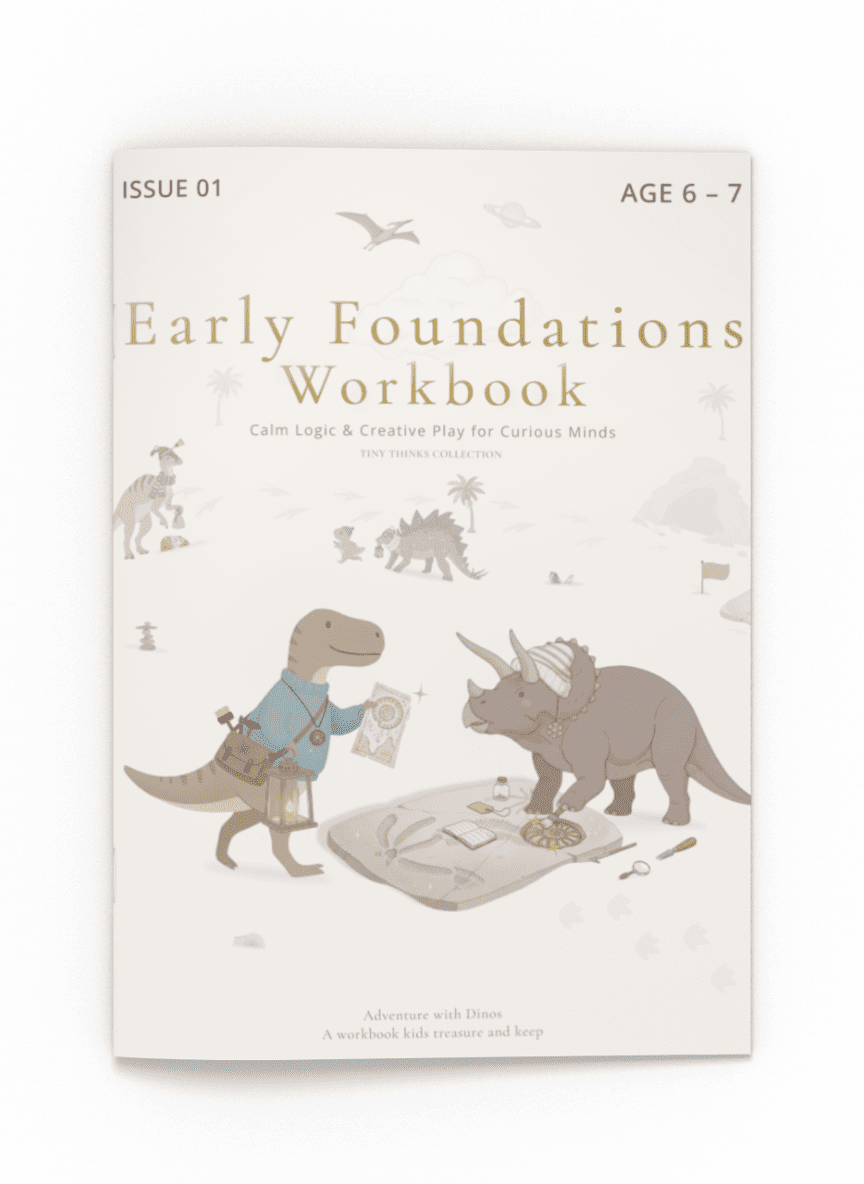

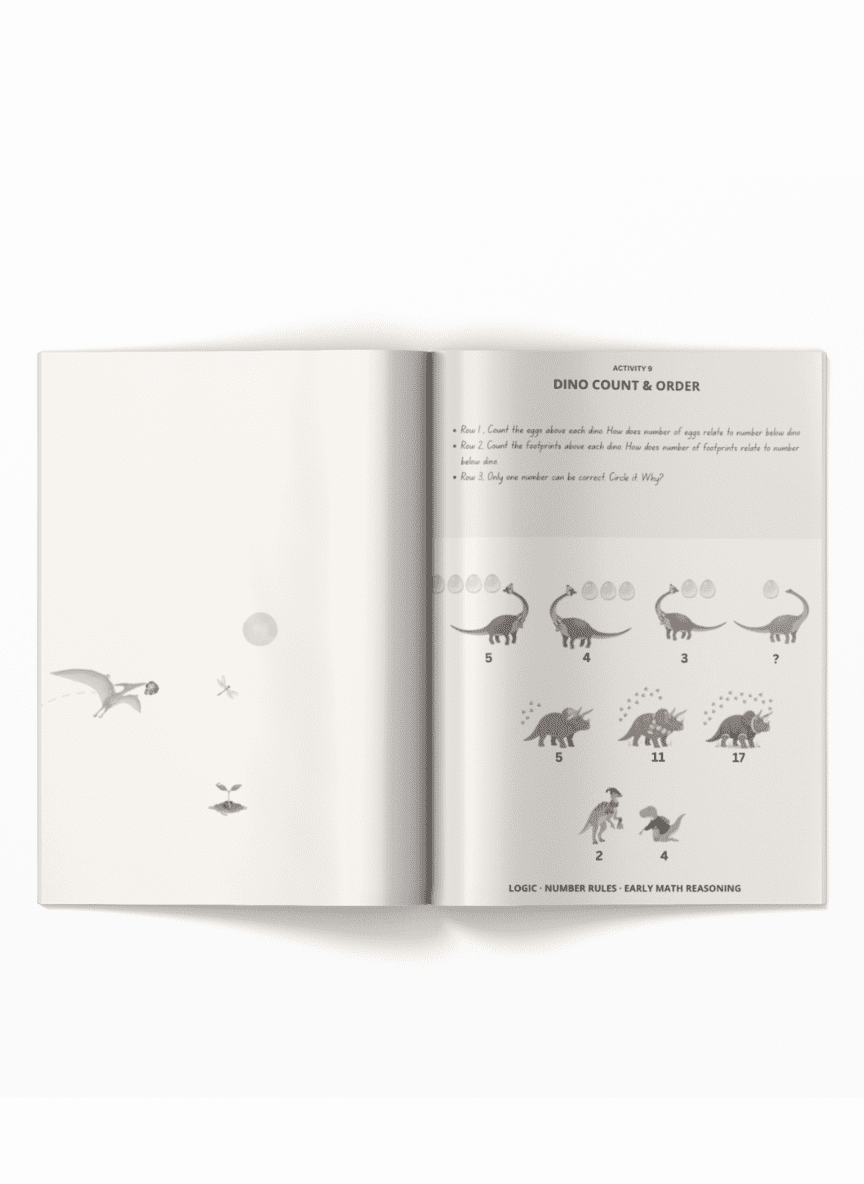
Level 1 — Foundations
Focus, attention, and noticing patterns
Ages 3–4
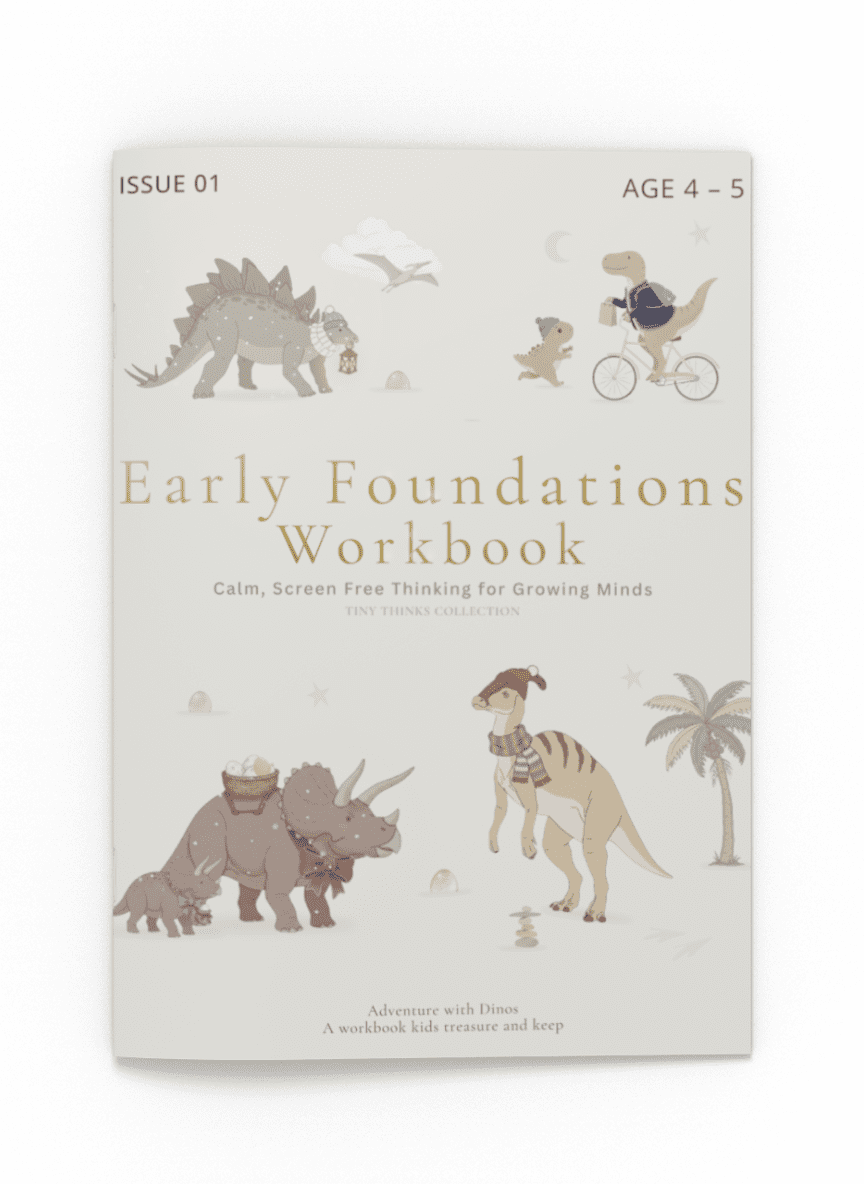
Level 2 — Early Logic
Matching, sequencing, and simple reasoning
Ages 4–5
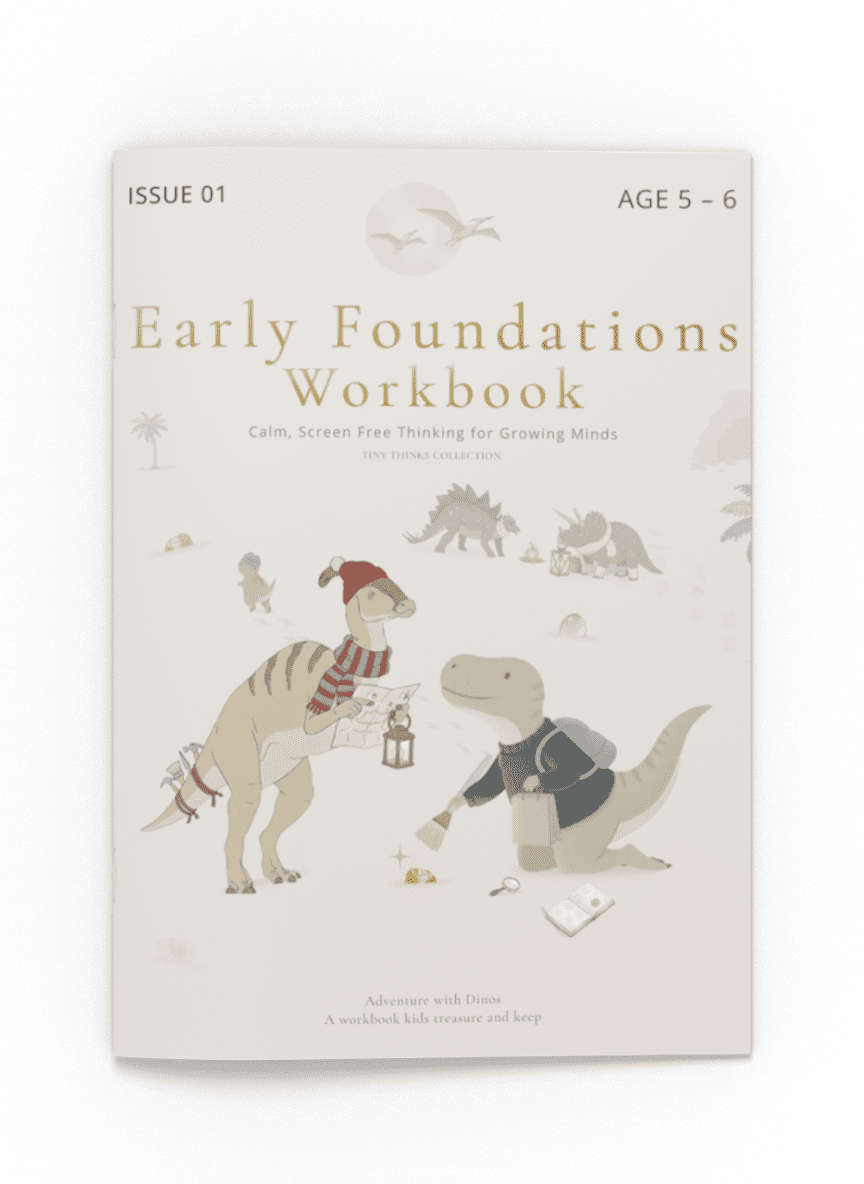
Level 3 — Structured Thinking
Rules, patterns, and multi-step puzzles
Ages 5–6
Level 4 — Multi-Step Thinking
Strategy, deduction, and deeper reasoning
Ages 6–7
Most activities keep kids busy for minutes. This is designed to build focus, so they stay longer — and come back to it.
Helps Children Settle and Focus
Gives tired minds something finite to hold onto — so attention doesn’t spiral.

Guided Thinking, Not Random Worksheets
You guide once. The page structure carries the rest.

Children Keep Coming Back
Children return to it for the characters — and stay for figuring things out
What are screen-free activities for kids ages 3–7?
Screen-free activities that actually hold attention at this age follow clear structure, short wins, and gentle challenge. Examples:
Simple logic puzzles (matching, sorting, sequencing)
Story-led scenes that invite kids to notice details
Step-by-step drawing or tracing
Find-and-circle games
Purposeful stickers (pattern completion, scenes)
Quiet sensory tasks like threading or stacking
Kids stay calmer when activities have a defined start and finish rather than open-ended “entertainment.”
This is the core design principle behind Tiny Thinks.
How do I keep my child calm at dinner without screens?
Calm dinners come from structured, low-arousal activities that give the child something to focus on without overstimulating them. What works:
Story-led pages with objects to find
Simple tracing or drawing challenges
Gentle puzzles they can do independently
Sticker scenes with a clear goal
Pair with a predictable “quiet start cue”:
“I have your calm page ready.”
Most children settle once the routine is consistent for 3–4 days.
What builds early logic and thinking skills for preschoolers?
Thinking skills grow fastest when children engage with:
Pattern-recognition games and Sequencing
Step-by-step problem solving
Story-led observation exercises
Short puzzles that require focus, not speed
This lays the foundation for attention, working memory, and early reasoning.
It’s exactly what Tiny Thinks workbooks are designed to strengthen.
How do I help my child focus without relying on apps or screens?
Children focus better when the activity gives them structure, short wins, and a clear finish. The strongest screen-free focus builders for ages 3–7 are:
Step-by-step tasks (tracing, matching, sequencing)
Story-led scenes that invite them to notice details
Simple logic puzzles that gently stretch attention
Calm sensory activities like threading, stacking, or sorting
Draw-and-find tasks with a defined goal
Short 10–20 minute “quiet challenges” instead of open-ended activities
Kids stay calmer when the activity tells their brain “start → do → finish,” instead of endless stimulation.
This is the core design principle behind Tiny Thinks — calm, structured tasks that naturally build focus without screens.