Key Takeaways
- Active learning makes kids get their hands dirty, inspiring involvement, inquisitiveness, and tactile investigation, all of which promote brain development and focus.
- Communication, teamwork and problem-solving skills flourish when kids engage in active, hands-on and playful learning experiences at home and in class.
- Kids recall a lot more when they are active participants in learning. The experience and feedback actually cement the knowledge in their brain!
- When kids are active, inquiring, participating, and diving deeper on their own, they grow self-assurance, self-reliance, and a passion for learning.
- Whether at home or at school, supportive learning environments should promote cooperation, acceptance, and a culture of inquisitiveness to make learning feel secure and exciting for all kids.
- A balanced strategy, mixing the active and passive, satisfies diverse learning styles and maintains children’s engagement, particularly when you incorporate technology and practical challenges.
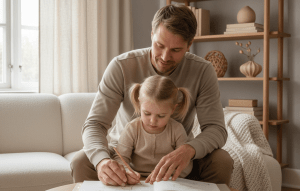
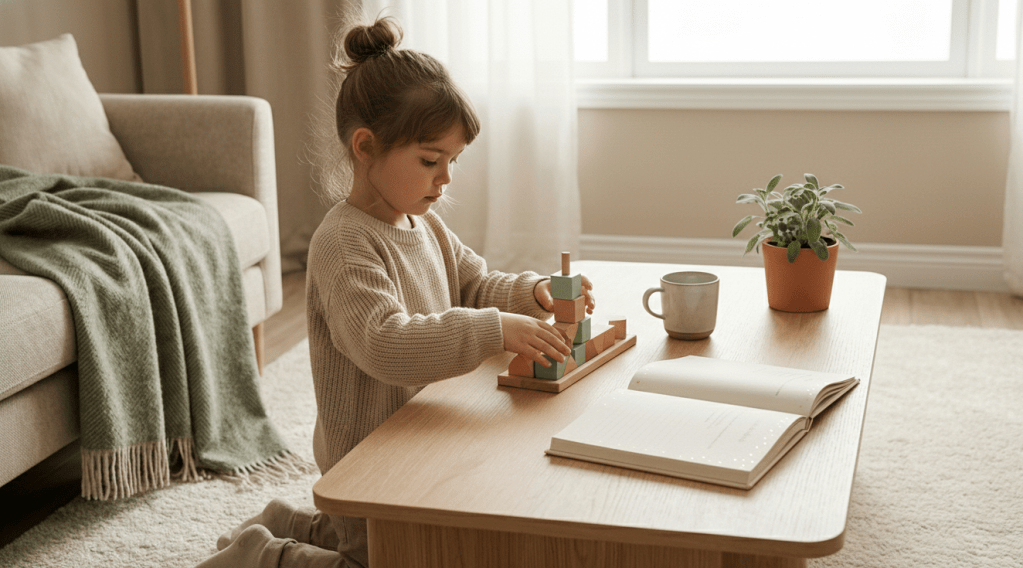
Active learning for toddlers frequently equates to kids having tactile interaction with components, deciding things and constructing sequences independently.
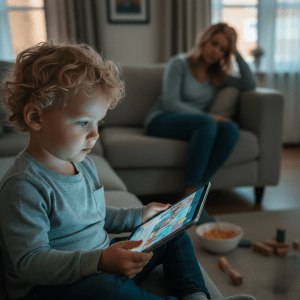
Passive learning, on the other hand, typically consists of internalizing material by listening or viewing with minimal interaction.
Knowing how these styles influence attention, memory and independent thought, parents can select daily habits that nurture deeper focus and tranquility.
The following discussion explores these distinctions further.
Need a calm, screen-free reset right now. Start with the Tiny Thinks Free Calm Pack.
The Core Distinctions in Learning
Active learning is about engagement, where students are actively participating in discussions, sharing ideas, and engaging in various learning activities. In contrast, passive learning is the traditional lecture method, where information is presented in a one-way format. This passive learning method results in minimal interest, with the learner’s role reduced to mere acceptance of information.
The fundamental differences in learning strategies exist across cultures and contexts, yet active learning methods consistently outperform passive ones in terms of motivation and self-confidence. Visual, auditory, and tactile learners greatly benefit from active participation through interactive lectures—manipulating, categorizing, verbalizing, and testing—rather than just being told.
When kids get involved, the hard thinking is constructed organically. They query, link, and pattern, not just memorize.
1. Brain Engagement
Active learning illuminates the mind. As a kid sorts shapes, colors blocks, or collaborates, the brain’s sensory systems imprint fresh data into working memory. These experiences stick. Emotion and novelty both help cement learning, making details easier to generate later.
Curiosity is usually the ignition. Kids pursue curiosities, experiment, and course-correct. This self-motivated investigation builds strong neural connections, enabling more profound understanding. Interactive work engages attention, banishes distraction, and cultivates the habit of deep thought, which is a base for future academic and real-world prowess.
2. Skill Development
In active learning, kids aren’t just absorbing; they’re rehearsing. Communication and teamwork skills arise organically when they tackle problems together or explain their thinking. Repetition, whether matching cards or tracing lines, solidifies concepts and aids transfer from short-term to long-term memory.
Playful challenges encourage creative and flexible thinking. Feedback matters here: a gentle prompt, a hint, or a small correction guides improvement and builds competence. This is how kids become the champions some parents say they want.
3. Knowledge Retention
Active learning forms more robust memory traces. Kids who do, talk about or teach learn more than kids who just watch or listen. Practice goes a long way. Without it, learning erodes. Thirty percent is gone after half a year and almost fifty percent after two years.
Emotional arousal during learning, even mild excitement or pride, enhances encoding and recall. Examining and remembering previous content, even after a long hiatus, can resuscitate lost information. Deep, intrinsic learning, such as games, puzzles, and pattern play, cements facts and abilities more firmly than passive reexposure.
4. Child’s Role
In active learning, the child is in charge. They’re not blank slates; they’re wanderers. They question ‘why?’, propose answers, and provoke themselves. This ownership creates confidence and independence.
When children lead their investigation by selecting resources, establishing mini objectives, or checking their work, they develop habits that extend past the toddler years. Tiny Thinks encourages this. Picture matching, sequencing, and patterning tasks are designed for self-start, not adult prodding.
Kids come back on their own and develop endurance and concentration.
5. Learning Environment
A great active learning environment is quiet, organized, and consistent, which promotes student engagement. Furniture is child-height, supplies are reachable, and the visual clutter is low, all encouraging active participation. Kids sit next to each other, pass materials around, and assist one another, enhancing their social learning experience.
The environment is nurturing, with grownups demonstrating inquisitiveness and consistent control. Teachers and parents are facilitators, not managers, establishing the activity and receding. Tiny Thinks fits these moments: after school, during screen transitions, or mealtime chaos.
The Free Calm Pack and age-specific workbooks offer safe, low-arousal activity. When you need your child calmed and thinking in a focused way, this is what works.
Need a steady daily rhythm of calm thinking play. Move into Tiny Thinks screen-free Workbooks.
How a Child’s Brain Responds
When kids learn by doing—shuffling, categorizing, following, connecting, constructing—they engage more of their brain. Active learning activates motor, sensory, and thinking regions simultaneously. This means stuff sticks. For instance, when a child counts jumping steps or organizes picture cards, their brain is reacting and creating memory via motion and contact, not merely hearing or observing.
The outcome is enhanced memory and increased attention. Research indicates that children retain as much as 75% of what they personally do, versus only 10% from passively watching or listening. Exercise is like “Miracle-Gro” for the brain, improving memory, attention, and learning.
Active learning doesn’t just increase memory; it develops the brain’s executive functions. These are the skills behind planning, self-control, and flexible thinking. When kids are physically engaged—drawing, stacking, flipping pages—their executive functions develop more rapidly than kids who just sit and listen.
For instance, a two-week movement-based math exercise resulted in children getting over 89% better at multiplication. Preschoolers who engage in frequent hands-on play perform better academically down the road. These initial advantages count. Robust executive functions forecast improved school performance—not just in a single domain, but across the board.
Engagement leads to learning. When little ones are genuinely engrossed—picking their own puzzle, completing a pattern, or pairing colors—their brain floods with dopamine. This chemical boosts motivation and renders learning pleasurable. It’s the contrast between a kid staring blankly at a screen and one who glows when something clicks.
Dopamine from active engagement doesn’t only increase pleasure. It sets the stage for a lifetime of inquisitiveness and self-starters. That’s why calm, structured, hands-on learning isn’t just fun—it’s vital for cognitive depth and emotional stability.
Every child learns differently. Some have to look, some have to feel, some have to wiggle. A quiet, low-stimulation system that provides tracing, matching, sequencing and gentle movement answers these needs without taxing the senses.
For instance, Tiny Thinks™ offers child-led pages that suit all types — visually minimal for the distractible, tactile for the wigglers and step-wise for the co-dependent. This offers each kid a method to calm their brain and cultivate concentration without resorting to screens or incessant adult attention.
For parents dealing with after-school mayhem, meal-time meltdowns or travel tension, Tiny Thinks™ provides a peaceful, tangible aid. The Free Calm Pack is the fast reset for busy minds with no instructions and no overhead, just immediate structure.
When routines require more, the age-specific Workbooks extend tranquil reasoning even more. Not a chore and not a treat, it is simply a consistent means of supporting your kiddo to calm down, concentrate, and get back to autonomous studying when it counts.
Beyond “Good” vs “Bad” Learning
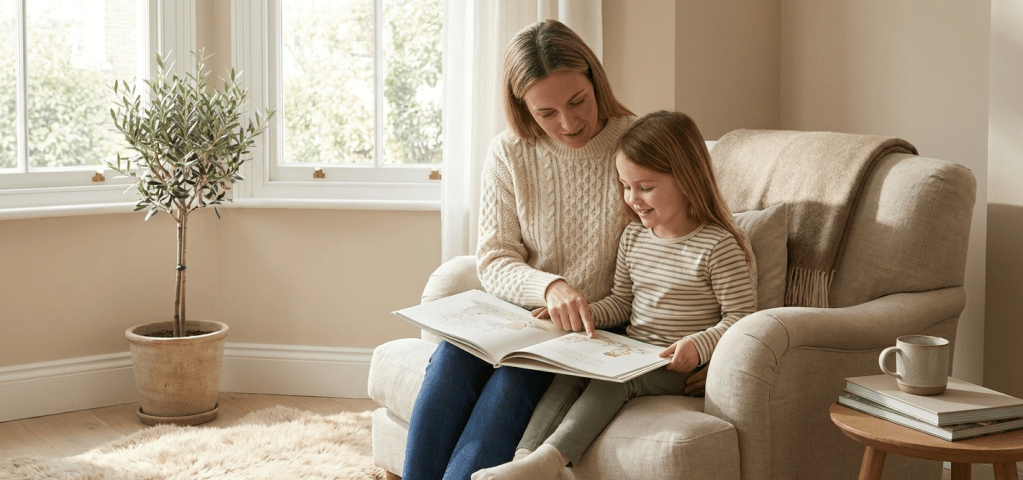
Learning isn’t a battle between ‘active’ and ‘passive’. Both are more of a continuum than an either-or. In the wild, engagement ebbs and flows. Some days kids are primed for experiential discovery and challenge. Other days, they need to listen, watch, or quietly soak up.
These neat categories don’t align with the reality of children’s lives, particularly during the early years. Passive learning gets no respect. It has a role. Hearing a tale, seeing an example, or silently watching something in action establishes the base of learning.
It’s how most kids are introduced to the architecture of words, the music of digits, or the arc of a project. For others, particularly those swamped by incessant hustle, downtime is a balm and provides room to reflect, cogitate, and recharge. At school or at home, not every kid is prepared to leap into the fray. Occasionally pulling back is the way they advance later.
Active learning—selecting, experimenting, sequencing, constructing—strengthens comprehension. It’s not a panacea. Not every kid lives for being on all the time. Studies demonstrate that when learning is aligned with a child’s readiness, both skill retention and skill transfer increase by 25 to 30 percent.
Instead, the best environments enable kids to go freely between watching and doing, with subtle pushes toward autonomy. When kids establish their own milestones, like apprentices do, their learning sticks longer and transfers further. They default to direct instruction, strict pacing, and high-stakes testing, favoring coverage at the expense of engagement.
This can squash curiosity and independence. We now know that pedagogy for kids, andragogy for adults, and heutagogy for self-determined learning all have their time and place. These frameworks aren’t hierarchical. They’re a toolkit.
Kids require both the security of definite direction and the liberty to course-correct, depending on their developmental phase and context. Tiny Thinks™ is based on this philosophy. It’s not about screen replacement or policing family screen habits.
It’s about giving parents relief in high-friction moments after school, during screen transitions, mealtime chaos, travel, waiting rooms, and bedtime wind-down by providing a calm, screen-free alternative that kids can manage independently. The Free Calm Pack is your dose of quick, dependable relaxation.
For families ready to go deeper, the age-based Workbooks develop focus and thinking skills in calm, structured increments.
Practical Ways to Foster Active Learning
Active learning is not keeping children busy. It’s about nurturing their capacity to engage with intention — to focus, think, and contribute. For families struggling with screen fatigue, after-school mayhem, or sleeplessness at bedtime, active learning provides a route back to peaceful, ordered involvement.
Tiny Thinks™ focuses on regulation-first, screen-free design parents can use in the real moments that count. Here are some practical ways to promote active learning, both at home and in the classroom.
- Utilize short, structured games that involve following a path or matching patterns.
- Alternate between individual tasks and small collaborative projects.
- Integrate hands-on, tactile materials whenever possible.
- Push kids to anticipate, explain, or diagram their knowledge.
- Pose open-ended questions that encourage discussion and deeper thought.
- Provide calm, visually simple workspaces to reduce distractions.
- Use feedback and encouragement strategically to reinforce persistence.
At Home
- Checklist for Promoting Active Learning:
- Establish a consistent learning schedule.
- Provide hands-on materials such as blocks, basic puzzles, or silent drawing supplies.
- Dedicate a quiet, minimal distraction work space.
- Minimize background noise and visual clutter when it is time to learn.
- Switch out easy, guided tasks to maintain interest without overwhelming.
Educational games can help move study time from passive to active. Memory match, easy sequencing cards, or quiet puzzles encourage kids to practice focus and memory in a low-arousal context.
Parents can fuel active learning by posing questions that lack single “right” answers. What do you think happens next?” or “How would you solve this?” encourage kids to get involved, not just react.
Consistent, understated feedback—‘I saw how you carefully completed that pattern’—cultivates confidence and inspiration. Our Tiny Thinks™ Free Calm Pack is made for these moments with structured, low-stimulation pages kids can initiate themselves and revisit again and again.
In the Classroom
- Techniques:
- Begin the school year with surveys about learning methods and preferences.
- Employ small groups for discussion and peer learning.
- Intermingle real-world type activities, like easy problem solving or mind mapping.
- Vary the lesson formats to suit different attention spans and learning styles.
Group projects or peer discussions where students share, question, and listen are effective. One-on-one exchanges or Socratic seminars on student-generated topics bring every child’s voice to the surface, not just the talkative leaders.
Getting students to pause and bring others into the discussion facilitates more inclusive engagement and deeper concentration. Teachers can encourage active thinking by asking students to jot down predictions or key ideas following a lesson.
With regular feedback, a flexible approach, and constructive concept mapping, you can help your child internalize this new skill. Tiny Thinks™ Workbooks support these goals with calm, predictable design that minimizes cognitive overhead and encourages independent initiation.
This is particularly valuable during transitions or hyperactive class moments.
The Role of Technology
Technology influences the way kids learn, for good or bad. In active learning, technology can become a tool for constructing, investigating, and communicating novel concepts. Rather than watching a video or dragging shapes on a screen, kids can create stories, build rudimentary models, or work collaboratively with peers through digital means.
|
Potential Benefit |
Example in Practice |
|---|---|
|
Personalized pacing |
Children use adaptive math apps that adjust difficulty in real time |
|
Creative expression |
Drawing and story apps let kids invent and share their own work |
|
Immediate feedback |
Reading games highlight errors and offer hints instantly |
|
Collaboration |
Shared whiteboards or group story-building apps |
|
Problem-solving |
Puzzle apps that require planning and sequencing |
|
Choice in demonstration |
Children present learning via voice, video, or interactive slides |
Online learning tools can make a difference in young children’s experience when used thoughtfully. Most platforms now employ adaptive technology, monitoring how a child is doing and calibrating activities to their current level. This keeps kids in the zone where learning feels attainable but not too easy.
For instance, a math app could provide a child additional practice with counting if they’re having difficulty or explore basic addition if they’re prepared. Such personalization can help kids remain engaged and make genuine progress, particularly when combined with obvious visual indicators and minimal distraction layouts.
It’s simpler to encourage collaboration and communication with technology. Even in 3–7 year olds, basic digital environments can enable kids to construct something collaboratively, say, a group drawing or contributing to a collaborative story sentence by sentence.
These experiences nurture social skills, turn-taking, and problem-solving, all within a framework that can be repeated and elaborated over time. For kids who have difficulties in group settings or get overwhelmed in a noisy classroom, digital collaboration can be a gentler introduction to working with others.
Gamified learning apps can, if used sparingly, make practice fun and help kids stick it out through frustration. The trick is discovering games that incentivize work and brainpower, not merely quickness or shiny visuals.
For instance, a puzzle app where a child can experiment with various solutions or a sequencing game that becomes more intricate as the child progresses. If they’re simple, repeatable, and not overloaded with sound or animation, these tools can help kids build patience and flexible thinking.
Tiny Thinks™, for example, is based on principles of regulation-first, screen-free design. It’s there for parents who need a quiet, low-stimulation option when their kid’s attention just feels pulled in too many directions.
When screens are overused after school, during long-haul travel, or in the middle of a messy evening, Tiny Thinks™ provides a reset. The Free Calm Pack gives parents an instant way to shift the energy: a set of quiet, structured thinking pages that invite independent focus.
There’s no hype, no moral framing—just a toolkit for the days when you need your kid grounded and thinking peaceably. For longer routines, the age-based Tiny Thinks™ Workbooks extend this structure, always with the same principle: build attention, sequencing, and thinking—not just fill time.
Finding the Right Balance

Mixing active and passive learning isn’t just a theoretical exercise; it’s a reality that every educator and parent confronts each hour, especially with toddlers who alternate between wild enthusiasm and complete calm. Each child learns differently, and some flourish in action time, constructing or organizing calmly. Others absorb information more effectively through tender reenactment or narrative. The challenge lies not in choosing a side but in knowing when to pivot and how much structure to maintain for optimal learning experiences.
Both teachers and parents tread this boundary carefully. Too much passive learning can lead to disengagement, evidenced by glazed eyes, fidgeting bodies, and wandering minds. While passive learning methods can be effective for presenting a large volume of information at once, they are not always compelling for young learners! In contrast, active learning strategies, such as sorting, matching, building, and discussing, require more effort from both the adult and the child. These strategies foster critical thinking skills but can overwhelm kids if every minute is filled with active or novel tasks.
The best days balance both: a calm story, then a small tactile task; a quiet listen, then a structured pattern to build or trace. Evaluating involvement is the fulcrum. You eye the room or your kid. Are they bored? Are they fidgety? Are they dead or over-hyped? This is not about diagnosis; it’s about scanning for where the focus is. When engagement is waning, it’s usually a sign to switch, perhaps from hearing to action or from active to soothing, measured pacing.
Lesson plans or home routines require cues and contingency actions for these occasions. It’s why structure counts, but so does flexibility. Occasionally, an advanced child requires a more striated prompt. Occasionally, an exhausted kid can handle nothing more than a bunch of easy, repeatable work. To be willing to change plans at the last minute is not failure; it is flexible instruction.
Continuous calibration is hard work. What stuck? What didn’t? Even the best structured plans require adapting for new group dynamics, varying moods, or an unforeseen shift in the room’s energy. A growth mindset isn’t for kids alone. We adults need it as well, being willing to look and see what works, what doesn’t, and try again tomorrow. They learn by example, by watching us manage and model calm change.
For families seeking to strike the delicate balance of those needs at home, Tiny Thinks™ is built as a regulation-first, screen-free alternative. It doesn’t demonize screens but provides a low-tech alternative for after school, mealtime frenzy, or screen-shuffling—times when a kid needs to slow down, not ramp up. The Free Calm Pack is a simple reset: quiet, predictable, and easy to start.
For more persistent structure, age-specific Tiny Thinks™ Workbooks offer a peaceful, hands-on avenue to construct concentration and nascent cognitive abilities. These aren’t enhancements or prizes; they’re real-world relief devices.
Conclusion
Active learning vs passive learning kids Most days, this distinction manifests in subtle ways when a kid silently sorts shapes at the table or just devours a show on a tablet. The real transition occurs when learning feels tactile, deliberate and autodidactic. Kids do best with predictable, low-noise activities that allow them to think, experiment, and repeat at their own pace. Screens and speed input are valuable, but composed play with a plan forms durable focus. In everyday life, a consistent blend functions optimally. When the schedule feels overwhelming or focus wanes, low-stim, thought-based activities reset equilibrium. For households, that translates to reduced resistance and more of those beautiful moments where kids calm down, focus, and mature on their own.
Need a quiet, predictable option for the after-school window or screen transitions. Use the Tiny Thinks Free Calm Pack.
Frequently Asked Questions
What is the main difference between active and passive learning in children?
Active learning strategies engage students through hands-on activities, while passive learning methods primarily involve listening during lectures.
How does active learning benefit a child’s brain development?
Active learning methods encourage students to think critically and creatively while developing problem-solving skills, enhancing their study motivation and long-term retention of information, which fuels overall brain development.
Can passive learning still be useful for kids?
Yes, passive learning can expose you to new ideas or information. It works best in conjunction with active approaches to deeper understanding.
What are some practical ways to encourage active learning at home?
Ask open-ended questions, present hands-on activities, and nurture their curiosity through active learning strategies. Use real-world examples and let kids tinker, talk, and ponder what they learn.
How does technology support active learning for kids?
Interactive apps, educational games, and online tools can help make learning fun and promote active participation. Technology enables students to be active explorers of topics at their own pace.
Is it necessary to choose only one type of learning approach?
No, a measured approach is best. Blending active and passive learning lets kids get the best of both depending on the topic and learning objectives.
How can parents assess if their child is learning actively?
Look for indicators such as posing questions, teaching concepts, or utilizing information in novel contexts. Active learners are frequently curious and excited about what they are learning.