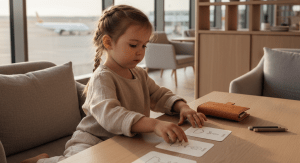
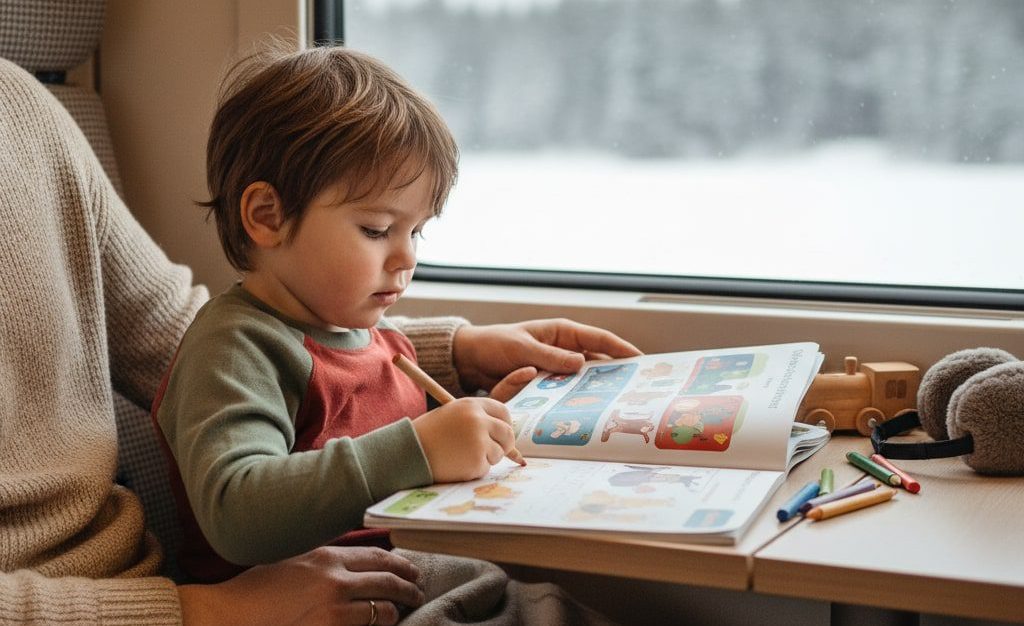
Christmas travel activities for kids can turn long flights, crowded airports, and hours on the road into calm, screen-free opportunities for learning and joy. Parents following the Our Tiny Treasures approach start with simple, hands-on activities that support emotional regulation, curiosity, and connection. According to Our Tiny Treasures research, children stay calmer and happier during travel when their hands and minds stay gently engaged without overstimulation.
These ideas also align beautifully with the Our Tiny Treasures calm-learning philosophy, which encourages families to use travel moments for storytelling, observation, curiosity, and connection rather than screen reliance. Many parents pair these activities with compact travel-friendly pages from the Our Tiny Treasures workbook series to keep learning fun and screen-free.
Key Takeaways
- Sensory bins, story prompts, window bingo, and DIY hobby kits transform holiday travel into creative, screen-free fun.
- A festive travel kit filled with comfort items, surprise gifts, and healthy snacks helps kids stay calm and energized.
- Smart planning and a positive mindset dramatically reduce holiday travel stress.
- Travel can become a classroom—teaching culture, budgeting, observation, and adaptability.
- Experiencing local holiday traditions and foods expands children’s worldview and empathy.
- Family travel rituals and journaling strengthen memories and emotional connection across the years.
According to child development guidance from the Harvard Graduate School of Education, structured, predictable activities during travel help children feel secure, reduce stress, and promote emotional resilience. That’s why Christmas travel activities for kids matter—they turn chaotic transitions into screen-free moments of learning, bonding, and joy.
Engaging Christmas Travel Activities

Christmas travel activities are more than distractions—they’re ways to connect, ease travel stress, and build lasting family memories. Whether flying across the world or driving a few hours to see relatives, these ideas nurture creativity, hands-on learning, and togetherness without screens.
Below are some engaging, parent-approved activities that encourage screen-free holiday fun:
- Sensory bins with festive objects
- Storytelling prompts for imaginative play
- Window bingo with holiday-themed visuals
- DIY craft or hobby kits
- Audio adventures (stories, carols, podcasts)
- Outdoor winter walks or mini-hikes
- Family holiday movie nights
- Trying new recipes together
- Holiday time capsule projects
- Singing carols and decorating small travel trees
1. Sensory Bins
Sensory bins are a screen-free travel lifesaver. Fill a small portable container with pinecones, ribbons, faux snow, and mini ornaments. Add a drop of peppermint or cinnamon oil to create a multisensory experience and deepen memory cues.
Hide tiny Christmas toys inside so kids can dig, discover textures, describe scents, and create stories.
This encourages language development, fine-motor skills, and observation—skills supported by the Our Tiny Treasures Skills Framework.
According to research from the National Institutes of Health, sensory-rich play strengthens cognitive pathways related to focus, executive function, and memory—making sensory bins a perfect travel companion.
2. Storytelling Prompts
Storytelling transforms waiting time into creativity time. Give prompts like “What if Santa’s sleigh got lost?” or “Tell the Christmas Eve story from a snowman’s point of view.”
Kids can narrate, act, or draw their stories.
Packing a couple of holiday picture books offers visual inspiration. Kids can retell the stories, add alternate endings, or create sequels—building imagination and expressive language.
UNESCO literacy research (UNESCO) shows that storytelling enhances vocabulary, cultural awareness, and narrative reasoning in children.
3. Window Bingo
Window bingo is a family favorite. Use printable or handmade bingo cards featuring snowmen, wreaths, reindeer, lights, churches, or decorated houses.
Kids mark off what they spot along the journey.
Turn it into a contest with a small prize—or have everyone compete as a team.
It keeps even restless children engaged in their surroundings.
4. DIY Craft Kits
Travel-friendly DIY kits—paper, markers, stickers, glue sticks, holiday-shaped cutouts—offer endless screen-free creativity.
Kids can make snowflakes, cards, bookmarks, gift tags, or tiny ornaments.
Crafting supports fine-motor skills and emotional regulation and gives children something meaningful to gift or display later.
For more structured activities, tuck in a few pages from the Our Tiny Treasures Screen-Free Workbook Collection.
5. Audio Adventures
Audiobooks, Christmas stories, kids’ podcasts, and curated playlists make travel immersive and relaxing.
Listening together creates space for conversation, shared laughter, and family bonding.
The American Psychological Association notes that shared listening experiences strengthen emotional connection, calm anxiety, and improve communication—making audio adventures ideal for holiday travel.
Prepare Your Festive Travel Kit

A well-prepared holiday travel kit can transform long journeys into stress-free, memory-filled adventures. According to Our Tiny Treasures research, children feel calmer and more secure when they have predictable tools, comfort items, and screen-free activities ready to use.
These festive kits also align with the Our Tiny Treasures Age-Group Learning Guides, making it easier to pack developmentally appropriate activities.
Essentials for a Festive Travel Kit:
- Comfort items like blankets, soft toys, or stuffed animals
- Travel pillow for naps
- Noise-canceling headphones
- Finger puppets or mini figurines
- Coloring books, crayons, and sticker sheets
- Pre-wrapped surprise gifts
- Healthy, energy-stable snacks
- Compact travel games and puzzles
- Small devotionals or magnetic Advent wreath
- Crosswords, word searches, I Spy books
- Tissues, sanitizers, and personal hygiene tools
- Water bottles and easy-open snack containers
Comfort Items
Comfort items help children self-soothe during unfamiliar travel days.
Beloved blankets and stuffed animals offer familiarity, helping kids settle during flights, layovers, or long drives.
Travel pillows prevent neck strain and allow for cozy naps, while noise-canceling headphones help reduce overstimulation in crowded terminals and loud planes.
A small deck of cards or a magnetic travel board can provide screen-free engagement and support calm, focused play.
Surprise Gifts
Surprise gifts add joy and anticipation to long trips.
Wrap small items—stickers, finger puppets, mini puzzles, festive pencils—and give them at intervals: after boarding, halfway through a road trip, or following a layover.
Letting kids choose some of the treats beforehand builds ownership and helps them feel included in planning.
These surprises work as both positive reinforcement and emotional reset points during travel.
Healthy Snacks
Healthy snacks help stabilize energy levels and regulate mood.
Pack fruits, trail mix, granola bars, or whole-grain crackers to avoid sugar spikes or crankiness.
Mini containers or zip bags keep snacks organized and easy to access.
Encourage kids to help pack the snacks—this builds responsibility and decision-making skills.
Staying well-hydrated reduces fatigue and irritability, so always bring refillable water bottles.
Master Your Travel Logistics

Christmas travel with kids can feel chaotic, but thoughtful planning turns stress into confidence.
According to UNICEF Early Childhood Development, predictable structure helps children manage big transitions and adapt to unfamiliar environments.
With smart logistics, your holiday travel becomes smoother for everyone.
Smart Packing
Use a child-friendly packing checklist—warm layers, gloves, hats, sleepwear, and a soft blanket for chilly markets or long queues.
Packing cubes help organize outfits by child or day, making essentials easy to reach without rummaging.
Keep toy choices minimal: one coloring book, one puzzle, and one logic workbook page set from the Our Tiny Treasures Screen-Free Workbooks.
Too many toys cause clutter and overstimulation, especially in tight travel spaces.
Pack insulated snack bags with warm treats—cocoa in a thermos, warm muffins, or spiced nuts—to make cold waits or long layovers feel comforting.
Strategic Timing
Schedule travel during nap times when possible, reducing chances of meltdowns.
For long drives or flights, plan regular stretch breaks to reset energy, use bathrooms, or enjoy brief walks.
Traveling a day before or after peak holiday dates minimizes crowds and delays.
Use simple visual schedules to show kids what comes next—boarding, snack time, reading, rest—this reduces anxiety and increases cooperation.
Positive Mindset
Children take emotional cues from parents.
Talk up the fun parts of the journey—seeing holiday lights, exploring a new city, trying treats at a Christmas market.
Use simple affirmations like “We’re a great travel team” to guide kids through challenges like delays or crowds.
Give kids choice and agency by letting them pick a snack, choose a travel game, or help push a stroller or wagon.
Transform Travel into Learning
Travel exposes children to new experiences, cultures, and environments—making it a powerful learning tool.
According to the MIT Media Lab, real-world exploration builds critical thinking, curiosity, adaptability, and observational skills far better than screens.
Whether you’re venturing across continents or visiting a nearby town, your holiday travels can become hands-on lessons in logic, culture, nature, and responsibility.
Cultural Discovery
Before the trip, explore the destination’s holiday foods, customs, and stories.
This increases anticipation and gives kids meaningful context for what they’ll see.
Museums, monuments, and holiday markets turn into living classrooms—helping kids understand history, art, and cultural celebrations.
Talking to locals encourages language skills and global awareness.
A travel journal allows children to document foods, words, and traditions, strengthening memory and reflective thinking.
Nature Exploration
Hikes, beaches, or guided nature walks offer hands-on science lessons.
Kids can observe wildlife, identify plants, track footprints, and learn about ecosystems.
Collecting natural items—leaves, stones, shells—creates opportunities to compare, categorize, and observe patterns.
Discussions about conservation and environmental protection transform ordinary walks into early lessons in stewardship and empathy.
Budgeting Basics
- Include kids in simple budget planning—food, souvenirs, activities.
- Give them a small allowance to practice saving and spending decisions.
- Use real shopping moments to teach price comparison and value.
- Have them record expenses in a notebook to reinforce math and accountability.
Embrace Local Holiday Traditions
Exploring local celebrations while traveling gives kids a deeper understanding of how different cultures honor the season. According to UNESCO Literacy research, experiencing global traditions builds empathy, cultural awareness, and a sense of belonging to a larger world. These on-the-go Christmas travel activities for kids can become some of your family’s most meaningful memories.
Below is a table of local holiday traditions and what they represent:
| Tradition | Region/Example | Significance |
|---|---|---|
| Lantern Festivals | East Asia, Europe | Hope, light, new beginnings |
| St. Nicholas Parades | Central Europe, Netherlands | Generosity and holiday spirit |
| Christmas Markets | Germany, Austria, Global Cities | Community bonding and local crafts |
| Nativity Displays | Latin America, Mediterranean | Storytelling and tradition |
| Holiday Food Feasts | Worldwide | Sharing abundance and connection |
Festive Foods
Holiday foods offer a delicious entryway into cultural learning. From tamales in Mexico to stollen in Germany to bibingka in the Philippines, each dish carries centuries of tradition.
Let kids help choose new foods to try—whether it’s roasted chestnuts from a street vendor or a gingerbread pastry from a local bakery. These decisions build autonomy and strengthen curiosity.
Cooking a simple recipe together—like Swedish pepparkakor or Greek melomakarona—turns travel days into hands-on lessons in culture, math, sensory learning, and teamwork.
Local Markets
Holiday markets are sensory wonderlands: shimmering lights, wooden toys, hand-woven scarves, spiced treats, and warm drinks. Encourage kids to chat with artisans about their crafts—these conversations support language development, observation, and confidence.
Have each child choose a meaningful keepsake, like a painted bell or carved ornament. These items become physical reminders of the journey and deepen emotional connection to the experience.
Markets also teach kids about local ingredients and seasonal foods. Bringing home spices, dried fruit, or artisanal treats extends the learning long after the trip ends.
Community Events
Parades, concerts, tree-lightings, and lantern walks invite travelers to participate in local culture. According to the American Psychological Association, shared community rituals strengthen children’s sense of belonging and decrease travel-related stress.
Take pictures, write notes in your journal, and talk afterward about what made the event special. These reflections help children process and appreciate cultural differences and the warmth of community celebrations.
Create Lasting Travel Rituals
Rituals give kids a sense of home, even when far from it. They don’t need to be elaborate—simple routines repeated each trip become powerful anchors of comfort and connection.
A Christmas Eve walk in a new city, making a homemade ornament from found objects, or watching the same holiday movie after decorating a hotel tree—these moments help kids feel grounded during travel.
Let children help invent new rituals or choose favorites from the previous year. This gives them ownership and makes the traditions even more meaningful.
Keeping a travel journal—digital or paper—allows each family member to capture memories, doodles, funny moments, new foods, or interesting facts from the trip. Over the years, these journals become treasured family keepsakes.
Talking about travel memories after returning home strengthens gratitude and helps children appreciate the experiences more deeply. According to UNICEF Early Childhood guidance, reflection helps kids integrate learning, emotions, and cultural understanding.
Conclusion
Christmas travel with kids can feel overwhelming at times—but with thoughtful planning, screen-free activities, and a focus on slow, meaningful moments, these trips become opportunities for growth and connection. By incorporating educational games, preparing a festive travel kit, and embracing local traditions, families shift the focus from stress to exploration.
The memories made during these holiday journeys—silly travel rituals, new foods, cultural discoveries, and shared stories—linger long after the trip ends. For more screen-free ways to keep kids engaged during travel, explore the hands-on, calm-learning activities in the Our Tiny Treasures Workbook Shop.
Frequently Asked Questions
What are the best Christmas travel activities for kids?
Engage kids with sensory bins, coloring, storytelling, window bingo, travel games, and Christmas audiobooks to keep long trips fun and screen-free.
How can I prepare a festive travel kit for my children?
Pack comfort items, snacks, mini crafts, activity books, and pre-wrapped surprises. Include headphones, hygiene items, and a few travel-friendly logic games.
How do I manage travel logistics with kids during Christmas?
Plan ahead, pack smart, choose optimal travel times, use visual schedules, and maintain a positive mindset to reduce stress and meltdowns.
How can travel become a learning opportunity for kids during Christmas?
Introduce cultural foods, traditions, maps, budgeting, and journals. Museums, markets, and nature walks also provide hands-on learning.
What are some ways to embrace local holiday traditions while traveling?
Attend parades, markets, concerts, and cultural events. Try local holiday foods and explore community traditions like lantern walks or nativity displays.
How can I create lasting travel rituals for my family during Christmas?
Start simple rituals—like annual travel photos, holiday walks, ornament making, or a special Christmas book—to build memories across the years.
Are there travel activities that work for children of all ages?
Yes—coloring, music, audiobooks, snacks, I Spy games, and Christmas crafts work well for toddlers through teens, with easy modifications.