


Key Takeaways
- Problem solving skills establish strong foundations for children’s future thinking, grit, and emotional intelligence, preparing them for success in the real world.
- Kids learn best when permitted to explore, inquire, and experiment, so encourage curiosity and hands-on discovery on a daily basis.
- Mistakes are great instructors. Help kids in viewing failures as chances to develop, and role model the value of learning from failure.
- By asking open-ended questions and leaving room for independent problem solving, you encourage critical thinking and help your child become a confident decision maker.
- Games, stories, and group projects are fun ways to cultivate collaboration, communication, and creative problem solving at home and beyond.
- Emotional support, a balanced approach to digital content, and recognizing each child’s unique learning style all play key roles in reinforcing problem solving abilities.
When daily challenges feel heavy, Tiny Thinks provides the calm, structured thinking play that children naturally enjoy and return to regularly. Use our Free Calm Pack to turn overstimulation into a moment of quiet focus. Get the Free Calm Pack
Child problem solving skills refer to a child’s capacity to spot problems, reason through possibilities, and solve problems with logic and imagination.
For 3 to 7 year olds, these skills emerge from daily rituals and activities, easy puzzles, and real life challenges like sharing or cleaning up. Developing solid problem solving skills encourages focus, adaptable thinking, and autonomy.
In the following chapters, actionable strategies and screen-free activities will assist kids in developing these skills at home and beyond.
Why Problem-Solving Matters
Problem-solving isn’t a skill for older kids or adults. It’s the way young children ages 3-7 learn to make sense of the world. On a daily basis, kids encounter little and big challenges, such as blocks that won’t stack, a snack that’s trapped, a puzzle piece that won’t fit, or a tiff with a pal.
These moments feel small, but they are the foundation of intellectual development and lifelong grit. Supporting kids in practicing and mastering problem-solving lays the foundation for academic achievement, social confidence, and a calm, regulated approach to life’s hurdles.
Cognitive Development and Future Success
It’s problem-solving that lies at the core of developing confidence and thinking big. When kids are allowed room to work through a problem, be it how to share a toy or crack a basic math problem, they cultivate both pragmatic and analytical abilities.
These formative encounters assist kids in viewing challenge as a chance, not a danger, which influences how they cope with adversity down the road. In real life, this looks like allowing a child to attempt to zip up their own jacket or determine why a tower keeps toppling.
Kids who exercise these steps figure out how to break larger troubles into bite-sized pieces. They’re more prepared for academic assignments that demand sustained attention and pre-planning. Ultimately, this reasoning process makes you a better student and sets the stage for the sophisticated thinking required in adulthood.
Emotional Regulation and Resilience
Learning to solve problems doesn’t just help kids think, it shapes how they feel and act. When a kid is bogged down and you let them flail a bit, they get a workout in patience and frustration tolerance.
It’s typical for toddlers to throw tantrums when they can’t have their way. When adults direct them to try, fail, and try again, kids discover that screw ups aren’t catastrophes. Instead, every try is an opportunity to learn.
That develops resilience, the capacity to rebound from setbacks. Children who solve more problems become less likely to melt down when things go wrong, and they trust themselves. This is crucial, particularly for overstimulated kids or those who become easily dysregulated after screentime.
Slow, manual problem-solving puts their nervous system in a different gear and brings back calm.
Social Skills and Teamwork
Problem-solving is not always a solitary activity. Children 3-7 are still figuring out how to collaborate, share and compromise. When kids problem solve with each other, take turns, build something or make decisions as a group, they learn empathy and communication skills.
Teamwork instills the lesson that there are multiple solutions to every problem, and sometimes the best one comes from hearing others out. This gets kids ready for the real world where working with others is the key, be it in future classrooms or offices.
Real-World Readiness and Daily Practice
Robust problem-solving skills arm kids against the real world. Almost all work requires you to think creatively and solve novel problems. Employers seek individuals with methodical problem-solving skills and a calm demeanor under pressure.
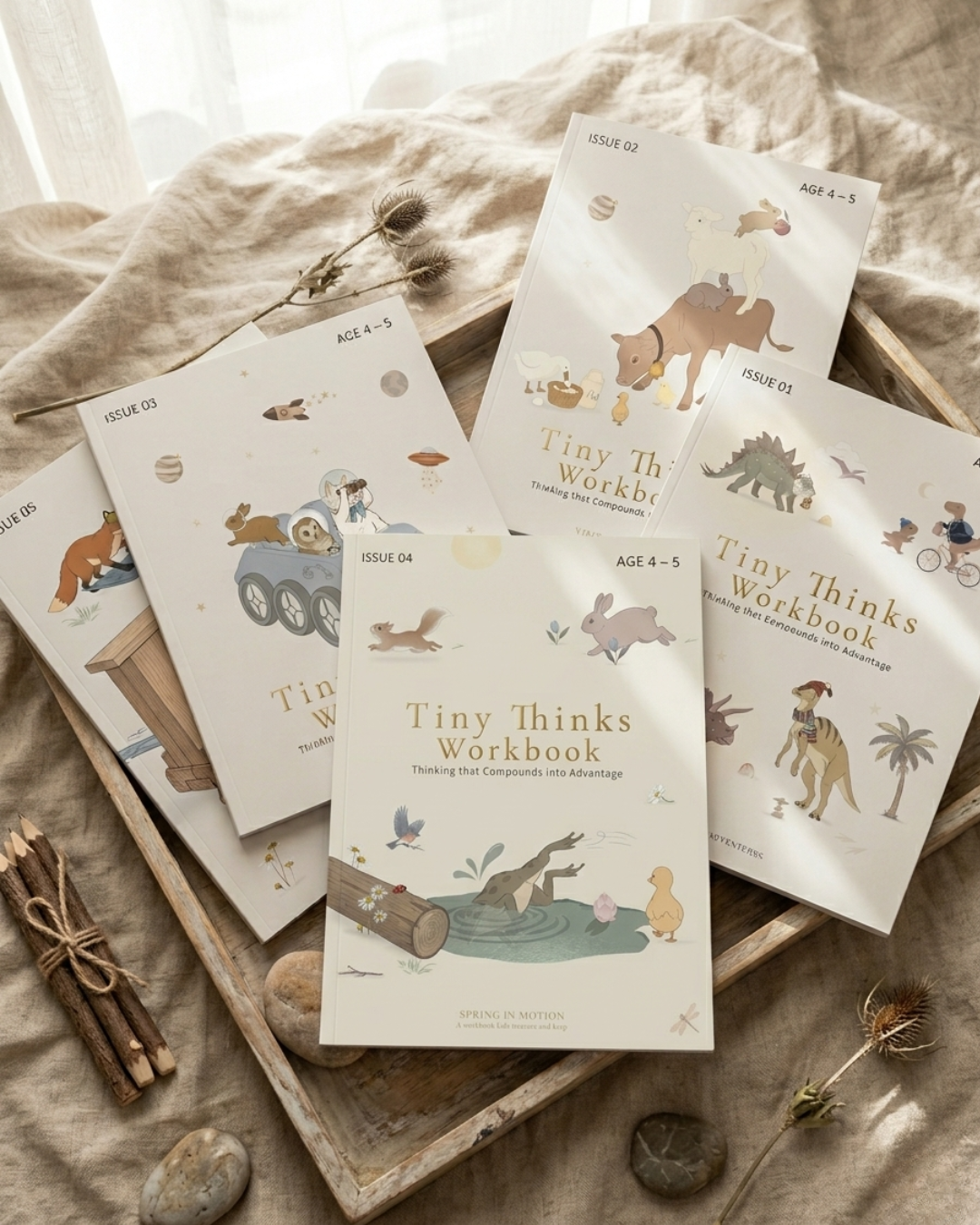
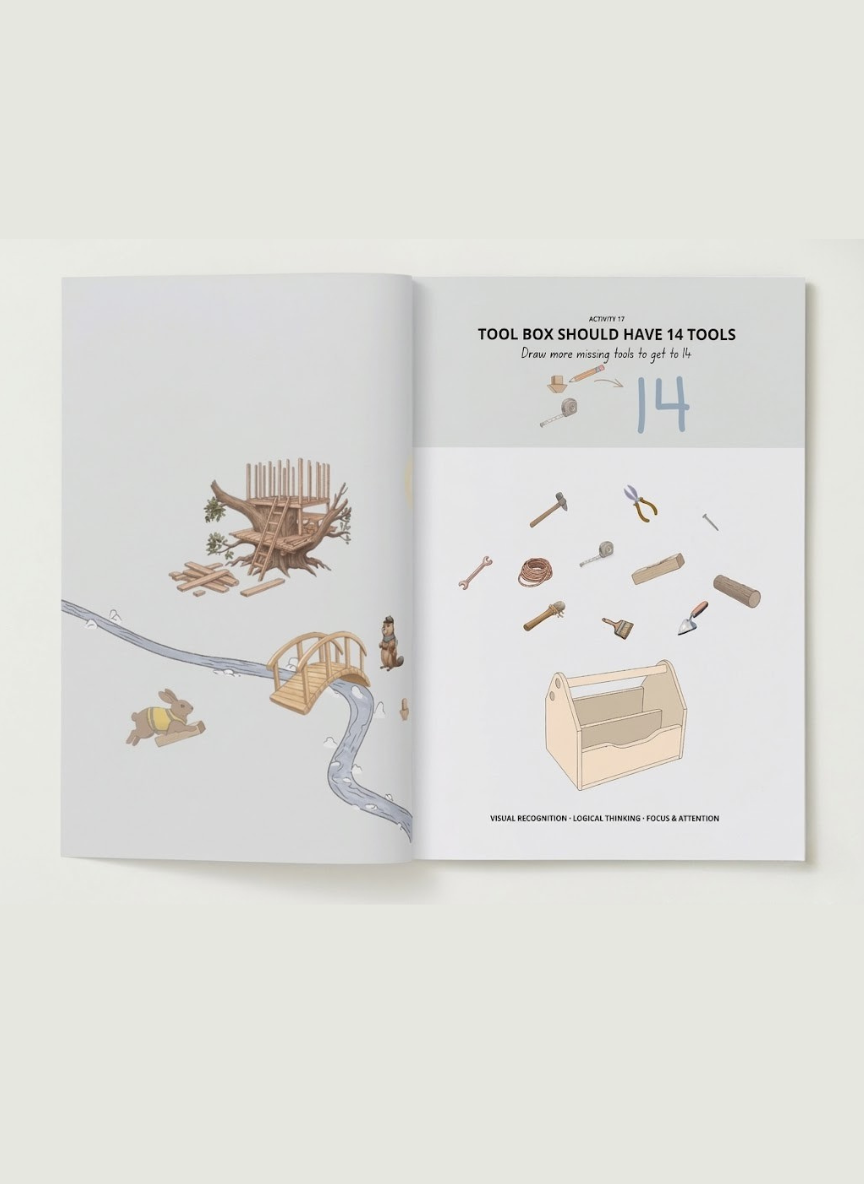
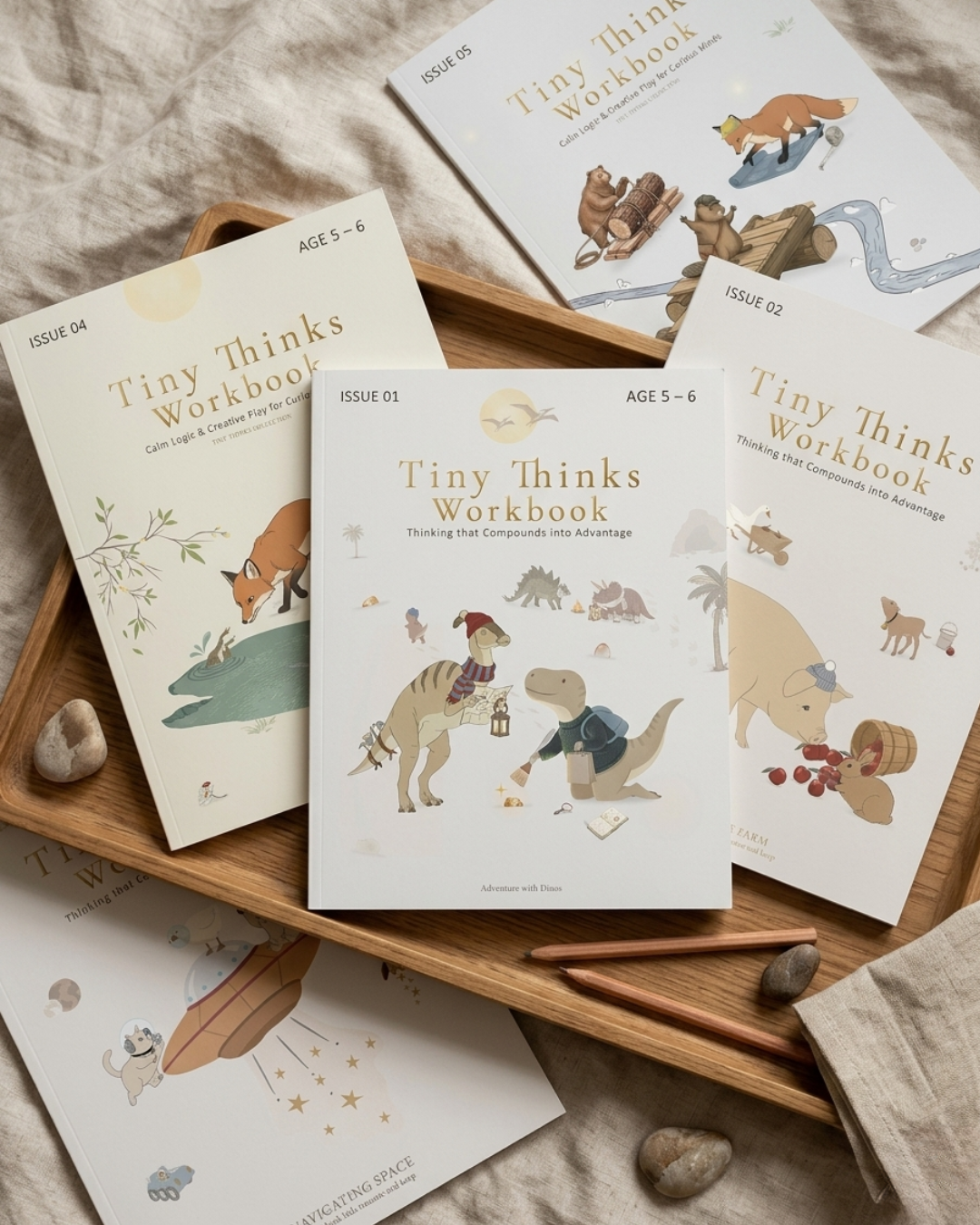
These habits begin early. Parents can reinforce this by modeling problem-solving out loud, saying, ‘This piece doesn’t fit, let’s try another,’ or ‘What could we do instead?’ Mini, framed challenges such as those in Tiny Thinks™ Workbooks are perfect for this.
They break down challenges into actionable steps and give kids a chance to exercise ownership and solution-building. For parents seeking screen-free solutions to soothe overstimulation or occupy challenging moments, dinnertime, road trips, and waiting rooms, the Free Calm Pack and age-specific Tiny Thinks™ Workbooks provide tender, fun opportunities for children to cultivate these abilities on a daily basis.
Kids truly love the still concentration these tasks provide and parents experience more calm and more regulated behavior, even when life feels hectic.
Why calm, sit-down activities work when screens don’t?
Travel days (and long waits) overload children in a quiet way. Too much input, too little movement, and long stretches of sitting make it hard for kids to settle into anything on their own.
What helps most in these moments isn’t stimulation or distraction, it’s gentle structure.
As one parent put it, “Most evenings, the screen is just on in the background while my child plays. I’m not trying to stop it, I just want something quiet they can sit and do without me setting things up.”
Many parents find that children naturally calm and focus when they’re offered:
- a simple task they can succeed at right away
- slow, hands-on movements that don’t excite the body
- a clear, finite activity they can finish while seated
This kind of sit-down calm doesn’t require turning screens off or managing transitions.
Children ease into it on their own, and screens fade into the background. If your child gets overstimulated easily, this guide breaks down low-noise, low-mess calm play ideas.
Nurturing Problem-Solving Skills
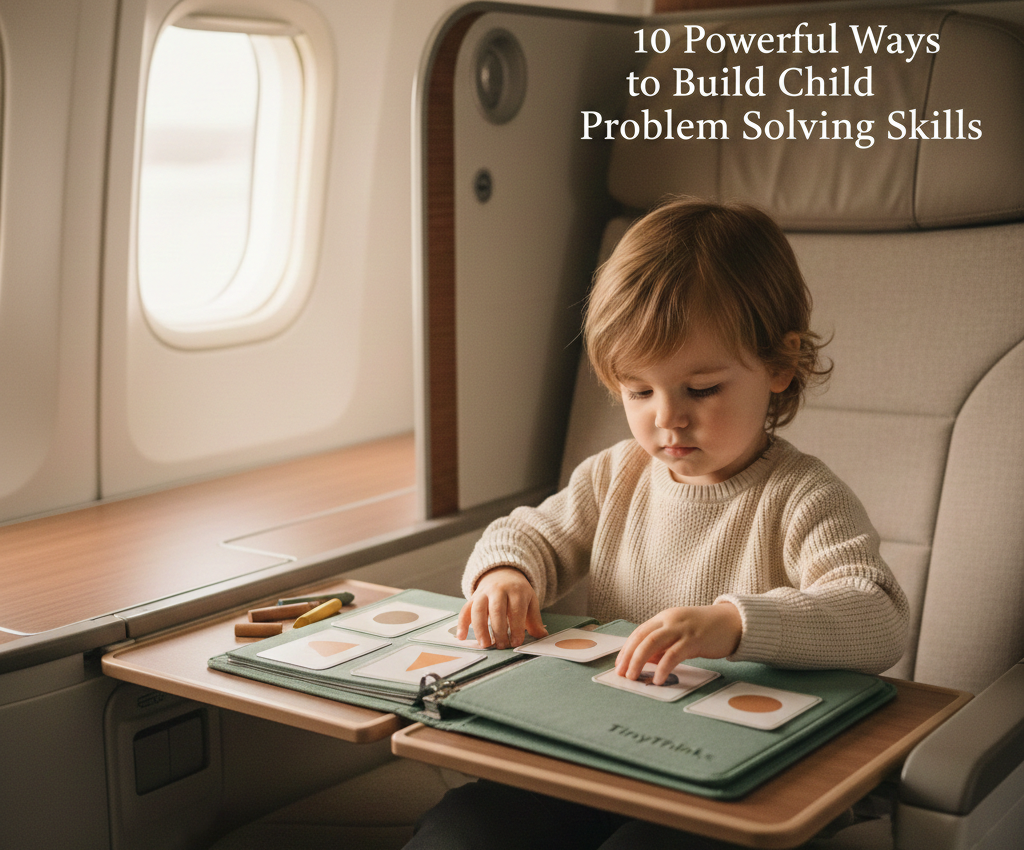
Problem solving in kids 3 to 7 is more than just mending a puzzle or locating a missing plaything. It’s about molding how they manage frustration, remain inquisitive, and teach themselves to think. A regulation-first, screen-free approach teaches kids to calm down, control their emotions, and cultivate the mental habits that give rise to true, sustainable confidence.
A regulation-first approach is especially effective because child problem solving skills strengthen best when children feel calm, supported, and unhurried.
These skills are best nurtured through small moments throughout your day, not just in homework, particularly at the dinner table, on car rides, and after school when stressed parents too easily grab for their devices.
1. Model Curiosity
Kids learn most by observing adults approach ambiguity with curiosity, not stress. When you say aloud, “I wonder why the sky turns dark at night,” you demonstrate to your child that ignorance is a motivation, not a defect. Make curiosity part of ordinary routines: ask questions at the grocery store, examine leaves on a walk, or debate which socks are the warmest.
This shows that questions are welcome and that it’s okay to not know. Invite your child to participate. If they say, “Where do ants go when it rains?” fight the temptation to Google or provide a fast answer. Propose researching together, or even just thinking, “That’s a great question. What’s your take?
This doorway leads to critical thinking and gentle wonder. In the Tiny Thinks Free Calm Pack, you’ll discover prompts tailored to ignite precisely these types of moments, motivating kids to notice, measure, and inquire for themselves.
2. Reframe Failure
They’re the backbone of growth. Kids need assistance viewing mistakes as stepping stones, not shame. Talk about your own botched recipes, miscommunications, or misplaced keys. Discuss what you discovered, how you adapted, and what you’d attempt next time.
This normalizes setbacks and cultivates grit. Nurturing Problem-Solving Skills Solution: Encourage kids to vent. ‘That was a tricky puzzle. What did you observe? What would you try differently? By emphasizing the process, not the outcome, you help them cultivate healthy coping skills for dealing with disappointment.
Growth mindset language can be interspersed throughout the day and reinforced through screen-free activities that encourage controlled trial and error. If you want to build early thinking skills without screens, use these research-backed logic activities.
3. Ask, Don’t Tell
When your child encounters a problem, spilled water, shoelaces, or sibling squabbles, stop before you intervene. Instead of solving for them, try: “What do you think we could do here?” or “How might you start?” Open-ended questions lead kids to reason out loud, decompose the problem into stages, and investigate their own answers.
Over time, this approach employed consistently creates genuine independence. You don’t need expensive stuff. Even old favorites such as hide-and-go-seek or scavenger hunts require you to plan, adapt, and strategize.
These are the moments that train kids to problem solve, make decisions, consider different possibilities, and learn from results. These skills are purposefully embedded throughout every page of the Tiny Thinks™ Free Calm Pack.
Tiny Thinks is the calm, structured thinking play system for ages 3–7 that families use whenever screens create problems. If you want to build early logic skills without screens, use these research-backed activities. Shop Age-Based Workbooks 3–7
4. Create Space
Problem-solving thrives when kids have the time and room to figure things out. Reserve silent stretches of the afternoon, a secluded nook with a puzzle, a set of matching cards, or a basic construction set. Minimize background noise and distractions so that focus is feasible.
Allow kids to struggle a little! If they get stuck, just sit nearby and encourage, don’t rescue. Call in siblings or friends to co-conspire. Occasional outside inspiration opens up new doors. Providing the right tools matters.
Tinys Thinks™ Workbooks are built to be portable, inviting, and structured for independent, screen-free play anywhere, whether you’re waiting for a meal or traveling.
5. Celebrate Process
Celebrate the process of child development, not just the outcome. You really worked that one out, or I thought it was great how you persevered. This fosters iteration in young children. After a challenge, reflect together: “What did you learn? What will you do next time?” Celebrate these moments with family to enhance their creative problem solving skills.
Kids develop confidence when their process is observed and appreciated. Develop a positive reinforcement habit, with soft encouragement and sharing of victories. Tiny Thinks™ activities are designed to make these celebrations natural, with bite-sized challenges that provide fast successes and room for contemplation.
As time goes on, the kids come to find and crave these pockets of quiet attention and exploration on their own.
The Developmental Roadmap
Problem-solving skills don’t come out of nowhere; they grow incrementally, charting a developmental roadmap as kids mature. Every age has its own competencies and requirements. If you’re a parent with a young child ages 3-7, knowing this roadmap will assist you in having realistic expectations and meeting your child where they’re at.
The developmental roadmap. The table below summarizes how problem-solving develops from infancy to adolescence, emphasizing the key milestones at each age.
|
Age Range |
Key Milestones and Skills |
|---|---|
|
3-4 years |
Recognizes simple patterns, follows two-step instructions, uses trial-and-error play, begins to verbalize needs (“I can’t reach,” “It’s stuck”) |
|
5-7 years |
Considers others’ viewpoints, explores simple cause and effect, starts to plan steps out loud, can brainstorm a few solutions, asks “why” when stuck |
|
7-9 years |
Uses logic to explain ideas, asks open-ended questions, predicts outcomes, weighs options, learns from mistakes, can follow multi-step processes |
|
10-12 years |
Integrates feedback, solves complex problems, works in groups, reflects on progress, adapts strategies |
Refer image: Child Development Problem-Solving Milestone Chart
Cognitive development supports these skills. Three to four years: most children use trial and error, leaning heavily on routine and repetition. By five to seven, they begin telling you what they think, ‘I think this will work’, and can entertain simple options.
They learn best with soft open-ended questions and visual work, not high-speed, dopamine-spiking screens. This is the age where Tiny Thinks™ activities shine: matching, sequencing, and simple logic games that slow things down and build focus. Whenever you sit down and talk through a problem together or let your child test a tracing maze before dinner, you’re strengthening these budding skills.
Providing age-appropriate challenges is what counts. For smaller children, that could be a two-piece puzzle or deciding what shoes to wear. For older kids, it may involve mapping out the stages for an art project or determining how to share toys with a brother or sister.
Each “just right” challenge pushes them a step ahead, stretching their brain without driving them to overwhelm. In our experience, we find that concrete, tactile activities pacify the nervous system, particularly in high-arousal moments such as after school or while traveling.
Teachers, both at home and in classrooms, have a massive part to play. Their role isn’t to work out the solution for the child, but to generate an environment where it’s okay to mess up and it’s encouraged to try new things.
A supportive adult, on the other hand, does just the opposite. They make children feel safe to try, fail, and try again. That’s why screen-free tools like Tiny Thinks™ are built for independent, repeatable use.
They let kids practice steps like identifying the problem, brainstorming solutions, testing, and reviewing, all at their own pace. Many parents discover that our Free Calm Pack and age-based Workbooks provide the perfect push for this kind of early childhood education, even in the hustle and bustle of daily life.
Problem-Solving Activities
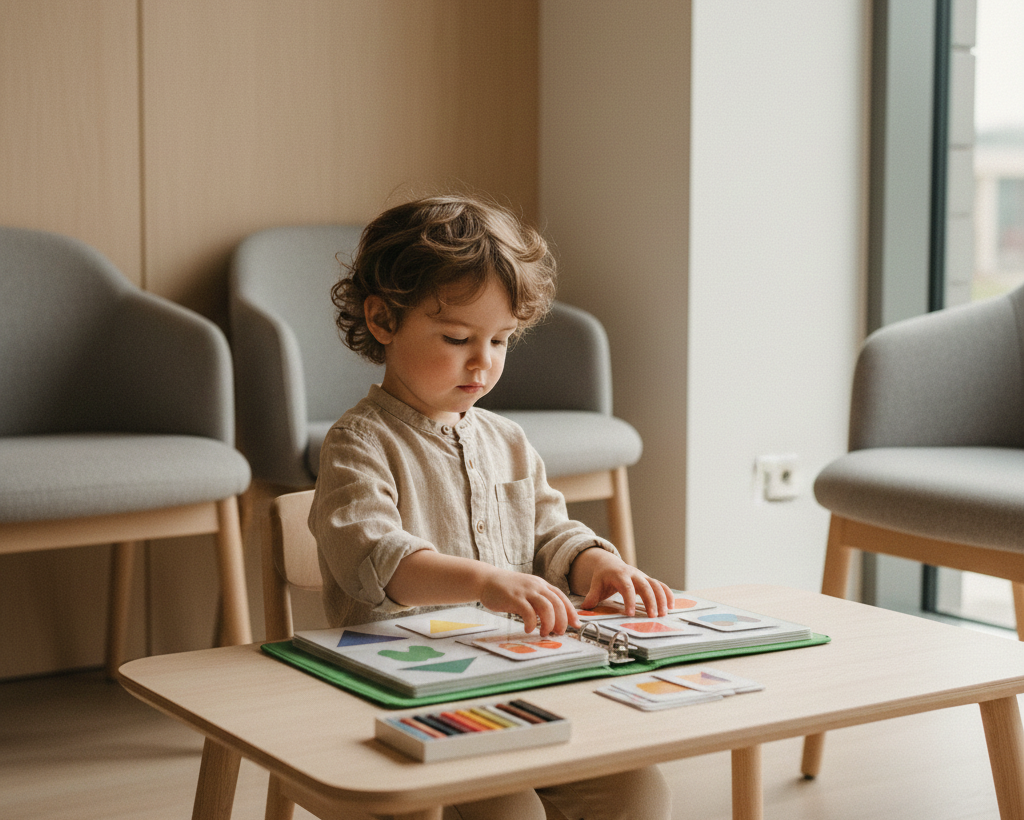
Children’s problem-solving activities for ages 3-7 develop most rapidly when exposed in peaceful, organized, and captivating ways. Such problem-solving activities that support regulation, focus, and thinking, not simply entertainment, help children establish habits of persistence and flexible thinking.
Although computer games can promote critical thinking, analog activities provide controlled input and aid in calming the nervous system, particularly in frenzied times. Below are a variety of activities that nurture problem-solving skills without relying on screens:
- Board games that require planning and strategy
- Pattern-block puzzles, mazes, and matching activities
- Outdoor obstacle courses and scavenger hunts
- Such as telling stories, role play, and puppet shows involving conflict and resolution.
- Simple coding toys or unplugged coding cards
- Art projects with open-ended materials
- Engaging in collaborative problem-solving activities includes group challenges like building towers or the human knot.
- Everyday tasks, like tying shoelaces or packing a bag
- Age-appropriate Sudoku, crosswords, and sequencing cards
For a full list of alternatives to screens, check the core guide on screen-free activities for kids ages 3-7.
Play
Building block towers to solve stability puzzles is a great way to engage young children. Creating obstacle courses using pillows or furniture can also stimulate their critical thinking skills. Playing memory and matching card games, as well as completing jigsaw puzzles together, further enhances their cognitive abilities and supports early childhood development.
Role-playing “store” or “restaurant” with rules and challenges introduces them to real-life scenarios. Making up treasure hunts with clues encourages creativity and critical thinking.
Imaginative play is a shortcut to flexible thinking. Kids make up situations, encounter imaginary obstacles, and experiment with answers without grown-up involvement required. These experiences generate assurance and inventiveness, and the aptitude to envision different answers.
Board games like ‘Connect Four’, ‘Guess Who?’ or even plain dominoes develop strategic thinking, observation, and patience. Outdoor play introduces a kinetic dimension. Kids need to experiment with solutions, change their strategies, and leverage their entire bodies to solve problems, like how to jump across stepping stones or maneuver through a chalked maze.
Active play organizes the sensory system, grounding kids and boosting their capacity to engage in calmer activities afterward.
Stories
Reading books where characters face dilemmas and choose solutions is an excellent way to promote problem-solving. Telling “what would you do?” stories around daily challenges encourages kids to think critically. Making up endings to familiar tales and drawing out “social stories” for tricky social moments also fosters creativity.
By urging kids to make up their own tales with issues and conclusions, you encourage both creative thinking and empathy. Following a tale, reviewing a character’s decision, “Could they have done it differently?”, allows kids to exercise perspective-taking and critical thinking.
Social stories, concise and targeted, prepare kids for anticipated difficulties like sharing or losing a game. They present potential reactions and assist kids in rehearsing solutions in their heads before encountering the actual scenario.
Projects
Work in groups, such as constructing a paper bridge or creating a mini garden, that encourage collaboration and compromise. Kids have to listen, bounce ideas, and embrace input, fostering collaboration and critical thinking.
Ownership is important. When kids choose their own supplies or project guidelines, they access independence and inventive risk-taking. Projects such as categorizing by shape, baking with measuring cups, or picture-card coding bring problem solving into reality.
Pausing after a project: What worked? What didn’t?, helps kids appreciate the importance of effort, iteration, and error-based learning. When you connect projects to daily life, cleaning up toys, planning a snack, you demonstrate that problem-solving is everywhere, not just in “special” activities.
Tiny Thinks™ Workbooks and the Free Calm Pack are for these real moments. Every activity is designed to soothe overstimulated children, develop thinking skills, and regain focus, particularly when parents require a screen-free solution that genuinely delivers.
These devices provide kids the regular input their nervous systems hunger for and the stimulation their brains demand. Parents experience quieter behaviour, extended concentration, and actual interest at the dinner table, on the road, or in after-school transitions.
How Tiny Thinks fits into this moment?
Tiny Thinks pages are designed to gently pull attention away from screens without effort from the parent.
They:
- start easy, so children can begin immediately
- use quiet hand movements that slow the body
- lead naturally into calm, focused attention
Parents often use them in moments like travel, waiting, or evenings, whenever they want a calm alternative to screens without planning or negotiation.
The Unseen Influences
Problem solving in kids 3-7 is almost never a linear process. Beneath every “Why did they do that?” moment, there are invisible forces at work: emotions, digital inputs, individual learning preferences, and the structure of their environment. Most parents observe that a peaceful kid can completely fall apart following some time on YouTube or how an impromptu dinner table puzzle can bring back silent concentration.
Science reveals how these unseen influences mold the way children reason, justify, and persevere through difficulties even when the source isn’t apparent in the moment.
Emotional State
|
Emotional State |
Effect on Problem-Solving |
|---|---|
|
Calm |
Sustained focus, better logic, less frustration |
|
Anxious |
Rushed answers, avoidance, rigid thinking |
|
Overstimulated |
Scattered attention, impulsivity, more errors |
|
Supported |
Willingness to try, openness to feedback |
|
Discouraged |
Withdrawal, low persistence, fear of mistakes |
Kids in this demographic experience feelings strongly, and those feelings can either aid or sabotage their problem-solving skills. A child who notices, “I’m frustrated,” and takes a breath is more likely to persist with a puzzle or collaborate with a peer.
Research even shows that 3-year-olds perform better in tasks like the shaken box when adults include simple curious questions, “What do you think made the noise?”, which softly orients attention to unseen forces and supports regulation. Empathy plays a role: when children understand others’ feelings, they navigate group problem-solving with less conflict.
Backstopping emotional awareness isn’t merely about soothing; it’s about arming kids with the ability to confront challenges in a controlled state. Subtle direction, such as following a line or matching a picture, establishes a “reset” moment for a child who’s thrown or unfocused.
No coincidence, Tiny Thinks™ worksheets are purpose-built for this. Deliberately slow, methodical, and soothing, they ground kids back in a controlled space where thinking can take place.
Digital World
Screens are already interlaced into everyday life. Certain digital tools nudge creativity and logic, but for ages 3 to 7, rapid, high dopamine content, such as YouTube Kids, splinters attention and inhibits emotional regulation.
Research indicates that post-screen kids cannot concentrate on hands-on tasks and crave fast dopamine “hits” instead of developing persistence through frustration. A calibrated approach means screens may be used deliberately, yet must be counterbalanced with engagements that rejuvenate languid, deep cognition.
Educational apps with free-form challenges are better, but paper-based, screen-free activities, like those found in Tiny Thinks™ Free Calm Pack, offer the predictability and structure to help children recharge after digital overload. Content monitoring and talking about what’s viewed online educates kids to decode covert influences and transfer lessons offline.
Learning Style
None of the kids tackle the problems in the same manner. Some are visual learners, others require exploratory hands-on assistance, while some flourish with verbal guides. It’s crucial to acknowledge these distinctions.
It turns out that 4- and 5-year-olds are particularly susceptible to the framing of the problem. Whether it’s a question about causality or something visual can make a notable impact on their ability to succeed. Providing a variety of problem-solving strategies nurtures adaptability.
For instance, a child might do poorly with verbal riddles, yet flourish with pattern blocks or picture sequences. When kids are given the opportunity to experiment with various implements, sketching, categorizing, and authoring, they find what approaches come instinctively.
Tiny Thinks™ Workbooks are designed to encourage this type of inquiry, with open-ended questions and soft directions that flex to different learning styles.
Beyond The Home

For kids 3-7, real-world problem solving doesn’t end at the doorstep. Out there, new spaces, new faces and unanticipated challenges mold their skill to cogitate, adapt and develop. Community resources, such as libraries, museums and local playgroups, often have workshops or activities specifically for young kids. They’re more than just fun excursions.
These provide kids with guided opportunities to learn how to make decisions, collaborate with peers and experiment. Confronting new things in a secure, nurtured environment develops both confidence and emotional intelligence. When a kid is reluctant to participate or nervous in an unfamiliar setting, parents can model relaxed interest, softly encourage them to engage and remain close as a safe haven.
It teaches kids to self-regulate with mild exposure, rather than shutting down in overwhelm. Schools have a big role in reiterating problem-solving skills. It’s optimal when families and faculty work in tandem. When parents and teachers use consistent approaches at home and school, such as the same language for problem-solving steps or sharing stories about how to calm down and think things through, they give kids a sense of predictability.
For instance, if a teacher debriefs a peer conflict with “what happened? What could we do next time?” and parents use the same script at home, kids get a double practice dose. This type of reinforcement is even more critical for kids who have trouble with transitions or get overwhelmed in busy settings. Teachers can notify parents about typical challenges, such as playground spats or difficulty finding a group to play with, so families can rehearse those scenes at home with soothing, structured routines.
Extracurricular activities, whether it’s sports, music, art, or nature clubs, challenge children to solve all kinds of real problems: taking turns, coping with small failures, following instructions, and thinking creatively. They’re not just skill-building experiences; they teach kids how to manage frustration, how to negotiate with their peers, and how to sense the pride of persistence.
Kids get beat up or bullied. With guidance, these moments become teachable moments for either asserting themselves or reaching out to an adult for assistance. In the long run, children who are involved in group activities on a regular basis emerge with enhanced communication and teamwork skills and a more resilient sense of self.
Peer relationships beyond the home are crucial for social problem solving. Kids discover how to share, collaborate, resolve conflicts, and make friends. Sometimes they’re hard, like dealing with exclusion or navigating group dynamics. These are everyday challenges, even if they’re tough to watch as a parent.
It’s useful to review what occurred afterward in quiet, straightforward language and drill potential reactions with role playing or light prodding. Structured activities, like Tiny Thinks™ Workbooks or the Free Calm Pack, can nurture these skills by walking kids through pattern recognition, turn-taking, and small wins that regain confidence following a rough day.
For families seeking screen-free reinforcement beyond the home, Tiny Thinks™ provides on-the-go, soothing pages kids truly love, resources that assist with refocus and regulation, wherever you are in life.
Tiny Thinks is positioned as infrastructure for your home, not just advice. It is what families use instead when modern stimulation stops working. Download your calm-down toolkit today. Get the Free Calm Pack
Conclusion
Backing problem solving among children 3 to 7 years old accomplishes more than just assisting them to complete a puzzle or navigate a difficult spell at home. These foundational thinking skills develop the confidence, patience, and grit to tackle real-world challenges in and beyond the family.
Everyday routines, such as mealtime, travel, and transitions, are easier when kids know how to pause, think, and try again. Kind, interactive activities and thoughtful questions matter, particularly when life seems hectic or overwhelming. Silent, systematic work allows the mind room to decelerate and concentrate. Those little daily seconds do accumulate. With patient guidance and the proper equipment, families experience reduced overwhelm, increased autonomy, and consistent development in their children’s problem-solving, both collaboratively and individually.
Frequently Asked Questions
What are problem-solving skills in children?
Problem-solving skills allow your young children to think critically, plan effectively, and figure things out, facilitating their social competence and overall child development.
Why is problem-solving important for children?
Problem solving enhances confidence, critical thinking, and adaptability. It equips kids to confront daily trials and triumph in school and beyond.
How can parents nurture problem-solving skills at home?
Parents can cultivate curiosity and demonstrate optimism while providing age-compatible mini-brainteasers that enhance critical thinking skills. By offering support, not solutions, you help your child develop problem-solving skills through experience.
At what age do children start developing problem-solving skills?
They start acquiring problem-solving skills during early childhood, even before age three. Skills develop as they get older and learn.
What activities develop problem-solving skills in children?
Blocks, puzzles, role-play, and simple science experiments all promote problem solving, fostering collaboration and innovative thinking among preschoolers during these early childhood development activities.
How do culture and environment influence problem-solving abilities?
Child problem solving is influenced by family values, traditions, and experiences. Nurturing spaces foster inquisitiveness and perseverance.
Can schools improve children’s problem-solving skills?
Yes, schools encourage problem solving with group projects, open ended questions, and real-world challenges. This gets kids primed for success later on.