
Key Takeaways
- Opt for screen free travel toys that encourage creativity, imagination, and family bonding on your trip!
- Age-appropriate, compact, and multi-functional toys keep kids occupied and happy, regardless of the setting.
- Focusing on high play potential, lightweight, and easily cleanable toys makes travel easier for families.
- One new toy per trip keeps the thrill high and cycling out your play kit keeps boredom and overstimulation at bay!
- Safety comes first. Choose non-toxic, age-appropriate toys and watch for choking hazards.
- After every trip, have your child help you rotate in new travel toys!
Screen free travel toys are tactile activities and items to keep your 3 to 7 year olds interested and chill on the road — no tablets or phones required!
With basic patterns, matching games, and tactile components, these toys help encourage concentration and solo play.
Screen free options often help families de-stimulate on planes, in cars, and at airports, making travel days easier and quieter for kids and parents alike.
Need a calm, screen-free reset during travel right now? Start with the Tiny Thinks Free Calm Pack.
Beyond the Screen Glow
Screen-free travel toys are more than just a distraction; they serve as the perfect travel toy for kids ages 3–7 when overstimulation strikes, particularly during chaotic travel moments. Parents often resort to screens as an easy solution, a digital pacifier, to calm meltdowns in airports, trains, or restaurants. However, over-reliance on screens can create a cycle of dependency. Fast-paced content spikes dopamine, shortens attention spans, and leaves children even less regulated than before.
We know from research that screen time in excess results in more meltdowns and behavior challenges, not less. Typically, when parents exchange screen time for hands-on, structured activities, they observe a transition. Children settle, focus, and even become more independent.
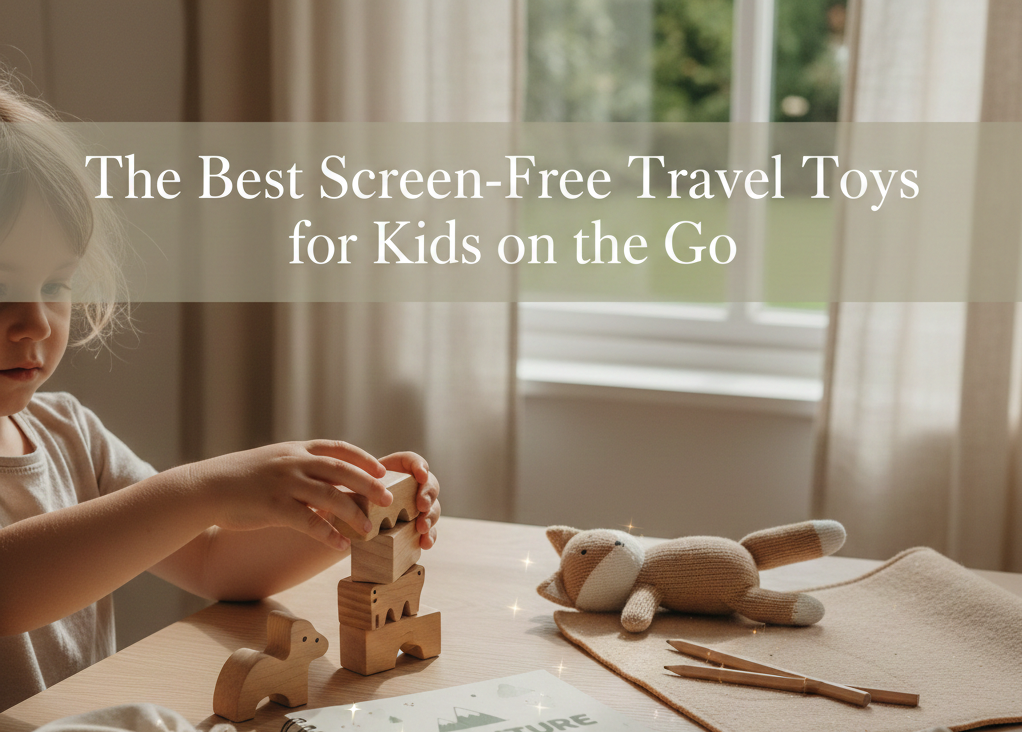
Embracing screen-free play is saying yes to creativity and imagination flooding into these travel pockets. A humble bag of stacking blocks can turn a gate wait into a spontaneous construction zone. Sticker pads, reusable busy books, and sensory kits, also known as textured cards or soft lacing beads, let them experiment, craft narratives, and construct their own silent universes.
In these moments, boredom is not an issue to be quashed but a portal to discovery. Kids typically begin with “I’m bored” and then gradually float off into their own world, employing a bag of felt shapes or a travel drawing board to conjure up new play. This type of play builds cognitive muscles, providing the nervous system with precisely what it craves: slow, predictable stimulation.
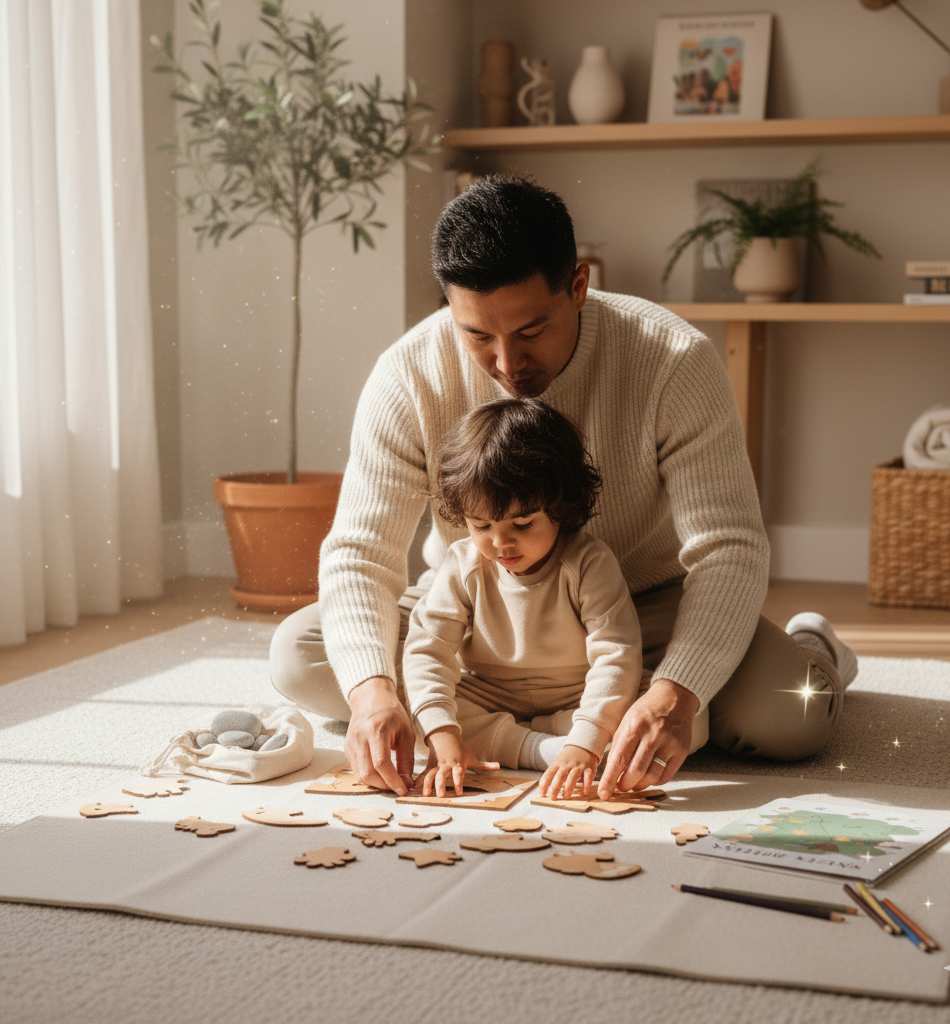
Travel offers a unique opportunity for families to reconnect without the distractions of notifications. Screen-free travel toys nurture these connections, allowing for shared experiences. Playing a memory match game or a simple pattern game together keeps conversation flowing and attention shared, enhancing the overall travel experience.
It’s not about occupying every moment, but about allowing kids to take charge and providing options, such as “Would you like to attempt the sticker pad or the lacing kit?” so they feel empowered. This decision cultivates involvement, and the group gaming establishes family traditions that kids recall well beyond the vacation concludes.
Fine motor skills thrive in the real world with hands-on work. Ton threading, sticker peeling, and tracing lines in a quiet workbook activate muscles and minds. Montessori-inspired toys, such as wooden stacking rings, small puzzles, and sensory cards, encourage repetition and mastery.
Research shows that children accustomed to regulated, screen-free activities, like those found in a Montessori environment, tend to self-regulate better and experience fewer public tantrums. These activities help soothe and organize their nervous systems, making travel smoother for everyone.
Need consistent, quiet thinking play that holds attention beyond the trip? Use Tiny Thinks screen-free workbooks built for sustained, independent focus.
Reducing device reliance isn’t about perfection. It’s about providing genuine, practical options. Screenless rituals — a ‘travel drawing ritual’ or a story-telling session with picture cards — become touchstones for future journeys.
Tiny Thinks™ Workbooks and the Free Calm Pack were designed for these exact moments: portable, easy to use, and intentionally built for focus and calm. Parents who test them usually report quieter rides, fewer breakdowns, and more independent play. The soft-bound format of Tiny Thinks™ pages lulls children to sleep fast, ensuring they are the trusted companion for any journey.
How to Choose Screen-Free Travel Toys
How to Choose Screen-Free Travel Toys for Kids ages 3–7
Traveling with children can be overwhelming. The idea is to keep kids focused, calm, and engaged without resorting to fast-moving screens, particularly on long trips or during stressful transitions. Below we break down what to look for, how to match toys to different travel situations, and why regulation-first tools like Tiny Thinks™ can make the biggest difference.
1. Age and Stage
Getting the right toys for your child’s age is important for safety and interest. A three-year-old will require chunky pieces, simple puzzles, or sensory toys like playdough, whereas a six-year-old may gravitate toward small construction kits or logic games.
Toys that encourage development, such as tracing cards, matching or threading beads, develop early reasoning skills and fine motor control. Go for travel toys that grow with your child. Zipper and button busy boards do the trick for toddlers, but a set of stacking cubes or a coloring book fit preschoolers and hold their attention longer.
Most importantly, select items that encourage independent play. This provides your child with a feeling of control and makes you more calm in managing travel stress.
2. Travel Type
Your toy selections are defined by the nature of your trip. Airplane travel requires really small toys, such as magnetic drawing boards, sticker books, or tiny busy bags that all travel well in a carry-on.
Car rides permit slightly bigger selections, as long as bits will not roll away. Longer trips lend themselves to toys you can distribute like a new surprise every hour. If your family will be at hotels or restaurants, pack a few multi-purpose toys, such as a travel-size puzzle or a reusable coloring set.
Tailor your toy kit to your setting and length to keep kids occupied and peaceful.
3. Toy Footprint
Space is important. Lightweight, compact toys minimize clutter and simplify packing. Foldable boards, mini pouches of art supplies, or miniature building sets are perfect.
Don’t overpack by creating a shortlist of necessities. Multi-use toys, such as a kit that is both a stacker and a sorter, maximize play value and save room. Put toys in individual pouches or zip bags.
This way, your child can grab a toy on their own and nothing goes missing during the trip.
4. Play Potential
Shoot for toys with high play potential, meaning toys that have multiple ways to play and can adapt to different moods. Whether it’s building sets, mosaic sticker kits, or a set of washable crayons with blank notebooks, these types of toys promote creativity and encourage sustained focus.
Open-ended toys can be stacked, sorted, or constructed into patterns, providing more play value than one-trick-pony toys. For families with multiple children, think about toys that encourage teamwork, such as card games or basic board games, to enhance social interaction on the road.
|
Toy Type |
Age Suitability |
Play Potential |
Size/Portability |
|---|---|---|---|
|
Busy Board |
3–5 |
High (sensory) |
Compact |
|
Building Blocks |
4–7 |
High (creative) |
Small pouch |
|
Sticker Book |
3–7 |
Moderate |
Ultra-compact |
|
Tiny Thinks™ Kit |
3–7 |
Very High |
Minimal, flat |
|
Coloring Set |
3–7 |
High (creative) |
Flat/foldable |
|
Fidget Toys |
3–7 |
Moderate |
Pocket-sized |
5. Safety First
Safety first, as always. Make sure they’re age appropriate and stay away from small parts for kids under 3. Select non-toxic, tested toys and favor durability.
Travel is hard on stuff. All trustworthy toys will provide safety certifications and it’s worthwhile checking before you pack. Tough, quality toys can survive the voyage and reduce the potential for breakage.
Tiny Thinks™ Workbooks and the Free Calm Pack are designed for these realities: compact, regulation-first, and tailored for focus, calm, and skill-building. They demand absolutely no preparation, function in any environment, and kids LOVE them.
For parents in need of immediate screen-free salvation, these toys provide no less practical calm in the real moments that count.
The “One New Thing” Rule
The ‘one new thing’ rule is an easy, principle-first solution for families on the road with kids 3–7. This ingenious rule operates by injecting only one new toy or activity at the beginning of every trip — long-haul flight, car ride or train journey. This strategy harnesses kids’ innate curiosity and it is calibrated to maintain excitement at a sane level and avoid the overstimulation that typically triggers meltdowns.
The new-toy-ness gives a definite, predictable place to focus, which quiets jittery nerves and directs energy toward hopeful anticipation, not stress. Selecting one new thing isn’t about saturating hours with diversion. Instead, it’s about throttling the pace and giving a soft landing to the travel experience. Kids feel VIP when they get to choose a new toy themselves, and this sense of agency can soothe their nervous system.
For a four-year-old, perhaps a chunky wooden puzzle with animals. For a six-year-old, perhaps a mini logic puzzle or a new pack of colored pencils. The secret is allowing the child to assist in selecting, offering them a voice while maintaining the moment you’re peaceful but organized!
The new toy turns into a good behavior reward. Parents might say, “Once we’re settled in and hear the safety talk, you can open your new toy.” This creates a positive feedback loop: good behavior earns something special, and the toy itself is associated with a predictable routine. As they grow, kids begin to associate travel with anticipation and confidence — not just standing around or ambiguity.
My kids’ own families swear by this as it diminishes tantrums and whining during delays. Others observe their child is more relaxed, focused, and less apt to request a screen. By getting with the new toy first, you establish a strong tone for the voyage. It’s a bonding experience, sitting side-by-side, ripping open the package, discovering the components.
For a child, it’s a memory that stands out: “Remember the trip when I got the animal matching cards?” This moment can ground the rest of the adventure, helping the whole experience seem less overwhelming and more magical. Toys are regularly rotated, bringing one new thing each trip, to keep the magic alive and boredom at bay. It prevents the suitcase from becoming inundated with unplayed-with toys, a blessing for families living in close quarters or enduring five-hour travel days.
The ‘one new thing’ rule is not a one-size-fits-all approach. Some kids with sensory sensitivities or obsessive interests may require an alternate approach. It’s about experimentation, observing what appeals to your kid, and tweaking. For ages 3–7, both parents report that slow, structured toys—matching cards, a simple maze, or Tiny Thinks™ activity pages—tend to hit the sweet spot for quiet focus.
Many families begin with the Free Calm Pack or test out an age-appropriate Tiny Thinks™ Workbook as their “one new thing.” Both are purposefully paced and not hyper-stimulating, which makes them a dependable, screen-free travel choice!
Curating Your Travel Play Kit
A well-curated travel play kit keeps kids 3 to 7 entertained and regulated on long journeys, whether by car, train, or plane, without resorting to screens. By providing the perfect travel toy balance of toys and activities, children are less apt to spiral into boredom or overstimulation, ultimately making travel more pleasant for all involved. It’s not about perfection or strict guidelines, but giving parents actual, actionable tools to address those pressure points where screens typically intervene.
Building a varied kit begins with paying attention to your child’s present interests and play habits. A few kids tend toward puzzles or silent sketching. Others require the tactile stimulation of snap-together blocks or fidget toys. For ages 3 to 7, it’s important to include age-appropriate options: simple matching cards, magnetic tangrams, sticker scenes, and small, safe building sets.
Switching a few new items in and out keeps the kit fresh. Something as simple as a new set of reusable stickers or a mini sketch pad can re-energize a child’s attention. Consider more than just slick tech. Classic implements such as chunky crayons, threading beads, and a small memory game still beckon craft and slow cognition, even from a cramped airplane seat.
Balance, of course, is crucial. Combine these with an active play item or two, such as a soft ball or stackable cups, for on-the-fly games at rest stops. Quiet activities, such as our Tiny Thinks™ Workbooks or our calming tracing cards, are a godsend during long waits or when you’ve been exposed to overstimulation.
These slow, organized tasks provide a child’s nervous system the consistent stimulation it requires to calm down. At other times, active choices assist in working off fidgetiness in ways that screens can’t.
Organization counts! A special travel bag or pouch with transparent pockets simplifies the process for kids to locate desired items and for parents to monitor components. Select things that are hard-wearing, cleanable, and not too precious. Travel is uncertain, and losing a puzzle piece shouldn’t wreck the journey.
Everything should be portable, with nothing that is heavy or hard to set up. A simple but easily forgotten step is refreshing the kit regularly. Swapping out one or two items before each trip, such as a new logic puzzle or a different set of Tiny Thinks™ Calm Pack pages, keeps the experience novel and helps eliminate the urge to request a screen.
Kids observe when their kit matches their shifting interests and even minor tweaks can renew excitement. For parents seeking dependable, effective, screen-free instruments that operate wherever you are, Tiny Thinks™ Workbooks and the Free Calm Pack can be lugged along on any adventure.
These age-based, regulation-first activities are purpose-built for travel, lightweight, mess-free, and centered on calming the brain through structure and soft cognitive challenges. Unlike many off-the-shelf toys that provide temporary diversion, Tiny Thinks™ encourages genuine concentration and silent immersion, the kind of engagement a majority of families need while traveling.
Engaging Toys for Travel
Screen-free travel toys for ages 3–7, like friendly travel toys and montessori travel toys, serve a practical purpose: quiet focus, gentle hands-on play, and regulation on the go. Here is a recap table of the travel toys you should consider, with features and benefits applicable for actual family travel situations.
|
Toy Type |
Features |
Benefits |
|---|---|---|
|
Coloring Books/Sketch Pads |
Compact, reusable, low-mess |
Encourages creativity, quiet play |
|
Magnetic Tiles |
Easy to assemble, travel pouch included |
Develops spatial reasoning, teamwork |
|
Fidget Spinners/Cubes |
Small, tactile, silent |
Supports focus, reduces restlessness |
|
Sensory Balls/Jars |
Textured, squeezable, safe materials |
Calms nerves, stimulates senses |
|
Interactive Soft Books |
Lightweight, washable, fine motor activities |
Ideal for toddlers, easy to clean |
|
Puzzle Games |
Portable, multiple difficulty levels |
Problem-solving, independent play |
|
Portable Puppet Sets |
Soft, story-based, fits in carry-on |
Imagination, social learning |
|
Mess-Free Art Kits |
No liquid/paint, reusable pages |
Clean creativity, easy pack-up |
|
Musical Shakers |
Soft sound, compact size |
Entertaining for younger children |
Quiet Creators
Easels and crayons aren’t exactly practical for long rides. Compact coloring books and sketch pads provide a dependable outlet for silent artistry. Many parents swear by travel-safe art supplies like waterless markers or reusable drawing boards that avoid mess while still letting kids get creative.
These activities are simple to pass between siblings and do well in the tight quarters of an airplane seat. Take-along puppet sets or tiny dolls get their imagination going! This fantasy play is soothing, particularly when you’re stuck somewhere with a long delay.
Soft, interactive books are handy for toddlers, providing tactile stimulation and basic tasks that encourage the growth of fine motor skills. Try them out at home first to make sure they actually entertain your child when you need it most!
Fidget Friends
The best fidget toys are those that fit your child’s sensory needs! Favorites are squishy stress balls, textured cubes, and silent spinner rings. Here’s a brief checklist for ages 3–7:
- Squishy balls: Squeeze for sensory feedback and calming for anxious hands.
- Spinners/cubes: Small, pocket-sized, keep fingers busy without noise.
- Sliding puzzles: Compact, challenge focus, easy to store.
- Pop-it boards: Press and pop. This repetitive motion can help regulate energy.
Basic puzzles or logic games can occupy downtime and offer mild mental stimulation. Packing these in a clear zip bag keeps them within easy reach and easy to clean between uses.
Busy Builders
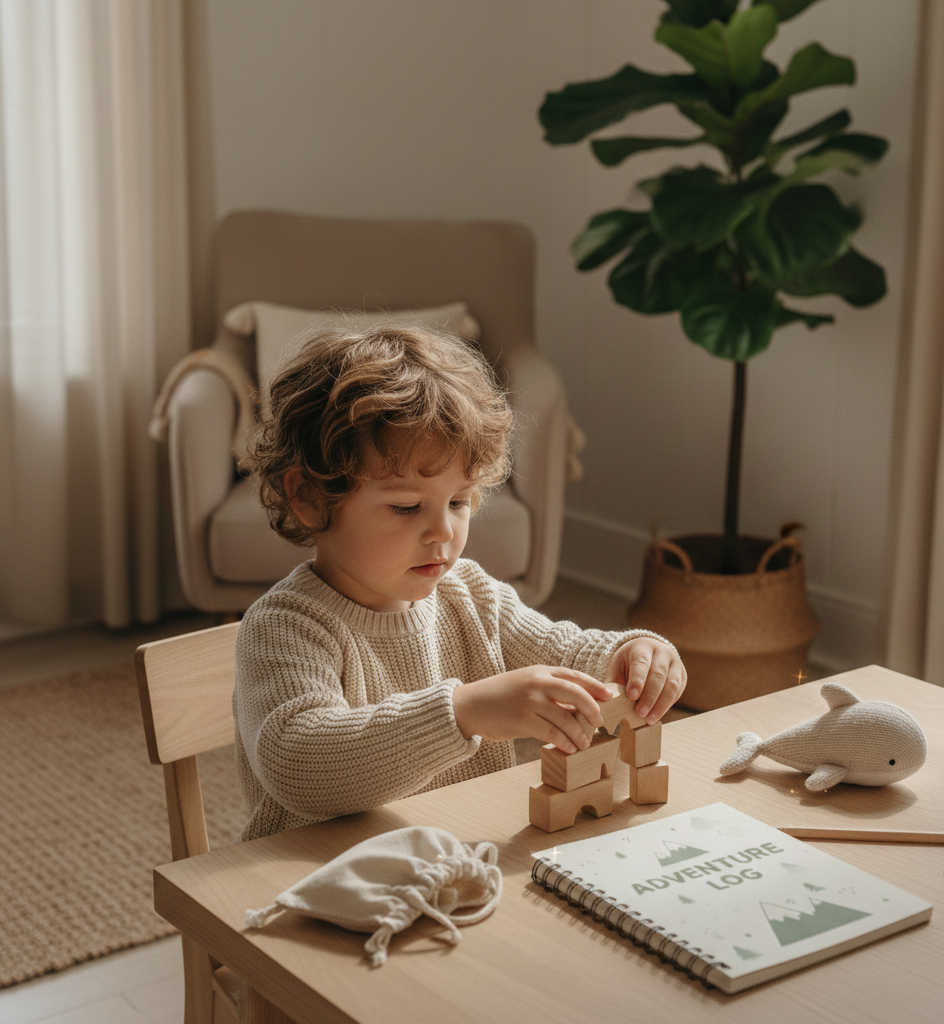
Magnetic tiles and mini LEGO sets provide open-ended building that encourages problem-solving and fine motor skills. Find sets that include tough little travel cases with pieces that are too large to lose. For siblings, a little bigger set fosters collaboration by sharing pieces and building together.
With quick draw and pack-away options, these are perfect for short layovers or long flights. Building toys encourage spatial reasoning and can get kids used to following easy directions. This active play is particularly helpful for kids who require a little more containment after an overstimulating travel day.
Sensory Seekers
For kids who seek sensory stimulation while on the move, tactile balls, jewel-toned bead sensory jars, and plush shakers are winners. These toys stimulate touch, vision, and sound without filling the space. Squishy toys and sensory jars encourage exploration and can divert fidgety energy in confined spaces.
Stick to toys marked safe for 3 to 7 year olds. Make sure they are sturdy, washable, and pack easily. Sensory play on the road encourages exploration and promotes peaceful, adaptively regulated behaviors when schedules are thrown off.
Tiny Thinks™ Workbooks and the Free Calm Pack combine all these strengths: hands-on, mess-free, and intentionally designed for focus and regulation. They pack into any carry-on, provide instant soothing structure, and evolve alongside your child’s cognitive abilities. Kids pick these instead of screens because they are actually fun.
The Post-Trip Toy Reset
Post-travel toy reset — this one gets overlooked too often but it can silently revolutionize the way kids 3–7 get back into the swing of things. This is so much more than just tidying up, particularly for families who are striving to reduce screen time and develop peaceful, well-organized spaces. Rather than just shoving toys back in bins, the reset is an opportunity to review, reflect, and refresh with a regulation-first mentality.
For some parents, it’s a useful clutter control strategy to prevent play spaces from becoming overwhelmed, while others fret it sounds tedious or time-consuming, especially with suitcases still open and exhausted kids underfoot. Both are legitimate points of view, but by engaging kids in the task, you can make it a soothing post-vacation rite of passage that cultivates independence and self-control.
Empowering kids to go through their travel toys and pick which to keep or donate provides them a sense of ownership. Kids realize when their shelves and baskets are too full, just like we do. By diffusing the post-trip toy influx and posing basic queries—“What ones did you enjoy using on the plane?” or “Anything you didn’t really use?”—parents assist kids in processing what they actually liked.
For some families, this is as simple as sorting into piles: keep, donate, or pass along to a friend. Even three-year-olds can identify favorites, and older kids can assist in the decision. While the process can be time-consuming, the benefits are clear: less clutter, more space for focused play, and opportunities to reinforce decision-making skills.
Leveraging the reset to rejuvenate the toy stash clears room for new, screen-free alternatives. Post-trip, kids’ interests change—they come back raving about a new animal they spotted, a puzzle they completed, or a doodle they made in a waiting room. This is the time to pull out a new activity book, a new puzzle, or a Tiny Thinks™ Free Calm Pack that aligns with their current interests.
For parents in search of gentle, dopamine-calming solutions to screens, these purposeful swaps pack a punch. By rotating out old toys and introducing Tiny Thinks™ Workbooks, you can create that newness balance without the overstimulation of digital content.
Talking about favorite travel memories associated with specific toys reinforces the good stuff. Kids might recall constructing a block tower on a long layover or quietly following lines in a pattern book over dinner. These stories ground toys in significance, not just in the escape they facilitated.
Other families like to leave a favorite drawing out or save a special sticker as a trip memento, making the reset a moment of reflection and gratitude. I love involving the kids when it comes to putting away and caring for their toys. It’s a great exercise in responsibility and independence.
Even these easy actions, such as setting toys in baskets, cleaning a suitcase, and organizing puzzles, cultivate habits that nourish self-control. For parents craving instant, calm-centric post-travel engagement, our Tiny Thinks™ Free Calm Pack and age-specific Workbooks are designed to reflect quiet, independent work, helping kids reset into those home routines without the screen-withdrawal meltdown.
Need a reliable, no-prep calm option for planes, cars, and waiting rooms? Keep the Tiny Thinks Free Calm Pack within reach.
Conclusion
Traveling with kids 3-7 can be full of wiggles and screen demands, particularly when you’re stuck in a car, plane, or waiting room. Selecting screen-free travel toys provides families an actual tool to hush that bug. Easy, tactile toys with quick rules, like matching cards or pattern blocks, provide little minds something to occupy themselves while calming the sensory overload that accompanies travel. By rotating only one toy or activity each trip, you can keep it fresh without straining your baggage. Post-trip, having travel toys stowed away for a bit makes them extra special. With a little forethought, travel can be your family’s most zen, connected time of their lives experience — no screens required!
Frequently Asked Questions
What are screen-free travel toys?
Screen free travel toys, as the name implies, are toys that don’t involve any digital screens. Think puzzles, coloring books, building sets, and card games. Such toys keep little ones active and amused instead of glued to a screen.
Why choose screen-free toys for travel?
Screen-free toys, including friendly travel toys, promote creativity, problem solving, and social interaction, making travel fun for restless children while minimizing eye strain.
How do I pick the best screen-free toy for travel?
Toys that are small, light, and easy to clean. Think about your child’s interests and age. Try to find things that are versatile and can be used in many different ways.
What is the “One New Thing” rule?
One new thing rule for screen free travel toys. This keeps kids inquisitive and engaged while not overloading them with choices.
Can screen-free toys help during long journeys?
Yup, friendly travel toys are perfect for keeping the kids occupied on road trips! They will help you kill time, stave off boredom, and encourage screen-free learning and creativity.
How should I organize travel toys?
Utilize small bags or boxes to divide the different toys, including a perfect travel toy selection of flexible items your child loves. Store the kit neatly and in an easy-to-reach location for stress-free travel.
What should I do with travel toys after the trip?
Once the trip is over, clean up and put away for next time. Rotate them along with their other toys at home.