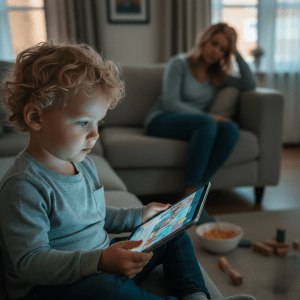
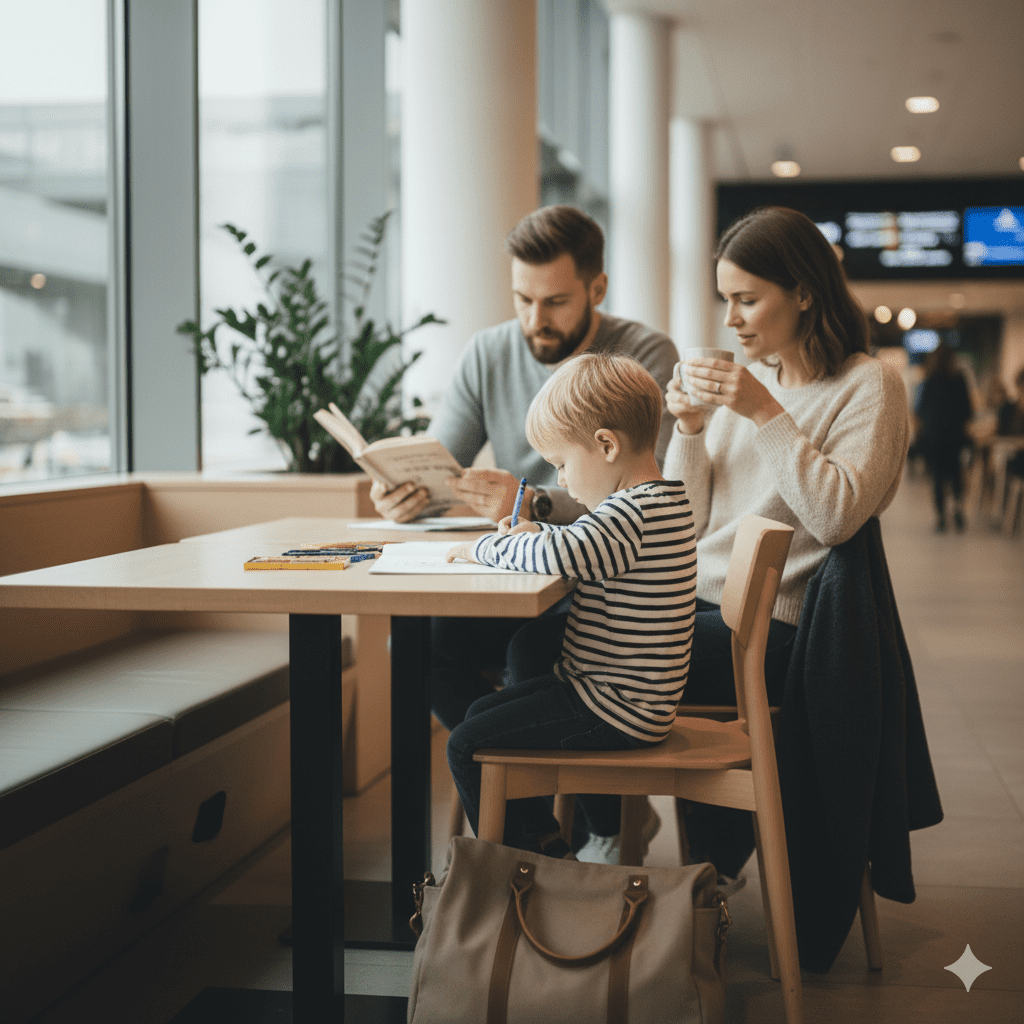
Gentle focus, sensory regulation, and slow attention-building — even for wiggly kids.
Parents search for the same question in a hundred different ways:
- “How do I calm a child who can’t sit still?”
- “Why won’t my child focus?”
- “What are quiet activities for hyper kids?”
- “How do I help my child settle after school?”
- “What calming activities actually work for active kids?”
This guide is built to surface for all of them. And here’s the key truth every parent needs (and why most “just try colouring” advice doesn’t work): Kids don’t struggle to sit still because they’re misbehaving — they struggle because their nervous system is overwhelmed.
As Dr. Becky Kennedy puts it:
“Kids aren’t giving you a hard time — they’re having a hard time.”
When a child is overstimulated, excited, dysregulated, or in “wiggly mode,” the goal isn’t to stop the movement.
The goal is to offer activities that match their nervous system where it is, then bring it down gently.
Below are the 10 calm-but-engaging activities that work even for highly active children — backed by child psychology, sensory regulation principles, and thousands of parents using them daily.
Why Active Kids Struggle to Sit Still
Children ages 3–7 commonly experience:
- sensory overload
- high internal energy
- incomplete regulation after school
- dopamine seeking
- low frustration tolerance
- immature impulse control
Plus, most “quiet activities” are either:
- visually overwhelming
- too open-ended
- too high-cognitive-load
- boring and unstructured
So the child bounces off the activity instead of sinking into it.
Calm attention requires:
simplicity → structure → gentle dopamine → visual order → slow pacing
This is exactly the design logic behind Tiny Thinks™.
10 Calm Activities for Kids Who Can’t Sit Still
Slow, engaging, and not visually chaotic.
1. Pattern Matching (Fast-to-Calm Transition)
Active kids need a quick success hit to settle.
Pattern matching gives them:
- “I can do this” wins
- clear start and finish
- visual predictability
- dopamine without chaos
This is why every Tiny Thinks™ workbook opens with hyper-simple pattern pages — the nervous system softens within 30–60 seconds.
👉 Try the free sample pack here.
2. Tracing Slow Paths (Regulates Movement Into Focus)
Active kids don’t need to sit still immediately.
They need controlled movement.
Tracing:
- slows the breath
- supports vagus nerve regulation
- gives quiet, repetitive motion
- organizes visual attention
It’s calmer than colouring and easier than writing.
In Tiny Thinks™, every tracing page uses long, slow curves to deepen regulation.
3. Sequencing Cards (Organizes Chaotic Thoughts)
Active kids usually have “mental ping-pong.”
Sequencing tasks provide:
- linear order
- left-to-right flow
- step-by-step clarity
- cognitive grounding
Dr. Becky Kennedy would call this “providing a scaffolding for the brain.”
In Tiny Thinks™, sequencing is built with clean spacing and low-stimulation artwork to prevent overwhelm.
4. Spot-the-Difference (Slow Visual Scanning)
Perfect for wiggly kids because it:
- engages the brain
- slows the eyes
- narrows attention
- reduces fidgeting
Tiny Thinks™ illustrations are intentionally detailed-but-calm — hand-drawn scenes with soft textures, warm tones, and enough micro-details to pull attention in without overstimulating.
5. Simple Logic Mazes (One Direction, One Decision)
Children can’t calm down if the cognitive load is too high.
Tiny mazes with:
- one path
- one direction
- one outcome
give the brain “just enough” challenge to engage without chaos.
6. Quiet Observation Pages
Kids who fidget crave stimulation — but not noisy stimulation.
Observation tasks give:
- slow looking
- patient scanning
- tiny discoveries
- gentle reward
These are the pages that keep kids calm on flights, trains, restaurants, and waiting rooms.
7. Sorting Tasks (Order = Emotional Safety)
Sorting resets overstimulation in minutes because:
“Children regulate through less, not more.” — Dr. Becky Kennedy
Sorted items = sorted feelings.
In Tiny Thinks™, every sorting task uses soft neutral palettes to avoid sensory overwhelm.
8. Draw-the-Missing-Piece (Micro Creativity, Low Chaos)
Active kids need creativity in controlled doses.
This works because:
- it’s not open-ended
- provides a clear prompt
- avoids decision overload
- gives gentle autonomy
Micro creativity calms better than full-page drawing.
9. Slow Shadow Matching
The brain must slow down to match shape-to-shape.
This improves:
- attention span
- precision
- visual focus
- body stillness
It’s one of the most successful activities for high-energy 4–7 year olds.
10. Structured “Find and Circle” Tasks
These turn scanning into a calming routine.
Benefits:
- predictable success
- low-stress repetition
- simple motor action
- dopamine in small intervals
Tiny Thinks™ uses softly illustrated scenes with subtle, hidden objects to keep children focused without sensory overload.
Why These Activities Work Better Than Colouring
Colouring is:
- too visually busy
- too open-ended
- too much motor planning
- too little structure
Active kids need guided calm, not creative chaos.
How Long Should These Activities Last?
For wiggly kids:
- 3–4 year olds: 5–10 minutes
- 4–5 year olds: 8–12 minutes
- 5–7 year olds: 10–20 minutes
Consistency beats duration.
Tiny Thinks™ pages are designed intentionally for these time windows — not too long, not too short.
A Simple “Calm Transition” Routine for Active Kids
Use this anywhere — home, car, restaurant, travel.
- Start with 30–60 seconds of pattern matching
- Move into tracing for 2–4 minutes
- End with a structured page (maze, observation, spotting)
This gives:
- quick dopamine
- then slow motor control
- then deep focus
Parents consistently report:
“For the first time, my child can sit calmly for 10–15 minutes.”
The Tiny Thinks™ Approach for Kids Who Can’t Sit Still
Every workbook issue is built for:
- high-energy kids
- sensory-sensitive kids
- children who get overstimulated easily
- neurodiverse-friendly calm routines
- predictable, low-mess, slow-paced engagement
Each illustration is hand-drawn with:
- soft Scandinavian palettes
- low-stimulation scenes
- micro-details that invite, not overwhelm
- structured layouts that feel safe to the brain
This is why Tiny Thinks™ works where most worksheets fail.
👉 Browse the collection here:
https://ourtinythinks.com/shop-workbooks
👉 Download the free sample pack (pattern + tracing + calm pages): https://ourtinythinks.com/ai-for-kids/screen-free-kids-workbooks-download/
FAQ
What activities calm a hyper or active child?
Pattern matching, tracing, sequencing, observation pages, simple mazes, and structured scanning activities.
What helps a child who can’t sit still focus?
Activities with low cognitive load, predictable steps, and slow movement — not open-ended tasks like colouring.
Why is my child overstimulated and wiggly?
Sensory overload, dopamine seeking, fatigue, transitions, and lack of structure.
How do I calm a busy child quickly?
Offer a predictable, visually simple task that provides instant success.
{ “@context”: “https://schema.org”, “@type”: “Article”, “headline”: “10 Calm Activities for Kids Who Can’t Sit Still”, “description”: “A gentle, psychology-backed guide that explains why active children struggle to sit still and provides 10 slow, sensory-safe activities that reduce overstimulation and help kids focus without screens.”, “image”: “https://ourtinythinks.com/wp-content/uploads/featured-image-calm-kids-activities.jpg”, “author”: { “@type”: “Organization”, “name”: “Tiny Thinks™” }, “publisher”: { “@type”: “Organization”, “name”: “Tiny Thinks™”, “logo”: { “@type”: “ImageObject”, “url”: “https://ourtinythinks.com/wp-content/uploads/tiny-thinks-logo.png” } }, “mainEntityOfPage”: “https://ourtinythinks.com/insights/calm-activities-for-kids-who-cant-sit-still”, “keywords”: [ “calm activities for kids who can’t sit still”, “calming activities for active kids”, “activities for hyperactive kids”, “Montessori calm activities”, “sensory-safe activities”, “quiet-time ideas for busy kids”, “screen-free focus activities” ] }