
- Key Takeaways
- Understanding Toddler Overwhelm
- The Calm Kit System
- Building Your Toddler’s Calm Kit
- How to Introduce It
- Calm Kits on the Go
- Why This Method Works
- Conclusion
- Frequently Asked Questions
Key Takeaways
- Understanding when toddlers are overwhelmed, whether they throw a tantrum or withdraw, allows adults to intervene sooner and avoid an eruption.
- A Calm Kit provides toddlers with an appropriate outlet for big feelings, particularly in overstimulating or new environments where emotional regulation suddenly feels out of reach.
- By customizing the Calm Kit with touch, sight, sound, movement, and comfort items, you’re supporting their individual sensory needs while establishing a calming ritual.
- Use it not as a punishment or quiet-time tool, but present it during calm moments and model it to toddlers so they feel comfortable and excited to use it on their own.
- We’re big fans of Portable Calm Kits because they are great for travel and outings!
- By employing a Calm Kit, you’ll create both security and independence that empower your toddler to take charge of their own emotions while deepening the connection between child and parent.
This guide is for parents of children ages 3–7 who want calmer days — especially during transitions like after school, mealtimes, travel, or bedtime.
When days feel chaotic during transitions like after school or before dinner, families use a predictable calm structure instead of improvising in the moment. The Tiny Thinks™ Free Calm Pack provides that structure immediately, without screens or setup.
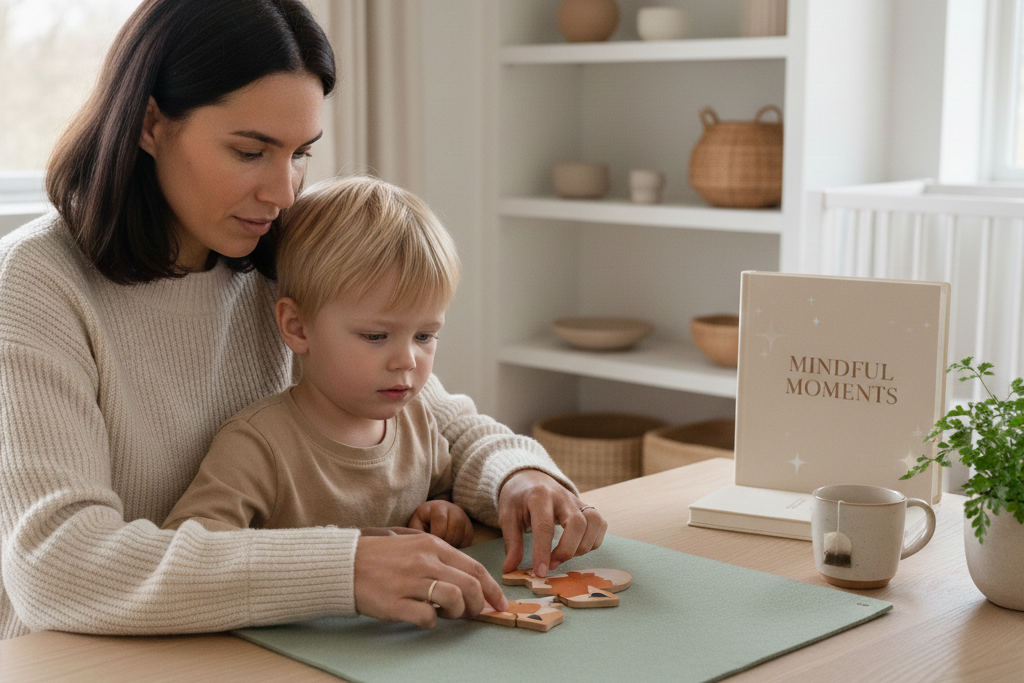
A calm kit for toddlers is an intentional collection of silent, sensory activities to help little ones calm down and engage in moments of overwhelm.
These kits use simple, easy-to-do activities to help reinforce focus, sequencing, and solo play, especially when screens or overly stimulating toys have left a child’s senses overloaded.
As parents, we often turn to calm kits during after-school meltdowns, travel, or bedtime wind-downs, relying on their predictable structure to restore regulation and create calm, quiet engagement.
Understanding Toddler Overwhelm
Toddlers getting overwhelmed is common. It’s a natural reaction to a world that often feels too fast or too loud for little kids to take in. Busy environments, sudden sounds, hectic schedules, or even just a pile of new toys can trigger a child’s nervous system into overwhelm. What seems like a small interruption to adults—an up-turned spoon, a blaring TV, a loud voice—can feel enormous to a three-year-old.
Their rapidly developing brains, already about 80% of adult size by age three, are flooded with sensory input they don’t yet have the tools to process. Overwhelm isn’t always dramatic. Sometimes it shows as a full meltdown—yelling, tears, or throwing things. Other times, it’s quieter—kids withdrawing, being secretive, or simply refusing to communicate.
This is not misbehavior or a lack of discipline; it’s dysregulation. For children under three, most regulation is external. By ages three to five, they begin building their own toolkit, but it’s a rough, uneven process that can change overnight. A toddler who happily played in playgroup last week might cling to a parent or refuse to join in this week.
When a child’s world becomes too loud, bright, or unpredictable, their emotions can spiral. You may notice quick mood changes, inflexible requests, or a desperate search for screens and snacks. These are cues that the child needs structure and a way to reset. Without intervention, toddlers stay overwhelmed, making it harder for them to manage transitions, follow routines, or engage peacefully with others.
Research supports what many parents sense: early exposure to emotion vocabulary and calm co-regulation predicts stronger social skills and smoother school transitions later. Addressing overwhelm isn’t about removing all challenges—it’s about providing the right anchors. Predictable, quiet activities like matching pictures, tracing lines, or gentle breathing exercises give the child a tangible point of calm.
Breathing paired with movement helps regulate both body and mind. Teaching kids words for their emotions and giving them simple steps to follow builds confidence and self-regulation. These calm, low-noise activities aren’t distractions; they lay the foundation for independence and patience.
This is the genius of Tiny Thinks™. The Free Calm Pack is a handy relief tool that you can grab during a stressful moment. It’s not entertainment, nor a reward. It’s a structured, visually soothing system that calms kids quickly, supports concentration, and lets them return to solo play.
For parents looking for a trusted tool during after-school decompression, travel, waiting rooms, or bedtime wind-downs, Tiny Thinks™ workbooks extend this same approach. They remain predictable, kid-led, and completely screen-free.
The Calm Kit System
About The Calm Kit System
A Calm Kit is a regulation-first toolkit for parents who desire a dependable, screen-free solution to support toddlers in managing feelings and calming during moments of high friction. It’s not a condemnation of screens, but a choice for families craving lower-stimulation options.
This system is flexible and supports neurodivergent kids, kids with alternative support needs, and basically any kid who just loves a quiet moment after a busy day. Every Calm Kit is customized—what calms one child may not calm another—so contents are adjusted to age, interests, and regulation needs.
It’s designed to foster independent initiation, be a tool for self-regulation, and establish a reliable, easy-to-access framework kids and parents can turn to during after school decompression, screen transitions, meals, travel, and waiting.
A Proactive Tool
The Calm Kit is a proactive, not reactive, tool. It’s not just for meltdown babysitting. When parents introduce the kit into the mix on a daily basis before the pressure mounts, it becomes normal, comfortable and simple for a child to select.
Setting the kit within reach after school or bringing it to a doctor’s office or family gathering reminds the kid that a safe, quiet alternative is an option. This preemptive readiness prevents escalation. Kids start reaching for the Calm Kit before frustration even strikes.
Already, just having a known, tangible kit nearby softly decreases screen dependence by providing an organized solution that functions in the moment. Using it daily builds consistency.
Parents who model Calm Kit use—demonstrating to the child how to pick an activity, how to use a sensory tool, or how to pause and breathe—experience kids begin to take these steps on their own. Some days the parent will sit with them, other days they will play alone.
Tedium trumps innovation. Kids discover that the Calm Kit is dependable, not a ‘special treat’ and they start to gravitate towards it during tough times.
A Sensory Approach
Sensory play is the foundation for nearly all successful Calm Kits. It assists toddlers in working through emotions via tactile, visual, auditory, and even kinetic means. The sensory toys interrupt the flood of feelings and the child’s feet are firmly planted in the here and now.
Tactile activities, like kneading a soft stress ball or shaking a sensory bottle, provide instant soothing feedback. Below is a table categorizing typical Calm Kit items by sensory engagement:
| Sensory Engagement | Example Items |
|---|---|
| Tactile | Stress balls, soft fabric, putty |
| Visual | Sensory bottles, calm-down jars |
| Auditory | Rainmakers, gentle shakers |
| Olfactory | Scented play dough, lavender sachet |
| Oral | Chewy jewelry, water bottle |
| Fine Motor | Simple puzzles, lacing cards |
Each child is unique. Some are drawn toward fidget toys, others toward coloring or quiet stacking games. We discover the right mix over time.
Parents make certain everything is safe and appropriate for the child’s age. The best Calm Kits grow up, where kids might create new uses for old favorites, such as sensory bottle races, texture layers, or improvised silent games.
A Connection Point
Calm Kits provide a soft landing, a tender bridge between mama and baby, nurturing connection during those difficult times. When a parent participates with their toddler in a calming activity, such as drawing, pattern making with blocks, or simply color matching, the kit is a shared experience, not just a diversion.
Establishing a consistent Calm Kit ritual, five minutes of quiet play after school, before dinner, etc., creates security. Kids know what happens next; predictability helps emotional regulation.
As parents, we can seize these moments to discuss emotions in phrases kids understand, modeling calm engagement that doesn’t involve over-explaining or dramatizing. Having an open line of communication is important.
Kids require a parent to demonstrate use of the Calm Kit. Others immediately seize control. Both strategies work. What counts is the regular, reliable framework and the call to recommune silently, non-coercively, unconditionally.
For families interested in this type of structured, screen-free support, Tiny Thinks™ has a free Calm Pack as a great place to start. For those times when your kiddo re-enters this system, age-specific Tiny Thinks™ Workbooks deliver extra regulation-first thinking play for in-between moments like dinner prep, travel, waiting rooms, and bedtime wind-down.
These aren’t enhancements or prizes; they are effective solace for when calming is required most.

Building Your Toddler’s Calm Kit
Calm Kit – A calm kit is a do-it-yourself, regulation-first toolkit for helping toddlers settle and refocus during moments of hyper-stimulation. It’s not a reward or even a distraction. It’s an easy, consistent framework rooting independent play and self-regulation, after school decompression, mealtime madness, screen transitions, travel, waiting rooms, and bedtime.
As with anything you construct for your child, this kit works best when it’s customized, stored for convenient access, and routinely updated according to your child’s evolving needs and interests.
Checklist for Core Items:
- Touch items (soft toys, fidgets, fabric swatches)
- Sight items (picture books, calming visuals, puzzles)
- Sound items (music, nature sounds, headphones)
- Movement items (balls, stretchy bands)
- Comfort items (blanket, favorite stuffed animal, soothing scents)
- Sensory tools (play dough, sensory bottles, teething rings)
- Personal choices (let your toddler help select favorites)
- Convenient, in-reach container (clear box or bag they can open)
- Rotate and purge as items lose their appeal.
1. Touch Items
Touch is something that should always be included in a calm kit. Plush pals, silicone fidgets, and swatches of textured fabric provide reliable, calming stimulation for active fingers. Stress balls, play dough, or silly putty work great for toddlers who crave sensory input.
Even a teething ring or cool gel pack can assist a teething tot in regulating. Include your child, allowing him to select favorite textures. The selection, the contact, and the manipulation of these objects is self-soothing as it decelerates sensory input and anchors their focus.
2. Sight Items
Visual objects are essential in any calm kit. Board books with bold, uncomplicated illustrations, cards featuring natural elements, or gently colored puzzles all assist in refocusing attention and promote quiet participation. Mazes and matching cards construct early thinking skills through low stimulation, pattern-based play.
Certain kids find solace in spinning tops or goofing off in mirrors. These options softly hold focus and disrupt the overstimulation cycle without overloading the senses.
3. Sound Items
Sound can control a toddler’s mood and surroundings. Mini iPods with lullabies, Zen music, or nature sounds, soft shakers, or chime toys, and noise-canceling headphones or hearing protection ear muffs are for the little ones who need things a little quieter, particularly in waiting rooms or in public transport.
Interactive sound toys, such as rain sticks or whisper tubes, encourage focused listening and auditory experimentation. Sound in the proper modality calms and aids in establishing a serene, contained space.
4. Movement Items
Movement is a release valve baked into toddlers. Pack a small soft ball, stretchy band, or beanbag for some soft action. Easy movement games, such as rolling a ball, stretching, or spinning a top, help expel accumulated energy.
These activities redirect attention from anxiety to body awareness. Some moments are for parent-child engagement, while others are for flying solo. Both types facilitate regulation and attention.
5. Comfort Items
Every kid needs something to hold on to. Whether it is a favorite blanket, soft toy, or parent’s scarf, they can anchor them during stress. Tossing in a sachet of lavender or a soothing scent adds another level of cozy.
The emotional security is just as important as the sensory input. Let your toddler choose their comfort object. When the world gets too large, a single perfectly selected item brings back security and peace.
That’s what Tiny Thinks™ is all about. Our Free Calm Pack brings some organization and hands-on interaction, ideal for beginners. For continuous regulation, our age-specific Tiny Thinks™ Workbooks employ serene, reliable design to develop attention, working memory, and independent thought.
No stress. No bribery. Not judging screens—just a consistent screen-free alternative that wins when your kid needs to come back down and find his or her calm.
How to Introduce It
That’s because introducing a calm kit for toddlers is more about establishing a predictable, low-stimulation alternative that integrates with your existing day. Calm kits such as Tiny Thinks™ are not a screen replacement; they offer parents a consistent alternative to screen time and a more controlled tool to help kids calm down after being over-stimulated.
It’s not to moralize or judge; it’s to provide a system that works when a kiddo needs to reset — be it after school, in travel, or before bed. By introducing a calm kit intentionally, with structure and consistency, children begin to understand the purpose and develop the habit of using it independently.
- Select a quiet, neutral time to present the calm kit, not during a meltdown.
- Sit down together and discuss in plain language what the kit is actually for. That is for when you want to relax or use it.
- Entice your kid to assist in organizing the kit or calm-down space by stashing some familiar or favored objects inside.
- Model using the kit yourself: Sit, breathe, pick up an item, and show gentle focus.
- Practice together: Use the kit for five to ten minutes each day at a predictable time, such as after school, before dinner, or after a bath.
- Try inviting your child to use the kit with you in those small moments of overwhelm. “Let’s take a quiet break together.”
- Wrap it up with positive reinforcement. For example, you can say, “I saw you took out your calm kit when you started feeling wiggly. Well done.”
- Promote independent use as your child becomes familiar and softly recede as they demonstrate readiness.
- Keep the space cozy and visually calm: soft lighting, minimal clutter, neutral colors, and a comfy seat.
From Experience: A calm kit works best when it’s woven into ordinary, everyday moments — not held in reserve as a last ditch effort. For instance, following a boisterous playdate, you can mention, “This is a good time for our quiet kit.
As a way of introduction, during long travel or waiting room stretches, provide the kit as a front line implement instead of a fallback. Kids react positively to observing parents model calm, slow experimentation with the kit. Sitting side by side and tracing patterns, pairing pictures, or just hugging a snuggly bear sends a strong message.
My Tiny Thinks™ Free Calm Pack is made for just these occasions. It’s organized, low-arousal, and designed for reuse. The pages are visually sparse and tangible, encouraging attention and self-directed action.
There’s no “right way” to utilize it; the kids can begin, pause, and come back at will. For families wanting a more full-bodied, longer-lasting structure, our age-based Tiny Thinks™ Workbooks build out this experience, adding even more layers of pattern, sequencing, and silent cognitive play.
Both integrate into real life rhythms and don’t need special accommodations or continuous adult oversight.
Calm Kits on the Go
Portable calm kits provide an easy method for bolstering kids’ outside-of-home regulation. By having a mini Calm Kit on-the-go, parents can combat overstimulation and waiting room restlessness without scrambling or turning to screens. They’re small enough to fit in a bag or stroller and offer a neutral, predictable routine to stressful moments.
During repeat stress points like waiting rooms, travel delays, or pre-bed wind-down, families rely on a calm system that children already know how to use. Tiny Thinks™ Workbooks extend calm routines beyond one-off moments into daily life.
Calm kits are not only for toddlers; big kids and adults appreciate having self-regulation aids on hand, be it at the doctor’s office, on public transportation, or on family vacations.
Waiting Rooms
Calm kits in waiting rooms are a practical answer to long waits and last minute delays. A quiet toy, a pinwheel for slow breaths, and a few picture cards can transform a stressful wait into a tractable, even peaceful, span of time. Kids with a personalized stash of comfort items, be it a mini-moonie, a zip of sequenced cards, or a fidget toy, are less prone to hoo-hah in public.
Kits are built for silence, with no buzzing, no music, and no rolling across floors. Each item is selected for peaceful occupation. Other parents swear by taking a moment to do some simple deep breathing with their child using a pinwheel or blowing bubbles in order to bring both parties into the present. This becomes its own ritual, something the kid anticipates and recalls.
Art supplies, a small notepad and a few coloring pencils, can get a child centered on something slow and tactile instead of the din of a jam-packed room. The goal is not distraction, but instead regulation and comfort through slow, predictable action.
Travel Time
Travel presents its own regulatory challenges. Calm kits on the go contain just the basics, a fidget, some easy-wipe flashcards, and maybe some reusable stickers. We choose activities that take up little room and don’t make a mess. For longer trips, breaks are built around the kit: a short stop, a deep breath, tracing a pattern, or squeezing a sensory ball.
A few families have even formed their own travel ritual centered around the kit. The kid assists in getting the goods packed, selects what’s first, and understands that the kit emerges at certain landmarks—post-boarding, every rest stop, and pre-landing. This framework lessens stress and provides your kid a reassuring anchor amidst the chaos of unfamiliar or overstimulating travel.
Calm kits encourage independent play, providing parents some quiet time as the little one resets. That’s what Tiny Thinks™ are for. No, it’s not a screen replacement, but it’s a dependable choice for parents who want their kids tuned-in, at peace, and inspired without distraction or gimmickry.
Light and simple, the free Calm Pack features few items, simple instructions, and scaffolded thinking exercises that cultivate focus and nurture initiative. For more frequent use, age-based Tiny Thinks™ Workbooks take these routines home or on the go, always screen-free and always regulation-first.
Calm kits are a no-nonsense, no-judgment parenting lifesaver for those moments when you need your kiddo to be regulated—like, NOW—in public scenarios.
Why This Method Works
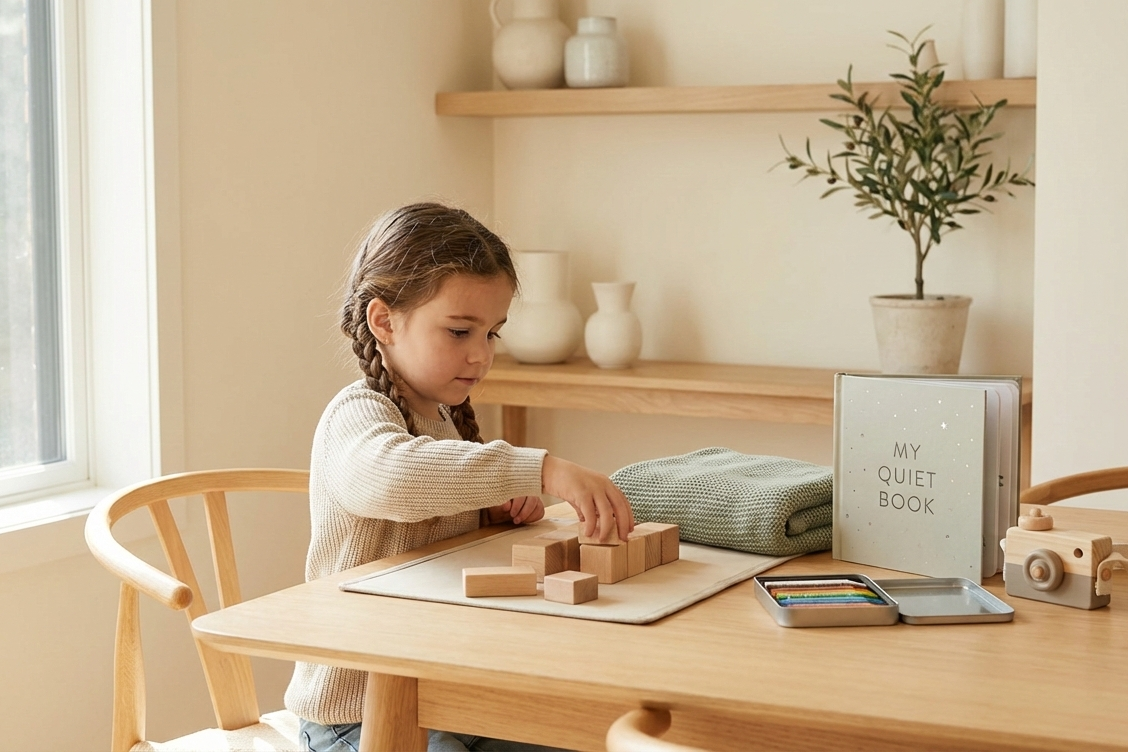
A Calm Kit is not an additional activity box to keep your kids occupied. It is a streamlined, low-stimulus framework for kids 3–7 dealing with attention overload, transition meltdowns, and emotional spirals. The kit works because it intercepts these moments with predictable, tactile alternatives that assist kids in calming down, not ramping up.
It emphasizes developing attention, sequencing, and independent initiation, which are crucial early childhood skills that screens tend to disrupt.
| Psychological Benefit | How Calm Kit Delivers It |
|---|---|
| Emotional Regulation | Predictable, tactile tools support settling and focus |
| Autonomy | Children choose and start calming activities on their own |
| Stress Reduction | Sensory options lower anxiety, provide healthy distraction |
| Working Memory Support | Structured, repeatable tasks build sustained attention |
| Self-Expression | Open-ended drawing or matching enables creative release |
| Frustration Tolerance | Step-based activities train patience, not instant reward |
| Predictability | Routine, familiar materials give a sense of safety |
The Calm Kit allows toddlers to self-regulate their emotions without parental guidance. When a child is ricocheting post-school or unraveling post-screen time, they need a means for their body and mind to slow down.
Putting a Calm Kit in their hands, packed with straightforward objects such as aromatic brushes, playing cards, or a lone crayon, empowers them. They may opt for consistent brushing, mimic calm patterns, or follow lines. Kids soon learn to employ these aids to anchor themselves, the basis of self-control.
Sensory play is at the heart of this process. Slow, predictable inputs like squeezing a fidget ball or brushing arms communicate safety to the nervous system. The tactile feedback relaxes the body, enabling the mind to refocus.
For most kids, this is the only way out of overwhelm. The kit’s hands-on decisions respect that reality, providing a universally available method to repair equilibrium. No crafts or projects are required, just a few subtle choices that always do the trick.
Proactive trumps reactive. A Calm Kit prepares the battlefield for victory before a tantrum erupts. When a kid knows they have a reliable menu of them to grab onto—particularly during moments of high friction like waiting rooms or travel—they’re less likely to spiral.
The kit provides a buffer, soaking up tension and empowering the child. They learn, eventually, to recognize their own cues and intervene early. This isn’t mere distraction. It’s the fortress of fortitude, constructed by habit and persistence.
Calm Kits aren’t avoidance, but instead build the skills kids need for real-world regulation. Tiny Thinks™ doubles down on this with a Free Calm Pack as an entry point, made for stand-alone use in daily madness.
For families requiring more structure, age-based Tiny Thinks™ Workbooks provide multi-day, serialized thinking exercises. Both options are grounded in the same principle: calm, screen-free structure that a child can return to on their own, no matter the pressure of the moment.
Conclusion
For most families, the after school or travel hours can be crazy. Toddlers hop from one need to another, seeking immediate silence for the clamor of the day. A calm kit provides silent architecture. Not a distraction, but a tender means to encourage quieting a child’s mind and body. When the pieces are straightforward, hands-on, and orderly, kids naturally slip into concentration and stillness. Over time, the kit becomes a familiar anchor, something a little one grabs without being asked. In everyday life, that translates to fewer meltdowns, easier transitions, and more peaceful solo moments. The aim isn’t amusement; it’s to re-establish focused attention, one routine-inducing action at a time.
When calm needs to happen without negotiation — after a long day, before bedtime, or in public — families default to a structured thinking-play system instead of reactive solutions. Tiny Thinks™ Workbooks provide that dependable infrastructure for ages 3–7.
Frequently Asked Questions
What is a calm kit for toddlers?
A calm kit is a small collection of simple tools and toys that can help toddlers find some calm amidst the chaos. It can contain plush toys, sensory items, and soothing activities.
Why do toddlers need a calm kit?
Little ones can easily be overwhelmed by big emotions. A calm kit provides them with safe, healthy ways to self-soothe and calm themselves.
What should I put in my toddler’s calm kit?
Think of a soft toy, a mini book, sensory balls, coloring pages, and noise-canceling headphones. Select secure and age-appropriate items.
How do I introduce the calm kit to my child?
Introducing the kit to your child in a calm moment. Tell them how and when to use it. Practice together until your kid feels comfortable pulling it out when necessary.
Can I use a calm kit when traveling?
Yes, a calm kit comes in handy on the go. Opt for tiny things you can easily bring along. It can help your little one feel safe and calm in unfamiliar or hectic settings.
How often should I update the calm kit?
Touch base with the kit. Swap busted or outgrown items. Refill the kit as your kid’s interests and needs evolve.
Does a calm kit really work?
Yes, even a lot of parents and experts swear by calm kits. They instill self-soothing techniques in kids and offer rapid respite during tense moments. you can also use the Montessori Quiet activities.