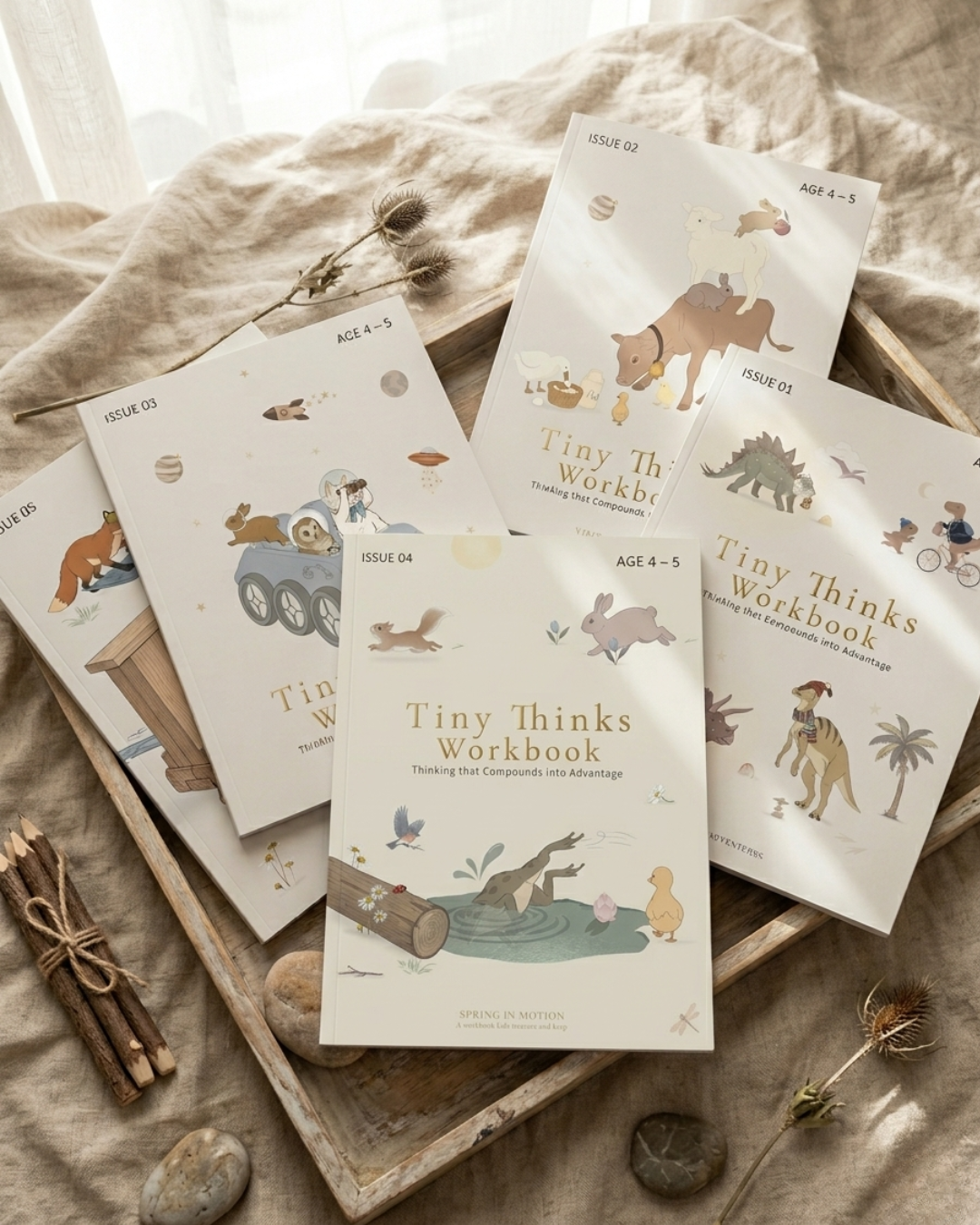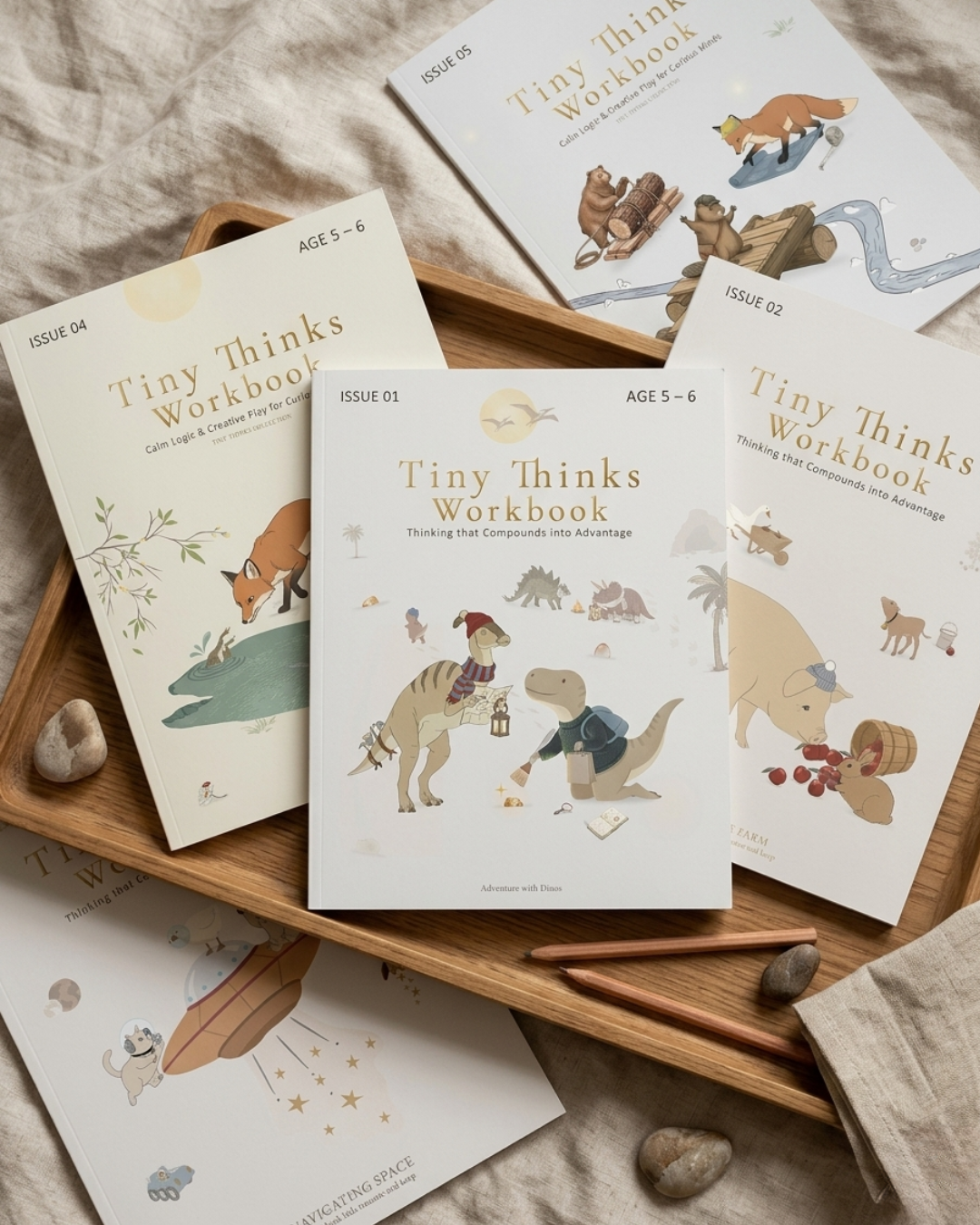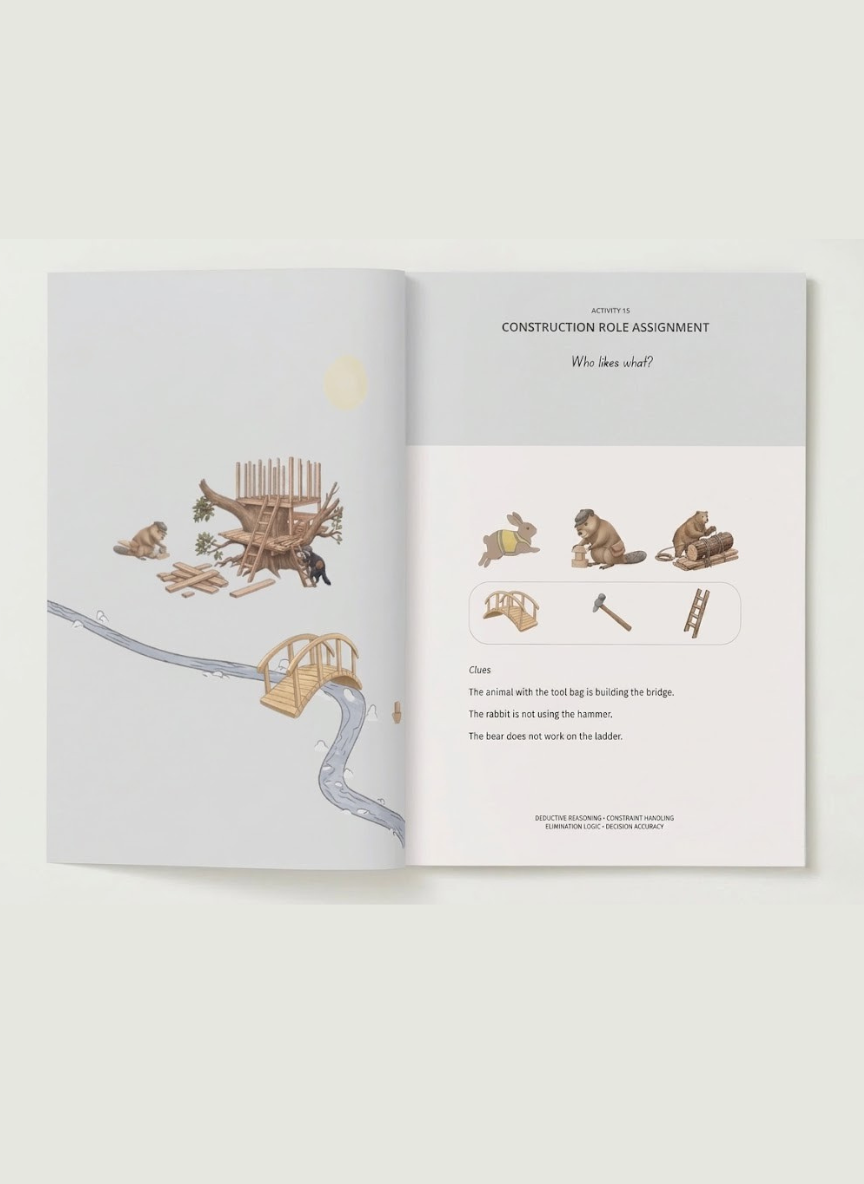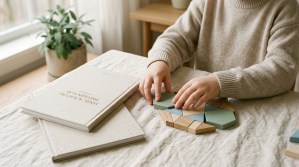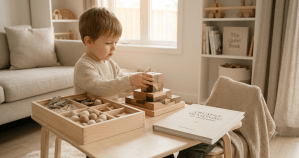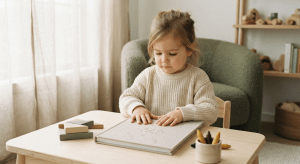



Early logic skills for kids is the quiet foundation behind focus, problem-solving, and confidence.
Kids ages 3–7 naturally develop core cognitive skills during calm, hands-on play. Activities that strengthen pattern recognition, early logic, sequencing, visual reasoning, and fine motor control help build a strong thinking foundation. These same skills make independent play easier and support early problem-solving at home and on the go.
Ages 3–7 are the years when kids build the “thinking muscles” they later use in reading, math, planning, and emotional regulation.
Parents constantly search for:
“early logic skills for kids,” “thinking skills activities,” “how to improve focus without screens” — and there’s almost no structured answer online.
This page is the missing framework: the five core early-thinking skills, explained simply, with examples you can use at home without screens.
🍓 Download the Free Calm Pack (quiet logic games you can use today)
🍎 Explore Tiny Thinks Workbooks (Ages 3–7)
Matching (Ages 3–7)
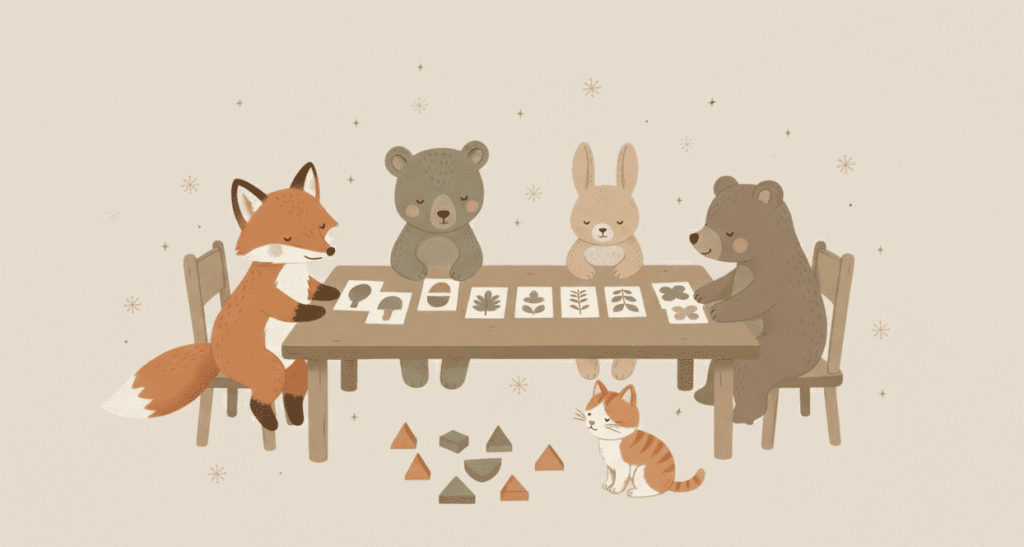
Matching is the starting point of logic: spotting similarities, comparing details, and early categorization.
It builds:
- attention
- visual discrimination
- early reasoning
Real-life examples:
- object-to-picture matching
- shadow matching
- shape/colour sorting
- find-the-pair tasks
👉 Tiny Thinks uses matching on almost every page to build early logic in calm, predictable ways.
Sequencing (Ages 3–7)
Sequencing teaches order, cause-and-effect, and early planning — the “first → next → last” thinking that later becomes reading, routines, and emotional regulation.
Examples:
- 3-step picture stories
- flow sequences
- size ordering
- simple daily routines
👉 Most parents forget sequencing entirely — but it’s essential.
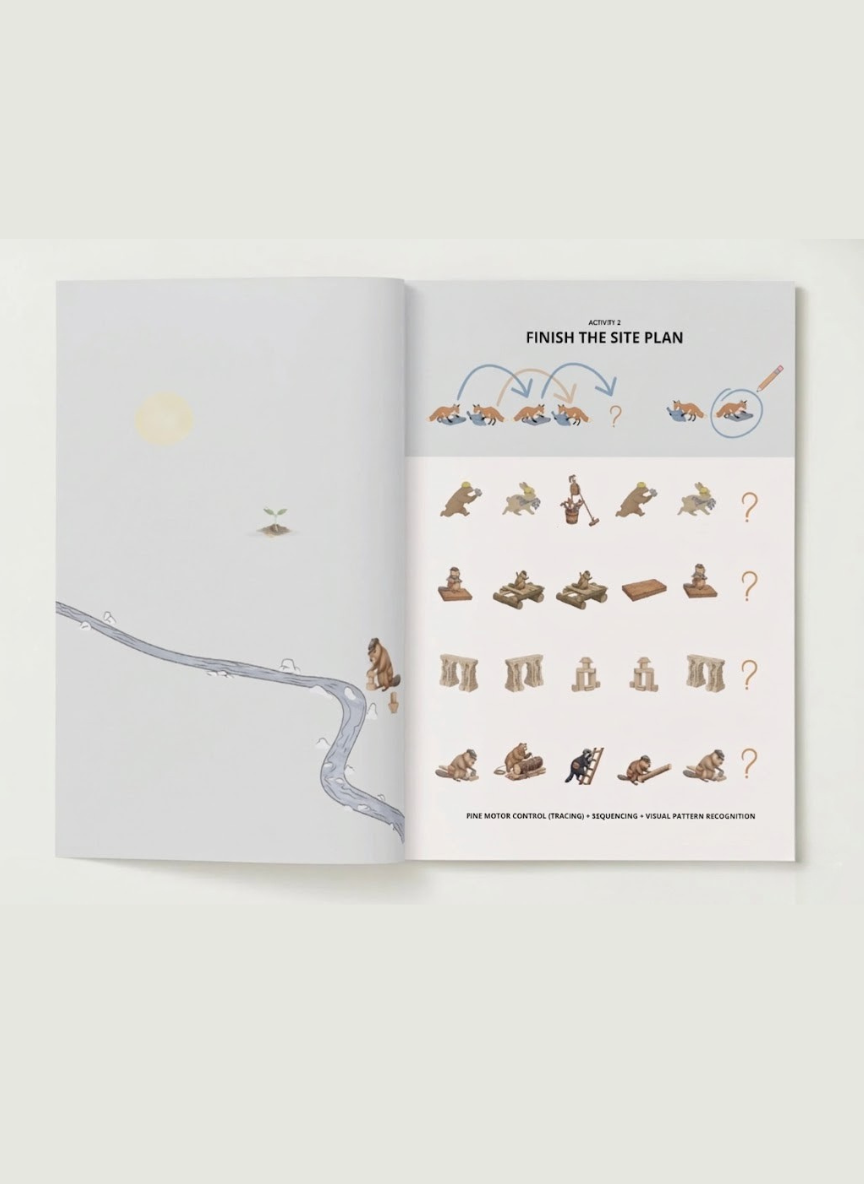
Pattern Recognition
Patterns form the backbone of early math and cognitive flexibility.
Examples:
- AB / AAB / ABB patterns
- colour or shape progressions
- “fill the missing piece” puzzles
Patterns teach kids to predict, reason, and notice structure — skills supporting both reading and numeracy.
👉 Tiny Thinks introduces patterns in every month’s theme, very gently across ages.
Gentle Logic Puzzles
For ages 3–7, “logic puzzles” simply mean slow, visual reasoning tasks that teach kids how to make independent decisions.
Examples:
- “which one does NOT belong”
- path reasoning (“which line leads to the object?”)
- small observation logic
- find-and-circle reasoning tasks
👉 These are the thinking foundations behind problem-solving.
Spotting + Observation Skills
Observation trains:
- calm focus
- visual attention
- detail orientation
Examples:
- spotting small details
- slow “look and circle” games
- visual hunts
- noticing differences
These tasks settle overstimulated kids and keep them grounded in busy environments.
Real Moments Where Thinking Skills Work Best
Kids naturally use these skills during:
- meals out
- flights & travel
- waiting rooms
- evening wind-down
- after-school quiet time
- sibling calm play
This is why the Tiny Thinks calm-play system works — logic skills replace overstimulation in the exact moments parents struggle with most.
Tiny Thinks Workbooks (Ages 3–7)
Our monthly story-led workbooks use:
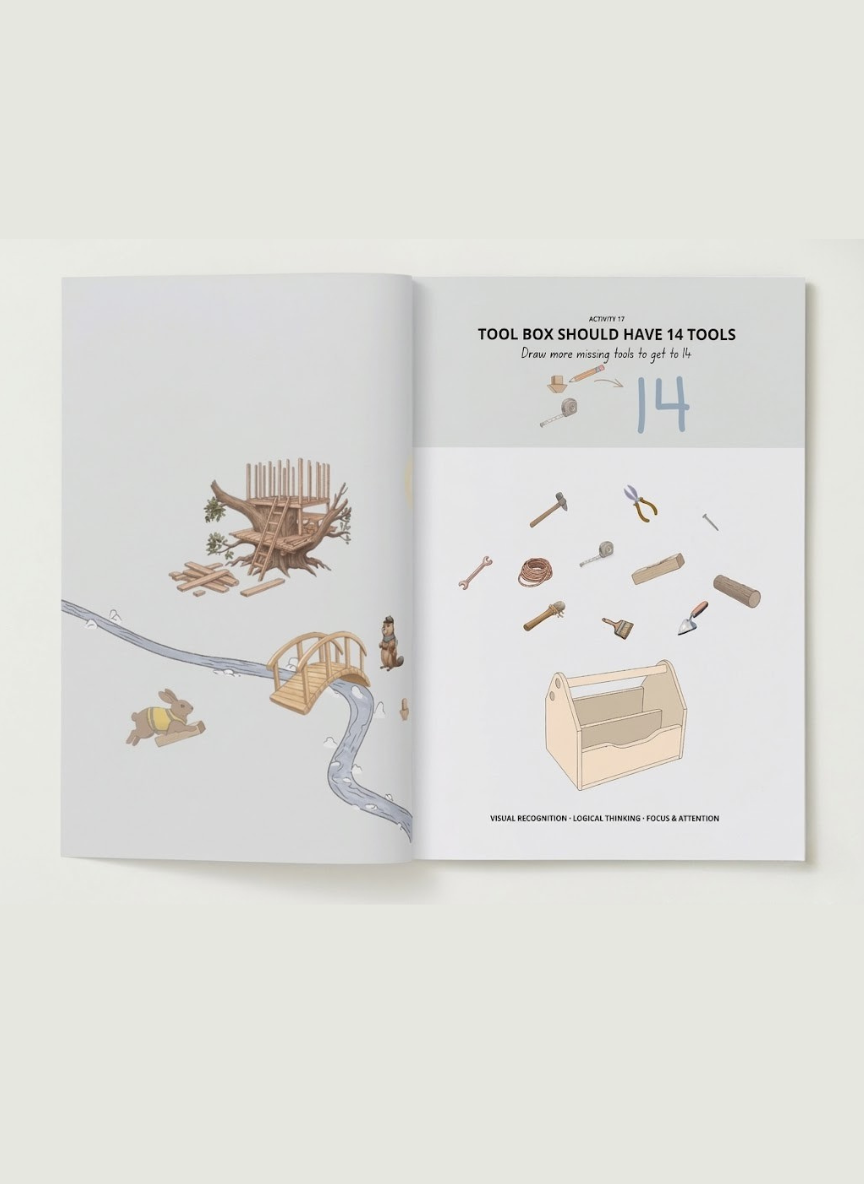
- matching
- patterns
- sequencing
- gentle logic puzzles
- observation & visual reasoning
- 10–20 min independent tasks
- calm illustrations built for focus
- collector’s sapling (monthly growth system)
🍓 Download the Free Calm Pack
🍎 Explore Tiny Thinks Workbooks (Ages 3–7)
FAQ
What are early logic skills for kids?
Matching, patterns, sequencing, gentle reasoning puzzles, and observation tasks that build foundational thinking.
How can I improve my child’s thinking skills at home?
Use calm tasks: matching, simple patterns, small sequencing stories, spotting, and short structured activities (10–20 minutes).
Why do thinking skills matter at ages 3–7?
They build attention, problem-solving, emotional regulation, and early foundations for reading and math.
Are worksheets good for early logic?
Only if they’re calm, visual, short, and age-appropriate. The best tasks feel like puzzles, not schoolwork.