




- Key Takeaways
- Why TV Overstimulates Children
- The Unseen Sensory Imprint
- Distinguishing Play from Distress
- Creating a Calmer Media Diet
- Strategies for Post-TV Calm
- When to Seek Professional Advice
- Conclusion
- Frequently Asked Questions
- Why does my child become loud after watching TV?
- How can I tell if my child is playing or in distress after TV time?
- What are the signs of overstimulation from TV?
- How much TV is safe for children each day?
- What can I do to help my child calm down after watching TV?
- When should I be concerned about my child’s behavior after TV?
- Can changing TV content make a difference?
Key Takeaways
- As I explain in my book, loud, fast-paced TV can overstimulate and confuse small children’s senses, making it more difficult for them to concentrate or relax after viewing.
- TV fast cuts and emotional intensity can shrink kids’ attention spans and increase their difficulty in self-regulating.
- C’mon, we’re all kids who act like what’s on TV. So regular exposure to aggressive or loud behaviors at home can cause it to come out at home.
- Blue light from screens, particularly in the evening hours, can interfere with kids’ sleep and impact their health. Establishing boundaries at night is key.
- Selecting tranquil, slow shows and incorporating hands-on, quiet work after the screen can help kids settle and regain focus.
- If your kid is always wired, whining, or otherwise stumped after TV, you should get a professional opinion to support healthy development.
When the TV goes off and your child’s body stays loud and restless, this is the moment families switch to calm structure. Use the Tiny Thinks™ Free Calm Pack as the default bridge after screens.
Child loud after tv, particularly if it’s an action-packed, mind-stimulating series. The transition from screen intake to real-world silence can spark wild outbursts, impulsive activity, and restless behavior.
To many parents, this pattern presents itself during transitions—after school, before dinner or at bedtime. Realizing how screen intensity impacts your child’s regulation is the first step to laying the foundation for calmer, more predictable routines.

Why TV Overstimulates Children
TV was created for mass distraction, not child management. Today’s programs are more intense, louder, quicker, and more emotionally manipulative than they have ever been in the past. Kids ages 3 to 7, whose brains are still wiring these core attention and regulation skills, are especially hard-hit by these high-stimulation inputs.
What parents interpret as ‘kid being loud post TV’ is not disobedience or enthusiasm. It’s the aftershock of a system saturated with sound, fast-paced stimulation, and mood swings.
|
Factor |
How It Overstimulates |
Resulting Behavior |
|---|---|---|
|
Excessive Noise |
Loud soundtracks, sound effects, background volume |
Heightened arousal, shouting, restlessness |
|
Rapid Scene Changes |
Quick cuts, no visual pauses, zero plot depth |
Scattered focus, impulsivity, hyperactivity |
|
High Emotional Intensity |
Characters yelling, dramatic conflict, exaggerated reactions |
Anxiety, irritability, emotional outbursts |
1. Sensory Overload
TV shows pile music, dialogue, and sound effects on top of each other at volumes that wouldn’t occur in a peaceful home. For a kid, this blitz can be intense. The brain races to sift signal from noise, and most kids under seven just can’t handle the burden.
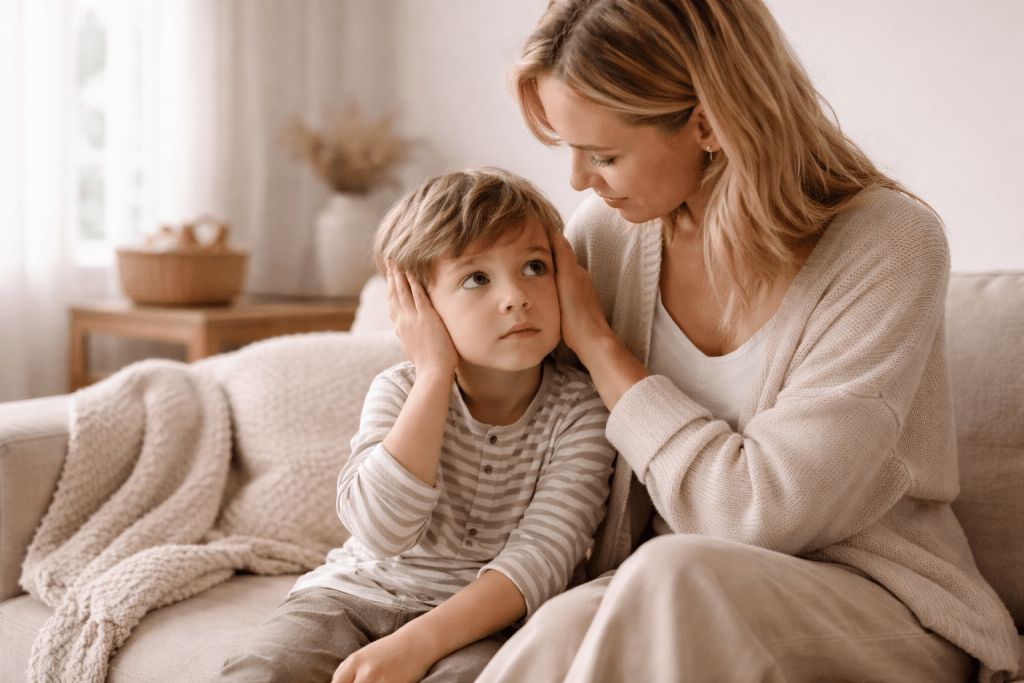
For others, this manifests as hyperactive, frenetic play post-TV. For some, it’s ear covering or isolation from the group. Kids with sensory or processing issues tend to unravel the fastest, never able to shake the residual buzz of background TV.
Noise pollution doesn’t just distract; it actually destroys a child’s ability to calm down and concentrate, particularly in kids with attention problems and symptoms of ADHD.
2. Content Pacing
Fast-paced cartoons and shows cut scenes every 2 to 3 seconds. This not only keeps kids hooked, it shatters their attention. Young brains, still learning to sequence and hold information, get caught in a cycle of seeking new stimulation.
Compare this to slow, predictable visuals or a calm storybook: children’s attention stretches, memory deepens, and frustration tolerance grows. Fast editing exhausts cognitive energy, leaving kids frazzled and unfocused.
Pediatrician and TV researcher Dimitri Christakis explains why most programming geared towards kids causes this overstimulation as opposed to really helping them learn.
3. Emotional Intensity
A lot of shows utilize overblown emotions—screaming, slapstick, frenzy—to capture interest. These spikes can induce genuine stress in young children, who have not yet built a robust emotional framework.
Some behave aggressively; some become anxious or withdrawn. As explained in my post, the problem with television’s overstimulation is that it hits the themes of the brain, making the brain more sensitive to drama.
Parents who preview and contain intensity levels provide their child the best opportunity to self-regulate.
4. Mimicked Behavior
Children learn by imitation. When TV characters solve things by yelling, fighting, or rule-breaking, kids replicate this at home. Even subtle habits—interrupting, tuning out, or requiring immediate gratification—are easily acquired.
Parental guidance is everything. Watching with kids, asking questions, and naming appropriate behavior helps kids distinguish fantasy from reality. Open dialogues around media can decrease the transference of undesired beliefs and encourage positive limits.
5. Blue Light
Screens give off blue light, which tells our brains to remain alert. Evening TV, particularly before bed, interferes with natural sleep immunity and contributes to difficulties with winding down.
Kids exposed to blue light at night fight sleep, have a hard time falling asleep, and wake less rested. Simple rituals—turning off screens at least an hour before bedtime, dimming the lights, and transitioning to tactile, screen-free activities—can recalibrate a child’s sleep and temperament.
Tiny Thinks™ provides a Free Calm Pack and organized workbooks for these pressure points. These quiet, low-stimulation helpers assist children in self-regulating post-screens, at dinner, in waiting rooms, and bedtime.
They are not treats; they are salvation to mothers and fathers desperate for their kids to chill out and think quietly on their own for once.
The Unseen Sensory Imprint
Screens are woven into the daily fabric of most families. Most parents observe that their child is louder, more hyperactive, or more difficult to calm down after television viewing. This isn’t a moral lapse or bad parenting. It’s a broader commentary on how rapid, high-volume input can alter the way young brains experience sound, attention, and emotion.
Some children are more sensitive to this than others. One kid might become noise-seeking and wild following a cartoon, while another curls up quiet and irritable. The impacts are subliminal to begin with, but eventually, repeated exposure can imprint on kids’ sensory processing, attention, and self-regulation.
Auditory Processing
Their little ears are still forming. Repeated exposure to blaring or rapidly fluctuating TV soundtracks can overpower their auditory system, making it difficult for them to block out ambient noise or stay focused on verbal instructions. Any parent will recognize the phenomenon — their kid is rehashing TV jingles or banging on the walls, unable to calm down after a show.
These are not arbitrary actions. They are traces of a nervous system still humming with overstimulation. Gotta watch the volumes. Even mild cacophony endured for extended stints can strain a kid’s ears. If your child frequently requests repetition, appears overwhelmed by normal noises, or hears ringing in the ears, these behaviors may be early indicators of auditory processing stress.
Sometimes, what appears to be “not listening” is instead an overwhelmed system. In these instances, a hearing screening is an easy place to start. Audiological testing can catch issues early and allow parents to modify the home environment as needed.
Attention Spans
TV kids can have difficulty concentrating on silent, self-driven tasks. Excessive screen exposure contributes to attention deficit and an inability to transition from what psychologists call fast to slow thinking. That’s why switching from raucous cartoon watching to a peaceful dinner table can seem insurmountable.
The neural system is still craving novelty, motion, and sound. To help rebalance, keep screen sessions brief and schedule in time for silent, tactile work. Brief, predictable tasks like matching cards and easy puzzles allow the brain to recalibrate. They bolster working memory and promote self-directed attention.
Gradually, children grow at ease with silence and become less dependent on incessant input.
Emotional Regulation
Overuse of screens can sweep away a child’s capacity to handle intense emotions. You may notice more irritability, fussiness, or grumpiness following TV. Some kids rock or recite sayings or songs from shows to self-soothe, but it doesn’t calm their system.
These slow, tactile activities — stacking blocks, tracing lines, and gentle sorting — reset their mood and return emotional energy to a lower level. Mom and dad who demonstrate calm, regulated behavior during and after screen use set the example.
It’s not about eliminating TV, but about providing an antidote: quiet time, predictable structure, and sensory breaks. Tiny Thinks™ is made for this moment—post-TV, in meltdown or when you need quick regulation. The Free Calm Pack is a great first step.
For longer focus, age-appropriate Tiny Thinks™ Workbooks provide guided, minimal distraction fun. They provide kids a dependable method to calm themselves, no prompts necessary.
|
Lasting Effects of Early TV Exposure |
Signs of Sensory Processing Issues |
|---|---|
|
Reduced attention span |
Seeking or avoiding loud noises |
|
Difficulty filtering sounds |
Repetitive vocalizations |
|
Sensation seeking/avoiding |
Irritability or crankiness |
|
Low registration |
Difficulty shifting activities |
Distinguishing Play from Distress
Post-TV, a lot of kids get loud, jumpy, or even foolish. Sometimes it’s just full-on play, but at other times it can signal that they’re overwhelmed. This can be blurry for parents in hectic households or with more sensitive children. Not all screaming is happiness, and not all tantrums are misconduct. Loudness in the aftermath of screens usually indicates that the child’s nervous system is still revved up and not yet calmed down. The trick is to determine when noise is healthy play and when it’s a symptom of distress related to their hearing health.
One of the frustrating things about kids is that they frequently use the same behaviors to communicate different meanings. A child may scream with delight while playing, then employ that same decibel when distressed by a change in the rules or an unfortunate turn. Sensory processing issues complicate the picture. Some kids bite, seek tight clothes, or get rough not because they’re ‘bad’, but because their systems can’t filter the input.
These kids tend to go from wild play to meltdown in a flash. TV noise, particularly in the background, can push them over the edge. Studies suggest that background TV decreases focused play and increases distractibility even if the child isn’t directly watching. What appears to be hyper play could be a frantic child trying to keep pace with over-stimulation.
Observation is the parent’s best weapon. Watch for patterns: is your child’s loudness linked to certain shows, or does it happen with any screen? Do they become more hyperactive or aggressive after fast-paced programs, or when the house is loud? Overwrought kids can ramp up by hurling, screaming, or roughhousing with toys or siblings. Others may retreat, become clingy, or engage in compulsive play to comfort themselves.
If you observe biting, pushing, or children going in for tight hugs, these are usually “red flags” for sensory distress, not play. An encouraging context supports kids to communicate what’s going on within. Instead of asking, “Why are you so loud?” ask, “Is your body feeling fast in this moment?” Offer words for the experience, then offer choices: “Do you want to jump on the spot, or come help me stack these blocks?
This provides the child with an avenue to shift from hysteria to serenity without being shamed. For children with sensory sensitivities, small adjustments make a difference. Turn down the volume in the room, use soft textures, and provide heavy work activities like pushing a basket or squeezing playdough.
When the signals scream overload, soft redirection is most effective. Introduce a composed, orderly substitute, something with defined procedures, rhythmic routines and minimal excitement. That’s where Tiny Thinks™ comes in. The Free Calm Pack was designed for these exact moments: after school, after TV, or any time a child needs to settle.
Kids can initiate on their own, go with easy flows and gently downshift. For families that want more, our age-specific Tiny Thinks™ Workbooks provide additional assistance, always with the same serene, consistent framing. These tools aren’t an “extra,” they’re a relief, a return to self that helps a child return to themselves after sensory overload.
After school or before dinner, when TV noise lingers and calm feels out of reach, families rely on structured thinking play instead of negotiating behavior. The Tiny Thinks™ Free Calm Pack is built for that post-screen comedown.
Creating a Calmer Media Diet
Kids tend to emerge from TV time rowdy, or antsy, or difficult to reengage. This is not a moral weakness or a parenting flaw. It’s the inevitable consequence of rapid, high-stimulation input on young nervous systems. Tiny Thinks™ takes a regulation-first approach: not anti-screen, just pro-calm. For parents in need of pragmatic, screen-free alternatives, it’s about structure, not guilt.
Choose Content
Choosing your media wisely is more important than just turning off the screen. It’s about selecting choices that fit a child’s stage of growth, not merely their appetite for cartoons or ruckus. Low-stimulation content promotes focus, attention, and emotional regulation. Parents can cultivate a shortlist of shows that soothe instead of excite.
- Choose slow-paced shows, soft colors, and defined narratives.
- Seek out content that promotes thinking, sequencing, or problem solving.
- Prioritize shows with minimal background music and simple animations.
- Choose nonviolent narratives that model kindness and cooperative play.
- Avoid shows with rapid cuts, screaming soundtracks, or unexpected scenes.
Previewing episodes before sharing them lets parents be fully aware of tone and pacing. Kids can assist in selecting, but the adults lead by example. Including kids in decisions fosters autonomy and teaches them to self-moderate. Ed content shouldn’t be passive watching. Ask what they observe, what they’re curious about, or what they would try next.
Set Timers
Timers function as cognitive anchors. Hard-scheduled viewing blocks prevent media from seeping into the whole day. For kids under 7, the majority of families discover that two cups of less-than-30-minutes, morning and afternoon, are simpler to maintain than one extended block.
Timers aren’t just about restricting time; they generate expected shifts that can positively influence hearing health. When the buzzer goes off, the routine continues without debate or tantrum, fostering consistency. Once kids know what to expect, they adjust quickly, reducing the risk of complaints related to discomfort from loud sounds.
Routines can encompass “media-free” pockets, such as meal times or the hour before bed, which tends to result in better sleep and more tranquil evenings. Tracking media use can unearth patterns. Some kids with less self-regulation naturally gravitate toward more screen time, so tracking helps catch this early.
Parents modeling healthy habits, such as putting the phone down at dinner and turning the TV off after a certain time, has a quantifiable effect. Kids do what they see.
Watch Together
It’s not supervision, it’s shared experience. Sitting next to your child and discussing what’s on the screen transforms mindless viewing into intentional education. It decelerates the rate and anchors material in actual discussion.
Ask questions as you watch: “What do you think will happen next?” or “How does that character feel?” Shared commentary helps kids process storylines and build empathy. These talks build connections and support healthy media habits. Kids learn how to eat, not just be fed.
If modeling is subtle, it is powerful. When parents listen, minimize distractions, and consume mindfully, children absorb those very same patterns. It’s magic. Family viewing time can serve as a calm anchor in hectic days, much more compelling than any lecture from Mom or Dad.
Tiny Thinks™ slots into this system as a convenient, screen-free option for pressure points—after school, before dinner, travel or waiting rooms. The Free Calm Pack can be used simply on its own. Kids calm down fast, lost in organized, low-stimulus cogitation.
For families wanting more, age-specific Tiny Thinks™ Workbooks continue the calm, providing kids with consistent schedules that promote concentration and control. Not a prize or a “patch”—simply the device that functions when silence is required the most.
Strategies for Post-TV Calm
After TV, kids are often loud, edgy, or cranky due to excessive noise exposure. This is not a failure of parenting or screens; rather, quick, shiny input distracts and keeps the body craving. The nervous system requires a bridge, something slow, steady, and physical to restore regulation. Constructing a calm post-TV ritual is not about screen denial but about addressing the harmful effects of noise on hearing health, providing trustworthy fallback plans when your kid is cranky and noisy.
Sensory Reset
Most kids require a body reset following television. Sensor input such as motion, tactile, or soft sound can bring the system down from overload. A solid bear hug, slow joint compressions, or just hitting your hands gently but firmly on your kid’s shoulders can help ground their body and mind. Others prefer deep breathing, slow arm movements overhead, or rolling a soft ball beneath their feet.
Tactile play is another powerful weapon. Playdough, sand, or even just a plain old tray of dried beans provides hands with activity and the brain with something predictable to work on. For a few kiddos, a nook of calm may include a fleecy rug, a basic tent, or a weighted blanket.
For noise- or light-sensitive individuals, dim the lights, mute ambient noise, and restrict clutter in the room. Nature is a master regulator. If you can, open a window, step outside, or bring in a small plant or stone. Even a few minutes with your feet in grass or your hands in water can help reset a system that feels stuck on high alert.
Quiet Activities
Post-TV, many parents find their kid bouncing off the walls. The secret is low-stimulation, regimented choices that encourage silent concentration, not additional hustle. Books with basic images, light puzzles, or matching games are great. Present your child with two or three options, not an entire shelf. Too many possibilities can overload a fatigued brain.
-
Simple sequencing cards: lay out a three-step story to arrange.
-
Calm coloring involves large shapes and soft colors, not busy designs.
-
Object sorting: sort blocks by size, sort stones by color, sort buttons by shape.
-
Matching games: picture pairs, memory cards, or simple dominoes.
Non-reading demanding, not-so-fast-turns – family board games can help. We’re talking slow-paced memory games, stacking towers, or building something together – cooperative style. Avoid anything that flares, buzzes, or suddenly sings. Check this list of screen-free activities.
Outdoor Play
Moving outside is a powerful post-TV calm reset. Your body requires an opportunity to flow through space, inhale fresh air, and witness natural light. Even 10 minutes outdoors, walking, running, or just sitting helps the body calm down. Mood improves, crankiness subsides, and concentration comes back sooner.
Unstructured play for the win. Let your little one dig, stack sticks, or rake leaves. Free of rules, free of direction, just open time to discover. Outdoor playtime is more than just a way to tire out; it cultivates imagination, interpersonal skills, and grit while protecting them from harmful effects of loud sounds.
Some kids require a five-minute warning before getting off the backyard playtime, just like screens, to help them make the calm transition. Tiny Thinks™ is for moments like this. The Free Calm Pack provides you with structured, screen-free thinking pages—matching, sequencing, quiet pattern work—for children ages 3–7.
When you need your kid to calm down after TV, these pages are that reliable, low-stimulus road back to peace. Kids can initiate them themselves, so you’re not stuck being the permanent umpire. For a deeper calm routine, age-based Tiny Thinks™ Workbooks apply the same principles of calm, visual structure, and simple sequencing to daily routines like mealtimes, travel, and bedtimes.
No fanfare, no stress. Just a dependable method to get kids back into calm, concentrated play after the TV. Parents know their kid. Some require touch, some require movement, and some need quiet structure. Think Tiny Thinks™ is your calm veneer for the moments that count.
When to Seek Professional Advice
Not every post-television roar is reason to fret. We’ve found some kids just need additional time to reset after rapid screens. Some trends indicate it’s time to bring in a pediatric specialist. If a child remains loudly agitated and can’t settle well beyond the turn-off time of screens, it’s time to look further.
Increased noise sensitivity or obvious distress around common sounds—ear covering, crying or avoiding usual environments—could be a sign of sensory overload. If you find your child upset by general household noises or if they seem particularly reactive to noises following screen exposure, professional testing can provide insight into what’s going on below the surface.
These persisting red flags of distress, meltdowns, covering ears, avoiding noise, aren’t a phase. They could mirror underlying sensory processing differences or even early hearing issues. Kids who appear to gain little or no advantage from hearing aids after 6 months or who begin responding adversely to previously tolerated sounds require timely professional advice.
If you know your child has hearing loss, you need to be extra careful around loud noises. Single event exposures to extremely loud noise, like fireworks, can lead to sudden hearing changes that always deserve urgent medical care.
Noise-induced hearing loss isn’t necessarily visible. It may occur subtly, particularly in toddlers and kids wearing headphones or earbuds—even those with volume-limiting safeguards. If you’re noticing your child turn up the volume, request louder TV or appear less responsive to soft sounds, don’t delay.
Early intervention is much easier than dealing with long-term hearing damage. Pediatric audiologists can detect early indicators that the majority of parents tend to overlook and provide actionable advice to safeguard and empower your child’s hearing health.
As parents, we sometimes hesitate to get help, concerned that we’re overdoing it. Being cautious is prudent—particularly for younger children, whose brains are still developing the circuits of attention and self-control. Seeking professional advice if and when it is warranted gives your child the best opportunity for healthy development and it brings peace of mind for you as well.
For families aiming to quiet the chaos and find that post-screen calm, Tiny Thinks™ is created for these very real moments. The Free Calm Pack provides you with easy, organized thinking worksheets kids can implement on their own, no parental nagging and no added stress.
These soothing routines come in handy post-school, during screen transitions or when you need some headspace at the table. For kids who demand more, our age-based Workbooks provide a screen-free gentle dose of attention, patterning and independent initiation building, all packaged in a visually tranquil format.
You don’t need to make your routines over; just have the right tool when you need it most.
When screens end and regulation matters most—especially at bedtime—Tiny Thinks™ becomes the system families use instead. Start with the Free Calm Pack to restore quiet focus without prompting or pressure.

Conclusion
Most parents recognize the scene: TV goes off and bam, the room is filled with wild, loud energy. Kids aren’t being naughty on purpose. Their brains are still going at the speed of the show, seeking the next quick hit. Slow, intentional, haptic play provides a consistent method to get them calm and re-centered. These types of predictable, calm activities give the nervous system a chance to downshift so it is easier for children to sit and quietly focus and engage. The idea here isn’t to banish screens; it is to recognize what takes place afterward and have the appropriate resources on hand. With easy, repeatable actions, you will lead your family from mayhem to tranquility, making post-TV time a moment of true recharge — not yet another fight.
Frequently Asked Questions
Why does my child become loud after watching TV?
Most kids experience difficulty relaxing immediately after watching TV due to the excessive noise exposure from rapid images and loud sounds, which overstimulate their hearing and senses.
How can I tell if my child is playing or in distress after TV time?
Watch your child’s temperament. If they appear cheerful and sprightly, it probably is play. If they’re cranky, hyperactive, or can’t calm down, overstimulation or upset is a likely culprit.
What are the signs of overstimulation from TV?
Signs of difficulty hearing include loud talking, irritability, and trouble sitting still, which may indicate concerns about hearing health.
How much TV is safe for children each day?
Professionals suggest allowing under one hour of screen time per day for young children. Less screen time promotes sound sleep and good behavior and social skills.
What can I do to help my child calm down after watching TV?
Suggest a calm activity, like reading or drawing, to help your child’s hearing health. Dim lights and reduce background noise to protect them from excessive noise exposure.
When should I be concerned about my child’s behavior after TV?
If your child continues to become upset, aggressive, or has difficulty calming down after exposure to loud sounds from the television, it’s time to discuss these hearing concerns with your child’s pediatrician.
Can changing TV content make a difference?
Yes. By selecting calmer, slower-paced shows and steering clear of loud or fast-paced ones, you can minimize overstimulation and keep your child more mellow.