



- Key Takeaways
- The Overstimulated Child Brain
- Recognizing The Red Flags
- Beyond The Meltdown
- The Content That Counts
- Creating A Balanced Digital Life
- The Unseen Digital Footprint
- Conclusion
- Frequently Asked Questions
- What are the signs of screen overstimulation in children?
- How does too much screen time affect a child’s brain?
- What should parents do if their child has a meltdown after screen use?
- Why does the type of content matter for kids?
- How can families create a balanced digital life?
- What is a digital footprint, and why should kids care?
- Can screen time be positive for children?
Key Takeaways
- Screen overstimulation in children can lead to sensory overload, dopamine imbalances, cognitive fatigue, and emotional swings. All of these can affect learning and well-being.
- Early signs of overstimulation include irritability, meltdowns, headaches, and withdrawal from social activities. Recognizing these red flags helps parents respond early.
- Designing calm, nurturing spaces with predictable rhythms and screen-free sanctuaries assists kids in unwinding and cultivating focus habits.
- Healthy digital habits result from demonstrating good screen behavior, promoting activities such as reading and physical play, and establishing clear limits.
- Prioritizing screen-based educational or interactive content over passive entertainment can foster more positive cognitive development and emotional regulation.
- Educating kids on online safety, data privacy, and the effects of algorithmic content promotes aware and responsible digital citizenship early on.
When screens turn off and your child can’t settle, families use the Tiny Thinks Free Calm Pack to reset attention without negotiation or noise.
Screen overstimulation in kids refers to the state when young children experience excessive sensory input from digital devices, leading to fragmented attention and increased irritability.
Most parents observe that their little one is becoming fidgety or irritable following screen time, which is an all-too-common reality in daily life, such as during after-school or pre-bed moments.
Knowing how rapid digital input is shaping attention enables parents to select serene, organized options that encourage concentration and solo play.

The Overstimulated Child Brain
Screen overstimulation in young children is a regulation problem, not a moral one. Beneath the tantrums, fidgeting, and moodiness is an overstimulated child brain begging for a little peace. For parents, the challenge isn’t just about limiting screens; it’s about knowing when their child’s brain is overstimulated and how to recalibrate it.
Tiny Thinks™ responds to this demand by offering a peaceful, screenless layer that facilitates self-regulation and self-directed attention, free of criticism or additional stress.
1. Sensory Overload
Irritability, meltdowns and out-of-the-blue resistance to routine are often indicative of sensory overload. In the real world, that manifests as your child blocking his ears at loud sounds, wincing in a bright room, or boycotting some outfits following an extended stint on the screens.
Triggers pile up: television volume, flashy animations, and rapid-fire notifications from devices. Other kids, after screen-saturated afternoons, are aggressive or aloof, their brains stuffed with too much data.
Simplifying things by muting background noise, dimming lights, and providing a physically engaging, quiet activity can do wonders. A supportive environment translates to less background noise, less abrupt shifts, and defined physical boundaries.
For other families, it’s as easy as closing doors, using soft lamps, or a single calm activity such as a matching page from the Tiny Thinks Free Calm Pack after screen time.
2. Dopamine Dysregulation
Screen time can spike dopamine, the brain’s “reward” chemical, fostering cycles of craving and crash. Kids who’ve been raised on fast digital input tend to develop overstimulated brains.
They become impulsive, constantly requiring further stimulation or easily frustrated when it’s withdrawn. It’s not a character flaw; it’s a neurochemical loop.
Healthy regulation is creating physical play, open-ended activities, and screen breaks. Keeping an eye out for signs such as pursuing never-ending novelty or opposing simple chores enables parents to detect dysregulation early.
Two hours or more of screens daily is associated with behavioral issues and challenges calming down for slower, focused play. Tactile, structured alternatives soothe the cycle and equilibrium is restored.
3. Cognitive Fatigue
Extended screen use drains working memory and truncates attention. Children might have a hard time taking directions or lose interest when activities aren’t on a screen.
Fatigue manifests in the form of zoning out, jumping steps, or toy hopping. Both regular screen breaks and low-stimulation tasks, such as simple puzzles, picture sequencing, or slow tracing, give the brain time to recover.
Even brief, silent hours with a Tiny Thinks workbook reset cognitive load. Healthy screen habits protect learning and nurture vocabulary development, while overstimulation diminishes school success and emotional intelligence.
4. Emotional Volatility
Emotional swings — anger, tears or sudden withdrawal — often accompany overstimulation. Kids lose their patience for minor frustrations and blow up at controls.
The connection between heavy screen use and the surging anxiety, depression, or even ADHD-like symptoms seen by professionals is well known. Teaching calm habits, such as deep breathing or slow movement, builds resilience.
A calm, predictable environment, including routine bedtime, low noise, and tactile activities, facilitates emotional self-regulation. Tiny Thinks sheets, meant for hushed concentration, provide a nice grounding tool during high-friction moments.
5. Sleep Disruption
Unrestricted screen exposure interferes with melatonin secretion and postpones sleep onset. Blue light before bed causes difficulty falling asleep and waking during the night.
The signs include a child who can’t settle, wakes often, or drags through the next day. Screen limits before bed, calming rituals and substituting screens for quiet, tactile activities support better sleep.
Overstimulation lurks in many forms because monitoring your sleep quality brings early warning of hidden overstimulation. Tiny Thinks Free Calm Pack makes a great screen-free wind-down tool, especially for sensitive kids.
Recognizing The Red Flags
Screen overstimulation in toddlers typically manifests most initially in the normal routines of their day. It’s not a character issue or a parenting flaw. It is a predictable regulation issue: fast, high-stimulation input fragments a child’s ability to settle and think. Identifying these early red flags—behavioral, bodily, and social—is step one for parents seeking practical, calm alternatives.
For after-school crashes and screen handovers that spiral, the Tiny Thinks Free Calm Pack provides a calm, structured reset kids can enter on their own.
Behavioral Signs
Frequent crankiness and opposition, particularly following screen time, indicate cognitive overwhelm. A child who melts down when you ask him to turn off a device or who appears incapable of managing even minor frustrations is suffering nervous system burnout. Meltdowns and outbursts after screen transitions aren’t “bad behavior”; they are frequently a symptom of sensory processing overload.
Some kids lose their sense of time, get defensive when you ask about screen use, or even lie about or conceal how much time they spend on devices. These are not character defects. They are control breakdowns that occur because of excessive rapid feed, too soon.
Observe your child’s behavior after screens: Do they resist every request? Are they difficult to transition to something new? Pay attention to any pattern of anxiety or focus waning precipitously following screen time. Have your child identify what they’re feeling — tired, annoyed, ‘buzzy’ — to connect body signals with the experience of overstimulation. When these behaviors stretch over a few days, it’s time to pay attention.
Physical Signs
Physical symptoms are often dismissed but can be the clearest clues: headaches, stomachaches, or even nail biting can be direct signs of screen overload. Some kids get hyper and can’t sit still, while others appear tired, droopy, or just ache overall.
It’s usual to notice tension in the jaw, shoulders, or hands, which are minor indicators that the nervous system is having difficulty rebooting following excessive screen time. Screen fatigue isn’t always apparent. A child may appear “wired but tired” — restless, unable to calm down, but all exhausted nonetheless.
Use movement to help: offer a walk, a jump, or a stretch after screens to see if symptoms ease. If not, ask yourself whether screen time needs to be cut in half or if an “electronic fast” for a few weeks is necessary to reset the system.
Social Signs
Red flags: Children overwhelmed by screens might shy away from play or have difficulty connecting with friends. You may observe them withdrawing from peer groups, experiencing social difficulties, or losing interest in previous imaginative playtime.
Social withdrawal is a classic red flag, but so is sudden aggression, such as snapping at brothers and sisters, refusing to share, or becoming bossy and rigid in play. Nurture social skills by organizing brief, no-pressure playdates or group activities.
Be on the lookout for any red flags, like avoidance or challenges to join in. Foster empathy and communication by modeling calm, clear language: “It looks like screens make it hard to play with friends. How about something slower?” Record social changes to report to caregivers or professionals if necessary. Early intervention is not as concerned with labels and instead tries to get the child back in balance and connected.
Tiny Thinks™ delivers a tangible, screen-free path to regulation. The Free Calm Pack is for after-school crashes, mealtime chaos, and bedtime wind down, providing kids with predictable, structured thinking play when they need to settle without rapid input.
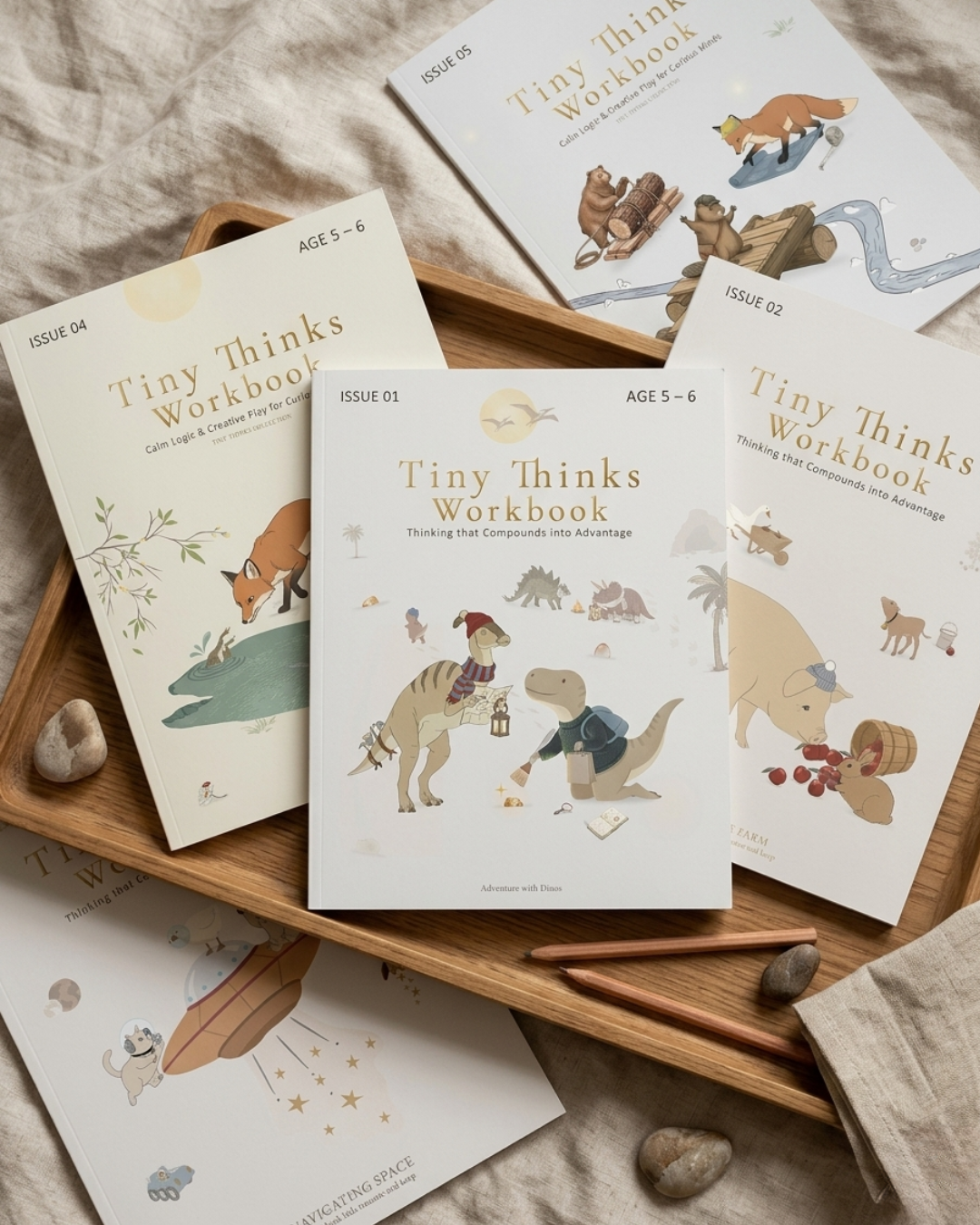
To support this journey over time, the age-specific Tiny Thinks™ Workbooks develop attention, pattern identification, and independent activation. These skills bring back tranquility and focus without parent powerplay. These are not punishments or sophistications; they are a salvation for genuine, high-friction occasions.

Beyond The Meltdown
Screen overstimulation isn’t about blame or bad choices. It’s the daily life of contemporary parenting. Kids, particularly ages 3 to 7, are still building the brain circuits required for attention, self-control, and cognitive flexibility. Rapid-fire, high-volume input from screens can overload these systems and once the screen shuts off, the emotional brain is still buzzing.
Meltdowns aren’t only about frustration; they are the physical manifestation of sensory overload and regulatory exhaustion. Parents see it: irritability, trouble calming, mood swings, and a child who can’t shift gears, even when the screen is long off. This section goes beyond the meltdown moment, outlining what’s at stake for learning, social skills, and long-term well-being and how to reconstruct calm, focused thinking.
Learning Impact
-
Your kid’s screens create cognitive overload that scrapes their attention and memory when they try to learn something new at school. Your brain is in “react” mode, not “think” mode. Even basic tasks, such as listening, following directions, or remembering what was just taught, become more difficult. Other kids will appear to be spacey, frustrated, or tune out completely.
-
Schools can assist by providing quiet areas, low-key transitions, and visual supports. For our sensory kiddos, defined routines, soft lights, and anticipated activities are a soothing combination. These are not “extras” but rather crucial for kids whose brains are fried by relentless input.
-
There’s more than a little value in parents and teachers joining forces to catch stress signals early. If your child’s grades begin to fall or they appear disengaged, it’s not always a question of motivation. At other times, it’s the consequence of overstimulation.
-
Routine check-ins at home and at school, looking for patterns such as restlessness after weekends, trouble initiating tasks, or requiring extra reminders, can catch sensory overload before it sabotages learning.
Social Skills
-
On top of distracting focus, overstimulation can impede social development. When a child’s system is flooded, reading cues, sharing, or group play feels overwhelming or even scary.
-
Organized, slow-paced social activity, such as easy board games, turn-taking, and small group play, develops confidence and clarifies social guidelines. Your kids learn best in a calm environment.
-
Parents can coach kids through these social landmines by previewing what to expect, giving them bite-size, winnable social goals and modeling calm transitions. Confidence builds when children feel prepared, not pushed.
-
Calm, predictable environments, such as parks with quiet corners and playdates with one friend at a time, nurture emotional development and allow kids to exercise new skills without sensory overwhelm.
Long-Term Health
-
Chronic overstimulation and screen time overuse lay the groundwork for anxiety, insufficient sleep, and a low tolerance for frustration. The body and mind never receive the reset they crave.
-
A balanced routine of movement, quiet time, slow tactile play, and face-to-face interaction guards mental health and sets the stage for resilience. It’s not about perfection, just about rediscovering calm, predictable rhythms.
-
Families can establish wholesome routines of meals, outside time, and screen-free wind-downs. Mindfulness does not need to be complex. Slow breaths, a simple puzzle, or silent drawing are all supportive.
-
Checking in with providers keeps growth on track. When worries arise, such as sleep, mood, or energy, having a trusted professional in your corner helps parents make adjustments to routines early.
Tiny Thinks™ is designed for these moments. The Free Calm Pack is the quick fix for after-school comedowns, screen transitions, hangry mealtime chaos or travel waits. No hype, no pressure, no judgment.
When you need your kid calmed and thinking clearly, this is what works. For families wanting more, the age-based Workbooks provide structure for consistent, independent focus at home, with no endless adult oversight necessary. Tiny Thinks™ integrates into your real-world schedule, not as an “add-on” but as the peaceful thinking subtext that re-centers you and develops resilience, step by step.
The Content That Counts
It’s not only what kids watch on screen that forms their minds, it’s how they engage. The distinction between passive and active usage, the content itself, and social media all matter for attention, behavior, and development. Parents see the difference: a kid that won’t get off a show, who freaks out at dinner, who craves more and more stimulation but calms down less.
It’s not screen elimination that’s the objective, but rather installing a thinking layer that recreates tranquility and concentration.
Passive vs. Active
Passive screen time means a kid is just sitting there, consuming content with barely any interaction, like never-ending cartoons or auto play videos. No contest, no mimesis, no remembering or sequencing or inventing. This passive mode leaves children cognitively under-stimulated and neurologically over-stimulated, resulting in impatience, irritability and trouble switching to real-world play.
Active screen time encourages interaction. Kids could doodle, work on puzzles, or engage in directed study. The device is a creative implement, not a drug. Yet, despite the activity content, it’s all about balance. Screen should NEVER substitute for direct, tactile, messy matter-of-the-senses engagement.
Parents are the make or break. Keeping an eye on the passive/active media balance, choosing with kids, and keeping screens out of bedrooms, especially for preteens, are all pragmatic steps that help support better sleep and overall regulation.
Educational vs. Entertainment
Meaningful content promotes intellectual and interpersonal development. When a child investigates early math, hears stories, or rehearses new languages with adult engagement, they develop working memory, sequencing, and attention. Human interaction grounds these advances.
Kids acquire language most effectively from speaking and playing with adults, not screens alone. Entertainment media, with rapid staccato edits and algorithmic innovation, splinters focus. It makes real-world tasks—waiting in line, eating a family meal, winding down at bedtime—much more difficult.
Kids can get fidgety, crave additional activity or have a hard time self-soothing. What does matter is focusing on content that relates to actual learning objectives and discussing with kids what they’re viewing—assisting them in critically thinking about the stories, messages, and decisions.
Social Media’s Role
Social media is a tricky minefield for little kids. For some, it provides connection, while for others, it brings anxiety, overstimulation, or comparison. These fast-moving feeds and likes can reinforce shallow engagement and quick dopamine cycles. It becomes increasingly difficult to focus deeply and regulate emotions.
Mindful use means sending your kids in the direction of the good stuff and staying in dialog. Discussing your online experiences, the highs and the lows, educates kids to explore the digital world with confidence, not trepidation.
Tiny Thinks™ is designed for these genuine moments. When after-school madness strikes, when screen handoffs go south, or when bedtime calls for silence, mom and dad grab the Free Calm Pack or age-specific Workbooks.
These aren’t enhancements or bonuses or “bells and whistles.” They are structured thinking tools that are low-stimulation and tactile, designed for child-initiated calm. They assist in disrupting the cycle of overstimulation, recovering attention, and cultivating independent focus.
Creating A Balanced Digital Life
Screen time is a reality of contemporary childhood. Parents are not floundering when they hand their kids screens to survive a hectic moment. What counts is how you engineer structure, boundaries, and alternatives that bolster your children’s attention, regulation, and autonomy. Kids ages 3 to 7 are particularly vulnerable to such fast-moving, high-stimulation exposure, which can shatter attention and increase emotional volatility.
A balanced digital life is not screen abolition, but a reintroduction of calm, predictable rhythms at home, after school, during in-betweens, and at the close of exhausting days.
Alternative screen-free activities for calm engagement include:
- Picture-matching games using simple household objects
- Sorting or sequencing toys, blocks, or cards
- Quiet reading corners with a small selection of books
- Drawing, tracing, or sticker activities at the table
- Nature walks or simple scavenger hunts outdoors
- Water play with cups and scoops in the sink
- Building with blocks or stacking cups
- Listening to calm music or audiobooks
- Simple pattern puzzles or shape sorting
- Helping with safe, small kitchen tasks
Establish Routines
For a few families, the entire day becomes less difficult when screen time falls into a defined, consistent pattern. Kids require routine to calm their bodies and minds. Daily routines with screen times and break times established allow kids to know when rapid input is approaching and when it is time to decelerate.
Visual timers turn abstract time into something concrete and real, handing control to small children and defusing potential battles. Routines are not set in stone; they move with the child’s needs, energy level, and what is going on that week. Tiny Thinks™ routines typically start with one sedate, organized activity following a screen barrage, allowing kids to re-access concentration and reboot.
Designate Zones
Screens are at their best when they have a home—not everywhere, not nowhere, but in distinct spaces where they belong. Bedrooms and dining tables become screen-free by default, which fosters sleep, eating, and conversation. A designated corner of the living room with a tablet or television informs kids when screens are on and when they are off.
Families who discuss these boundaries together experience less resistance and more consciousness from kids. Zones are flexible; what is important is that the framework is explicit and maintained.
Model Behavior
Kids love to copy what they observe. Parents who ditch devices at dinner, narrate their own screen boundaries (“I’m turning this off so we can chat now”), and get involved in non-screen activities are setting a powerful, lived example.
Sharing micro-decisions—“I’m deciding to read now”—makes the process transparent. Families who discuss choices about media with their kids expose them not only to critical thinking but also to compliance. This modeling develops internal regulation, not just external rules.
Encourage Alternatives
A home with consistent alternatives makes screen transitions easier. Children settle best with options that are calm, predictable, and open-ended: picture books, tracing, matching, stacking games, or hands-on help in the kitchen.
Even a few minutes of outdoor play helps release this energy and restore our focus, both of which are crucial after extended screen time. Parents can rotate toys or set out mini invitations to play, such as a tray with sorting pieces or memory game cards. Social play with siblings or buddies, even if short, provides children the connection and newness they crave from screens.
Tiny Thinks™ are here for these pressure points. THE FREE CALM PACK is a quick and easy, structured way to reset overstimulated kids — no prep, no nagging, just a simple page or pattern that brings their attention back.
During dinner madness, screen shifts, trips, or bedtime lull, Tiny Thinks™ Workbooks provide peaceful, low-stimulus engagement, assisting kids to relax and think on their own. These aren’t upgrades or rewards — these are savors for actual occasions when focus and calm are truly required. No guilt, just a game that gets down.
The Unseen Digital Footprint
Children are establishing digital footprints earlier than ever, frequently before they realize the consequences. An unseen trail follows us—every click, message, and video watched leaves its imprint—the digital footprint. These traces define children’s digital identity and play a role in their future prospects.
Parents aren’t supposed to banish screens; they can instead help their kids navigate these spaces mindfully. Tiny Thinks™ represents calm regulation-first solutions, not a rejection of technology, but an alternative when attention, safety, and autonomy are important.
Data Privacy
A sane data privacy begins with architecture, not paranoia. Kids love browsing the web to hang out and chat with others, but don’t necessarily comprehend what is secure to share. Begin with a simple checklist:
- Use strong, unique passwords for every account
- Never share real names, addresses, or school details publicly
- Ask an adult before clicking unknown links or downloads
- Keep devices updated and use secure Wi-Fi networks
- Discover which apps can access the camera, microphone, or location.
Discuss these points jointly. Make privacy settings a family affair, going through devices and apps for permissions and talking about why each setting is important. Parents can silently oversee online worlds, not as a Big Brother, but as a guardian ensuring that digital playgrounds remain secure and consistent.
Algorithmic Influence
Algorithms determine what children view. The more they watch or play, the more it learns their preferences, frequently delivering faster, louder, more addictive content. This can splinter attention and prevent kids from dropping into more slow, deep thinking.
Urge kids to observe how recommendations materialize and think before they click on the next video. Add some varied, non-algorithmic content to expand their exposure and dilute the strength of automated feeds.
|
Algorithmic Trigger |
Child Behavior Response |
Potential Overstimulation Outcomes |
|---|---|---|
|
Auto-playing videos |
Continuous viewing |
Shorter attention span, restlessness |
|
Recommended content |
Narrowing interests |
Repetitive, low-variety consumption |
|
Trending challenges |
Peer-driven participation |
Impulsive, risk-seeking behaviors |
Future Self
Kids’ online decisions are creating a history that can rise to the surface years down the road. This archive of posts, pictures, and comments might influence their school or professional prospects. Kids ages 10 to 12 are particularly vulnerable as they transition from consuming to producing.
Direct them to think, “Would I want a future instructor or employer to see this?” Encourage self-reflection on how their media habits match up with longer-term goals, not just today’s fun. Keep communication lines open. Technology is identity too; how you use it counts.
Tiny Thinks™ is made for screen handovers, after-school crash dumps and those moments when overstimulation maxes out. The Free Calm Pack offers immediate relief: calm, tactile thinking pages that settle children and build focus.
For families wanting more, our age-appropriate Tiny Thinks™ Workbooks provide scaffolding for independent, regulation-first play—sans screens. Not a prize, not an ethical position, simply a trustworthy instrument for steadier brains.

Conclusion
Screen overstimulation in childhood today. Rapid digital input can fragment focus and exhaust a kid’s tolerance, particularly when existence already seems noisy and uncertain. Most families observe the symptoms: restless flitting from one activity to another, tantrums following screens, and difficulty relaxing at dinner or bedtime. It almost never means taking the screens away entirely. Instead, slow, predictable routines and tactile, thinking-based play help rebalance. Kids flourish on routines that allow their brains room to calm down and order. Such steady, low noise environments invite self-direction, focus, and calm. Once parents know the true process behind overstimulation, it becomes easier to set the proper supports. Calm, consistent systems become the lifeblood at home, on the go, and wherever the day takes you.
When screen transitions keep repeating at dinner or bedtime, families install Tiny Thinks Workbooks as the calm, structured thinking play their child returns to without prompting.
Frequently Asked Questions
What are the signs of screen overstimulation in children?
Typical symptoms are mood swings, sleep disturbance, irritability, and attention problems. Physical symptoms such as headaches can emerge. Be alert to behavior changes following screen time.
How does too much screen time affect a child’s brain?
The brain becomes overstimulated. It can’t unwind or focus. It can affect memory, learning, and regulation of emotions.
What should parents do if their child has a meltdown after screen use?
Don’t panic — console. Slowly pull back screen time. Establish device-free zones and advocate for alternative pursuits such as reading or playing outside.
Why does the type of content matter for kids?
Content quality determines how kids think and feel. Educational and age-appropriate material encourages healthy development. Violent or fast-moving content can increase stress and anxiety.
How can families create a balanced digital life?
Establish firm screen boundaries. Plan offline activities regularly, like family walks or board games. Be a good role model and follow these same guidelines.
What is a digital footprint, and why should kids care?
A digital footprint is the data trail left by an individual’s online activity. Educating kids on how to use screens thoughtfully safeguards their privacy and online image.
Can screen time be positive for children?
Yes, if used wisely. Educational apps and video chats with family used under supervision can encourage learning and connection. Balance and supervision are essential.