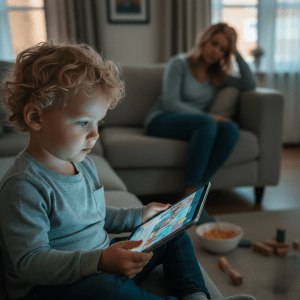

Quick note before we dive in: if you don’t have time to set all of this up from scratch, Tiny Thinks™ makes calm, story-led activity books. Screen-free activities for kids ages 3–7 are most effective when they’re calm, predictable, and easy for parents to set up—especially when you know what actually works in real family moments like meals out, flights, and evening wind-down.
👉 Download the Free Calm Pack or shop Tiny Thinks™ workbooks by age if you want a ready-made calm-play system.
- Key Takeaways
- Why Screen-Free Time is a Gift for Your Child
- How to Easily Start Your Unplugged Family Adventures
- Fun Outdoor Activities to Get Everyone Moving
- 1. Nature Scavenger Hunt
- 7. Gardening Together
- 8. Picnic in the Park
- Creative Indoor Play for Rainy Days
- 4. Indoor Obstacle Course
- 6. Creative Arts and Crafts
- 9. Puppet Show Performance
- 10. Dance Party at Home
- Simple Supplies You Might Already Have at Home
- Cooking and Kitchen Fun for Little Chefs
- 2. DIY Cooking Projects
- Easy Recipes Kids Will Love to Make
- Quiet and Cozy Activities for Family Bonding
- 5. Family Board Game Night
- 3. Storytime Under the Stars
- How to Make Reading Fun for Everyone
- Building Lasting Memories Without Screens
- Tips for Making Screen-Free Time a Regular Habit
- How to Handle “I’m Bored” from Your Kids
- Balancing Tech and Unplugged Time in a Modern World
- Conclusion
- Frequently Asked Questions
- What are the benefits of screen-free activities for kids?
- How do I start screen-free time without pushback?
- What if my child says, “I’m bored”?
- How can I make outdoor time engaging without spending money?
- What indoor activities work well on rainy days?
- How do I balance tech and unplugged time?
- What easy kitchen projects are safe for kids?
Key Takeaways
- Screen-free time develops attention, autonomy, and peace when activities are age-appropriate and remain quiet and predictable. Start small with short daily blocks and grow the routine over time.
- Stimulate creativity with hands-on play, including scavenger hunts, crafts, puppet shows, and dance parties. Maintain a revolving supply bin to keep set-up fast and fun.
- Unite your family with classic activities such as board games, gardening, and picnics. Let each family member select to increase buy-in and variety.
- Keep outdoor time active and easy with nature walks, relay races, bike rides, and seasonal checklists. Sprinkle in soft learning by counting discoveries, naming plants, or monitoring the weather.
- Gear up for the rainy days with indoor obstacle courses, themed busy boards, and blanket-fort storytime. Utilize timers, charts, and visual cues to help make transitions away from screens a little easier.
- Make the kitchen into a laboratory for safe, age-appropriate recipes and tasks. Show them some measurement in metric and reward hard work with a family tasting.
Screen-free activities for kids consist of tactile play, backyard sports, art projects, books, and basic experiments. These alternatives develop attention, manual dexterity, and interpersonal communication.
Popular examples range from LEGO creations to clay statues, planting seeds, scavenger walks, and story time exchanges. These short, inexpensive setups work great at home, school, or travel.
To keep it fresh, rotate themes and alternate between individual and collaborative projects.
Why Screen-Free Time is a Gift for Your Child
Screen-Free Time creates focus, imagination, and strong bonds. It encourages improved sleep and habits that last.
To encourage concentration and independent play, pair activities with age and ability. Toddlers thrive on chunky blocks, water play in a shallow bowl, and rice or clean sand bins for textures. Three to five year olds can sort buttons by color, build a train track, or do simple puzzles with twelve to twenty-four pieces. School-age kids might craft a reading nook, draw a tableau from their day, or construct a cardboard fortress with tape.
Brief, explicit arrangements establish the mood for independent play. Research indicates kids younger than five years absorb most effectively from live, tactile interaction with parents, so a little coaching in the beginning facilitates continued involvement. Over time, this type of independent play lengthens their attention span and reduces the demand for fast screen highs.
To encourage calm and emotional regulation, choose low-noise, predictable tasks. Clay rolling, bead threading, and gentle matching games steady the rhythm. A silent ‘blue things in the room’ round or leaf rubbings on paper anchor the senses.
Screens around bedtime associate with sleep disturbances. Consistent, screen-free rituals signal the mind to unwind. A simple wind-down plan works well: bath, two short books, soft light. Kids fall asleep quicker, and mornings tend to run better as well.
To inspire innovation, rely on hands-on projects and games that scale with your child. Cardboard engineering, paper weaving, and open-ended art allow kids to experiment with concepts and observe results quickly. Family prompts spark play: “Build a bridge that holds three toy cars,” “Draw a map to a hidden snack,” or “Act out a market with play food and set prices.
Hands-on play and real-world chores trump screens for learning boosts in toddler-aged kids. A screen-free week tends to liberate space for novel pursuits such as baking, nature drawing, or basic coding with unplugged logic cards, and those become enduring passions.
To reinforce connection and conversation, schedule communal, screen-free periods. Ten minutes after dinner for a mini board game, a weekend walk where everyone finds one weird-shaped rock, or a family recipe prepared together.
Screen-free time redirects attention to others, cultivating connection, trust, and inside jokes. It fights against dangers associated with intense usage such as language delay, attention fatigue, and imposter syndrome and lays down a foundation for beneficial habits down the line.
How to Easily Start Your Unplugged Family Adventures
Unplugged Family Adventures establishes regular routines that keep device-less time easy and enjoyable. Plan a definite daily or weekly slot, even 30 minutes in the late afternoon or a two-hour block on Saturday morning. Let kids help shape that time.
Request one inside and one outside selection for each week. A short list might be cloudwatching Tuesday, LEGO build Thursday, and nature walk Sunday. Habit diminishes resistance and agency increases engagement.
To make short starts simple, organize an activity bag or basket. Store it by the door or in the car. Include crayons and a notepad, a deck of cards, a small kite, a magnifier, a light ball and a handful of classic games.
Include tape, string and chalk for open-ended play. On extended excursions, add in a basic craft kit and a collapsible bird field guide. If you’re traveling or waiting, whip out Simon Says, freeze dance, or a mini puzzle. These low-effort selections keep hands occupied and temperaments even.
Use visual cues to reduce friction when you plan to unplug the screens. A quick chart indicates the days unplugged slot and activity option. A sand timer or digital one set to vibrate assists kids in pacing themselves.
Couple the screen time conclusion with an obvious signal, such as opening the activity basket or going out on the balcony to observe the sky. Some families experience easier transitions when the following jump-off begins immediately, for example, “timer dings, put on shoes, head out for a quick walk.
Make it more exciting with turns. Every family member chooses a screen-free activity for the day or week. Alternate options so everyone gets to have their voice heard.
They can be as simple as a backyard scavenger hunt, a costumed play trip to a ‘store’ with price tags made from sticky notes, or a quick trip to a local museum or science center. A pick can be as minuscule as cloud shapes on the grass or as huge as a weekend camping trip that puts the group into the great outdoors, unplugged and under the stars.
Rely on simple touchstones for education and peace. Reserve time for reading, drawing, or LEGOs. Stir in pretend play such as making meals or opening a stand, which encourages interpersonal and cognitive development.
For easy adventures, explore a new block on foot, chart a route, and search for three new birds or buildings. Nature scavenger lists make any park trip a mission. Sky checks at dusk instruct pattern and bird watching crafts concentration.
Fun Outdoor Activities to Get Everyone Moving
Fun Outdoor Activities to Get Everyone Moving provides families with a roadmap to screen-free time filled with real movement and shared laughter.
To ignite their curiosity, organize backyard camping or a nature scavenger hunt. A little tent, a safe fire pit or lanterns, and a star map transform a yard into a mini-campsite. Make dinner easy by using foil-wrap veggies. Sprinkle in rapid-fire tasks such as pitching the tent or tying fundamental knots to cultivate hands-on ability.
For scavenger hunts, write a list with items that fit your location and season, like a smooth stone, a pine cone, three bird calls, or a leaf with serrated edges. Timed rounds add pace for older kids, while picture prompts help younger ones. Nature scavenger hunts encourage attentiveness and can transition into a sound hunt that records wind, rustling leaves, and faraway traffic.
For active play, schedule timeless games that scale to any sized group. Tag, hide and seek, and hopscotch require minimal prep and occupy kids for hours. Sprinkle in ‘Red Light Green Light’ or ‘Bandaid Tag’ for fast, anywhere action—a driveway, a park border, or even an open hallway during a downpour.
Construct a basic three-station relay, like a 10-meter sprint, a wood plank balance beam, and a crawl-under rope. Obstacle courses can employ cones, cardboard boxes, and chalk lines. Throw in cornhole and Bocce Ball for some turn-taking, polite rivalry. For teens, archery at a professional range teaches focus, form, and confidence with defined targets and safety guidelines.
To fold movement into daily life, schedule in family walks or bike rides. Short loops of 1 to 3 kilometers after dinner help with a steady routine and better sleep patterns. Parks and nature centers will often map trails with distance markers and wildlife to look for, providing a mission for checklist-loving kids.
Some state parks have loaner binoculars, junior ranger booklets, or archery demonstrations on weekends. On scorching days, trade your trails and parks for a trip to the splash pad, fly kites in an empty field, or have an easy water balloon toss that quickly refreshes everyone.
To maintain momentum, write up a seasonal list and have kids choose. Spring could include cherry blossom walks and frog spotting. Summer leans into kite days and water balloon rounds. Autumn accommodates leaf pile jumps and Bocce Ball on hard earth.
Winter reserves room for crisp scavenger races and garage-taped, chalkless hopscotch. A giant lawn Twister board, sprayed in eco-safe paint, transforms any season into a silly, full-bodied stretch.
1. Nature Scavenger Hunt
Nature Scavenger Hunt builds focus, sparks curiosity, and gets kids moving outdoors. It is perfect for mixed ages, scalable to various environments, and injects genuine screen-free learning.
To construct age-appropriate lists, pair items to ability and access. For toddlers, keep it easy with ‘a round rock,’ ‘a yellow leaf,’ or ‘bark that feels rough.’ For school-age kids, include specific things such as “three types of seeds,” “a leaf with visible veins,” or “bird sound.” In a city park, employ usual suspects like clover, pine cones, and ants.
Backyard into a scavenger hunt with garden herbs, cloud shapes, or a snail trail after rain. Themes keep focus and aid with ideas. A color hunt might require five green things and two red. A shape hunt searches for a star shape in a flower or a spiral in a shell. A numbers hunt goes after things in collections, such as four sticks of equal length or ten small stones.
For younger kids and pre-readers, printable hunts with recognizable icons take the pressure off. A line drawing of a feather or acorn directs them quicker than words. Your own card set does the trick. You can use photos you take on your phone and print afterwards. Laminate for reuse with dry-erase markers.
Include a “bonus box” for sensory activities that require no reading, such as “soft”, “wet”, or “smooth.” Embed soft logic into the exercise. Have kids sort finds by size, color, and texture. Have them count petals, compare leaf edges, or line sticks from shortest to longest. Short prompts work best.
Until the wind came. That is heavier even though it is smaller. How many legs does the beetle have? These cues train attention, not just collection. Make the time outside into a mini field lesson. Discuss weather signs, such as cloud types and wind direction via a leaf toss.
Find bird footprints, puppy paws, or bike treads in wet dirt and record the pattern. Name plant parts, then match them on a real stem. Tools add focus without complication. A small camera or phone camera records finds for later discussion. A magnifying glass reveals vein nets on leaves.
Binoculars are useful for birds that stay far away. An insect net is handy for catch and release. Try a basic code such as “look, note, let go” to demonstrate consideration for living things. Have kids set the next hunt. They pick five to ten goals, write or draw the list, and direct the path.
This develops planning and problem-solving. Maintain a “nature box” or “nature table” to showcase safe items such as seed pods, shed bark, or vacant snail shells. Label and date pieces to keep track of seasons. The box gets kids to slow down and appreciate little things they would otherwise breeze past.
It remains inclusive with distinct roles. One kid eyes, one writes, one carries equipment. Distance remains short, about 200 to 500 meters, to conserve energy. Combine standing breaks with mini-walking sprints. Wrap up with a fast share circle.
Have each child present one discovery and tell one thing they learned. That quick wrap increases retention and transforms the day into development, not just a stroll.
7. Gardening Together
Okay, Gardening Together cultivates hands-on skills and zen focus all while getting kids outside and moving! Short tasks suit little hands and little attention spans. Give everyone some easy tasks by age.
Toddlers can water with a wee can and pat soil around seedlings. School-age kids can sow pea or radish seeds in rows, thin sprouts, and feel for moisture. Older kids can stake tomatoes, blend compost into beds, and gather ripe lettuce. Mix it up, switching time so each kid gets a turn planting, watering, weeding, and picking.
Employ definite markers of progress, such as counting new leaves or measuring stem height with a centimeter ruler. To inculcate responsibility and patience, assign each kid a plant of their own. Label pots with names and weekly objectives like ‘keep soil moist, not soppy’ or ‘prune dead leaves on Sunday’.
It grows for weeks, sometimes months and that gap teaches follow through. A sunflower grows between 1.5 and 3 metres from spring to late summer. Kids can chart the growth on a wall chart. Failures occur. A sagging basil plant or seeds that won’t sprout demonstrates why water, light, and timing are important.
Celebrate consistent nurture, not merely the end bounty. Use garden time to demonstrate simple science in obvious ways. Walk through a plant’s life cycle from seed, sprout, flower, and fruit with a fast grower like radish that matures in 25 to 35 days.
Compare soil by touch. Sandy soil feels gritty and drains fast, clay feels sticky and holds water, and loam feels soft and crumbly. Sprinkle in some compost and observe as worms, beetles, and fungi turn scraps into nutrients. Highlight pollinators in action and how flowers nurture bees and butterflies.
Plant nectar-rich flowers such as marigold, zinnia, or lavender and leave a shallow water bowl with stones for a landing pad. Link the tiny plot to the broader ecosystem with facts kids will love. To turn it into a family affair, plant out a little herb box or a 1 x 2 metre bed.
Herbs such as mint, chives and parsley provide immediate victories, consistent fragrance, and convenient snips for recipes. Organize a few crops that ripen at different times to maintain interest across months. Begin with peas in cool weather, then beans and zucchini as days warm.
Cook with what you grow. Chop cherry tomatoes for a salad, mix basil into an easy pesto or steep mint leaves to make tea. Record difficulties as work. Slugs, heat waves and early failures will arrive. Experiment with barriers, mulch to retain moisture and replant as necessary.
Capture progress, such as a weekly shot of a sunflower next to a marked stick, making the long arc clear and motivating. For many families, the shared chores, the dinners, and the tiny victories bring them together and develop a consistent appreciation for the work that goes into food.
8. Picnic in the Park
Picnic in the Park ranks high in the low effort and high payoff column. Fresh air, low prep, and genuine face time. Families and friends use picnics to unwind, share food and conversation, sans screen. A lot of us schedule them during the hot months, but pleasantly warm days in spring or fall are ideal.
To pack smart, keep snacks simple and in mini bowls or bags. Bite-size fruit, cheese cubes, crackers, and cut veg all travel well. Wraps, mini sandwiches, or rice balls keep their shape on a blanket. Don’t forget a thermos of cold water or lemonade too and a tub for ice. Bring a thin blanket, reusable cups, and wipes. Most folks brought a basket or soft cooler for convenience. Clean-up is fast with a little trash sack. The point is easy setup and easy pack-up.
For play, throw in a few timeless pieces that appeal to multiple ages. A ball backs quick rounds of pass, easy soccer, or catch. Bubbles attract both toddlers and young children. A jump rope or chalk sets up solo play or group rounds. Decks of cards, a yo-yo, or frisbees take up little space and require no plug-ins. One little kit can translate into an hour or more of outdoor amusement.
To utilize time wisely, establish an easy beat. Dine, then switch to quick games, and unwind with chill conversation. Test out easy prompts such as ‘high and low of the week’ or two-minute true stories. The kids always lean in at the silent nibble time. A brief read-aloud with a slender paperback can be lulling. They bring families closer together, creating shared memories that aren’t torn apart by the noise of apps or alerts.
To keep picnics fresh, switch up parks or green spaces each week. A new spot gives you a change of pace and a reason to go again. Seek out shade, open fields, and a bathroom if you have little ones. Urban plazas with lawn patches work as well. Some will picnic occasionally, some often, and both are logical.
As few as one hour in the outdoors transforms the feel of a day and provides a clean screen break. A picnic remains easy to organize and appeals to a variety of group sizes. Two together, with one tote bag, is as good as a big group with two blankets. The format scales effortlessly and accommodates various diets. In all of them, they get outside, breathe, and share time.
Creative Indoor Play for Rainy Days
Creative Indoor Play for Rainy Days provides kids with a refreshing change of pace featuring hands-on, screen-free fun with minimal setup. It works across ages and small spaces and keeps costs low with things you already have!
Fort building – blankets, pillows and chairs can transform into a magical play cave of imagination. Throw a passing sheet over two kitchen chairs and spread cushions on the floor. Add a flashlight and a pile of books for some quiet time. Make the fort into a ‘train’ by lining up stools as passenger seats. A simple sign on paper can spell out clinic, library, or space camp. Rearranging furniture helps demarcate ‘rooms’ for each game and keeps the space clear and safe.
For solo play, lay down some themed magnet sets or a busy board. A metal tray or fridge door handles magnet roads, letters, and shapes great. Go for a car set with road signs or a food set for a mini “store” with play money. Activity boards with latches, knobs, and zips are perfect for toddlers and preschoolers who love to tinker. Keep it at kid level on the floor or a low table to minimize drops and noise.
To stir interest, switch up toys and games on a weekly basis. Put away half the toys, then trade them back in later. Stir in indoor games from around the world for good measure. Tchuka Ruma, a plain old seed-and-cup game, hones counting and turn-taking. Tapatan, a three-in-a-row game hailing from the Philippines, requires only a drawn grid and small markers. Short rounds enable mixed ages to play together without argument.
For energy, active play still applies indoors. Clear a hall for a soft runway, position cushions as stepping stones, or lay down tape for a balance path. Introduce a mild obstacle course: crawl under a table, leap over a rolled towel. Indoor water play adds a calm focus. Set a shallow basin on a mat with cups, sponges, and toy cars for a car wash, or angle a cutting board to make a water ramp with small boats. Having dry towels around keeps the stress down.
So simple science and crafts fill the day with care and learning. Create your own lava lamp using a clear bottle, water, oil, food dye, and a fizzy tablet. Grow some crystals using warm water and table salt or sugar. Make some crafts: clay, paint, or even homemade shakers from dry beans and jars.
Cooking adds a tasty finish. Stir up Rice Krispie treats and coat them with melted chocolate or bake plain scones for tea in the fort.
4. Indoor Obstacle Course
Indoor Obstacle Course gets everyone moving with added focus and fun, and it’s easy to set up. The short name suits snug spots and occupies little hands when days go cold or dark. Use yours in living rooms, hallways, or any open corridor.
All homes have enough equipment. Couch cushions become stepping stones, chairs and blankets create tunnels, and tape traces start lines or balance beams. Boxes, stools, and soft mats provide additional height and variety. Keep walkways clear, pad sharp edges, and set one-way flow to reduce bumps.
For fast construction, set down a tape line to walk, a cushion hop area, a chair tunnel, and then a crawl-around box.
To construct gross motor prowess, pile up activities that demand large actions. Crawling under a blankie tunnel develops core and shoulder strength. Jumping cushion to cushion develops power and landing control.
Balancing on a tape line or a low “beam” made from a plank on the floor trains ankle and hip control. Mix in some bear walks for upper body load, crab walks for coordination, and wall sits for leg strength. Tossing soft balls into a bin at the end combines both aim and hand-eye coordination.
A sample flow includes five hops, a belly crawl, a balance line, six passes of a ball around the waist, and then a two-foot jump to finish.
To give it a bit of emphasis and vigor, time each run with a phone or kitchen timer. Publish times on a paper leaderboard. Make it a light fair. Use heats, relays, or pairs play in which one kid sets cones and the other runs.
For teamwork, divide work among stations and pass a soft baton. Replace ‘fastest time’ with ‘clean run’ or ‘best balance’ to maintain more kids in the mix. Short rounds, of 30 to 60 seconds, are appropriate for most ages and really assist in keeping form.
Modify height, spacing and rules to accommodate different ages and requirements. Little ones require big steps, slow balance beams and low leaps. Older kids deal with tighter turns, longer crawls and combo moves like hop-spin-hop.
Give options at each station, like balance line or side steps, to change the level of difficulty. Incorporate visuals and light prompting for students who enjoy boundaries. Remember padding for knees and wrists.
A course can remain simple or become complex depending on advancement, available space and the mood. We all know families who create indoor courses for active play and exercise. They’re great because they develop problem-solving and confidence as kids plot plans and challenge skills.
Balance beams, tunnels and balls introduce new challenges with no screen.
6. Creative Arts and Crafts
Creative arts and crafts provide children with hands-on enjoyment, develop skills, and a definite channel for expression. The payoff shows up fast: better fine motor control from drawing, cutting, and gluing, and steady gains in focus and problem-solving. Short bursts are perfect for toddlers, while older children are good with longer, multi-stage constructions.
To help contain the mess, create a mini art station. Use a coffee table or a tray on the floor. Stock up on crayons, colored pencils, washable markers, plain paper, glue sticks, child-safe scissors, tape, and a small scrap bin. Sprinkle in a shoebox of goodies such as buttons, yarn, bottle caps, and cardboard tubes.
Label your containers and have a damp washcloth on hand. A neat station accelerates start time and transforms cleanup into a habit. For communal residences, a collapsible caddy or transparent bin keeps it transportable.
Select age-appropriate projects and pair equipment to ability. For toddlers, use big paper, fat crayons, and finger paint. Easy collage with pre-cut shapes or sticker mosaics develops grip strength and hand-eye coordination. Sensory bottles with water, glitter, and beads can calm and serve as a quick lesson in sinking and floating.
Preschoolers love play-dough or kinetic sand. Many people discover that play-dough is relaxing and aids in shape practice. For children in the 6-9 range, watercolor resist with wax crayons, nature rubbings, and bead threading fit nicely. Older kids can get into origami, which demands patience and clear instructions, or easy DIY toys like paper spinners and clothespin planes.
Save room for free craft time. Give a prompt, not a script. A box of loose parts and a theme like “mini city” ignites new builds! Post a printable ‘how to’ for themed days, like paper crowns for a birthday or leaf prints in the fall. DIY instruments bring the mix to life with sound.
Wrap rubber bands around an empty tissue box for a small string box, then vary band widths to test pitch. These exercises strengthen trial and error, a fundamental member of the craft problem-solving tribe.
Get the family involved with group activities. Chalk art on a sidewalk or driveway transcends age and fosters collaboration. Sock puppets with yarn hair and button eyes encourage impromptu skits and teach children rudimentary storytelling and stage voice confidence.
When you’re done each time, showcase the work. Hang a clip line in a hall, set a revolving frame near the writing table, or dedicate a shelf to clay pieces. Consistent exhibition demonstrates that hard work counts and nurtures persistent belief.
9. Puppet Show Performance
Puppet show is a cheap, effective play that combines craft, verbal, and social skills. It works for a broad age range and requires minimal materials. Kids receive hands-on work and a transparent stage for ideas, which nurtures creativity, imagination, and expression in a very tangible way.
To make puppets quickly, grab socks, paper bags, or simple craft bits. A button-eyed sock with some yarn for hair works great. Paper bag puppets with drawn-on faces and felt tongues read beautifully on a little stage. For robust constructions, adhere felt to card and then tape it to popsicle sticks for easy stick puppets.
Finger puppets made out of felt scraps slip onto little hands and fit fast scenarios. For a partially darkened room, shadow puppets cut from card and taped to skewers throw crisp shapes on a wall or sheet.
To mold the story, pen brief scripts or have children riff on dialogue, establish a goal, introduce a complication, and then wrap up with a solution. For instance, take a beloved book scene and switch the location to a park or market, or a family trip involving losing a hat and finding assistance from a benevolent merchant.
Free form scenes develop quick thinking and reinterpreting classic stories cultivates language and literacy. Add a feelings check by having a puppet identify an emotion and then demonstrate a calming step, like taking slow breaths or requesting assistance, which makes the show a great educational resource about feelings.
To stage, turn over a table and drape a cloth front, scarf a couch backrest or cut a big window in a cardboard box. Maintain the stage at kid chest level for easy arm extension. Set a lamp behind a white sheet for cover shadow scenes. Designate a little offstage area for props and swift changes.
Puppet show – instruct in one basic rule for smooth control. Puppets should only move when they are talking or doing something. If she does not speak the puppet line, the puppet remains motionless. That neat rule keeps attention on voice and movement.
To increase buy-in, get the entire family involved. Switch roles. One races music, one runs lights, one reads lines, and kids switch as performers and audience. The group work turns the build, the script, and the show into a collaborative effort, which increases focus and keeps the session dynamic and engaging.
10. Dance Party at Home
Dance Party at Home boosts mood, creates fitness, and generates fast laughs. Quick movement breaks reset kids’ focus and burn energy. Set the music, and your living room becomes a safe dance party. Not a lot of gear or big plan is needed, just a few wise decisions.
Begin with a playlist of happy, family-appropriate songs and an open floor. Upbeat here means pulsing and pounding type tunes that fall into the 100 to 130 bpm range. Imagine pure pop, old school disco, K-pop, or worldwide kids’ hit albums. Five to ten songs span 15 to 30 minutes. Download songs for offline play in the event of patchy Wi-Fi.
Make room by clearing a 2 by 2 meter space, push low tables out of the way, and check that rugs are not loose. Dim lights if that helps soothe the room, but leave walkways in sight. For mixed ages, take turns with picks so each kid gets to hear a favorite! Example mix: “Uptown Funk,” “Happy,” “Waka Waka,” and two tracks from a kids’ soundtrack.
Have everyone come up with basic moves or follow simple patterns. Freestyle makes it low stress. Call out themes, ‘jump moves’, ‘spin moves’ or ‘robot arms’. For a fast pattern, try a four-step cycle like clap, step right, step left, and turn. Repeat for the entire chorus. Younger kids imitate more quickly with explicit signals and slow counting.
Your older kids can lead a round and teach two steps. Rotate leaders every song to maintain buy-in. A quick freeze game works great too. Music stops, bodies freeze, and then move again on the beat.
Props add a playful dimension without the mess. Light scarves provide big arm waves that feel dramatic yet safe. Hats or costume bits make it a mini show! Little flashlights create beam trails in a darkened room, which, quite frankly, gets shy kids participating through the light play first.
For noise-aware kids, try soft ribbons or foam batons. Remember to make all props soft, light, and easy to hold. A laundry basket by the sofa cures quick cleanup. One with props and one without keeps focus from drifting.
Tap dance time is a consistent evening energy buster. A 15-minute dance party roughly an hour before bed assists the body in getting a clean arc from motion to wind down. Follow with water, a stretch, and a little reading. Mark it on a wall calendar for regularity.
Two to four nights a week is plenty for habit. For tiny houses, micro batches of three tunes post dinner. On weekends, go for 25 with a theme night, such as “retro” or “around the world.
Simple Supplies You Might Already Have at Home
Simple Supplies transform free time into immediate, active play with no prep and low cost. The benefit stays clear: kids stay busy, think on their feet, and use what is around.
To begin, raid your kitchen and closet for everyday supplies. Cups, spoons, tape, string, rubber bands, and cardboard boxes cover most every need. Include paper, pens, clothespins, bottle caps, and safe lids. A short list helps: ten paper cups for stacking, masking tape for tracks, one large box for a fort, and a spoon set for sound play.
A tea towel can become a cape or a sail. A shoe box becomes a garage. A tray keeps marbles or beads in one place, aiding cleanup and focus.
For inspiration, consider easy applications that span ages. Stacking and balance tasks develop concentration and refine motor skills. Cup towers, bridge spans, and ramp runs set under a tray with your cups, rulers, and books. Tape car lanes on the floor or a hop trail.
Make sound tools such as dry rice in a sealed jar or elastic bands around a box for a small harp. Designate paint paper art stations with tape resist shapes, leaf rubbings under a sheet, and cut sponge stamps. Everyday math slips in too: count, sort by size, group by color, and measure length with spoons or blocks.
To make it slick, stash all supplies in one transparent container. Just label the bin and add small bags or boxes inside for sets like caps, bands, and markers. Put the bin on a low shelf to break the ‘ask for help’ loop.
When time is tight, pull the bin out and drop one prompt card on top, like ‘Build the tallest cup tower you can’ or ‘Make three sounds with kitchen tools.’ A timer can create a defined structure, such as ten minutes to build, five to test, and two to clean up.
To up the ante, make it a home-only challenge. Cut back the equipment to five pieces and request a new game, toy, or tool. For instance, with cups, tape, and a spoon, kids can create a marble run that strikes a bell.
With a box, some string, and clothespins, they can hang up a mini clothesline and match sock pairs. With paper, caps, and markers, they can sketch out a board game with rules and a point track. Rotate themes like travel, space, or garden week to keep the ideas fresh and tied together.
Cooking and Kitchen Fun for Little Chefs
Cooking develops authentic life skills and keeps hands occupied, screen-free. Kitchen fun makes daily chores into together time, too. We give our thumbs-up to cooking and kitchen fun, a clear win for focus, fine motor skills, and family bonding.
To pair tasks with age, pair them simply and safely. They can wash soft fruit in a bowl, tear herbs, or sprinkle toppings. Pre-school and younger children can mix batter, pour dry oats into a jar, or create yogurt parfaits with layers of fruit and granola.
Older kids could crack eggs into a separate cup, knead soft dough, or mold veggie patties. Break steps into small parts. For example, with sandwiches, lay out bread, spread hummus, add sliced cucumber, then press and cut. Each step seems achievable and fosters confidence.
For some math and order, introduce measuring and sequence as soft lessons. Counting scoops of flour acts like a simple number drill. Using 250 ml of milk illustrates volume in a very transparent manner. Fractions appear in every half cup and quarter teaspoon.
Reading a short recipe guides sequence: preheat, measure, mix, cook, and clean up. Easy — like pancakes. Sift 200 g of flour, 1 tablespoon of sugar, and 1 teaspoon of baking powder. Stir in 300 ml of milk and 1 egg. Fry for 2 minutes on each side. Kids observe cause and effect in real time.
To construct autonomy and planning, have kids select what to make from two to three options. Make sure it is a balanced list and achievable. Selections such as veggie wraps, fruit salad cups, or baked potato boats shine!
Help make a mini plan: list ingredients, check the pantry, and set a time to cook. A weekly ‘kid pick’ snack, like popcorn with spice mix, provides rhythm. For a more complete assignment, go for a theme night, like ‘rainbow plate’ with red tomatoes, orange carrots, yellow corn, green peas, and purple cabbage.
To keep the space safe and clean, establish firm rules and follow through. Wash hands for 20 seconds before and after touching food. Tie hair back. Carve Swampy Simple and wipe spills immediately with a damp cloth.
Educate on the safe zone around heat and blades. For toddlers, try blunt knives with soft foods such as bananas or boiled potatoes. Turn saucepan handles in on the stove. Raw meat remains on its board, and hands and implements are washed after touching it. Supervision remains even for basic activities.
2. DIY Cooking Projects
DIY cooking develops actual capabilities and keeps hands occupied screen-free. Kids get to practice their fine motor moves, basic math, and safe kitchen habits. The reward seems yummy and accessible for almost any age.
Begin with no-bake or easy assemble projects to reduce stress and mess. Fruit kabobs use washed berries, banana slices, and melon cubes on blunt sticks. Lay the bowls in a row, add a yogurt dip, and substitute seeds for crunch. Sandwich faces go over well, too. Spread out some whole-grain toast, hummus, cucumber slices, cherry tomatoes, and olives. Kids smear, layer, and create faces with round eyes and curved pepper strip smiles.
Energy bites provide an additional quick win. Combine oats, nut or seed butter, honey, and a couple of add-ins like raisins or walnuts. Cool for 20 minutes, then portion and roll into small balls.
Creativity flourishes when kids are allowed to decorate. Cupcakes provide a blank slate. Take vanilla or chocolate bases, small bowls of frosting, and a few color sprinkles. Keep tools minimal with butter knives and spoons.
Personal pizzas introduce decision in a tidy package. Mini bases, tomato sauce, some grated cheese, and toppings like mushrooms, corn, and sliced peppers. Kids construct these in patterns or flags of color. Snack plates demonstrate this same concept with less prep. Pair with crackers, cheese cubes, carrot sticks, grapes, and a dip. Have each child plate a shape or rainbow row and eat it.
Cooking time creates a safe space to experiment with new foods. A little tasting plate by your side during the main course is helpful. DIY Cooking Projects work in the same way. Introduce contoured items in a minuscule piece and make them optional.
Think kiwi slices, roasted chickpeas, or a mild cheese. Let’s get down to textures with simple vocabulary. Crunchy, soft, smooth, or chewy. Taste words remain down-to-earth as well. Sweet, sour, salty, bitter, or umami. Associate new flavors with familiar ones. Mango is good and sweet like peach. Roasted carrots are as sweet as corn. No pressure, just steps that seem natural in the task’s momentum.
To preserve the amusement, capture the labor. Capture the steps and final plate with a transparent photo. Shoot with natural light near a window and a simple background. Print a few shots and paste them into a family recipe book with brief comments.
Include the date, the assistants, and what was successful. Over time, the book becomes a cookbook that kids can read and cook from. A communal cookbook reduces redundant queries and simplifies next time’s preparation as well.
Easy Recipes Kids Will Love to Make
Easy Recipes Kids Will Love to Make develops real hands-on skills and provides quick victories at the dinner table. The reward appears obvious. Kids get taught easy prep, safe knife use with soft foods, and measuring. Clean up remains light. Stress remains minimal.
To keep it flowing, select recipes with minimal steps and brief lists. Smoothies, salads, and trail mix are good for most ages. A Banana and Yogurt Smoothie requires fruit, yogurt, a splash of milk, and one spoon of oats for body. A chopped salad can use cucumbers, cherry tomatoes, canned chickpeas, and a lemon oil dressing.
Trail mix is perfect for days when time is scarce. Combine toasted oats, seeds, and a small scoop of dried fruit. Sprinkle with a few dark chocolate chips for a fun twist. Every recipe utilizes simple tools and takes less than 15 minutes.
For pre-readers and early readers, provide obvious visual direction. There are picture cards that display the sequence without large amounts of text. Each step gets its own card to keep the attention centered. For a smoothie set, have cards with wash fruit, peel, add to cup, pour milk, blend, and clean up.
Color-code tools as well. We use a blue spoon for yogurt and a green cup for fruit, which cuts down on mix-ups. Spread everything out on a tray to define the workspace. Short timers allow kids to monitor chill time or blend time effortlessly.
Personal choice fuels buy-in. Just arrange a toppings bar with some smart choices. For salads, provide sliced olives, sweet corn, and crumbled feta. For yogurt cups, lay out berries, chopped nuts, and honey.
We put jars of seeds, pretzel bits, and coconut flakes for trail mix. Just keep them small so the balance remains just right. Offer a basic guideline such as choose one crunch, one fruit, and one sweet. Kids gain empowerment while remaining inside a framework.
Taste tests make cooking into learning. Inquire what sounds, tastes bright, crunchy, or creamy. Taste a mango smoothie against a berry one and observe the color and thickness. Use tiny cups for side-by-side sips.
Sprinkle a little cinnamon into one and a little vanilla into another and vote. Sharing the finished plate with the entire family promotes pride. A platter of mini salads or a pitcher of smoothie left on the table shows that you made an effort.
Give specific process-based compliments such as your slices are perfectly even or the blend is nicely balanced.
Quiet and Cozy Activities for Family Bonding
Quiet and Cozy delivers tranquility, mutual engagement, and minimal preparation. It’s perfect for nights, rainy days, and any time that could use a gentle restart. Families get consistent routines and less chaos while remaining connected.
To read together, establish a little nook with blankets or a simple fortress constructed from two chairs and a sheet. Maintain a warm light and a small pile of books. Picture books are great for mixed ages, and a brief classic chapter fits older kids. Alternate lines or voices, or stop and point at something in the picture. A 15 to 20 minute read blocks screens and slows things down before bed.
For a world blend, throw in folktales from different lands or poetry with obvious rhyme. Audiobooks can play on a small speaker and kids can follow the book with a finger.
For convenient mindfulness, employ brief breathing games. Try box breath: breathe in for four counts, hold for four, breathe out for four, and hold for four. Trace a star on a card and pair a breath with each point. For wiggly kids, do five “squeezie breaths” — tight fists on the in-breath and soft hands on the out-breath.
List five things you can see, four you can feel, and three you can hear. Limit sessions to under five minutes and associate them with cues such as dimming the lights or the sound of the tea kettle. In a week, stress falls and sleep comes quicker.
To play with quiet teamwork, select puzzles, cards, or gentle board games. A 300-piece nature puzzle provides a win in under an hour. I sort edges first and then share little areas such as sky or trees. For cards, sample Uno Cooperative where players assist a common objective or Rat-a-Tat Cat with open hints for small children.
Non-competitive board games like Outfoxed or Hoot Owl Hoot keep the noise down but demand collective strategy, not face-to-face victories. Monitor the time that games conclude while on a high note, approximately 20 to 40 minutes.
To schedule daily quiet time, block a regular slot, even 15 minutes. Offer three bins: books, blank paper with soft pencils, and audio stories on a simple player. Give light rules: one bin at a time, quiet hands, and clean up at the end.
As options, combine wordless picture books, short story collections, or field guides. Drawing prompts assist in beginning, like “draw a small home” or “sketch 3 fruits.” Audio stories from public radio or library apps let eyes take a break while minds stay active.
Don’t Want to DIY Every Activity?
If you like these ideas but don’t have the time or energy to set them up daily, Tiny Thinks™ workbooks bundle the same calm-play foundations into beautiful, screen-free pages for kids ages 3–7.
- Designed for restaurants, flights, waiting rooms, and evenings
- 10–20 minute quiet-focus pages (matching, patterns, gentle logic)
- New monthly themes + a collectible sapling that “grows” over time
🍓 Get the Free Calm Pack
🍎 Explore the workbooks by age
5. Family Board Game Night
Family Board Game Night means genuine face time, consistent laughter, and painless learning without screens. The quick set-up is great for weeknights, and the speed is perfect for mixed ages. A pile of games on the table says ‘easy to organize, great to do over and over.’
To please all, select games by age and skill, not box hype. Little kids do best with short turns and clear rules. Candy Land, Outfoxed, and Feed the Woozle maintain attention spans under 20 minutes. Early readers get help with picture clues or color moves. Older kids can probably deal with one or two layered rules. Ticket to Ride, Sushi Go, and Dixit fit that bill and let parents coach without dominating.
Teens like a little more depth. Catan, Azul, and Codenames offer real choices and teamwork. Sprinkle in some cooperative titles like Pandemic or Forbidden Island when younger players fear losing. A shortcut house rule assists span gaps, such as additional clues for fresh players or fewer cards for grown-ups in Go Fish.
For fun, switch up styles so the night doesn’t feel the same each week. Strategy games work the brain and reward planning, like Splendor or Carcassonne. Word games construct vocab and clue feeling, like Bananagrams or Just One. Nothing beats the classics for comfort and low-bar access, like Uno, Connect 4, or Jenga.
Short fillers come in handy when time is at a premium. Dobble or Spot It takes less than 10 minutes and keeps the energy up between longer rounds. A tiny whiteboard makes word games into team play, even when reading levels are mixed.
To establish a habit, schedule a weekly time and honor it. A set night reduces timing arguments and slashes negotiation exhaustion. Something simple before the game starts transitions from day work to playing. Clear off the table, put a little snack bowl down, and pick out a playlist on low.
Maintain a game queue so selection time remains brief. Take turns determining the first game of the night each week. Mark victories and co-op rescues on a sticky note or a fridge chart, not to place people on leaderboards, but to record the collective record.
Game night is a soft skills lab with tangible returns. Rotation brings structure and provides room for every voice. Patience develops as they wait their turn and strategize. Well-defined rules impart lessons of fairness and how to request a move-check.
Good sportsmanship shines through in quiet victories and gracious defeats. Short debriefs help with what worked, what to try next time, and one thing someone did well. Celebrate the journey, not just the destination.
3. Storytime Under the Stars
Storytime Under the Stars combines open air, quiet illumination, and communal reading for an easy bedtime ritual that children recall. It keeps the setup simple. A little yard, rooftop, or balcony will do. Spread a groundsheet, some cozy blankets, and pack those extra warm layers.
Use dim flashlights or clip-on book lights to keep eyes cozy and bugs less attracted. A thermos of warm milk or mint tea helps underscore the transition from play to rest. In dry seasons, a star map app in daytime helps plan where to point later without screens at night.
To keep the rhythm flowing, select two or three short reads and one longer selection. Board books work for toddlers, poetry for mixed ages, and a brief chapter from a series to make the older kids happy. Folk tales go everywhere, from Anansi stories from West Africa to fables with obvious morals.
For a quick sample set, attempt one humorous rhyme, one serene nature page, and one cliffhanger chapter. Rotate readers so children have a chance with the light and feel involved in the evening’s rhythm.
Family lore belongs in this setting. Toss around a true tale from a grandparent’s school day, a travel snafu, or a first furry friend. Limit each story to less than five minutes and spice it up by including a single tangible sensory detail, such as the scent of rain on hot stone or the sound of a market at dawn.
For made-up tales, use a simple frame: a place, a goal, a twist, and a fix. Think of a garden, a lost key, a talking beetle, and a new friend. One prompt per child, with no long waits.
Props enhance the excitement without the fuss. Kids can pack a special stuffed animal, a glow-stick flashlight, or a scarf that becomes a cape, a sail, or a tent flap. A tin of smooth pebbles can substitute for stars or coins in a treasure hunt.
A pillow becomes a mountain for a little adventurer. Try to keep props small and quiet so the mood stays soft and the clean-up stays short.
Take advantage of the night to lead them to sleep. Begin 45 minutes prior to bed, dim the light every 10 minutes and use hushed voices towards the end. Close with a repeat line like “The night is kind and calm” to cue rest.
A quick breath game fits the bill. Take a deep inhale for three, hold for two, and exhale for four. Eventually, children associate books with relaxation, which forms a consistent reading habit.
How to Make Reading Fun for Everyone
ReadingFUNKids helps kids build focus, grow vocab, and bond with family. Reading Fun” reduces screen time without power struggles. The payoffs manifest themselves in academics and peaceful nights.
Allow children to choose their reading to increase buy-in and pride. Choice can be brief and informal. Comics, puzzle books, joke books, sports magazines, cookbooks, and even field guides are great options. An animal-loving kid could pick up a book on sharks. A teen might enjoy a travel magazine with big pictures and little blurbs.
Establish a minimum standard for length and format. Even a five-minute flip through a car guide counts. A little nook at home with two baskets makes choice feel real. Switch out library books every two weeks to mix things up.
Bring text alive with voices, props, and quick questions. A squeaky mouse voice or a slow giant voice inserts pace and humor. A scarf as a pirate bandana transforms a chapter into a mini scene. Pop some light prompts to keep minds active.
What would you eat on this boat? Which clue looks key? Make it quick and entertaining, not a test. For non-fiction, go for a fact hunt. Discover a great date or a new word. When it’s a poem, clap out the beat. For beginning readers, echo read one line each.
Establish a family reading challenge to instill consistent momentum. Set an obvious goal and map it in plain view. Options that work well include:
- We use minutes read per week, for example, 100 minutes spanning the family.
- Pages per day, like 10 pages before bed.
- Or have a theme count, like five animal books in a month.
Grab a wall chart or fridge grid. Decorate with stickers per session, not per page. Celebrate little victories with easy rewards. A new bookmark, a selection of the next read, or a spontaneous weekend trip to the library.
Share progress at dinner, one highlight from each person. Make the tone light and fair. No shaming if you miss a day.
Bring in themed story times to create the feeling of an event. Pajama night with warm milk and soft lights slows down the pace. Picnic reading on a blanket transforms a park break into a book hour.
A bus ride with ‘mystery day’ pairs a quick whodunit with a pocket magnifier. A baking read combines a mini recipe with cookies. Rainy day poems with hot cocoa and a pile of haiku take only 20 minutes.
The goal remains straightforward. Connect books to little, real moments.
Building Lasting Memories Without Screens
Building memories rewards with genuine interaction, definitive rituals, and uncomplicated mementos. Commonality lays the foundation. Family outings go well when they have a specific objective and a straightforward agenda. A quick hike on a trail marker, a public pool, or a local museum gives kids a change of scenery and some space to spread out.
Cooking projects assist at home with hands-on activities. Mix flatbread dough, wash, and chop fruit for a salad or form dumplings with specific jobs by age. Imaginative play contributes white space. Lay out clay, blocks, or old boxes and tape. Add one prompt, like build a bridge or create a miniature shop.
Try to keep sessions under an hour for younger kids to maintain attention. To help memories stay fresh, capture small moments in low-effort ways. A quick hand-shot or first tower standing for a minute is enough. Match photos with an easy what, where, who caption.
Drawings work for kids that like to draw. A quick pencil sketch of a leaf from the park speaks a poignant narrative. A memory journal captures it all in one place. One page per day or week, with three lines for highlights, one mini sketch box, and a date.
Employ metric notes, such as walked 2 kilometers or baked 12 cookies, to make progress simple to follow over time. Build buy-in by having kids select and rank their top screen-free picks. Use a brief list they can nail down, such as kite day, bike ride 5 kilometers, bake banana bread, and paint with watercolors.
Have each child label a favorite with a sticker. Schedule the next two weekends from those selections. A family board on the fridge keeps the plan clear. Incorporate a weather check and a budget line, including bus fare or park entry, so the plan doesn’t slip.
To help quality time stick, establish a regular rhythm. Something like Saturday morning from 9 to 11 establishes a cue that kids come to rely on. Keep it small to keep it from being stressful. A picnic at a local park is inexpensive and can easily fit into a two-hour frame.
Take turns so that each person is captain once a month. For instance, one week a child chooses the game, the next an adult teaches a recipe. Consistency builds a bank of shared wins spanning months and years.
Tips for Making Screen-Free Time a Regular Habit
TIPS FOR MAKING SCREEN-FREE TIME establishes a regular schedule kids can keep. A plan reduces friction, provides routine, and allows space for play that cultivates attention, motor coordination, and social connection.
To establish clear boundaries, decide when screens are on and off, then communicate the schedule to kids in simple terms. Fixed windows work best, like 30 minutes after homework or none before school. Tie rules to places as well, such as no screens at the table or in bedrooms.
Describe the ‘why’ in simple terms, such as better sleep and less eye strain. Keep them the same on weekends and holidays, with minor adjustments for vacations. For example, one movie on long flights, not a whole day of games. Just write the rules on a card on the fridge so no one argues about it in the moment!
To substitute for screens, create a routine that fits age and interests. Leave out open-ended options to prevent stalls. For 3 to 5 year olds, switch up the activities with short blocks, such as 15 minutes of block towers followed by 10 minutes of sticker art.
For 6 to 9 year olds, try skill builders, such as a backyard scavenger hunt, a simple card game, or a LEGO build prompt. For ages 10 to 12, sprinkle in some projects that instill pride. Bake flatbread, sketch out a floor plan of their bedroom, and learn three types of knots.
Flip active and quiet periods so energy stays balanced. Prepare a convenient grab-and-go box of crayons, tape, yarn, popsicle sticks, and a deck of cards. Switch them out weekly so it stays new.
To ease the transition, incorporate visual schedules and timers. It has a picture chart on the wall with the flow, like snack, craft, read, and outside time. A sand timer or silent visual timer lets kids experience time without your nagging.
Use the same countdown cues every day. Say, “Five minutes left, then puzzle time,” at the same place in the routine. For younger children, use icon cards they shift from “to do” to “done.” For older kids, establish a phone timer that chimes in the kitchen, not in their hands, to minimize quick peeks.
To model screen-free habits, leave your own device out of reach during these same blocks. Store it in a bowl by the door or in a zip pouch. Do a parallel activity, such as reading a book or doing a quick stretch routine.
Celebrate small victories. Say out loud, ‘I turned off the TV and did 10 minutes of meditation.’ Jump in for a minute or two of their play, then back off. Kids emulate what they see, not what they hear.
If you want ready-made routines instead of planning activities every evening…
If you like these ideas but don’t have the time or energy to set them up daily, Tiny Thinks™ workbooks bundle the same calm-play foundations into beautiful, screen-free pages for kids ages 3–7.
- Designed for restaurants, flights, waiting rooms, and evenings
- 10–20 minute quiet-focus pages (matching, patterns, gentle logic)
- New monthly themes + a collectible sapling that “grows” over time
🍓 Get the Free Calm Pack
🍎 Explore the workbooks by age
How to Handle “I’m Bored” from Your Kids
How to Handle “I’m Bored” transforms a sticky moment into an easy-to-execute plan. The objective remains obvious. Impose structure, maintain choice, and ignite small wins quickly.
Begin with a boredom-buster jar or a quick-hit list that kids can select from in a moment. Put simple slips of paper in a jar or on a fridge page. Make stuff snappy and obvious so it does the work unaided. Shoot for 10 to 20 and exchange a handful each week. Great picks employ low prep and everyday household stuff.
Sample challenges might be a 10-minute Lego build with a theme, draw a map of the home, fold one paper airplane and test flight distance, cup tower to 50 centimeters, copy a snack label in neat hand, or a 5-item scavenger hunt, for example, ‘soft, round, shiny, red, noisy’. Spice it up with a few outdoor choices when safe, such as leaf rubbings with crayons, hopscotch chalk grid, or a 3-lap run around the yard.
To develop resourcefulness, challenge kids to create games or projects from what they’ve got. Give them a minimal frame and put it on their head. Just say, ‘Use three things from the recycle bin to create a tool,’ ‘Create a mini museum with five objects and write tags,’ or ‘Turn socks into puppet guests and host a two-minute talk show.’
Provide a time box of fifteen minutes to start, then a quick share time. Give light guardrails, not fixes. Give them a question that unlocks the next step, like “What could be the rule that makes it fun?” or “How would someone win this?
Choice matches kids’ mood and energy. Provide a rapid fork between independent and collaborative play. Keep one option calm and one option active. For instance, solo options could be dot-to-dot pages, a jigsaw, or sorting coins by year.
Maybe your family options are a round of Go Fish, a five-round charades set, or a blindfolded kitchen taste test with three safe foods. Present the two paths with equal emphasis. Have the child choose and swap out after a predetermined amount of time, for example, 20 minutes, which keeps it equitable and consistent.
This brief talk about boredom puts them in the proper frame. See it as a pause that can spark new ideas. Use simple words and a quiet tone. Remind them that a bored brain can discover new connections and initiate new projects.
Highlightable evidence comes post-activity. For example, notice the new rules they wrote for a ball game or the new way they wrapped a scarf. That feedback connects boredom with growth.
Balancing Tech and Unplugged Time in a Modern World
Balanced Tech assists children in developing attention, improving sleep, and enhancing family routines. It smooths out daily screen battles.
To establish effective guardrails, delineate distinct tech-free zones or periods. Meals, car rides less than 30 minutes, and the hour before bed are no-brainers. Park phones in a basket at dinner. Park tablets in a shared drawer after 19:00. Buy a cheap alarm clock and kids don’t need a phone at night. Convenient cues are helpful, such as a table mat that only comes out for meals.
For younger kids, have a picture card that reads ‘no screen time now.’ For teens, post the schedule on the fridge so the rule resonates steadily, not arbitrarily.
To build momentum, connect screens to work and rest, not to emotion. Make doing something screen-free a brief reward or intermission after homework or chores. Ten minutes of sketching after math, a bike loop after dish duty, a puzzle sprint after reading. Make prizes brief and scheduled.
For example, 20 minutes of games follows 40 minutes of work. Employ a “work then play” timer. For instance, two 25-minute study sessions are separated by a 10-minute Lego interlude. This rhythm conditions timing and reduces procrastination.
To maintain buy-in, discuss how unplugged time benefits. Tie it to goals kids care about: faster sport skills, steadier sleep, less eye strain, and more time for friends. Share easy truths they can try. Blue light interferes with melatonin, so I usually fall asleep to paper books in less than 20 minutes.
Outdoor play for 60 minutes a day connects to better mood and concentration. Ask kids to assist in establishing family tech guidelines. Have them choose one tech-free time period and one favorite screen-free activity for that time period.
Make the rules together, such as no phones in bedrooms, chargers in kitchen, and a maximum of 2 hours of screens on school days. To maintain the plan equitable, record what functions and tweak. Perform a quick check every Sunday.
What hours generated resistance and why? Bend a rule if it serves the objective without compromising it. For instance, shift gaming to weekends if weeknights seem hectic. Toddlers? For teens, permit social chat in designated windows and ban devices from bedrooms at bedtime.
Don’t just say it out loud, use a tracker in full view — perhaps a weekly chart noting your study time, outside time, and sleep. Aim for consistent tendencies, not ideal days.
Conclusion
One Simple Way to Make Screen-Free Time Easier. You don’t need a perfect system to reduce screen time. Start with a few calm, predictable activities that work in real life: meals, travel, evenings, and “I’m bored” moments.
If you want a ready-made option instead of planning everything yourself, Tiny Thinks™ workbooks give you:
- Screen-free calm for daily life (meals, flights, waiting rooms, evenings)
- 10–20 minute pages that build focus, matching, patterns, and early logic
- Story-led themes kids actually want to come back to
🍓 Download the Free Calm Pack – try it during your next dinner or flight.
🍒 Shop Tiny Thinks workbooks (Ages 3–7)
Frequently Asked Questions
What are the benefits of screen-free activities for kids?
Screen-free time increases attention, creativity, and sleep. It reinforces physical fitness and interpersonal skills. Kids learn problem-solving, emotional regulation, and family connection. These advantages assist both in the classroom and at home.
How do I start screen-free time without pushback?
Set definite, small time increments. Provide options, such as a scavenger hunt or arts and crafts. Participate to lead by example. Keep it enjoyable and routine. Nudge time upward. Recognize the little victories.
What if my child says, “I’m bored”?
Validate the emotions. Offer a simple prompt, like “Pick one: build a fort, draw, or read.” Maintain a boredom box with materials. Vary the activities to keep it interesting. Don’t turn on a screen as an easy solution.
How can I make outdoor time engaging without spending money?
Use nature scavenger hunts, park picnics, or garden work. Make missions such as tallying bird chirps or charting a route. Bring simple tools like a notebook, magnifier, or ball. Make it a habit.
What indoor activities work well on rainy days?
How about an obstacle course, art station, puppet show, or dance party? Use pillows, tape lines, and cardboard. Keep directions easy and timed. Combine individual and family challenges.
How do I balance tech and unplugged time?
Establish clear boundaries and screen-free areas. Designate daily unplugged slots. Pair screen time with activity or creativity time. Check for content quality. Be consistent and set the example.
What easy kitchen projects are safe for kids?
Try no-heat recipes: fruit skewers, yogurt parfaits, or sandwich art. For older kids, plain old baking with supervision does the trick. Introduce hygiene, measuring, and clean-up. Keep chunks small and steps obvious.