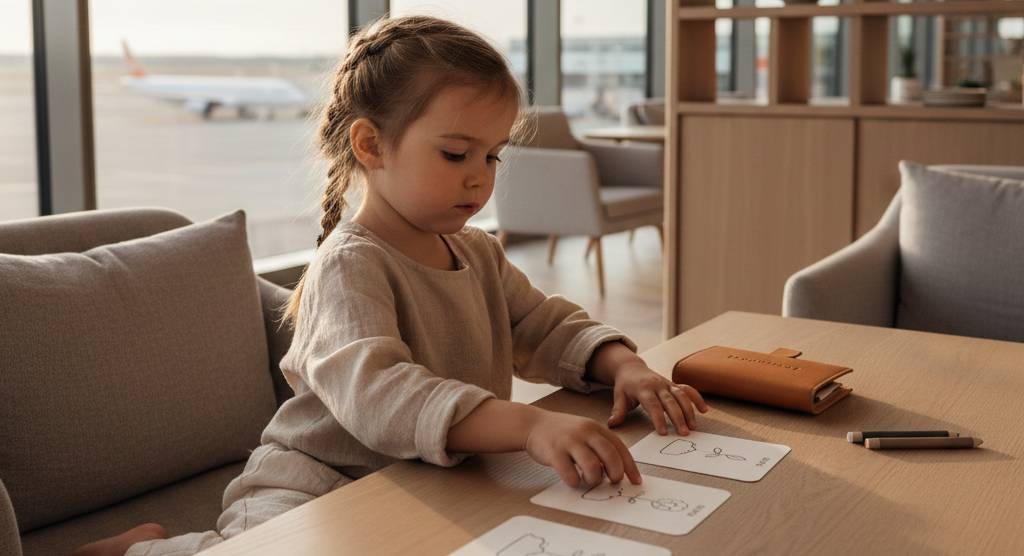
Key Takeaways
- Sequencing activities nurture brain development, logical thinking, and storytelling, providing your child with a solid foundation for reading, writing, and problem-solving.
- While the activities are designed to be age specific, you can adapt them for each age group. Think plain sequences for toddlers, picture sequences for preschoolers, and fun brain challenges for school-age kids.
- Real world moments, such as mornings, cooking, and chores, are valuable real life moments to teach sequencing and foster responsibility and independence.
- Sequencing develops emotional intelligence by helping kids recognize feelings, role-play social scenarios, and develop confidence through practice.
- Sensory materials, visual cues, and inclusive strategies when adapting sequencing activities for kids ensure that all children, regardless of learning style or background, can benefit.
- Pairing the hands-on with carefully selected tech tools results in a holistic and compelling approach to sequencing that sets kids up for a lifetime of learning.
Sequencing activities for kids assist kids ages 3 to 7 in developing the ability to give order, follow steps, and make sense of their day.
These activities leverage simple visuals, stories, or hands-on tasks to fuel thinking skills and control behavior, especially in times when kids are feeling antsy or over-stimulated.
Sequencing practice can be a quieting mealtime, travel, or after-school tool that offers the structure that encourages concentration and autonomy.
The Core Benefits of Sequencing Activities
Sequencing activities provide an accessible opportunity to help 3-7-year-olds organize information, develop early logic, and experience calm concentration removed from hyper-speed screens. These activities, whether sequencing picture cards, daily routines, or simple story retells, form essential building blocks for thought, language, and self-regulation.
Screens are often unavoidable. These types of screen-free sequencing activities offer a necessary palate cleanser for overstimulated little brains and assist parents in cultivating calm pockets of their day.
1. Brain Development
Sequencing activities light up children’s brains; they get them thinking about what’s first, next, and last. Every time a child sequences the steps to brush their teeth or arranges pictures of a seed becoming a plant, their brain builds new connections.
These revisited experiences construct memory, particularly as children reencounter the same sequences through play and daily life. Such sequencing puzzles force kids to keep multiple elements in mind at once and try out various combinations until something ‘clicks.’
Games with actual pieces, like stacking cups by size or color, increase spatial awareness. As kids progress from three-step to more advanced sequencing, their cognitive flexibility expands.
2. Logical Reasoning
When kids sequence picture cards illustrating how to wash hands or stack blocks by size, they’re exercising logical skills. These activities condition them to recognize rhythms and interpret causality, capabilities that reinforce later problem solving in all domains.
Anticipating what may come next in a sequence reinforces logical thinking. Selecting or arguing about the “ideal sequence” for activities, such as what to pack for a trip, fosters good decision making.
These are the small, yet mighty moments that prepare kids to confidently face real world challenges and transitions.
3. Storytelling Skills
Sequencing brings stories to life, especially for young learners. When kids retell a known story using sequencing cards or pictures, they discover how to arrange the events in a beginning, middle, and end format. This process enhances comprehension skills and aids language development, particularly for early readers and second language learners.
Kids love scrambling story sequences together to dream up goofy consequences, which fosters creative thinking and mental flexibility. Engaging in these narratives with friends or grown-ups promotes dialogue and supports early childhood development.
Each kid’s take is different and we all hear and discover.
4. Future Academics
Sequencing is at the heart of early reading and math, particularly for young learners. Sequencing activities, such as story sequencing, prepare kids for reading and writing, where understanding the correct sequence is crucial for comprehending both narratives and directions. Counting, sorting, and number recognition are all based on sequence, which enhances cognitive development.
As kids master these fundamentals, they develop preparedness for more abstract scholastic challenges. Visual aids such as graphic organizers ground these complicated sequences in reality, which is particularly useful for special needs children or second language learners.
Our Tiny Thinks™ Workbooks and the Free Calm Pack provide carefully designed screen-free, gently structured sequencing activities for these early years. The soothing images, sequenced activities and sensory feel allow kids to settle in at mealtime, during travel or after school, times when parents most crave quiet focus and independence.
5. Problem Solving
Sequencing is the essence of problem solving. When kids encounter a challenge, like solving how to construct a basic tower or lay the table, they have to determine which action is in front.
These activities cultivate grit, as kids attempt, tinker, and attempt again. Inventing their own solutions encourages creativity and demonstrates that there’s often more than one way to skin a cat.
Group sequencing games promote teamwork as the kids have to listen, negotiate, and contribute ideas. These skills extend beyond play: sequencing teaches children how to plan, prioritize, and manage daily life calmly and confidently.
Why do calm, sit-down activities work when screens don’t?
Travel days (and long waits) overload children in a quiet way. Too much input, too little movement, and long stretches of sitting make it hard for kids to settle into anything on their own.
What helps most in these moments isn’t stimulation or distraction, it’s gentle structure.
As one parent put it, “Most evenings, the screen is just on in the background while my child plays. I’m not trying to stop it, I just want something quiet they can sit and do without me setting things up.”
Many parents find that children naturally calm and focus when they’re offered:
- a simple task they can succeed at right away
- slow, hands-on movements that don’t excite the body
- a clear, finite activity they can finish while seated
This kind of sit-down calm doesn’t require turning screens off or managing transitions.
Children ease into it on their own, and screens fade into the background.
Sequencing for Every Age
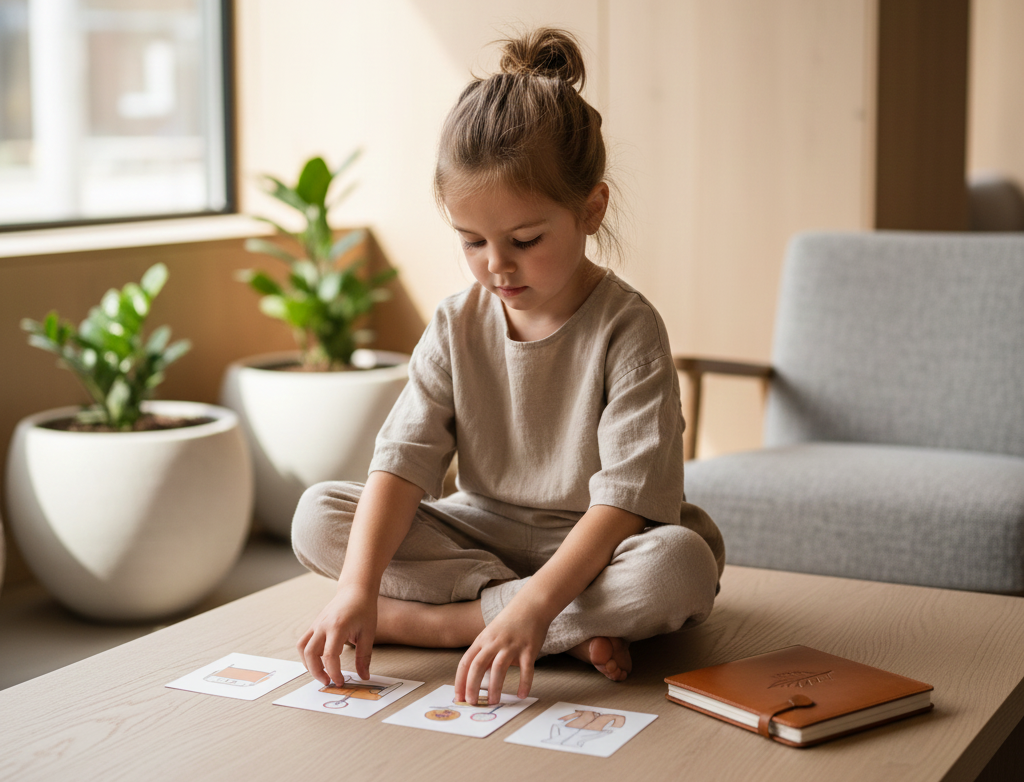
Sequencing is the nail by which kids pound the world into shape, from getting their teeth brushed to grasping the sequence of a beloved bedtime story. For ages 3-7, how we teach sequencing needs to mature with them, beginning simple and then increasing in complexity as their cognitive abilities develop. Not all ages require the same sequencing; age-appropriate materials are the secret!
Well-matched activities can build focus, help regulate emotions, and lay the groundwork for stronger language and thinking skills. Whether with hands-on play, story cards, or cooperative working, sequencing fosters clearer thinking and more peaceful routines, especially when screens seem alluring, but a parent craves a quieter alternative.
Toddlers
- Match socks or shoes by color and size.
- Arrange three simple pictures showing steps of washing hands.
- Stack blocks by size, big to small.
- Line up favorite toys from shortest to tallest.
Washing hands, shoes, and cooking up a simple snack can all become soft lessons. Parents phrase each step and build sequencing through repetition. Play-based learning makes it easy.
Singing songs with hand movements, a two-step dance, or constructing a tower in sequence are effective methods. Games such as 1, Next, Last are great for really short bursts when attention is fleeting. Hands-on activities aid comprehension.
Toddlers press playdough shapes in a sequence or brush textured cards that direct their hands in the proper sequence. These slow, hands-on experiences pacify their nervous systems, allowing transitions to become easier.
Preschoolers
Sequencing for any age: Themed worksheets, such as sequencing pictures from a story about planting seeds, assist preschoolers in visualizing how events fit together. Around this age, kids can typically manage four-step sequences, which is consistent with developmental research.
Sequencing games like “What Comes Next?” encourage preschoolers to predict or construct the next element of a pattern. These games are great for at home or in waiting rooms, when screens would normally occupy the void.
Picture cards are an incredible visual reinforcement. Kids sequence cards to depict the steps of dressing or making a sandwich. This visual pattern fosters independence and concentration.
Stepping out loud fortifies language. ‘What happened first?’ or ‘What comes after we brush teeth?’ makes sequencing a daily habit. Stories get juicier, and children’s own narrative repertoire expands.
School-Age
- Build comic strips with five or more story frames.
- Sequence recipe steps for making a snack.
- Organize a scavenger hunt by clues in order.
- Reconstruct historical timelines with simple cards.
Tech can aid learning with apps and digital puzzles. Tactile and paper-based aids frequently allow for more profound, peaceful concentration. They’re built for this. Our Tiny Thinks™ Workbooks offer incremental challenges that spur concentration and independent thinking without the overstimulation of rapid-fire screens.
Older kids enjoy devising their own sequences, such as a treasure map or a new game. This independence sparks independent thought and accountability. Group projects like constructing a chain reaction with blocks or illustrating a story mural encourage teamwork and social learning.
For screen-free homes, our Free Calm Pack and age-specific Tiny Thinks™ Workbooks provide families with actionable tools that kids love. These shapers deliberately decelerate, encourage control, and slot seamlessly into transitions such as meals, trips, or after-school clear-outs where calm is most required.
Everyday Sequencing Opportunities
Sequencing is embedded in almost every aspect of family life, often unobserved. For 3 to 7 year olds, mundane rituals, dressing, breakfast, cleaning transform into organic opportunities to cultivate logical reasoning, independence, and language skills. These daily activities provide consistent sequencing practice when screens are off and the environment is relaxed.
Pictures, narratives, and active work reinforce control by establishing sequencing opportunities. By modifying activities for each child’s age or ability and speaking in real-life terms, children begin to gain confidence along with invaluable critical thinking skills.
Morning Routines
Kids thrive when mornings seem predictable. A basic picture schedule, wash face, brush teeth, dress, eat breakfast, helps even a 3-year-old understand what’s next. More advanced kids may create their own schedule or use a sequencing worksheet to put steps in order.
Some parents find it helpful to challenge their child: “Can you finish your morning steps before the timer rings?” It transforms sequencing practice into a game-like race, not drudgery. This ushers kids into real-world sequence planning in a low-stakes way.
They can check off steps, determine which order to address easy tasks, and observe how skipping a step, such as forgetting to brush teeth, alters results. Talking about why each step is important, “What if we put on socks before pants?” injects logic and laughter into the discussion. Morning routines, day after day, provide a sanctuary in which to perfect sequences and learn from minor errors.
Cooking Together
Cooking offers a prime sequencing environment, particularly in families where the kitchen is a central hangout spot. Following recipes gives children hands-on experience with order: measuring flour, cracking eggs, stirring, then baking. Even a peanut butter sandwich, bread, spread, filling, has a sequence.
With little kids, begin with two-step commands, such as ‘Spread, then cheese,’ and work your way up. Math skills flourish here! Measuring ingredients, waiting for things to bake, all emphasize order and timing.
Discussing the story events involved, such as “What’s going to happen if we add the eggs after we bake it?” further develops comprehension skills. Cooking can be transformed into an engaging activity for every age and ability, utilizing storytelling or even cut and paste sequencing cards for your non-readers.
Simple Chores
Chores are another easy opportunity to practice story sequencing and they have the added bonus of imparting responsibility. Cleaning a room involves a series of steps: pick up toys, make the bed, and dust the shelves. A graphical chore chart, with icons or photos, defines the sequence and helps kids witness how they’re doing.
For most, offering some choice in the sequencing, such as “Do you want to make the bed first or pick up toys?” fosters motivation and ownership. Some kids might need to begin with only two steps: put shoes away, then hang up the coat, before advancing to more elaborate lists.
Discussing why chores should be sequenced, such as asking, “Why do we vacuum after tidying toys?” helps link steps with reward. These discussions exercise memory and language abilities, as kids describe or recount their activities. Chores, as with all sequencing activities, can be screen free, practical, and calming when accompanied by soft music or quiet conversation.
Our Tiny Thinks™ Workbooks and Free Calm Pack make it easy to do sequencing, screen-free! Their hands-on activities, cut-and-paste pages, and visual story cards slide right into our everyday routine.
Other parents swear these screen-free options bring back calm, ignite concentration and settle the kids at home, in waiting rooms, or post-school. When kids can experience mild, sequenced opportunities, overstimulation recedes and control returns.
These toys scale with your child’s abilities, transitioning from basic two-step sequences to more difficult patterns, providing a healthy alternative to rapid media.
Sequencing and Emotional Intelligence
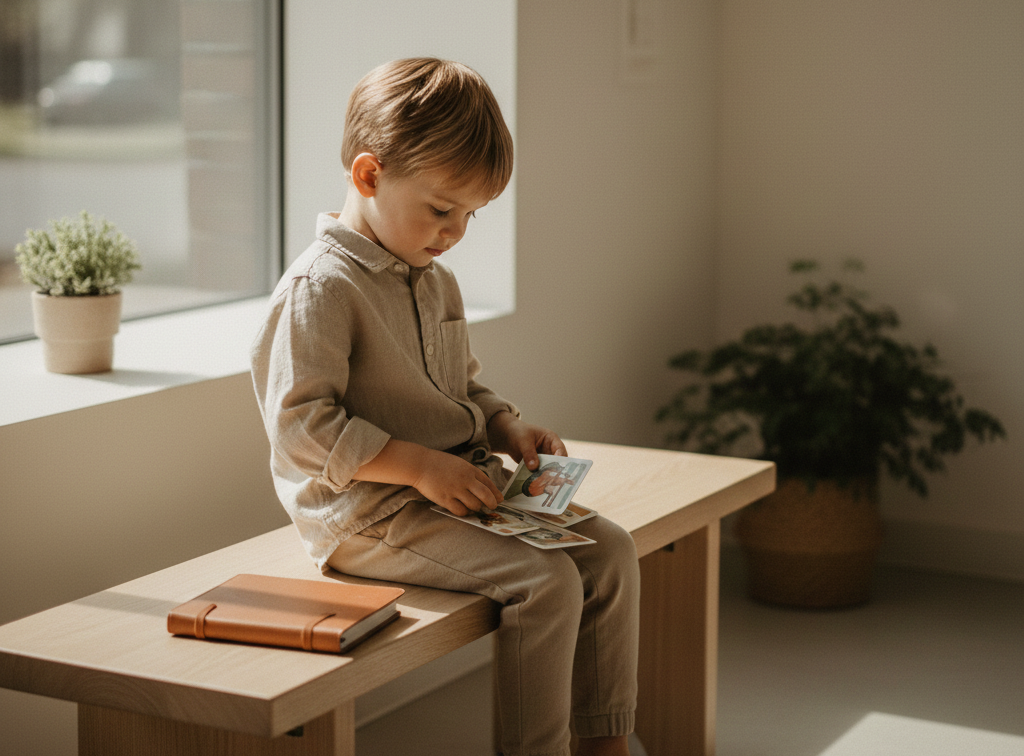
Sequencing activities for kids provide predictability, which supports emotional regulation during transitions.
Activities that involve sequencing don’t just build your child’s cognitive skills; they set the stage for emotional intelligence in kids ages 3–7. By sequencing actions, narratives, and emotions in a logical order, preschoolers obtain predictability and control, two components of emotional control. When routines and emotions are subdivided into sequences, kids panic less and are more likely to control their behavior, particularly during transitions or high-stress moments.
These skills back working memory, attention, and logical reasoning, all intimately connected with emotional insight and social navigation.
Understanding Feelings
Sequencing cards with facial expressions or emotional scenarios helps children name and sequence their feelings: first surprise, then frustration, and finally calm. This framework provides kids with a secure sequence when feelings are flying. For example, a child might use cards to show: “I felt scared, I cried, then I hugged my parent, and then I felt safe.
Playing dolls or puppets allows kids to role-play what comes first, next, and last when someone is sad or mad. Big emotions become less threatening. Awareness-building begins modestly, sometimes just by posing the question, “What came first when you got mad?
Sequenced storytelling, in which children describe an occasion when they experienced a particular emotion, aids them in organizing these feelings and identifying patterns. When they share these stories, they start to observe that emotions take a path of sequencing, not frenzied haphazardness. For kids that cannot verbalize feelings, a sequence is not simply soothing; it is necessary.
Sequencing provides them with the tools to articulate, not just respond.
Social Interactions
Little ones discover social smarts in stages. Group games involving saying hello, taking turns and saying goodbye allow them to rehearse the rhythm of actual interactions. In a circle, each child could pass a ball to say hello and goodbye, reinforcing the sequencing of conversation.
Sequenced board games and card activities impart the lessons of turn-taking and sharing. These things, like abstract rules, become concrete and predictable. Picking up on social cues, waiting for your turn to speak, and noticing a friend’s sad face depends on sequencing these social moments.
Sequencing and emotional intelligence storytelling with social twists, “First, Sam wanted to play. Next, he inquired of Mia. Then, they played together,” fosters empathy and aids kids in anticipating how others could be feeling. Such tiny, foreseeable increments alleviate stress surrounding new experiences and assist children in being comfortable in ensembles.
Building Confidence
Sequencing activities, such as story sequencing, enable kids to take charge and learn essential life skills on their own, brushing their teeth, setting the table, or re-telling a picture story. When children perceive their achievement in specific increments, their self-belief increases. Rewarding them with “You knew what sequenced!” boosts self-confidence and inspires continued practice in their learning activities.
A growth mindset blooms when kids are urged to attempt, even if the sequencing seems tricky. Failures are in the mix, not something to shy away from. In nurturing environments, kids are secure in trying out increasingly complicated sequences, confident their attempts will be appreciated.
This sense of control and predictability carries over into calmer behavior in everyday life. Tiny Thinks™ Workbooks are designed with this regulation-first logic: slow, structured sequencing pages that invite children to organize their thoughts, feelings, and actions step by step.
The Free Calm Pack provides parents with instant, screen-free resources to cultivate focus and emotional balance in any moment, at mealtimes, waiting rooms, or bedtime. These are not worksheets; they are soothing rituals that kids truly love, designed to reinforce regulation and thought skills just when families need it most.
Adapting for All Learners
Sequencing activities for kids 3-7 work best when they suit each child’s individual gifts, challenges, and current context. Most families are busy navigating overstimulation, transition madness and screen lures. Some days, a screen is the only way through.
When parents desire a screen-free alternative, customizing sequencing activities for all learners, visual, tactile, or collaborative, counts. Regulation is priority number one; the true objective is to design silent, reliable stages that aid children in calming down and concentrating, regardless of talent, experience, or capacity.
|
Learning Style |
Adaptation Example |
Strategy |
|---|---|---|
|
Visual |
Picture cards, diagrams, color coding |
Graphic organizers, flow charts |
|
Auditory |
Storytelling, sequencing songs |
Verbal instructions, sound cues |
|
Kinesthetic |
Movement sequences, hands-on sorting |
Tactile materials, action steps |
|
Collaborative |
Group story-building, peer modeling |
Turn-taking, shared tasks |
|
Individual |
Self-paced cut-and-paste, solo workbook activities |
Quiet work, independent choices |
Sensory Input
Sequencing activities are less meaningful when they don’t connect with children’s senses. One easy solution is with textured cards, felt, sandpaper, and soft cloth that children can feel and organize. That’s a good one for all ages and abilities.
For others, drumming a finger path or arranging sticky objects by touch assists in grounding their nervous system. Movement tasks, such as jumping in sequence or miming story steps, enable your energetic or sensory children to fully engage.
A multisensory environment means offering choices: some children respond to sound or music cues, while others prefer hands-on manipulation. These strategies support self-regulation and help all children find their own path to the same sequencing skill.
Visual Cues
Visual supports are the backbone of sequencing for the young learner. There are picture charts, step-by-step diagrams, and color-coded cards to help you break down tasks into small, manageable chunks.
For instance, a kid could pair meal prep steps on a neat visual organizer or track a bedtime routine chart with defined pictures. Color coding each step, red for first, blue for second, and green for third, makes it easier for kids to remember and organize.
Graphic organizers, particularly those with big, easy pictures, enable pre-readers and nascent wordsmiths to develop sequencing skills without the assistance of advanced language. Technology can help too.
Interactive whiteboards or simple apps can create drag-and-drop sequencing games. Many parents find that hands-on paper tools lead to calmer, more focused engagement than screens.
Cultural Stories
|
Culture/Region |
Example Story |
Sequencing Elements |
|---|---|---|
|
Japan |
Momotaro |
Sequence of helpers met |
|
West Africa |
Anansi tales |
Steps in trick or journey |
|
Scandinavia |
“The Three Billy Goats” |
Order of goats crossing |
|
Latin America |
“The Rainbow Serpent” |
Sequence of travels/events |
Sequencing isn’t only about math or to-do lists; it exists in the narratives families craft. Kids can sequence familiar folk tales from their own cultures or hear classmates share stories from home.
Parents could assist kids to retell a family tradition in order or a holiday celebration. This builds appreciation for both difference and common ground: the way every culture uses order, routine, and storytelling to make sense of the world.
Juxtaposing story arcs from various locations, for instance, can ignite interest and allow all kids to see themselves in the learning. Inclusion is ensuring each child’s narrative matters, and each child encounters a quiet, consistent learning environment to explore.
Our very best screen-free options, like Tiny Thinks™ Workbooks and the Free Calm Pack, are purpose-built for these needs. They provide soft, tactile/kinesthetic and easy-to-visualize sequencing activities that actually work in those real moments when parents need quiet focus and calm the most.
Digital Sequencing Tools
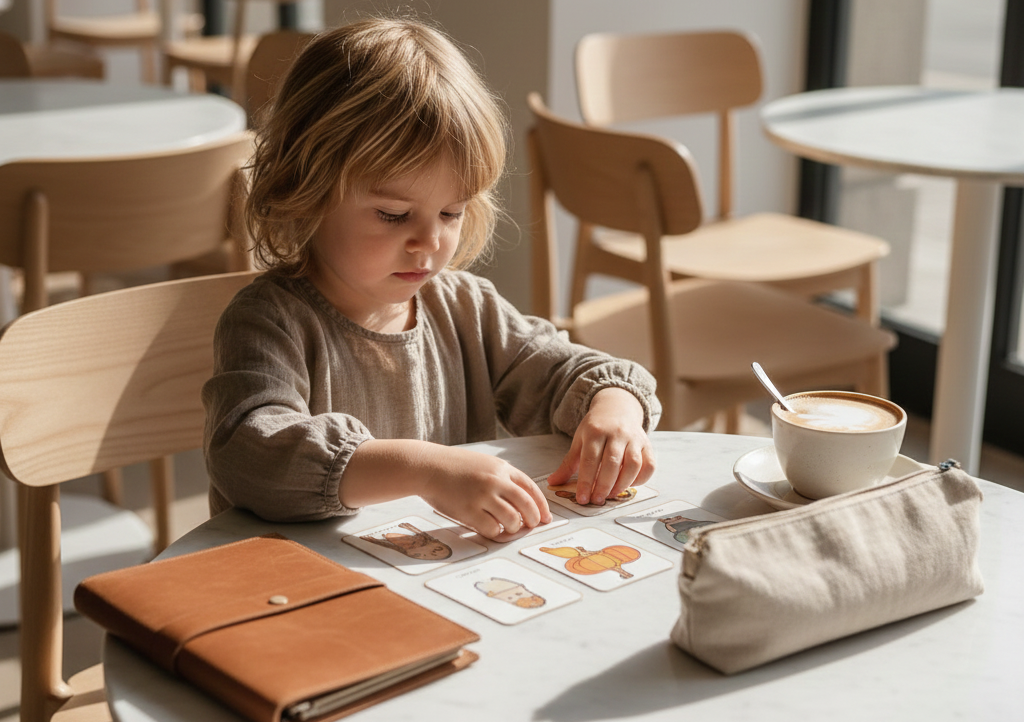
Digital sequencing tools can provide a convenient choice for parents and teachers looking to bolster sequencing skills in 3-7 year olds. These tools provide everything from basic drag and drop games to activities that develop critical thinking, vocabulary, and comprehension. Many parents appreciate these for quick grabs when screen-free isn’t an option, think travel days, waiting rooms, etc.
Sequencing-focused educational apps and websites are now ubiquitous and easily tailored to any age group. Others provide premade templates that can be modified for various topics, such as math patterns, story retellings, and daily routines. These interactive elements, such as dragging images into sequence or connecting stages in an activity
, typically keep kids engaged longer than watching a video passively.
For instance, apps can allow a child to construct the sequence of brushing teeth or preparing a basic recipe with images and audio cues. These experiences can reinforce stepwise thinking and help kids visualize complex tasks. Sequencing online games have proven particularly popular. A lot of these games leverage cute characters and narratives to help chunk work into reasonable steps.
Kids could sequence scenes from a known fairy tale or group images according to the steps for dressing. The response is instantaneous. When the sequence is not correct, the game usually encourages the child to retry. This repetition, combined with visual and audio tools, can engrain learning in a playful instead of stressful manner.
Digitally, you can spice up sequencing lessons with multimedia in the classroom. Educators can build picture schedules, online recipes, or storyboards with images, audio, and even short video clips. These digital sequencing tools are particularly great for kiddos who thrive with visual supports or need additional guidance around transitions and task work.
Others track student progress so teachers can see what skills need to be practiced more. For these reasons, digital sequencing tools ought to be used purposefully and sparingly for 3-7-year-olds. Regular consumption of rapid digital content, particularly autoplay videos or algorithmically personalized platforms, interferes with attention, diminishes patience, and promotes overstimulation.
Kids still require slower, more predictable input to organize their nervous systems and construct real focus. For families who want a quieter, less digital experience, screen-free options like Tiny Thinks™ Workbooks and our Free Calm Pack provide hands-on sequencing activities for early thinkers.
These paper-based tools encourage calm concentration, solo play, and easy skill development, aiding young kids in resetting their nervous systems in real-world transitions such as meals, travel, after school, or bedtime.
How Tiny Thinks fits into this moment?
Tiny Thinks pages are designed to gently pull attention away from screens without effort from the parent.
They:
- start easy, so children can begin immediately
- use quiet hand movements that slow the body
- lead naturally into calm, focused attention
Parents often use them in moments like travel, waiting, or evenings, whenever they want a calm alternative to screens without planning or negotiation.
Conclusion
Sequencing activities are more than a pastime for kids ages 3-7. They develop reasoning, aid memory, and assist children in recognizing how one action follows another in both reasoning and real life. Be it stacking blocks, piecing together a picture story, or following a recipe one step at a time, these quiet rituals infuse order and serenity.
For kids who feel overwhelmed or scattered, a basic sequencing activity can snap them back in, giving them a sense of control again. By selecting the perfect activities that are hands-on or screen-based, that is exactly what every kid can feel. During the hectic swirl of family life, these little-known, peace-producing predictable blocks of steps can really pay off in terms of focus and emotional equilibrium.
Frequently Asked Questions
What are sequencing activities for kids?
Sequencing activities for kids enhance narrative skills, promoting reading and cognitive development.
Why is sequencing important for child development?
Sequencing activities build memory, communication, and logic. They teach kids about consequences, which can translate into better academic and social skills.
At what age can children start sequencing activities?
Kids as small as two can get in on the action with basic sequencing, such as organizing things by size or color. Activities can become more structured for older kids.
How can I use everyday routines for sequencing practice?
Everyday tasks, such as brushing teeth or making food, are perfect for teaching essential life skills through story sequencing. Talking through these steps encourages young learners to focus on the process rather than just the outcomes.
Can sequencing activities support emotional intelligence?
Yes. Sequencing activities for kids develop empathy and emotional intelligence.
How do I adapt sequencing activities for different learning needs?
Utilize visual, tactile, or digital tools to suit each kid’s skills. Scale difficulty and provide assistance if desired to make it an inclusive activity.
Are there digital tools for sequencing activities?
Yes. A lot of the educational apps and web games feature interactive story sequencing activities that enhance early childhood development, making education accessible for children everywhere.