

This guide shares calm, screen-free travel activities for kids ages 3–7, helping families navigate flights, road trips, restaurants, and waiting rooms with ease.
Calm ideas for flights, road trips, trains, waiting rooms, and long travel days, without relying on screens.
Travel places a high load on a young child’s nervous system.
New spaces, long waits, bright lights, restricted movement, fast transitions, unfamiliar sounds, all of these can push a child into cycles of excitement, overstimulation, and sudden dysregulation.
A predictable rhythm helps children stay steady:
a quick reset → slow movement → quiet focus
This three-step sequence supports regulation, prevents overwhelm, and helps children settle into the pace of travel.
Children between ages 3–7 regulate differently, so this guide offers age-matched ideas for toddlers, preschoolers, and early school-age children.
Download 👉Free Calm Pack for quick, screen-free travel pages you can use on flights, road trips, restaurants, and waiting rooms.
Families often look for travel activities for kids that keep them regulated without adding noise or clutter.
1. Why Travel Feels Hard for Kids Ages 3–7

Travel brings an unusual mix of overstimulation and understimulation:
- Overstimulation: noise, crowds, bright lights, tight spaces, fast changes
- Understimulation: long stretches of waiting with nothing to do
- Post-screen crash: if a child’s system is used to high-intensity screens, travel becomes more difficult without them
- Developing regulation systems: ages 3–7 rely on predictable cues to stay steady
Simple travel activities for kids help them stay steady when routines are unpredictable.
Quiet, tactile, low-mess activities help organize the nervous system by giving the hands a clear task and the mind a gentle focus.
Choosing the right travel activities for kids can lower sensory overwhelm during long transitions.
For more ideas, explore our Screen-Free Activities for Kids hub, which offers simple, low-demand options that support calm focus.
2. Quiet Travel Activities for Toddlers (Ages 3–4)
Toddlers need short, simple, repeatable tasks that don’t create overwhelm or require long explanations.
For toddlers, travel activities for kids should stay short, calm, and easy to rotate.
Explore age-ready packs for younger toddlers at Ages 3–4 to find compact, low-mess travel kits perfect for flights and restaurants.
Best Calm Options
- soft stickers
- small reusable sticker pads
- water-reveal boards
- gentle matching cards (2–4 pairs)
- mini lacing cards
- tiny fabric squares or ribbons to sort
- wooden rings for stacking
- trace-and-wipe cards
- snack sorting (berries, crackers, tiny containers)
These gentle travel activities for kids keep hands busy without overstimulation.
Real Travel Scenarios
- Flights: offer one item at a time; rotate every few minutes.
- Restaurants: water-reveal boards + lacing cards = low noise, low mess.
- Road trips: sticker pads and simple matching tasks reduce fidget stress.
Parents often prefer travel activities for kids that work in tight spaces like airplane seats and restaurant tables.
For preschoolers, see our curated travel packs for Ages 4–5.
3. Quiet Travel Activities for Ages 5–7
Predictable travel activities for kids ages 5–7 help prevent boredom during long stretches of waiting.
Older children can handle slightly deeper tasks, as long as the activity stays predictable and low-demand.
Best Calm Options
- drawing invitations (“add stars,” “add windows,” “add leaves”)
- mini activity sheets from your travel binder
- reusable drawing boards
- early logic cards
- tiny travel stories notebook
- simple origami squares
- pipe cleaner mini-crafts
- sticker-based ideas (“circle five blue things you see”)
- travel journal ideas
These travel activities for kids match the developmental needs of early school-age children.
Real Travel Scenarios
- Flights: drawing invitations work well during long taxi/takeoff waits.
- Road trips: logic cards help bridge long stretches between stops.
- Waiting rooms: reusable drawing pads give quiet, sustained focus.
Using calm, screen-free travel activities for kids can make long trips feel more manageable.
You can also explore our Calm Play Activities guide for more gentle, screen-free ideas that work well during travel transitions.
4. Calm Travel Activities For Kids
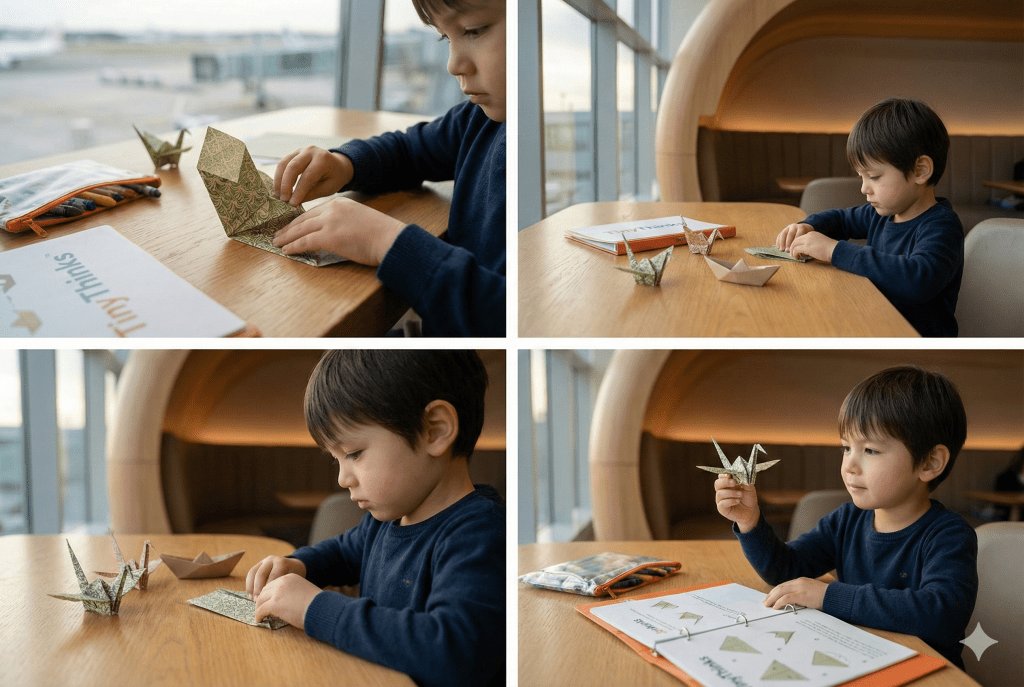
Activities for Ages 5–6
Children between five and six years old often move between brief bursts of excitement and longer stretches where their bodies finally settle into the rhythm of travel. This age group benefits from hands-on tasks that have a clear beginning and end—early logic cards, simple sequencing strips, reusable activity pads, or short picture-based mazes. Many six-year-olds begin subtly signaling when they need direction: tapping their foot against the seat, leaning forward to look out the window, or shifting their bag from one knee to the other. These are natural cues that their attention is sliding, not signs of misbehavior.
At this age, travel activities for kids should offer gentle focus without heavy instructions.
On flights, a tray-table setup with a pencil, one sticker sheet, and a slim travel activity page often steadies them within a minute or two. In cars, a quick rotation between drawing ideas and matching cards reduces boredom before it becomes restlessness. Parents usually find that five-year-olds still appreciate reassurance and co-regulation, while six-year-olds enjoy choosing from a small selection of activities in their own travel pouch. Both ages thrive when the routine remains simple: Slow Movement → Quiet Focus.
For ready-to-pack pages and activity pads, see the Ages 5–6 travel kits.
If your child enjoys gentle thinking tasks, our Early Logic Skills collection includes simple puzzles and sequencing ideas perfect for ages 3–7.
Activities for Age 7
Seven-year-olds respond well to structured travel activities for kids that support independence.
They enjoy purposeful tasks—small travel journals, themed sticker scenes, beginner logic puzzles, short story ideas, or simple card games with quick rounds. During road trips, many seven-year-olds start scanning the window or shifting posture when they want something “real” to do. Offering a travel notebook or a compact activity pad usually anchors them without overstimulation.
On flights, this age responds well when given one responsibility—choosing the next activity, tracking the travel sequence, or managing their own small travel pack. This sense of ownership smooths transitions during takeoff, landing, and longer waits. In waiting rooms, reusable drawing boards or simple map-based scavenger ideas keep hands busy and attention steady. Activities at this age should feel structured but not complicated, supporting early independence while staying comfortably screen-free.
Try our compact activity pads for older children: Ages 6–7, which work well for independent travel tasks and short journals.
The TinyThinks age-specific workbooks add structured, calm-learning pages perfect for ages 3–7 during travel.
5. Calm Travel Activities That Work for All Ages (3–7)
Cross-Age Quiet Options
- a small portion of soft clay or dough alternative
- pocket-size magnetic board
- mini dry-erase board
- felt shapes for sorting or building
- themed tiny bags (beach, farm, winter)
- simple travel scavenger lists
- gentle audiobooks with child-safe headphones
- low-excitement travel card games
Cross-age travel activities for kids make packing much easier for families with multiple children.
Useful In
- airport waiting
- hotel check-ins
- long queues
- train and ferry rides
- restaurants
- slow mornings on trips
These flexible travel activities for kids fit naturally into any part of the day.
Parents often find that using a small travel bag with one favorite toy, one sticker activity book, and a single low-demand task prevents overwhelm better than offering too many choices. A curated activity selection keeps routines predictable and matches toddler attention spans while still giving older children enough variety to stay engaged.
For more calm, independent options, see our Montessori Quiet Activities guide for hands-on tasks that travel well.
6. How to Build a Calm Travel Bag (Ages 3–7)
Keep items light, repeatable, and predictable.
Simple Packing Guide
- One tactile activity (clay, felt, pipe cleaner)
- One repeatable task (stickers, water-reveal)
- One focus activity (logic cards, drawing kit)
- One snack rotation (crackers, berries, raisins)
- One audiobook or story option
- Tiny Thinks Workbook for all ages 3-7, specifically designed for each age’s curiosity.
A well-curated travel bag with calm travel activities for kids keeps routines predictable.
This prevents overwhelm and keeps the child’s nervous system organized.
For an easy start, the 👉Free Calm Pack gives you simple, low-mess activities perfect for any travel bag.
Parents often find that using a small travel bag with one favorite toy, one sticker activity book, and a single low-demand task prevents overwhelm better than offering too many choices. A curated activity selection keeps routines predictable and matches toddler attention spans while still giving older children enough variety to stay engaged.
Light, reusable travel activities for kids work best when luggage space is limited.
7. Travel Binder: A Reliable Screen-Free Anchor

Your travel binder (TinyThinks calm-learning system) becomes the stable center:
- fine-motor pages
- simple logic tasks
- matching cards
- drawing invitations
- calm play ideas
- gentle sequencing tasks
A travel binder works as a steady anchor when travel activities for kids stay simple and familiar.
Offer one page at a time. Children focus longer when choices are limited and predictable.
Parents traveling with siblings—or even twin toddlers—often see calmer interactions when duplicate materials are packed so each child has their own set. Matching sticker sheets or two reusable pads prevent small conflicts from derailing the routine and make longer travel days far more manageable.
Adapting to Individual Needs
Every child responds to travel differently, and the easiest way to see this is by watching what they do in the first ten minutes of a car ride, flight, or waiting room. Some children begin talking quickly or swinging their legs because their bodies are searching for movement. Others grow quieter and tuck themselves into their parent’s side when the environment feels unfamiliar. These cues determine what type of activity works best. A sensory-seeking child often calms with a soft fidget cube or textured ball, while a child who withdraws may prefer low-demand tasks such as tracing, matching shapes, or sticker-based sorting.
Adapting to individual needs also means adjusting expectations. A tired child may only manage two-minute tasks. A child who slept well may settle into longer stretches of drawing or early logic puzzles. The goal isn’t constant entertainment—it’s offering predictable anchors: one tactile activity, one focus task, and one movement reset where possible. The TinyThinks Free Calm Pack and the age-specific workbooks support this by providing small, structured pages that match different regulation needs.
Challenges in Waiting Rooms
Waiting rooms create a different kind of stress for young children because the environment is quiet but full of unpredictable cues—doors opening, names being called, adults whispering, fluorescent lighting, and long stretches without movement. Many children respond by shifting in their chairs, swinging their feet, or leaning heavily into a parent’s arm. A small, predictable task works better here than anything elaborate: a reusable sticker sheet, a tiny drawing pad, or a calm matching card. Parents often find themselves glancing at the clock or listening for their name while trying to keep their child settled in a tight space.
Children ages three to seven regulate best when materials don’t roll, spill, or scatter. A single pencil, a few flat stickers, and one lightweight travel page are usually enough to help them settle without disturbing others. Giving a seven-year-old the small responsibility of choosing the next quiet activity often reduces tension as well. Keeping the rhythm Slow Movement → Quiet Focus makes waits feel less stressful, even when they last longer than expected.
Importance of Child-Friendly Spaces
A child-friendly space during travel does not need toys or bright decorations—it simply needs to reduce sensory conflict. Soft lighting, predictable seating, a corner away from heavy foot traffic, or a chair beside a wall instead of the center of a room dramatically changes how a child behaves. Parents often notice the shift right away: a child who was bouncing in a busy hallway may sit more still in a quieter corner with a single activity page. These small adjustments help the nervous system settle, making it easier to use screen-free activities without constant redirection.
Child-friendly spaces also reduce sibling tension because each child has a small defined zone for their materials. In airports, this might mean choosing a quieter gate area. In restaurants, it might mean seating a child with their back to the main walkway. These tiny environmental decisions support the Calm-Learning rhythm and make travel smoother for both parent and child.
Light, reusable travel activities for kids work best when luggage space is limited.
8. Travel Routines That Reduce Overwhelm
Before Flights or Road Trips
- slow movements (walk, stretch, carry a small bag)
- preview what will happen (“first we wait, then we sit…”)
- choose one activity together from the travel bag
During Travel
- rotate activities slowly
- use soft verbal cues
- offer snacks as regulation support
- keep switches calm and predictable
Slow, predictable travel activities for kids reduce the mental load during longer journeys.
After Travel Days
- quiet room time
- dim lights
- soft play
- slower pace before bedtime
These routines help the child shift from “travel mode” into regulated calm.
9. Screen-Free Travel Tips for Parents
- avoid introducing new screens during challenging travel moments
- keep activities familiar
- let the child hold one simple responsibility
- use slow breathing resets
- expect short attention cycles , this is normal
- reduce verbal instructions during dysregulation
- keep the environment as predictable as possible
Choosing screen-free travel activities for kids helps maintain regulation during unpredictable travel days.
Avoid introducing new screens during challenging moments — for official guidance on screen use and child health, see the American Academy of Pediatrics guidance: American Academy of Pediatrics (AAP).
Calm travel is less about entertainment and more about supporting regulation.
Duplicate travel activities for kids help prevent small conflicts between siblings.
10. For Parents Who Want Ready-to-Use Tools
If you want a starter set of travel-ready calm pages, you can download the TinyThinks™ Free Calm Pack.
Many parents prefer ready-to-use travel activities for kids that work across the age range of 3–7.
For families who want deeper support, the age-specific calm-learning workbooks offer simple, structured tasks matched to ages 3–7.
Both options help you build a predictable, screen-free rhythm that supports flights, road trips, restaurants, and waiting rooms.