Key Takeaways
- Smart kids are built for more than academic success. Daily habits cultivate emotional intelligence, creativity, and moral character.
- Foster creative play, exploratory questions, and critical thinking to nurture innovative minds and flexible learners.
- Why kids need a dose of life skills and real-world attitude and how to teach it with a little help from science.
- Develop daily habits of reflection, nutrition, play, and sleep from an early age to feed your smart kid’s brain and body.
- Help your kids explore the digital world with healthy boundaries, enriching content, and inspired creativity online.
- Model and talk about values such as kindness, honesty, and responsibility to help your kids become ethical, empathetic adults who make a difference in their communities.
Daily habits for smart kids are easy, repeatable practices that teach your kids to cultivate attention, memory, and independent thinking in real life.
These habits are most effective when they are quiet, consistent, and simple for kids to initiate on their own. Tiny jobs such as sorting, matching, or following mini sequences build concentration and patience, helping both to develop.
For households with hectic schedules, consistent habits are a trusted rock for developing brains.
Redefining “Smart” Beyond Grades
Need a calm, screen-free reset right now—after school, before dinner, or during a wait? Open the Free Calm Pack for quiet thinking play kids pick up on their own.
Smart, in preschool, is far more than a digit or a grade. Parents witness this on a daily basis—kids who can bang out the ABCs but can’t control themselves following a jam-packed afternoon. The true blueprint for learning forever is constructed with emotional intelligence, flexible cognition, hands-on expertise, and a robust moral compass.
In global families, these habits count way more than brute achievement. Daily life becomes the curriculum: mealtime, bedtime, the car ride, waiting room. Every moment is a chance to develop reasoning, control, and autonomy.
Emotional Intelligence
They develop emotional intelligence when parents address emotions as information, not as theatre. It begins with identifying emotions—“You seem frustrated,” or “That waiting was tough”—not to comfort or divert, but to guide the child to look within.
Parents who model clear, simple sentences (“I feel tired after work”) provide children a script for their own experiences. Cooperative play—puzzles, block towers, or a joint sketch—imparts skills of compromise and iteration, not via sermon, but via actual conflict and restoration.
Story time isn’t simply about language—it’s a daily opportunity to stop and inquire, “Why do you think he felt left out?” or “What would you have done?” Over time, these small moments accumulate. The kid learns how to observe, identify, and sail their emotional landscape, and connect to others with compassion and empathy.
Creative Thinking
- Open-ended building blocks for inventing new structures
- Let’s pretend that dolls or animals are characters in an original story.
- Easy puzzles or mazes for trial and error problem solving.
- Drawing tools and collage materials for visual exploration
- Nature collections (stones, leaves) to sort, group, and imagine
- “What if” games that stretch thinking beyond the obvious
Everyday creative thinking is constructed in silence, not the storm. Kids require loose parts and time to create, not directions. Parents query, “What else could it be?” not correct answers.
Brainstorming over dinner, even if it’s just silly ideas, teaches kids that mistakes are a part of learning. Art and music become background, not performance: a drawing left unfinished, a song hummed quietly, a pattern tapped on the table.
These habits craft a mind that is elastic, patient, and capable of thinking outside the box.
Practical Skills
Teaching these practical skills is best done when children are given the opportunity to attempt and even fail in real-world contexts. A four-year-old breaks her own egg, cleans up the shell, and educates herself.
Budgeting with coins, tracking with a kitchen timer, packing for a trip—these are the everyday opportunities for responsibility. Chores are not penance but engagement in family existence.
So when your child has a knot in their shoelace or a zipper that won’t budge, stop yourself before you step in. That gap where they attempt initially is where issue-resolving matures.
Checklist for organizational skills:
- Establish a very basic daily schedule with visual reminders, such as picture charts.
- Assign a personal space for belongings (cubby, basket)
- Small tray activities to cultivate single-task focus
- Don’t demand clean-up. Teach it as a step-by-step process.
- Practice sequencing (first/next/last) in daily tasks
Moral Character
One slow rhythm anchors the day—wake, eat, play, rest, repeat. They need this predictability to feel secure enough to take risks and experiment. Curiosity is ignited with little questions (“Why did the plant sprout?”), resilience enabled through small frustrations, empathy by attuning to the needs of others, reflection by taking a moment at day’s end to share a learning.
Not everything has to have a reward. A plain old ‘You did it’ will do. We see progress when a child helps, or pays attention longer, or shakes off a setback without breaking.
Tiny Thinks™ is here for them. The Free Calm Pack provides fast-entry, screen-free thinking pages for after-school or transition moments, no stress, no prep.
Workbooks age-sorted give you structure when dinner, travel, or wind-down requires more than distraction. They provide a soothing, reusable thinking veneer. Not a reward, not an upgrade, just a thing that works when everything else is too noisy or too speedy.
Core Daily Habits For Smart Kids
Smart habits are founded on routine, not excitement. Kids thrive on habits that fuel focus, curiosity, and independent thought—particularly in friction-filled moments, like right after school or bedtime wind-down. A peaceful, consistent environment reduces cognitive overhead and gets kids back to deep, independent play.
Tiny Thinks™ was made for these daily struggles, providing parents a low-stim alternative when screens have been tapped out.
1. The Curiosity Habit
Kids flourish when inquisitiveness is embraced, not hurried. Schedule question-time, even the incessant “why?” and role-play investigating answers together. Maintain a shelf of grab-and-go books and easy documentaries, rotating in new subjects now and again.
Offer open-ended prompts: “What do you notice about this?” or “How do you think that works?” Provide kids with an environment where it’s okay to question. There is no judgment for incorrect guesses.
Family discussions can be as easy as discussing something new discovered at dinner, allowing each kid’s comment to be appreciated. Curiosity thrives in a space that stops for their explorations, not just right answers.
2. The Focus Habit
Focus is precious, particularly in a society of rapid stimulation. Begin with a clean slate, a clean desk. Clear out extra toys and screens during your homework or creative work blocks. Set one small, visible goal: a single worksheet, a puzzle piece, or a line to draw.
Timers for five to ten minutes let kids experience elapsing time and stay on task. Short breaks count. A brisk walk, stretch, or glass of water resets the mind. Conclude each block by having the child see their progress.
Over time, these habits develop the internal discipline to pay attention without prompting.
3. The Resilience Habit
Kids develop grit when behavioral effort is observed more than results. Praise effort, not just ‘getting it right’. When setbacks occur, discuss what was difficult and what to attempt in the future instead of immediately trying to solve the problems for them.
Share true tales—your own or from history—about individuals who persisted after making errors. Allow them to take reasonable risks, such as tasting a new food or learning to ride a bike.
Provide them with tiny opportunities to battle through and bounce back, understanding you are there to bolster, but not save. This consistent, patient strategy cultivates confidence and grit.
4. The Empathy Habit
Lead with empathy by talking respectfully, listening attentively, and being patient even when you’re exhausted. Discuss what others may be thinking or feeling. Little things like assisting a brother or sister or looking in on a neighbor remind them of how powerful kindness is.
Try simple role-play games: “How would you feel if your friend was left out?” These moments teach kids to think outside of themselves and lay the foundation for healthy, compassionate relationships.
5. The Reflection Habit
You should always build in time for quiet reflection, even five minutes before bed. Inquire, ‘What went well today?’ and ‘What was tricky?’ Yet others like to maintain a bare-bones diary entry or sketch a cartoon of their day.
Talk about what worked and what didn’t. With gentle open-ended questions, help your child begin to think in terms of choice and change. Over time, these habits foster self-awareness and a feeling of momentum.
6. The Routine Habit
A reliable routine is the foundation of creative thought. Start with a visual checklist: lay out clothes, pack bags, and complete basic chores. Kids find comfort in predicting what comes next, particularly after major transitions.
Incorporate active time, quiet play, and unstructured time for creativity. Evening wind-down is a must. Dim lights, soft voices, and an easy activity such as picture matching, tracing, or a simple Tiny Thinks™ page get his mind ready for sleep.
Routines require time to settle. Consistency, with kind flexibility, is crucial.
Tiny Thinks™ provides Free Calm Pack and age-based workbooks that dovetail perfectly into these habits. Developed for those times you just need your kiddo grounded and thinking peacefully during post-school meltdowns, screen detox, on-the-go, or bedtime, they deliver a dependable, low-stim reset.
Kids opt into them, and moms and dads breathe a sigh of relief in no-micromanaging-structure-that-works land.
The Blueprint for a Smart Day
A consistent daily schedule is the foundation of a peaceful, productive childhood. Predictable routines, visual schedules, and gentle transitions assist young children in anticipating what’s next and calming down each part of the day without you having to constantly remind them. When the day is mapped out visually with photos for every step and clear transition cues, kids feel secure and empowered, even in the most stressful moments.
Ownership occurs when kids assist in planning out the schedule themselves, minimizing power struggles and providing them with a sense of agency.
Morning Rituals
A good morning makes for a good day. It begins with a nutritious breakfast. Things like whole grains, fruit, and protein help fuel consistent energy and focus. This reflection can be as simple as identifying something to look forward to or a small goal for the day.
Physical activity is easy to weave in. A short walk, gentle stretching, or even a quick dance can settle jitters and sharpen focus. Morning rituals are a time for connection, too. Reading collectively or reviewing the day’s agenda gives kids a sense of being anchored and acknowledged before they transition into their independent work.
Learning Blocks
Study time is best in short, focused bursts. They learned that young children do well with learning blocks of 10 to 20 minutes, each with a defined objective. Mixing up activities—once tracing letters, once sorting colors, once building with blocks—keeps learning fresh and available for different brains.
Interactive components such as matching games or group puzzles foster involvement without overstimulating the senses. Progress checkpoints are light. Sometimes, simply stopping to admire what the child created or discovered, then collectively tweaking the tempo or strategy, is effective.
This architecture allows kids to exercise attention and sequencing without exhaustion.
Active Breaks
Movement is important, not only to bodies but to minds. Short bursts of activity, jumping, balancing, or stretching, disrupt sitting time and rejuvenate focus. Outdoor play, whenever possible, provides kids room to decompress.
Mindfulness can be as brief as a deep breath or a stretch, creating an architecture of moments of calm throughout the most intense of days. Allowing kids to select their own break activities fosters ownership and maintains motivation.
These breaks, interspersed throughout the day, assist kids in controlling vitality and returning to focused work.
Evening Wind-Down
The evening routine marks the day’s conclusion and beckons tranquility. Unplugging 30 to 60 minutes before bed promotes better sleep and softer moods. Silent activities, such as reading, coloring, or listening to a story, require children to quiet down and think.
Dinner may be an opportunity to discuss the day’s peaks and troughs, cementing the importance of reflection. Reliable bedtime signals, including a darkened room, a treasured book, and a cozy blanket, soothe kids to sleep, saving you hassle and giving you a pleasant start to the day.
Nutrition, Sleep, and Purposeful Play
Balanced meals—veggies, grains, protein—energize the brain and body. Adequate sleep is imperative to physical growth and emotional balance. Intentional, unstructured play—puzzles, construction, sketching—sparks imagination and engineering, rooting kids in the moment.
A holistic approach doesn’t pursue perfection; it acknowledges that well-being is constructed on small habits consistently applied to all hours of the day.
Tiny Thinks™ slots perfectly into this framework. The Free Calm Pack provides families with a visual schedule and low-stimulation, thinking-based activities for high-pressure moments, such as after school, screens out, mealtime, travel, or bedtime.
Kids self-initiate, parents step back. For deeper focus, the age-based Tiny Thinks™ Workbooks follow the same principle, cultivating attention and control through hands-on, structured play, with no coercion required.
Tiny Thinks™ is not a screen substitute or a treat. It’s a lifeline for parents craving peaceful, self-directed activity when it counts. The relief is in knowing there’s something that works each day, no sweat.
Need daily structure that settles into routine without prompting? Move to Tiny Thinks Workbooks for consistent, self-initiated thinking play.
Nurturing the Brain and Body

Children build thinking skills and self-regulation through the basics: food, sleep, play, and a predictable environment. These all set the stage for focus, recall, and control of stimulation. Tiny Thinks™ treats these moments as chances to re-calm and cultivate that free-flying focus—no razzle-dazzle, no unnecessary urgency, just clean structure that works in the trenches.
Fueling Foods
Children’s brains require consistent nourishment. Fruits, veggies, whole grains and good fats like avocado, nuts and olive oil are at the center of a brain-nourishing diet. These foods provide your brain with vitamins and minerals that support natural neural growth, mood stabilization and energy levels.
Take, for instance, blueberries and leafy greens, which are rich with antioxidants that shield brain cells, and oats and brown rice, which are slow-release energy sources that help maintain your focus. The kids who assist in washing vegetables, stirring grains, or assembling snacks are learning what’s going into their little bodies and why.
Labeling foods as ‘brain-strong’ or ‘focus foods’ ties eating with how they feel and think. Even a three-year-old can pour water for themselves, cultivating independence and consciousness around hydration. Water, frequently underrated, has a direct effect on mood and cognition. Little prompts like a water bottle within arm’s reach assist kids in self-regulating without being nagged.
Essential Sleep
Most preschoolers require 10 to 12 hours, sometimes more. Routine is what grounds me. Things like brushing teeth, putting on pajamas, and reading a short story in the same order every night send a message to the brain that it’s time to sleep.
Light and noise matter: blackout curtains, a quiet room, and consistent bedtime help the body shift into sleep mode. Describing sleep as “charging the brain’s battery” resonates with even a five-year-old. Parents see the difference: a rested child listens longer, handles frustration better, and remembers new information with less effort.
Sleep isn’t a prize; it’s a biological imperative—particularly when brains are sprouting in rapid growth.
Purposeful Play
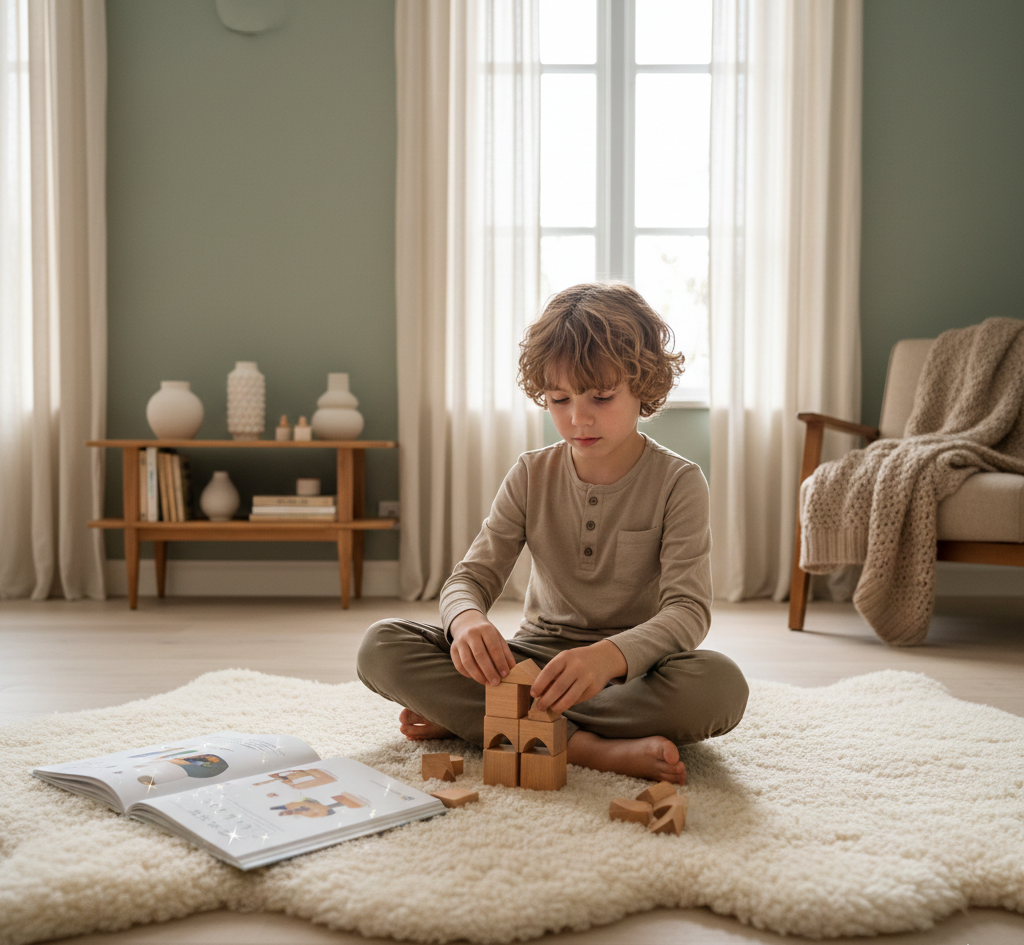
Unstructured play fuels creativity and problem solving. Blocks, puzzles, picture cards, and open-ended materials allow children to experiment and find patterns. A cardboard box is a spaceship and a pile of stones is a counting game.
These times develop spatial reasoning and verbal memory, both of which are important elements of early learning. Group play, be it with brothers and sisters or friends, fosters communication, turn-taking, and empathy. Kids bargain, justify, and adjust.
Storytelling, easy music creation, and open drawing give the brain a chance to join ideas and fortify working memory. Physical play, such as jumping, balancing, and running, nurtures both body and brain, enhancing attention and control.
Screen Sense
Screens are useful, not evil. Establishing concrete, predictable boundaries like 30 minutes post-dinner or pre-transition provides scaffolding. When boundaries are consistent, children can learn to stop, transition, and reflect.
Discussing their viewing and prompting questions develops digital literacy and critical thought. Digital skills count. As they safely navigate, learn about privacy, or explore a creative drawing app or audio stories, they’re using tech thoughtfully.
Tiny Thinks™ is for when screens can’t calm—after school, on the road, while waiting. Our Free Calm Pack and age-based workbooks provide hands-on, mind-based options that kids select to self-return again and again, helping create focus and self-control without parental coercion.
Navigating the Digital World
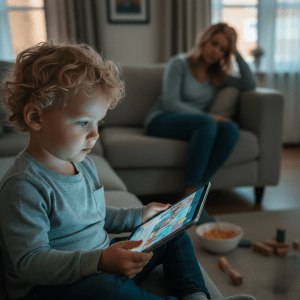
Our kids are experiencing the digital world at a younger age than any previous generation. We’re handing kids screens at 18 to 24 months, years before they can even read, years before they can self-regulate. For the majority of families, tech is useful and essential. It helps with homework, maintaining connections around the world, and providing peace and quiet on a plane.
It’s not if you’re going to use screens, it’s how. Access is uneven. About two-thirds of school-aged children worldwide don’t have home internet, and even in well-connected countries, daily educational use in schools is far from universal. The reality is clear: screen time is neither “bad” nor “good.” It’s the context, quality, and structure that shape outcomes.
Quality Over Quantity
The real distinction is in what kids are doing with their time online, not how much. Kids recall the programs, games, or apps that get them talking or make them discover something new. Co-viewing—joining your child to watch or engage with digital content—transcends monitoring. It’s a means of role modeling thinking, questioning, and eliciting your child’s own opinions.
Even the simplest nature documentary can turn into a chat about the weather, animals, or kindness. After observing, inquire what they observed, what astonished them, or what they would modify. These shared discussions foster critical thinking, not merely passive viewing.
A family media plan is helpful. Agree as a family what’s okay, how long screens are used and what content counts. It’s less about rigid boundaries and more about selecting what supports your child’s development. Kids who discuss what they experience are wiser at distinguishing fact from fiction and the morals in tales and play.
Co-Viewing Together
Digital creation is where kids transition from consumers to creators. Whether it’s a mini-movie about their beloved pet, creating a unique game, or composing a storybook, these activities transform screens into creative mediums. Most kids love to exhibit their efforts to relatives, describe their selections, or collaborate on a digital jigsaw puzzle.
This fosters bravery, promotes collaboration, and turns technology from a refuge into an outlet. Parents can foster these moments with free or easy tools and applaud effort versus perfection. It’s not just about professional tools either. Drawing applications and simple video editors allow kids to construct, edit, and publish.
Working together on digital projects imparts crucial skills like patience, listening, and compromise. These are all valuable skills well outside the screen.
Digital Creation
Values are just as important as skills. Setting digital boundaries, modeling respectful communication, and talking through online dilemmas are all ways to help kids safely navigate the digital world. Ongoing conversations about compassion, integrity, or generosity, even in online contexts, ground kids in fundamentals.
Hit them with the same lessons through different channels and you’ll navigate the digital world even better. Tiny Thinks™ is designed for those moments that you need a peaceful, screenless answer. Our Free Calm Pack is prepared for after-school decompression, screen transitions, or bedtime wind-down.
When you catch your child spinning out from rapid fire input or flopping after screens, these thought-organization sheets offer a reset. Kids participate on their own, coming back again and again precisely because it’s slow, tangible, and expected. For parents requiring more, age-specific Tiny Thinks™ Workbooks bring the same serene, regulation-first methodology—an option, not an obligation.
The Unseen Curriculum: Values
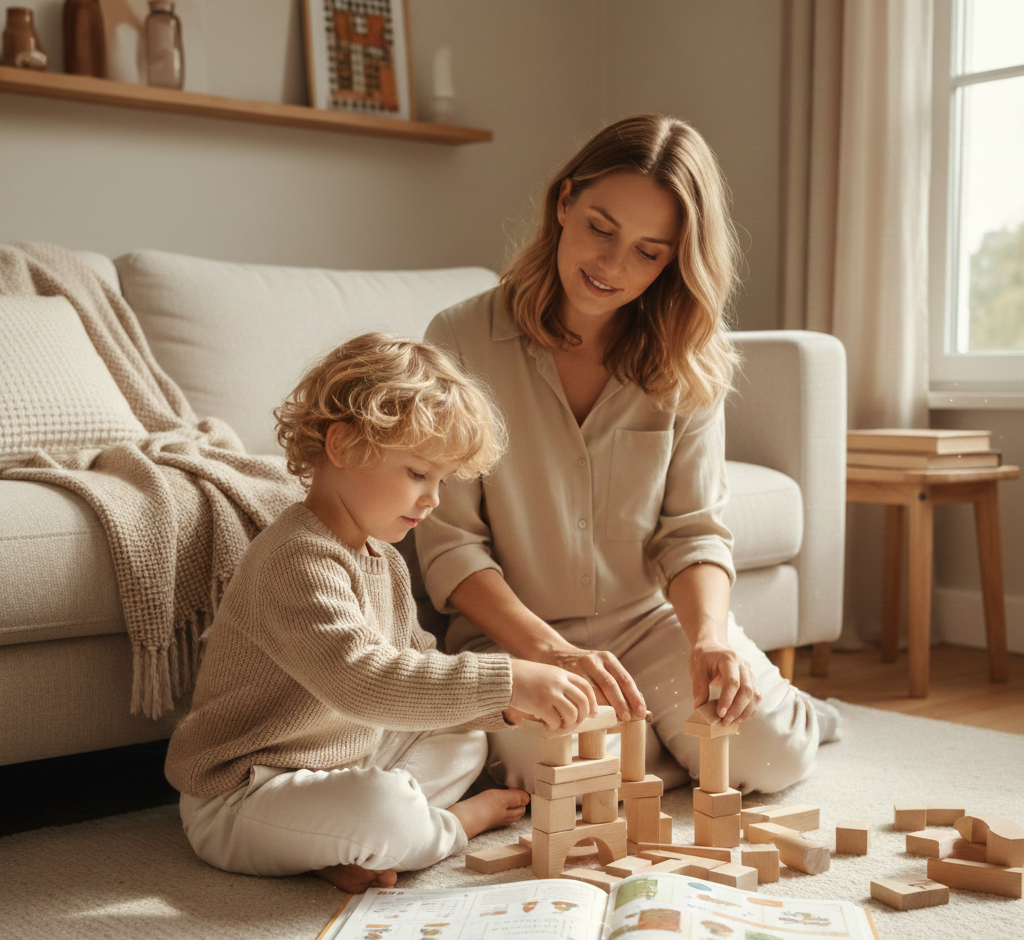
Kids pick up these values from daily life much more than they do from formal lessons. Most habits—kindness, honesty, responsibility—flourish in the interstices of a structured life. What parents model, reinforce, and celebrate becomes the unseen curriculum that shapes a child’s early sense of right and wrong.
This layer is not about lectures or reward charts. It is about everyday structure: small, repeated actions, calm corrections, and family rituals that put values into practice.
Practicing Kindness
Nurturing kindness begins modestly, with habits of mind that render concern for others a habitual response. A child can assist in setting the table, sharing a favorite treat, or opening a card for a neighbor. They need not be grand acts.
When children see kindness modeled, like a parent holding the door or listening patiently, they internalize the message: “This is how we treat people.” Celebrate kindness. Silent praise, “I saw you assist your brother with his shoes,” constructs self-esteem and makes the conduct adhere.
On rare occasions, families can volunteer together, like picking up litter at the park or donating gently used toys. These traditions demonstrate to kids that it’s kindness that builds the community, not just the family.
By talking through the impact, kids become aware of the way kindness shifts the atmosphere around the house and further. A kid who shares a toy with a peer observes the grin and experiences the bond. Gradually, these moments accumulate into a sense that kindness is not simply anticipated but treasured.
Embracing Honesty
Integrity is best imparted via ongoing, transparent engagement. Mom and dad can role model integrity by saying, ‘I forgot your snack today’ and demonstrating how confidence develops from candor. In a serene household, kids don’t have to fear telling it like it is — even if it’s not what mom and dad want to hear.
Kids need room to discuss tough subjects without dreading severe blowback. If a little one spills some juice and fesses up, appreciating their courage matters more than the spill. When dishonesty does occur, talking about the impact, such as loss of trust and hurt feelings, allows kids to understand why being honest is important.
As a family, you can use tales, true or fictional, to discuss honor. What would you do if a friend lied to you? These conversations assist kids in rehearsing thinking through the moment before it hits.
Fostering Responsibility
It doesn’t happen overnight. Delegating age-appropriate chores, such as watering plants and sorting laundry, provides kids with concrete responsibilities. Meeting obligations, such as preparing a school bag the evening prior, imparts dependability.
Errors are inherent to education. When a child forgets a chore, calm reminders and chances to retry matter more than punishment. Appreciating some responsible moves, even minor ones, encourages ongoing effort.
A few families devise cute little charts or get into habits of checking off the days of progress, but the emphasis remains on internal fulfillment, not external reward. Kids who own their daily work evolve into adults who grasp responsibility, contribution, and independence.
These principles transcend the lifespan of any sticker chart. Tiny Thinks is made for these in the moment moments. It translates values into daily structure: calm, visual activities that guide independent thinking and gentle self-correction.
The Free Calm Pack provides screen-free opportunities for kids to experience focused practice of sequencing when you need to calm down from high-energy transitions or wind down in the evenings. For families craving more scaffolding, age-specific Tiny Thinks Workbooks scale up this structure by providing consistency, explicit expectations and chances to cultivate responsibility and compassion, all without adult coercion or screen-based interference.
Conclusion
Smart early habits appear calm and consistent on the exterior. Real growth occurs in these small, repeatable moments—pausing to think, noticing a pattern, seeing a job through to the end. Brains are made, not just born, through tranquil habits, not only clever responses or grades. Every day, the framing is more important than the hustle. These predictable patterns, ample rest, slow moves, and soft screens set the stage for deeper attention and more powerful thought. They revert back to what feels doable and secure. When home life nourishes clear thinking and self-direction, children are naturally more patient, curious, and independent. Smart isn’t brash or flashy. It’s the calm assurance of knowing you’ve established the proper routine, day after day.
Need one dependable, low-stim option that fits the day—travel, mealtime, wind-down? Tiny Thinks calm thinking play is the steady default kids return to independently.
Frequently Asked Questions
What does it mean to be a “smart” kid today?
Being a ‘smart’ kid is about more than just good grades. It includes things like curiosity, problem-solving skills, emotional intelligence, and the ability to adapt to change.
What are core daily habits that help kids become smarter?
Core daily habits for smart kids. Habits that fuel brain development and health.
How can parents support healthy digital habits for kids?
As parents, we can set screen limits, encourage safe internet use, and model mindful digital behavior. Open dialogue about online safety is key.
Why is physical health important for a smart mind?
Physical health fuels the brain. Daily exercise, nutritious meals, and sufficient sleep support your child’s concentration, learning, and energy.
What values should kids learn every day?
If they’re not taught honesty, kindness, respect, and responsibility, kids are doomed. These values guide them to make smart choices and cultivate solid relationships.
How can routines make kids smarter?
Routines allow kids to control their days, which reduces stress and improves focus. This lays a solid foundation for know-how.
What role does curiosity play in raising smart kids?
Curiosity fuels learning. When kids inquire and investigate, they cultivate critical thinking and a passion for learning that endures.