- Key Takeaways
- Why Screen Time Causes Aggression
- Not All Screens Are Equal
- The Unseen Consequences
- Proactive Prevention Plan
- How to Handle Outbursts
- When to Seek Professional Help
- Conclusion
- Frequently Asked Questions
- What is the link between screen time and aggression in kids?
- Are all types of screens equally likely to cause aggression?
- How much screen time is safe for children?
- What signs show that screen time is affecting my child’s behavior?
- Can screen time affect a child’s sleep and mood?
- How can parents prevent screen time-related aggression?
- When should I seek professional help for my child’s aggression?
Key Takeaways
- Time on screens, particularly violent or rapid content, can make young kids more aggressive and frustrated by overstimulating their brains and impeding emotional control.
- Not all screen time is created equal. Interactive and educational content fuels learning and creativity, while passive and entertainment-heavy media might exacerbate behavior.
- Screen overuse frequently results in sleep problems, social isolation, and sedentary behavior, which in turn affect mood and self-regulation.
- Kids can resort to screens to escape real-world frustrations. Nurturing grit and providing soothing screenless options nurtures positive coping skills.
- By setting up screen time family rules, modeling healthy habits yourself, and implementing timers to switch activities, it’s possible to minimize outbursts and support better behavior.
- In dealing with post-screen time aggression, your calmness, validation, redirection, and re-connection assist kids in developing constructive strategies for navigating intense emotions.
Screen time aggression is the incubation of irritability, frustration, or even outbursts that many kids exhibit after being exposed to digital devices. Such reactions are common in toddlers, particularly following rapid, high-stimulation content.
Once the screens are done, for some kids it’s hard to settle down or transition to another activity, resulting in household meltdowns. Some parents prepare for these moments with simple support from Tiny Thinks to make the shift away from screens more predictable and less reactive.
By understanding the connection between fast-paced digital input and behavior, parents can construct calmer, more predictable routines.
The following section includes actionable solutions.
Why Screen Time Causes Aggression
Aggression after screen time isn’t a character flaw or some parenting failure. It’s a natural cognitive and regulatory reaction to rapid, high-stimulus digital input. Toddler-age kids are particularly vulnerable to the way screens manipulate their mood, behavior, and frustration tolerance, especially when it involves violent content or long exposure.
The hazard increases not simply from what they experience, but from how their brains handle stimulation, emotion regulation, and rebound after digital submersion.
1. The Brain
Screen time fuels fast dopamine spikes, making it essential for parents to manage screen time effectively. Kids’ brains crave their next fix of novelty, color, or noise, leading to excessive screen usage. When the screen goes black, that dopamine crashes quickly, causing kids to become cranky and fidgety. This cycle intensifies with prolonged screen exposure, resulting in behavioral issues such as tantrums after screen activities.
The more time they’re on screens, the stronger this cycle becomes. Temperament counts as well. Other kids are just naturally more impulsive or sensitive to stimulation, so repetitive screen exposure makes them more likely to lash out or lose patience.
Violent content is even more profound. According to research, consuming violent media as early as age three conditions kids for punching others, being bullied, and having a short temper. The brain begins to normalize aggression.
2. The Content
Not all screen time is created equal. Calm, slow shows or soothing games are less impactful than fast, violent, or chaotic ones. Violent video games and TV are directly associated with increased aggression, even controlling for other variables.
Kids who play violent games for more than 14 hours per week are much more likely to have angry outbursts. Neither are the inappropriate or intense content that interrupts emotional development. Children exposed to violence lose empathy and become more reactive.
In other words, the more screen time there is, the potential for aggressive results increases, particularly if unfiltered or unsupervised.
3. The Transition
It’s difficult for most young children to move off screens. The brain has to transition from fast, passive stimulation to slow, real world engagement. Several children bark, whimper, or grumble with this transition.
Distress might be indicated by screaming, throwing themselves on the floor, or in extreme cases, hitting. Gentle structure helps: a visual timer, a clear next step, or a favorite calm activity nearby.
Parents breathe a sigh of relief when they provide SILENT, tactile options — matching games, simple sorting, or a calming drawing pad — instead of just powering down and demanding immediate compliance.
4. The Avoidance
Screens can become a refuge from boredom, frustration, or social difficulty. Kids who use screens to escape unpleasant emotions do not get to develop resilience. After a while, they may have difficulty coping with little frustrations or stressors.
As parents know, patterns emerge: tantrums when screens are refused, chores shirked, and new activities rejected. The key isn’t to eliminate screens, but rather to develop coping mechanisms and foster real-world problem-solving.
Providing easy, scaffolded, screenless alternatives assists kids in developing the ability to tolerate discomfort and bounce back from stress.
5. The Overstimulation
Overstimulation appears as hyperactivity, quick temper, or emotional shutdown. Too much screen time leaves many kids jumpy, loud, and hard to calm. Others will progress to cursing or physical aggression, particularly following rapid or violent programming.
Breaking the cycle means we need to pause for quiet, hands-on activity. Slow pattern play, calm sequencing tasks, or quiet picture books can help your kids rebalance.
Screen breaks, especially after 30 to 60 minutes or more, provide an opportunity for the nervous system to reset and can help avoid meltdowns.
Tiny Thinks™ exists for these moments: after-school chaos, screen comedowns, waiting room spirals. The Free Calm Pack helps you calm kids quickly, with low-stimulation, guided play that kids can initiate themselves.
Over time, Tiny Thinks™ Workbooks help families experience fewer meltdowns, more focus, and easier transitions without the negotiation or enforcement.
Not All Screens Are Equal
Not all screens are created equal when it comes to kids. Device type, content quality, and mode of child-screen interaction affect a child’s mood and behavior post-use, especially concerning screen violence. For parents already facing after-school meltdowns, managing screen time becomes crucial to understanding the distinction between beneficial and detrimental screen activities, as some screens just interrupt peace more than others.
Interactive vs. Passive
Interactive screens—apps that respond to a child’s touch, thinking or choices—engage the brain differently than passive screens. When a child plays an educational puzzle, constructs a simple pattern or solves a problem, they are forced to engage working memory, attention and sequencing. The kid is active, not passive. This type of involvement can help concentration and even creativity, particularly if it is a low tempo and predictable experience.
Passive viewing, such as cartoons or never-ending video clips, requires no such involvement. The brain gets a fast flow of pictures and noises, and the kid doesn’t have to think, organize or remember. This is where frustration and aggression can fester. When the stream stops, when they turn off the tablet, kids frequently fall into whining, tantrums or agitation. It’s about regulation, not discipline.
Interactive games with straightforward objectives can help kids work on patience and grit. Even here, care is required. NOT ALL SCREENS ARE EQUAL. Not all screens are created equal, and as such, repetitive tap-and-win games can be as dysregulating as cartoons. The nicest are the ones that accommodate slow thinking and quiet tinkering, not just roaring stimulation.
Educational vs. Entertainment
Educational screens provide organization, encourage mastery, and cultivate cognition, particularly when apps are created to construct language, focus, or sequence. These experiences prove worthwhile when deployed intentionally, in small doses, and surrounded by adults who can debrief the activity. For young children, learning from human interaction, the “video deficit effect” still outpaces any screen, but well-chosen educational content can reinforce budding skills.
Entertainment content–rapid-fire shows, unboxing videos, or algorithmic whims–provides instant jolts of newness. As they accumulate, these can scatter focus and increase difficulty settling. Kids used to fast input might have a hard time with boredom or with real life slow tasks that require persistence. Too much entertainment-based screen time can create a cycle. Children crave more stimulation, become less able to tolerate frustration, and rely on screens to escape discomfort.
YouTube’s Unique Problem
YouTube, for example, pairs passive consuming with random content. Its algorithm is engineered to keep kids watching by serving up limitless related videos. Most aren’t developmentally appropriate. Kids left to their own devices on YouTube can stumble upon baffling or even alarming videos. Because of the endless scroll and recommended video addiction, kids are more likely to fight turning it off, which in turn makes them whiny, perseverative and emotionally dysregulated.
YouTube Kids is safer, but still needs limits. Uncontrolled screen time, particularly pre-bedtime or late in a chaotic day, can intensify emotional growth and behavioral issues. Kids can get crankier, less patient, and take longer to calm down.
For parents in need of a break from screen anarchy, Tiny Thinks™ brings a serene, screenless thinking layer. The Free Calm Pack is crafted for the real moments—after school, screen switches, travel, meals, and bedtime—when kids need assistance calming and redirecting their brains.
Tiny Thinks™ Workbooks generalize this format for continued, self-directed concentration. Its pages are quiet, non-agitative, and easy for children to pick up and begin their own adventure.
The Unseen Consequences

Screen time is a component of contemporary family living typically serving real needs. Below the surface, habits take hold, particularly when screens become the automatic answer to winding down, waiting, or filling in between. Subtle changes in focus, mood, and even circadian rhythm can add up. They’re not always dramatic, but they can reframe the way a child copes, relates, and rebounds from tension.
Many parents notice small signs: shorter patience, quick frustration, bedtime resistance, or a child who drifts toward screens instead of people. These signs are not malfunctions. They are, instead, just signposts of accumulated stress, not just on kids but on everyday family systems.
Sleep Disruption
Screen time, particularly before bed, correlates to disturbed sleep in children. Blue light exposure suppresses melatonin, the hormone that makes you sleepy. Even half an hour of tablet use before bed can delay sleep, diminish its quality, and decrease its duration.
When sleep is erratic, kids are more susceptible to mood swings, crankiness, and acting out. Sleep is when the brain consolidates memory and resets emotional balance. Without it, attention, patience, and self-control wither.
A screen-free pre-bed routine, such as drawing, simple match games, or quiet tactile play, instills a natural wind-down. It’s not about perfection; it’s about predictability. Well-rested kids tend to be less cranky and more self-regulated during the day.
Social Skills
High screen use can blunt the intuitive feedback loops of in-person interaction. Kids who spend more time on screens have less time to read facial cues, negotiate turn-taking, or fix minor fallouts. Over time, this can manifest as social withdrawal, resistance to group play, or unease with peer interactions.
Sometimes, the signs are subtle: a child who prefers solo digital play over shared games or resists invitations to play outside. Real-world human contact, like basic board games, group puzzles, or communal reading, develops social skills.
Group play, even with one or two friends or siblings, builds collaboration and adaptive cognition. These moments don’t have to be extravagant. Daily, screen-free face-to-face interaction, even just a few minutes, has the power to reboot a child’s social self-assurance and conversational abilities.
Physical Inactivity
Screens seduce stillness. When default play is digital, physical play falls. These sedentary patterns are associated with increased obesity, cardiovascular problems, and reduced gross motor skills development.
The dangers aren’t merely physical; kids who are less active are more likely to experience anxiety and mood issues. Simple changes help: a short walk after dinner, a family dance break, or even moving puzzles on the floor.
These resets disrupt passive spirals, and they’re cheap to replicate. Over time, kids who have family walks or play outside for as little as fifteen minutes a day develop improved concentration, sleep, and emotional stability.
Tiny Thinks™ was made for these moments—the after school crash, dinner hour spiral, bedtime stall. The Free Calm Pack is the fastest way to reset: no screens, no setup, just quiet, structured thinking that children can start on their own.
For families desiring a longer stretch, the age-specific Workbooks continue this calm with reliable, visually minimal activities that promote focus, pattern finding, and self-starting. These aren’t treats or enhancements—they’re just the chill coat for when you need your kid down, in concentration and prepared to reengage with the day.
Proactive Prevention Plan

Controlling screen time and its ensuing toddler rage requires a definitive, actionable plan that honors both the child’s need for order and the parent’s need for salvation. Tiny Thinks™ works from a rule-first angle. Screens are not vilified or shamed in use. Rather, it provides a serene, organized option for those times when over-stimulation is inevitable.
This method puts parents back in the driver’s seat by leveraging predictability and kind boundaries to sidestep meltdown-level escalation and nurture focus, pattern detection, and self-control.
Create a Contract
A straightforward screen time contract grounds expectations. Start with explicit rules—when, where, and for how long screens are allowed, in addition to consequences for ignoring those limits. By involving the child in this process, the contract becomes a shared weapon, not an imposed decree.
Ask them what moments of the day feel hardest and where screens assist or act against. Their responses mold the guidelines and repercussions, fostering ownership. Go over the contract every few weeks. If routines shift or aggression comes to a boil, adapt together.
Treat the contract like a living document, not a one-shot solution. It teaches kids about limits and the reasoning behind them, not just obedience. Over time, contracts help kids view self-regulation as a skill, not merely a rule to obey.
Model Behavior
Kids are a reflection of their parents’ digital habits. Parents who stash phones at the table, take breaks from work to interact face-to-face, and express enthusiasm for screen-free events provide a strong role model for managing screen time. Family time, whether it’s preparing dinner together, playing a basic board game, or folding laundry, demonstrates that the action is off-screen as well.
-
Moderation is about establishing that screens are a tool, not a default. Say, ‘We save the tablet for stories after dinner,’ not ‘You get the iPad when I’m busy.’ Discuss why and when screens are appropriate and how excessive screen time can interfere with settling down.
-
Screen time is a privilege, not a right. Getting it by working together, smooth hand-offs, or completing a mission makes it feel like a treat, not a given.
-
When parents tweak their own screen habits, kids feel it. The home environment normalizes equilibrium.
Set Timers
Timers are just too convenient. Use a timer—never ‘five more minutes.’ Kids as young as three know a timer’s beep more than an ambiguous caution. Timers interrupt extended arcs and defuse power conflicts.
Get out of the habit. Even a two-minute pause to stand, stretch, or do a quick matching puzzle helps reset the body and mind. Timers serve a dual role as time management tools. After repeated experience, kids learn how long “15 minutes” really feels and even begin to self-wind down.
When the timer goes off, assert the boundary calmly. It’s consistency that prevents the system from unraveling, even on hard days.
Choose Wisely
Not all screens are created equal. Select age and developmentally appropriate shows, games, or apps for your child. Preview options together and preview media before it is presented as a matter of course.
-
Prioritize content that builds slow thinking, including matching games, gentle stories, and simple sequencing puzzles.
-
Reserve room for bite-size, engaging learning that requests the child to stop, wonder, and answer, not merely observe.
-
Be candid about why certain kinds of content (fast, unexpected, or violent content) isn’t useful. “Fast cartoons make it hard to calm down after” is transparent and truthful.
-
Over time, have your child help you compile their own collection of “calm options.” The more invested they are, the less likely they’ll resist.
We made Tiny Thinks™ for these stress points. The Free Calm Pack contains swift, organized tasks that include matching, tracing, and easy patterns that kids can grab and employ after screen time, at dinner, or when waiting is difficult.
These pages serve as a soft landing, allowing kids to settle and re-activate the thinking part of the brain. For families who want more, age-based Tiny Thinks™ Workbooks expand the soothe and certainty of these routines that bring back focus and independence, wherever you are.
How to Handle Outbursts

Screen-time related tantrums are prevalent in toddlers and young children, particularly if a transition is hurried or if screens have become your primary distraction tool. These moments typically arrive at the friction points of daily life—after school, before meals, or the evening wind-down—with kids who are already tired, hungry, or overloaded.
It’s not about demonizing screens as “bad,” but rather providing kids and parents a manageable, rule-first path through these moments with less anxiety and more competence.
Stay Calm
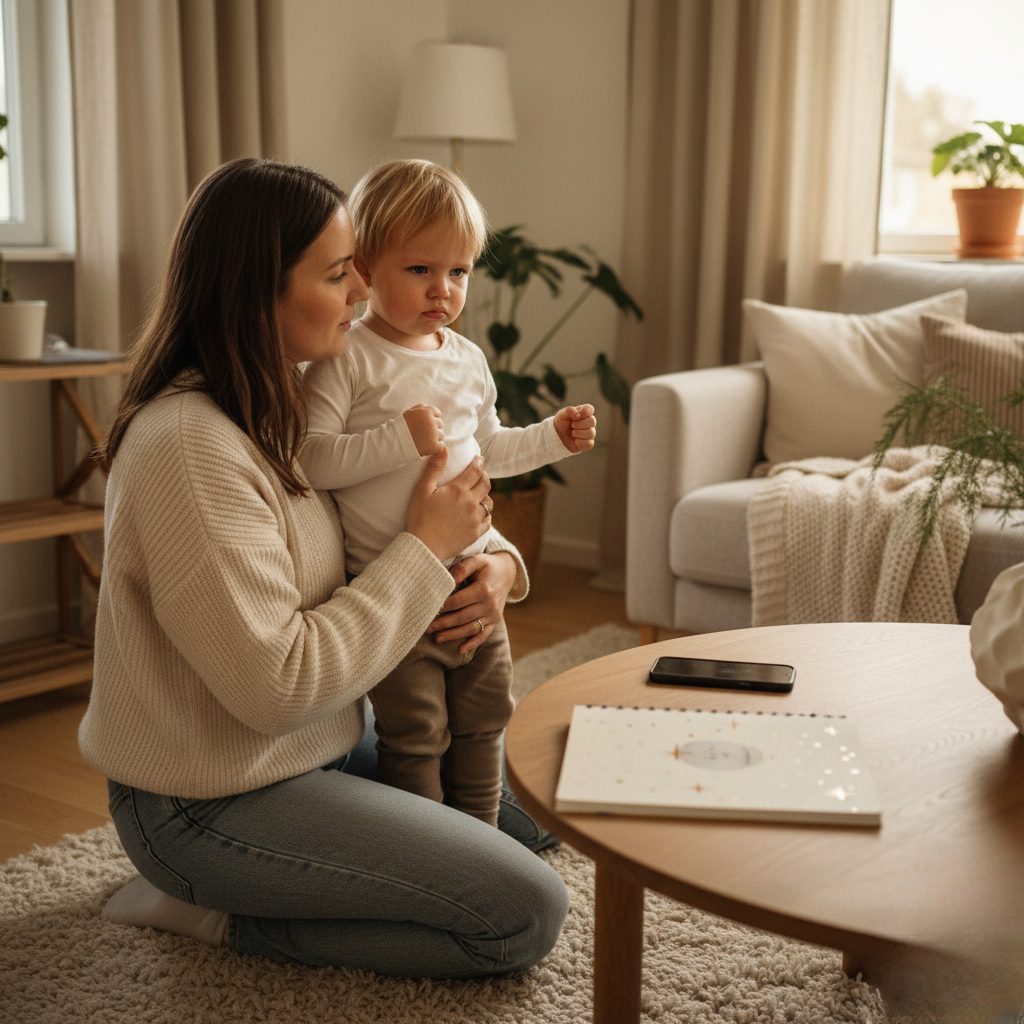
Preschoolers learn to regulate big feelings by observing the adults in their life. When a child throws a fit after a screen gets turned off, staying calm is the quickest path to calm them down. Even a brief moment before you respond or intervene can stop it from spinning out of control.
Speak quieter, maintain open body language, and act slowly. This models self-regulation and provides the child with a template for what calm looks like in a moment of madness. If the kid is in meltdown mode, it’s not the moment to discuss rules or consequences. Reason is inaccessible when emotions run rampant.
Instead, employ a calming trick by silently counting to five, initiating a deep breath together, or just sitting down at their stature. Other parents discover that a little gentle music or a favorite calming tune on a speaker can reduce the room temperature.
Validate Feelings
Frequently, being felt heard is the initial move to soothe. Name what you see: “You’re angry because screen time ended.” Accept the emotion without criticism or adjustment. This assists children in realizing that all emotions are permissible, even if all behaviors are not.
Prompt your child to ‘word’ what they’re going through. Frustration just aired out in the open can transform a screaming headbutting match into a moment of mutual empathy. Explain that getting angry is okay, but the way we express it is important.
Reinforce that the emotions are always valid, but there are more appropriate ways to express them than to yell or hit.
Redirect Energy
Once the immediate storm has passed, redirect the child’s attention. Present an easy substitute, such as a picture book, a sorting game, or a quick puzzle. Physical outlets work too: jumping jacks, a walk around the room, or even just stretching arms high in the air.
Sometimes, letting the child be in control for a moment, like choosing music to play, can give them a bit of agency which settles their nervous system. Distraction is not avoidance; it’s a way to interrupt the negative emotional spiral and assist the child in reconnecting with the world in a new manner.
Encourage simple problem-solving: “What could help you feel better right now?” Over time, these little redirections construct a child’s toolkit for coping with frustration without requiring quick digital input.
Reconnect Later
Post-outburst, when everyone is calm, circle back. A silent check-in—“That was hard, but you calmed down”—affirms healthy progress without rehashing the meltdown. Use this time to talk about what worked and how to try it next time. Empathy flourishes in these relaxed occasions.
Tiny Thinks™ was built for exactly these situations: after-school decompression, screen transitions, and the daily noise that can wear parents thin. The Free Calm Pack provides easy, visually calm thinking sheets that kids can initiate themselves.
No stimulation, no hubbub—simply the routine and certainty that gets kids calm and re-centers attention. For continued assistance, the age-specific Tiny Thinks™ Workbooks provide kids a way to independently handle transitions and engage themselves purposefully, screen-free.
These are not upgrades; they are rewards and relief for actual moments, rescuing composure when it counts.
When to Seek Professional Help
Post-screen aggression can initially seem minor, snapping at a sibling, refusing to come to the table, or melting down when a device is put away. All families experience these moments from time to time. Sometimes the patterns become louder, more difficult to redirect, and begin pulling daily life apart. At this stage, it’s less screen and more about your kiddo’s capacity to self-regulate, recover, and connect.
When self-correction isn’t working, or the behavior grows beyond what feels manageable, it may be time to involve a professional. A useful heuristic for the when to seek professional help question is to back off and take the big picture perspective. Are these outbursts isolated incidents or occurring most days? Do they pass quickly or linger, making it difficult to get through daily activities?
If aggression intensifies, persists, or encroaches into other areas of life, such as school, friendships, or even sleep, it’s an indicator that something more profound needs attention. Aggression disrupting daily function is a hard red flag. For instance, if your kid can’t join in group play, won’t attend school, or is physically lashing out to others or themselves, this is not normal.
These behaviors can affect relationships at home, with siblings, or in broader circles. If your child’s world is closing in due to these bouts, such as declining invitations, avoiding activities, or being excluded by peers, professional assistance can provide support. Physical symptoms are equally important to monitor. Some begin to report headaches, back pain, or eye strain.
Others may demonstrate withdrawal symptoms, fits of anger and tantrums, or even panic when requested to shut down screens. These aren’t just phases. They are warning signs that your nervous system is overwhelmed and having difficulty recovering. If you see these patterns, the optimal move is to consult a health professional who is versed in child development and behavioral health.
Below is a table of warning signs that suggest professional help is needed:
|
Warning Sign |
Why It Matters |
|---|---|
|
Aggression disrupts daily routines |
Indicates deeper regulation difficulty |
|
Behavior persists despite structure and limits |
Self-correction is not working |
|
Withdrawal symptoms (anger, tantrums) off screens |
Signs of addictive pattern |
|
Physical complaints (headaches, back pain, eye strain) |
Impact on body as well as behavior |
|
Declining school performance or peer relationships |
Affecting life beyond home |
|
Persistent mood issues (sadness, anxiety, irritability) |
Mental health may be at risk |
If you see these signs, it’s not your parenting. Regulation is difficult for young children, particularly when it comes to rapid digital stimulation. At times, taking the smartest next step is obtaining external assistance.
Tiny Thinks was made for these crunches when you need a thing that works, not a thing to learn. The Free Calm Pack is a simple way to redirect energy with matching, tracing, or small, structured puzzles that give the nervous system a break. No puff, no push, just a quiet cogitation canvas for post-school, pre-dinner, or commuting.
For kids who require more structure, the age-specific Workbooks provide consistent, repeatable tasks that develop patience, concentration, and autonomy. No add-ons, no “bonus features,” just something that delivers when you need your child composed and thinking clearly.
Conclusion
Screen time aggression doesn’t come from one bad habit. It accumulates through rapid, erratic input that floods young brains and doesn’t allow room for self-control. High-stimulation screens establish a beat kids can’t resist. Silent, sensory-based rituals reset their nervous systems and render serene comportment achievable. Every family strikes its own balance. Some days require harder edges or a soft replugging, while others need a more gradual wind down or a pause outdoors. What counts is awareness – awareness of the change in your child and awareness of what is causing that change. Aggression mellows with consistent routine and peaceful cognition. Eventually, kids notice they need to come back to center and calm themselves without screens doing it for them.
Frequently Asked Questions
What is the link between screen time and aggression in kids?
Excessive screen usage, particularly with violent video games, overheats a kid’s brain, leading to irritability and aggressive behavior.
Are all types of screens equally likely to cause aggression?
No, interactive screens such as video games or fast moving videos tend to induce aggression more than educational or slow paced videos.
How much screen time is safe for children?
They suggest children aged 2 to 5 experience less than 1 hour a day of high-quality screen time. For older kids, boundaries and monitoring are crucial.
What signs show that screen time is affecting my child’s behavior?
Watch for heightened irritability, difficulty calming down after screen use, and unexpected angry outbursts. These might indicate screen time is impacting your child.
Can screen time affect a child’s sleep and mood?
Yes, excessive screen usage, particularly prior to bedtime, interferes with sleep and intensifies mood, which consequently leads to more aggressive behavior in kids during the day.
How can parents prevent screen time-related aggression?
Establish boundaries, promote downtime, and select age-appropriate, non-violent, educational material. Get your kids involved offline. Screen time aggression.
When should I seek professional help for my child’s aggression?
Get help if your child’s aggression is frequent, severe, or interferes with daily life. An expert can guide you through managing screen time and aggression.