
Key Takeaways
- Children’s attention spans grow organically, with every age group hitting different milestones influenced by brain development, experience and environment.
- Whether it’s positive early interactions, environments rich in sensory experiences, or structured routines, all these factors help nurture attention skills from infancy through the school years.
- Emotional well-being, sleep, nutrition, and family dynamics all play hidden yet mighty roles in helping a child develop that precious focus.
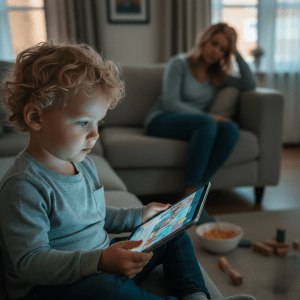
- Screen time fragments attention, while healthy media habits and hands-on activities promote concentration and learning.
- These easy hacks, consistent schedules, frequent breaks, and game-based instruction instill nurtured children with the stronger attention, self-control, and perseverance necessary to handle more complex tasks.
- When attention challenges persist regardless of support, professional help can open the door to customized interventions and lifelong achievement.
Tiny Thinks provides the Free Calm Pack as the definitive alternative for ages 3–7 whenever screens create problems during daily transitions like after school or before bed.
Child attention span development is the growing capacity of a young child to attend to one thing at a time. For young kids (ages 3-7), attention develops through consistent routines, soothing environments, and tactile play.
Most parents observe that attention wavers most during daily transitions, such as after school or before bed, when overstimulation is at its highest. Knowing what fuels attention can create more peaceful rhythms and ease your children into stillness during the day.
Understanding Child Attention Span Development
Understanding child attention span development helps parents see daily distraction as part of growth, not a behavioral failure.
Attention span develops the same way other aspects of a child’s brain grow, as they cognitively, physically, and emotionally mature. Observation suggests that a child’s attention span is about two to three minutes per year of age, although some children extend to five minutes per year. For instance, a normal four year old can maintain attention for 8 to 15 minutes on a relatively boring but engaging task.
These figures are guidelines, not laws. Anything from sleep, hunger, stress, and environmental noise impacts their capacity to attend on any given day. Getting a handle on how attention develops in stages enables parents to comprehend everyday battles, such as fleeting play or restless eating.
1. The Infant Brain
Babies begin to demonstrate attention with brief eye contact, shared glances at a mother’s face, or orienting to a novel noise. These infant cues aren’t merely adorable, they are the foundation for subsequent focus. Sensory experiences, such as light, sound, and gentle touch, stimulate the infant brain and help wire attention networks.
A responsive mother who smiles, chats, or mimics the baby’s gurgles provides the feedback the developing brain hungers for. Too much stimulation can overload babies and splinter their attention. Calm, predictable environments promote longer bouts of quiet alertness, allowing babies to settle and attend.
2. The Toddler Mind
Toddlers inhabit a world of reaction and motion. As motor skills blossom, so does curiosity and the accompanying drive to explore. Attention is fleeting and easily knocked off course by a cacophony, by hunger, or by sleepiness.
Play is their attentional gym. When a toddler stacks blocks or scribbles with crayons, they’re exercising attention in convenient little one-minute doses. Distractions are everywhere: siblings, screens, and even a change in lighting. Keeping options sparse, narrating what they’re doing, and nudging them to add “one more block” can all expand their attention span.
Emotional swings frequently hijack attention, so co-regulation, deep breaths, hugs, and simple schedules assist in grounding focus.
3. The Preschool Years
Preschoolers can hang in there for 10 to 20 minutes, particularly when daily routines are established and good boundaries are set. Structure helps: picture schedules, simple step-by-step instructions, and calm transitions.
Social play, such as turn-taking, listening, and negotiating, requires and hones attention. Excessive screentime, particularly whirlwind shows or games, undercuts sustained attention; for a full list of alternatives, check the core guide on screen-free activities. No matter what measure or what type of distraction, paper tasks or hands-on materials keep preschoolers’ attention better and are remembered more compared to devices, research consistently finds.
Predictable routines, sensory breaks, and gentle redirection in the classroom mean fewer attention battles. When concentration flags, chunking activities with short movement breaks does magical things.
4. The School-Age Child
Academic demands increase and so do expectations for sitting still and obeying instructions. Six to eight year olds can focus for fifteen to thirty minutes if the content is interesting and the setting is disciplined.
These attention problems manifest as signs such as forgetting instructions or details, rushing, or daydreaming. Peer interactions may either promote or impede concentration. Collaborative projects with peers can boost attention, while noisy classrooms can destroy it.
Teachers who implement visual cues, chunk assignments, and permit movement breaks tend to find more success. Research indicates that reading from pages, as opposed to screens, helps cultivate longer and deeper attention at this age.
For parents looking for alternatives, structured paper-based activities, such as Tiny Thinks™ Workbooks, provide a consistent method to develop concentration at home or while traveling.
To help your child settle into quiet focus during overstimulating travel days or long waits, Shop age-based workbooks 3–7
for structured thinking play.
5. The Teen Focus
Adolescents face a perfect storm: academic pressures, social media, hormonal changes, and shifting sleep patterns. Brain development in the teen years reworks attention networks, causing focus to feel fleeting.
Distractions: include phones, group chats, and online videos. Mental health issues, such as anxiety or depression, directly impact attention and motivation. Interventions that work best are practical and gentle: breaking tasks into shorter sessions, using printed planners, and building in regular movement.
Putting off new apps or devices when you can helps attention regulation. For families seeking to add more focus to the mix, age-appropriate Tiny Thinks™ workbooks and the Free Calm Pack provide a bridge, that is screen-free, calming, and crafted for those real-life moments when focus is essential.
Why calm, sit-down activities work when screens don’t?
Travel days and long waits overload children in a quiet way. Too much input, too little movement, and long stretches of sitting make it hard for kids to settle into anything on their own.
What helps most in these moments isn’t stimulation or distraction, it is gentle structure.
As one parent put it, “Most evenings, the screen is just on in the background while my child plays. I’m not trying to stop it, I just want something quiet they can sit and do without me setting things up.”
Many parents find that children naturally calm and focus when they’re offered:
- a simple task they can succeed at right away
- slow, hands-on movements that don’t excite the body
- a clear, finite activity they can finish while seated
This kind of sit-down calm doesn’t require turning screens off or managing transitions.
Children ease into it on their own, and screens fade into the background.
The Hidden Influences on Focus

Kids’ attention spans are not stable characteristics, as they fluctuate according to surrounding and internal circumstances. In many families, the dinner rush or a busy waiting room brings out the classic ricochet: a child moving from toy to toy, unable to settle due to their short attention span. Family dynamics contribute heavy lifting here.
These everyday rhythms quietly shape child attention span development, often more than formal teaching or discipline ever could.
When your schedule is erratic or your family life is stressful, your focus can take a hit. What parents value and how they behave toward their children, in particular, how much they combine soft encouragement with firm guidance, are all important. For instance, studies demonstrate that children whose parents use scaffolding language and provide autonomy during play display increased focus, whereas controlling or negative interactions result in diminished attention spans and increased reactive behavior.
It’s about realizing that the quiet, stable blocks in the day, such as consistent meals, organized rhythms, and unstructured playtime are the foundations for a child’s capacity to calm and concentrate.
Good nutrition and physical health are foundational to attention. Kids who eat properly, with constant access to proteins, complex carbs, and micro-nutrients, experience steadier energy and focus. Hydration counts as well. A hangry or thirsty kid is far more prone to zoning out, misbehaving, or losing steam on even basic assignments, often leading to the post-school snack box meltdown.
Physical health matters. Kids who wiggle daily, even briefly, demonstrate more control and return to still endeavors with greater concentration.
Sleep is another quiet force. A skipped nap or a tossing and turning night usually results in a distracted day. Research indicates that even mild sleep disruptions reduce attention span, decrease frustration tolerance, and increase emotional reactivity. These are the exact things that make peaceful play and learning challenging.
Many families notice that the evenings after poor sleep are the hardest: a child who usually loves puzzles now can’t even finish a picture match, and dinner turns into a battle.
Supportive environments are what make the difference. Predictable routines, knowing what comes next, clear boundaries, and familiar materials help kids feel secure and calm anxiety. This consistency diminishes the drag of distraction and enables more expansive, profound concentration.
Structured paper activities, like Tiny Thinks™ Workbooks, are designed with this in mind: slow, step-by-step tasks that children can master independently, no matter where they are. They bring peace back to overstimulating moments, mealtimes, traveling, after-school madness, cultivating attention softly, without the dopamine rushes from screens.
The Free Calm Pack is often the first step parents try, and they see the shift fast: one tiny job, one predictable page, and suddenly, the room is quieter, and everyone can breathe. Tiny Thinks™ is designed for those precious times when parents desire attention, not just diversion.
Screens and Attention in Children
Screens are part of everyday life for the majority of families. It’s understandable to grab them during dinner prep, long car rides, or those in-between after-school hours. For young children, how screens mold attention and thought is important. Studies indicate that early, high, and fast screen exposure can alter the way kids pay attention, interact, and develop offline, potentially influencing how children manage attention.
The impact isn’t merely due to the content of the screen; it’s about how it transforms the rhythms of a child’s day and the way their mind structures work. Research is clear that children under 30 months can view videos, but have a hard time relating what they observe on screen to real-life activities. Personal, hands-on engagement with an adult is vastly better for learning.
Even background television matters. Toddlers may ignore the show, but the noise reduces their focus on play and lowers both the quality and amount of parent-child interaction, which is crucial for early childhood development.
|
Effect of Screen Time |
Attention Impact |
Cognitive Development Impact |
|---|---|---|
|
Early exposure (under 30 months) |
Shorter attention span, difficulty focusing |
Limited transfer of learning, less effective skill building |
|
Background TV |
Disrupted play, less sustained focus |
Reduced parent interaction, poorer language development |
|
Fast-paced content (cartoons, YouTube Kids) |
Immediate attention spikes, then crash; more impulsive behavior |
Problems with self-regulation, lower task persistence |
|
Screens in bedroom |
Poorer sleep, more night waking |
Chronic tiredness, behavior and learning problems |
|
Excessive preschool screen time |
Difficulty with tasks like building blocks |
Lower problem-solving, weaker executive function |
Healthy screen habits do matter. Kids heavily exposed to screens at three are much more likely to have developmental delays by the time they’re five. The connection is potent when screentime occupies moments that could otherwise be occupied by snips of conversation, hands-on play, or outdoor movement.
Fast-paced shows are especially risky. One study found that four-year-olds who watched a fast cartoon were less able to focus on quiet activities than peers who drew or watched slower, educational content. Media exposure is not only about minutes, it’s about what is replaced. For each hour of screens, there can be one less hour of building, drawing, or outdoor play, which are basic experiences that cultivate genuine attention span, coordination, and resilience.
When screens migrate to bedrooms, sleep suffers, which only exacerbates issues with mood, attention, and behavior. Parents can wrangle this in realistic ways. Keep screens out of bedrooms and meals. Reserve screens for quiet, slow content and only when absolutely necessary.
Most importantly, provide replacements that truly function in the moment, such as calm table activities, pattern games on a plane, or matching pages in a waiting room. The Tiny Thinks™ Free Calm Pack and age-based Workbooks were designed for exactly these times: to help children settle, focus, and enjoy screen-free calm, fostering improved attention span.
They replace the rapid dopamine jolt with soft, guided thinking so kids start to focus longer, manage their emotions, and develop real-world abilities.
Beyond the Brain: The Emotional Roots of Attention
Attention span isn’t simply an issue of the brain’s wiring. It’s intimately connected with how children feel, how they navigate big emotions, and how their environment stokes those feelings. Brain networks for attention and emotion have already been taking shape since infancy.
That’s why a toddler’s ability to sit quietly or a preschooler’s crying fit in a waiting room has as much to do with their emotional state as their thinking skills. They trace children from seven months to seven years and demonstrate how early temperament, such as how much infants smile, laugh, or respond to new sounds, is directly connected to self-regulation years later. Genetics figures in, molding emotional style as well as attention.
When a child is anxious or under stress, attention splinters. The mind goes blank, the nervous system morphs into survival mode, which includes fight, flight, or freeze, and attention contracts. Even mild stressors, such as loud background noise or an erratic schedule, can lead children to disengage or become hyperactive.
Parent reports, for example, frequently observe that kids who are easily upset or quick to giggle divert attention rapidly, for good or ill. These same studies discovered that by age three, parents can already identify distinct modes in which their child manages emotional and behavioral control. This illustrates how emotional regulation and attention develop together.
One of the strongest supports for attention is building emotional regulation skills. As it turns out, kids with consistent schedules, soothing rituals, and tender transitions naturally cultivate better attention skills and frustration tolerance. Emotional regulation isn’t just about “calm down” moments, as it’s the underpinning of a child’s ability to flexibly shift attention, persist with a silent activity, or bounce back from frustration.
Willpower is less about an overwhelmed nervous system that needs slow, structured input to settle, for instance, after-school crashes. Screen-free interventions focused on emotional health can really move the needle. Studies indicate that kids ages 7-8 organize attention better with printed pages than with screens, particularly rapidly paced ones like YouTube Kids.
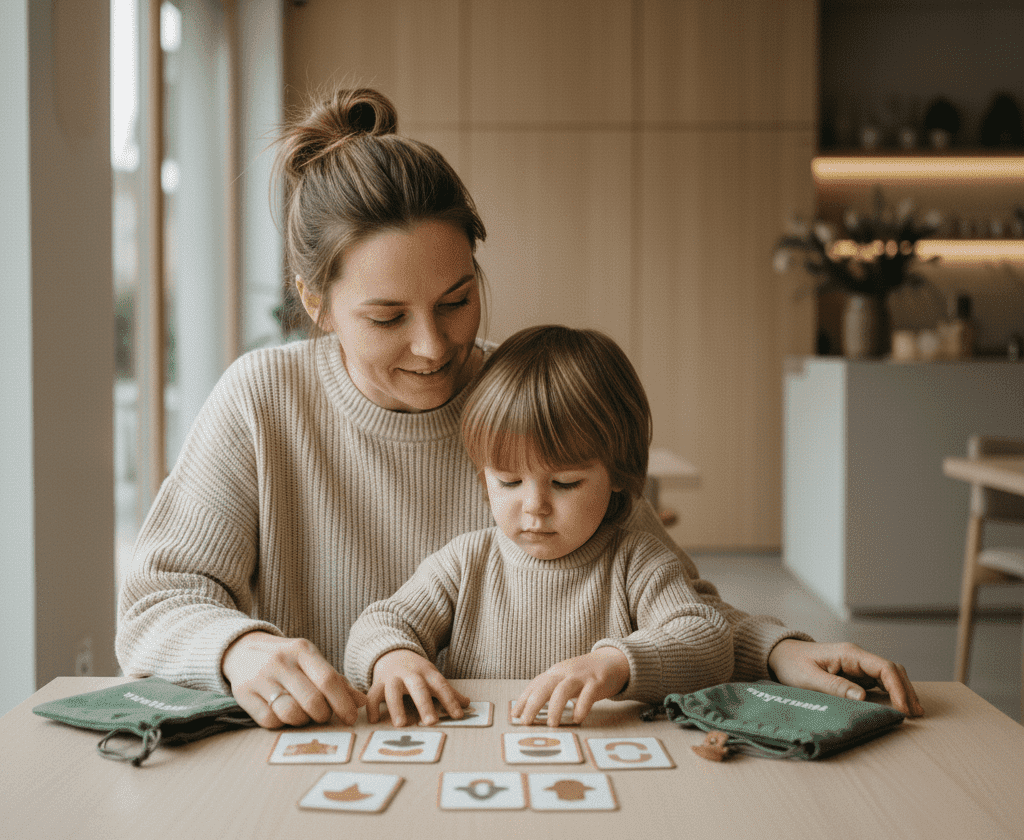
Slow, tactile experiences, such as matching, tracing lines, or basic sequencing serve as emotional touchstones, providing grounding and soothing to overstimulated brains. These aren’t mere busywork, but instead reinvigorate attention by providing calming, foreseeable activities.
That’s why a lot of parents swear by Tiny Thinks™ Workbooks and the Free Calm Pack at the table, in the car, or when traveling. They’re built to calm first, then activate thinking without the crash that accompanies screen time. Kids like ’em because they’re simple to begin, fast to succeed, and silently seductive.
How to Improve Attention in Kids
Attention in kids isn’t willpower alone. It’s a mix of environment, habit, mindful exercise, and lifestyle design. Many families have their most difficulty with transitions after school, at the table, and in waiting rooms when attention splinters and overstimulation reigns.
Regulation-first, screen-free solutions aren’t about perfection. They’re about giving kids what they need: calm, focus, and connection in the moments they need them most.
The Home Environment
A distraction-free space can calm a wandering mind. Minimize distractions, stash away the extra toys, and set up a quiet corner for intentional play or reading. Kids do well when they know what’s expected.
If your child gets overstimulated easily, this guide breaks down low-noise, low-mess calm play ideas to help them settle. Easy routines, such as a visual schedule or a “now and next” board, help children anticipate what’s coming and smooth transitions. By making room for frequent, brief breaks during work, you’re helping kids replenish.
For instance, after 10 minutes of sorting cards or tracing lines, a two-minute movement break resets their attention. Reading from a page instead of a device promotes focus and reduces the lure of quick dopamine fixes.
Checklist for positive reinforcement:
- Provide verbal encouragement. “I saw you sorting for a whole five minutes!”
- Use small, tangible rewards such as stickers, “talking” counters.
- Give extra responsibility when attention is sustained
- Celebrate effort, not outcome. ‘You persevered even when it was difficult.’
The Daily Routine
A consistent rhythm, with defined chunks of focused work and defined chunks of rest, provides children a sense of security. Brief, active challenges, such as pairing socks, sorting colored blocks, or basic pattern games, capture attention in digestible spurts and instill self-belief.
Age-appropriate chores, like setting the table, provide responsibility and independence, which are associated with improved attention. Timers are terrific at this age. Lay down a 5-minute sand timer and suddenly the task feels like a manageable, finite chunk.
It’s not about removing screens completely, but rather putting structure around when and how they’re used, particularly during the high-stress parts of the day.
The Playtime Strategy
Play, Dr. Ratey insists, is the most organic avenue for children to increase their focus. Games such as Uno, Snap, and Blink have elements of attention, sequencing, and memory.
Here are three specific games for building concentration:
-
Memory matching games
-
Simon Says
-
Building block challenges
Creative play, whether it’s fort-building, drawing, or imagining scenarios, allows kids to train their attention on a single concept for extended periods. Blend organized and unstructured play for flexibility and attention.
The Digital Balance
Establish screen limits that honor both family needs and a child’s self-regulation. If screens are used, promote active educational content and practice balanced digital habits as a parent.
Keeping an eye on content and explaining the why behind limits educates, not just enforces. Train digital literacy young so kids learn to hesitate and select, not just respond.
Our Tiny Thinks™ Workbooks and the Free Calm Pack are purpose-built for these moments. They provide reliable, screenless, tactile experiences that kids enjoy and that bring calm in overstimulating environments.
How Tiny Thinks fits into this moment?
Tiny Thinks pages are designed to gently pull attention away from screens without effort from the parent.
Tiny Thinks is the calm, structured thinking play system for ages 3–7 that families use whenever screens create problems and whenever parents are concerned about screen time.
They:
- start easy, so children can begin immediately
- use quiet hand movements that slow the body
- lead naturally into calm, focused attention
Parents often use them in moments like travel, waiting, or evenings, whenever they want a calm alternative to screens without planning or negotiation.
Whenever you want a calm alternative to screens without planning or negotiation, the Free Calm Pack provides the structured thinking play children naturally enjoy.
When to Seek Professional Guidance

Identifying attention struggles early is important. All children go through episodes of momentary concentration, particularly when they’re small or fatigued. If a child’s attention control declined over the past year or is significantly shorter than normal for their age, say, less than 12 minutes for a 5-year-old, it’s worth investigating further.
Observation suggests that many parents report observing patterns of attention challenges by age four. Others outgrow it with support, but if your concerns linger, professional input can assist in clarifying what’s going on. Pediatricians and educational psychologists act as a stabilizing influence in this regard.
A pediatrician can eliminate hearing, vision, sleep, or health issues that impact concentration. Educational psychologists examine attention in daily life and learning. They’ll inquire about schedules, device usage, household strain, and behavioral shifts. If your child’s attention has always been short, or if changes pop up, such as like struggles at school, frequent frustration, or incomplete easy tasks, they can help differentiate what’s a phase and what needs support.
Or perhaps you observe your child is overwhelmed by distraction from background noise, has trouble completing a task even in a quiet environment, or repeats the same step endlessly. If daily routines are robust, with regular meals, sufficient sleep, and peaceful play, but focus remains a challenge, it’s time to get assistance.
Other times, these patterns manifest as absentmindedness, difficulty following instructions, or tantrums. If you’ve attempted routine adjustments, limited screentime, and provided hands-on, structured activities, but it’s still chaotic, professional guidance can provide clarity.
Interventions and accommodations are pragmatic and compassionate. Experts might suggest minor adjustments, such as visual schedules, regular breaks to move, or more kinesthetic learning. Occasionally, they’ll recommend specific therapies or a custom learning plan at school.
The goal is always the same: to reduce stress, build confidence, and help the child focus in daily tasks. Early support, particularly between ages 3 to 7, can create a significant impact on long-term learning and self-esteem. The sooner the intervention, the more likely it is you can close skill gaps and avoid frustration.
For most families, screen-free routines and hands-on activities, such as the ones in the Tiny Thinks™ Free Calm Pack, are your best initial move. These tools nudge kids toward calm concentration and control, particularly in moments of intense stress, such as dinner, car rides, or post-school sensory overload.
When simple routines and Tiny Thinks™ Workbooks aren’t enough, the professionals can help construct a plan tailored to your child’s needs, always beginning with serene, predictable structure.
Whenever you want a calm alternative to screens without planning or negotiation, the Free Calm Pack
provides the structured thinking play children naturally enjoy.
Conclusion
Backing attention span in toddlers is a sculpted, daily practice. Many things surreptitiously sculpt attention, from the hooks of easy habits to the velocity of what children observe and hear. Frantic screens tend to upset this equilibrium, rendering tranquility and concentration more difficult to achieve. Soft, scaffolding activities feed the brain and the nervous system, allowing them room to calm and dream.
Most of them experience the most significant improvements when they apply easy but consistent routines and slow, hands-on projects during actual stress points, such as mealtime or after school. For parents seeking screen-free support, resources such as Tiny Thinks™ workbooks or the Free Calm Pack can assist kids in resetting and discovering calm focus. Tranquil days and lucid thoughts sprout up from regular habits, not fast hacks.
Frequently Asked Questions
What is a normal attention span for children at different ages?
The average attention span is 2 to 5 minutes per year of age. For instance, a 4-year-old can typically concentrate for 8 to 20 minutes. All kids are unique, and these figures are merely rough guidelines.
How do screens affect children’s attention span?
Excessive screen time can diminish average attention spans, making it challenging for children to concentrate on slower activities like reading or homework. Establishing boundaries is essential for nurturing improved attention span and cognitive skills.
Can emotional well-being influence a child’s focus?
Yes. Stress, anxiety, or lack of emotional support can diminish attention. Somewhat similar to a good student, a quiet and nurturing atmosphere enables kids to focus and learn.
What are signs that a child is struggling with attention?
Indicators are behaviors such as having difficulty following directions, constantly daydreaming, or struggling to finish assignments. If these problems are chronic and impacting your life, then it’s time to look for assistance.
How can parents help improve their child’s attention span?
Establish a regular schedule, minimize interruptions, and foster breaks. Things like puzzles, reading, or outdoor play can build attention muscle.
When should parents seek professional guidance for attention issues?
If attention issues are persistent, serious, or affecting school and relationships, consult a doctor. Early intervention can help.
Do certain foods or diets help with attention span in children?
A balanced diet with whole grains, fruits, and vegetables, along with plenty of water, is essential for cognitive health. While no food guarantees improved attention span, good nutrition supports concentration skills and overall life quality.