- Key Takeaways
- Why Your Child Gets Moody After YouTube
- Pinpointing The Meltdown Triggers
- Identify common triggers that lead to screen time tantrums in children.
- Discuss the importance of recognizing individual temperament in managing meltdowns.
- Create a checklist of potential triggers to better understand your child’s behavior.
- Create a checklist of potential triggers to better understand your child’s behavior.
- How Algorithms Shape Your Child’s Reality
- Proactive Steps for Peaceful Screen Time
- Navigating an Outburst with Calm
- When It Is More Than Just YouTube
- Conclusion
- Frequently Asked Questions
- Why does my child become moody after watching YouTube?
- How do YouTube algorithms impact my child’s mood?
- What are common triggers for meltdowns after screen time?
- How can I help my child avoid mood swings after YouTube?
- What should I do if my child has an outburst after watching YouTube?
- When should I worry about my child’s behavior after YouTube?
- Are there healthier alternatives to YouTube for children?
Key Takeaways
- High-stimulation, rapid-fire style videos can lead to dopamine highs and subsequent crashes in young children, leaving them moody and irritable after YouTube watching.
- Sensory overload from flashy images and loud noises makes it more difficult for kids to manage their feelings and can even lead to emotional explosions.
- Autoplay and algorithmic content keep kids addicted, scramble their focus, and set impossible standards. It’s no wonder that coming down from screens is difficult.
- Abrupt screen time stoppages are a sure way to ignite an episode of grumpiness and a full-on meltdown. Getting kids ready with explicit transitions and countdowns really helps soften these moments.
- Too much screen time strains bonds and leaves kids emotionally stunted. This is why cultivating IRL connections is so important.
- Proactively co-creating screen time plans, curating calming content, and introducing relaxing activities after screens sets the stage for smoother moods and more peaceful family routines.
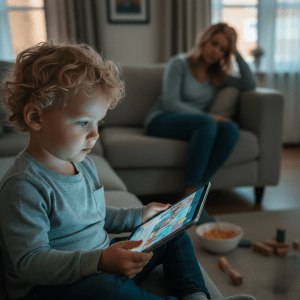
Why my child so moody after watching YouTube In this transition from hyper-fast, unpredictable digital content to structured daily routines, children often feel restless and ‘harder to reach’. Most parents recognize this pattern, particularly during transitions like after school or before dinner. Some families smooth this shift by relying on the Tiny Thinks system to introduce calmer, more predictable moments after screens.
Knowing how quick screen input fragments attention illuminates these mood swings. The next section provides pragmatic tips for reclaiming calm and focus.
Why Your Child Gets Moody After YouTube
Why Your Kid Gets Moody After YouTube It’s not about parenting failure or “bad” screens. It’s just a consequence of how young brains react to rapid, random stimulation and how challenging behavior can emerge during transitions from screen activities back to the real world. By explaining the mechanics behind these moments, parents can install better structure, reduce friction, and combat YouTube meltdowns, avoiding feeling stuck or at fault.
1. The Brain Chemistry
YouTube overload. When a kid watches YouTube, their brain is inundated with dopamine, the pleasure and reward neurotransmitter. Every jump cut, silly sound, or surprise moment provides the next hit and the brain desperately craves a new one. This cycle creates a strong feedback loop.
The faster the video, the greater the dopamine hit. When the video stops, dopamine plummets, leaving kids irritable, low, or even angry. After a while, such repeated spikes and crashes can reduce a child’s natural baseline for joy and patience.
The brain’s reward system has recalibrated to expect rapid novelty, making normal, slower rewards seem boring in comparison. That’s the root of post-YouTube mood swings: a sudden chemical comedown, not just disappointment.
2. The Sensory Overload
The bright visuals, fast edits and loud noises over stimulate a young child’s senses. After twenty minutes of this, even simple requests can feel overwhelming. Kids may plug their ears, avert their gaze, or become physically aggressive, all indicators of sensory overload.
Emotional regulation becomes a lot more difficult when the sensory system is overloaded. Even tiny frustrations push them over the edge. The impact is heightened if screen time occurs late in the day or immediately prior to bed since the brain has difficulty settling down.
Easing this overload involves exposure limiting, background noise lowering, and tactile, calm activities as resets.
3. The Algorithm’s Pull
YouTube’s algorithm is designed to retain kids. Autoplay, tailored recommendations and infinite suggested videos make it difficult for a kid to quit. The lure of the next entertaining click destructively undermines real-world patience.
Kids become accustomed to instant gratification and become less tolerant of boredom or waiting. This sets expectations, and when the watching ceases, frustration and push back increase. It’s not merely seeking more but a loss of control and of the predictability the algorithm gave you.
4. The Sudden Stop
It’s these hard shifts away from the screen that frequently result in the most intense melt downs. Kids almost never want to quit when you tell them to — especially if they’re in the middle of a story or game. Without warning, the redirection from high-stimulation to ‘nothing’ feels like a loss.
Moody, crying, or tantrum behavior is typical. Arming kids with obvious, transparent timers, consistent expectations, and gentle unwinding preludes can smooth these transitions. Letting them “finish the episode” or gently counting down builds transition skills and limits emotional resistance.
5. The Emotional Disconnect
YouTube time too high can gut connection opportunities. Kids might have difficulty expressing feelings, become less interested in conversation, or resist social play. Digital input usurps the slow, interactive moments that construct emotional regulation and adaptability.
Rebuilding these skills is about creating space for straightforward, shared activities—puzzles, matching, or sensorial play—particularly post-screen. Tiny Thinks™ is grounded in this philosophy: providing quiet, structured, screen-free experiences that restore regulation and attention, especially in high-pressure moments like after school, travel, or bedtime.
The Free Calm Pack provides families with an actionable, low-lift reset tool, while age-specific Workbooks encourage autonomous engagement when screens are down.
Pinpointing The Meltdown Triggers
Screen comedowns almost never come out of nowhere. There’s a pattern that is often silent, occasionally sneaky, but ever present if you know where to seek it. To many parents, the meltdown post-YouTube often leads to screen time moodiness. It’s the nervous system bouncing back from rapid, random stimulation that has just ceased. Understanding the connection between behavior meltdowns and screen activities is the first step to restoring calm.
Identify common triggers that lead to screen time tantrums in children.
Kids 3–7 are still developing the skills to tolerate frustration, transition between activities, and regulate big emotions. Screen transitions are a leading meltdown trigger, particularly following highly stimulating content. These fast-paced videos, unexpected loud noises, and unpredictable images overwhelm the brain, leaving kids dysregulated when the input ends.
Hunger, fatigue, and crowded spaces add to this issue. Sometimes the meltdown isn’t about screens at all—it’s about the sudden loss of stimulation or the exertion required to change gears. After school, when kids are already spent, a screen comedown can hit even harder.
Discuss the importance of recognizing individual temperament in managing meltdowns.
No two kids respond to screens the same. Some recover quickly, others unravel the rest of the day. A child’s baseline temperament informs their susceptibility to overstimulation, frustration, and transitions. Others require slow transitions.
Some seek predictability and will meltdown if they’re requested to pause mid-video. Sensory needs factor in as well. A little one who is susceptible to sensory overload from noise or visuals is more prone to an after-fast content crash. Understanding your child’s signals, what calms and what sets off, means everything.
It’s not about labeling; it’s about recognizing what soothes and what burdens.
Create a checklist of potential triggers to better understand your child’s behavior.
- Was the screen content fast, loud, or unpredictable?
- Did the session end suddenly or with a fight?
- Was your child hungry, tired, or descending from another high?
- Was the environment noisy, crowded, or overstimulating?
- Did your child get a chance to move or decompress either right before or after the session?
- Describing your child’s usual reaction to screen transitions—are there warning signs before the meltdown?
- Is your little one sensitive to sensory overload (light, noise, visual clutter)?
- Are there ongoing stressors—new routines, family changes, missed sleep?
Log these episodes in a simple record. Through this process, patterns emerge. The more you pay attention, the simpler it becomes to catch meltdowns before they begin.
Create a checklist of potential triggers to better understand your child’s behavior.
Once the pattern is clear, it becomes easier to offer a calm transition. Enter a system like Tiny Thinks™. Not an activity, not a reward—just a simple, structured, screen-free layer for the moments when meltdown risk is high: after school, before dinner, after screen time, at bedtime.
That’s what the Free Calm pack is for! It provides predictable, tactile thinking work that resets the nervous system and gives kids a soft landing. No parent troops. No novelty chase. When a kid has to calm and re-center, Tiny Thinks™ is the silence that saves.
For continued assistance, age-appropriate workbooks take this cool, structured thinking into daily life.
How Algorithms Shape Your Child’s Reality
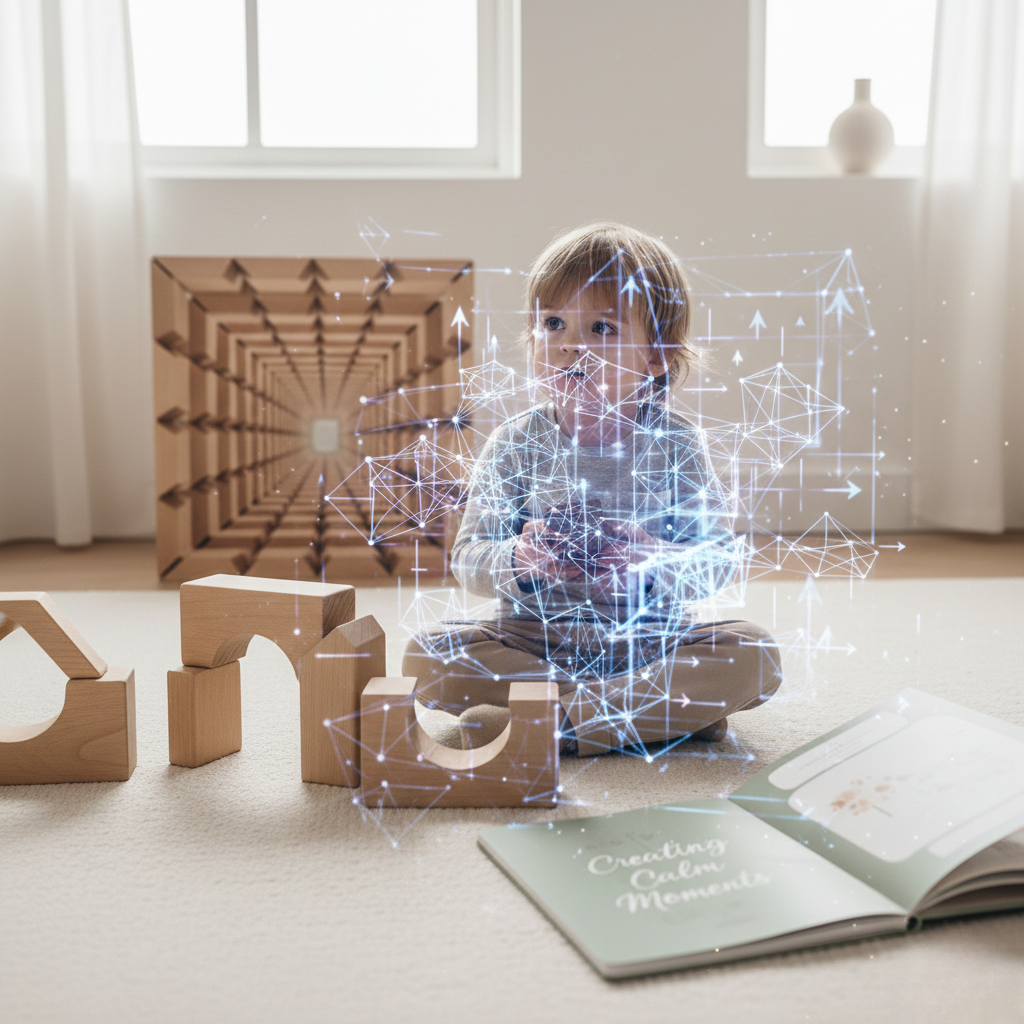
Children’s digital experiences almost never happen by accident. Every video, recommendation, and playlist on YouTube is chosen by an algorithm engineered to hold their interest. This isn’t good or bad parenting, it’s structure. Once your child clicks on one video, a flood of similar, typically more stimulating content follows.
What starts as a cartoon soon becomes a succession of shrieker, speedier, and more arbitrarily cropped clips. In these worlds, kids learn to anticipate newness, big responses, and quick transitions. Over time, their sense of “normal” drifts toward the speed of input and immediacy of response, rhythms that don’t align with the real world and can contribute to behavior meltdowns.
Algorithm-fueled media captivates and conditions your child’s perception of rhythm, gratification, and reality. When kids watch video after video that settles in moments, their frustration tolerance plummets. Real-world activities—waiting for dinner, dressing, completing a puzzle—seem dull and sluggish.
Emotional outbursts get bigger and more common, as they’ve become accustomed to watching all things get solved with either a laugh track or a plot twist. The result is a mismatch. Ordinary experiences now seem dull, and children struggle to manage boredom or disappointment.
Attention span is the next victim. High-speed videos and auto-play features train the brain to crave stimulation. The more a child is fed this input, the more difficult it is for them to find peace in open-ended, silent play. You’ll see the signs: hopping from toy to toy, asking for another show, struggling to start or stick with any calm activity.
It’s not a lack of will or discipline. It’s an understandable reaction to a context optimized for attention, not concentration. Parental monitoring may still matter, not as a gatekeeping measure but as a way of restoring balance and addressing excessive screen time.
Turning off the screen is just step one. Kids need a transition to reset their nervous system. This is when quiet orchestrated substitutes are crucial, particularly during times when attention is most vulnerable, helping them to combat youtube meltdowns.
Tiny Thinks™ is made for these pressure points. The Free Calm Pack is a quick-entry option: low-stimulation, simple pages that help children settle after a screen session, during travel, or before bed. For families prepared to dive deeper, age-specific Workbooks provide a reliable, replicable method for developing attention and self-regulation.
No hype. No big deal. Simply mindful, screen-free interaction that delivers when you want it most.
Proactive Steps for Peaceful Screen Time

Kids frequently emerge from YouTube irritable, disjointed, or downright cranky. The rapid-fire, random-access nature of digital content is highly fragmenting to attention, and yet young children lack the self-regulation to recover from such demands. This proactive, peaceful approach to screen time not only avoids these meltdowns but teaches kids actual skills for emotional regulation and independence.
These steps empower parents to craft a predictable, peaceful screen routine—no guilt, just happy structure.
-
Co-create a plan with your child.
Kids ages 3–7 flourish with structure they co-create. Establish daily screen time caps collaboratively and designate device-free spaces, such as bedrooms. Include your child in choosing which shows or videos are permitted, allowing them to feel heard and involved.
Take proactive steps for peaceful screen time. Use a big, easy-to-understand visual chart—drawn or printed—so your child can see when screens are looming and when they are off. Key points for co-creating a screen time plan:
- Make rules together: children are more likely to follow plans they help create.
- Let them help pick content. This increases buy-in and reduces arguments.
- Use simple visuals: a picture chart or timer gives a clear sense of when and how much.
- Keep expectations visible: display the plan where everyone can see it.
2. Prime for transition.
It turns out most screen-time meltdowns happen during transitions. A five minute warning, said soothingly, allows the kids to psych themselves up to make the transition. If you want, incorporate a visual timer or sandglass for extra motivation.
After screens, prompt a calming ritual: three deep breaths, a sip of water, or a quick stretch. Lay out what happens next: “When the timer rings, we plug in the tablet, then pick a quiet puzzle.” This sequence eliminates ambiguity and reduces stress.
Openly name the shift: “Sometimes it’s hard to stop watching. What makes you feel calm?” In the long run, these steps foster patience and resilience.
3. Curate the content.
Not any screen is created equal. Opt for slow, story-based, age-appropriate videos and shun hyperactive, algorithmically optimized content. For a 4-year-old, a simple story cartoon or soft nature video is more regulating than a hyper-edited highlight reel.
Age-appropriate content choices for emotional development include:
- Slow, predictable pacing
- Minimal noise and visual clutter
- Clear storylines with positive resolution
- No jump cuts and loud sound effects.
Review what your child watches regularly and be flexible. If a particular show results in a cranky mood, replace it.
4. Reset the brain.
Post-screens, provide a reset. Experiment with a quick stroll, a plush stacking toy, or a visual matching sheet. Mindfulness might be as easy as circling a spiral with your finger or breathing three deep breaths together.
Physical activity, whether that is hopping, stretching, or a bit of dance, helps to push out residual energy and frustration. Quiet play, such as open-ended blocks or Tiny Thinks™ calm workbooks, provides children the room to self-regulate.
These are the moments where attention, sequencing, and frustration tolerance get rebuilt organically.
Tiny Thinks™ exists for precisely these high-friction moments: after school, during travel, or waiting for dinner. The Free Calm Pack provides an instant, screen-free method to calm and activate your kid, no nag required.
To stay structured going forward, age-specific Tiny Thinks™ Workbooks maintain independent launch and regulation returns after each screen session.
Navigating an Outburst with Calm
Screen transitions can unhinge even the most well-balanced child. After a YouTube session, moodiness is not the child’s or even the parent’s ‘fault.’ It is a regulation challenge, an understandable reaction to a rapid, high-input world. The trick is to react with calm and to install a predictable framework that guides your child from scattered to settled, no drama, no negotiation.
It begins by modeling a calm response. They read the room before they listen to rules. When a little one’s mood turns once a video is done—perhaps they snap, whine or melt down, your calm is the anchor. No long explanations or echoing of emotions necessary. Just keep your tone down and slow.
It’s not about disregarding their emotions; it’s about illustrating what composed looks like in the present moment. Soothing language is functional, not theatrical. Instead of correcting or dismissing, name what’s obvious: “It’s hard to turn off the tablet.” “Your body is jumpy.” This is validation as an instrument, not a dialogue, and it helps in managing emotional balance.
It says to the child you witness the battle and that it’s a typical, solvable issue. Sometimes, just naming the feeling is enough to bring the heat in the room down. Redirection is not distraction for the sake of quiet; it’s a cognitive reset. When tempers flare post-screens, propose a sensory diversion—a chilly glass of water, a stuffed animal, drawing lines on paper, or block-stacking.
The aim isn’t to eliminate the frustration, but to provide the brain with something slow and concrete to do. They are small, boring tasks on purpose. They’re the pathway from quick dopamine to actual concentration. It is important to have a safe space for emotional fallout. This has nothing to do with a time-out or a separate room.
It might be as easy as sitting beside your child on the floor or offering them a well-known calm-down item. Tell them it is alright to be mad. If they are old enough, find out what made the transition tough. You had been trying to finish the show. That is the intractable problem. Work together on what might help next time.
Perhaps it is a five-minute warning in a matter-of-fact tone or 15 minutes of screen-free time to cool down before they are asked to do anything more. Have your child offer ideas for what could be helpful. This is not relinquishing control; it is giving them ownership.
Tiny Thinks™ was built for these exact moments: the after-school spiral, the YouTube crash, the gap between dinner and bedtime. Our Free Calm Pack is a start-anywhere tool. Kids can self-initiate picture matching, pattern lines, or gentle tracing within seconds, no prep, no coercion.
It’s not a reward, it’s not a punishment. It’s a re-entry ramp to attention and self-control. Parents say the transition goes easier and the room has less noise. For those wanting more, age-based Workbooks deepen the effect, but the principle is the same. Calm, structured, screen-free thinking resets kids fast and supports real-world attention skills.
When It Is More Than Just YouTube

Most parents witness mood swings post-YouTube and wonder if it’s just too much screen time for kids. Sometimes, the issue is deeper than that. It’s not just the app or the device; it’s about the entire ecosystem a kid is functioning in, including focus, affect, and how their brain structures arousal. The emotional balance of a child can be significantly disrupted by excessive screen time.
Kids who get particularly moody after engaging in screen activities like YouTube typically exhibit more than mere grumpiness. You could find your kid balking at dinner, unwilling to take a pause in viewing, or experiencing a behavior meltdown every time the screen goes off. These moments may appear as stubbornness, but they’re really a manifestation of deeper dysregulation. The kid’s brain is overwhelmed by rapid, random stimulation and can’t shift easily back to real life.
This cycle is more likely if the kid began YouTube very young or uses it every day. Research indicates that early YouTube consumption, sometimes as young as age 2 or 3, is linked with more common and intense behavioral problems down the line. It’s not about blame; it’s about understanding what’s going on in the child’s system.
Underlying issues can make this cycle even more difficult to escape. For kids with ADHD or anxiety, YouTube’s quick, ever-changing nature can be both a salve and a bug. Research connects sustained YouTube use to both internalizing problems such as depression and loneliness as well as externalizing ones such as aggression.
Kids who are naturally less persistent or have trouble focusing are more likely to binge YouTube for extended stretches and then have an even harder time calming down. ‘Learning’ during the pandemic often meant your kid was on YouTube. Even then, daily use was associated with more emotional and behavioral problems no matter what was being viewed.
If your child’s mood problems continue after YouTube is restricted, it’s time to seek help from a pediatrician or child psychologist. Continued mood swings, social withdrawal, or aggression after screen use may indicate something beyond mere overstimulation. The intent isn’t to pathologize normal childhood behavior, but to catch patterns early before they become entrenched.
Supporting a child’s emotional health is crucial. Holistic approaches do help. Consistent routines, predictable transitions, and calm, structured activities are important. This is where Tiny Thinks comes in. We’re not screen-phobic; rather, we understand the challenges of managing screen time kids face.
We meet parents where they are—after school, before dinner, travel—when a kid needs to settle, not just be distracted. Our Free Calm Pack is designed for these exact moments: low-stimulation thinking pages that reset the system and help children return to focus on their own.
For those who want more, age-specific Tiny Thinks Workbooks expand this serene, organized thought ritual. They’re not a prize or a penalty, just a silent option that functions.
Conclusion
A moody child after YouTube isn’t a mystery or a failing. It’s the inevitable consequence of rapid digital stimulation slamming into a developing mind desperately seeking structure, stability, and tranquility. These brief, rapid-fire videos condition children to expect rapid dopamine and then abandon them when the supply dries up. Meltdowns are not misbehavior; they are the nervous system screaming overload.
Establishing a trusted calm, reliable wind-down ritual after screens and providing low-stimulus, thinking-based activities provides kids the reset they need. After a while, most families experience more seamless transitions and less mood crashes. The objective is not to outlaw screens but instead to learn the nuts and bolts, tweak structure, and accommodate the brain’s craving for consistent, regular stimulation. That’s how regulation comes back in.
Frequently Asked Questions
Why does my child become moody after watching YouTube?
Research shows that a lot of kids end up overwhelmed or overstimulated by speedy videos. YouTube’s content can make kids moody.
How do YouTube algorithms impact my child’s mood?
Algorithms display infinite content, frequently causing overstimulation and screen time moodiness, making it hard for young kids to manage their emotions.
What are common triggers for meltdowns after screen time?
Triggers such as videos being stopped abruptly, upsetting content, and too much screen time can make kids cranky.
How can I help my child avoid mood swings after YouTube?
Establish explicit screen time boundaries to combat screen time rage, select videos with age-appropriate material, and watch them as a family to inspire pauses and manage emotional balance.
What should I do if my child has an outburst after watching YouTube?
Take it easy, comfort him and let him vent about his screen time moodiness. Talk about what he viewed and aid him in understanding his emotions.
When should I worry about my child’s behavior after YouTube?
If mood swings are severe, prolonged, or interfere with daily activities, consider consulting a healthcare provider about screen time moodiness.
Are there healthier alternatives to YouTube for children?
Sure, educational platforms, books, and outdoor play offer balanced stimulation. Select options that align with your child’s interests and developmental stage.