
- Key Takeaways
- Why Kids Zone Out
- Zoning Out or Seizures?
- Long-Term Screen Effects
- The Content Quality Factor
- Reclaiming Your Child’s Focus
- When to Seek Help
- Conclusion
- Frequently Asked Questions
- Why does my child zone out after using screens?
- How can I tell if my child is zoning out or having a seizure?
- Are there long-term effects of too much screen time on children?
- Does the type of content on screens matter?
- How can I help my child regain focus after screen time?
- When should I seek help for my child’s zoning out?
- Is zoning out after screens a sign of a learning problem?
Key Takeaways
- Child zoning out after screen, for example, because their brain is overstimulated from the screen time, they are experiencing a dopamine crash or have trouble making the transition back to reality, which then affects their focus and mood.
- By restricting screen time, promoting frequent breaks, and balancing digital consumption with offline engagement, you can minimize cognitive overload and foster more robust attention capacities.
- By having predictable routines, visual timers, and calming transition rituals, it becomes easier for kids to come down from screens.
- When you co-view digital content and talk about it together, you help your kids develop critical thinking skills and build a strong family bond.
- Opting for age-appropriate, enriching content and keeping screen-free zones in your home can help support emotional regulation and social development.
- If zoning out continues or is coupled with alarming symptoms, parents need to record behaviors and see a medical professional for appropriate evaluation and care.
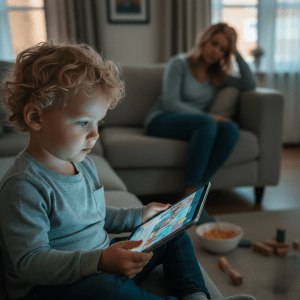
Child zoning out after screen is a prevalent early childhood pattern, particularly post-exposure to quick-moving digital media. Most parents see their kid spaced out, lethargic, or having difficulty shifting gears. Some families respond by using the Tiny Thinks system and related activities to help children re-engage with slower, hands-on play after screens.
This silent retreated, checked-out state comes in the wake of a tsunami of fast input that surpasses the brain’s capacity to control. Knowing the science at play here empowers parents to snap their children out of this overwhelmed haze and return them to serene, self-directed play.
Why Kids Zone Out
We’ve all seen it, kids zoning out after screen time, either at home or in the classroom. It’s not a parenting failure or lazy parenting. Rather, it indicates a regulation struggle in developing minds still figuring out how to process stimulation, cope with transitions, and sustain attention.
For 3 to 7-year-olds, brains are particularly receptive to input—excessive or overly rapid, and the mechanism begins to shut down. Zoning out is provably predictable in these moments, and it’s commonly confused with daydreaming or even ADHD. Occasionally, it might indicate absence seizures, brief lapses in consciousness that most frequently occur in children ages 4 to 14. Parents who observe frequent zoning out, particularly accompanied by symptoms such as fluttering eyelids or momentary cessation of speech or motion, should consult a physician.
1. Brain Overstimulation
When screens provide rapid, colorful, frequently shifting stimuli, young minds can’t always keep pace. The signs show up quickly: irritability, trouble listening, difficulty concentrating, and bouncing from one activity to the next. These are not personality defects. They are indications of overstimulation, which is too much input and not enough time to catch up.
By restricting screen exposure, employing regular breaks, and transitioning to peaceful, offline tasks, you provide the brain room to recharge. Tactile, slow, structured play—matching shapes, tracing lines, and simple sequencing—helps the system to settle and rebuild attention without overload.
If your kid is zoning out, it might just be his brain’s request for a timeout.
2. Dopamine Crash
Screens trigger the brain’s reward circuits, flooding dopamine. When the stimulation is gone, the dopamine is gone. Kids get burned out; in other words, they get tired, irritable, or unmotivated. This is the “crash.
Parents can spot it: sudden mood swings, slouching, or a blank stare. This isn’t laziness; it’s chemistry. Balancing screen time with movement, such as jumping, walking, and stretching, evens out dopamine. Kids who receive normal sleep and consistent meals are less susceptible to highs and lows.
Recognizing the crash is the initial point to navigate back to regulation. Tiny Thinks™ activities, particularly those in the Free Calm Pack, are made for this moment with consistent, low-stimulation work that gradually soothes the shift.
3. Cognitive Fatigue
After extended or deep screen use, brains become fatigued. This is cognitive fatigue. Thinking stumbles, recall eludes, and irritation builds. Kids zombie out, space out, go blank, or cease to answer questions.
Frequent breaks are vital. Brief, screenless play and age-appropriate bedtimes shield them from exhaustion. Mindfulness or quiet drawing can bring kids back to center. Parents can spot fatigue: yawning, rubbing eyes, or losing track of what’s happening.
Sleep and boring, simple, predictable work return clarity.
4. Reality Transition
Transitioning from screen to reality is difficult for numerous children. Screens provide immediate responses. The real world is paced more slowly and takes more exertion. This gulf can lead to zoning out or resistance to return.
Structured transitions assist by employing timers, visual indicators, or a standardized ‘screen off’ ceremony. Label the transition by saying, “Okay, now it’s time for a matching game,” and keep it simple! Kids have to know what’s coming, and a solid, predictable routine helps fill in the gap.
Open dialogues like “I see it’s difficult to put the tablet down” build trust and make transitions smoother.
5. Hypnotic State
Extended passive screen time can induce a sort of trance, staring, little motion, sluggish blinking. This hypnotic state appears as zoning out and can make children difficult to respond to or engage.
Just keep a close eye on reactions and select interactive or slower paced material when screens are unavoidable. Set time limits. If zoning out becomes frequent or is accompanied by physical symptoms such as blinking or stillness, think about absence seizures and seek professional advice.
For the majority of kids, switching to hands-on, restful activities such as those presented in the Tiny Thinks™ Workbooks resets their involvement and eases them back to the moment.
Zoning Out or Seizures?

Kids zoning out after screen time is nothing new — particularly at today’s breakneck digital clip. The brain goes from fast, bright, algorithm-fed images to a quiet room and sometimes, a kid just zones out. They could zone out and appear to be having a seizure. Typically, this is cognitive fatigue—normal zoning out that accompanies overstimulation, tiredness, or too many shifts. In some instances, these breaks are more than just zoning out.
Be sure to differentiate normal zoning out from absence seizures, a form of epilepsy that frequently begins in early childhood. Absence seizures can look subtle: a child stops moving, stares into space, and may blink quickly, smack lips, or rub fingers. The seizures only last 10 to 20 seconds, sometimes less, and then the child goes on as if nothing had occurred.
These can occur multiple times a day or very sparsely over weeks. Other kids appear dazed or drowsy briefly. Tiredness, flashing lights, or even prolonged screen exposure can cause these spells, which makes them easy to confuse with post-screen zoning.
Parents know their child best, and most can feel when something is ‘off’. If a child’s zoning out after screens is frequent, difficult to interrupt, or accompanied by repetitive behaviors—blinking, lip-smacking, finger rubbing—it’s worth monitoring. They can be particularly difficult to observe, as they’re subtle and sudden.
Unlike their dramatic convulsive cousins, absence seizures fly under the radar and often get misclassified as simple inattentiveness or mischievous daydreaming. They’re more common in children under age 9, and the good news is that many outgrow them, particularly if they start early.
Tracking the episodes clears things up. Take note of the time, what your child was engaged in, the duration and any movements. This allows providers to differentiate between zoning out and seizures. No moral panic is necessary. Absence seizures seldom require emergency intervention. They don’t need first aid.
It’s important to understand the distinction for appropriate treatment. If you’re confused, go with your gut. Repeated zoning out, especially with movement, should be discussed with a doctor. Grab your notes. Defined rhythms guide diagnosis and care.
When zoning out is simply an indication of overstimulation, parents require a trustworthy, low-stimulation reset. That’s where Tiny Thinks™ come into play. Calm, screen-free activities such as the Free Calm Pack or age-specific Workbooks provide a way to assist the brain in calming following rapid digital stimulation.
They’re designed for real-life pressure points: after school, travel, mealtimes, or bedtime wind-down. No hype, no judgement, just a practical alternative for families who need a silent, contemplative option their kid will opt into again and again.
Long-Term Screen Effects
Long-term screen affects the way toddlers think, relate, and regulate. Screens can be helpful for family life. We need to realize that the fast and disorganized rhythm of digital content can affect fundamental developmental abilities, particularly as a habit for calming or entertaining kids.
The table below summarizes potential impacts across cognitive and social-emotional domains:
|
Area |
Potential Impact |
|---|---|
|
Cognitive Ability |
Lower cognitive skills, reduced academic performance, and weaker vocabulary acquisition |
|
Attention Span |
Shortened attention, difficulty focusing on slow-paced, real-world tasks |
|
Emotional Regulation |
Increased emotional reactivity, aggression, externalizing behaviors, and reliance on screens for comfort |
|
Social Skills |
Fewer face-to-face interactions, hindered development of empathy, cooperation, and communication |
Attention Span
|
Study/Evidence |
Finding |
|---|---|
|
Longitudinal studies (global) |
Early, prolonged screen time linked to shorter attention spans in school-aged children |
|
Pediatric associations |
Two or more hours daily increases risk of attention-related challenges and academic delays |
Because their brains have been wired on instant gratification, they can’t maintain attention during more languid classroom work. They might struggle to track multi-step instructions or stubbornly stick with patience-testing efforts like reading or d.i.y. Puzzles.
Establishing daily screen limits, ideally under two hours, can safeguard kids’ concentration capacity when it counts. Activities that require long periods of attention, such as block building or picture card matching, reinforce the brain’s ability to focus.
Having an awareness of when and how your child falls off from a task provides an early warning system, for which you can provide timely support. Seeing these patterns allows parents to provide substitutes before habits become ingrained.
Emotional Regulation
-
Show some breathing, mild movement, or easy mindfulness exercises when things get frustrating.
-
Assist kids in labeling what they are experiencing. Then provide an organized, screen-free method to process, such as drawing, using clay, or arranging objects.
-
Redirect kids to what naturally calms—coloring, stacking, water play—especially after screen time.
-
Collaborate with teachers or caregivers to establish calm-down corners and habits that support self-regulation beyond the home.
Kids subjected to high screen volumes look for digital solace when they’re distressed, rather than cultivating internal resources. This pattern can make you more emotionally reactive and even aggressive, particularly if you’re using screens to avoid instead of address intense emotions.
How Building Emotional Vocabulary and Providing Tactile, Predictable Activities Teaches Our Children to Self-Soothe.
Social Skills
Excess screen time displaces those crucial face-to-face interactions essential for healthy social development. Kids might struggle to read social cues or take turns if the majority of interactions are online.
Scheduling playdates, park outings, or family games provides kids face-to-face opportunities to negotiate, share, and cooperate. Parents and caregivers can model positive social behaviors, such as listening or polite language, during everyday activities.
Tiny Thinks™ backs this up with screen-free activities meant to be used solo or with others, cultivating both concentration and social courage. Tools like the Free Calm Pack or age-appropriate Workbooks are handy for transitions, meals or travel, which are times when screens are a default option.
The Content Quality Factor
Screen time is a facet of parenting in the modern world. What a child watches is equally as important as how much. The quality of what’s on the screen forms children’s thoughts, words, and relational values. Not all screen time is created equal. Some develops skills, while others shatter focus. For families working to cultivate quiet, self-generated attention, the content you select makes a difference.
-
Choose age-appropriate, enriching content. Begin by pairing content with your child’s developmental stage. For example, a three-year-old enjoys straightforward stories with concise wording and languid momentum, whereas a six-year-old can handle intricate sequences and mild reasoning challenges. Seek out programs that have a regular predictable structure, quiet visuals, and clear narration.
Quality educational shows, such as early language and literacy programs, assist kids in associating words, feelings, and concepts. This is particularly potent for disadvantaged children, since studies indicate it can eliminate language and social skills gaps. Steer clear of fast-cut, random content, which can leave a child over-stimulated and scattered after the screen has been turned off.
-
Quality content cultivates thought and word. From around age two, preschool programs can be a helpful language and social tool. These aren’t the ‘background noise’ cartoons that play incessantly; they are deliberate, purposeful, and replayable. When content is created for learning—deliberate, clear, and interactive—it bolsters genuine advances in vocabulary, sequencing, and even emotional intelligence.
This applies to all kids, but particularly to those who are less fortunate. Random baby-geezer entertainment or algorithmically determined videos splinter attention and defrazzle kids to the point of non-settling once the screen goes dark.
-
Bad content can cause behavior and attention problems. When kids view programs or segments intended for adults or with frenetic editing, there is typically a pronounced ‘zone out’ effect once the television is switched off. Children can retreat, become cranky, or disinterested in other pursuits.
Over time, excessive exposure to junk or age-inappropriate media can heighten anxiety, lower patience, and make transitions more difficult. Parents can use parental controls to screen out content they don’t want their kids to see and set the timing.
-
Parental controls are QUILT, not punishment. The aim is not to outlaw screens, but to make what there is genuinely useful. Most streaming platforms these days allow you to filter by age, genre, and even speed of content. Establish profiles for every kid.
Previews before regular viewing. Keep screens in common areas, so you can quickly peek.
Tiny Thinks™ is for those moments when the screen goes dark and a little one needs to put their mind at rest, refocus, and return to the world refreshed. Free Calm Pack: A screen-free reset with structured age-appropriate thinking pages to undo overstimulation and get back on track.
For continual reinforcement, age-based Tiny Thinks™ Workbooks offer silent, routine tasks that kids revisit independently, developing self-regulation, focus, and emergent thinking skills.
Reclaiming Your Child’s Focus

Your kids zoning out after screens is not a character flaw or parenting failure. It’s an inevitable byproduct of rapid, high-intensity input. When a child transitions from algorithmic content to real-world content, attention splinters. Attention, patience, and incentive decline.
What helps isn’t more discipline or guilt, but instead a simple, regulation-first framework. Tiny Thinks™ is for parents who want to take back these everyday moments without power struggles or moral debates.
The Digital Detox
A digital detox doesn’t have to be dramatic. It might be as temptingly easy as carving out 30 minutes of screenless time daily. As part of this window, kids decompress — disconnect and reconnect with their immediate world — a walk outside, Legos, or silent drawing.
These seconds of breathing room provide your nervous system a chance to reboot, making it easier to go from rapid, fragmented attention to slower, more deliberate cognition.
Parents may notice some withdrawal behaviors: irritability, boredom, a restless search for stimulation. These are not failure indicators. They are the system rebooting.
Regular detox windows train your kids’ brains to again tolerate silence and remember the joy of real-life play. Families that employ these breaks consistently report their kids’ moods normalize and their attention sharpens, particularly if the detox involves quiet, tactile activities.
Co-Viewing Strategy
Co-viewing makes passive screen time an active, thinking time. Even three-year-olds gain from sitting down with a parent and discussing what they notice. Ask simple questions: “What is that character doing? Why do you suppose she feels that way?
This increases understanding and gets kids to engage with the material instead of tuning out. Dedicating family viewing blocks, even just 20 minutes at a time, turns screens into a communal experience rather than an isolating one.
These discussions encourage critical thought and offer subtle media education, teaching kids how to judge what they view. Co-viewing is not about managing every second, but about presence and curiosity. It models healthy engagement over passive scrolling.
Transition Rituals
The majority of friction occurs in those initial five minutes after screens go dark. Rituals can buff this edge. Utilize a visual timer or basic countdown so your child understands what’s ahead.
When screen time ends, offer a small, calming action: a picture matching card, a tracing line, or a simple sorting task. This cues the brain that it’s time to transition. Family participation is important here.
Take a moment to sit together for a little story or soft drawing. These reliable transitions create trust and minimize pushback, particularly when combined with a regular schedule like screens off before dinner or bath.
With time, the transition becomes second nature and temper tantrums fade.
Environment Reset
Tranquil, screen-free environments serve to instill focus in kids. Set up a silent-activities table or corner with no devices. Think soft colors, minimal clutter, and low noise.
The brain calms more quickly when the environment is consistent and not excessive. Boundaries are pragmatic not punitive. Keep screens in a central location and designate other spots, such as bedrooms and dining tables, as tech-free zones.
Even small rituals, like clearing a workspace or dimming lights, can help a child shift from scattered to settled. These tangible cues aid the psychological transition from screen to concentration and solo play.
Tiny Thinks™ is made for these opportunities. The Free Calm Pack provides families with organized, low-stimulation activities that kids are able to initiate and complete independently.
For those requiring more, age-based Workbooks stretch this calm thinking layer. These aren’t treats or extras; they’re pressure valves for when you need your child occupied and silent, particularly in those high-friction moments.
When to Seek Help

Nearly all kids space out a little after screens. They may gaze into space, appear lethargic or appear somewhat stunned for a minute or two. Normally, this is the brain’s reset mechanism after too much rapid input. Occasionally, zoning out can appear distinct. If your kid’s zoning out occurs frequently, persists beyond 10 to 20 seconds, or is accompanied by tics such as eyelid fluttering, excessive blinking, or jerking hand movements, you should take notice.
Children who suddenly become mute or immobile, blink uncontrollably or appear oblivious to what occurred when they ‘return’ might require medical assistance. These patterns can occasionally be associated with absence seizures, a brief type of seizure suffered by young children. Although uncommon, they’re important, as early diagnosis and assistance can alter trajectories.
If you’ve observed your child during staring spells that might appear to be random or common, stop and look for additional indications. Are they totally checked out, absent from what’s going on around them? Do they jump in exactly where they left off, as if nothing happened? If this is occurring multiple times a day, or if your child has a previous diagnosis of epilepsy or a neurological condition, consult a pediatrician.
It’s not about alarm—it’s about catching things early, when intervention can truly safeguard thinking abilities and everyday functioning. Pediatricians might recommend a neurologist referral or an EEG just to exclude absence seizures or other potential underlying causes.
Sometimes, zoning out is simply an indicator that you’re tired, hungry, or overstimulated. If you observe worrisome trends, don’t hesitate. It never hurts to inquire, particularly if the spacing out includes minor jerks or feels like your kid “checks out” and forgets it. Early intervention, if needed, can really be the difference in learning, attention, and emotional well-being. Trust your gut. If it feels wrong, get advice.
If you’re seeking actionable methods to support your children between appointments or while you wait for answers, soothing, structured play can help fill the void. That’s where Tiny Thinks™ comes in. We don’t vilify screens—they’re here to stay.
When you need your little one to calm down, refocus, or land softly after a screen, our Free Calm Pack is your salvation. It’s designed for the real moments: after school, screen transitions, the chaos before dinner, travel, and bedtime wind-down. Each page is designed for self-lead, low-friction, re-use—no selling, no hoopla, just a serene cogitation stratum.
For families craving more structure, our age-based Tiny Thinks™ Workbooks provide predictable, tactile routines that support attention, sequencing, and regulation right at high-friction times.
Conclusion
Most parents recognize their toddler zoning out after screen time. This can appear strange or even alarming. Usually, this is not a medical issue. It’s a signal that the child’s brain is transitioning, shifting from rapid, hyperstimulation input back to the more languid pace of real life. Such brief zoning-out sessions are normal, particularly following high-impact digital material. Replacing it with calm, structured, tactile play helps them reset. Simple, predictable routines are more powerful for attention than any app or video. For the majority of families, the solution isn’t more monitoring, but better transitions. Real-world attention strengthens with real-world exercise, and a bit of patience is a giant leap.
Frequently Asked Questions
Why does my child zone out after using screens?
Zoning out occurs because screens can overexcite the brain. Your kids are dozing off like zombies after that screen time.
How can I tell if my child is zoning out or having a seizure?
Zoning out typically refers to being distracted, whereas seizures can manifest as staring, body stiffening or twitching. If you observe abnormal movements, reach out to a healthcare provider.
Are there long-term effects of too much screen time on children?
Okay, too much screen time can impact attention, sleep, and mood. It can affect social and learning skills if not balanced with other pursuits.
Does the type of content on screens matter?
Yes, educational and interactive content is less bad. Violent or fast-paced content could actually exacerbate zoning out or attention issues.
How can I help my child regain focus after screen time?
Promote breaks, exercise and real human interaction. Screen limits and regular routines bring back attention.
When should I seek help for my child’s zoning out?
Get help if zoning out is common, prolonged for minutes, or accompanied by physical symptoms such as twitching or loss of awareness. Consult a pediatrician for guidance.
Is zoning out after screens a sign of a learning problem?
Not necessarily. Sometimes a child will zone out after a screen. If you observe persistent attention or learning problems, consider consulting a specialist for additional evaluation.