
Key Takeaways
- Early logic skills are crucial to kids’ development in general, impacting everything from problem solving and adaptability in school to social communication with empathy and understanding.
- Building logic skills is not just about puzzles. It comes from everyday activities, curious play, story-time, the great outdoors, and imaginative construction, all of which can be incorporated into family life.
- Every kid’s logic skills evolve in their own time, so celebrating small victories and tailoring activities to their interests nurtures confidence and drive.
- Emotional intelligence develops in tandem with logical reasoning as kids are prompted to ponder feelings, explore various viewpoints, and under expert supervision, resolve social dilemmas.
- You don’t need pricey toys or mind-numbing screen time for logic development. Common objects and real-life experiences are universal and free resources for moms and dads everywhere.
- As parents, we can cultivate enduring logic skills by valuing accomplishment, prioritizing active exploration, and praising effort and inquisitiveness instead of perfection.
Early logic skills for kids are the foundational skills to observe, sequence, and predict, which generally emerge during ages 3 to 7. Developing these skills teaches kids how to reason, solve daily problems, and think in a structured way.
For parents, knowing how logic develops in kids this age can make routines more peaceful and encourage solo play. The following sections describe what to expect and how to foster these skills at home.
Why Early Logic Matters
Early logic abilities provide the foundation for a child’s thinking, governing not merely how they approach challenges but how they navigate the world. For 3-7 year olds, logic is the act of making sense of patterns, routines, choices, and ramifications.
These skills don’t just sculpt classroom success; they undergird attention, emotional regulation, and flexible thinking in everyday life. When logic is subtly stitched into play and daily life, kids develop the basis for a lifetime of learning, better relationships, and more peaceful moments, especially when overwhelm or irritation looms.
Future Problem-Solving
Kids who exercise logic early develop the skills to decompose any challenge, whether that’s sharing a toy, completing a puzzle, or taking turns at the doctor’s office. Logic instructs them to stop, think, and select a logical step-by-step solution rather than surrendering to a road block.
This skill instills confidence and resilience, traits that translate into adulthood. In real life, a kid might choose how to construct a block tower or resolve a sibling argument using logical progression.
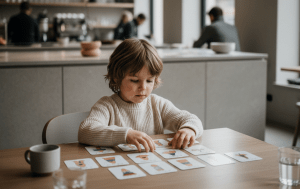
With each experience, they cultivate a kit of parts for tackling more complicated problems down the road, from math homework to navigating friendships. Our Tiny Thinks™ activities, which provide subtle, screen-free logic puzzles and sequencing cards, give kids a safe place to engage in this type of structured thinking, which is particularly useful during after-school transitions, traveling, or mealtime.
Strengthening early logic skills for kids helps them approach challenges step by step instead of reacting emotionally.
Academic Readiness
Early logic lays the foundation for later academic success, particularly in preschoolers. When kids engage in thinking skills activities like sorting, matching, and sequencing, they’re priming their brains for reading and math. Logic teaches children that there are patterns in words and numbers, making learning to read or add a much easier task.
Cognitive flexibility, the capacity to shift perspectives or rules, facilitates learning in every domain. Research shows that young children who do logic activities adjust more quickly to new lessons in the classroom and are better equipped for standard tests, where analytical and reasoning abilities count.
Elementary strokes, such as executing picture directions or finishing a pattern, prepare the foundation for academic demands ahead. Tiny Thinks™ Workbooks deliberately straddle the line between structure and autonomy, gently transitioning kids into school habits with confidence and concentration, even in chaotic or overwhelming settings.
Emotional Intelligence
Logic helps kids understand not just what they feel, but why. When they talk through choices or paint out both sides of a tale, they develop compassion. Early logic is important because it trains your child to think before they act.
This meta-cognitive thinking undergirds healthier self-control and healthier relationships.
- Do:
- Ask children to explain their reasoning in social situations.
- Get them thinking about others’ feelings and points of view.
- Be calm and logical when talking about feelings or disputes.
- Don’t:
- Dismiss a child’s feelings as “irrational.”
- Race to fix for them without their input.
- Overwhelm with too many choices simultaneously.
Tiny Thinks™ solutions, like the Free Calm Pack, deliver age-appropriate prompts and logic-based activities to help kids practice these skills in real time at the dinner table, on car rides, or while waiting in line. This offers families a gentle, effective screen alternative during moments of stress or transition.
Why do calm, sit-down activities work when screens don’t?
Travel days (and long waits) overload children in a quiet way. Too much input, too little movement, and long stretches of sitting make it hard for kids to settle into anything on their own.
What helps most in these moments isn’t stimulation or distraction, it’s gentle structure.
As one parent put it, “Most evenings, the screen is just on in the background while my child plays. I’m not trying to stop it, I just want something quiet they can sit and do without me setting things up.”
Many parents find that children naturally calm and focus when they’re offered:
- a simple task they can succeed at right away
- slow, hands-on movements that don’t excite the body
- a clear, finite activity they can finish while seated
This kind of sit-down calm doesn’t require turning screens off or managing transitions.
Children ease into it on their own, and screens fade into the background.
The Logic Development Roadmap

Logical thinking develops one stage at a time from toddlerhood to early school age, each laying the groundwork for the next. Kids 3-7 years old progress from cause and effect to pattern recognition to multi-step problem solving. Early achievements, such as organizing toys or observing patterns in daily activities, indicate the development of a child’s logical reasoning skills.
Research indicates that by age 5, a child’s sense of pattern can predict their math skills years later, emphasizing the significance of these early years of logic development.
The Explorer (Ages 2-3)
Toddlers begin their logic odyssey by experimenting with objects, touching, stacking and even grouping them by color, shape or size. This hands-on exploration is how they come to understand features and categories, the foundation of logical reasoning. Starting at approximately 2½ years, most kids start to manage impulses, a key factor in being able to concentrate on sorting or matching.
Even at 20 months, kids can do super simple shape hunts or fit basic puzzles together. Simple activities such as matching socks, sorting blocks, or finding what belongs together aid them in practicing early logic. Curiosity is through the roof at this age, so interactive play, like stuffing and unstuffing boxes or sorting toys by category, promotes problem-solving screen-free.
|
Activity |
Description |
Regulation Benefit |
|---|---|---|
|
Simple puzzles |
Fit shapes or pieces together |
Builds focus, patience |
|
Sorting games |
Group objects by color, size, or shape |
Encourages calm, order |
|
Everyday categorizing |
Match socks, group utensils, tidy up toys |
Predictable structure |
|
Object hunts |
Find items that fit a theme (round, soft) |
Active engagement |
The Connector (Ages 4-5)
At four and five, children connect ideas, sequence events, and recognize patterns. Role play and storytelling ignite logical pathways as kids describe what occurs next or why a character behaves in a particular manner. Logic development plan sequenced games, such as following picture cards or creating simple bead patterns, bolster reasoning.
Activities such as constructing a tower as a team or sorting a basket of mixed items encourage working together and mutual problem solving. Research connects cognitive flexibility at this age with later math success, so providing opportunities to explain choices or predict outcomes is crucial to critical thinking.
- Story dice (create stories with random picture cubes)
- Sequencing cards (putting daily routines or stories in order)
- Pattern blocks (copying and extending repeating color/shape patterns)
- Cooperative board games (working together to solve challenges)
- Group sorting challenges (sorting mixed items as a team)
The Strategist (Ages 6-7)
Older kids do well when faced with more complicated puzzles, logic mazes and planning games. Independent thinking blooms when they experiment with solutions or talk out their logic. Math activities such as sorting by number, simple word problems, or pattern finding in nature develop analytical skills.
Team strategy games in which kids have to plan moves or share ideas encourage communication and flexible thinking. Things such as unpacking their bag or figuring out the interim steps in a recipe make them apply logic in real, tangible ways.
Tiny Thinks™ Workbooks provide age-appropriate challenges for this growth, and the Free Calm Pack delivers screen-free structure for frazzled moments. For parents wishing to promote calm, regulated logic in overstimulated moments, these tools are deliberately catered to ages 3-7.
How to Build Logic Skills
Early logic skills for kids 3 to 7 years old grow strongest in the ordinary moments, mealtimes, getting dressed, waiting rooms, after-school transitions, when their nervous system craves structure the most. Logic isn’t just puzzle time; it’s embedded in everyday life, soothing overstimulated brains, constructing attention, and providing screenless zen.
Parents think, “How can I swap out YouTube Kids for something that feels just as effortless and fun?” The answer is to embed logic into routines children already know.
1. Everyday Routines
Organizing socks by color, stacking bowls by size or setting the table in a pattern, are little logic games disguised as chores. Kids can create to-do lists with stick-figure illustrations to map out putting on clothes, shirt, pants, and shoes, cultivating both sequencing and autonomy.
Household items like buttons, spoons, or fruit can be grouped by different properties: “Find all the round and red things.” When kids declare why they sorted or what step follows, they practice reasoning out loud.
Even managing a bedtime routine with a sticker chart turns into logic-laden fun, helping kids visualize progress and anticipate the next step.
2. Playful Questioning
Open-ended questions ignite thinking long past a “yes” or “no.” Something like “What if our dinner was outside tonight?” or “How could we brush our teeth without water?” Kids’ answers expose their reasoning.
Playing “Shape Hunt” in the house or “Find something rough or blue” outside extends their capacity to compound conditions. Thinking games like “20 Questions” or basic riddles instruct logic skills in a low-stress environment.
When children question in return, it demonstrates their curiosity and their developing abilities. Appreciate their wonder and continue the cycle.
3. Storytelling
Yet stories provide a soft introduction to logic and cause-effect. When you read a picture book, stop and say, “What do you think is going to happen?” Challenge kids to create their own endings or new stories about real-life situations, “What if our cat could talk?
Talking about story elements, who, where, what happened, and why, develops comprehension and logic. When children retell a story, they exercise both the organization of thoughts and the ability to see connections, which builds memory and logic simultaneously.
4. Nature Exploration
Nature is a quiet laboratory for investigation and experiment. Gather leaves and organize them by form or magnitude. Observe the stream of water and anticipate where it will penetrate.
Why are certain rocks smooth? What logic do you observe in this flower? These moments train kids to observe, contrast, and articulate. Nature walks turn into scavenger hunts with logic twists, such as “Locate an item that is both soft and green.
Outdoor time grounds kids’ energy and develops cognitive skills in an immersive, screenless environment.
5. Creative Building
Blocks, magnetic tiles, cardboard boxes, anything really, are for spatial logic. Kids construct towers, bridges, or houses for toy animals. Every assignment requires strategizing, forecasting, and troubleshooting.
Building together as a team teaches negotiation and shared reasoning: “Let’s make a bridge strong and tall.” Jigsaws or even easy sudoku for older kids familiarize logical sequences.
Tiny Thinks™ Workbooks take this a step further, providing soothing, tactile puzzles and design challenges, all screen-free. The Free Calm Pack is a soft landing, particularly for kids inexperienced with work sessions.
Ages 3-7, Tiny Thinks™ guides develop logic, patience, and soft attention, allowing parents to tame dinner, travel, or bedtime with tranquility.
Logic Beyond Puzzles
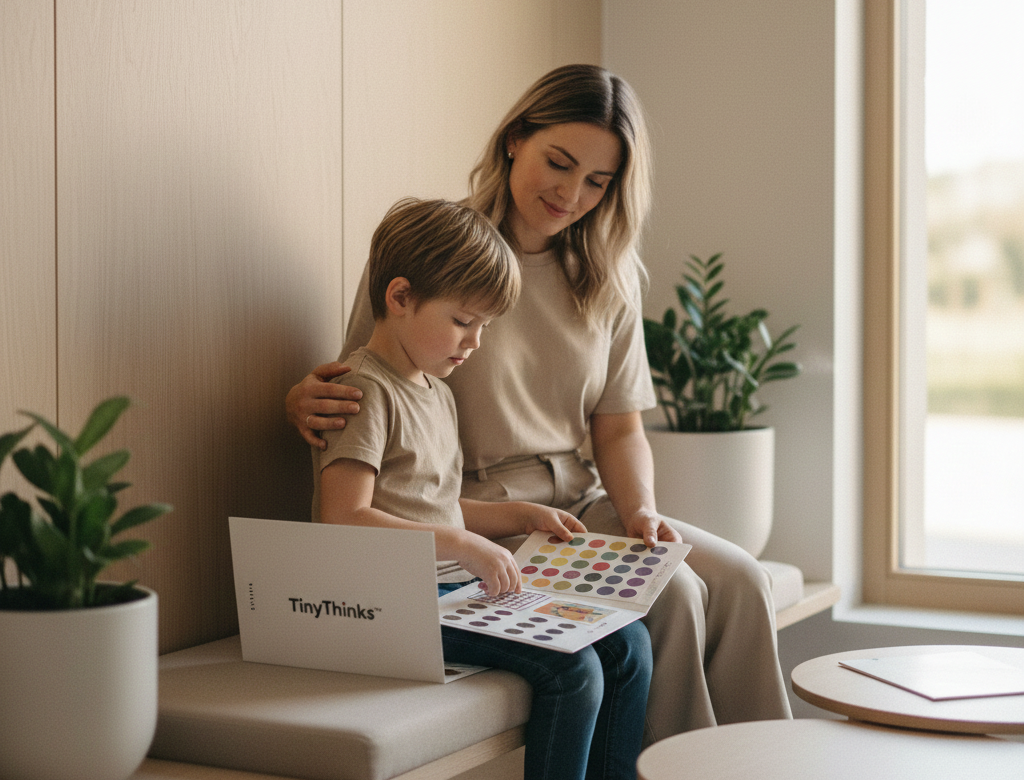
Logic isn’t just for puzzles and brain teasers; it’s the basis for how children 3–7 see patterns, solve problems, and understand their world. Most parents associate logic with a silent table exercise, but its implications go far beyond. Logic, after all, breaks down large challenges into steps and nurtures not only intellectual development but more lucid social and emotional maneuvering as well.
Any day, moment, chatting about shapes in the clouds, strategizing the ultimate block tower, or splitting a snack, is a chance for logic to break free of the classic game box. Research demonstrates that straightforward riddles, when employed in class, can increase logical-mathematical abilities well into higher grades. For young children, logic lives everywhere: in conversations, teamwork, art, and feelings.
When you, as parents, provide screen-free, guided experiences honing in on these reality moments, kids find the peace and lucidity necessary to calm down and concentrate, particularly during transitions like dinner, travel, or after school downtime. Incorporating thinking skills activities into everyday tasks can significantly boost their cognitive development.
The Social Link
Collaborative games, such as partner memory or ‘build a bridge together,’ demand that children apply logic in order to succeed cooperatively. These activities naturally promote turn-taking, negotiation, and teamwork. Kids start to detect patterns in one another’s behavior and learn how to anticipate and react thoughtfully.
Discussing emotions and perspectives is a useful route. When parents stop and ask, “What do you think your friend felt?” or “Why do you think that happened?” it fosters empathy and logical reasoning hand in hand. Role-playing works particularly well in this regard.
Little situations like two kids desiring the same toy allow children to exercise themselves in seeking equitable solutions, applying logic to balance options and forecast consequences. Working on a shared challenge, such as constructing something from blocks or solving a scavenger hunt clue, cements the importance of collaboration. Logic is the social language that forges both social confidence and critical thinking.
The Emotional Link
Logic beyond puzzles helps children handle big feelings by providing them a consistent structure for making sense of what’s going on inside. When your kid gets flustered, deconstructing the problem, “What happened first? What can you do next?” can substitute panic with measured actions.
There’s something really powerful about having your kids articulate how they feel in plain old cause-effect terms. I was sad that my tower had collapsed. Maybe next time, I can make it wider.” Storytelling enhances this ability. By reading a story together and talking about the characters’ decisions, children can link emotions to logical consequences, thereby fortifying their resilience.
With practice, children learn to stop, think, and select an answer even in moments of heat. This is at the core of emotional regulation and it’s a technique that extends well beyond childhood.
The Creative Link
Creative thinking and logic aren’t opposites; they’re partners. When kids devise new rules for an easy game or dream up crazy answers for a problem, think getting a stuffed animal “across the river” using only safe objects, they’re mixing fantasy with sequential thinking.
Art is a great hands-on way to discover logical patterns. Designing patterns or organizing by color or shape engages your artistic and logical mind. Brainstorming sessions, “What are all the ways we could build a house with these blocks?”, ignite innovation while instilling logical structure.
Kids who exercise this logic/creativity mash-up become much more versatile problem-solvers, capable of facing new situations with poise. This isn’t a school-only skill set, it’s a life skill.
Both the Tiny Thinks™ Workbooks and the Free Calm Pack are thoughtfully crafted to cultivate these skills, making logic approachable, soothing, and enjoyable for 3-7-year-olds. Their hands-on work emphasizes real-world situations, encouraging concentration and emotional control unplugged.
Parents report smoother transitions, extended attention spans, and more independent play, particularly in those challenging moments when screens seem like the only answer. Tiny Thinks™ pages expose children to logic beyond puzzles through pictures, patterns, stories, and gentle challenges.
They meet children where they are and help them build skills that last. For families craving truly effective screen-free structure, these resources provide peace, practical magic, and fit seamlessly into daily life.
Spotting Your Child’s Progress
Tracking logical development in children ages 3-7 isn’t so much about formal testing as it is about spotting small, daily changes. For parents looking to support early logic skills, especially those who want screen-free solutions, the focus is on real moments: how your child solves a puzzle, explains their thinking, or navigates a daily routine.
Observation, celebration, and pacing of the individual is key. These techniques assist in directing your child’s development and maintaining the activity soft and self-confidence developing.
Observation Over Testing
Observation provides the best insight into a young child’s logical development. Rather than technical quizzes or worksheets, observe your child at play or as they solve real world problems.
Observe whether they can categorize items based on shape or size, complete a basic puzzle, or justify their selection. These moments reveal how they’re thinking, not just what they know.
Use informal assessments during routines, like setting the table, matching socks, or figuring out the order of getting dressed. These tasks reveal reasoning skills without pressure. For example, if your child insists the spoon goes on the right and can say why, you’re witnessing logic in action.
Encourage children to talk about what they did and how they figured it out. This builds self-reflection, helping them see their own growth.
Maintain a simple log or chart of these observations. A graph or checklist can illuminate new skills and patterns over time. If your child suddenly begins breaking down large tasks, such as constructing a block tower, into more manageable steps, record it.
Over weeks, you will notice trends that aren’t always apparent from day to day.
Celebrating Small Wins
Every little achievement needs to be acknowledged. When your kid nails a hard puzzle or breaks down why something functions, pause and celebrate. Simple praise, “You managed to get all the shapes to fit!” works wonders.
It inspires and empowers. Design a positive reinforcement system. Put stickers on a skills chart or allow your child to brag about their accomplishments to relatives.
These victories cause rational thought to seem valiant and significant. Help your child identify easy goals to deconstruct, such as completing a new maze at a fast speed or grouping objects according to pattern. When they achieve these targets, celebrate it together.
There’s nothing like sharing small wins with others to build self-esteem. Even just informing a friend or grandparent about a new skill helps your child recognize their advancement.
It educates them to pause and be proud of their learning process.
Adapting to Their Pace
Each kid develops logic at a different pace. Don’t compare your child to someone else. Every learning journey is different.
Some babies might grasp patterns early, while others might take a while to master cause and effect. Modify activities for your child’s interests and skill level. If your child adores animals, incorporate animal sorting games.
If they love to draw, go for some pattern tracing. Give additional support when a task seems difficult. Introduce challenges when they’re prepared for more.
Cultivate a growth mindset by praising effort, not perfection. Remind your child that it’s not the mistakes; it’s the learning. Foster determination and inquisitiveness.
When you do spot progress, even incremental steps, recognize it generously. This allows your child to feel safe to try, fail, and try again.
For parents craving structure, our Tiny Thinks™ Workbooks and the Free Calm Pack provide age-specific, screen-free ways to augment logic skills.
These serene, active-learning bursts assist kids in centering, calming themselves, and savoring smart, at home or on the go.
Common Misconceptions
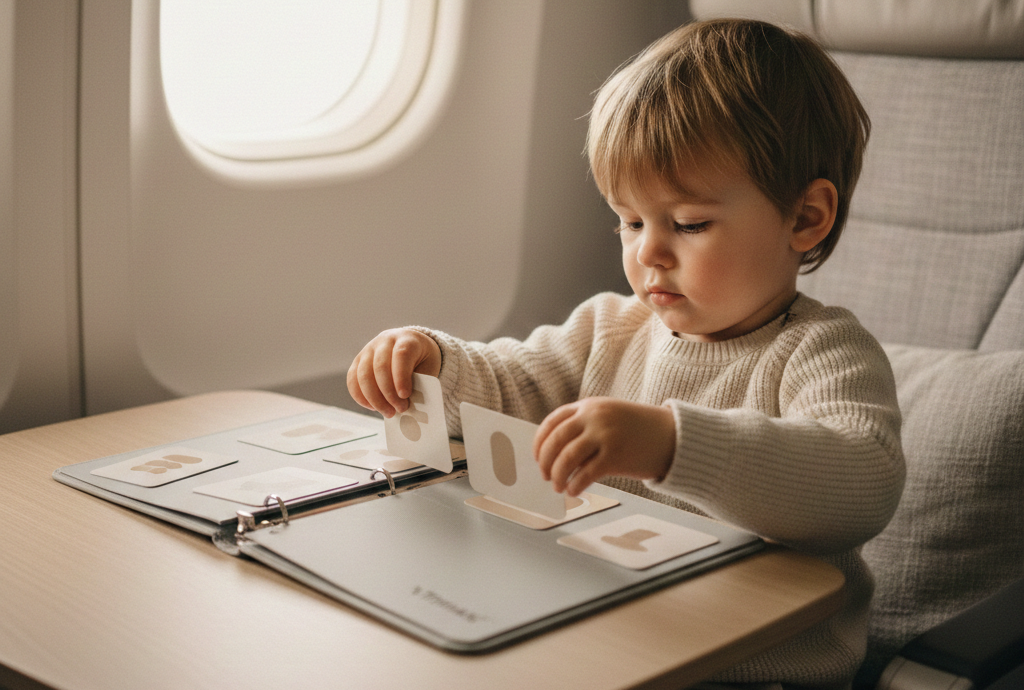
So what do most parents hear about early logic skills for 3-7 year olds? Others think only “gifted” kids do well, or that you need screens or special toys. These thoughts can make parents feel stressed or outdated.
In reality, logic is about gradual, consistent immersion and practical experience. Here’s a table of common myths, with clarifications to make sense of what really counts.
|
Myth |
Clarification |
|---|---|
|
Logic is only for geniuses |
All children can develop logic skills with practice and support. |
|
More screen time means better logic skills |
Excessive screen use can disrupt attention and regulation. Hands-on tasks build deeper logic. |
|
Logic requires special toys |
Everyday items and simple materials work just as well for early logic development. |
|
Coding and logic are only for math people or engineers |
Coding and logical thinking are for everyone, not just for those in STEM. |
|
Cognitive skills develop at specific ages |
Early logic and reasoning abilities are present from birth and grow over time. |
|
Language and logic are separate |
Language learning and logic are closely linked in early childhood. |
Logic is for Geniuses
One of the most important myths to bust is that logic is for “math kids” or child prodigies. Science demonstrates that all children, regardless of aptitude, can develop logical reasoning.
The brain does not divide into a “logic side” and “creative side.” Both hemispheres cooperate for early problem solving, pattern recognition, and simple deduction. Even a child who struggles with traditional puzzles can develop logic through everyday routines, such as sorting laundry, matching socks, or following simple recipes.
What matters is practice and a calm, predictable environment. Kids develop logic by working, not by observing. Success stories come from ordinary homes: a child who struggled with transitions now sets the table by color and size, building sequencing skills.
Another learns to predict bedtime steps, improving pattern recognition. Our Tiny Thinks™ Workbooks are here to support these little moments of power, meeting kids where they are, not just where they “should” be.
More Screen Time is Better
They think more screen time leads to stronger logic skills, particularly when apps promise to actually train your brain. Logic thrives on real-world assignments.
Screens, particularly quick-hit content like YouTube Kids, can spike dopamine, fragment attention, and derail regulation. Good educational apps have their place, but they’re no substitute for slow, hands-on play.
Too much screen time will give you a short attention span, shallow thinking, and mood swings. Hands-on, screen-free activities like Tiny Thinks™ pages provide slow, predictable input that enables children to focus, regulate, and think deeply.
In-person experiences cultivate both language and logic, grounding new abilities in living experience.
It Requires Special Toys
There’s a myth that you need fancy logic toys or coding kits. In fact, kids build robust reasoning abilities by engaging with the world.
Simple objects, such as spoons, buttons, and boxes, become potent reasoning instruments. Sorting spoons, constructing a bottle cap pattern, or putting your shoes on in order all develop the same brain pathways as more expensive kits.
It’s not the cost, it’s the creativity. A child pairing shoes, sorting crayons by color, or constructing a ‘train’ with blocks is engaging in the basics of logic.
Our Tiny Thinks™ Workbooks and free Calm Pack employ minimal designs and straightforward steps. There are no batteries or super tools, so parents can provide practical, calming logic exercises anytime, anywhere.
How Tiny Thinks fits into this moment?
Tiny Thinks pages are designed to gently pull attention away from screens without effort from the parent.
They:
- start easy, so children can begin immediately
- use quiet hand movements that slow the body
- lead naturally into calm, focused attention
Parents often use them in moments like travel, waiting, or evenings, whenever they want a calm alternative to screens without planning or negotiation.
Conclusion
Early logic skills influence how children 3-7 think, solve problems, and approach the world. Patterns, sorting, and simple ‘what comes next?’ questions lay the foundation for more sophisticated reasoning as children get older. Progress often looks quiet: a child lining up cars by size, finishing a sequence, or explaining a simple choice. These moments count way more than completing worksheets or memorizing rules.
Development occurs in mini, practical doses around the breakfast table, at playtime, or standing in line. With a consistent blend of soft coaching and practical application, kids develop self-assurance and adaptable thought. For families seeking peaceful, organized approaches to cultivate logic, Tiny Thinks™ provides simple, screen-free activities that slide smoothly into everyday life.
Frequently Asked Questions
What are early logic skills in children?
Early logic skills help preschoolers recognize patterns, make connections, and enhance their problem-solving abilities, laying the foundation for critical thinking skills and lifelong learning.
At what age do children start developing logic skills?
Kids start to develop some early thinking skills as young as age two. These logical thinking abilities blossom between ages three and seven through play and everyday tasks.
How can parents help build logic skills at home?
They can foster logic skills in their kids by posing open-ended questions, playing matching games, sorting activities, and reading stories that feature basic problem solving.
Are logic games and puzzles the only way to develop logic skills?
No, thinking skills can be cultivated with everyday tasks, reading, blocks, and even just a thoughtful conversation.
What signs show that a child’s logic skills are improving?
Your child might begin asking ‘why’ questions, organizing things by size or color, identifying patterns, or justifying their decisions. These demonstrate increasing logic.
Why is early logic development important?
Early logic skills play a crucial role in preparing preschoolers for school and life, enhancing their problem-solving abilities and critical thinking skills, which help them make smarter decisions as they mature.
Are there common myths about early logic development?
Yes, some think that only older kids can learn logic or that only math activities develop logic. In reality, you can cultivate logic skills early with many activities.