
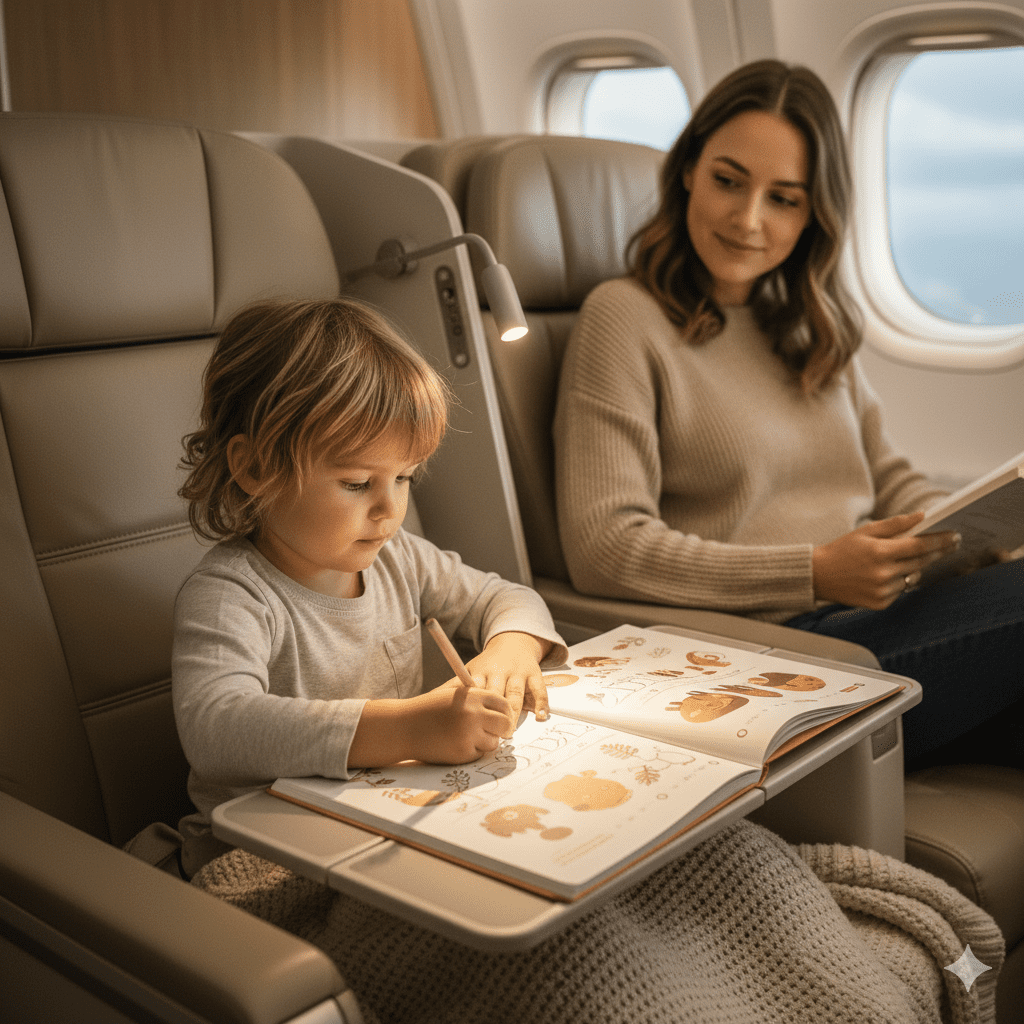
Calm After Chaos: The Tiny Thinks™ Travel Method
If you’ve been searching for “how to keep kids calm on flights,” you’re not alone — every parent feels this anxiety before travel. How to Help Your Child Stay Peaceful on Flights — Without Screens
If you’ve ever felt your chest tighten a week before flying with your child… you’re not alone.
Parents rarely talk about it, but the pre-travel anxiety is real:
- Will they melt down in the airport?
- Will people stare?
- What if they refuse the seatbelt?
- What if the whole journey derails the holiday?
For many parents, the dread begins long before boarding — and it can quietly steal the joy of a trip you were excited about. But here’s the secret no one tells you:
Children aren’t “misbehaving” on flights. They’re overwhelmed.
And overwhelm has a pattern — one you can soften.
As Dr. Becky Kennedy says:
“Kids aren’t giving you a hard time. They’re having a hard time.”
And flights are one of the hardest situations for ages 3–7.
Tiny Thinks™ was designed for these exact moments — not in theory, but in the real, messy, overstimulating reality of travel.
Let’s break it down gently.
Why Flights Feel So Hard for Kids (Even the Calm Ones)
Parents often assume flights go wrong because children are:
- bored
- tired
- too excited
- too active
But regulation science explains something deeper:
Airports overstimulate the nervous system.
Crowds, noise, rushing, bright lights, new smells.
Airplanes understimulate it.
A tight seat. No movement. Predictability is gone. Children go from “too much” → “not enough” in minutes. Their nervous system doesn’t know where safety is. Screens don’t regulate this state — they mask it.
And when the tablet goes off, the nervous system crashes even harder. This is why many parents say:
“The real meltdown happens after the screen time…”
The solution isn’t “no screens.” The solution is a soft, predictable rhythm that regulates the body.
Tiny Thinks™ uses that rhythm on every page.
The Calm Flight Method (Ages 3–7)
Many parents trying to figure out how to keep kids calm on flights assume the problem is boredom — but the real issue is nervous-system overload. This is not a long list of things to pack.
It’s not 57 activities. It’s one calm sequence.
Parents say this rhythm works on:
- long-haul flights
- short trips
- trains
- restaurants
- ferries
- waits, queues, delays
- even at home during late afternoon “witching hours”
It works because it respects how a child’s nervous system actually settles.
Step 1 — The Soft Landing (Before You Even Sit Down)
Slow the pace before boarding:
- walk slowly down the jet bridge
- speak softer
- hold hands
- say: “We’re going to have some quiet time while we fly.”
Predictable words tell their brain:
“You’re safe. I’m here.”
Safety first → regulation second → cooperation third.
Step 2 — Offer One Fast Success
Children cannot leap from “buzzing” to “calm.” They need a bridge.
A simple, beautiful task — like a Tiny Thinks™ starter pattern — creates a quick win that tells the nervous system:
“You’re okay. You can slow down.”
Parents report calm beginning in 30–60 seconds.
Try it, you can download free sample here.
Step 3 — Shift Into Slow Movement
Stillness is too hard at ages 3–7. Slow movement works better. This is why Tiny Thinks™ tracing lines designed specially for kids learning and calming. Long tracing lines settle:
- breathing
- eye tracking
- vagus nerve activation
- full-body fidgeting
This step turns chaos into quiet curiosity.
Step 4 — Move Into Quiet Visual Engagement
Once your child’s system softens, their focus opens. Tiny Thinks™ pages use:
- warm tones
- generous spacing
- micro-details that reward slow looking
- no bright clutter
- no cartoon noise
- gentle storytelling through illustration
This is intentional. Typical activity books overstimulate.
Tiny Thinks™ does the opposite — quietly, beautifully.
Step 5 — Close the Ritual Predictably
Consistency = cooperation.
A simple whisper works:
“Quiet time is finished. Let’s stretch.”
No battles. No negotiating. Just rhythm.
Predictability is the strongest form of regulation.
How Long Can Kids Stay Calm on Flights?
Realistic, developmentally accurate windows:
- 3–4 years → 15–30 minutes
- If the child rotates between 2–3 calm micro-activities. This is absolutely normal and widely achievable.
- 4–5 years → 20–35 minutes
- This is the “sweet spot” for structured quiet activity.
- 5–6 years → 25–40 minutes
- Regulation improves significantly at this age.
- 6–7 years → 30–45 minutes
This is where calm time often becomes “independent project time.
Tiny Thinks™ extends these windows by 20–40% because it uses the fast-to-calm → slow movement → quiet observation sequence – all while kids have fun, learn and explore.
These windows grow when:
- the visuals are designed with details and wonder
- the child feels competent
- the nervous system is regulated
- the activity naturally leads to their mind growth
- the routine stays predictable
Why Tiny Thinks™ Works So Well on Flights
Each edition is made for real travel situations:
- small tray tables
- cramped seats
- long waits
- nothing interesting around
- tired parents
- workbook fits in bags without increasing weight
But more importantly:
Tiny Thinks™ regulates emotions first → teaches independent thinking second.
The illustrations are designed to feel wonder. Each monthly drop builds on the one before, so children grow:
calmer → more focused → more curious
month by month, page by page. This is not busywork.
This is calm learning™.
The Tiny Thinks™ Calm-and-Curious Method
A three-step rhythm built into every book:
- Fast-to-calm (simple pattern win)
- Slow movement (gentle tracing)
- Quiet visual focus (warm illustrations)
Once calm, their natural curiosity switches back on.
This is where thinking, noticing, and problem-solving happen naturally — without pressure, without screens, and without overwhelm.
Why Tiny Thinks™ Is Our Go-To Tool for Flights
After trying snacks, sticker books, surprise toys, and “just one more cartoon,” most parents realise they don’t need more stuff in their bag — they need one reliable, calming activity that actually helps their child settle.
Tiny Thinks™ calm-learning workbooks were created for exactly this: screen-free, beautifully illustrated pages that follow a calm rhythm (fast win → slow tracing → quiet visual focus). Parents often say these are the only books that hold their child’s attention on flights without overstimulating them.
If your child gets overwhelmed, restless, or dysregulated on planes, a calm, structured workbook is often more effective than new toys or more screen time. Tiny Thinks™ turns those long, anxious stretches into quiet, focused moments where your child feels proud, busy, and regulated.
Try Tiny Thinks™ for your kids on Your Next Flight
✨ Download the free calm-learning sample
✨ Browse all calming workbooks (ages 3–7)
https://ourtinythinks.com/shop-workbooks
Parents don’t need perfection. They need tools that fit real life — not ideal life.
Tiny Thinks™ was built for real life.
Frequently Asked Travel Questions From Parents
How do I survive a flight with my toddler without losing my mind?
Flights overwhelm kids because the sensory environment goes from overstimulating to understimulating in minutes. A simple calming sequence — fast success → slow movement → quiet focus — helps regulate their nervous system. Tiny Thinks™ uses this exact pattern with warm illustrations that hold attention gently.
How can I prevent airplane meltdowns?
Meltdowns are a regulation issue, not behavior. Predictability and calm visual engagement reduce overwhelm. The Calm Flight Method (used in Tiny Thinks™) gives kids a rhythm their body understands.
My child gets overwhelmed on flights — what do I do?
Start with one fast, achievable task to help their system soften. Then shift into slow tracing and quiet observation. These steps match how children naturally regulate.
What are non-screen activities that actually work on planes?
Look for calming, structured, low-stimulation activities with warm colors and generous spacing. Tiny Thinks™ is designed specifically for this environment.
What calms kids quickly on a plane?
A “quick win” pattern page settles the nervous system within 30–60 seconds. It tells their brain: “You’re safe. You can slow down.”
What’s a good quiet activity for flights?
One that blends gentle structure, soft illustration, and predictable sequencing — the foundation of every Tiny Thinks™ workbook.
If you want one thing in your bag that consistently helps your child settle on flights, take a look at the Tiny Thinks™ Calm Travel Workbook (Ages 3–7) .