


Key Takeaways
- Everything about the modern world assaults kids’ attention spans with the presence of distractions and digital overstimulation. This makes it increasingly difficult for kids to pay attention and bring deep engagement to tasks.
- Constructing and nurturing attention is an ability that matures. Parents can aid their kids by modeling single-tasking, welcoming boredom, and training focus stamina.
- If you design calm, predictable environments like your home’s own focus zone, kids settle and focus better. Mindful routines and sleep keep their brains healthy.
- Restricting screen time and providing screen-free, compelling substitutes such as nature walks, quiet time toys, and arts and crafts can build attention muscles and decrease dependence on digital stimulation.
- Emotional regulation and strong relationships are the bedrock for attention, where children can co-regulate and feel safe to express their emotions.
- If a child consistently struggles with focus despite these strategies, Early professional support is a helpful resource and provide targeted assistance.
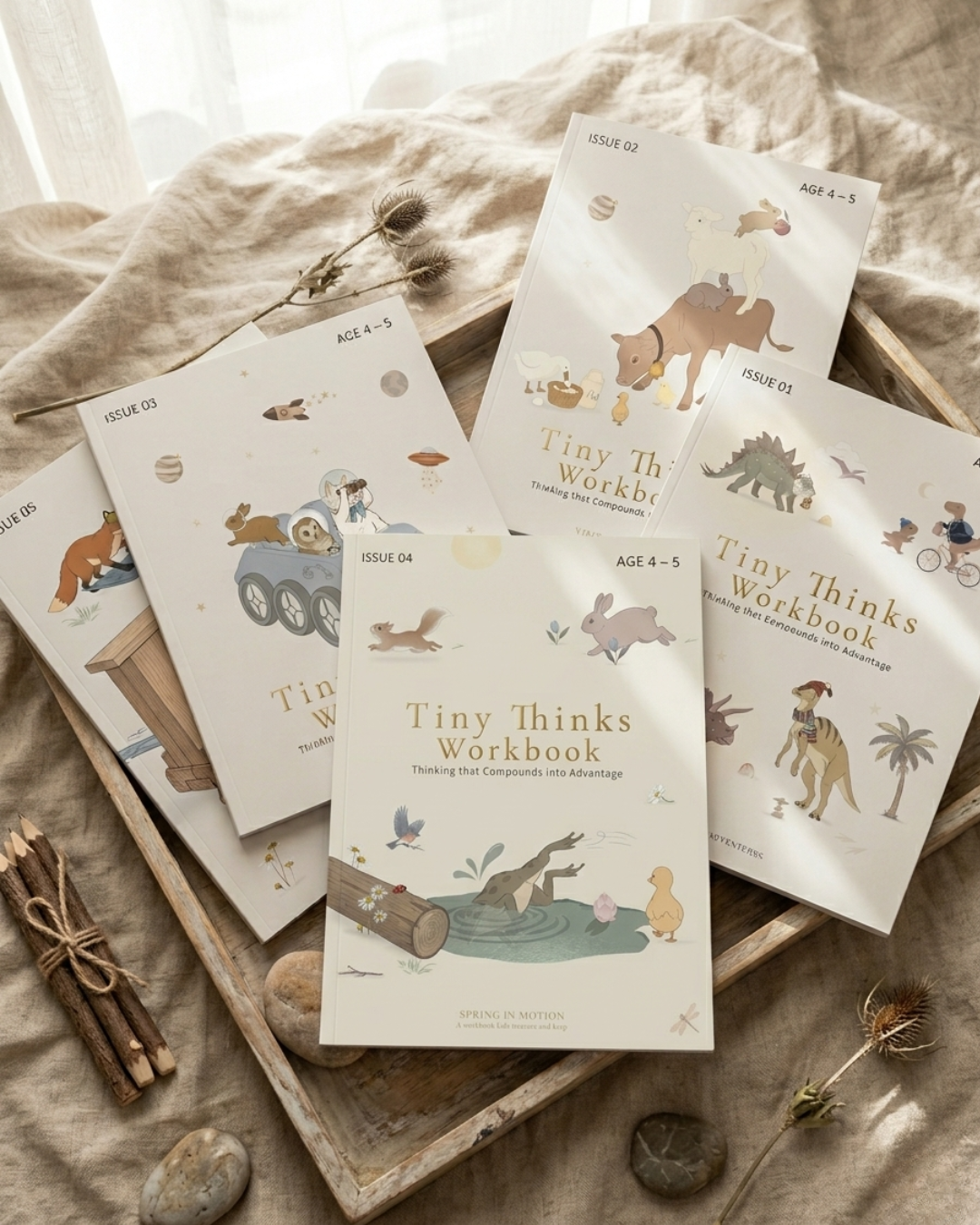
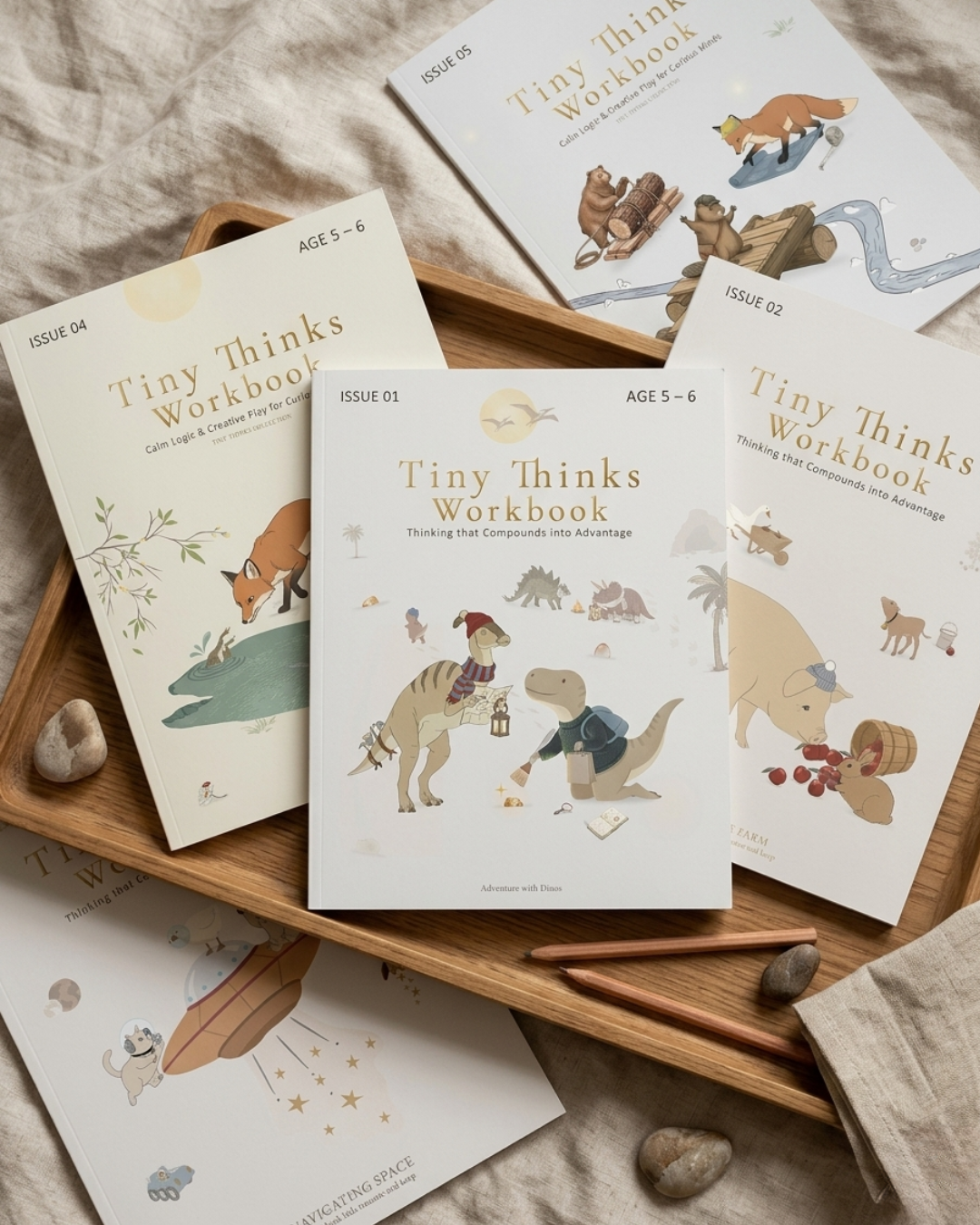
Tiny Thinks provides calm, structured thinking play that children naturally enjoy and return to regularly. Access the Free Calm Pack to establish a predictable focus ritual during the after school transition.
For enhancing attention span in children, slow, predictable input is crucial. Most 3 to 7 year olds have a hard time paying attention, particularly following rapid fire digital content or frenetic days. Their minds crave structure but drown in too much clutter.
Calm, ordered activities stimulate the nervous system and build longer attention. Here at Tiny Thinks, the objective is clear: design kid friendly, thinking driven rituals that your kids can initiate themselves and revisit over and over again.
The Modern Attention Battlefield
Our kids are contending with a barrage of distractions — multiple screens, ambient noise, rapid fire content and changing expectations. It’s harder than ever to stay focused. Our average attention span is now under eight seconds, and we look up from screen to screen every 47 seconds.
This reality isn’t about blame; it’s about the terrain that families have to traverse. Attention, previously considered an avenue for meaningful human connection, is now measured, optimized, and monetized. For parents, the challenge is clear: help children build sustained focus when the world is designed to fragment it.
Why Focus Fades
Children’s attention spans often fluctuate for a variety of reasons. Fast, algorithmic content delivers immediate gratification, conditioning new brains to crave a steady hit of newness. The result is that when faced with slower, real-world tasks, many children lose interest quickly.
These devices provide instantaneous sensory feedback, and kids can’t stand to be bored or wait for results. Overstimulation of screens sets up a feedback loop where your brain craves even more stimulation, not less.
Multitasking toggling between homework, video, and messages inhibits deep engagement. Kids almost never complete one thing before hopping to the next. Environmental noise, clutter, and haphazard schedules chip away at your concentration.
In classrooms, attention battles, At home, it’s the kid who can’t play independently for longer than a minute or so or requests a new activity every few seconds.
A Parent’s Concern
Parents observe these trends and fret. Short attention can lead to missed lessons, half eaten meals or social tension. It’s not just academic, kids who can’t pay attention have a hard time making friends, sharing or taking turns.
Early intervention counts. These attention skills you build today will set the stage for success in school and in life. Supporting attention is not about eliminating all screens or attaining perfect silence.
It’s about providing utilities that nudge kids toward renewed concentration, even during frantic intervals. Parents know their kids best. They witness the tangible real world effect when their offspring can calm and focus to finish something, even if for a moment.
Peaceful, organized options are necessary. That’s why Tiny Thinks™ is here. For after school crashes, screen hand-offs, or waiting rooms, parents are armed with a Free Calm Pack or age based workbook.
These aren’t prizes or enhancements. They’re dependable, screen-less methods to assist kids in rebooting, concentrating, and developing the mental strength required for autonomy. Shop age-based workbooks 3-7
The Attention Skill
Attention is more than just sitting still. It’s the skill of tuning out and focusing on what counts. There are different kinds: focused attention (zeroing in on a single task), sustained attention (maintaining focus over time), and shifting attention (moving smoothly from one task to another).
These aren’t innate characteristics, but learnable abilities. These structured activities, pattern matching, quiet sequencing games, and tactile tracing, train the brain to decelerate and complete what it begins.
Tiny Thinks™ uses this logic: low stimulation, visually calm design, and predictable routines. They can begin solo, remain absorbed, and come back unbidden by mom or dad. Academic advancement, easier meals, and more peaceful transitions all depend on this base.
Understanding Your Child’s Focus
Focus in toddlerhood is crafted by empirical routines, context, and neurological evolution. Attention is not innate; it is constructed through daily experience, molded by his age, fatigue, and the environment surrounding the child. Screens are here to stay for the majority of families.
Tiny Thinks™ just happens to provide a convenient, less stimulating choice for those times when quiet, independent concentration is most in demand.
Tiny Thinks is the calm, structured thinking play system for ages 3–7 that families use whenever screens create problems. Use the Free Calm Pack to bridge the gap between digital stimulation and independent play.
Attention by Age
| Age (years) | Typical Attention Span (minutes) |
| 2–3 | 4–8 |
| 4–5 | 8–12 |
| 6–7 | 12–18 |
| 8–10 | 20–30 |
| 11–15 | 30–45 |
Attention span increases with age. Toddlers don’t sit still and they shouldn’t. By six, a child can typically focus for 12 to 18 minutes. At 15, 45 minutes is almost too much.
For a significant minority of 4 year olds, however, close to 40% will have difficulty with attention for significantly less than the average amount. You need to get involved, mom and dad.
At all ages, kids require some easy to understand structure, fixed mealtimes, bedtime, and expected transitions. Short, hands on activities like matching cards or easy puzzles fit younger kids. Older children benefit from calm, sustained tasks such as reading, building, or slow paced games.
For all ages, sitting still too long is counterproductive, particularly for energetic children. Movement breaks, deep breathing, and stretching can help sharpen focus and restore attention.
The Brain Science
A child’s brain is constantly constructing new neural pathways. Attention networks have a period of rapid development in the first years and continue to be sensitive into adolescence. The frontal cortex your kid’s focus, planning, and memory center develops slowly, so young children meander between tasks.
Sleep, nutrition, and predictable routines aid the brain in creating stability. Attention has a lot to do with memory. A child who cannot retain multiple steps in memory might appear distractible and frequently requires additional assistance with sequencing or working memory.
Sleep hygiene, consistent bedtime, no screens before bed, and calm wind down directly replenishes the brain’s ability to focus. Irritability and fatigue sabotage focus far more than any ‘willpower’ gap. Learning about these processes is not about pathologizing normal behavior.
It’s about recognizing what the brain needs: rhythm, rest, gentle challenge, and emotional safety.
Foundational Pillars
Constructing attention begins with regulation, not teaching. Your kids focus best when routines ground their day and feelings are validated. Before either strategy, receive your child’s focus without redirecting it.
Emotional regulation, both yours and theirs, prepares the ground for peaceful, sustained focus. Stable environments matter. Predictable locations, direct signals, and uncomplicated, duplicatable tasks reduce mental strain.
Robust connections, the silent interludes while reading, the collaborative puzzle breaking, or simply sitting next to your son or daughter, forge the trust required for shared attention.
Tiny Thinks™ is designed for these moments. When after school is a whirlwind, when travel is extensive, when your kiddo is flitting between demands, the Free CALM Pack or age level Workbook provides tangible, organized, screen-free cognition.
No parental enforcement is required, just an easy, low noise solution to reestablishing focus and independence.
10 Ways to Improve Kids’ Attention Span
Developing a child’s attention span isn’t about removing screens or shoving perpetual stimulation. It’s about providing that unsurprising, soothing scaffolding that gets kids grounded, centered, and programmed back in for independent thought. Consistency, patience, and micro-steps each day build the foundation.
Advance is slow. Measure, rejoice in incremental success, and accept that some days will be better than others.
1. Master Single-Tasking
Kids develop attention span when they do one thing at a time. A plain matching game, lining up blocks by color, or tracing a line from beginning to end these mono tasking exercises allow the brain to pause and take in.
Parents who wipe down the table without consulting a phone or fully fold the laundry before beginning something else demonstrate this by example. Clearly define when an activity begins and ends no multitasking, no background screens, etc.
2. Embrace Boredom
Boredom is not an issue to fix. It’s an opportunity for a kid’s mind to drift, to dream, to create. Free play stacking bare wooden blocks, doodling on a blank sheet, or arranging buttons allows kids to zone out in their own universe.
Boredom, even if it starts as fidgetiness, frequently results in deep, self directed projects. Let it take its course.
3. Build Focus Stamina
Attention is a slow growing muscle. Begin with five minutes on a puzzle, then increase a few each week. Use a kitchen timer or the Pomodoro technique, which involves 20 minutes of focus followed by a 5 minute break.
Add movement breaks, such as stretching or a quick run across the room, between tasks. Celebrate when your child perseveres longer than ever before!
4. Narrate Your Day
Talking through daily routines models focus. I’m pouring the milk, now I’m closing the lid, now I’m putting it in the fridge,” demonstrates to kids how to really focus on each step.
Whether it’s telling stories, having your kid retell their day, or explaining how you worked out a problem together, it builds attention and listening. These mini sessions become focus habits.
5. Create a Focus Zone
A quiet corner with a low table, natural light, and a small basket of materials will suffice. No screens, no clutter, nothing that buzzes or blinks. Predictable spaces become focus spaces.
Maintain simplicity with a puzzle, picture cards, or one workbook. Make it a habit to come here every day, even if it’s for 5 minutes.
6. Play Attention Games
Memory, matching and sequencing games teach the brain to retain focus and remember steps. Pattern building puzzles or slow strategy games like dominoes assist.
Cooperative games have them learn to wait, watch and respond. Switch up games, but make it a calm, predictable experience. These turn into daily rituals, not fads.
7. Practice Mindful Moments
Plain old breathing, smell the flower, blow out the candle, exercises that help kids reset. A minute of shutting down the eyes and taking in soft sounds, directed visualization toward a silent wood, or even just identifying three things they can see, hear, and feel all cultivate present-moment attention.
Mindfulness is a practice, not a panacea. Short daily routines are ideal.
8. Connect with Nature
Outdoor time regulates the nervous system. Whether it’s looking for little things on a walk or listening to birds or sorting rocks by size, all require silent attention.
Nature provides infinite patterns, colors, and sounds with no digital noise. Free outdoor play, climbing, digging, and cloud watching ground attention and reset regulation.
9. Co-regulate Emotions
Big feelings get in the way of paying attention. Name the feeling, demonstrate a slow breath and implement soothing techniques in unison, such as squeezing a stress ball, lying down or being cocooned in a blanket.
Kids who observe adults handling stress learn to do the same. A predictable, calm routine after the stress helps kids turn back to work.
10. Prioritize Deep Sleep
Attention begins with rest. Toddlers need 11 to 14 hours, pre schoolers need 10 to 13 hours, and school age children need 9 to 11 hours. Wind down routines, such as dimming lights, playing soft music, and avoiding screens before bed, tell the body it is time to settle.
A regular bedtime, with the same steps every night, makes sleep expected. Better sleep leads to better focus the following day.
For families that need relief right now, Tiny Thinks™ provides convenient, structured, screen-free Calm Packs and Workbooks your kids can grab and do on their own after school, pre dinner, or on the go.
These are not play activities, but a quiet cogitation coating that replenishes attention and control, free from parental coercion. Parents see the difference: less stress, more mindful focus, and a dependable reset no matter how hectic the day.
The Digital Dilemma
Screens are now embedded into the family experience. They assist with logistics, provide moments of quiet, and occasionally provide authentic connection. For most parents, the issue isn’t deciding if screens have a place; it’s figuring out how to use them without sacrificing gains on attention, patience, and creativity.
It’s not a question of “right” or “wrong.” It’s about regulation: keeping attention systems healthy in a world that runs fast, bright, and always on.
How Screens Rewire
Children’s brains are made to flex. With constant screen exposure, attention circuits recalibrate to brief bursts of focus, dialed for rapid dopamine. This isn’t a moral failing; it’s a foreseeable reaction to rapid input.
The more a kid’s day is structured around quick hit images and immediate responses, the more difficult it is for him to maintain slow, deep effort. Over time, this can leave children struggling to shift back into calm, focused work.
Overexposure is associated with Front-Striatal circuitry in the brain, which governs self regulation and impulse control. Some parents notice new patterns: children ricocheting from one activity to the next, struggling to settle, or showing irritability and red eyes after long digital sessions.
Content counts as much as length. Quick, algorithmic videos and endless games can fracture working memory and eat away frustration tolerance. The danger is not distraction alone but a transformation in how kids learn to think: how to think through, sequence, and finish work.
Media literacy begins early. Even with preschoolers, naming what’s going on on screen, pausing to inquire and model breaks can build awareness, not just compliance.
Beyond Screen Time
Substituting for screen time isn’t about sacrifice. It’s about recovering the types of experiences that cultivate hard attention. Predictable, tactile activities such as puzzles, matching games, simple tracing, and sorting help kids sequence, see patterns, and work on their own Screen-Free Activities Hub.
This is not “busy work.” They are central to thinking tools. Family routines are important. Sharing mealtime conversation, telling stories, or even working side by side on quiet tasks allows kids the opportunity to practice patience, practice turn taking, and see others.
Screen-Free Activities Hub
Whether reading aloud, sharing stories, or simply flipping through books together, this nurtures language, working memory, and imagination. All things that rapid content consumption can degrade.
Creative hobbies demand attention. Be it arts and crafts, stacking blocks, or constructing small worlds from found objects, these activities force kids to decelerate, choose, and embrace imperfection.
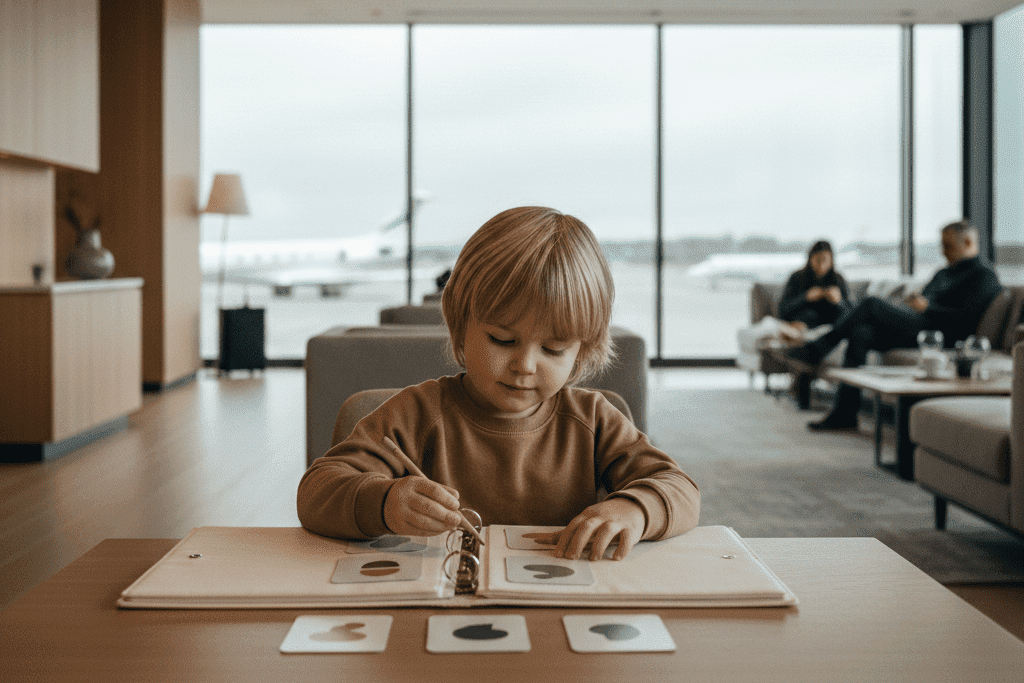
These episodes appear straightforward, yet they comprise the scaffolding of initial self control. Tiny Thinks exists for these ordinary high, stakes moments: after school crashes, the dinner hour, long travel days, and waiting rooms.
When screens aren’t calming your child or when you’re craving a different kind of connection, the Free Calm Pack includes easily structured, regulation first thinking pages for repeat, child in charge access.
For parents who want more, age based Workbooks continue those routines with reliable, low stimulation activities that encourage independent initiation and deep focus. No hype. No stress. Just good old-fashioned calm, screen-free tools that work when you need a kid to calm down and reflect.
Attention-Building Activities
Attention doesn’t sprout from thin air. It’s a craft constructed by unhurried, organized training in the normal world. Play and movement are the basis. Kids require the chance to fixate on one thing, come back to it and repeat it without being endlessly directed or interrupted.
Attention builds when the environment is quiet, predictable, and low in noise, not when every moment is stuffed with rapid input. These activities nurture attention span and cognitive skills in real world moments, such as after school, during screen comedowns, early logic skills at mealtime, in waiting rooms, or before bed.
Each can be integrated into your week with minimal preparation:
- Jigsaw puzzles (10 pieces, 20 pieces, or simple shape sorters)
- ‘2 minute challenge’ (fixate on one thing in the room, no talking)
- Ball or scarf catch (soft, slow throws, encourage tracking)
- Simple sequencing cards or picture matching
- Heavy work activities (carrying books, pushing a laundry basket)
- Mindfulness exercises (watching a candle flame, tracing finger labyrinths)
- Drawing or coloring with limited color choices
- Yoga for toddlers (animal shapes, hold for a count of five)
- Daily living tasks scaled down to little pieces (table setting, napkin folding)
- TAP Free CALM PACK by Tiny Thinks™ – for peaceful, solo deep dives
It helps to add structure. Think of a weekly rotating schedule for these activities. All days don’t have to appear uniform. The trick is consistency and making the habit integral to the routine, not an “add-on.
Quiet Time Toys
Quiet time toys decelerate the afternoon and prime the environment for obsessive attention. Puzzles, stacking cups, matching cards, and pegboards all engage kids to coordinate their eyes and hands. The best toys do not beep or flash; they lure a child back, over and over, without coercion.
Unstructured time with these toys develops working memory, attention, and frustration tolerance. When a child sits with a puzzle for ten minutes, they are exercising sustained attention, which screens seldom require of them.
Provide a little focused choice. Limit toys and rotate them weekly to keep interest without overwhelming. Let the kids decide what to begin with and back off. Quiet time isn’t about filling minutes; it’s about letting the mind settle and focus.
Movement Breaks
Physical motion is often the best reset for a drifting mind. Brief movement breaks, such as two minutes of yoga, a round of “statue,” or hauling heavy things, can regulate the sensory system and return concentration.
Kids are not designed to remain sedentary for extended periods. Attention spans at age three are six to eight minutes on average, less after a long day. Intersperse silence with bouts of action, not as a reward, but as a rejuvenator.
Even indoors, options are wide: animal walks, scarf toss, or balancing on a taped line. Outside, catching a ball or running minimal obstacle courses provides the same advantage. Motion is not a diversion from cognition. It is the reboot that enables thinking.
Creative Pursuits
Drawing, painting and even simple crafting require concentration, foresight and persistence. When your child picks his colors, experiments with a new line or pastes pieces together, he is making choices and sticking to a mission.
Creative time is not for the product. It is about the process: starting, persisting, and finishing. Grant kids liberty with supplies, yet maintain options to a minimum so they don’t get bogged down. Let them wander at their own pace without repairing.
Tiny Thinks™ workbooks and the Free Calm Pack are based on these principles. They’re not entertainment, but a quiet, low stimuli cogitation tissue for those moments when you need your kid to chill after school, during transitions, meals, or bedtime.
When to Seek Help
Most parents observe when their child has trouble focusing. Perhaps it’s the way they drift away from an easy puzzle or can’t sit through a snack without abandoning the table. Other times, these moments are just a rite of passage to youth. When inattention lingers and impedes daily life, such as homework, dinner, or even play, it’s natural to question whether something else is afoot.
If your child’s attention span appears significantly shorter than their peers or if they’re unable to finish tasks, become quickly frustrated, or shy away from activities that demand concentration, it may be time to seek help. It’s not about judgment and it’s not about screens being ‘bad.’ Tiny Thinks™ treats screens as utensils. When a child’s attention doesn’t rebound even after you attempt slower, calmer schedules, it’s worth investigating.
Families have stress moving, changes at home, sickness ,that can screw up a kid’s ability to concentrate. Some kids respond to interruption with agitation or blanking, while others can become fixated on the same task for hours. If you’ve observed these patterns and they’re not moderating with structure or routine, it’s beneficial to seek the assistance of a pediatrician or child psychologist.
They’re trained to search for root causes like ADHD, anxiety, or sensory processing variations and can direct you through next steps. They’ll inquire into your child’s everyday experiences, observe their behavior, and possibly recommend normative testing to get a sense of what’s occurring beneath the surface.
Most parents know their kid. If your gut tells you something’s amiss, listen to it. While attention spans differ drastically, you’ll know when your child is having a harder time than seems usual. Early intervention aids kids before patterns become habits. Early help can be as simple as learning to strengthen attention muscle through play, therapy, or just a more consistent daily schedule.
No parent should have to wait for a crisis. If continued distractibility is making the most ordinary moments of your life more difficult, it’s worth investigating. If you’ve experimented by slowing things down shorter directions, quiet spaces, reduced clutter, more one step assignments and attention still isn’t coalescing, that’s the time to seek assistance.
Certain kids just keep drifting or drop out of interest even with low, stim options. If your child can’t follow through on activities or their attention span keeps them from joining in with peers, these are obvious warning signs to get help.
Tiny Thinks™ exists for these pressure moments: after school, during travel, at the dinner table, in waiting rooms, or before bed when you need your child to settle and engage on their own. Our Free Calm Pack is a sweet, screen-free primer.
For kids who want more, Shop age-based workbooks 3-7 age-specific Tiny Thinks™ Workbooks provide structured, visually soothing thinking play that develops the attention, sequencing, and frustration tolerance you’re after. No hype. No stress. Simply a dependable resource for parents who need their kids to go from scattered to settled with less stress and more harmony.
Tiny Thinks is positioned as infrastructure, not advice, for the moments when modern stimulation stops working. Download the Free Calm Pack to provide your child with a dependable, screen-free method for rebooting their concentration.
Conclusion
Attention is not an innate characteristic. It’s a craft molded by what inundates kids on a daily basis. Quick, high-stimulus input fragments attention, but slow, low stimulation rhythms restore it. Easy to predict actions matching, sorting, gentle pattern work help little minds expand and relax. Most kids don’t need more novelty. They require peaceful consistency, unambiguous prompts, and room to start on their own. For parents, dependable attention hacks translate to less haggling and more serene silence, particularly during that after school chaos, dinner, or bedtime caloric crash. When worries persist, faith based experts can assist. For the majority of families, however, attention flourishes through little increments right at home, integrated into the daily din and quiet.
Frequently Asked Questions
What causes short attention span in children?
Short attention span in kids comes from distraction, lack of sleep, poor diet, or too much screen time. Sometimes it may be due to more deep rooted issues such as ADHD.
How can parents help improve their child’s attention span?
Parents can assist by establishing schedules, minimizing interruptions, promoting pauses, and providing interesting tasks. Persistent encouragement and affirmations go a long way.
Are digital devices always bad for children’s focus?
Not necessarily. Educational content online can help, but excess screen time or overstimulating media like quick cuts may decrease attention. Balance and supervision are the magic words.
What are some effective activities to build attention in kids?
Puzzles, reading, art projects and memory games can enhance attention. Outdoor activities and mindfulness exercises aid kids in cultivating enhanced attention abilities.
When should I be concerned about my child’s attention span?
If your child’s focus issues disrupt everyday activities or education or they display other behavioral concerns, it’s likely time to consult an expert.
Does nutrition affect a child’s attention span?
Yes. Nutritious meals full of fruit, vegetables, and whole grains fuel your child’s brain and attention. Cut out the sugar and processed foods for even better results.
Can physical activity improve attention in children?
Yes. Physical activity really boosts blood flow to the brain and enhances children’s concentration and self-control.