
Key Takeaways
- Understanding allows kids to link concepts, reason, and problem-solve. Memorization alone tends to result in superficial learning that doesn’t last.
- Fostering a space for kids to question, experiment, and connect cultivates stronger understanding and enduring learning.
- Going from memorization to understanding requires active learning. This involves employing conversations, analogies, and hands-on work to make ideas resonate.
- When kids understand what they learn, they feel confident, motivated, and proud, and learning is a blissful, self-rewarding experience.
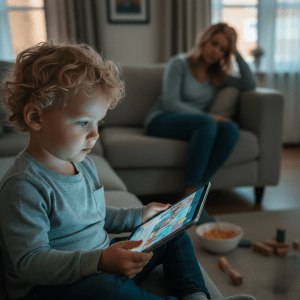
- Technology can work to support comprehension when used thoughtfully. This includes interactive tools and collaborative activities that stimulate exploration.
- Prioritizing understanding rather than memorization sets children up for academic achievement and for a lifetime of learning, providing them with the skills necessary to thrive in an evolving world.
Need a calm way to build real understanding instead of rote recall right now. Move directly to Tiny Thinks screen-free workbooks that children sit with and return to independently.
Memorization vs understanding in kids refer to two different modes of information absorption by children. Memorization is about regurgitating facts, whereas understanding is about linking concepts and seeing how they apply in novel contexts.
In the early years, both are important, but deep learning takes root from understanding, not rote recall. Parents notice the difference in their daily routines, particularly when kids can’t remember steps or how to apply knowledge to novel tasks.
Memorization vs Comprehension
Memorization, often seen as mere memorization, lacks the depth of comprehension, which involves understanding ideas and making connections. This distinction is crucial in early education. For parents facing everyday chaos—screen transitions, after-school energy spikes, dinner meltdowns—the difference often shows up in how a student responds to new information: do they merely repeat it, or do they apply effective studying strategies?
- Memorization gives you a fast track to elementary skills such as counting, phonics, and days of the week.
- Comprehension lets children apply, connect, and adapt knowledge to novel contexts.
- Both processes are interrelated. Memorized facts support understanding, and deep understanding reinforces memory.
- Shallow learning, which involves memorizing for memorization’s sake, gets you through exams. Deeper methods, such as making information relevant to your life, develop enduring abilities.
- An effective learning environment gives space for both memorization for efficiency and comprehension for meaning.
1. The Goal
It’s not to stuff them with facts. Instead, focus on comprehension. Understand how numbers connect, why stories happen, and how patterns construct. Tell kids to seek understanding behind what they memorize. Push questions. When a kid asks why, or how, or what’s next, they’re leaving recitation behind for understanding.
Foster critical thinking by allowing room for ‘I wonder’ and ‘what if’. Make a space where errors are educational and responses can be constructed, not regurgitated. Kids learn best when they can discover, associate, and test, not memorize.
2. The Process
They begin by memorization—songs and shapes and daily routines. As you practice, active learning helps bridge to comprehension. Have them cluster, classify, or order things. Use easy mnemonics (rhymes or pictures, for example) to anchor memory, then discuss what those facts mean.
Collaboration enhances understanding. Children discussing, explaining, or teaching back what they’ve learned solidifies connections. Promote active discovery, not just rote repetition. This transition from rote to conceptual learning creates nimble intellectuals who can improvise, not just regurgitate.
3. The Brain
The brain stores memorized facts as separate information. Comprehension integrates that information into an interconnected web of patterns, narratives, and reasoning. Neural pathways do become reinforced by repetition, and they become really robust when things are meaningful.
The early years are a crucial time to establish these connections. These encounters that pair memorization with comprehension provide a foundation for future cognition. It is comprehension, not memorization, that fuels adaptive thinking, creative problem solving, and transfer to the real world. Memorization is ephemeral; comprehension endures.
4. The Outcome
Kids who understand ‘why’ and ‘how’ tend to be more creatively problem solving. They export abilities to new contexts and sustain their inquisitiveness. Comprehension increases grades, grit and autonomy.
Memorization certainly has a place. Memorize-only kids are lost when faced with a novel challenge. Those who comprehend flex, survive, and prosper in new contexts. The long-term benefit isn’t just academic performance; it is lifelong learning.
5. The Feeling
That’s when frustration mounts when learning begins to feel like drudging memorization. Kids who know what they’re doing get confident. Success becomes more than correct answers; they feel competent, interested, and inspired.
The thrill of revelation, a mystery uncovered, a narrative re-expressed, provides pleasure. These victories fortify deeper brains and smarter emotional control.
Tiny Thinks™ is for parents who crave peaceful, organized thinking adventures – not additional busy work. When you need your child settled after school, mealtime or a screen break, the Free Calm Pack provides them with quiet, low-stimulation activities that cultivate both memorization and comprehension.
The workbooks build on this with age-appropriate assistance for attention, sequencing, and independent focus. No stress. No judgment. Not memorization but understanding.
Why Comprehension Matters
Comprehension is the silent motor of all deep learning. When a kid comprehends, they aren’t just regurgitating trivia or going through mechanical motions—they’re creating a cognitive framework that allows them to reason, inquire, and associate. In a culture where quick info is omnipresent and focus fleeting, understanding provides kids the steadiness to step back, think, and return to substance.
This is the core principle behind every tool Tiny Thinks™ designs: slow, structured, and calm systems that help young children not just know but understand.
Comprehension Supports Critical Thinking and Reasoning Skills
The reason is that kids who understand instead of memorize are inherently more adept at solving problems. They can recognize patterns, decompose tasks, and identify priorities. For instance, a child who knows that “three” is any grouping of threes—apples or blocks or birds—can then leverage that understanding to count anything, anywhere.
When a child is asked why a story character made a particular decision, comprehension allows them to work it out, not just remember information. It’s this type of thinking that equips kids to navigate, acclimate, and make wise decisions in unfamiliar environments. Without comprehension, learning is parroting, and as soon as the setting changes—from home to school, one language to another—kids falter.
Understanding Makes Connections Between Concepts
When kids get it, they instinctively link new concepts to previous knowledge. A kid who grasps the idea of ‘balance’ can identify it in a park seesaw, a tower of blocks, or even dividing up snacks evenly at a table. Comprehension transforms isolated information into a web of significance.
This is the foundation of lifelong learning, observing how the concepts intersect and support one another. Kids who make these connections are more inquisitive and more open to questioning. They find learning all around them, not just in class.
Comprehension Builds Communication and Collaboration
Understanding is what allows children to communicate effectively. They can articulate their thought process, hear out their peers, and collectively brainstorm solutions. For instance, in a team exercise, a child who has a sense of what’s happening can aid his peers to keep up, not just complete their own piece.
Such experience develops the confidence and interpersonal savvy that extend well past regurgitating rules or scripts. When kids understand, they can communicate concepts, discuss job duties and work together peacefully.
Comprehension Prepares Children for Future Academic Challenges
Academic requirements escalate quickly. Kids who just memorize often get lost as work gets more complicated. It’s comprehension that allows children to apply what they know to new topics, new languages, new difficulties.
It’s what makes learning fun rather than intimidating. When a kid can grasp and implement a concept, they’re inspired to continue. That’s why Tiny Thinks™ is about peaceful, reusable cognition formations—not merely tasks, but an entire infrastructure for autonomous education.
For parents in the trenches—those frantic, after school/switch to screen/bedtime moments—comprehension-based tools are a godsend. The Tiny Thinks™ Free Calm Pack is designed for these moments: predictable, low-noise activities that reset focus and help children settle in fast.
For deeper, age-based support, the Tiny Thinks™ Workbooks develop attention, sequencing, and independent initiation in a way screens cannot. No judgment, no stress—just cool, organized assistance when it counts.
The Memorization Trap
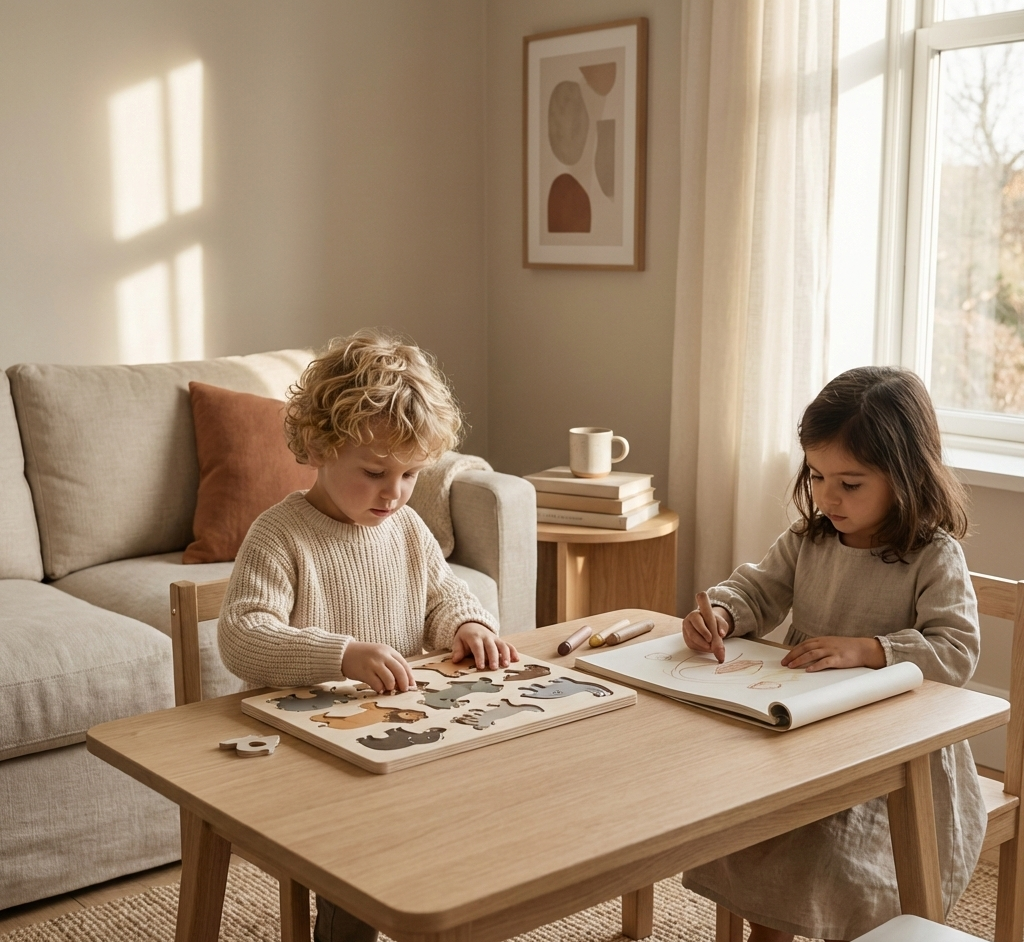
Memorization has been a foundational early learning tool for ages. It can appear industrious—listing times, tracing figures, reviewing terms. For most kids, particularly those between ages 3–7, memorization is a trap when it’s confused for real comprehension. The difference shows up in daily life: a child can name the days of the week but cannot sequence today, tomorrow, and yesterday; they can recite numbers but they freeze when asked to count objects past five. These are memorization ceiling indicators.
Knowing when memorization won’t cut it is crucial for parents and teachers. Watch for these patterns:
- The kid parrots but can’t describe in their own words.
- They get frustrated when they’re asked to apply a rule in a new context.
- They use cues and crutches, unable to remember by themselves.
- Answers work in drills, but flake out in the real world.
Rote memorization can stifle critical thinking and creativity. If kids are taught to memorize steps, such as a formula or a mechanical routine, without any foundation for why it works, their learning can be fragile. For instance, a kid could have memorized ‘2 plus 3 equals 5’ but could trip up on ‘if you have two apples and get three more, how many now?’ The ability is present on its own, but the logic is lacking.
Over time, this dependence on memorized steps stifles flexible thinking. There’s no place for curiosity or problem solving. Children begin to think there is just one right way. Shallow learning, based on memorization alone, has implications for long-term knowledge retention. When learned by rote, it quickly fades, especially when not connected to experience.
A kid can memorize a list of animal names, but if they can’t explain how each one moves or eats, those words fall away. Research supports this: students who engage in creative reasoning—figuring things out themselves—retain concepts longer and can adapt them to new problems. PBL, which is application, creative application, supports both fluency and deeper reasoning.
Memorization isn’t worthless. Some skills, like multiplication facts or letter sounds, respond well to drills and repetition. The trick is balance. The objective is not to ban memorization but to acknowledge its boundaries. When your kid has trouble generalizing his knowledge, like adding fractions with unlike denominators for example, it’s probably because his comprehension is lagging behind memorization.
Some educators suggest a layered approach: start with basic facts and then gradually build deeper connections through hands-on exploration and open-ended questions. Tiny Thinks™ was born out of these precise friction points. When children arrive home frazzled or induced into rapid-screen loops, serene, organized thought games free them from memorization.
The Free Calm Pack gives families an easy entry point: simple, sequenced activities that build attention, sequencing, pattern recognition, and self-starting. No screens, no pressure. It is simply a predictable system that allows children to practice reasoning at their own speed. For parents in need of something dependable after school, at dinner, on road trips, or in waiting rooms, the Tiny Thinks™ Workbooks take this methodology further with age-calibrated, low-cognition activities that build both memory and comprehension, all in a visually subdued, Scandinavian design.
Need a quiet reset during the after-school or screen comedown window. Start with the Tiny Thinks Free Calm Pack for self-directed, low-noise thinking play.
Spotting The Difference
Spotting the difference between memorization and understanding shapes how children learn and think independently. When you’re little, the line can be subtle. Memorization sounds like rapid-fire recitation—songs, numbers, or facts repeated back almost word for word.
Insight manifests in various ways. It’s slower, yes, occasionally messier, but it breeds flexible thinking. When a kid really gets it, they can describe it in their own words, apply it in a novel situation, or modify it to address a new challenge. This skill increases with experience and is a staple of cognitive development. Kids with more robust working memory and executive function perform it well.
|
Strategy |
Memorization |
Understanding |
|---|---|---|
|
Child’s explanation |
Repeats phrases or facts exactly as heard |
Explains in their own words, makes connections |
|
Response to new scenario |
Struggles or guesses randomly |
Applies knowledge in new situations |
|
Error correction |
Hesitates or gets stuck when details change |
Adjusts response, tries new solution |
|
Questioning |
Gives short, fixed answers |
Asks questions, explores “why” and “how” |
It’s not hard to tell which mode they’re in if you watch them closely. If a child regurgitates information but cannot re-express it or apply it, that’s memorization. For instance, a child could recite the days of the week but might freeze when questioned, ‘What comes after Tuesday?’ or ‘What do we do on Saturday?’
Comprehension appears when a child reorganizes information. If they can say that Tuesday is before Wednesday or organize activities by day, they’re applying comprehension. This process can be strengthened with routines like the Feynman Technique: ask your child to “teach” a new idea back to you as if you know nothing about it. Gaps and confusion rise to the surface and suddenly become apparent where room to grow exists.
Hands-on experience is yet another key indicator. Kids who get it will experiment with applying what they know in fresh contexts, counting silverware at dinner, organizing socks by color and size, or describing how water freezes. Even memorized facts don’t often get used flexibly.
In the trenches of life, particularly post-school scrambles and meal-time meltdowns, this difference makes a difference. Kids who really get it can self-regulate more, task switch, and develop patience.
Memorization isn’t “bad,” and screens aren’t the enemy. In actual homes, screens are realistic. When a parent needs quiet focus, regulation, or a calm thinking loop, Tiny Thinks™ offers a thoughtfully structured, screen-free alternative.
Spotting The Difference The Free Calm Pack has straightforward, repeatable actions that push kids from rote memorization into new thinking. This isn’t busy work; they’re habits crafted to calm the mind and develop self-starting.
For parents eager to take this one step further, the age-based Tiny Thinks™ Workbooks introduce sequencing, pattern, and real-world logic. Tiny Thinks™ is a relief tool that is reliable for the moments when regulation matters most: after school, during transitions, mealtime, travel, and bedtime.
Cultivating True Understanding
Surface memorization and true understanding are poles apart in how they form a child’s mind. Memorization might deliver quick wins, but it seldom develops the twistable knowledge required for real-life challenges. Understanding develops at a more gradual pace by linking new concepts to what kids already understand and by allowing them room to interrogate, wander, and reason through.
We’ve known for almost forty years that rote learning breeds misunderstanding in children. Others memorize first and understand later, while others cultivate understanding from the beginning and then remember effortlessly. Both paths have merit, but the latter is more robust for deep retention and real-world application.
- Create connections between novel concepts and a child’s prior knowledge. Connect counting blocks to common objects, or associate new animals with household pets.
- Use repeated, simple questioning: “Why do you think this happens?” or “How would you use this in real life?”
- Encourage hands-on demonstration by sorting, matching, drawing, or acting out a new idea.
- Establish simple rituals that allow kids to return to and remake the same ideas in a tranquil, anticipated fashion, not sprinting toward the new.
Ask Why
Children know better when you get them to ‘why’ it. This habit transforms passive consumers into engaged thinkers. When a child asks why a ball rolls or why leaves change color, they’re not just gathering information; they’re creating the cognitive framework for learning down the line.
Inquiry defies assumption and drives kids to seek out patterns, causes, and connections rather than settling for superficial facts. Open-ended questions in everyday life — at dinner, on walks, reading — can help train this skill.
When adults role model inquisitiveness, kids become comfortable exploring their own inquiries. Over time, it builds strong analytical skills and a habit of critical thinking that persists well past the formative years.
Connect Ideas
True understanding grows when kids connect new ideas to ones already well-known. Rather than deeming each topic as distinct, seek opportunities to connect concepts between math, language, and real life. For instance, counting apples on the kitchen table makes numbers relevant, and discussing where animals live links science with stories they already understand.
Interdisciplinary learning aids memory by providing new facts a location to ‘stick.’ Constructing these connections helps kids comprehend not only the ‘what’ but the ‘why’ and ‘how.’
It’s this network of connections, the essence of cognitive architecture, that underlies working memory and spontaneous generation. Kids do great when grown-ups highlight these connections. Nothing works better than when kids have some silent time and personal space to discover them themselves.
Returning to the same ideas through different activities, such as drawing, sorting, and matching, solidifies understanding and makes it more likely that new learning will stick.
Use Analogies
Analogies aid kids in understanding hard concepts by connecting them to something familiar. Describing electricity as “water flowing through pipes” or the heart as a “pump” helps to make abstract concepts less intimidating.
When kids generate their own examples, that’s a signal of real understanding. They’re not parroting what they heard—they’re reprocessing information into a form that works for them. This straddling between the known and the unknown allows novel material to slip into permanent memory.
Tiny Thinks™ incorporates this analogical thinking into each pac calm and workbook. Every activity encourages kids to identify patterns, observe analogies, and naturally extend knowledge from one domain to another without strain or glitzy hoopla.
Encourage Teaching
Kids who teach concepts to other kids understand better themselves. Peer teaching, be it a toddler instructing a sibling in sorting blocks or a whispered re-narration of a story to a parent, compels them to structure their thinking, employ clear expression and identify holes in their comprehension.
Teaching fosters true understanding and it fosters accountability—a kid beams when they can assist a peer’s comprehension. This approach can happen naturally at home: asking your child to “teach you” how their favorite pattern game works or letting them guide a friend through a Tiny Thinks™ Calm Pack.
Such moments provide quiet, concentrated attention and support learning with mild repetition. Tiny Thinks™ is for these moments—post-school, mealtime madness, waiting rooms, or bedtime routine—when kids need to calm down, concentrate, and exercise their own thoughts.
The Free Calm Pack provides easy-to-implement, structured activities that facilitate deep understanding and can be used independently. For families who desire more, our age-specific Tiny Thinks™ Workbooks offer continued, screenless assistance. No stress, no flash—just a trusty instrument to rewind your focus and construct enduring knowledge.
The Role of Technology

Technology has influenced the way kids learn and digest information. For parents of young children, the question isn’t whether screens are “good” or “bad,” but how to use them intentionally, particularly concerning the distinction between mere memorization and authentic comprehension.
Technology and Deeper Comprehension
Engaging learning tools can push kids past mindless memorization. Educational media, in particular when introduced in the preschool years, has been associated with more robust vocabulary and early language skills.
Apps that require kids to solve puzzles, match patterns or engage in new thought build connections, not just memory. For instance, a math app that directs a child through counting games can reinforce sequencing and pattern recognition. Both of these skills are essential to comprehension.
The true worth is when an app or tool gets a child to think engagingly, not just parrot.
Understanding Versus Memorization in Digital Resources
While many educational apps are designed around memorization, the best ones focus on understanding. Apps that ask kids to group, sort, or order things will keep them actively involved.
For instance, a science app could have a child pair animals to habitats, constructing reasoning around “why” versus just “what.” The top technology encourages kids to pause, consider, and decide.
The worth of these tools is contingent on what they supplant. If they replace rapid, hyper-arousing media or mindless screen time, they can be a net positive. If they edge out real-world, tactile play or if used in excess, there are risks: reduced attention, less physical activity, or even overstimulation.
Fostering Critical Thinking Through Online Resources
Online resources can encourage critical thinking, but it’s content and context dependent. For instance, a kid viewing a lethargic animal documentary might internalize new terminologies and facts, whereas one surrounded by frenetic material could have problems attending or controlling feelings.
Research indicates what counts isn’t just how much screen time, but the quality of it. Technology can assist you with this — for example, with online learning tools that inspire kids to question, experiment, and reflect, which supports more profound thinking.
There is a cost. Too much or the wrong kind of media will shatter focus, or in extreme but uncommon instances, cause addiction or behavioral problems.
Collaborative Learning and the Limits of Technology
Technology can bolster collaborative learning. Kids can connect with others, share their thoughts, and even collaborate on small projects. Video calls or shared drawing boards can allow the kids to learn from each other, even if apart.
In 3–7-year-olds, these experiences are the most meaningful when combined with adult involvement and structure. Unmonitored, screens can rapidly be all consuming or alienating.
There is a danger of inappropriate content or conduct, which is why careful oversight in education systems is necessary.
For parents seeking calm, structured alternatives, Tiny Thinks™ is a relief tool for moments when screens are not the answer: after school, during dinner prep, on the road, or at bedtime.
The Free Calm Pack and age-specific Workbooks provide hands-on, screen-free cognitive exercises that help kids calm down and concentrate, promoting mastery of essential skills without the pressure of mere memorization.
Need a consistent daily structure that builds comprehension, sequencing, and independent focus. Continue with Tiny Thinks calm thinking play through the full workbook system.
Conclusion
To facilitate actual learning in young children, it all boils down to emphasizing understanding versus memorization. Kids who memorize answers can’t apply concepts, but kids who understand what they’re doing can apply those concepts even when the context changes or the question evolves. Memorization can build quick recall, but it doesn’t develop enduring flexible thinking abilities. In a world where tech makes facts easy and attention scarce, building real understanding is the most dependable thing. Organized, peaceful spaces without near-continuous din and interruption assist kids to decelerate, order their thoughts, and relate new material. These daily, modest habits over time establish the foundation for enhanced focus, improved recall, and lifelong autonomous thought.
Frequently Asked Questions
What is the difference between memorization and understanding in children?
Memorization, often seen as mere memorization, lacks significance and leads to superficial learning, particularly in subjects like mathematics and science.
Why is comprehension more important than memorization for kids?
Understanding aids kids to think critically and solve problems, developing permanent skills, while mere memorization facilitates only temporary recall.
How can parents spot if a child is just memorizing?
If a kid can regurgitate facts but not explain or apply them, they’re memorizing. Memorization shows when they can repeat the answers word for word.
What are the risks of focusing only on memorization?
Memorization alone can stifle innovation and obstacle navigation. It can cause kids to flail around when confronted with new or complicated work.
How can technology support real understanding in children?
Technology provides interactive tools and visual aids that enhance students’ understanding, assisting them in discovering ideas and deepening their practice of applying various studying strategies.
How can teachers help children develop true comprehension?
Educators can incorporate real-world examples, pose open-ended questions, and foster discussion. Such practices enable kids to make links between concepts and grasp the content.
Can memorization be useful in learning?
Sure, the memorization approach assists with base-level facts and vocabulary, but it should complement real understanding, not substitute it.