Key Takeaways
- Opting for slower, more interactive shows like Ms. Rachel can encourage stronger language development and attention span in toddlers.
- The reiteration of songs and key phrases allows toddlers to retain new words and feel more at ease as they begin to find their voice.
- Both visuals and music are key in capturing kids’ attention and making language learning enjoyable and memorable.
- Viewing educational shows as a family and discussing them afterwards can enrich your child’s vocabulary and strengthen your relationship.
- High quality screen time paired with real world play, conversation, and hands on activities matters.
- Mindful choice and engagement in your child’s screen time can make a real difference in language, social, and emotional development.
When parents are deciding between slower, interactive shows and faster animated content, it often helps to balance screen time with calm, hands-on alternatives. Many families introduce simple screen-free activities, such as the Tiny Thinks™ Free Calm Pack, to support focus and language practice alongside intentional viewing.
Ms Rachel vs Cocomelon both have millions of young viewers and offer very different experiences for kids 3-7. Ms Rachel focuses on slow, interactive songs and clear speech. Cocomelon uses fast animation and popular music with rapid cuts.
Parents naturally question these styles of attention, language, and regulation. Knowing these distinctions supports families in selecting screen content or screen-free options that align with their child’s developmental needs daily contexts.
Why Shows Impact Language
Choosing the right toddler show can significantly influence language skills and support healthy brain development. Ms. Rachel is recognized for her clear, slow delivery and responsive interaction, while CoComelon uses quick, colorful animated songs and stories. Both shows capture attention but affect a young child’s mind differently. Understanding these distinctions helps parents select what aligns with their goals, especially when aiming to promote calmer language development and avoid overstimulation in their littles.
1. Pacing
Slower-paced shows like Ms. Rachel allow toddlers time to process language. Her measured staccato delivery, generous pauses, and articulation make it possible for kids to keep up, repeat words, and absorb phrases. This more gradual tempo corresponds to the natural tempo of young children’s cognition, allowing words and ideas to settle.
More rapid-fire fare can flood, hurdling new terms over before a child can catch them. When things go at a slow pace, kids hear, see, and comprehend more, building stronger language and attention systems.
2. Interaction
What makes Ms. Rachel’s videos particularly effective is the active engagement. She stops to ask kids questions, invites them to echo words, and demonstrates conversational turn-taking. This format mimics real conversations.
With a caregiver co-watching and responding, it multiplies the effect, transforming screen time into shared learning. Interactivity cues develop social communication skills. Kids discover that language is about connection, not just echoing noises. Conversation, even through a screen, makes learning stick.
3. Repetition
Songs and chants are the foundation of early language acquisition. Ms. Rachel’s purposeful repetition circles back to important words and concepts so they feel familiar. This predictability comforts children and provides their brains the rehearsal it needs to encode new words.
Circling back to songs, gestures, and catch phrases increases self-assurance, kids can participate, anticipate what’s next, and experience a sense of control over unfamiliar language. Known material soothes and makes acquisition seem safe and fun.
4. Visuals
Images take and keep a child’s attention, particularly in highly active shows such as CoComelon. Vibrant colors and animated cartoons grab attention and aid comprehension, especially among youngsters who are still developing listening skills.
Good pictures enable infants to associate words with referents, seeing a ball and then hearing ‘ball’ strengthens the connection. Too much glitz gets distracting instead of supporting, so balance matters. Intentional, uncomplicated images combined with straightforward words nurture both intellectual and emotional development.
5. Music
Music helps language by transforming words into rhythmically catchy hooks. Ms. Rachel’s tracks utilize melody and repetition to help new words stick, and CoComelon’s toe-tapping tunes make learning appealing.
Musical training doesn’t just teach language; it constructs memory, emotion, and attention. Singing at home with your kids, belting out the same favorites over and over, and injecting a little cadence into routines can all nurture early speech and language development.
Key factors in choosing language-building shows:
- Slow, clear pacing for processing and retention
- Frequent interactive prompts or questions
- Repetition of words and concepts
- Visuals that support rather than overwhelm
- Music with clear, simple lyrics
Tiny Thinks™ Workbooks and the Free Calm Pack employ these same principles: slow pacing, repetition, gentle visuals, and interactive prompts to cultivate screen-free language and focus in any daily moment.
Why calm, sit-down activities work when screens don’t?
Travel days (and long waits) overload children in a quiet way. Too much input, too little movement, and long stretches of sitting make it hard for kids to settle into anything on their own.
What helps most in these moments isn’t stimulation or distraction, it’s gentle structure.
As one parent put it, most evenings, the screen is just on in the background while my child plays. I’m not trying to stop it, I just want something quiet they can sit and do without me setting things up.
Many parents find that children naturally calm and focus when they’re offered:
- a simple task they can succeed at quickly
- slow, hands-on movements that don’t excite the body
- a clear, finite activity they can finish while seated
This kind of sit-down calm doesn’t require turning screens off or managing transitions.
Children ease into it on their own, and screens fade into the background.
After screen sessions, especially those involving music or animation, children often settle more easily when given quiet, structured activities. Parents frequently use the Tiny Thinks™ Free Calm Pack during travel, waiting times, or evening wind-downs to encourage calm attention without overstimulation.
The Developing Brain on Screens

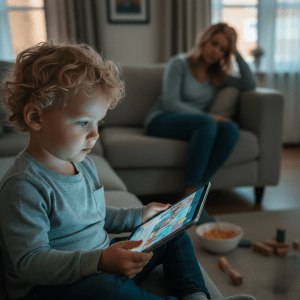
Early years forge kids’ brains’ way of processing the world, and screens loom larger than parents suspect. If a toddler parks in front of rapid-fire video, their brain adapts to quick dopamine hits, strobe images, jumping tunes, and constant characters. These bursts can make it more difficult for a child to concentrate on slow, real-life moments afterward.
The brain learns to anticipate instant gratification, not the slow nurture of constructing a block tower, reading a book, or cooking pancakes. Observed screen time isn’t necessarily evil. It’s all about how and when it’s used. A few minutes singing with Ms. Rachel, where sentences are crisp and motions are slow, is a far cry from the rapid-fire, trance-like assembly of Cocomelon.
Calm, face-to-face-style videos can facilitate such language and social imitation, which is potentially important for preschool children with restricted social options. Passive watching, especially solo, seldom aids concentration or willpower. The world doesn’t jump-cut, and neither should a child’s diurnal rhythm.
Below, the core risks and current recommendations for screen time:
|
Danger/Advice |
Something like Screen Content Style |
Parenting Advice (Ages 3–7) |
|---|---|---|
|
Overstimulation |
Quick edits, booming bass (e.g., Cocomelon) |
Reserve for special occasions |
|
Language Development |
Interactive, slow (e.g., Ms. Rachel) |
Co-watch, talk about. |
|
Attention span |
All screens, but especially fast paced |
Short sessions, pause |
|
Social skills |
Passive viewing |
Real play comes first |
|
Actionable Developmentally Appropriate activities |
Off-screen first! |
|
Reality play remains the gold standard. When a child stacks blocks, sets a table, or matches picture cards, their brain exercises patience, sequencing, and focus all at an organic, human pace. It’s not about vilifying screens; it’s about cultivating room for slothful, tactile learning.
Most parents reach for the tablet during tough moments: waiting rooms, evening meltdowns, and long car rides. I get it. They are ideal opportunities for organized, soothing replacements. There are Tiny Thinks™ Workbooks and Free Calm Packs for this kind of situation.
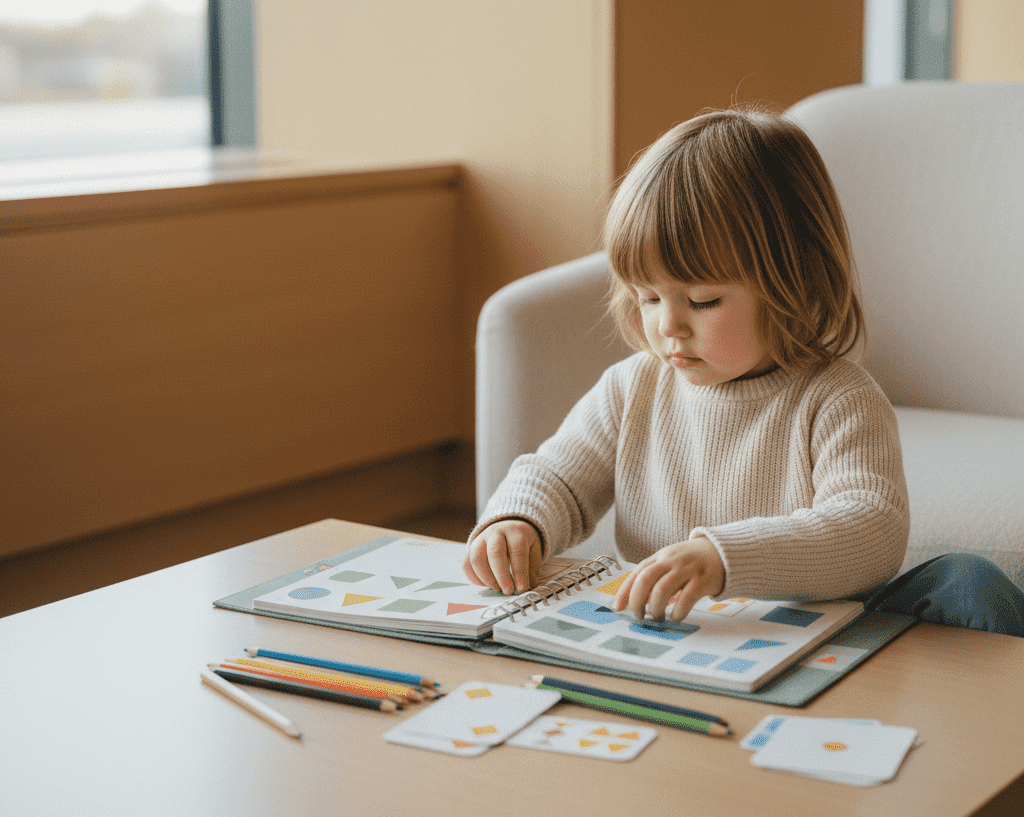
They’re not worksheets; they’re slow, absorbing, and meant to refresh your frenetic mind. Kids snatch them up voluntarily because the activities seem manageable, shape matching, pattern tracking, and rudimentary linear logic games that restore silence to dinnertime or the car seat.
Parents see the difference: calmer hands, longer focus, and fewer crashes after school.
More Than Just Words
Preschoolers’ curriculum, on or off screen or on paper, sculpts far more than vocabulary. For kids 3-7, it’s not just about the volume of words heard; it’s about how the words are woven into stories, rituals, and interactions. The true enchantment lies in introducing your child to patience, to listening and turn-taking, to identifying emotions, their own and those of others.
This is where Ms. Rachel and Cocomelon diverge significantly, and where parents can make different decisions that result in more tranquility-filled, regulated days. Programming like Ms. Rachel is constructed around engagement and deliberate, clear communication. Ms. Rachel frequently stops, asks the kids to answer, and demonstrates conversational turn-taking.
She employs expressions and intonations to communicate feelings, describes how characters are feeling, and fosters compassion. There’s a reason so many speech therapists recommend her: she doesn’t just label objects, she shows children how to connect. I see you’re sad. May we pause together?” These moments construct the base for emotional intelligence, not merely language.
Kids are learning how to label emotions, occupy their own space, and be patient just as much as they’re learning how to label colors or numbers. In contrast, Cocomelon zips from song to scene. It’s blinding, hooky junky, but it almost never stops for actual thinking or slow contact. The characters don’t demonstrate as much social problem-solving.
For certain kids, particularly after an action-packed day or during tense transitions, the rapid tempo can increase energy and exacerbate restlessness. It’s not good or bad; it’s what a child’s nervous system requires at the moment. A few kids get more dysregulated or hyped after Cocomelon, particularly if they’re already overstimulated.
Parents always request a “correct” decision. The solution is less about recipe and more about compatibility. We’re trying to cultivate a complete child, cognitive, emotional, social, and peaceful. Content that fosters empathy, patience, and soft regimen establishes the type of emotional scaffolding that kids bring into real life.
It’s not only what they see but how they rehearse the patience of listening and sensing their own emotions. Screen-free options, such as Tiny Thinks™ Workbooks and the Free Calm Pack, are built specifically to serve this need. They provide kids a consistent, tactile means to exercise concentration, complete step by step procedures, and develop early cognitive abilities while keeping cool.
Whether at the dinner table, in a waiting room, or after a long car ride, these calm packs offer what fast-paced screens can’t: a gentle, dopamine-neutral reset that supports attention and emotional regulation. Kids are wired to relax into the rhythm and feel rewarded by completing something, just like the hush of an excellent book.
It’s over time that builds the self-regulation and social reasoning that stick, not just new words, but the ability to use them well.
The Co-Viewing Connection
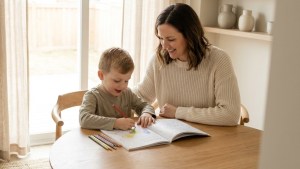
Co-viewing-where a parent and child watch educational material together–makes a quantifiable difference in the way children learn from screens. It’s not just about what’s on the screen, but how that experience is framed by an adult. Sitting with your child, narrating, asking questions, or even just reacting together, co-viewing really slows down the pace and helps structure what their brains are processing.
This is the case particularly when it comes to Ms Rachel versus Cocomelon. Ms Rachel is judiciously paced, with ample pauses, unambiguous diction, and front-and-center interaction. Cocomelon, meanwhile, fires on all pistons with tons of jump cuts, tons of energy, and tons of music. With a caring parent in the mix, even the quickest shows can be transformed into a launch pad for language, connection, and thinking skills.
Co-viewing creates connection. When parents take a seat and watch with their child, it alters the emotional temperature. The kids feel noticed. They’re not simply a passive recipient of flashing images; they have a companion. This can work as a great tool for establishing trust and communication, particularly during stressful or overstimulating moments, such as travel, waiting rooms, or after-school decompression.
A parent might pause a song, repeat a word, or point to something on the screen. These small gestures communicate to the child, “I’m here with you,” which calms their nervous system and anchors the experience in human connection instead of just dopamine bursts.
Language development flourishes in this communal arena. When parents talk about what they see, naming colors, singing songs, and asking about feelings, it turns passive screen time into active learning. Kids ages 3 to 7 are hungry for words and meaning. A parent asking, “What do you think will happen next?” or “How does that character feel?” broadens the child’s thinking and vocabulary.
Ms. Rachel’s more leisurely pace lends itself more easily to these types of interactions. Cocomelon, busier though it is, can still create pauses and conversations if parents are intentional.
Strategies for making co-viewing interactive and enriching:
- Pause the video to ask when to go down or predict the outcome.
- Point to objects, colors, or actions on the screen and name them to strengthen vocabulary.
- Connect screen activities to reality. “We did that in the park!”
- Talk about characters’ feelings or choices.
- Have your child repeat a phrase or sing along.
- Get creative. Use props or toys to reenact a favorite scene.
- Keep sessions short and conclude with a tactile activity, such as a Tiny Thinks™ Calm Pack trace page.
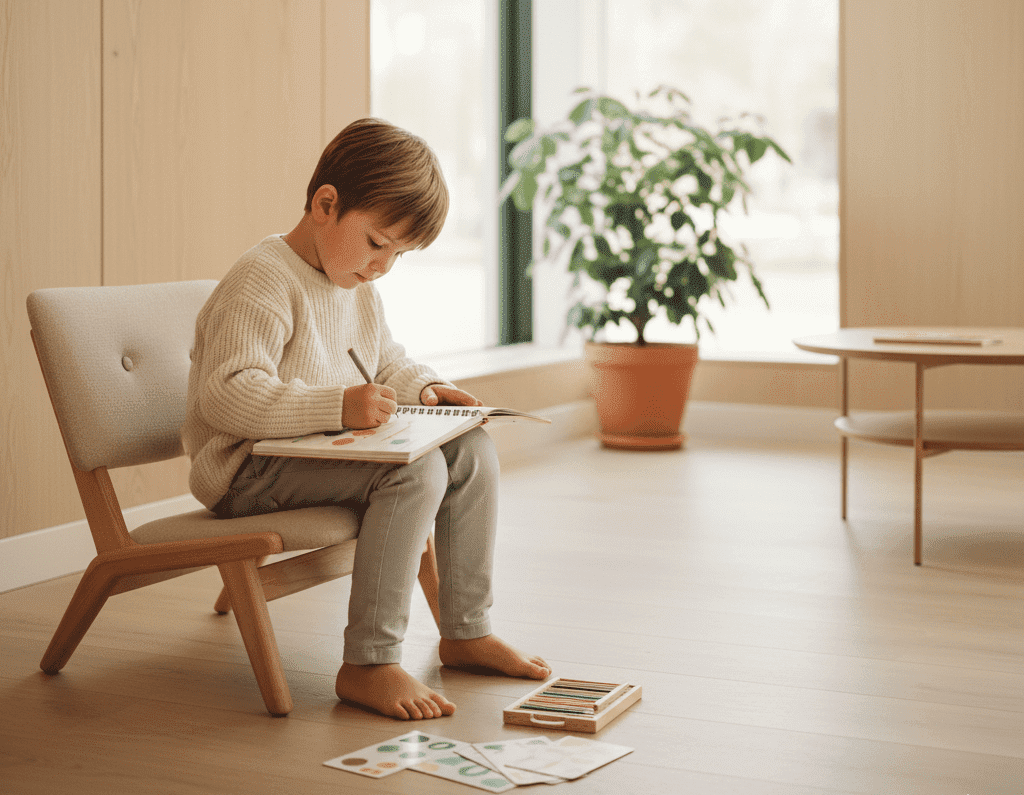
Tiny Thinks™ screen-free workbooks are designed for exactly these transition points: after a co-viewing session, when a child’s mind is primed for language, pattern, or logic play, a single calm page resets the nervous system and focuses attention.
The Free Calm Pack is a soft, no-risk introduction to this, just one organized, captivating activity at a time. For families who long for screen-free moments that actually work, especially after candy-coated content, age-based Tiny Thinks™ Workbooks provide you with an easy, dependable alternative to bring back quiet concentration anywhere, anytime.
Choosing Better Screen Time
Then, I realized that selecting screen time for young kids isn’t just about babysitting. It’s about nurturing their growing brains and safeguarding their emerging self-control. Parents ask if “Ms. Rachel” or “Cocomelon” is better, but the real question is what does your child’s nervous system need during these moments?
Both shows garner millions of views, but they each embody such contrasting philosophies towards early learning, stimulation, and regulation.
-
Tips for Choosing Quality Content. Seek out shows that slow down and encourage engagement. Good educational content employs clear language, steady pacing, and clean visuals. Steer clear of fast scene changes, loud noises, and manic plots. These cause dopamine spikes and leave kids dysregulated, bouncing from one thing to the next.
Instead, shows like “Ms. Rachel” employ slow speech, repetition, and direct engagement, all of which aid language and self-regulation. When you can, opt for shows that have educational experts on board and create content with actual developmental purpose, not just fun.
-
Matching content to each child’s needs. Each kid reacts uniquely to screen exposure. Some kids get fried and cranky from hyper cartoons, while others become passive or just checked out. Observe how your kid acts during and after watching.
Does the show settle them or hype them up? Do they sing, talk, or act out what they see? Shows reflecting a child’s own passions, music, nature, and uncomplicated narratives encourage attention in a more wholesome manner. If your kid is a music lover, soft sing-alongs (such as “Ms Rachel”) might do the trick.
If they love stories, seek out shows that have simple narratives and little distraction. Trust your eyes over marketing.
-
Interactive vs. Passive screen time. Passive viewing, just sitting and staring, rarely facilitates healthy development. Interactive media, in which kids are prompted to sing, respond to questions, or dance, is much better.
Ms. Rachel frequently pauses for kids to respond or repeat, assisting with language and social skills. In contrast, ‘Cocomelon’ employs vivid imagery and non-stop music but seldom cultivates any actual engagement. Select shows that decelerate and invite your child to participate, not just consume.
-
Reliable Sources for Curated Learning Materials. Not all platforms are created equal. Find content that is curated for age and quality like Khan Academy Kids, Sesame Street, or National Geographic Kids.
Most libraries offer free ad-free educational videos as well. Steer clear of platforms where autoplay means random or rapid-fire content like most of YouTube Kids. For families wishing to go offline completely, curated paper activities such as Tiny Thinks™ Workbooks and the Free Calm Pack provide structured, soothing, and developmentally appropriate alternatives that kids truly love.
These workbooks are purpose-built to calm the nervous system and develop early-stage skills for attention, memory, and logic. They are perfect for mealtime, travel, or post school-day meltdowns.
The Screen Time Echo Effect

Early screen exposure echoes out even when shows appear benign or educational. Differences between Ms. Rachel and Cocomelon become clear here: both offer music and repetition, but the pacing, predictability, and intent of each shapes a child’s developing mind in very different ways. When kids this young are staring at screens, their brains are building the genetic sequences that will reverberate into later learning.
Highly fragmented content, which Cocomelon is rife with, creates rapid dopamine spikes. These may prime the nervous system to anticipate incessant novelty, attention spans measured in seconds, and immediate gratification. In the long run, this makes silent concentration, patience, and deep play more and more difficult to experience screenless. It’s not a finger-pointing exercise.
We parents resort to screens at the dinner rush or on road trips because sometimes that’s what works. The manner in which we carve out these moments of activity curation matters more than we realize.
The echo effect explains how initial experiences with language, music, and puzzles establish a cadence for all subsequent learning. Ms. Rachel’s unhurried tempo, precise diction, and engaging signals correspond more tightly with what developing brains require to develop focus, communication, and impulse control. They stop, respond to queries, and think at their own pace.
This contrasts with Cocomelon’s quick scene changes, overlapping noises, and never-ending motion. What happens? Certain kids might have a hard time switching from quick screen input to slow real-world tasks. This can manifest itself as agitation during meals, irritability in waiting rooms, or resistance at bedtime, leading to difficulties in their daily routines.
Mindful media use means considering what sort of echoes we want to create. Is the show scaffolding language and attention, or simply stuffing quiet? Is it allowing for a child to answer, or dashing from one scene to the next? Parents don’t have to eschew screens altogether, but selecting programming that demonstrates calm, predictable schedules allows children to reflect the same tranquility into daily life.
It is the difference between a kid humming a nursery rhyme they were taught and a kid regurgitating fast-twitch phrases with minimal context. Evaluating screen time is ongoing, not one-and-done. Families change. Children’s needs change. What worked at age three might not fit at age five.
Checking in, Are mealtimes calmer? Is my child able to play independently after screen time? helps parents adjust. When calm, focus, or thinking seems off, it’s worth swapping in screen-free activities that reset the system. This is where Tiny Thinks™ shines.
A simple, structured workbook offers exactly what fast content can’t: slow, hands-on, patterned tasks that help children settle, focus, and think. The Free Calm Pack is a gentle start, and the age-based Tiny Thinks™ Workbooks go further, giving every parent a way to anchor daily routines, travel, or bedtime without chaos.
Children choose them because they are genuinely engaging, not just a “screen replacement,” but a calming reset that works anywhere.
How Tiny Thinks fits into this moment?
Tiny Thinks pages are designed to gently pull attention away from screens without effort from the parent.
They:
- start easy, so children can begin immediately
- use quiet hand movements that slow the body
- lead naturally into calm, focused attention
Parents often use them in moments like travel, waiting, or evenings, whenever they want a calm alternative to screens without planning or negotiation.
Conclusion
Navigating between options such as Ms. Rachel versus CoComelon requires more than just eye candy and earworms. Every show influences your child’s attention, language, and connection abilities. Ms. Rachel provides slower pacing and explicit language modeling that encourages early word acquisition and attention-driven engagement.
CoComelon, with its rapid edits and nonstop stimulation, often results in kids feeling overstimulated and less able to calm down. That’s where the real difference emerges in those daily moments: how easily your kid entertains himself, listens, or calms down from a busy day. Even minor adjustments to their viewing or interchanging in silences and hands-on tasks can change the entire atmosphere at home. Screen decisions count, but what happens after matters too; children flourish during calm, predictable routines.
If you want structured, calm moments without adding extra work, start with the Free Calm Pack or choose the workbook for your child’s age.
Choosing supportive screen content is only one part of the picture. Offering predictable, screen-free moments can help children process language and regulate attention more easily. The Tiny Thinks™ Free Calm Pack provides simple, hands-on activities that many families use to support calm focus throughout the day.
Frequently Asked Questions
What are the main differences between Ms. Rachel and CoComelon?
Ms. Rachel and CoComelon are popular choices for preschoolers, with Ms. Rachel deploying slow, interactive songs and speech to bolster language acquisition, while J.J. features fast-paced videos that may hinder healthy brain development.
Which show is better for language development in young children?
For instance, experts will generally recommend Ms. Rachel-type shows for language growth. Employing clear speech, repetition, and engagement, they bolster communication skills.
How does screen time affect a child’s developing brain?
Mindless or passive screen time displaces real-life interactions. This can cripple language and social skill development, particularly in very young children.
Is co-viewing with children important during screen time?
Yes. Viewing together allows adults to explain material, ask questions, and model language, all of which help kids learn more from screens.
Can shows like Ms. Rachel or CoComelon replace real-life conversations?
No. While educational shows can assist, nothing beats real life conversations and play with caregivers in developing strong language and social skills.
How can parents choose better screen time for their children?
Seek out programs on a YouTube channel that speak clearly, invite interaction, and foster engagement for healthy brain development in preschool-aged kids.
What is the “screen time echo effect”?
This effect causes kids to mimic the words or behaviors observed on screen. Programs that employ clear, interactive language increase the likelihood that children will use new words in real life.