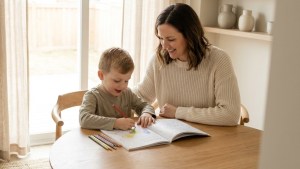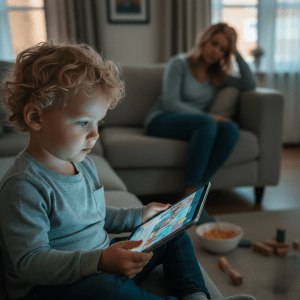

- Key Takeaways
- Why Patterns Matter More
- Boost Kids’ Pattern Recognition
- Beyond The Obvious Pattern
- Navigating Common Hurdles
- Measuring True Understanding
- The Future Is Patterned
- Conclusion
- Frequently Asked Questions
- What is pattern recognition in children?
- Why is pattern recognition important for kids?
- How can parents help boost their child’s pattern recognition?
- What are some common challenges with teaching pattern recognition?
- How can you measure a child’s understanding of patterns?
- Can pattern recognition skills affect future learning?
- Are there digital tools for teaching kids pattern recognition?
Key Takeaways
- Pattern recognition lays the groundwork for early math, logical thinking, and real-world problem-solving, fueling school and later-life success.
- Our pattern recognition kids respond best to hands-on activities, blocks, art, music, and movement that tie those abstract concepts to the world around them.
- When children observe patterns in nature, music, or their routine, they are stimulated to be curious, creative and develop more advanced language capabilities.
- By introducing math language to pattern recognition kids early and encouraging children to explain their thinking, pattern learning becomes meaningful and communication gets a boost.
- With customized activities and active support, we guide every kid, even those who are pattern-phobic, to confidence and comprehension.
- Instilling a passion for patterns in kids today sets them up for deep learning, creativity, and achievement in the pattern world of tomorrow.
Pattern recognition activities for kids 3–7 is about identifying likenesses, distinctions and recurring information in their immediate environment. Kids already employ these skills when they organize toys, pair socks or observe habits.
Pattern recognition primes early logic and lays the groundwork for math, reading, and problem solving. Many parents observe it initially during play or meals, when kids bunch objects together or adhere to uncomplicated patterns.
The meat of the post discusses parenting tips for fostering these skills in your own backyard.
Why Patterns Matter More
Not just a math skill, pattern recognition skills are how children ages 3–7 arrange their universe, develop logical thinking, and learn to control their attention. When kids identify, replicate, and generate patterns, they’re not simply fiddling with colors or shapes. They are silently constructing the cognitive biceps required for all sorts of challenges spanning from arithmetic to reading to analytical thinking.
Here’s how patterns form the core of early cognitive growth:
|
Importance of Patterns |
Early Math |
Cognitive Development |
Long-term Success |
|---|---|---|---|
|
Build calculation skills |
Children who practice patterns show stronger early math skills, even after accounting for age and memory differences. |
Pattern tasks train memory, attention, and sequencing—skills needed for focus and self-regulation. |
Early exposure to patterns predicts later academic performance, especially for children from under-resourced backgrounds. |
|
Deepen math concepts |
Recognizing patterns helps children move from counting to grasping addition and multiplication. |
Understanding “what comes next” builds logical thinking and problem-solving. |
Strong pattern sense supports success in mathematics and science later on. |
Pattern recognition underlies problem-solving. It helps kids anticipate what’s coming. When your child lines up blocks in a red-blue-red-blue pattern, they’re beginning to recognize patterns and predict.
It’s the same reasoning behind planning the steps in a recipe, your morning routine, or fair toy distribution. As kids gain experience, they’ll have the confidence to stretch, transform, or create patterns, fostering flexible thinking.
Patterns assist with making sense of day-to-day life. Toddlers sense the cadence—rise, eat, dress, play—and rely on these rituals to gain confidence. They perceive patterns in days of the week, in how to prepare, even in music beats.
This knack for spotting patterns guides them through transitions, minimizing meltdowns and increasing self-regulation. Patterns are everywhere: on clothing, in storybooks, in footsteps, and in the way we greet each other. When children observe these repetitions, they begin to structure their experience, which is soothing for the nervous system.
The connection between early pattern work and later success is obvious. These studies reveal that kids who start pattern tasks as early as 3 to 7 years old develop stronger math and reasoning skills by age 11, delivering particularly big advantages for children facing added adversity at home or school.
Working on patterns with beads, stickers, simple drawings or music conditions the brain to observe, think and generalize, abilities that persist well beyond the preschool years.
For families seeking screen-free alternatives, hands-on pattern work is particularly potent at calming frenetic energy and cultivating genuine concentration. Our Tiny Thinks™ Workbooks and the Free Calm Pack are specifically made for this age, with soothing, rhythmical pattern pages that they revisit over and over.
They are simple to do anywhere—dinner, the car, on a plane or while waiting in line—and provide kids the routine they desire without fast-paced screen dopamine surges.
Boost Kids’ Pattern Recognition
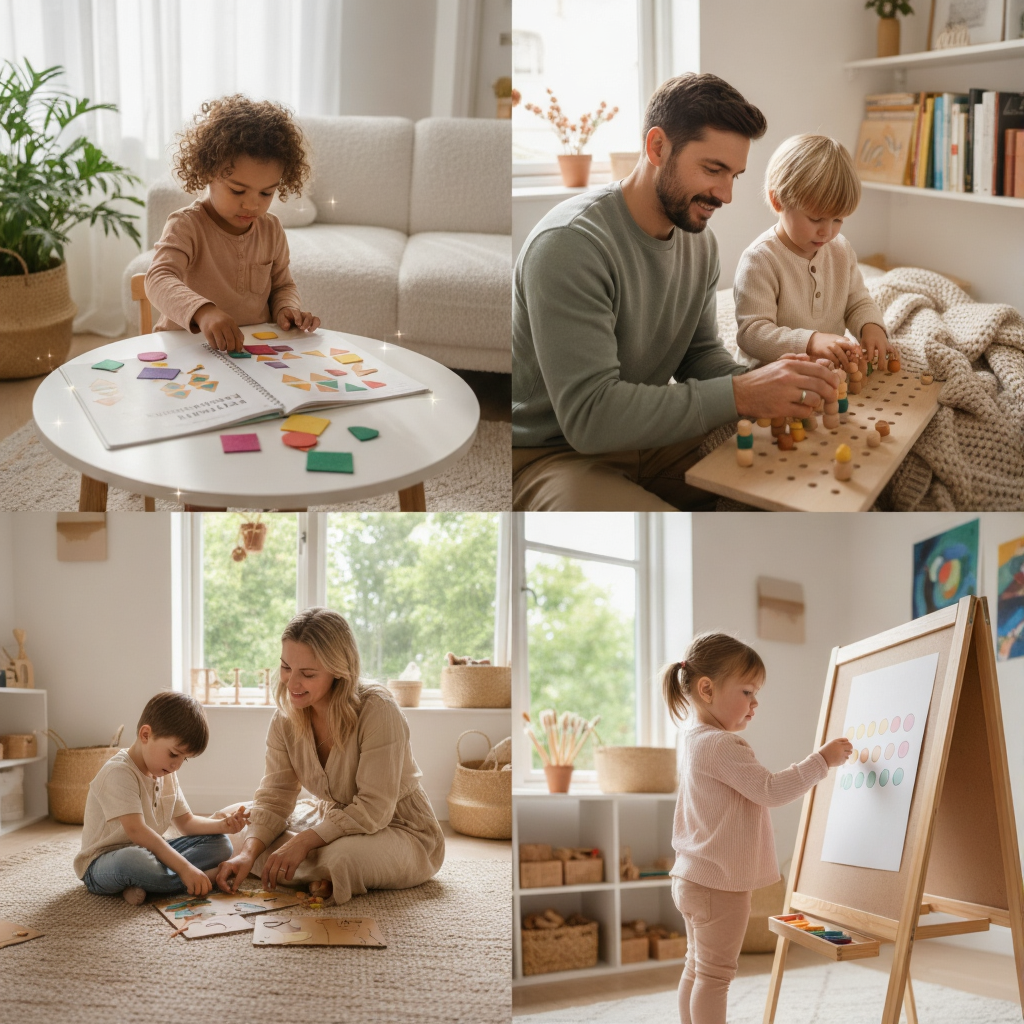
Pattern recognition is a core skill that influences how kids ages 3 to 7 think, pay attention, and study. A child’s pattern grasp at 5 years best predicts math ability at 11 years, after controlling for working memory and age, for instance. Patterning skills help with reading ability and executive function as well as early mathematics.
For parents seeking tangible, screen-free ways to build these skills in overstimulated moments, hands-on activities and predictable routines provide the biggest impact. This is particularly true when a mealtime, travel, or a waiting room threatens to send things into a tailspin.
1. See The World
Observing patterns starts with noticing what repeats: stripes on a leaf, bricks in a wall, tiles on a floor. Getting kids to notice these naturally occurring or daily patterns develops both attention and language. Visual aids such as pattern cards or even plain printouts make it easier for kids to perceive color, shape, and sequence, anchoring the abstract in something tangible.
Art projects—imagine crafting necklaces with repeating colors or stamping out alternating shapes—allow kids to design their own patterns, fueling spatial reasoning and confidence alike. When we adults discuss with kids the patterns they discover, it develops language and creates powerful cognitive connections. Talking about patterns in everyday tasks—brush teeth, shoes, jacket—also aids.
2. Hear The Rhythm
By clapping, tapping or playing simple instruments, sound patterns help kids build auditory discrimination. Repeat a short claptapclap and have your child copy or create their own. This develops listening and sequencing abilities and ties organically to emergent math concepts related to repetition and order.
Challenge kids to make their own sound patterns — be creative, be expressive. Music becomes a bridge. Rhythms in songs or chants reveal the link between counting and repeating structures, making numerical patterns concrete and memorable.
3. Feel The Sequence
Hands-on materials such as blocks, beads, or buttons let kids physically construct and continue patterns. Sorting colors or putting them in order not only bolsters fine motor skills but enhances pattern recognition. Movement-based pattern games, like hop-spin-hop or a patterned obstacle course, hit both body and mind simultaneously.
Sequencing isn’t just for toys; highlighting the sequence of steps in meal or play-time routines underscores how patterns structure our lives and aid kids in anticipating what happens next.
4. Move The Body
Physical games are another powerful avenue for pattern learning. Hopping, skipping, or clapping in specific rhythms tunes motor coordination and attentiveness. Team games in which each participant contributes a movement to pattern on their turn foster cooperation and encourage social learning.
Outdoor play provides kids with natural patterns to investigate, such as tree rings and repetitive petals. These activities root learning in the body and bring regulation through slow, predictable motion.
5. Speak The Logic
Building math language is using words like “repeat,” “sequence,” “next,” and “pattern.” When kids walk you through their thinking — why they selected a blue bead after a red — they’re exercising logic and communication. Storytelling supports this; pointing out repeated phrases or events in stories makes patterns visible in language.
Using everyday conversations — such as observing the sequence of traffic lights or the order of breakfast — integrates math language in real life.
Tiny Thinks™ Workbooks and the Free Calm Pack are made for these moments. They provide soothing, screenless experiences that encourage 3–7 year olds to hone pattern recognition with engaging, tactile, logic-driven assignments.
Tiny Thinks™ pages are designed for pattern recognition in kids, perfect for dinner tables, car rides or after school wind-downs. Most families discover that Tiny Thinks™ not only builds early math and reading skills, but immediately calms and promotes longer focus.
For parents seeking a screen-free, slow-paced, highly effective alternative to the rapid-fire onslaught of screens, these workbooks offer a convenient, fun option that easily fits into any schedule.
Beyond The Obvious Pattern
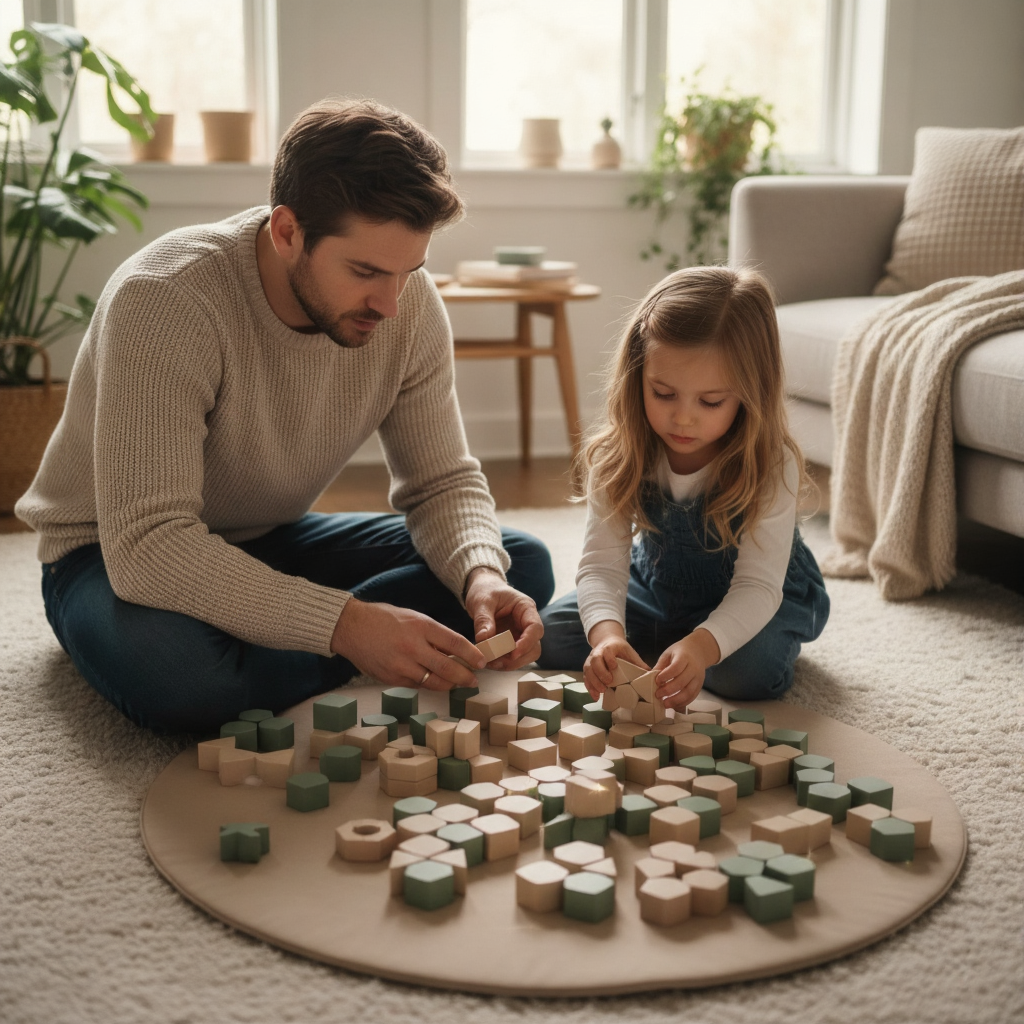
Pattern for kids 3–7 isn’t simply color matching or mimicking a pattern. Once children get past the simple AB pattern (red-blue-red-blue), they begin dealing with more complicated patterns like ABAB and AABB. These are the sequences you see in a line of blocks: red-red, blue-blue or in clapping games: clap-clap, tap-tap.
Sequencing games like these require children to keep information in their heads, anticipate what comes next, and self-monitor, which builds memory and attention. Even something as simple as lining up shoes by size or sorting spoons by length at the table builds early logic and visual discrimination.
Abstract patterns are the subsequent tier. Patterns show up everywhere: rhythms in music, the way leaves alternate on a branch, or how moss grows on the north side of trees. When kids identify these recurring patterns, it’s more than just a feel-good moment; it’s brain exercise that sets a foundation for math, reading, and even science.
Early patterns of nature or daily routines help children begin to recognize connections between objects, events, or ideas, the basis of advanced thinking later on. Creativity blooms when kids create their own patterns. Allowing a child to use colored pencils to create their own pattern or clap out a self-devised beat promotes adaptive cognition.
This process isn’t merely about finding the “correct” answer; it’s about trial and error, iteration, and cultivating creativity. When kids spontaneously create patterns, they’re not only getting a math workout, they’re practicing how to tackle novel problems in any domain of life—an invaluable skill for innovation.
Identifying beyond the obvious pattern is what marks the child out as not a passive observer, but an agent in his own world. Once a child can identify the pattern in the routine the family follows getting ready in the morning or how their block tower continues to topple in the same place, they begin to predict, plan and adjust.
This deep consciousness results in smarter organization and planning and the courage to experiment with new strategies. Pattern recognition crosses boundaries; it is as vital to reading and science as it is to art or music and supports interdisciplinary thinking.
Easy, practical exercises remain the most effective way to develop these skills in the early years. Sequencing games, grouping objects, or sorting picture cards—all on paper, not screens—allow kids moments to observe, hypothesize and experiment without interruption.
Technology can aid pattern learning, but the rapidity of digital content frequently splinters attention and evades deep focus. That’s why the Tiny Thinks™ Free Calm Pack and age-based Workbooks are purpose-built for slow, hands-on pattern play, assisting kids in constructing moments of focus and regulation, such as mealtimes, car rides, and after-school transitions, where screens would otherwise creep in.
Kids really like these quiet, organized activities and parents notice more peaceful, less distracted behavior immediately.
Navigating Common Hurdles
Pattern recognition is a foundational skill for 3–7 year olds. Lots of families experience their kid hitting rough spots with it, particularly after a hectic sensory day, amid transitions, or once fatigue kicks in. Knowing these hurdles is step one to backing growth in a laid-back, realistic way.
Conquering challenges builds resiliency for both kiddos and adults, but frustration can quickly swamp young children. If frustration flares or your kiddo starts to resist activities, it is often an indication their nervous system is overwhelmed or the activity feels uncertain. In these times, kids acting out is their language of distress, highlighting the need for effective teaching strategies.
Frequently, kids mess up on patterns not due to inability with the work, but because the format seems confusing or hurried. Distinguishing a rough day from persistent challenges is crucial. If your child habitually avoids sequences, crumbles around minor errors, or shuts down halfway through, it likely indicates a requirement for more consistent, kinder assistance.
Kids act different at different times; one may fly through a worksheet in the morning but fight through it after school madness. Context is key. Recognizing these patterns enables adults to modify their approach with patience and compassion, ultimately fostering strong pattern recognition skills.
- Provide them with pattern activities that are richly visual and tangible, such as laying out colored blocks or sorting socks by stripes or dots. Activities with obvious, repeatable actions offer predictability, which soothes the nervous system.
- Decompose bigger patterns into small, winnable steps. For instance, get your kid through the first two steps of a pattern, then stop and cheer before continuing. This instills confidence and enhances frustration tolerance.
- Apply cool words and warm persuasion. When an error occurs, exclaim, “That’s just how you learn patterns, let’s do it together,” not to hastily correct. It helps kids learn that encountering challenges is part of the course and that they’re stymies, not disasters.
- Try incorporating daily home numeracy routines, such as counting slices of fruit or sorting buttons, to bolster their pattern skills in a low-stress environment. These small periods accumulate and contribute to developing pattern fluency organically.
- Periodically, just look and see how your child is doing with pattern work. Tweak the difficulty, visual supports, or timing as necessary. Monitoring minor victories, such as completing a pattern without having a meltdown, can steer you forward.
For kids requiring extra assistance, focused worksheets and soft, incremental exercises make an impact. Our Free Calm Pack and Tiny Thinks™ Workbooks are perfect for ages 3 to 7, using slow, predictable structure and Scandinavian calm visuals so kids can settle and focus.
They are great for mealtimes, travel, or evening wind-down. These aids assist kids in developing pattern-recognition strategies and soothing the nervous system, making screen-free times more manageable for families.
Measuring True Understanding
Pattern recognition at ages 3-7 is significantly more than identifying colors or shapes on a page. It’s what I like to call the skill of measuring true understanding. It’s the capacity to discover order in apparent disorder.
For parents and educators, measuring if a kid really gets patterns involves looking beyond ‘getting it right’ to how well the child can identify, explain, and extend a series even when the rules shift. This is important because studies indicate that children’s initial capacity to identify and extend patterns is closely associated with subsequent computational aptitude, beyond what can be explained by age and working memory.
Knowing what to look for and how to track progress is essential to nurturing children’s thought.
Checklist for Assessing Pattern Recognition
It’s this simple checklist that helps adults measure which pattern skills a kid has acquired. Can they replicate a pattern with beads or stickers? Are they able to generalize a pattern, such as red, yellow, red, yellow, after encountering just a few instances?
Do they catch mistakes if you slip a wrong color in? Are they able to discuss what repeats? The gold standard is isolating the repeating unit, as in recognizing that blue green green blue green green is really just blue green green repeated over and over.
Practically, ask the kid to construct the tiniest tower that preserves the pattern. This measures whether they understand the recurring chunk, the most difficult of these abilities, and the one that best predicts future success in math and reading.
Progress Monitoring for Pattern Skills
Tracking growth is about more than one-off “got it” or “didn’t get it” checks. Make an easy to track chart with whether a child can copy, extend, or create patterns in various materials such as blocks, stickers, and sound claps.
Check in each week: are they noticing patterns faster? Are they at ease generalizing the rule, not just duplicating surface elements? Research highlights that children’s pattern skills at age 5 predict math ability at age 11, so measuring regularly helps you catch gaps early and make instruction more effective.
Encouraging Self-Assessment
Children love being asked, “How did you know what comes next?” or “What was tricky about this pattern?” Prompting reflection helps them notice their own thinking—whether they guessed, used color clues, or looked for what repeats.
Self-assessment builds metacognition, a skill that translates to reading, writing, and later algebraic thinking. When children can explain the rule behind a pattern, they are building the foundations for understanding mathematical relationships and for spotting commonalities in letters and words too.
Fostering Growth Mindset and Motivation
Many small successes, whether it’s cracking a tricky repeat or mending a broken pattern, help kids see themselves as thinkers. Hang patterns up, have children present to parents what they created, or just applaud their initiative.
This not only increases their confidence but spurs them to attempt more difficult patterns, preparing them for future success in math, science, and language. The right kind of praise, attention to effort, strategy, and progress, shows kids that brains grow with practice.
Tiny Thinks™ Workbooks and the Free Calm Pack are built around these fundamentals. Each page offers structured, screen-free pattern tasks that children ages 3–7 can do independently, wherever focus is needed most: during dinner, in waiting rooms, or after school crashes.
These activities lead kids to identify repeating units, continue sequences, and even verify their own work. For families wanting to swap frantic screens for peaceful, mind-focused rituals, these resources provide an actionable, rule-first alternative that really sticks in real life.
The Future Is Patterned
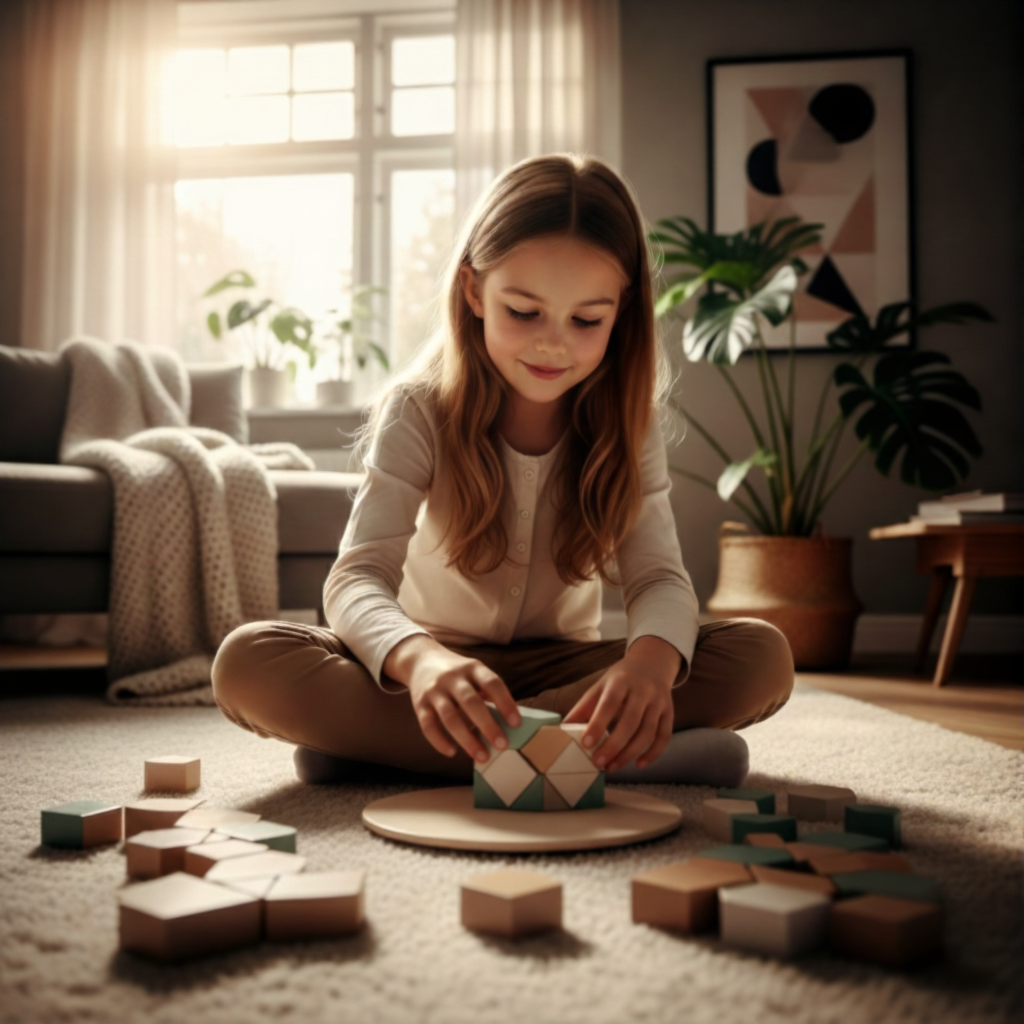
Pattern-thinking is a fundamental ability that influences the way kids process, absorb, and engage the world. By age two, children are looking for patterns and consistency. They notice stripes on a shirt, arrange blocks in a row or clap along with a beat. These first steps aren’t simply play; they are the beginning of so much more.
Pattern recognition allows children to predict and adjust, be it figuring out where to fit the next jigsaw puzzle piece or forecasting your friend’s next chess move. This capacity grows rapidly during the ages three to seven, when the brain is most receptive to making these links. By preschool, they can sort, mimic rhythms, and identify the subsequent shape or color in a basic pattern. All of this is lay thinking.
Pattern skills don’t just mean counting beads and singing songs. They’re the hum that powers math, language, and even social skills. When a child masters how numbers recur or a story develops, they’re strengthening the memory and logic muscles required for school and life!
Early pattern recognition forecasts how well a kid will do with math later, including geometry, measurement, and even algebra. Patterns manifest in geometric forms, hues, music, habits, and nature. Kids who observe these find it easier to make sense of novel concepts as they mature.
Here is a summary of why pattern recognition matters long-term:
|
Skill Area |
Impact of Pattern Recognition |
|---|---|
|
Mathematical |
Prepares for counting, geometry, and advanced math |
|
Cognitive |
Builds memory, attention, and logical thinking |
|
Social |
Helps anticipate behaviors, read emotions, adapt to routines |
|
Academic |
Boosts reading, problem-solving, and overall performance |
|
Career |
Fosters adaptability, creative thinking, and persistence |
Fostering a passion for patterns is essential to life-long learning. As children who play with patterns — sorting buttons, colored stones or tracing lines — acquire curiosity and confidence. They’re calming and engaging, which supports regulation and focus.
They don’t simply occupy time; they instruct kids on thinking in stages, observing, and persevering. For parents, this is especially valuable during busy or stressful moments: after school, at dinner, traveling, or in waiting rooms. Providing a calm, tactile pattern exercise can ease transitions and avoid tantrums.
Not every home has shelves of Montessori materials or space for intricate crafts. That’s where Tiny Thinks™ enters the picture. The Free Calm Pack provides families a fast start with easy pattern pages for 3 to 7 year olds, print- or pack-ready for any moment.
The workbooks dive deeper with step-by-step exercises that develop logic, focus, and early math skills. Kids pick them because they’re soothing, focused, and actionable. Parents report less chaos, more concentration, and fewer screen battles.
For families seeking gentle, screen-free assistance, these tools simplify pattern learning for anytime, anywhere access.
Conclusion
To support kids age 3–7 develop hardwired pattern recognition, these small daily moments are what count. Patterns pop up everywhere—our breakfast plates, nature walks, block play, or sock sorting post-laundry. Kids’ brains sort the world by these recurring patterns, constructing memory, logic, and flexible thinking. When parents slow things down and provide hands-on, calm activities, kids settle into focus naturally. Even easy paper-based activities can support that very same deep learning without the hyperstimulation of rapid-fire screens. Tiny Thinks™ Workbooks provides families with hands-on, screen-free methods to exercise pattern skills everywhere—at the table, on the road, or during downtime. Over time, these skills sculpt not just math and reading, but everyday confidence and independent problem-solving.
Frequently Asked Questions
What is pattern recognition in children?
Pattern recognition helps kids to observe, anticipate, and make sense of recurring relationships, nurturing strong pattern recognition skills essential for abstract math, language, and problem-solving.
Why is pattern recognition important for kids?
Pattern recognition underpins logical thinking and early math skills. It helps kids make sense of the world, enhances memory and establishes a firm foundation for future learning.
How can parents help boost their child’s pattern recognition?
Parents can engage young children in games and puzzles that promote sorting and pattern recognition skills. By identifying patterns in everyday items, such as colors, shapes, and routines, they can keep the learning fun and organic.
What are some common challenges with teaching pattern recognition?
Maybe some kids aren’t great with abstract thinking or get bored with repetition. By incorporating hands-on activities and real-world examples, you can keep them interested and accommodate various learning preferences.
How can you measure a child’s understanding of patterns?
You can assess their understanding by having the kids complete educational worksheets that involve sequences, sort things, or anticipate what comes next, providing insight into their pattern recognition skills.
Can pattern recognition skills affect future learning?
Yes, robust pattern recognition is associated with triumph in math, reading, coding and critical thinking. They assist kids in tailoring to new information and resolving intricate challenges.
Are there digital tools for teaching kids pattern recognition?
Yes, loads of kids are taught pattern recognition in educational apps and web games. These tools turn learning into an interactive experience and can be customized to various skill levels.