
- Key Takeaways
- Recommended Screen Time For Kids
- Beyond The Clock
- The Developmental Impact
- Creating A Family Media Plan
- From Consumer To Creator
- Screens And Neurodiversity
- Conclusion
- Frequently Asked Questions
- What is the recommended daily screen time for kids?
- How does too much screen time affect child development?
- Should screen time include educational activities?
- How can families create a healthy media plan?
- Why is it important for kids to be creators, not just consumers, of digital content?
- How does screen time affect neurodiverse children?
- What are some signs that a child may be using screens too much?
Key Takeaways
- Pediatricians recommend that kids under 2 have little to no screen time. Older toddlers should have no more than an hour a day.
- Quality counts as much as quantity. Instead, emphasize educational, age-appropriate content and co-viewing to foster comprehension and bonding.
- Moderating screen use, alongside physical activity, social play and unstructured time promotes healthy development and limits risk to sleep, attention, and physical health.
- Family media plans and consistent boundaries teach kids healthy habits, particularly when parents demonstrate mindful screen use and include children in rule-making.
- Challenge kids to go beyond watching and experiment with making stuff digitally, think critically about what they see, and explore fresh offline passions.
- Customize screen time for neurodiverse children with an awareness of overstimulation and emphasize media that supports their specific strengths and requirements.
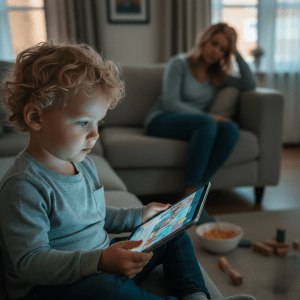
How much screen time for kids varies by age, daily routines, and a child’s capacity to self-regulate once screens power down. Some families support this balance with simple, hands-on Tiny Thinks activities to help kids reset after screens.
For children 3 to 7 years old, the majority of experts prioritize restricting recreational screen exposure to less than one hour per day, in favor of slow, predictable content.
Fast-paced screens fragment attention and disrupt calm and focus, particularly after school, at meals, and before bed.
The article below details what really assists kids in resetting and refocusing post-screens.
Recommended Screen Time For Kids
Screen time is embedded in just about every family’s existence these days. The real issue isn’t screens per se, but the frenetic and unpredictable pace of most content. Fast, autoplay-driven media fragments attention and crowds out the slow, tactile, face-to-face experiences young children need for focus and self-regulation building.
Below is a summary of daily screen time guidelines from major pediatric experts:
|
Age Group |
Recommended Daily Screen Time |
|---|---|
|
Under 2 years |
None, except video calls |
|
2–5 years |
Maximum 1 hour, high-quality content |
|
6–12 years |
1–2 hours, educational/recreational mix |
|
Teenagers |
Flexible, prioritize balance and wellbeing |
Screen guidelines are just the beginning. Real requirements fluctuate as kids mature and parents ought to note modifications in temper, rest, and socialization. We must balance screens with movement, outdoor play, and quiet, hands-on activities.
When screens are involved, content quality, context, and child engagement matter as much as total minutes.
1. Under 2 Years
Babies and toddlers require real-time experiences, including eye contact, touch, voice, and movement. Pediatricians say no screens for kids under two, except for video chats with relatives. Each minute looking at a screen is a minute not spent reacting to facial expressions or experimenting with an object.
Face-to-face play, singing and simple games like peekaboo cultivate pattern recognition and social skills in ways screens can’t. Even background television has been connected to shorter attention spans and delayed language.
At this age, quality time with caregivers, talking, reading and mirroring is the heart of early brain development.
2. Ages 2 to 5
For preschoolers, no more than an hour a day of quality, slow-paced programming. Choose content that is age-appropriate, educational, and preschool-aimed. Co-viewing is priceless.
Viewing together lets parents explain, inquire, and help kids tie what they see to actual experiences. Establishing simple screen routines matters: only after outside play or never during meals, for example.
Consistency allows kids to predict transitions and reduces conflict. When unchecked, passive viewing quickly overwhelms developing attention systems and complicates independent play.
3. Ages 6 to 12
As for school-aged kids, they require a more balanced approach. Daily, 1 to 2 hours is reasonable, with homework and creative use first. Too much recreational screen time is associated with impulsivity, mood swings, and physical inactivity.
Others flourish with a family media plan that includes strict rules around device use, designated public charging locations, and mandatory offline pauses. Discuss in an open manner what your child views online.
Browse the web together occasionally. It uncovers how your kid digests digital media and enables you to demonstrate positive digital behaviors. If screens begin to crowd out reading, chores, or real-world play, it’s a warning that regulation is faltering.
4. Teenagers
Teens require this same flexibility as academics and social lives migrate to online. Still, gutless, bottomless scrolling can corrode sleep and health. Talk openly about whatever’s going on online — safety, privacy, and social media’s impact on mood.
Watch for stress, withdrawal, or sleep changes. Assist teens in identifying when their own usage begins to feel compulsive. Family rules, such as no phones at dinner or in bedrooms, can enforce healthy boundaries without continuous strife.
Balance, not zero screen time, is the aspiration. When regulation is difficult, or screens are the only way to calm down, a peaceful, screen-less rescue comes in handy.
Tiny Thinks™ is great for those moments—after school, screen comedown, bedtime wind-down, when kids just need to reset. The Free Calm Pack provides child-led, structured thinking pages that bring back focus and self-direction.
For more support, our age-based Tiny Thinks™ Workbooks provide parents a trusted, no-prep system that kids return to happily, even when over-stimulated.
Beyond The Clock
Screen time isn’t just a matter of minutes or hours. What matters more than minutes recorded is the quality and type of what a child experiences on-screen. For moms and dads of ‘young kids’, particularly those with little ones navigating daily transitions and searching for a more peaceful household, it’s about what screens offer and what they might usurp.
Content Quality
Content selection is the one most controllable thing. For 3 to 7 year olds, age-appropriate and educational material encourages language, pattern spotting, and early reasoning. With care, interactive stories, basic logic games, and soothing drawing apps can cultivate thinking skills.
It’s easy for parents to default to screens for relief; just about 50 percent use screens on a daily basis, frequently to help manage chores or just catch a break. It’s not a flaw, but a truth of contemporary parenthood.
Sitting down with your child and checking out what they watch or play trumps a timer. Discuss the narrative, interactively inquire, and assist your kid in thinking about what they observed. This develops understanding and trains kids to pay attention to what they eat.
Interactive media, such as open-ended puzzles or easy sequencing games, captures a child’s attention for longer periods and promotes thinking in ways that passive video content cannot. Steering clear of fast-cut, over-stimulating or violent material continues to be key, particularly for this age group.
Kids exposed to graphic, violent or unsuitable content could be more agitated, have sleep issues, or mimic bad habits. Parents worried about sleep, attention, or ‘tantrums’ are reacting to these hidden confounds.
Active vs Passive
‘Active’ screen use – working puzzles, drawing, etc. – engages working memory and really supports early problem-solving. Passive viewing, particularly with autoplayed videos and rapid-fire cartoons, overstimulates, fragmenting focus and making kids more fidgety when screens shut off.
For children, limit apps to interactive ones and select apps that allow them to create or solve puzzles, not just watch. Reduce passive screen time especially before sleep or meals to safeguard sleep and family bonding.
More often than not, parents tell me they cave to screens because they want to avoid meltdowns. Structure, not content, is what calms a dysregulated child. After a hard day, it’s so easy to default to screens as a crutch.
Discussing what your child did — even for a minute or two — educates them to observe their own emotions and decisions, which is at the heart of genuine self-control.
Co-Viewing
Experiencing content together, through watching or playing, transforms media from isolated distraction to an opportunity for interactive learning. Co-viewing allows parents to direct comprehension, demonstrate inquiry, and bolster ideals silently, without diatribes.
Establishing this as a habit, even three or four times a week, encourages dialogue and establishes a tranquil vibe around devices. Kids are more apt to discuss what confuses or excites them when a parent is in the room.
Co-viewing isn’t about control, but about soft presence and mutual inquisitiveness. Families who construct screen-free rituals, like meals or bedtime, tend to report less conflict and more connection.
This isn’t about screen elimination, but about preserving sacred time for sleep, movement, or conversation. Tiny Thinks™ is here for these high-friction moments.
When you need your child settled, centered and thinking peacefully — after school, while traveling, at mealtime, waiting rooms, or bedtime — the Free Calm Pack provides instant comfort. Our structured, screen-free workbooks support self-initiated focus, patterning and independent thinking without the distraction of rapid content.
No stress. No guilt. Just a soothing, dependable buffer for when your kiddo has to unplug and get back into the offline groove.
The Developmental Impact

Screen time is integrated into everyday life for the majority of families. The real question is how screens mold a child’s developing mind, body, and relationships. It is about what kind, when, and for how long—not about screens per se. Fast, autoplay content is usually the primary disruptor, hijacking this attention system and crowding out slow, structured play.
Below is a summary of the potential impacts across key developmental domains:
|
Area |
Potential Impact |
|---|---|
|
Cognitive Development |
Delays in communication, problem-solving, and fine motor skills with >4 hours/day before age 2; decreased language scores; less neural activation for language |
|
Social Skills |
Reduced dialogue, fewer verbalizations, weaker friendship skills, increased aggression and emotional reactivity |
|
Sleep Patterns |
Disrupted sleep quality and duration, especially with evening exposure |
|
Physical Health |
Increased risk of obesity, sedentary behavior, and related health problems |
Brain & Cognition
Kids’ brains develop attention through repetition and slow tactile feedback. When screen time goes beyond three to four hours per day, especially noted with toddlers, parents tend to observe communication and problem-solving skills falling off behind their peers.
One study found a 17-point decline in vocabulary score for each additional hour of viewing. Fast-moving, frequently refocused screens, especially those with autoplay video, fragment attention and impede children’s ability to focus and learn. These habits can linger, with a sharp association between screen overuse in preschool and attentional problems at age seven.
Instead, kids who experience more reading at home show more robust neural activity in areas of the brain dedicated to language and cognition. Families can fuel brain development by alternating screen use with tactile activities, picture books, and unstructured play. Keeping an eye on screen time isn’t as much about adhering to a magic number.
It’s about ensuring that screens don’t crowd out the quiet, hard concentrated work that develops enduring intellectual abilities.
Social Skills
Screens can displace the little, daily moments that cultivate social confidence. The more time they spend with tablets or TV, the less verbally interactive and more behaviorally ‘hard-to-manage’ (aggressive or reactive) they are. The lost practice accumulates.
As much as possible, inspire your kids to play with others, participate in family rituals, or assist with basic chores, all of which fosters real-world social learning. In-person experiences, mealtime conversation, group games, or even quick neighbor drop-ins provide kids room to read cues, share turns, and develop friendships.
Screen time needs to be balanced with these experiences. Guided, low-stimulation tasks such as jigsaw puzzles or group drawing provide organic opportunities for cooperation and dialogue. These moments provide the developmental foundation for deeper connections down the road.
Sleep Patterns
Screens in bed push back sleep and reduce total sleep time. Blue light blocks melatonin, the hormone that says ‘go to bed.’ Parents report it takes longer to settle and there are more night wakings when kids watch shows or play games late into the evening.
Establishing an easy, screen-free wind-down ritual assists. This may be a bath, a story, or a silent matching game. Good sleep is directly connected to mood, memory, and development. Even small restrictions on evening screen time generally result in improved sleep and easier mornings.
Physical Health
Sedentary time increases with additional screens. Longer use is associated with increased childhood obesity, as it displaces physical activity and outdoor time. Brief intermissions, such as standing, stretching, or quick walks, mitigate these dangers.
Parents can offset screen time by folding active play into everyday activities. This could be a five-minute dance session after a performance or a hike before supper. Even micro-changes matter by reducing sedentary activity and developing habits for a lifetime.
Tiny Thinks™ was created for pressure points—after school, travel, transitions—when parents crave a calm, child-driven option. The Free Calm Pack gives families a gentle entry point: quiet, structured pages that settle minds and build focus.
Age-specific Workbooks provide familiar rhythms kids revisit again and again, nurturing solo focus, sequencing, and self-control. No hype, no stress—just a dependable, screenless choice for daily serenity.
Creating A Family Media Plan
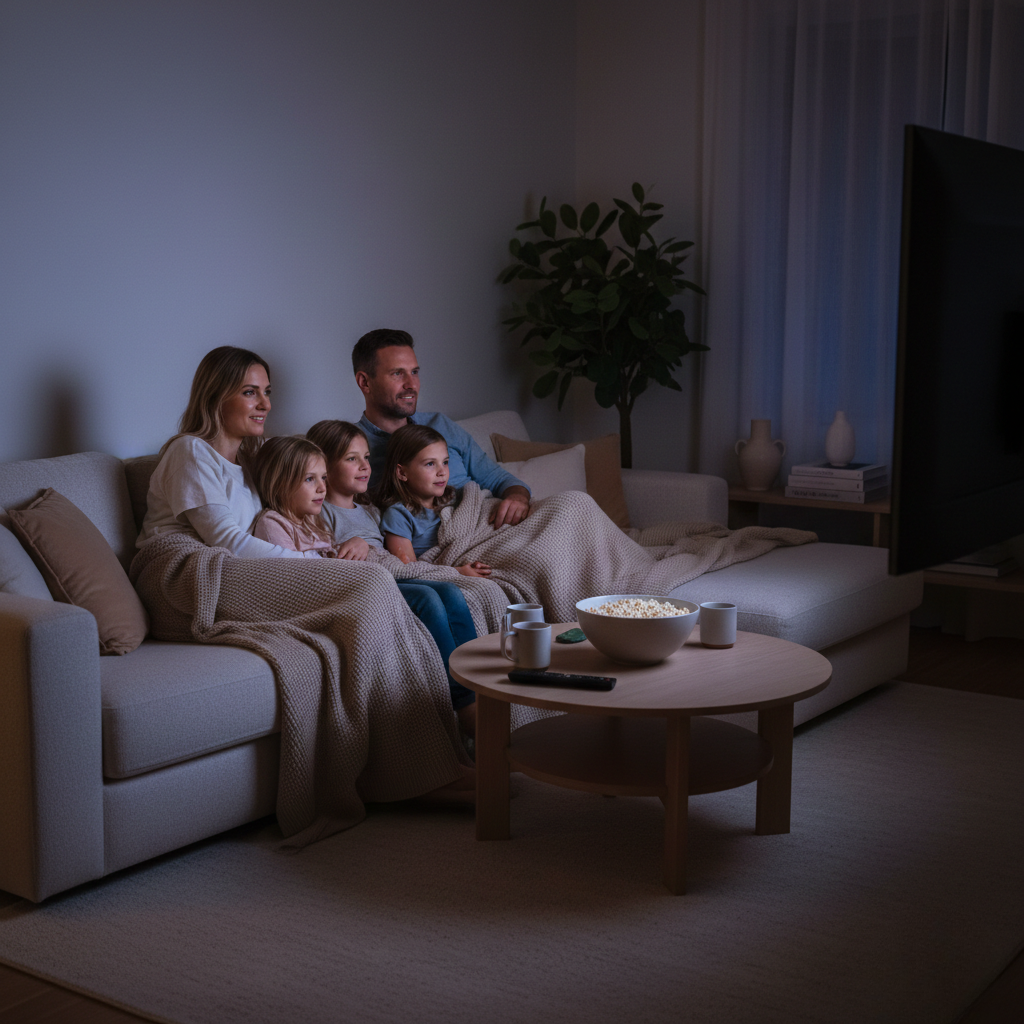
Screen time is integrated into the majority of family schedules, not an issue to be eradicated. The objective is not to banish screens, but to establish a consistent framework that returns balance and nurtures good focus. A family media plan isn’t a checklist that works for everyone, but a living agreement—one that responds to each family’s changing needs, values, and moments of actual stress.
The point is to craft purposeful, rules-first habits that allow screens to facilitate something, not wreak havoc.
Set Boundaries
- Checklist for Setting Limits:
- Establish daily screen time limits by minutes or episodes.
- Identify device-free spaces: bedrooms, dinner table, car rides.
- Pinpoint high-risk times: after school, before bed, during meals.
- Define types of content permitted: slow, non-autoplay, educational.
- Include transition cues: timers, visual schedules or a ‘last episode’ warning.
Help kids to understand why these limits are in place. Tell them, “Screens move fast, your brain needs slow time to grow strong.” Don’t moralize. If a rule shifts, explain why clearly — “We’re on vacation, so screens in airports only.
Consistency is important, but a little flexibility communicates trust as children age. Revisit rules every few months to keep pace with age and family rhythms.
Model Behavior
Kids observe grown-up behaviors as attentively as any program. If Mom scrolls through dinner or checks texts during play, kids learn that split attention is the norm. Make it a rule to place the phone down when you’re eating and explain your decisions—‘I’m putting my phone away so I can listen to you.’
Anchor your days with screen-free family routines such as reading, walking, and meal prep. When parents pick slow, tactile activities, kids do too. Screen habits gradually move from mindless to deliberate because the example is present every day.
Encourage Alternatives
- Calm, tactile activities: matching games, simple puzzles, coloring, tracing.
- Outdoor play: walks, gardening, sand, water, collecting nature objects.
- Building blocks involve stacking and arranging household items by size or pattern.
- Quiet sensory work: playdough, sorting by texture, threading beads.
Eases new hobbies in, pressure-free. Let unstructured play lead. Kids develop concentration and ingenuity when they’re left to tinker with basic materials.
Schedule screen-free windows: after school decompression, mealtime, waiting periods, bedtime wind-down. That’s where Tiny Thinks™ comes in. Free Calm Pack pages or age-based workbooks provide minimal-stimulation, low-structured tasks your kids initiate independently.
No arguing, no badgering, just peaceful thinking time. Parents use Tiny Thinks™ in real moments: post-school restlessness, transition meltdowns, or public waiting. Over the years, the quiet, regular schedule turns into a reliable safe harbor. Kids calm down, contemplate, and re-exit this world controlled.
From Consumer To Creator
Kids today are raised in a field of digital instruments. Most are proficient at tapping, swiping, and watching, but far too few use screens for anything other than consumption. The transition from consumer to creator is not about taking away screens; it is about transforming the way kids use them.
It is about empowering kids to become makers, builders, and shapers instead of passive inputs. Separating watching from creating is key. Not all screen time is the same; engaging one’s creativity provides a cognitive workout that mindless watching cannot. The point isn’t to demonize screens, but instead to steer kids toward experiences that cultivate focused attention, patience, and creativity in problem solving.
Tiny Thinks™ is here for parents who appreciate peaceful, organized options—not as a fix, but as a functional breath of fresh air when the situation calls for it.
Digital Literacy
Digital literacy is today’s core skill. Kids have to learn how to navigate safely and confidently online. For example, this translates into knowing how to maintain privacy and identifying something that’s not safe to share. Parents can bring this to life by discussing scenarios such as why family addresses and birthdays aren’t posted or what to do if a stranger asks questions in a game chat.
A further layer is comprehending media messages. Kids internalize messages from videos, games, and ads – sometimes without realizing it. Teach them to ask: Who made this? What do they want me to believe? Eventually, this molds a kid who can identify spin, challenge “facts,” and seek out what’s missing.
These skills can be interwoven into daily conversations, like talking about a favorite show’s message at dinner or highlighting differences in news headlines. From consumer to creator highlight examples live. Pose loose questions about what they observe or listen to. When digital life is woven into family life, kids are more deliberate and less susceptible online.
Critical Thinking
Steps for engaging children in critical media discussions:
- Watch or play together, then pause to ask, “What is happening here?”
- Explain how the story is narrated and why.
- Motivate kids to check other sources to see if it matches.
- Discuss what was omitted or how the same topic looks different.
Kids learn to question sources and check facts, not just believe what’s on the screen. Challenge them with questions like, ‘Who profits if you buy this?’ or ‘Could this be photoshopped?’ Media is an instrument for constructing a critical tool.
Even the simple act of making choices, whether that means comparing two weather apps or reading alternative perspectives on a news story, can cultivate habits of interrogation and contemplation. Critical thinking is not mistrust, but curiosity and carefulness. Kids who learn to interrogate what they watch are more competent, less gullible, and better equipped for the nuance of digital media.
Creative Tools
A lot of kids have great cameras on their devices. Easy projects, such as creating a photo story of their day or sending a quick video greeting to a friend, transform watching into doing. Digital storytelling tools allow kids of all ages to become storytellers themselves, producing and sharing their own stories complete with voice, images, and basic animations.
Music apps, drawing tools, and entry-level coding platforms provide avenues to create and communicate concepts. Learning programming logic by making a game or animation imparts sequencing, patience, and problem-solving. Kids will hit snags when coding or editing, but these moments cultivate resilience. Small reverses are in the mix and they can be positioned as advancement, not defeat.
Parents can nurture these endeavors by honoring hard work, not just outcomes. Show off their digital art, share stories with family, or just inquire about what they created and why. Combining creative screen use with periods of quiet, tactile activities like puzzles or blocks encourages controlled attention and deeper thought.
Tiny Thinks™ answers this call for quiet, organized, self-directed activity, particularly during intense moments such as after school, dinner, or bedtime cooldown. The Free Calm Pack and age-based Tiny Thinks™ Workbooks provide screen-free, low-stimulation options that kids are happy to come back to.
Screens And Neurodiversity
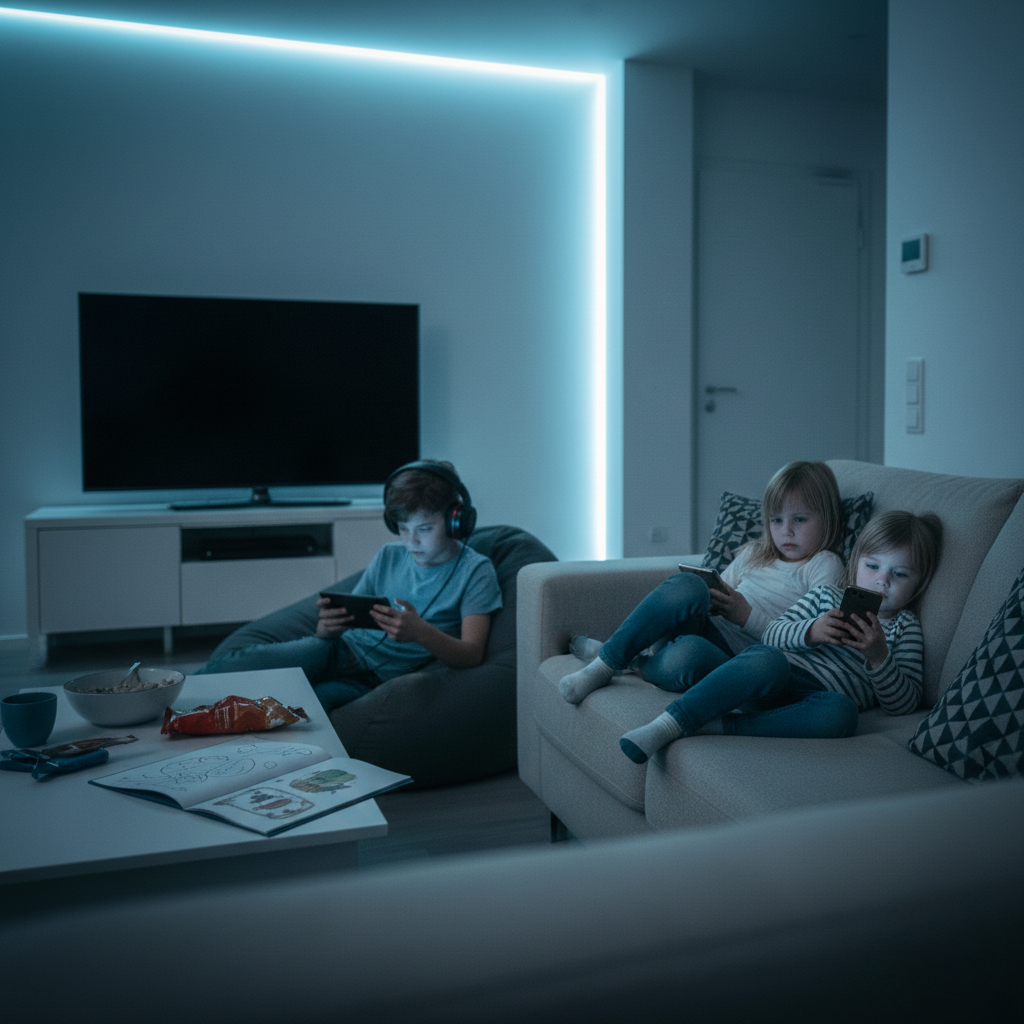
Screens are integrated into daily life for neurodiverse kids in ways that frequently appear different than their neurotypical counterparts. For some, a tablet or smartphone is more than a distraction; it’s a sensory regulator, a way to drown out noise, or a reliable ritual in an unpredictable world. Ditching screens without another sensory framework to lean on can easily backfire.
Many parents see this after school: a child using a device to decompress, then melting down if it’s taken away before they’re regulated. This isn’t willpower or behavior; it’s the nervous system seeking equilibrium. The challenge is that screens, particularly fast, autoplay-driven ones, can incline certain kids toward overstimulation, fragmented attention, and trouble settling down.
Sensitive kids — the ones prone to hyperactivity, inattentiveness or speech delays — can respond even more intensely to this bombardment. Checking what’s on the screen is as important as checking how long it’s on. It’s not just cartoons or games; it’s the pace and the noise and the chaos and the unpredictability. Kids with sensory sensitivities can be tipped into agitation by too-bright colors, volume spikes or fast scene changes.
Parents know this moment: the glazed look, the refusal to transition, the outburst when the device is turned off. That’s the symptom of a control breakdown, not defiance. Screens can provide genuine possibilities. For some neurodivergent children, online platforms are a lifeline — a crucial medium for self-expression, belonging and finding their passion.
Customizable games and inclusive media, particularly representing diverse experiences, allow kids to see themselves. For kids who have difficulty talking or playing with others, online spaces might be the first where they feel heard. This is particularly the case for neurodivergent girls, who are likely to encounter intense social anxiety both off and on screen.
There’s no one-size-fits-all rule for how much screen time is appropriate for every child. Yes, some families must use screens for education, for communication, for routine. The most effective approach isn’t about strict limits, but about structure: provide advance notice before transitions, co-view when possible, and set clear boundaries around when and where screens are used.
This minimizes power struggles and allows kids to predict what’s ahead. For families craving serene, screen-less activities that nonetheless stimulate a child’s brain, Tiny Thinks™ provides a minimalist, highly organized framework. Our Free Calm Pack is a tried and true after school, travel, or bedtime starter pack for when screens usually step in.
For kids who need more, age-based Tiny Thinks™ Workbooks develop sequencing, attention, and independent initiation through slow, tactile exposure. Every page is for sensory regulation, not pleasure.
Conclusion
Screen time is an everyday tale for many families, but the truth is that the damage lies less in the quantity than in the context. Supporting children in developing focus and resilience requires us to think beyond minutes. Relaxing, predictable routines—particularly following high-stimulation activities—replenish equilibrium and nurture attention. For a lot of families, this translates into establishing intentional limits, directing kids to slow, hands-on play and selecting mind-engaged, not just mindless, programming. Every child will be different, particularly those with special learning needs. In the end, the goal is not perfect control but a steady rhythm: screen time that fits into a wider pattern of calm, connected, and meaningful moments, both on and off the screen.
Frequently Asked Questions
What is the recommended daily screen time for kids?
They suggest less than 1 hour a day for kids 2 to 5 years old. For older kids, establish consistent limits that take into consideration their age and needs.
How does too much screen time affect child development?
Too much screen time affects sleep, learning, and social skills. It might make kids more likely to be obese and impact their mental health.
Should screen time include educational activities?
Indeed, educational screen time is great. Prioritize quality content and balance with offline experiences for well-rounded growth.
How can families create a healthy media plan?
Establish device boundaries, select suitable content, and implement screen-free periods. Make kids part of the rule making.
Why is it important for kids to be creators, not just consumers, of digital content?
When kids create digital material, it builds their critical thinking, creativity, and digital literacy. It promotes active, not passive, screen usage.
How does screen time affect neurodiverse children?
Neurodiverse kids are different. Personalized plans and advice from health professionals can assist in maintaining this balance.
What are some signs that a child may be using screens too much?
Warning signs are trouble sleeping, less interest in non-screen activities, moodiness, and falling grades. Modify screen habits if these emerge.