
- Key Takeaways
- Why Limit Screen Time?
- Rethinking the Screen Time Debate
- Recognize Unhealthy Screen Habits
- Create Your Family Media Plan
- Encourage Off-Screen Engagement
- The Parent’s Role in a Digital World
- Conclusion
- Frequently Asked Questions
- Why should parents limit screen time for kids?
- How much screen time is recommended for children?
- What are signs of unhealthy screen habits in kids?
- How can families create a balanced media plan?
- What are some alternatives to screen time for children?
- What is the parent’s role in managing screen time?
- Is all screen time bad for kids?
Key Takeaways
- Screen time restrictions promote healthy brain development, improved sleep, and better social skills.
- Balanced schedules with lots of off-screen time, such as outdoor play and creative projects, assist kids in building valuable life skills and emotional toughness.
- Quality trumps quantity. Picking high-quality, age-appropriate content and co-watching with your children can make screen time a valuable learning opportunity.
- Family rules and parental example establish boundaries and foster mindful media.
- Tech-free zones and device-free family time nurture connections and cultivate a calm, connected home.
- When it comes to screen time, open conversation and a little flexibility as kids age help families adapt and keep habits healthy in a digital world.
Should parents limit screen time for kids, they frequently ask, as digital devices become part of daily life for children as young as three. Some families reinforce these limits with simple, low-stimulation tools from Tiny Thinks to help kids transition back into focused, screen-free moments.
Limiting screens is associated with enhanced attentional capacities, self-regulation, and free play. Children who consume less content on quick, algorithmically-driven platforms are more easily settled and exhibit more patience in daily routines.
Screen-literate families make calmer, more confident choices at home.
Why Limit Screen Time?
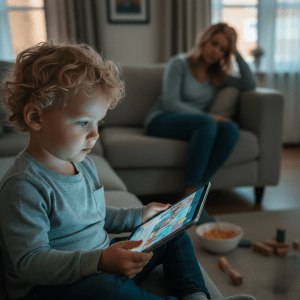
Screen time is a component of contemporary childhood. It’s a parental convenience, not a defeat. This is not a question about whether screens are bad, but rather about how they mold the nascent brain, attention, sleep and social skills, particularly for 3 to 7 year olds.
Below is a comparison of key developmental factors:
|
Development Factor |
High Screen Time Impact |
Low Screen Time/Structured Play Impact |
|---|---|---|
|
Attention |
Fragmented, short focus |
Sustained, deep focus |
|
Sleep |
Irregular, delayed, light |
Predictable, deeper sleep |
|
Physical Health |
Sedentary, posture issues |
Active, coordinated movement |
|
Social Skills |
Passive, less empathy |
Engaged, face-to-face practice |
|
Emotional Regulation |
Mood swings, anxiety |
Calm, frustration tolerance |
1. Brain Development
Toddler brains develop synapses through face-to-face and hands-on experience. Passive screen time, particularly algorithmic video, suppresses this growth. When kids just watch, they miss out on opportunities for trial-and-error, language exchange, and creative problem solving.
Studies associate two or more hours of daily screen exposure in toddlers with a sixfold increase in language delay. Vocabulary explosion, sequencing, impulse control — these milestones slow. Excessive screen time is associated with structural changes in brain areas concerning attention and literacy.
Such balanced routines, interspersing slower, hands-on play and digital content, are critical for healthy cognitive development.
2. Sleep Quality
Screens give off blue light that inhibits melatonin production, the hormone that tells you it’s bedtime. For young children, this delay leads to bedtime battles, lighter sleep, and next-day exhaustion. The experts suggest staying away from screens for ideally 30 to 60 minutes before sleep.
Good sleep nurtures memory, mood, and learning—essential needs of young children. Irregular schedules, powered by late-night shows or games, break this cycle and leave kids less able to concentrate and control emotions the following day.
3. Physical Health
More screen time leads to less movement. These sedentary routines add to childhood obesity and flabby muscle tone. Kids slumped over tablets face posture issues and premature musculoskeletal stress.
Eyes get fatigued staring at near screens, resulting in headaches and fuzzy vision. Active play—running, climbing, stretching—is still essential to both brain and body development. Parents who establish consistent, screen-free activity breaks enable their kids to reset and self-regulate.
4. Social Skills
Why, then, should we limit screen time? Screens can’t replace genuine human connection. The more children depend on devices for amusement or companionship, the less secure they grow in interpreting facial expressions, resolving conflicts, or communicating thoughts.
Social isolation increases when screens displace collaborative play or group activities. It’s these simple routines — mealtime talk, cooperative games, and even boredom — where real friendships and communication skills form.
5. Emotional Regulation
Children exposed to fast, unpredictable screen content tend to be more moody and prone to frustration. They can get anxious or irritable when screens are turned off. Recognizing these trends, parents can shift schedules to bolster tranquility.
Discussing emotions brought on by these online experiences helps kids work through and reset. Activities like drawing, building, or matching patterns encourage patience and coping skills without digital stimulation.
Boredom is not a bug to be squashed but a feature for innovation and self-soothing.
Tiny Thinks™ lives in these pressure points—after school, screen transitions, mealtime, travel, waiting rooms, bedtime wind-down. The Free Calm Pack and age-based Tiny Thinks™ Workbooks are colorful, low-noise pages kids opt to re-enter.
They develop attention, sequencing, and independent thinking without parent guidance. It’s not a moral position when the din is deafening and your attention has scattered. Tiny Thinks™ is a trusted fallback.
Rethinking the Screen Time Debate
Screen time battles are all around us. The truth for today’s parents is more complicated. Most families live in a vortex of schedules, due dates, post-practice comas, road trips and doctor’s office lobby sit-ins—none of which are an opportunity for an ethical screen challenge, but rather a functional device.
Studies find parents are not homogeneous. Roughly 39% believe they are more strict than their colleagues, whereas 42% confess that they could be stricter. The real tension isn’t about “good” or “bad.” It’s about discovering what is workable, calming and productive for your child in the moment.
Quality Over Quantity
Not all screen time is equal. There’s a difference between a kid tuning out to auto-play cartoons and one engaging with an interactive story or polished puzzle game. Good, educational content can reinforce early math, language, or emotional skills.
Co-viewing content, that is sitting down together and talking about what’s going on screen, transforms screen time into a shared, thoughtful activity rather than a solo distraction. Parents can use screens to extend curiosity and creativity.
Interactive apps that prompt kids to problem solve, draw, or build sequences activate the brain and can facilitate genuine learning. The trick is to use screens as a disciplined instrument, not a desperate fallback. Here are some options that align with calm, intentional family values:
- Basic drawing and sequencing apps (no blasting music, few pop-ups)
- Nature documentaries designed for young children (with slow pacing)
- Puzzle and logic games that promote incremental reasoning.
- Audio story platforms with gentle narration and clear visuals
- Language-learning games for basic vocabulary and pattern matching
Context is Key
Screens at breakfast as you’re rushing out the door feel different than a soothing wind-down video before bed. Parents are making dozens of quick decisions: Is this content age-appropriate? Does it suit the moment—after school, at dinner, on a plane?
What’s good for one family may be no good for another, and there’s no hard-and-fast rulebook. It’s not whether your child is watching or playing, but what and why. Framing screens as family time, such as watching a languid nature show together, can create bonding.
Screens as a solitary experience, particularly with rapid, algorithmically optimized content, can both splinter attention and amplify agitation. We all do it — using screens in a moment of stress to calm kids down. That may help, but it shouldn’t be the sole tactic for control.
Different activities have different impacts. A child building with a digital puzzle is working on patience and sequencing. Scrolling through infinite clips is merely pursuing the subsequent dopamine boost. Context, after all, always matters.
Passive vs. Active Use
There’s a huge distinction between passively watching a video and actively engaging with a problem-solving game. Passive use, particularly when it’s rapid, random, and autoplay-fueled, floods developing attention systems and makes kids jittery.
Active use, such as tracing instructions in a creative app or narrating your actions aloud, constructs working memory and focus. Encouraging active screen use means choosing tools that require participation: drawing, matching, building, or thinking in steps.
These types of interactive learning tools are designed to pique curiosity, teach kids to embrace frustration, and foster early independence. Here’s a simple checklist to help distinguish:
- Passive Consumption: Endless video streams, rapid animation, no user input, auto-play features, and overstimulating soundtracks.
- Active Engagement: Requires touching, building, solving, drawing, or narrating. Advancement is based on the child’s selections. Prompts deliberate action. It is convenient to stop and pick up again at another time.
For families seeking respite during after-school eruptions or bedtime blow downs, Tiny Thinks™ is a regimented, rule-positing, screenless salve. The Free Calm Pack provides serene, hands-on, thinking activities kids can initiate and complete independently, assisting in resetting attention and minimizing screen reliance.
For kids craving more, age-specific Tiny Thinks™ Workbooks extend the peaceful, reliable thinking cycle through daily transitions. No pressure, no hype—just what works when you need your kid in a calm, focused, settled mood.
Recognize Unhealthy Screen Habits
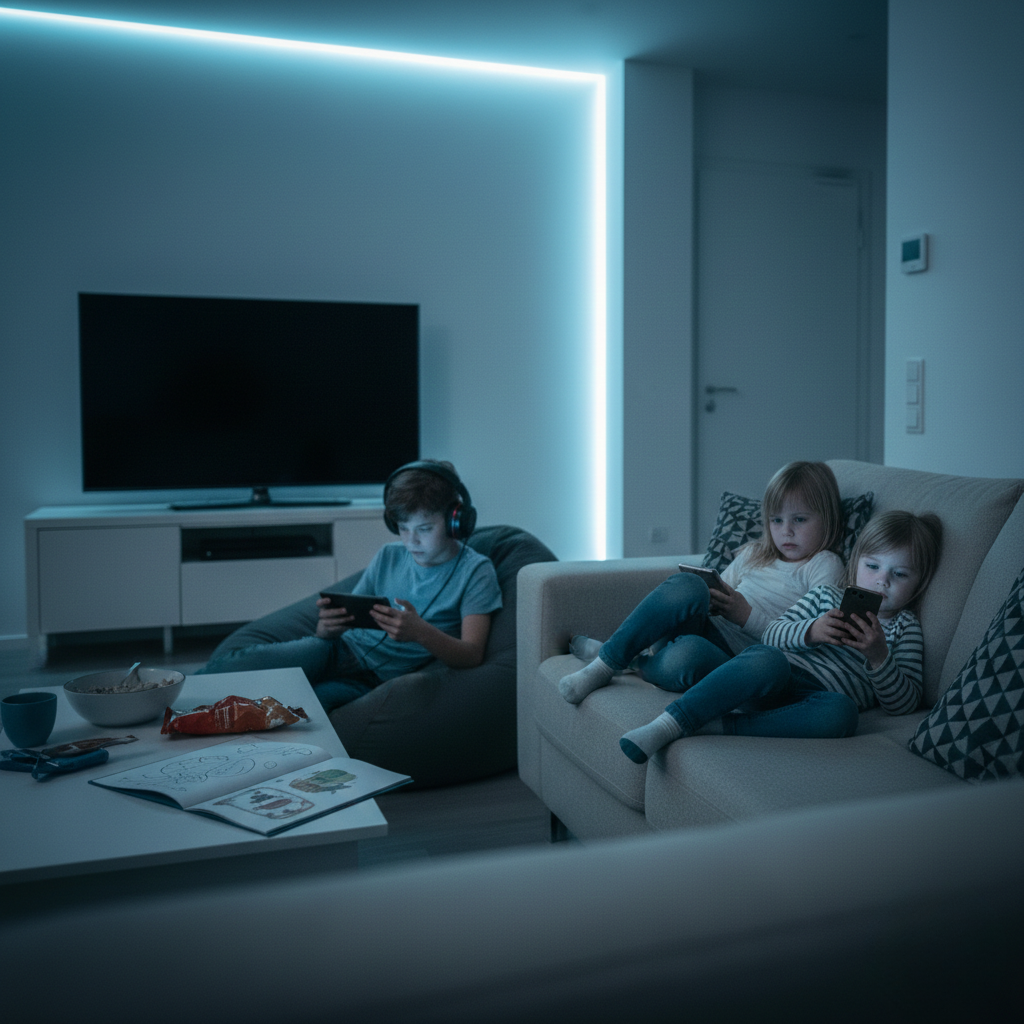
Unhealthy screen habits in young children don’t typically make their presence known boldly. They typically manifest initially in micro, day-to-day moments—more friction at transitions, less tolerance at the dinner table, pushback on changing activities, or a diminished interest in sustaining quiet, hands-on play. Most families use screens out of necessity, not negligence.
It’s not screens that should worry us; it’s the pace, uncertainty, and relentlessness of much screen content, particularly as autoplay and algorithmic feeds become standard. For three to seven-year-olds, building attention, regulation, and social skills is a core activity. Identifying early warning signs is critical for parents looking to save these skills in a screen-high world.
Behavioral Changes
Irritability, tantrums, or shutdowns post-screen are rooted in distracted attention and overstimulated nervous systems. Parents tend to observe their kid being irritable, reluctant, or hyper following a marathon tablet session, especially if it involves a high-velocity or algorithmic experience.
Studies associate early and prolonged screen exposure with heightened aggression and emotional reactivity, with the effects most pronounced when kids start habitual media use prior to age one. Candid, matter-of-fact discussions about how screens make their bodies and minds feel—calm or buzzy, patient or jumpy—help kids identify their own habits.
Defined, expected boundaries around when, where, and for how long screens are used minimize conflict and ease governance for all involved.
- Techniques to support self-regulation during and after screen use:
- For both, use a visible timer to signal transitions.
- Provide a soothing, active activity right after screen time (easy puzzles, sorting activities).
- Acknowledge screen addictions and unhealthy habits.
- Permit only one kind of content at a time to minimize overstimulation.
- Promote verbal check-ins about mood and energy before and after use.
Social Withdrawal
If your child consistently shuns playdates, ditches group activities, or resists family meals, these could all be symptoms of social withdrawal due to screen addiction. The more they are online, the less practice they get communicating face-to-face, working together, and reading social cues.
Spanish studies find a negative correlation between more screen time and less academic and social success. Parents can quietly tip the scale by inviting over a buddy for an uncomplicated board game, organizing mini group drawing sessions, or family walks.
Even brief, consistent chances for shared action develop social assurance and fortitude. These turn-based activities, or those that require negotiation or cooperative building, such as block towers or shared coloring, ground children in real-world connection.
Physical Symptoms
Persistent headaches, eye rubbing, or difficulty settling to sleep can all be indications that screen habits have gotten out of whack. Obesity, sleep disruption, and even symptoms of anxiety have been associated with high daily screen use.
Kids need breaks from their screens, a moment to glance away, stretch, or wiggle. Keep at least 40 centimeters from the device, which diminishes eye strain. Parents who do this demonstrate to kids how to nourish not only their minds but their bodies.
- Exercises and stretches for screen relief:
- Eye palming: Rub hands together, gently cup over closed eyes.
- Neck rolls: Slow circles to release tension.
- Shoulder shrugs: Lift and drop shoulders to relax muscles.
- Finger stretches: Spread and wiggle fingers after device use.
- Stand and reach: Raise arms above head, stretch side to side.
Tiny Thinks™ is there for these real, high-friction moments—after school, mealtime chaos, travel or waiting rooms—where screens are the default, but control is most necessary.
The Free Calm Pack offers a gentle, screen-free reset: low-stimulation, structured pages that settle and engage without external enforcement. Kids start up on their own, the ‘reward’ is behavioral calm, not innovation.
For families requiring more, age-specific Tiny Thinks™ Workbooks extend attention, sequencing and independent initiation. These aren’t things to “stay busy” with; they’re a thinking armor that repairs attention when the day gets loud.
Parents who implement a peaceful, structured system observe both mood and participation enhance, frequently within days.
Create Your Family Media Plan
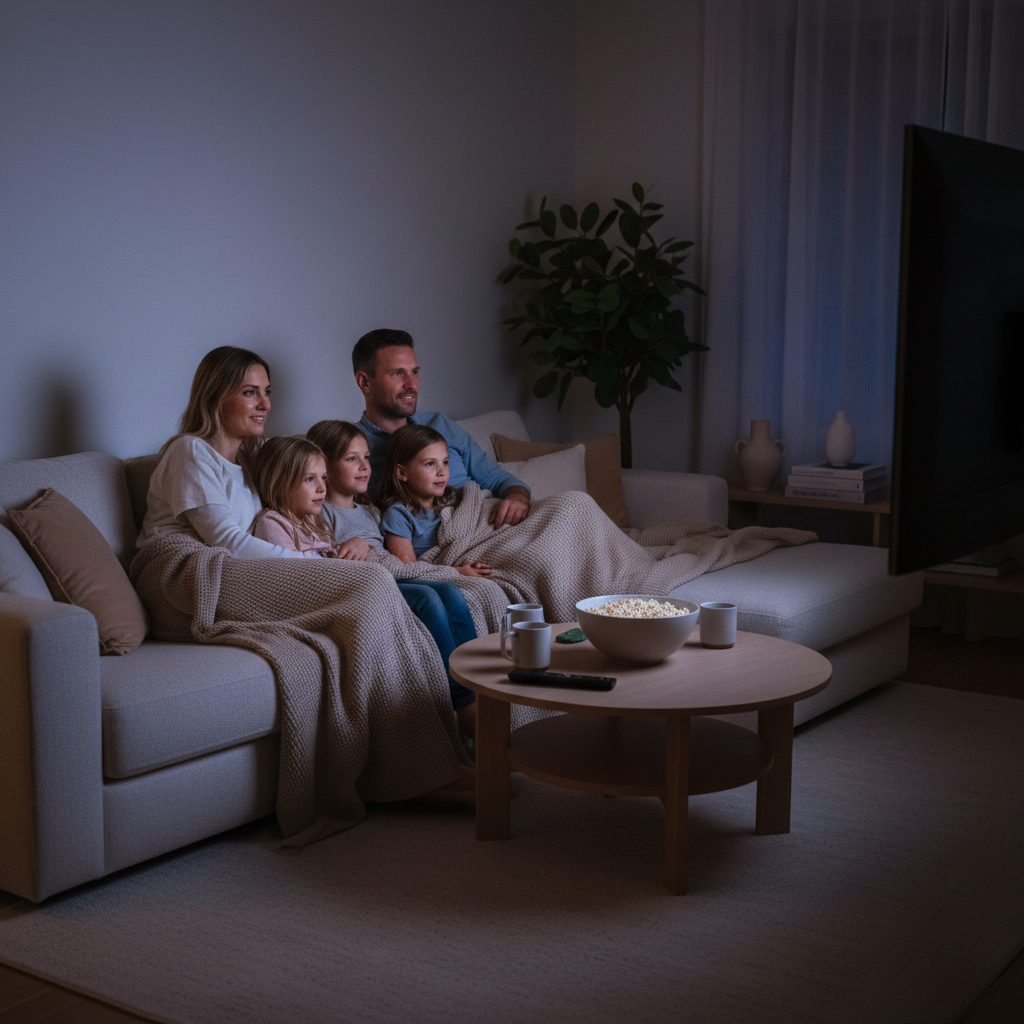
A family media plan isn’t only about limits. It’s a consistent framework that safeguards focus, maintains peace, and sets clear standards for all involved without demonizing devices. They aim to make screen use pragmatic and purposeful while creating room for slow, thoughtful control.
Here’s a simple example of a family media plan.
|
Component |
Purpose |
Example |
|---|---|---|
|
Daily Time Limits |
Prevents overuse, supports balance |
1 hour for children, 2 hours for adults, adjusted by age |
|
Device-Free Zones |
Protects family connection, reduces noise |
Mealtimes, bedrooms, car rides |
|
Quality Content Rules |
Prioritizes meaningful input |
Only pre-approved shows, no autoplay, educational focus |
|
Shared Screen Activities |
Encourages co-viewing and discussion |
Family movie night, learning games together |
|
Review & Adjust Schedule |
Allows flexibility as needs change |
Monthly check-in: what’s working, what needs to shift |
Model Healthy Habits
Kids observe how adults utilize devices. When parents pause to make eye contact, put down the phone at meals, or narrate why they’re turning off a screen, it sends a signal: screens are tools, not the main event.
There’s something really powerful about a kid seeing a parent close his laptop to play a board game, or say, “I need a break from scrolling.” Family moments can be a walk, story time, or prepping dinner.
It’s in these quiet, occasionally boring moments that discipline and bonding are established. When parents talk about their own screen habits, such as “I enjoy news clips, but I get irritable after too long. I need breaks too,” it positions screens as controllable, not taboo. Talking about unplugging out loud normalizes it for all.
Establish Tech-Free Zones
The kitchen table, child’s bedroom, and car are three essential tech-free zones. No screens at dinner not only fuels dialogue; it silences the room. The nervous system softens, children stay a little longer, and the need for rapid input recedes.
Bedtime is another such anchor. A screen-free wind-down, even just ten minutes with a picture book or simple puzzle, primes better sleep and calmer mornings. Others decide on a daily tech-free walk, park visit, or calm time with the blocks.
These rituals are the memory glue of childhood, needing no entertainment value—only presence.
Choose Quality Content
It matters to curate a shortlist of slow, predictable, age-appropriate shows or apps. When content is consistent and calm, kids settle faster and transition off screens with less fuss. Parents can watch with them, stopping to talk about what’s going on or how a character solved something.
Educational shows, nature documentaries, or minimalist design games, when selected purposefully, further learning. Having children select from a parent-approved list fosters ownership with defined boundaries.
It’s less restrictive and allows for more consistent exposure to quality over quantity. For parents hungry for solid, screenless relief, Tiny Thinks™ Free Calm Pack is made specifically for these high-friction moments—after school, dinner, travel, or bedtime.
Kids come back to these organized, quiet reflection pages voluntarily, not under duress. For families that require more, the age-specific Tiny Thinks™ Workbooks continue this peaceful regulation and enable independent concentration without the noise or stimulation strain of rapid digital media.
Encourage Off-Screen Engagement
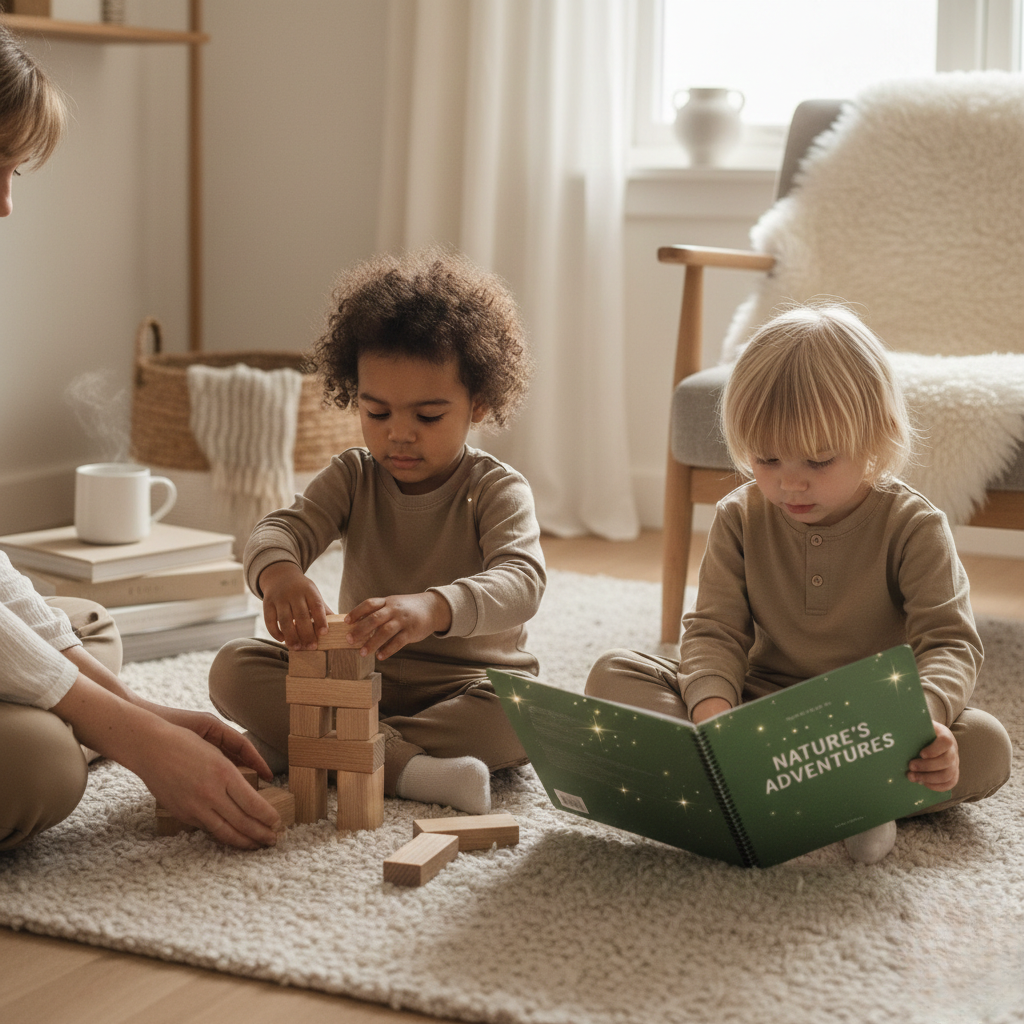
Screen time is a reality of parenting but it’s not the only route to concentration or quiet. Many families are in need of reliable off-screen grounding ways to help kids settle, reset and develop deeper thinking muscles. Off-screen engagement doesn’t mean scorn technology — it means giving kids fresh tools to keep their minds busy, particularly at vulnerable high-pressure moments like after school or on road trips.
Kids must have opportunities to build attention and self-control and work through independent play that’s not dependent on rapid electronic gratification. These low-stimulation, tactile activities bolster early attention development and establish reliable behavioral payoffs.
The Power of Boredom
Boredom can feel painful to adults and kids both. It is the womb of invention. When kids are put down with nothing to do, their heads start to scan for engagement, pattern, and surprise in the world around them. This isn’t wasted time. It’s a call for the brain to create new synapses.
When a kid announces ‘I’m bored’ what usually emerges is an explosion of independent play, a block tower, a doodle, or a silent story with action figures. Kids who are permitted to get bored learn to tolerate frustration, come up with their own ideas, and self-settle without external stimulation.
They become more adaptable minds, independently capable of amusing themselves and innovating their own solutions as they age. Parents who eschew filling every moment of silence with a screen or activity cultivate long-term attention and patience.
Easy offline activities — button sorting, shape matching, line tracing — provide kids with an approachable entry point. These aren’t keep-busy activities; they are exercises in cultivating the mental muscle for focus and persistence. Eventually, the kids come back to these quiet activities on their own, not under coercion.
Outdoor Activities
Daily outdoor play is one of the best things you can do to nurture your child’s regulation and well-being. Running, jumping and climbing not only make their little bodies physically stronger, but help them burn off the mental static of the day. Nature offers endless opportunities for sensory exploration: feeling tree bark, listening to birds, spotting patterns in clouds.
Family outings—be it a stroll around the block, a park, or a hike—stimulate inquisitiveness and communal exploration. Physical activity outdoors promotes sleep, mood, and social skills. Kids learn to negotiate, take turns, and observe the world around them.
Playing outside is particularly beneficial during screen transitions or following extended time inside. It resets and helps kids find their flow again.
Creative Pursuits
Art-istic activities give kids a peaceful, creative alternative that screens seldom do. Drawing, building, or crafting gives them an opportunity to turn something abstract into something tangible. This can be anything from mindless doodling with a pencil, lining up stones by color, or origami paper folding.
Building together, whether it’s a family mural, a shared story, or a homemade game, fosters togetherness and cooperative thinking. Creative work isn’t about perfection. It’s about process and discovery.
For kids who get easily frustrated or bored, creative work split into bite-sized, clearly defined steps is both comforting and rewarding. Creating with their hands fosters self-confidence and patience.
Structured, quiet activities such as Tiny Thinks™ Free Calm Pack fill in the void between frenetic screens and unstructured free time. These low-stimulation, thinking-based activities are designed for real moments: after school crashes, dinner chaos, or bedtime wind-down.
Children initiate independently and come back voluntarily, creating attention and autonomy. For families seeking something more involved, age-based Tiny Thinks™ Workbooks amplify these benefits with light sequencing and pattern recognition exercises. There is no pressure and no fuss, just what works when regulation is required most.
The Parent’s Role in a Digital World
It’s the parent’s role that is the foundation of a child’s connection to technology. The majority of preschoolers reside in households without screen time rules. However, how parents use their own screens is more significant than any family guideline. Kids observe us as adults using technology. If a parent scrolls through dinner, the kid learns that this is normal. If a parent grabs their phone every time there’s a lull, their kid learns to fill quiet with a screen. The link between parental viewing and a child’s screen habits is straightforward: modeling is stronger than rules.
The parent’s role is not limited to enforcement. It’s about designing daily rhythms that encourage focus and regulation. Kids below seven don’t have the self-regulation to choose to turn a screen off, particularly when they’re watching autoplay or algorithmic content that’s optimized to keep them watching. Limits and structure need to emanate from adults. Boundaries work best when combined with substitutes that self-regulate—something quiet, tangible, and organized.
Absent this, taking screens away results in friction, meltdowns, and chaos. It’s not about banning screens; it’s about creating a low-noise, predictable environment where a child’s attention can heal. Continued discussions about technology’s role in the family are key. Frequent, low-hanging fruit check-ins—What did you watch? How’d it make you feel?—keep parents tuned in to what’s occupying their kid’s mind.
Parents who are aware of trends, apps, and games can relate to the digital world that their children spend time in. It’s not about becoming a tech guru, but staying active and interested. It’s about naming what is happening when behavior shifts: “I notice it’s hard to stop watching. That’s not your fault. The videos are built to continue.” This removes the stigma from boundaries and redirects the emphasis toward organization.
A balanced approach to screens is about ownership and intentionality, not reacting out of guilt or fear. Others establish device-free hours at the dinner table, at bedtime, or while in the car. Some of us model pauses, putting the phone down to demonstrate that not every silence must be filled. Parents who apply defined rules and observe use, particularly for smaller kids, aid in shielding against fragmented attention, sleep disruption, and psychological volatility.
Yet, many parents minimize the influence of their own habits. Gentle guidance can help with a reminder that children absorb what they see and that small changes in adult routines ripple through the family. Tiny Thinks™ are built for these moments. It’s not a prize or a sneaky maneuver, but a peaceable, rule-above-all-alternatives that consistently refreshes attention after school, online, at mealtime, and while prepping for sleep.
The Free Calm Pack is a practical place to start: simple, structured tasks that children can do on their own, restoring focus without noise or overstimulation. For families who want more, age-based Tiny Thinks™ Workbooks build out that thinking layer, providing kids with a consistent, screen-free framework to revisit day in and day out.
Conclusion
Screen time is integrated into our daily lives for most families, but the true question isn’t “how much is too much?” It’s “what does MY child need to recover from rapid-fire, relentless input?” Kids 3–7 aren’t just whiling away screen time—they’re constructing the foundational layers of attention, patience, and independent thought that endure. Fast, algorithmic chunks of content erode that base. Slow, tactile, structured play brings it back.
All most parents want is to watch their child ‘settle’, ‘focus’ and ‘return to themselves’ after a hectic day. Limiting screen time isn’t a matter of restriction; it’s a matter of creating room for the kind of peaceful, cyclical routines that nourish genuine contemplation. That’s the layer that persists, even after the screen goes dark.
Frequently Asked Questions
Why should parents limit screen time for kids?
By limiting screen time, they can help protect children’s mental and physical health. Excessive screen use can disrupt sleep and interfere with learning and social development. Limits promote healthy habits.
How much screen time is recommended for children?
To 5 years, experts say no more than 1 hour per day, especially for 2 to 5 year olds. For older kids, establish regular boundaries according to age, necessities, and endeavors.
What are signs of unhealthy screen habits in kids?
Warning signs are trouble sleeping, mood changes, poor school performance, and avoiding offline activities. Be on the lookout for irritability when screens are removed.
How can families create a balanced media plan?
Parents and families can establish household rules as a unit, create screen breaks, and select high-quality programming. Regular conversations keep everyone aligned.
What are some alternatives to screen time for children?
Motivate your kids to play outside, read books, and pursue hobbies or other creative activities. These activities aid in building social skills, creativity, and physical fitness.
What is the parent’s role in managing screen time?
They’ve got to lead by example, set clear boundaries, and discuss online safety. Stay engaged and check in.
Is all screen time bad for kids?
Not all screen time is bad. Educational content and video calls with family are beneficial. The secret is moderation and monitoring.