
- Key Takeaways
- The Screen Time Dilemma
- The Digital Mirage
- Balancing Digital Life
- Create a Tech Plan
- Beyond the Home
- The Long-Term View
- Conclusion
- Frequently Asked Questions
- Why is limiting screen time important for children?
- What are the risks of too much screen time for kids?
- How much screen time is recommended for children?
- How can parents balance technology use at home?
- Are there benefits to screen time for kids?
- What should a family tech plan include?
- How can schools support healthy screen habits?
Key Takeaways
- Overabundant screen exposure affects young children’s attention, language, and social skills. Parents should be concerned about their long-term cognitive and emotional development.
- Extended screen time is associated with physical health dangers including obesity, sleep disturbances, and bad posture. This emphasizes the importance of exercise and screen-free habits.
- Passive screen use induces shallow learning and spurious associations, so supporting interactive and embodied experiences should be a top priority for healthy development.
- They can step in as boundary-setters, example-setters and content-selectors, setting clear limits, modeling balanced tech use and opting for quality, age-appropriate material.
- Family talks, co-viewing, and frequent check-ins assist kids in cultivating critical thinking and emotional regulation around screens.
- Community and school support, combined with consistent family practices, build a solid basis for healthy screen habits that will last a lifetime in our changing digital landscape.
Should parents limit screen time for kids, they should to promote their cognitive and emotional growth. Most parents observe that unlimited screens result in diminished attention spans, heightened irritability and difficulty soothing during transitions such as dinner or bedtime. Some families support these limits by introducing calm, hands-on Tiny Thinks activities to guide kids back into focused, screen-free play.
Research points to a clear pattern: fast digital input can fragment focus, while calm, structured activities help children self-regulate. Knowing why screens are limited allows families to build healthy habits that foster self-directed, focused play.
The Screen Time Dilemma
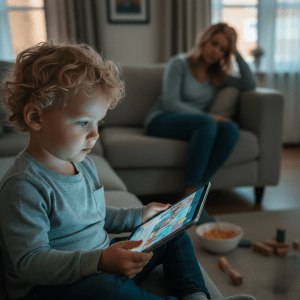
Screen time is the most common 21st century parenting puzzle. Screens are convenient, particularly for harried parents in frantic homes, but their mental and corporeal effect on kids 3–7 is profound. It’s not about the screen; it’s about the rapid, random content that can splinter forming attentional circuits and dismantle foundational skills.
You see this yourself when after-school meltdowns or sleepless nights hit and your child’s attention comes undone and self-regulation breaks down. By getting to the root, parents can recapture control, providing a framework that empowers rather than suffocates.
1. Cognitive Impact
Kids’ brains are meant to be wired for slow, manual involvement. As our attention systems become scrambled by quick-hit, autoplay-driven content, kids can’t finish some tasks demanding sequencing or independent thinking. Language development, especially vocabulary and conversational turn-taking, can stall with excessive screen time. This is particularly concerning for children today, as prolonged exposure to digital devices can lead to significant behavioral issues.
As a result, a kid used to rapid-fire YouTube shorts might struggle to listen to directions or recount a tale. There’s an increasing association between elevated screen use and ADHD-like attentional challenges. Parents have told me how their kid came home “buzzing” or “zoning out” following marathon screen binges—symptoms of cognitive overload, not carousing.
Digital distractions chip away at working memory and academic stamina, turning even the simplest puzzle or reading into an effortful slog. The screen time issue is more about what kind of input kids are receiving—predictable, slow-paced input builds brains, while algorithmic, quick-paced input dismantles them, highlighting the need for balanced screen usage.
2. Physical Health
Obesity rates increase when kids have screens for more than two hours a day, which corresponds with less outdoor time and less exercise. Such inactive behavior is typically accompanied by bad posture and eye fatigue. Screens at bedtime are particularly destructive, as blue light suppresses melatonin and circadian rhythms.
Myopia risk increases when screen time displaces time outside — kids who play outdoors regularly are less likely to be short-sighted. Physical health isn’t just weight, but the capacity to move, to rest, and to grow without the fuzzy brain and exhausting distraction of excessive sitting and screen staring.
3. Social Skills
When screens substitute for in-person contact, kids’ social intelligence can atrophy. Too much screen time leaves little time to read faces, practice empathy, or make up with a friend. A toddler who whiles away their downtime with a tablet might have difficulty participating in cooperative play, taking turns, or recognizing when a playmate is distressed.
Real-world social cues are subtle and take practice. Screens can’t replace these lived experiences. Parents who reserve time for peer play, communal meals, and family discussion provide their kids an essential basis for healthy social growth.
4. Emotional Regulation
Screens can feel like a convenient crutch for stressed, bored, or frustrated kids. Over time, frequent use of screen-based soothing can potentially atrophy a child’s aptitude for self-soothing and impulse control. Screen-transition meltdowns are ubiquitous, not because kids are “addicted,” but because their nervous systems have become accustomed to fast input.
Teaching children to regulate big feelings needs room for boredom, calm, and low-stimulation play. Absent these, kids tend to feel lonely, even amid digital distractions.
5. Sleep Quality
Screen time in the evening interferes with falling asleep and sleep quality, largely from blue light’s suppression of melatonin. Kids who are on screens before bedtime not only have a harder time falling asleep, they wake during the night more often. Implementing a screen-free bedtime ritual—maybe with silent sketching, hands-on play, or low-key matching games—returns us to a state of healthy sleep.
Sleep is foundational for attention, mood, and learning. Parents who guard this time with predictable, calming activities before sleep see the change in morning mood and focus.
Tiny Thinks™ will provide instant respite for parents looking for a quiet, screen-free framework, particularly during those super-friction moments. Calm Your Screen Time Dilemma – The Free Calm Pack is structured for intuitive, independent use to help kids self-regulate and reclaim thinking play.
For families craving more, age-based Tiny Thinks™ Workbooks provide deeper attention and sequencing support, all without the digital noise.
The Digital Mirage
The digital mirage is the name I gave to a world in which your kid’s screen appears shiny, cluttered, and full of potential—but the reality beneath the surface is often much more shallow than it appears. Screens can provide portals into education, companionship, and entertainment. Still, the mirage of connection and stimulation can obscure what is really occurring in a young child’s brain.
When their digital realm consists of quick swipes, auto-play videos, or customized social feeds, the outcome is frequently overstimulation and superficial attention. The digital mirage isn’t about screens being “bad.” It’s about knowing what’s actually evolving in a child’s mind—and what’s not.
Passive Learning
Passive learning is when a kid’s screen time is primarily watching, scrolling, or listening, instead of engaging in productive activities. Most preschool and early primary content is designed for quick consumption: animated letters, counting songs, or endless toy unboxings. As a result, children today often find themselves just sitting there, staring and taking it in without exertion or cognitive strain. This excessive screen time can lead to behavioral issues, as kids may regurgitate facts without developing the deep thinking habits that arise from struggle, sequencing, and active problem-solving.
This type of passive involvement can appear academic on the surface. In reality, the kid might regurgitate facts or parrot lines, but they seldom develop the deep thinking habits that arise from struggle, sequencing, and active problem-solving. The learning is frequently surface; a kid can identify every dinosaur from a cartoon, but can’t describe how they vary or why it’s important.
Passive watching almost never pushes memory, pattern recognition, or self-directed initiation. For genuine cognitive stimulation, parents should pursue interactive tools, such as apps or exercises in which kids have to make decisions, find solutions, or innovate.
Ultimately, the key is to ensure that screen time is moderated and complemented with hands-on activities. This approach not only reduces the negative impact of passive learning but also promotes a more enriching educational experience for children.
False Connection
Social media and online platforms feel like community for young kids; however, these ties are frequently unilateral or thin. Kids can spectate, add digital ‘friend’ lists, or send emojis, but none of that compares with a real in-person friendship with all its nuance.
As kids drift increasingly toward the online world, digital interactions start to supplant actual play. The polished pictures and idealized narratives viewed on social feeds can incite an anxiety to be doing, which causes certain kids to feel excluded or insufficient.
At worst, exposure to cyberbullying or ostracism can exacerbate anxiety and isolation. Parents would do well to discuss online friendship openly and to promote real-world play whenever possible. Being able to label the distinction between digital connection and true friendship enables children to develop resilience to the pull of the digital mirage.
Gamified Reality
Games and gamified learning apps are designed to hold kids’ attention with point scores, levels, and continuous rewards. For others, this renders screens indelibly difficult to disengage from. The boundary between wholesome amusement and addictive consumption becomes fuzzy.
Games can help kids learn persistence or hand-eye coordination, but the rapid reward cycle commonly pulls attention away from homework, chores, or spending time with family. When your prize is constantly scrolling across your display, the concrete drudgery of reality can feel mundanely gray in contrast.
Games aren’t poison, but unlimited gaming displaces the slow, disciplined hard problems that construct real attention and frustration tolerance. Limiting gaming and providing peaceful outlets for decompression enables kids to reset their focus and find joy again in slower, tactile play.
Tiny Thinks™ is designed for exactly these moments: after-school crashes, screen transitions, high-energy dinners, travel, and bedtime wind-down. Our Free Calm Pack and age-based workbooks provide kids a repeatable, low-stimuli route to return to focus without adult coercion.
Balancing Digital Life
Managing digital life for kids isn’t about avoidance, it’s about cultivating habits of attention, regulation, and independent thinking that will serve them well throughout their lives. Screens are the reality of our times—great for education and connection, but ready to take over little developing minds when quick, autoplay-powered videos rule.
For families with kids ages 3–7, it’s no longer about screentime elimination; it’s about balancing their use, selecting high-quality content, and building dependable, peaceful replacements for those overload moments.
Positive Uses
- Foster creative expression—digital drawing, music creation, and storytelling apps.
- Construct early reading and math skills with engaging and beautifully crafted games.
- Foster family bonding with video chats to grandparents or cooperative gaming.
- Add in some coding fundamentals or logic puzzles to spark problem-solving abilities.
- Support language development with audiobooks and child-focused podcasts.
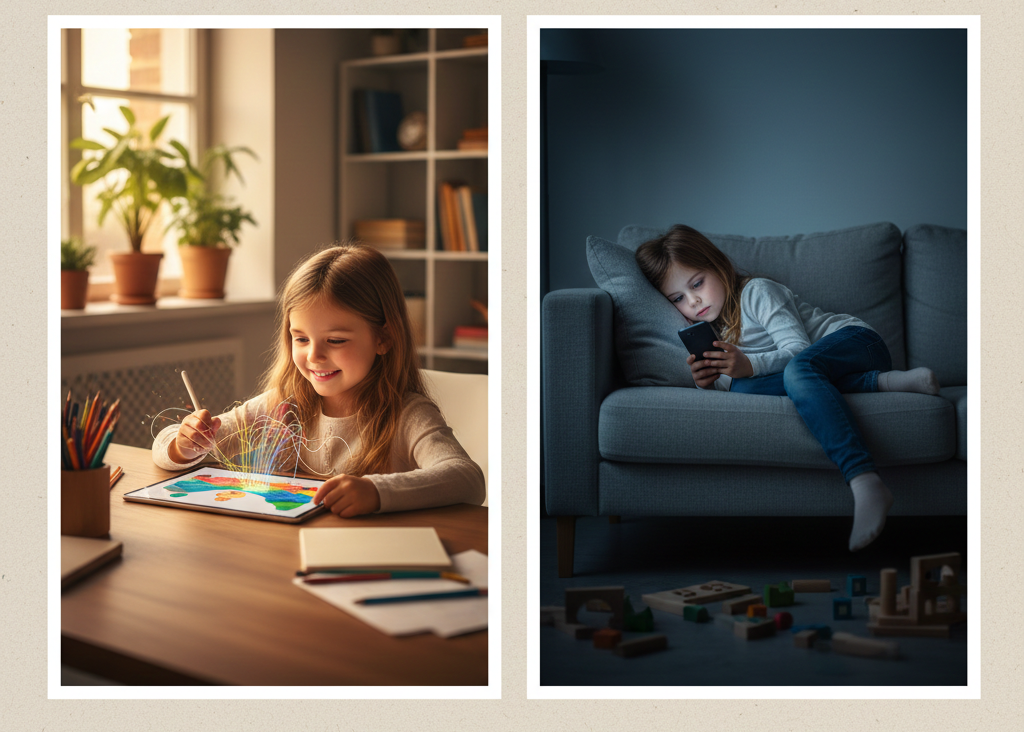
Screens can unlock wonderful possibilities for very young kids when they are harnessed deliberately. Drawing apps let your kids make a mess and share their work with the family. Story-building games work on sequencing and narrative skills.
Video calls span long distances, allowing toddlers to bond with their grandparents or cousins overseas. Having crisp objectives for each session, “let’s make a picture for Grandma,” or “let’s try one new puzzle game together,” keeps screen time targeted and effective.
This framework keeps them from mindless scrolling and gets kids to begin to think of screens as functional, not just addictive.
Content Quality
What you choose to pay attention to matters. Well-chosen, age-appropriate, educational programs can indeed support vocabulary, number skills, and pattern recognition. Fast, violent, or inappropriate material—particularly autoplay-fed video feeds—shards attention, increases arousal, and triggers behavioral problems.
It’s a melatonin suppressant through blue light overexposure that makes it difficult for kids to calm down at night and upsets circadian rhythms. Here, media literacy comes into play. Parents that take the time each day to check in and discuss what their child is viewing help foster a feeling of safety and skepticism.
Explaining why a show isn’t for their age or discussing reasons behind character motivations shields them from mindless assimilation of unhealthy behaviors. Kids who know media choices are not as easily influenced by advertising and peer pressure.
Co-Viewing
Just sitting with your child when they’re watching a screen alters the situation. Co-viewing transforms passive viewing into an active, social experience. Posing questions like “What do you think will happen next?” or “Why did that character feel upset?” prompts kids to engage and develops their thinking skills.
Co-viewing models healthy screen habits. If parents set device boundaries for themselves, children are more inclined to adopt their own. Talking about what you view together reinforces connection and transforms what can be isolating into a family bonding experience that fosters trust and communication.
Tiny Thinks™ exists for the realities parents face: after school chaos, mealtime meltdowns, travel delays, and bedtime wind-down. For these high-friction moments, calm, screen-free tools like the Free Calm Pack or age-based Tiny Thinks™ Workbooks fast track refocus.
The scheme is visually calm, structured, and purely child-driven. There are no surprises and no overactivation, just consistent regulation. When screens get to be too much, Tiny Thinks™ provides a thinking layer that kids come back to on their own, giving parents a down-to-earth solution for in-the-moment pain points.
Create a Tech Plan
A tech plan shouldn’t be just about screen limits. It’s a way to bring balance and structure back into the home, especially for young families. The essential goal is to moderate, not ban, screen time, providing kids with consistent limits and parents a feeling of control when schedules are strained.
This strategy minimizes the risks of erratic sleep, tantrums, and attention loss that come after too much high-velocity screen time.
|
Component |
Description |
|---|---|
|
Screen Time Limits |
Set daily maximums by age, with built-in breaks and transitions. |
|
Tech-Free Zones |
Identify areas (kitchen, dining table, bedrooms) where devices are not allowed. |
|
Family Media Agreement |
Create a written set of shared rules and expectations for all family members. |
|
Content Monitoring |
Use parental controls to filter and track what children access. |
|
Regular Tech Check-ins |
Schedule monthly reviews to discuss habits, adjust guidelines, and address new challenges. |
|
Online Safety |
Explicitly cover topics like cyberbullying, privacy, and respectful digital behavior. |
|
Alternative Activities |
Provide a list of non-screen options (board games, walks, cooking) to substitute screen time. |
Set Boundaries
Establish explicit, age-appropriate daily screen limits. For a 5-year-old, this might translate into 45 to 60 minutes, spread out in short bursts. This isn’t about hard and fast rules, but about shielding emerging attention mechanisms. Kids need guardrails, especially post-school or during dinner madness.
Establish tech-free zones, with no tablets at the table and no phones in bedrooms. The kitchen counter and table installations become serene.
Consistency is the downfall of most plans. Parents need to stand firm even if they’re weary or preoccupied. Reliable cues and routines help: a visual timer, a set shutdown phrase, or a “screen basket” for devices.
Parental controls count. They’re not just for blocking, but for steering autonomous decisions. Basic content filters and timers avoid accidental abuse, particularly with quick, auto-playing content.
Model Behavior
Kids imitate. If mom and dad check emails at the table, kids will see it. Modeling calm, regulated tech use—tucking your phone for meals or stopping your work to make eye contact—educates presence far more than any rule.
Demonstrate mindful habits: announce when you’re taking a screen break and name why you’re turning off the TV before bed. This isn’t so much about perfection, more about progress.
Family life is hectic and sometimes screens are just inevitable. What counts is the example kids see most. When parents value discussion and doing things together instead of mindless scrolling, kids absorb those values.
Find Alternatives
Checklist for family connection:
- Schedule one family outing per week: a walk in the park, visiting a museum, or bicycling together. Map it out on the calendar and let kids assist in planning.
- Try new hobbies: gardening, baking, or simple crafts. Select activities that are free, unhurried, and can be completed.
- Rotate board games or puzzles. Keep them out and accessible, so kids tend to reach for them during down time.
- Identify a 3rd ‘quiet time’ block following school for your kid to engage in independent play, such as pattern work, picture matching, or tracing. That’s where Tiny Thinks™ comes in.
Tiny Thinks™ provides eye-soothing, lined pages of your own focus and self-instruction—perfect for screen detox, waiting rooms, or bedtime wind-down. It doesn’t have to be complicated; think Free Calm Pack as a starter.
For more in-depth, age-staged development, utilize the Tiny Thinks™ Workbooks. Not a treat or an enhancement, it’s real-life stress point relief, returning focus and peace of mind with no parent cajoling.
Beyond the Home
Screen use doesn’t start and stop at the front door. Kids’ digital routines are formed by what’s going on at school, in community spaces, and through collective norms and expectations. For a lot of parents, their attempts at screen time restriction get compromised by school, after-school schedules, and what’s going on or expected beyond the home.
It’s this bigger context that counts as much as the living room drama.
School Policies
|
Benefits |
Challenges |
|---|---|
|
Structured exposure prevents overload |
Enforcing consistency across classrooms |
|
Can teach digital literacy |
Balancing device use with hands-on learning |
|
Promotes healthy boundaries |
Homework often requires screens |
|
Supports physical health |
Resisting industry pressure for more tech |
A lot of schools establish screens, but it’s a fine balance. There’s value in educating kids about the risks and rewards of technology, what it provides, and what it takes away. Students who log too many hours of screen time, even for homework, often experience headaches, exhaustion, and diminished output.
Some have bad posture, while others have a hard time remaining focused. A school that just bans screens neglects the opportunity to instruct in regulation. One that overlooks the problem risks fueling fractured attention.
Schools can support families with direct communication and actionable tools. Others provide classes or mail home ‘screen sense’ guides—easy-to-understand tools that help parents establish home policies that complement the classroom.
A handful of schools have established outdoor “movement breaks” or device-free zones. These shifts not only enhance focus; they stave off myopia, bolster language and cognitive development, and promote healthier sleep by limiting nighttime screen time.
The most effective schools make screens intentional and scheduled, not omnipresent.
Community Support
Little Johnny’s habits are formed by the world beyond the home. Local groups, such as libraries, sports teams, and community centers, can provide venues and activities where screens aren’t the focus. This is significant.
Kids who have the option to be outdoors, join a group activity, or engage in creative play tend to stare at screens less and develop better communication and social skills. Other communities have “screen-free” days, weekend walks in nature, or family game nights.
These aren’t big fixes, but they make healthier habits feel natural, not effortful. Partnership between parents, teachers, and community leaders is crucial. It’s simpler to draw boundaries when we’re all rowing in the same direction and when families witness alternatives being modeled at the type of destinations they visit.
For families with dinner-time chaos, on the road or in long waiting rooms, Tiny Thinks™ provides calm, screen-free activities. That’s where the Free Calm Pack comes in for exactly these moments when your kids calm down, focus and return to thinking tasks on their own.
Schools and community centers will occasionally hand out these packs, relieving parents of some of the effort of swapping fast input for predictable, tactile structure.
Healthy digital habits extend beyond the home, too. It’s about the culture and infrastructure surrounding the family. Peaceful options need to be in sight and easy to find.
Tiny Thinks™ Workbooks provide parents a trusted tool for the stress points that school and community schedules tend to generate.
The Long-Term View

Long-term thinking pays. When parents inquire if they should restrict screen time, the underlying concern is what enduring impact it has on their child’s mind and body. Part of the solution is as much about what screens supplant as what they offer. Children today require slow, predictable, tactile input. This is what undergirds attention development and control, not just in the moment, but across years.
Outside, kids exercise their bodies, exercise their eyes for distance, and exercise the muscle of patience. Outdoor time reduces myopia risk, an issue increasingly severe among kids clocking too much near-screen time. Active play accomplishes more than just burning off energy. Whether it is recess, physical education, or unstructured exploration, movement and being outdoors fuel cognitive development, academic performance, and emotional stability.
A little one who climbs, sequences, solves, and repeats learns to center and persist. These are foundational habits for a learner’s life. Screens aren’t evil; they’re instruments. However, when rapid, algorithmic content becomes the norm, the price is slow. Blue light screws up melatonin, which makes it tough to get to sleep. Excessive screen time can propel obesity and all the health problems tied to it, including heart disease, diabetes, and even the early signs of distractibility and irritability we experience after a screen binge.
Brain changes have been linked to overuse. Regions tied to impulse control and addiction adapt to nonstop digital input, making regulation harder, not easier. Every family beats. They model digital habits, frequently without awareness. Kids observe adults on the phone at the table, during transitions, in downtime. These habits form the family system. Self-reflection matters: how often does a child see a parent present, undistracted, and available during pressure moments?
The point isn’t guilt. It’s about reclaiming mindfulness, so digital media becomes a tool of choice, not habit. The digital world is constantly changing. New platforms, new content streams, and new pressures mean parents are dealing with a moving target. Education and awareness have to catch up. The American Academy of Pediatrics suggests 1 to 2 hours daily for kids over two, but the quality and structure of that time are more important than the clock.
Rapid, unmediated content splinters attention. Calm, tactile, structured substitutes develop it. When a kid can’t handle transitions, focus, or bedtime regulation, structure beats restriction. That’s the gap Tiny Thinks™ fills. It’s not a treat or an “add-on.” It’s a relief valve for those moments when parents need a kid to calm down and occupy themselves after school, at dinner, on trips, in waiting rooms, and at bedtime.
The Free Calm Pack provides an easy, immediate, and reliable mechanism to reboot. For families hungry for more, age-based Workbooks offer continued, peaceful mental scaffolding. Not to vilify screens, but to moderate them.
Conclusion
Screen time balance is the ongoing struggle so many parents face in this modern age. Most parents understand the reality — screens are ubiquitous and it’s not feasible to say “no” 24/7. What works best aren’t hard limits, but a wise, consistent approach. Kids flourish on a clear framework, consistent rhythms, and quiet substitutions that help them calm themselves down to sleep. Attention becomes more powerful when kids engage in slow, concrete, low-noise activities in combination with their digital lives.
Setting up an easy tech plan, keeping devices out of low-hanging friction moments, and prioritizing quiet, organized play allows kids to develop the type of attention and autonomy that endures. These decisions over time make day-to-day life quieter, smoother, and easier to manage for all involved.
Frequently Asked Questions
Why is limiting screen time important for children?
Screen time limitations protect children today’s physical and mental health by promoting healthy habits, improving attention spans, and encouraging greater social interaction, ultimately fostering well-rounded growth and reducing the negative effects of excessive screen time.
What are the risks of too much screen time for kids?
Excessive screen time can lead to detrimental effects on children’s mental health and social interaction, making it crucial for parents to limit children’s screen time to promote healthy habits and physical activity.
How much screen time is recommended for children?
Experts recommend that 5- to 17-year-olds should do no more than 2 hours of recreational screen time a day. Educational use is aside, and taking regular breaks is still key.
How can parents balance technology use at home?
Parents can establish limits on child screen time by instituting clear guidelines for usage. They should encourage other activities such as reading, playing outside, or pursuing hobbies to combat the detrimental effects of excessive screen exposure.
Are there benefits to screen time for kids?
Sure, screen time can be educational and connect kids with others. It may aid learning and creativity when applied judiciously, particularly with premium material and parental oversight.
What should a family tech plan include?
Establishing screen time limits and device-free zones is crucial for children today, as excessive screen time can lead to detrimental effects on their physical activities and overall health. Encouraging offline activities fosters healthier habits.
How can schools support healthy screen habits?
Schools can teach digital literacy and promote balance. They can establish screen time guidelines, encourage breaks, and provide non-screen activities while fostering healthy habits for students.