
Key Takeaways
- Toddler overstimulation is often caused by sensory overload, emotional contagion, developmental leaps, routine disruptions, and mismatches between a child’s needs and their environment.
- Catching early signals, such as shifts in body language, abrupt crankiness, or tears, allows you to act before the tantrums get out of control.
- Since every child has a different sensory threshold and different temperaments, this individual observation and record keeping enables you to tailor strategies that work for your child.
- State-based interventions like sensory reduction, comforting, and co-regulation with parents can re-balance and help toddlers feel secure.
- Building resilience with predictable routines, balanced activities, and sensory diets sets toddlers up to better handle overstimulation.
- If overstimulation causes persistent battles or interferes with everyday life, reaching out for professional assistance is a beneficial and essential move for your child’s health.
When transitions or sensory noise start to feel heavy, Tiny Thinks is the calm, structured thinking play system for ages 3–7 that families use. Shop age-based workbooks 3–7 to provide your child with a dependable, screen-free way to reset.
Toddler overstimulation is what occurs when a small child’s senses or emotions get bombarded by excessive noise, activity, or screen time. Most parents observe their toddlers hopping from toy to toy, having a meltdown after an outing, or requesting screens just to survive.
These responses mirror how sensitive the nervous system is at this stage. By learning about overstimulation, you can equip yourself to notice early signs and construct calmer schedules that truly support focus and regulation, particularly during hyper-active times of day.
What Causes Toddler Overstimulation?
Toddler overstimulation occurs when an overstimulated child’s nervous system becomes overwhelmed by excessive sensory stimuli such as noise, activity, or visual clutter. This situation is prevalent in chaotic routines and fast-paced environments. The risk is particularly high for preschoolers aged 3 to 7, as they are still building their ability to manage sensory processing difficulties and control their responses to the world.
|
Cause |
Description |
Example Scenarios |
|---|---|---|
|
Sensory Overload |
Too much input from senses, and loud sounds, bright lights, visual clutter |
Shopping malls, loud birthday parties |
|
Emotional Contagion |
Absorbing and mirroring caregivers’ or peers’ emotions |
Family gatherings, tense car rides |
|
Developmental Leaps |
Periods of rapid growth that increase sensitivity and fussiness |
New skills, sudden tantrums |
|
Routine Disruption |
Changes or unpredictability in daily schedule |
Travel, illness, change of caregiver |
|
Environmental Mismatch |
Sensory environment does not match child’s individual needs |
Crowded spaces, cluttered rooms |
1. Sensory Overload
Overstimulation occurs when a toddler experiences more sensory input than his or her brain can adequately process. Loud music, busy markets, or a playroom full of brightly colored toys can induce distress, meltdowns, or shut down. Kids with sensory processing differences might be more reactive, experiencing even typical environments as overwhelming.
Observing your child’s individual sensory preferences is essential to avoid overstimulation. Do they adore calm nooks or crave endless movement?
2. Emotional Contagion
Toddlers are highly sensitive to adult feelings. If you’re stressed, anxious or rushed, your child will reflect that energy, feeding their own nervous or frenetic energy. One stressed parent pre-dinner can trigger a series of toddler freak-outs.
When your toddler is at a party or playdate, they can soak up excitement or stress from other kids, resulting in amped up emotions, which causes even faster overstimulation. Parents who model calm responses to this overstimulation help buffer this effect, but emotional contagion is always lurking in group settings.
3. Developmental Leaps
When experiencing developmental leaps, toddlers can become suddenly sensitive to noise, touch, or disruption. Growth spurts and new skills, such as learning to speak in full sentences or mastering a bike, can leave your kid more cranky and tantrum-y.
Notice your child’s actions during these episodes and offer additional reassurance to relieve the tension. Sometimes all they need is a quiet corner and an extra-long snuggle to reset.
In moments of high stimulation or developmental shifts, Tiny Thinks provides the calm, structured alternative for ages 3–7. Use the Free Calm Pack for immediate relief during screen fatigue or difficult transitions.
4. Routine Disruption
Toddlers love structure. Changes like travel, illness, or a new caregiver can make toddlers feel unmoored and overstimulated. Regularity helps ground their feeling of security.
When disruptions occur, reintroduce familiar rhythms as soon as possible and as gently as possible. Gentle transitions, such as maintaining the routine of bedtime stories even in a new house, can ease the stress.
5. Environmental Mismatch
A disconnect between a child’s sensory needs and their environment can lead into overstimulation. Other kids require serene, minimal environments. Active households, packed playgrounds, or an excess of toys can exhaust them.
Whether it’s making a quiet nook at home or simplifying play options, you can bring the balance back. Tiny Thinks™ Workbooks, particularly the Free Calm Pack, provide tender, organized actions that fill these requirements.
They enable kids to calm, concentrate, and self-regulate, regardless of location; travel, waiting rooms, or after-school decompression. They are all expertly engineered to minimize overstimulation and develop early reasoning, making them a reliable screen-free choice for real-world seconds.
Why calm, sit-down activities work when screens don’t?
Travel days (and long waits) overload children in a quiet way. Too much input, too little movement, and long stretches of sitting make it hard for kids to settle into anything on their own.
What helps most in these moments isn’t stimulation or distraction, it’s gentle structure.
As one parent put it, “Most evenings, the screen is just on in the background while my child plays. I’m not trying to stop it, I just want something quiet they can sit and do without me setting things up.”
Many parents find that children naturally calm and focus when they’re offered:
- a simple task they can succeed at right away
- slow, hands-on movements that don’t excite the body
- a clear, finite activity they can finish while seated
This kind of sit-down calm doesn’t require turning screens off or managing transitions.
Children ease into it on their own, and screens fade into the background.
Spotting the Subtle Signs
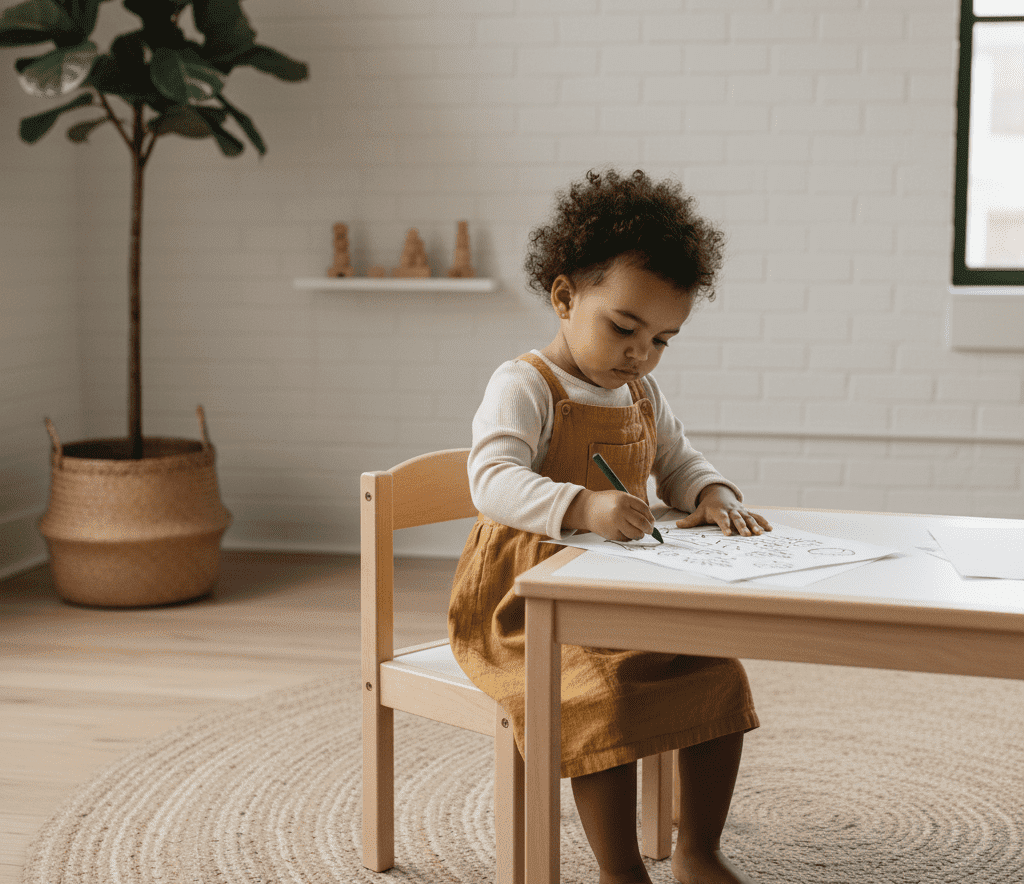
Toddler overstimulation often shows up through subtle physical, emotional, and behavioral shifts long before a full meltdown occurs.
Identifying overstimulation early is helpful in helping children, particularly during transitions in the day or chaotic settings. Toddlers receive such an onslaught of sensory information, including sound, light, motion, and touch, that their little brains can overload in a second. Every kid reacts differently, so remaining vigilant and proactive rather than reactive is what has the helps most.
By spotting the subtle signs, parents can intervene gently, keeping the emotional equilibrium and avoiding full-on meltdowns. The simple act of spotting patterns in a diary helps identify the subtle signs. Avoiding overload typically translates into avoiding drama down the road.
Physical Cues
-
Rubbing eyes, yawning, or slumping are typical early signs of tiredness associated with overstimulation. Your kids get super squirrly and can’t sit still, shuffling in their seat, picking at their collar, or wandering the room.
-
Facial expressions can be telling. A furrowed brow, pursed lips, or a suddenly blank stare can indicate sensory discomfort well ahead of words. Even looking away, body stiffening, or jaw clenching can signal a requirement for less stimulation.
-
Observe the body language as you transition from play to mealtime, entering a crowded restaurant, or after a birthday party. Detecting early changes, such as shrinking away from touch or covering their ears, provides an opportunity for soothing intervention.
-
Visual aids like emotion charts or body maps assist toddlers in naming what they feel when words are elusive. A simple “green-yellow-red” chart, used at home or on the go, can make it easier for kids to indicate where their bodies are feeling.
Behavioral Shifts
Others turn cranky, biting the heads of brothers and sisters or balking against minor demands. Others may stove into a shutdown, hiding under a table or behind mommy, or begin to flare into aggression such as hitting or throwing.
It’s tempting to chalk these up to standard “bad moods,” but when they tend to surround loud, busy, or chaotic times, overstimulation is usually the culprit. Social scenarios can be particularly challenging. Playdates and group settings might ignite happiness initially, but as sensory input accumulates, discomfort can arise rapidly.
Watch for rapid shifts: a child who’s laughing one moment and sobbing or lashing out the next may be overwhelmed by peer energy. Maintaining a journal of these trends, particularly following adventures and new experiences, helps differentiate between typical developmental highs and lows and actual sensory overload. This sets the stage for customized assistance.
Emotional Changes
Crying, tantrums, or sudden clinginess is an indicator of emotional overload for many toddlers, especially when they don’t have the words to relay what’s upsetting them. Frustration may spill over as they fight to express themselves, leading to outbursts that appear excessive.
Deliberate, soothing rituals, lullabies, long breaths, and a comforting hug can provide kids the stability they need to reset. Validation is important. Labeling a child’s emotions (“That was loud, huh?”) and providing comfort (“You’re okay, I’m here.”) fosters security.
When emotional storms rage at home or in public, preemptive calm-down activities are a lifesaver. This is where screenless, regulation-first tools like Tiny Thinks™ shine. Tiny Thinks™ Workbooks and the Free Calm Pack deploy gentle, structured paper tasks, matching, tracing, and sequencing that slow sensory input and restore focus.
They’re purpose-built for overstimulated moments: dinner rush, travel, after school, or bedtime. Instead of screens, which can trigger dopamine spikes that disrupt regulation, these activities gently lead kids into a familiar, soothing routine. Many families store a Calm Pack in their bag or car for just these moments, providing children with a trusted device to reset anywhere, anytime.
The Overstimulation Spectrum
Overstimulation is not a single challenge. It exists on a spectrum from mild distraction to intense meltdowns. Every child displays their own sensitivities, and what feels overwhelming to one will barely phase another. Sensory overload, emotional flooding, and intellectual exhaustion are all types of overstimulation, with their own associated stimuli and consequences.
Identifying where your child falls along this spectrum allows you to better construct a supporting environment and craft actionable strategies that work for your family. This means acknowledging that autistic children can be particularly sensory sensitive or sensory seeking, but overstimulation is a universal experience for all kids.
Child’s Temperament
Temperament influences the way kids respond to the world. It’s the basis for explaining why certain toddlers rebound from overstimulation from noise or crowds and others shut down or break into tears. In practice, temperament isn’t about “good” or “bad” but about reliable patterns that shape your strategy.
- Highly sensitive: easily startled, dislikes loud sounds or bright lights
- Easygoing: adapts to new situations, recovers quickly from upsets
- Slow-to-warm: cautious with new environments and needs extra time to adjust
- Sensory-seeking: craves movement, loud sounds, or tactile input
- Intense: strong reactions, both positive and negative, to stimulation
Take your child’s temperament into consideration when selecting activities. A sensitive child may excel with calm, organized play, whereas a sensory-seeker would require physical, engaging activities. Individualized strategies, such as a consistent bedtime for the wary kid or a “cool down corner” for the passionate one, help nurture not only concentration but emotional balance.
Your Child’s Threshold
Sensory threshold is all about how much input a kid can tolerate before they feel overwhelmed. There are kids who thrive at a hectic b-day party and others who are wiped out by it. These thresholds move with age, mood, and health. A few typically autistic children have low thresholds and require lots of break time, while others crave more input to feel regulated.
To gauge your child’s sensory thresholds, observe their behavior in different situations. Do they cover their ears, zone out, or cling to you when the room gets loud? Keeping a sensory journal can help track these patterns and identify potential meltdowns. For instance, was your child overwhelmed after a noisy outing or calm after engaging in calming activities?
Modify activities, noise, and even lighting according to these findings. About: The Overstimulation Spectrum. Use visual schedules to calm transitions and prevent overload if your child is on the Autism spectrum or is hardwired for preference.
Overstimulation vs. Tiredness
Overstimulation and tiredness can look nearly identical: crankiness, tears, and sudden outbursts. It’s all about the nuances. Overstimulation follows a sensory deluge, such as a chaotic playdate or excessive screentime. Fatigue follows exertion, especially after missed naps and late nights.
While both can induce similar coping mechanisms, such as withdrawal or meltdowns, the remedies vary.
-
Watch for timing: meltdowns after busy outings often signal overstimulation. Crankiness at the end of the day can just be exhaustedness.
-
Create routines: predictable meals, rest breaks, and quiet play buffer against both exhaustion and overload.
-
Offer low-stimulus time: dim lights, soft voices, and a familiar activity help children of all temperaments decompress.
-
Use structured paper activities: Tiny Thinks™ Free Calm Pack and age-based Workbooks offer focused, calming engagement without screens. They help children settle their nervous systems when the day feels too much.
How to Calm Your Toddler
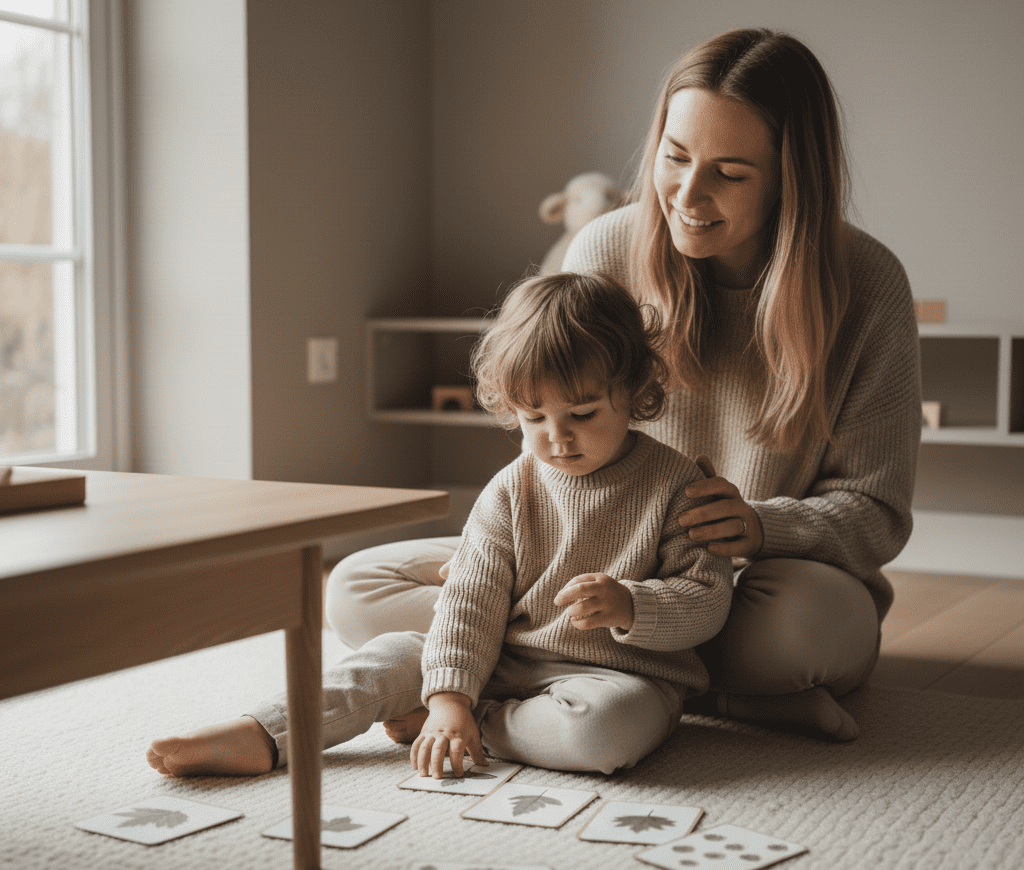
Calming an overstimulated toddler is a regulation-first approach to restoring emotional balance in the moment. When your child is overwhelmed, refusing, hiding, looking uncomfortable, or going unusually quiet, the nervous system is screaming overload. Slow, predictable input and gentle structure are the best ways to bring them back, particularly at predictable stress moments like mealtimes, travel, or the evening wind-down.
You want to set a peaceful tone, co-regulate, and provide soothing comfort without screens unless absolutely needed.
Reduce Input
First, reduce stimulation. Turn down any loud sounds, dim the lights and stash away any bright or flashing devices. Even the white noise of a TV or tablet in the background can cause a surge in arousal and make it more difficult for your toddler to calm down.
Designating a quiet zone, a corner with cozy throws, a beloved stuffed animal, or soothing tunes, offers your child a sanctuary when their universe suddenly becomes too vast or too loud. For many families, these “calm corners” turn into a sanctuary during daily transitions or post-hurricane outings.
Planning calm activities such as reading, easy puzzles, or coloring can assist kids in decompressing. It’s important to watch your child’s cues: if they withdraw or become restless, scale back further. Each child’s sensory tolerance is unique, and attentive parents can personalize activities.
Free Calm Pack activities from Tiny Thinks™ are specifically curated to provide slow, calming input. Arranged picture matches or tracing lines rapidly focus without introducing new overwhelm.
Offer Comfort
Physical comfort grounds a child’s nervous system. A long cuddle or bear hug can go a long way, particularly after a rough patch. Weighted blankets or a well-loved stuffed animal may add that nice pressure for kids to feel secure.
Some children respond best to a simple comforting routine: a quiet story, a familiar lullaby, or just sitting together in silence. Some just require a physical refresh. Heavy work, such as marching like in “Simon says” or crab walks, gives deep input when performed for 5 to 15 minutes, allowing the body to regulate and the mind to refocus.
Emotional scaffolding during these times is not a nicety; it’s essential for guiding children out of their overwhelm.
Use Co-regulation
Co-regulation is that you give calm before you demand calm. When you slow your voice, breathe deeply, and model grounded movements, your child learns to ground themselves. Calming words, “we’re safe, you’re OK, let’s breathe together,” help toddlers return to center.
If your kiddo melts down after school, ten to twelve circuits of gentle movements, such as jumping, hugging, and stretching, can settle their body and mind. Child-led movement, allowing them to choose their own method of movement, fosters independence and connection.
Deep relational attunement facilitates co-regulation. The more a child senses that their needs are being seen, heard, and accepted, the swifter their nervous system returns to equilibrium.
For parents who want an instant, screen-free solution, the Free Calm Pack and Tiny Thinks™ Workbooks provide guided, calming activities kids can immerse themselves in. All are designed to calm, center, and bring back serenity wherever you are at the dinner table, in the airport, in a waiting room, or at bedtime.
Building Toddler Resilience
Toddlers encounter daily tsunamis of sensory stimulation, bright lights, crowds, noise, and transitions. This overstimulation can overwhelm their still-developing nervous systems, making regulation difficult. Building resilience is about teaching toddlers to bounce back from these moments, to manage frustration, and to eventually build coping strategies.
Predictable routines, balanced activities, and sensory diets all contribute. Below is a table outlining practical strategies for families:
|
Strategy |
Purpose |
Example |
|---|---|---|
|
Predictable routines |
Foster security and stability |
Consistent meal, play, and sleep times |
|
Balanced activities |
Support emotional growth and recovery |
Mixing art, outdoor play, and quiet reading |
|
Sensory diet |
Address sensory needs and regulate input |
Heavy work (carrying groceries), soft music, fidget |
|
Narrating resilience |
Model coping for children |
Parent shares, “That was hard, but I kept trying.” |
|
Celebrating small wins |
Build confidence and reinforce effort |
Praise, high-fives after trying new tasks |
|
Talking about feelings |
Normalize emotional expression |
“You felt upset, but you calmed down with deep breaths.” |
|
Breaking down tasks |
Reduce overwhelm and encourage persistence |
“Let’s do puzzles together, one piece at a time.” |
|
Protecting sleep |
Support emotional and physical resilience |
Regular, early bedtime and quiet wind-down routine |
|
Allowing healthy risks |
Encourage learning from mistakes |
Letting child try zipping own jacket, even if slow |
Predictable Routines
Toddlers live for rhythm and repetition. Predictable routines, especially for meals, bedtime, and play, create a sense of safety that grounds their day. When the world is a crazy place, being aware of what’s coming next allows toddlers to calm themselves and concentrate.
For instance, the sight of a visual schedule or routine chart gives kids a heads-up about transitions, which cuts down on meltdowns and anxiety. This framework bolsters emotional regulation and fosters faith in one’s ability to navigate daily life, even when it’s chaotic.
Keeping mealtimes, bedtimes, and playtimes consistent helps to regulate mood and energy, and overstimulation becomes less probable. If your child has a hard time with transitions, for example, an easy-to-read picture chart might show them, ‘First we eat, then we play, then it’s bath-time.’
That predictability is resilience building; it provides children with the tools to both manage stress and recover from sensory overload.
Balanced Activities
A balance of active and quiet activities is crucial for emotional development in preschoolers. Physical play, such as running, climbing, and dancing, helps release energy, while calming activities like arts, puzzles, or listening to soft music offer tranquility. Observing your child’s cues matters: if energy spikes, switch to a slow-paced activity to prevent overstimulation.
Once your toddler has had a boisterous park trip, schedule some story time or drawing to allow your toddler’s nervous system to reset. Downtime is not squandered time. It’s key to processing novelty and developing resilience.
Children learn through play: persistence with a puzzle, negotiating rules in pretend play, and practicing patience while waiting their turn. Parents can foster these moments by providing positive reinforcement and recalling previous successes, “Remember how you completed the puzzle yesterday?
Sensory Diet
A sensory diet is a personalized collection of activities that assist kids in regulating sensory stimulation. For some, lugging heavy items, kneading clay, or jumping offer required input. For others, fuzzy textures, water play, or a quiet nook provide calm.
This is best designed with a professional such as an occupational therapist, though parents can begin by paying attention to what calms or invigorates their child. Modifying the sensory diet as kids mature is essential.
If bedtime is a battle, a soothing ritual with low lights and a single Tiny Thinks™ page might assist. Positive reinforcement, such as praise and high-fives, builds confidence and resilience over time. When kids are given the opportunity to take safe risks and overcome workable challenges, they exercise problem-solving and grit, which are key components of resilience.
Tiny Thinks™ Workbooks and our Free Calm Pack are made for these moments. Every page provides calm, active thinking activities that decelerate the day, ground routines and assist kids in resetting from overwhelm.
They are purposefully screen-free, perfect for meals, travel, and bedtime when parents desire tranquil concentration minus the hyper-stimulation of quick-cutting imagery. They learn to control, persevere and be proud, skills that extend long after the page is turned.
When to Seek Support

Most parents experience their little one becoming irritable, shutting down, or having a meltdown following a hectic day or overstimulating outing. Overstimulation might present as refusal to engage, hiding, avoiding eye contact, pickiness or a sudden withdrawal into silence. Other times, an extroverted kid will suddenly become reclusive at family functions or unable to transition between tasks.
These are strong indications the nervous system is on overload and needs a rest. When these patterns repeat, it is worth thinking about whether additional support is required. If overstimulation results in lasting behavior issues, such as chronic anxiety, sleep disturbances, or school struggles, seeking the advice of a pediatrician or child psychologist is essential.
This chronic overstimulation affects learning and memory, as well as emotional health. Some kids are particularly sensitive to noise, lights, or busy environments. In these instances, meltdowns, refusal to participate in group play, or an avoidance pattern of select activities may be indicative of sensory processing differences. They can assist in eliminating or diagnosing issues like sensory processing disorder, anxiety, or other neurodevelopmental differences.
When to seek support: Occupational therapists are often the best partners for families grappling with sensory overload. They can monitor a child’s reactions and create useful, customized tactics. For example, an occupational therapist may suggest slow, rhythmic movement breaks or quiet zones at home.
They tend to recommend child-directed activities such as stacking, sorting or soft movement play that allow kids to discover things in their own time and reclaim a sense of control. These strategies can avert flare-ups and facilitate more fluid daily transitions. Parents typically notice that with this type of coaching, their little one’s tantrums diminish and self-soothing increases.
Asking for assistance is not an admission of defeat or an indication of fragility. It’s a positive, caring action in helping a child’s emotional and developmental health. When parents make the phone calls, they teach their children helplessness. Kids respond when adults assist them in labeling their emotions and producing comforting rhythms.
This reduces emotional intensity and educates lifelong coping skills. For families trying to trade velocity screens for something more intentional, Tiny Thinks™ provides ready-made quiet time rituals. The Free Calm Pack and age-specific Workbooks are all built around slow, reliable input matching, tracing, and basic pattern work that kids absolutely love.
These practices gently nudge children toward regulation, assisting them in calming their bodies and minds in the wake of overstimulating experiences. Most parents we know need nothing more than a few minutes with Tiny Thinks™ pages, particularly at transition points such as after school or before bedtime, to quell the storm and bring back the focus.
When the day feels too loud, Tiny Thinks provides the calm, structured thinking play that children naturally enjoy and return to regularly. Access the Free Calm Pack to restore focus during the dinner rush or bedtime transitions.
Conclusion
To know toddler overstimulation is to be aware of how easily normal life can inundate little ones. Quick changes, overstimulating environments and too much information overwhelm little bodies and minds, contributing to tantrums or shutdowns. Catching the early warning signs allows parents to intervene earlier, where slow, structured routines can be used to regain calm and focus.
Building resilience doesn’t mean avoiding all stimulation but instead includes constructing predictable moments where your child can settle and feel safe. When things do spiral, reaching for practical, screen-free tools like Tiny Thinks™ pages provides both immediate relief and long-term support. For most families, with simple routines and realistic expectations, calmer days become the new normal and overstimulation feels less scary.
If you want structured, calm moments without adding extra work, start with the Free Calm Pack or choose the workbook for your child’s age.
Frequently Asked Questions
What is toddler overstimulation?
Toddler overstimulation happens when your little one encounters excessive sensory stimuli, such as noise or activity, leading to stress, irritability, or potential meltdowns in young children.
What are common signs of overstimulation in toddlers?
Common signs are irritability, tears, covering ears or eyes, unexpected meltdowns, or wanting to escape from people or situations.
How can I help calm an overstimulated toddler?
To help manage overstimulation in your toddler, take them to a quiet area where you can soothe them with calming activities like deep breathing, minimizing sensory stimuli.
Can overstimulation affect my toddler’s development?
Temporary overstimulation is okay. Regular or severe overstimulation without assistance can impact emotional health. Calming rituals can develop resilience.
Are certain environments more likely to cause overstimulation?
Noisy, brightly-lit, or crowded busy places like shopping centers or parties are great triggers for toddler overstimulation.
How can I prevent toddler overstimulation?
Schedule down-time in hectic days to prevent overstimulation, maintain simple routines, and be alert to the overload symptoms in young children. Ease your preschoolers into new experiences and always have a comforting quiet space to retreat to when necessary.
When should I seek professional help for my toddler?
If your toddler is frequently overwhelmed, can’t recover, or if overstimulation impacts daily life, speak with a pediatrician or child development specialist for advice.