


- Key Takeaways
- What is Child Dysregulation?
- Recognizing Child Dysregulation
- Why Kids Get Dysregulated
- The Brain-Body Connection
- How to Help Your Child
- The Power of Thinking Play
- Conclusion
- Frequently Asked Questions
- What is child dysregulation?
- What are common signs of child dysregulation?
- What causes child dysregulation?
- How does the brain-body connection affect child dysregulation?
- How can I help my dysregulated child?
- What is thinking play and how does it help?
- When should I seek professional help for my child?
Key Takeaways
- Child dysregulation might manifest through explosive emotional reactions, extended tantrums, or resistance to transition. All of these affect development and wellbeing.
- As we conclude, remember that identifying early signs such as behavioral rigidity, social difficulties, and physical manifestations like headaches and stomachaches allows adults to assist children before issues become overwhelming.
- There are a variety of reasons why your child might be dysregulated, such as temperament, developmental differences like ADHD or autism, family stress, or even parenting practices.
- That brain development and emotional regulation link means kids require time, patience, and supportive environments to develop these skills.
- Stable routines, talking things through, soothing strategies, and tender but regular exposure to new things make your child feel safe and learn self-regulation.
- Screen-free, thinking play fosters creative problem-solving and emotional resilience, providing kids with a peaceful environment to sort through emotions and emerge buoyant.
Child dysregulation means a child who struggles to regulate their emotions, attention, or behavior in normal circumstances. Lots of parents observe this at those crazy transitions—after school, before dinner, or when screens get unplugged. This is where structured, screen-free supports like the Tiny Thinks system can help by guiding kids through simple activities that promote focus and emotional balance.
Symptoms include hyperactivity, crankiness, or difficulty focusing on a task. More times than not, it is rapid, random input flustering a little one’s nervous system. Using purposeful activities—such as those found in the free Tiny Thinks activities pack—can give children a practical way to reset and regulate during these moments.
Knowing how dysregulation operates can make it easier to steer kids back toward calmer, more focused states when they are supported with the right tools and routines.
What is Child Dysregulation?
Child dysregulation is when a child has difficulty regulating their emotions and responses. Child dysregulation manifests as meltdowns, outbursts or sudden withdrawal, moments when a child cannot regulate themselves or regain calm. It’s not bad behavior or a lack of discipline. It’s a sign that their system is overloaded and their coping skills are overwhelmed.
Regulation is not automatic for kids ages 3 to 7. Their brains are still figuring out how to transition from big feelings back to equilibrium. Childhood emotional dysregulation is frequent. Some kids scream, some run out of the room, and others shut down and cry. The spark could be minimal—a missing sock, a cracked crayon, a sibling’s booming voice—but the response is massive.
These behaviors aren’t haphazard. They’re the brain’s ‘too much’ baton. When dysregulation is recurrent, it begins to permeate everyday life. Parents experience it after school when a child arrives home all revved up and can’t calm down for a snack. Or at dinner when the din at the table pushes a child into rebellion.
Post-screen time can also trigger dysregulation when quick digital stimuli have them cranky and stuck in second gear. Temperament has a lot to do with it. Other kids are naturally quick to bounce back after stress — a bump or a bang and they’re back to playing within seconds. Others are slower, more sensitive to change or stimulation, and require additional time or assistance to calm down.
It’s not something parents cause or fix. It’s a combination of biology and experience, and it means different kids require different kinds of structure in order to feel safe and regulated. Parents observe, for instance, that one child can deal with an action-packed birthday party and another is drained for hours afterwards.
Chronic dysregulation impacts more than just mood. It affects attention, learning, sleep, and even sibling and friend relationships. A kid trapped in a cycle of dysregulation can’t pay attention, respect rituals, or enjoy solo play. The world can seem random, which intensifies the cycle.
Over time, the aim is not pristine stillness but developing a child’s ability to bounce back. This involves training their brain and body to return to a state of calm, even when it gets tough or loud. Tiny Thinks™ was created for parents in these times. No screen-shaming—we’re all on them.
When you need screen-free relief to help your child settle, focus, and think quietly, the Free Calm Pack is often the quickest reset. The pages are low-noise, visually simple and designed for independent use. They can initiate and terminate themselves, giving parents breathing room.
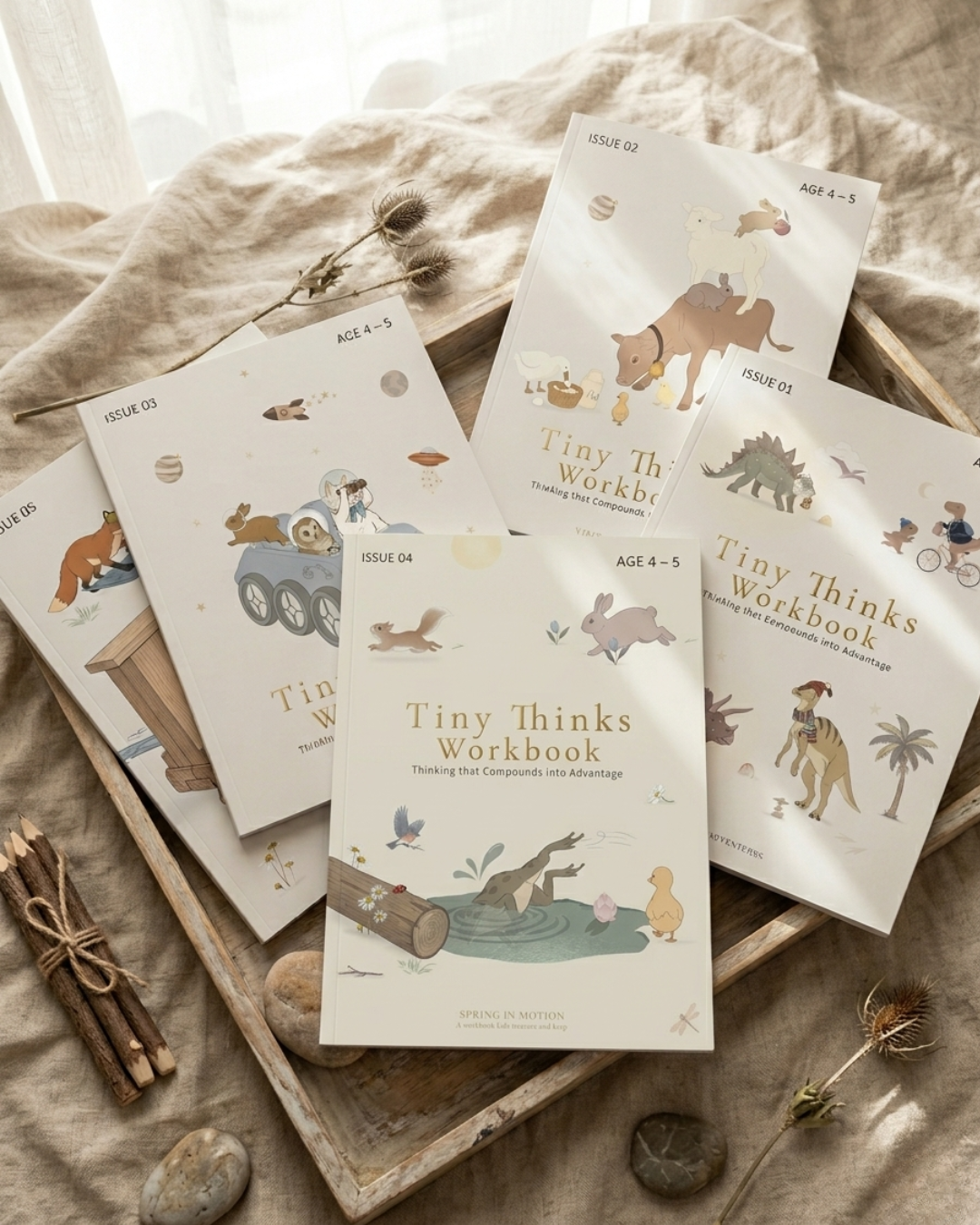
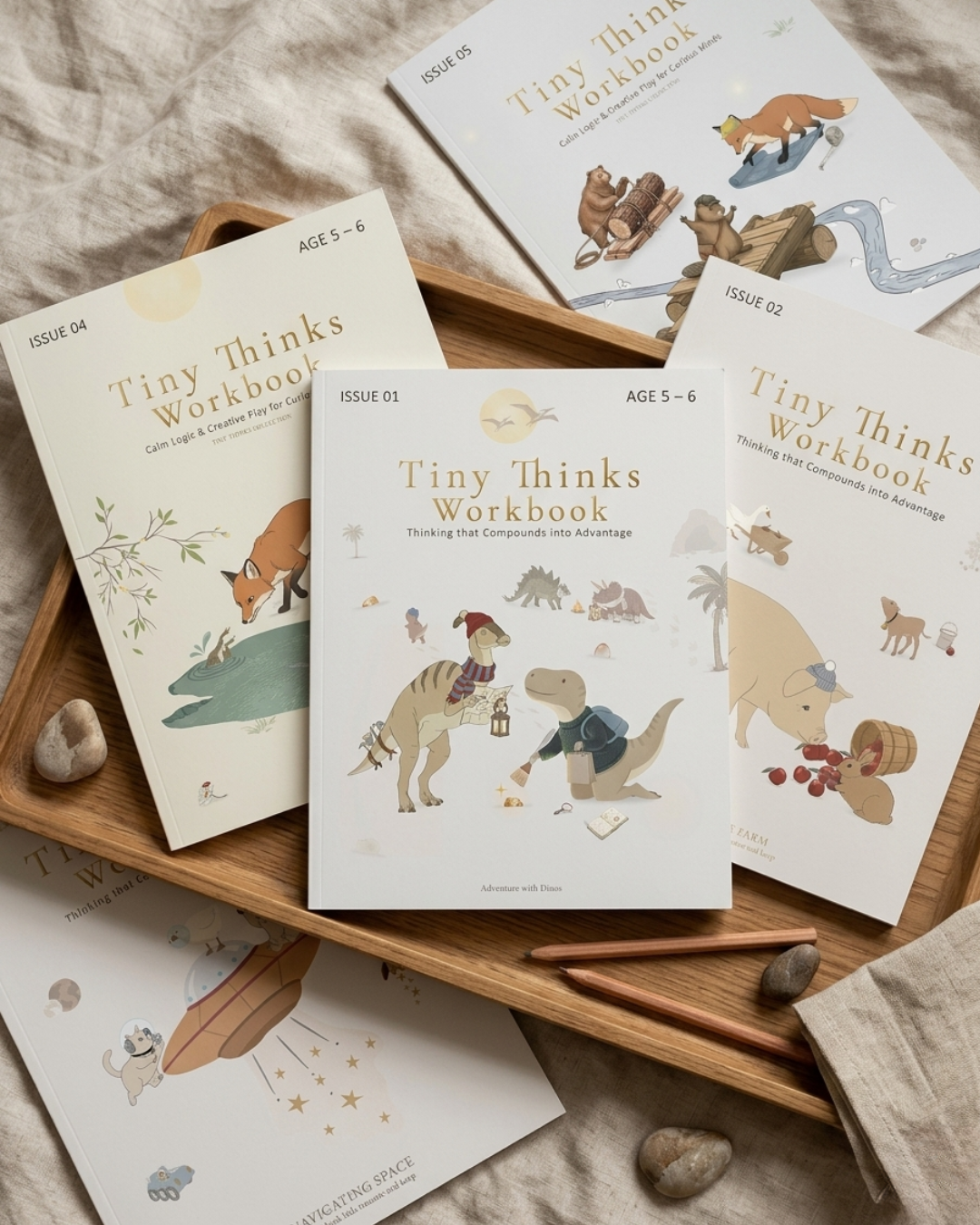
For continued reinforcement, age-specific Tiny Thinks™ Workbooks provide the same peaceful, replicable experience for home, travel, or any stressful moment.
Recognizing Child Dysregulation

Child dysregulation reveals itself in the real moments—following a long day, transitioning off of a screen, or when the routine is broken. It’s not about bad behavior, but a nervous system that just can’t calm down. Knowing what to watch for enables parents to react with structure, not frustration.
Signs include:
- Intense emotional reactions to minor events
- Outbursts that last longer than expected
- Difficulty adapting to changes or new instructions
- Struggles with peer relationships and social play
- Physical complaints like headaches, stomachaches, or fatigue
1. Intense Reactions
These outbursts in toddlers tend to resemble quick bursts of rage, crying, or extreme moping. These moments are bigger than the moment. Juice spilled becomes a meltdown, and a minor change triggers tears.
It’s not rebellion. Their little emotions are spilling over, maybe because they’re exhausted, hungry, or screen-weary. Recording these outbursts, even casually, aids parents in identifying trends. Perhaps it’s consistently post school or immediately preceding dinner. Match them up with recognizable child dysregulation.
2. Prolonged Outbursts
Some last much longer than a tantrum. A child may cry, scream, or simply opt out for 20 minutes or longer. They throw the family routine off course and challenge everyone’s daily existence.
In these moments, the best thing adults can do is stay steady. A calm presence models regulation, even when the child can’t access it themselves. Establishing a predictable, quiet sanctuary for your child to decompress, such as a corner with pillows or a familiar book, can bring relief when words no longer suffice.
3. Behavioral Rigidity
Behavioral rigidity is the kid who won’t transition from one activity to the next, won’t take a new food, or loses their mind when plans change. This presents itself both at home and out in the world—birthday parties, school, the grocery store.
Regular routines give these kids a sense of being grounded. Change is most effective when it is introduced in manageable, predictable increments. For instance, shifting bedtime by 10 minutes or providing a visual schedule allows kids to feel a measure of control through flexibility.
4. Social Difficulties
Dysregulated kids don’t make great friends. Outbursts can leave friendships teetering on a tightrope. Social struggles erode confidence, making it difficult for kids to participate in group play or handle conflict.
Controlled playdates, with defined starting and ending points, can assist. Educating basic language for huge feelings, such as “I’m angry” and “Give me room,” fosters emotional literacy and promotes more fluid exchanges.
5. Physical Manifestations
Headaches, stomachaches, and fatigue can all reflect a child’s emotional state. Stress and anxiety express themselves in the body, not only in behavior. Parents can monitor these symptoms with emotional patterns to find links.
Basic relaxation practices, such as deep breathing, stretching, or silent coloring, assist children in connecting body and mind, offering respite and developing self-awareness.
Tiny Thinks™ offers what families need in these moments: screen-free, calming structure that resets attention and regulation. The FREE Calm Pack is a hands-on first step for everyday use, and age-based Tiny Thinks™ Workbooks take this support even further, ever-present when calm concentration is required.
No stress. No moralizing. Simply a trustworthy opportunity for moms and dads craving some zen, brain-centered respite.
Why Kids Get Dysregulated
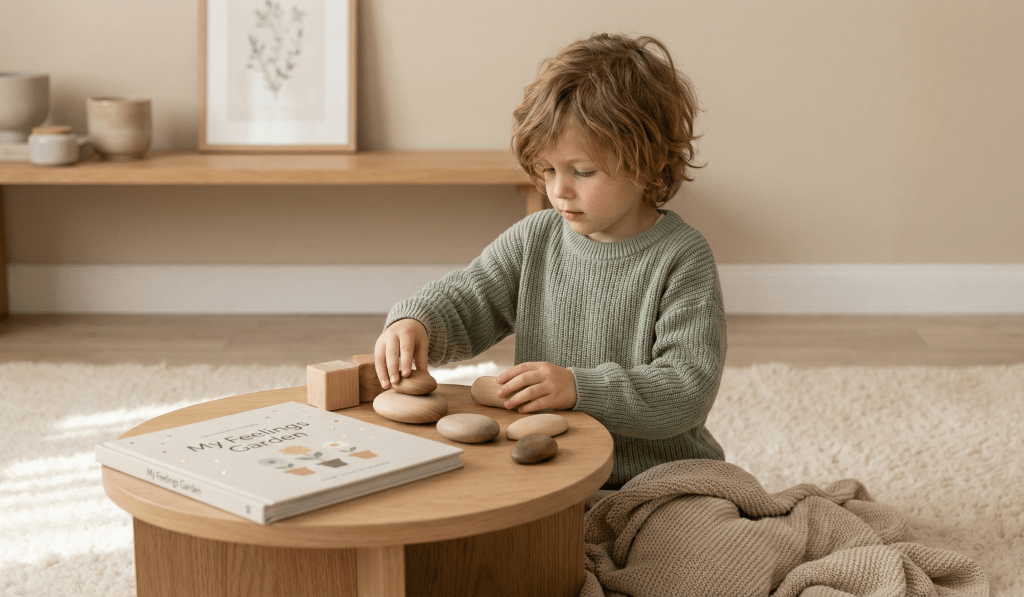
About: Why Kids Get Dysregulated It stems from actual pressures, rapid schedules, disrupted environments, exhausted bodies and the storm of digital stimulation that interferes with concentration or recovery. Dysregulation, on most days, rears its head as a short fuse, tantrums about minor things, or a kid spinning through toys, snacks, and requests for devices. A lot of parents experience this post-school dinner prep travel stuffing turkey syndrome.
It’s almost never a singular cause. It’s a combination of what’s going on inside and the external environment.
| Factor | How it Contributes to Dysregulation | Example Scenario |
|---|---|---|
| Fast-Paced Input | Overloads attention, fragments focus | Child moving quickly from app to app |
| Fatigue | Lowers tolerance, increases irritability | Meltdown after a long day |
| Unpredictable Routines | Increases anxiety, reduces security | Chaotic transition from play to dinner |
| Environmental Noise | Raises sensory load, blocks thinking | Loud restaurant, busy waiting room |
| Family Stress | Child absorbs emotional tone | Tension during a rushed morning |
| Developmental Differences | Unique regulation challenges | ADHD, autism—harder to settle |
| Parenting Practices | Can buffer or worsen stress | Calm routines vs. constant redirection |
Parenting matters, not morally. Kids thrive with structure—expected actions, solid transitions, and schedules that inform the brain what to anticipate. When we adults rush and rearrange things rapidly and frequently, kids’ brains are working overtime to keep up.
That’s when you notice more requests, more bouncing around, more screen demands. Soft rhythms and low-stimulation options like matching or tracing reduce the load. They provide kids a means to calm themselves without requiring frequent guidance from moms and dads.
Developmental differences influence regulation as well. Kids with ADHD or autism tend to have a harder time with waiting, shifting focus, and managing noise. Their brains receive input in a different way.
What appears to be willfulness or escapism is frequently an actual battle to process and maintain composure. These kids need even more structure, explicit visual signals, repeatable rituals, and soothing sensory activities. Not to ‘fix’ them, but to make regulation easier so they can engage and thrive.
Environmental factors are always a factor. A home full of stress, change, or noise exacerbates this, making it harder for any kid to regulate. Maybe a new sibling has come along, or mommy or daddy is consumed with work, or the family is in transition moving.
Kids catch it all. They might not have the words, but their behavior speaks volumes—clinginess, tantrums, or a sprint toward screens for solace.
That’s why calm, low stimulation options are so important. Tiny Thinks™ is not a screen time judgment—it’s a rescue device for when you need your kid to lick their wounds and think quietly.
THE FREE CALM PACK is for those moments after school, mealtime chaos, or travel when you need fast, structured focus. For ongoing support, age-based Tiny Thinks™ Workbooks provide predictable, thinking-first routines kids can work through on their own.
They don’t merely occupy time—they reconstruct attention, pattern recognition, and the ability to self-initiate. No hype. No guilt. Just a system that works silently when you require it.
The Brain-Body Connection
Child dysregulation might appear as mood swings, short temper or uncontainable energy that parents can’t calm. Underneath, it’s the brain-body connection getting out of sync. Your nervous system is wired for protection with rapid responses, vigilance and rapid attention shifts.
In toddlers and young children, self-regulation is still being built. Their brains are being conditioned to decelerate, observe and make sense of the world outside. When a child’s system becomes overwhelmed with too much shifting, noisy rooms, rapid screens or even simply an extended day, regulation abilities disintegrate.
You experience it as meltdowns after school, frustration when powering down a device or that wild zig-zag at the dinner table. The link is simple: the more predictable and calm the input, the easier it is for the child’s brain to manage emotions and focus.
Relationship Between Brain Development and Emotional Regulation
| Age (Years) | Brain Development Stage | Regulation Skill Emerging |
|---|---|---|
| 3–4 | Rapid neural growth, high plasticity | Basic impulse control, short focus span |
| 5–6 | Growth in prefrontal cortex | Simple sequencing, better frustration tolerance |
| 7 | Early connections settle, more organization | Longer focus, independent calming, better pattern use |
What the research means in practice The table illustrates why patience and peaceful design are important. A three-year-old’s meltdown after screentime is not a lack of discipline. It is a brain still developing to filter and categorize.
By seven, kids begin demonstrating greater self-direction, but only if they have had sufficient practice with slow, input-oriented work.
Nervous System Response to Stress
Stress throws the system into “go” mode. The stress hormones spill from your body, your heart rate jumps, and your focus scatters. For adults, this might manifest as snapping or zoning out.
For toddlers, it’s usually bolting, concealment, or screaming rebellion. The more frequently a child’s system gets pushed into this state by hurried mornings, busy environments, or even quick-hit digital fare, the more difficult it becomes to return to stillness.
A kid who spends the afternoon on frenetic screens may be unable to settle for dinner as their brain is still wired for frenetic, not calm.
Brain’s Role in Managing Emotional Responses
The prefrontal cortex, the brain’s control center, takes its time developing. It deals with planning, focus, and calming after distress. When a child is dysregulated, this area of the brain ‘goes offline.’
That’s why reasoning or talking down a meltdown seldom succeeds. What returns regulation is not more words, but a shift in input—something tactile, slow, and repetitive. Simple sorting and matching or tracing activities help the brain to reestablish order after chaos.
Activities That Build Brain Health and Emotional Stability
Parents don’t require froufrou programs or bugging. The trick is providing the brain slow, organized input when the child is overwhelmed. This resembles either a take-2 matching activity in between dinner or a silent tracing page post-school.
Tiny Thinks™, designed for these moments, is a quiet, screen-free alternative that kids can initiate themselves. The Free Calm Pack serves as a reset button for fragmented energy, while the age-specific Workbooks provide kids structured, low-stimulus opportunities to exercise focus and sequencing.
It’s not a screen replacement or a screen use value judgment. It’s about a trustworthy, no-mess utility belt to support the brain’s primal craving for unflustered repetitive processing, particularly during high-friction moments like trips, meals, or lights-out.
How to Help Your Child
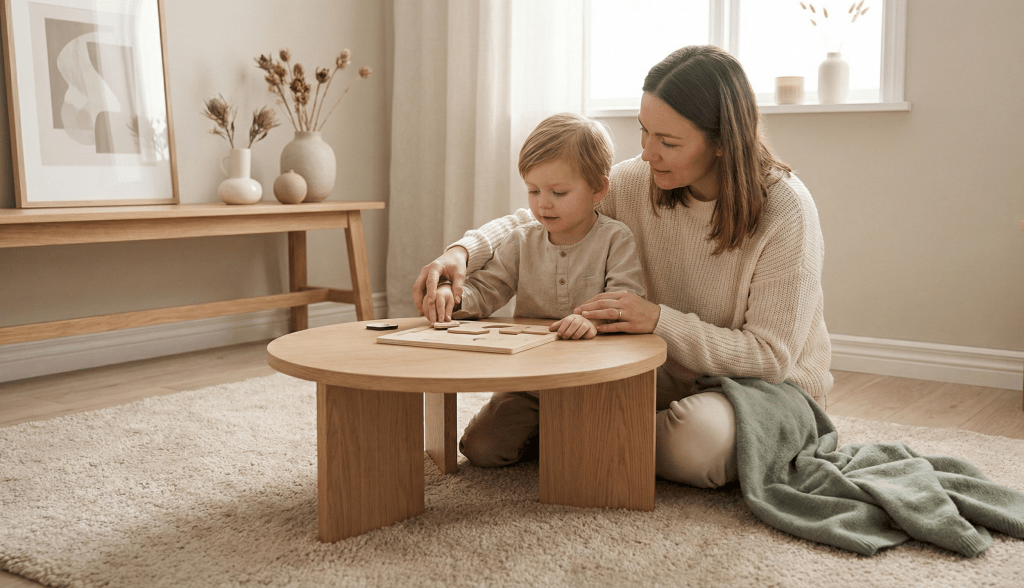
Dysregulation shows up in small, familiar ways: a child who can’t sit at dinner, who melts down after preschool, who can’t transition off a screen without a fight. It’s not defiance that’s going on. It’s a nervous system that’s been accelerated too frequently, too quickly, with no opportunity to catch up.
Regulation is about bringing that balance back from frantic and reactive to calm and focused. These strategies are crafted for in-the-moment, real-life scenarios where parents want low-effort solutions that get results.
Checklist: Practical Strategies for Supporting Regulation
- Construct pockets of predictability. Kids calm quickest when they know what’s next. Utilize the same easy routine for high-friction periods — after school, before meals, and bedtime. A visual chart or a short list can help: shoes off, snack, quiet time. No complex rituals are required; just simple, actionable, repeatable steps.
- Provide a single obvious, winnable task. When a kid is spiraling, begin with something they can complete in less than a minute. Matching socks, lining up blocks, tracing a basic shape—anything with a definite start and finish. The victory resets their control and calms the nervous system.
- Restrict stimulation in the me enter recovery periods. Post day or screen, don’t introduce more noise or selection. Tone down the lights, tone down your voice, and turn off the music. Let the world help you: less choice, less hurry, gentler colors.
- Utilize hands-on anchors. Provide your kids with something to feel or shift around, such as clay, a velvet cloth, or a sluggish puzzle. Hands-on, predictable work anchors their mind and extracts them from the cognitive whirl.
Calming Techniques: Deep Breathing and Mindfulness
Instruct kids to breathe slow and deep. Model it yourself; breathe in for four and out for four. Hands on belly or a soft toy rising and falling. For mindfulness, test out easy “listen for the bell” games or notice five things you can see or feel. No apps, no scripts. The goal is for kids to become aware of their body decelerating. If your child gets overstimulated easily, this guide breaks down low-noise, low-mess calm play ideas
Consistent Routines: Security Through Structure
A steady routine isn’t about rigid schedules. It’s about reliable cues. Same sequence, same things, same vocabulary. For example, after dinner: clear plate, wash hands, two pages of calm workbook, pajamas. Gradually, the little body begins to know what to expect and it calms.
Open Communication: Naming Feelings
Help kids say what’s going on inside. Use concrete language—“I see you’re feeling jumpy,” or “It looks like your body is too fast right now.” Let them draw or point if words are cumbersome. The objective is not to fix the emotion, but to render it visible and ordinary.
Calm, Screen-Free Alternatives: Tiny Thinks™
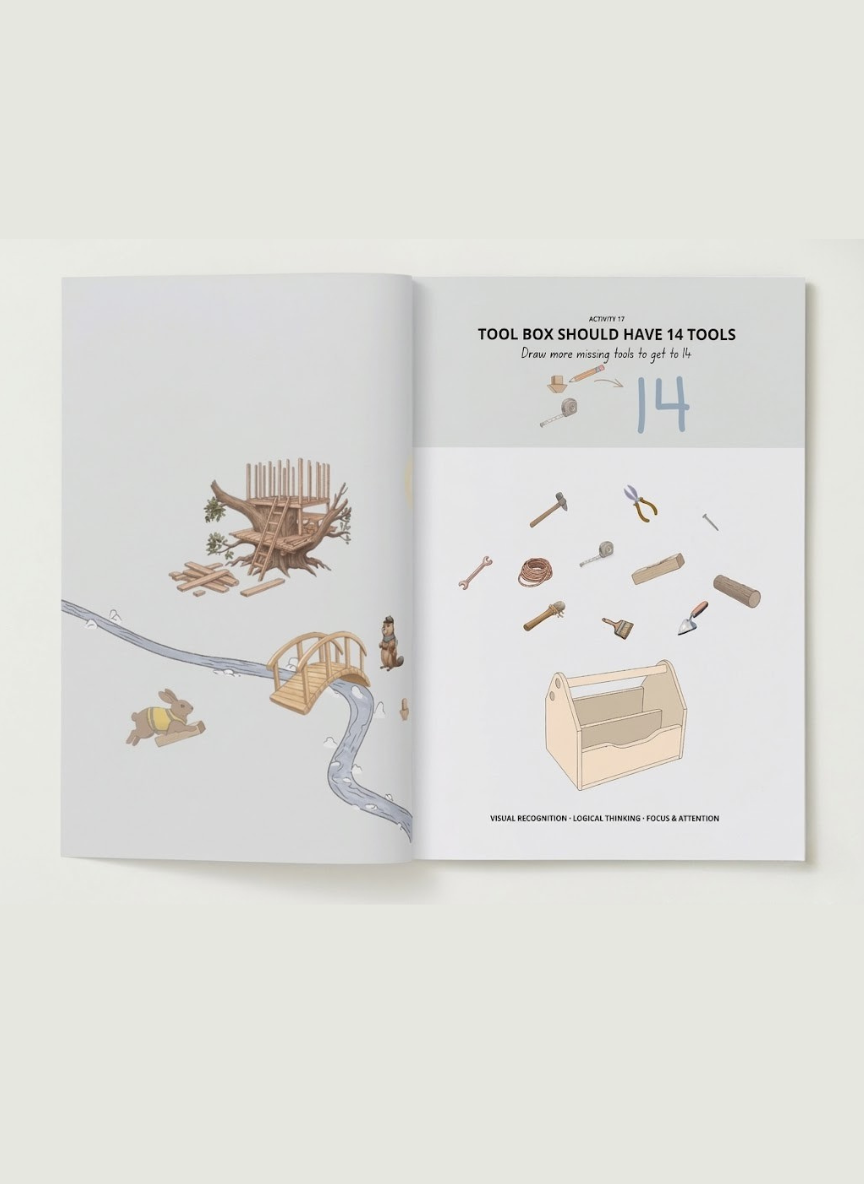
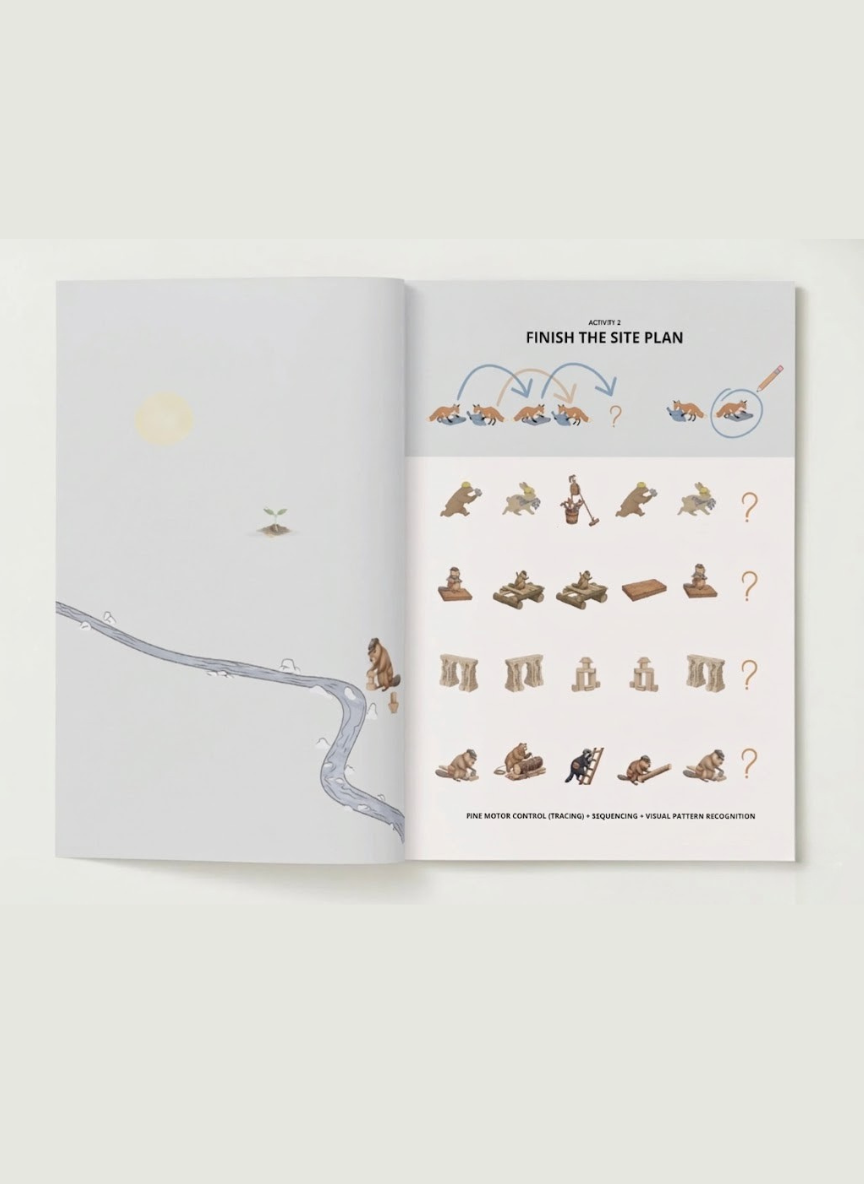
When you need your child to settle quickly after school, while you’re prepping dinner, or winding down for bed, hand them a calm, tactile sheet from the Tiny Thinks™ Free Calm Pack. These are not busywork or entertainment; they’re structured thinking loops: matching, tracing, and simple patterns.
Kids start and finish by themselves. A quiet environment, soft designs, and cognitive load just right. For sustained assistance, age-specific Tiny Thinks™ Workbooks amplify this effect, screen-free and low-stimulation, always. It’s the crutch you grab when you’re hurting, not celebrating. For a full list of alternatives to screens, check the core guide on screen-free activities.
The Power of Thinking Play
Thinking play is a useful instrument for assisting kids to settle and recapture control when dysregulation hits. It provides young children with a low-stimulation, predictable structure that helps them organize their thoughts and bodies. When a kid is trapped in the cycle of rapid digital stimulation, attention fragments and irritability tends to increase.
Rapid fire transitions, booming bells, or arbitrary routines prevent children from finding their footing. Thinking play, such as matching, pattern building, or step-by-step puzzles, shifts the pace. It provides kids with defined, ordered behaviors that assist in decelerating their system and regaining equilibrium.
Screen-free play nurtures creativity and problem-solving, unlike any digital content. Screens provide results immediately—tap, swipe, result. Tactile thinking play demands that a child stitch together information, keep a series in mind, and tolerate serpentine movement.
For instance, a three-step matching game or a basic sorting page requires a child to look, think, and then do in sequence. These micro-decisions construct real working memory and pattern recognition. As my child matures, they eventually learn to observe, persevere, and finish on their own. This is the core of attention: the ability to stay present and see something through.
Parents fret about how to help kids express big feelings without drama or meltdown. Thinking play allows room for emotional expression in a secure, bounded manner. Guided play, such as sequencing a daily schedule with picture cards or finger tracing a zen path, enables a child to shift energy and define what they sense, verbally or not.
In high-friction moments, like after school and waiting for food, handing your child a rote thinking chore offers a silent escape. There is no pressure to speak, no obligation to entertain; it is simply an opportunity to transition from overload into productivity.
The long-term consequences of thinking play are subtle but powerful. Kids who grow up in tranquil, orchestrated play environments learn how to cope with frustration, be patient for their turn, and bounce back from disappointment. This constructs resilience not by dodging distress, but by rehearsing rebound in a protected environment.
Over months, parents observe increased patience, improved concentration, and a child who can comfort themselves when the world feels overwhelming. Tiny Thinks™ is for these actual moments—after the homework crashes, dinner shambles, long haul or bedtime meltdown.
The Free Calm Pack is the entry point: simple, printable thinking pages that work instantly to bring quiet and focus. Many households supplement with age-specific Tiny Thinks™ Workbooks for continued assistance. It’s not about supplanting screens or out-entertaining. It’s about providing a trusted, rule-first choice when cool is in the highest demand.
Conclusion
Child dysregulation is a common reality for many families, particularly during crunch times like after school or before bed. Most parents recognize the symptoms—fidgeting, tantrums, difficulty falling asleep—but overlook the source. Rapid stimulation, be it from screens or disorganized settings, confuses young minds and impairs self-control. Slow, predictable, tactile activities are a reset, helping kids find focus and calm. Thinking play is not about keeping kids occupied but about constructing the mental infrastructure they need to regulate frustration, order tasks, and bounce back from overwhelm. Small, structured steps build. With consistent habits and a peaceful thinking cortex, mom and dad acquire a day-to-day regulation utility—a no-hassle, silent movement forward.
Frequently Asked Questions
What is child dysregulation?
Child dysregulation indicates that a young one has difficulty controlling their feelings or actions. They might respond with rage, panic, or depression in behavior that appears disproportionate to the circumstances.
What are common signs of child dysregulation?
Typical symptoms are excessive tantrums, difficulty settling, mood swings, and unpredictable spikes in energy or focus. Others might regress or throw a tantrum.
What causes child dysregulation?
Child dysregulation can be triggered by stress, fatigue, sensory overload, or routine changes. Some kids have other emotional or developmental issues.
How does the brain-body connection affect child dysregulation?
How brain and body dance to the stress beat. When a child’s nervous system is in turmoil, it is difficult for them to regulate their emotions or behavior.
How can I help my dysregulated child?
Remain composed, provide reassurance, and deliver direct commands. Assist your child in identifying their emotions and provide them with easy coping mechanisms such as deep breathing or a brief pause.
What is thinking play and how does it help?
Thinking play includes activities that promote problem solving, creativity, and emotional expression. It gives children an opportunity to exercise self-control and discover how to handle their emotions in a secure manner.
When should I seek professional help for my child?
If your child’s emotional outbursts are persistent, severe, or impacting daily functioning, seek help from a mental health professional for advice and assistance.