
Key Takeaways
- Incremental shifts and empathy for the emotional lure of devices smooth transitions for children.
- Mixing screen time with enriching, hands-on activities and open discussion enables kids to build healthy media habits that reflect family values.
- Centering connection, skill-building, and creative boredom-busting alternatives helps children discover happiness and purpose outside of screens.
- Hands-on, screen-free alternatives, such as mindfulness, arts and crafts, outdoor play, and family reading, cultivate emotional wellbeing and skills for life.
- By incorporating these activities into your family’s daily rhythm and setting an example with balanced screen use, kids will begin to adopt screen-free time organically.
- Fewer screens lead to more focus, more creativity, and more family connection, resulting in a happier and more connected home.
Most parents today are looking for gentle, realistic alternatives to screen time that actually help their child settle instead of spiraling into overstimulation.
Screen time alternatives provide families with actionable strategies to nurture preschoolers’ attention and tranquility amid harried habits. Several parents report screens make their kids have more restless energy, shorter attention spans, and emotional highs and lows.
Easy, tactile activities, such as matching, tracing, or simple pattern puzzles, really help move kids from scattered to settled. For families seeking peace, these screen-free options add a rhythm that promotes quiet play and easier transitions.
Why “Just Turn It Off” Fails

Turning off screens seems straightforward, but for kids ages 3 to 7, it almost never goes the way we want. Little kids get deep bonds to screens. The rapid-fire images, recognized voices, and immediate gratification on YouTube Kids or games are engineered to grab their focus and fire up dopamine. When the device clicks off, it’s not mere boredom or frustration; they experience true grief. Many parents see this instantly: the whining, tears, or wild energy that follows a sudden “No more iPad.
It’s not just that they want more cartoons; it’s that their brain and nervous system have been wired for this constant stimulation. Just turning it off doesn’t get to the root of the behavior. Most kids lack the skills to self-regulate post-screen. Their brain has been on “fast-forward”, flickering pictures, quick scene changes, quick victories. This overstimulation revs up the nervous system.
When the screen goes dark, their body doesn’t immediately relax. Instead, you frequently observe what appears to be hyperactivity, opposition, or even tantrums. Studies indicate that overwhelming screen time can mold the brain’s regions for executive functioning, decision-making, and emotional regulation. The more they depend on screens, the tougher it is to just turn it off. Finding appropriate screen time limits is essential for their development.
There’s a social component, as well. For many kids, screens aren’t just entertainment; they are connection. Whether it’s following a beloved character or simply hanging out with a brother or sister while both are on devices, there’s a sense of connection. Turn it off, and some kids feel stranded, particularly if the rest of the family remains connected. This feeling of being left out fuels push-back and makes the adjustment even more difficult.
Kids require recovery time from the overstimulation. Experts argue it can require four to six weeks of diminished screen time for a child’s brain to recalibrate and regain baseline attention levels. Just turning screens off won’t cut it during this period. What children require are screen time alternatives that offer predictable, physically demanding work that simulates the concentration and immersion desired by them, pattern matching, tracing, or mild logic games.
Absent these, kids will inevitably still look to the screen for the ‘quick hit’ or find it difficult to fill their time with self-directed play, creative activities, or social interaction. Tiny Thinks™ solves are made for these moments. Each page provides calm, paced input, image matching, soft sequencing, free response prompts created for tranquil attention.
These early struggles are exactly why parents need calm, structured alternatives to screen time that match a child’s need for predictable, soothing input.
Let the Free Calm Pack and age-specific Tiny Thinks™ Workbooks help your kids get off screens by bringing back calm and repairing focus, language and social skills. They interact with kids where they stand, providing the same sense of accomplishment and immersion as a beloved program, minus the overstimulation.
A New Philosophy for Screen Time
Parenting in a digital age requires a philosophy that appreciates both the educational blessings and curses of screens. Today, there are many families seeking pragmatic strategies to mix enriching screen experiences with screen-free alternatives that soothe, connect, and cultivate kids. It’s not anti-screen or judgmental; it just provides parents with practical tools to bring back peace, cultivate concentration, and generate the type of memories many of us had as kids, free from constant electronic distraction.
When families offer thoughtful alternatives to screen time during tricky moments, kids slowly learn to find comfort and focus in quieter, hands-on tasks.
The Connection Goal
Other families find spiritual nourishment in shared screen experiences, such as family movie nights or watching a documentary together. These moments can ignite conversation and provide kids a safe space to chat about what they’re seeing online. Discussing content, particularly post-show or post-game, fosters social awareness and emotional intelligence, qualities kids require for relationships on and off-screen.
Real-life connections are still key. Kids still need actual playdates, collaborative board games, or stacking blocks together. Monitored online playdates can assist kids in keeping up friendships long-distance, but they can’t substitute for real-time interaction. Families who establish “no screen” zones, like phones off at the dinner table, recount deeper connections and more memorable discussions.
The Skill-Building Goal
Screens can aid early learning when used purposefully. Educational apps and pattern, logic, and creative thinking games build essential mind skills, particularly when combined with hands-on activities. For instance, a kid who digs a drawing app might equally dig real-world crafts, or a coding game can be paired with constructing simple machines from around the house.
Parents are used to setting skill-building goals, such as learning to count to 100 and completing a puzzle, and celebrating progress to keep kids motivated. Selecting good content jointly and talking through why certain games or shows are superior empowers kids. A lot of parents find it useful to rely on resources that steer their decisions, like curated lists of age-appropriate apps or screen-free alternatives that develop the same skills.
Our Tiny Thinks™ Workbooks and Free Calm Pack are designed for this purpose, featuring regulation-first, hands-on activities that kids actually enjoy and return to for more family fun.
The Boredom Goal
Boredom is not a screen to be hacked. It’s an opportunity for kids to explore, innovate, and expand their imagination. Encourage kids to recommend their own screen-free activities; this helps foster independence and inventiveness. Some families maintain a “boredom jar” full of suggestions for silent play or creative activities.
- Drawing, painting, or sticker collage
- Building with blocks or creative construction sets
- Simple science experiments with kitchen ingredients
- Storytelling or puppet shows with homemade props
- Gardening or nature walks
- Classic board games or family puzzles
- Quiet time with picture books or gentle tracing pages
Outdoor activities, such as walking, gardening, or sports, decrease stress and increase well-being. These screen-free moments calm and ignite curiosity. Tiny Thinks™ are perfect for parents in search of screen-free, ready-to-go distractions that bring back focus and immerse kids in quiet thinking almost anywhere.
Practical Screen-Free Activities for Life

Screen-free alternatives, activities that are engaged and meaningful, can anchor children’s routines, supporting regulation and focus while fostering family connection. These activities provide more than distraction; they cultivate thinking skills, emotional balance, and social connections in those moments when screens feel like the only viable choice.
Here are some concrete, evidence-based strategies to create screen-free moments in actual real life.
1. Calm Activities
Mindfulness activities can calm a frayed nervous system. Gentle breath work, such as following a finger up and down a spiral while breathing in and out, assists kids in taming their energy. Reading together as a family, even for 10 minutes, breaks the momentum and nurtures creativity.
Journaling, whether through pictures or simple sentences, allows kids to identify feelings that may have otherwise spun into meltdowns. Quiet activities, particularly prior to going to sleep or coming home from school, can reset your child’s little system much more efficiently than quick editing clips.
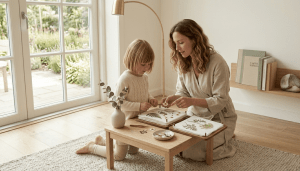
These simple calm-activity moments act as gentle alternatives to screen time, giving kids a way to reset their energy without digital stimulation.
Calm play routines work as gentle alternatives to screen time, helping children regulate their energy without relying on fast digital input
2. Creative Activities
Arts and crafts allow for both concentration and a bit of expressive liberty. Kids can raid the junk drawer, old magazines, cardboard, nature finds, and make collages or sculptures. Storytelling sessions, where each family member contributes a sentence, ignite both linguistics and laughter.
Regular drawing or coloring helps calm the body and helps kids work through their day. DIY projects, like making your own sock puppets or the easiest forts ever, turn your everyday afternoons into adventures. Family art challenges, who can draw the best leaf or create the tallest paper tower, build teamwork and resilience.
Creative projects are some of the best alternatives to screen time because they spark curiosity while keeping the environment slow and grounded.
3. Active Activities
Physical play is critical for regulation and health. Traditional outdoor games such as hopscotch, tag, or jump rope get kids up and running around with their peers. Nature walks or scavenger hunts combine exercise with intrigue. Kids can gather leaves or identify birds.
Water balloon games or simply running through a sprinkler can change an overheated afternoon. Family bike rides or impromptu obstacle courses in the backyard foster camaraderie and happy exercise. These activities combat the restlessness screens tend to create.
Active outdoor play also works as one of the healthiest alternatives to screen time, helping kids burn energy without the jittery crash that follows fast videos.
4. Learning Activities
Educational puzzles and games build problem-solving skills without over-stimulation. Home science experiments, such as mixing baking soda and vinegar or growing beans in jars, invite curiosity and wonder. Book clubs, even with just two family members, can ignite conversations about beloved tales.
Museum or nature center visits, when feasible, make learning a communal experience. Seasonal projects, whether it is memorizing a poem in winter or folding paper airplanes in the summer, provide structure and novelty.
Tiny Thinks™ Workbooks and the Free Calm Pack are all purpose-built to slot into these moments, offering screen-free, regulation-first thinking tasks kids love and revisit on their own. Their calm, predictable rhythm helps kids settle, center, and cogitate at home or on the road.
Parents often find that logic-building games become effective alternatives to screen time because they satisfy the child’s need for challenge without overstimulation
5. Social Activities
Playdates and group games, board games, and cooperative challenges foster social skills and empathy: family celebrations, even the smallest ones, foster togetherness. Giving back through volunteering or community events helps kids visualize their role in the world.
Nothing teaches communication and teamwork like classic playground games, something screens cannot do. These social rhythms, especially when incorporated into weekly routines, cultivate both resilience and connection.
Weaving Activities into Your Routine
Integrating screen-free activities in your life begins with predictable structure. Kids ages 3–7 are monsters for routine and when parents establish a daily cadence with defined expectations, children calm down sooner and fight less. A family schedule that blocks out screen-free windows before dinner, after school, or weekend mornings makes it easy to safeguard those moments for hands-on activities.
For instance, most families benefit from allocating 30 minutes post-lunch for outside play or creative activities to keep the day flowing nicely. Something as simple as a chart or visual calendar, complete with stickers or pictures for each activity helps young kids anticipate what’s next and cuts down on device arguments.
Kids observe us at meals and social events. Parents who turn away their own phones and tablets at dinner send a powerful signal that meals are for bonding. Turning mealtimes into a device-free zone, with conversation starters or small table activities like picture matching and simple tracing, provides kids with a reliable substitute to quick screens.
Getting kids involved in cooking, even tasks as easy as rinsing veggies or laying cutlery, bridges the dopamine gap screens create. These tasks provide organization, meaning, and sensory engagement in a manner that inherently brings the nervous system to equilibrium.
Most parents know that weaving in some sort of calm down activity during transitions, particularly before bed, is the best way to combat overstimulation at night. Whether it’s reading a comforting tale, a soft puzzle, or a page of Tiny Thinks™ before the lights go out, they all help a child’s brain decelerate.
These slow, reliable inputs, such as patterning, tracing, and basic sequencing, exercise the same processing skills that screens hijack, but in a way that bolsters self-control and attention span. Over time, this ritual tells the body that it’s time to sleep, making tucking in easier for all.
A family calendar on the wall, color-coded for various activity types, provides children with control and anticipation. By marking out scheduled outdoor play, creative time, or special screen-free events, such as building a fort or dress-up day, young kids know what to expect.
This visual scaffolding is particularly beneficial for transition-resistant kids or those who request screens when they are bored. It gives parents a tool for gently limiting screen use: “Today after snack, we’re drawing together. The calendar says it’s our art day.
When families embed small alternatives to screen time into the daily rhythm, children transition more smoothly and begin to expect calmer routines.
My Tiny Thinks™ Workbooks and the Free Calm Pack provide ready-to-go, structured activities specifically calibrated for these moments. These pages encourage calm concentration and solo activity, image matching, light tracing, sequencing, so parents can recalibrate frazzled children fast, even at the dinner table or the pediatrician’s office.
It’s not uncommon to find a Calm Pack in many families’ bags for an upcoming trip or appointment, knowing it will calm their child’s nervous system when the situation becomes stressful. Tiny Thinks™ isn’t just a workbook; it’s something real families who want screen-free calm that fits into real routines, wherever they are.
The Surprising Benefits of Less Screen Time
Reducing screen use can seem like an impossible feat, particularly when every day schedules weigh against parents. The rewards of less screen time extend well beyond fewer device-related skirmishes. It’s not about scapegoating screens; sometimes, they’re the lifeboat in a chaotic moment.
It’s about recognizing what’s possible when you pivot to quieter, more deliberate, hands-on options. The table below summarizes the central advantages that study and practical experience continue to validate.
|
Benefit |
Research Insight / Everyday Impact |
|---|---|
|
Improved mental health |
Lower stress, fewer depressive symptoms, and better sleep quality |
|
Stronger attention |
Longer focus spans, better task completion, less need for instant rewards |
|
More creativity and play |
Inventive play, open-ended thinking, richer use of imagination |
|
Family connection |
Shared activities, better communication, fewer power struggles |
|
Physical well-being |
More movement, fewer headaches, improved sleep routines |
|
Mindful habits |
Awareness of screen use, better self-regulation, greater independence |
Reducing screen time, even a little, immediately manifests in your concentration and attention. Quick-hit shows and apps condition kids’ brains to anticipate rapid rewards, so they struggle to calm down enough to engage in slower activities like coloring, constructing, or matching images.
When the nervous system is afforded a rest from that rapid input, you watch kids start to extend their attention, first a minute, then several. Research reveals that a few weeks after turning down the screens, kids are better able to focus, finish tasks with less effort, and experience fewer meltdowns during transitions such as dinner or bedtime.
Even a 10-minute paper task like a Tiny Thinks™ pattern match or story sequence can help a kid switch from fidgety and fragmented to calm and absorbed, smack in the middle of a hectic kitchen.
Creativity and imagination can surprise even parents after screens go off. Screens, particularly quick ones, occupy all the crevices, allowing minimal room for genuine cognitive digestion.
When you give kids an easy offline impulse, a page of visual riddles, a blank to complete a sketch, a card set to order, they begin creating, imagining, and working it out. This kind of free-form engagement bolsters critical thinking and develops foundational learning skills that digital content can’t reproduce.
Your family bonds stronger when your screens aren’t default. Whether you’re doing a picture hunt together, switching off with a tracing game, or assisting an infant in completing a logical sequence, you’re creating tiny, yet very potent moments of connection.
These moments in community do more than simply enhance communication; they support your kid’s ability to manage emotions, which makes transition times less fraught and evenings calmer. Research echoes what parents often notice: less screen time means more conversation, gentler routines, and a deeper sense of togetherness.
Tiny Thinks™ solutions are designed specifically with these needs in mind. Every workbook and the Free Calm Pack provide a rhythm and certainty that calls kids to concentrate, decompress, and engage in independent thought.
They’re simple to deploy at dinner, in the car, or waiting anywhere, engineered to replace those twitchy, overstimulating lulls with serene, hands-on discovery. Kids really anticipate them because the assignments are perfectly sized for accomplishment and intrigue.
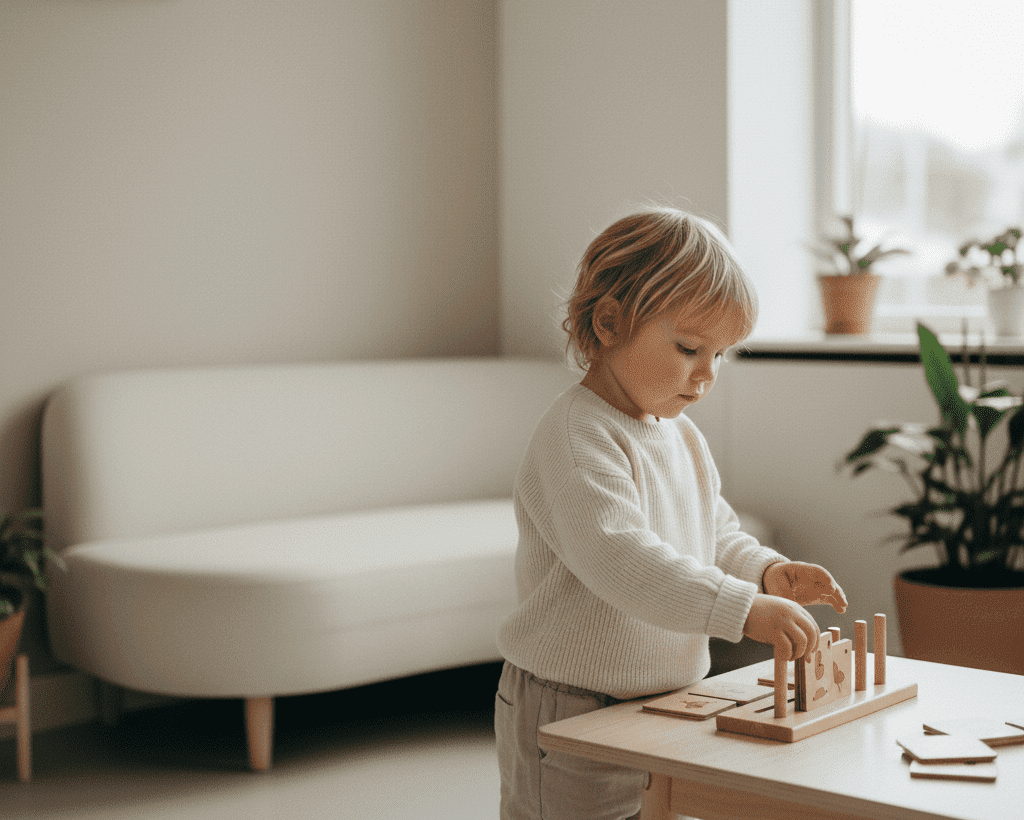
Montessori-style quiet work is one of the most sustainable alternatives to screen time, offering slow, hands-on concentration that nurtures independence.
Building Your Family’s Digital Plan
Every family’s digital plan looks different, but the goal is the same: regulation first, screens used thoughtfully, and a calm daily rhythm that actually works for real families. For most families, the toughest times are the daily transitions, mealtimes, travel, after-school, and bedtime, when screens seem like the only choice. The reality is, we’re not judging at all; devices happen.
For those seeking options, even minor shifts can make for more relaxed, attentive kids.
|
Element |
Why It Matters |
Examples/Ideas |
|---|---|---|
|
Device-Free Times |
Helps establish healthy habits |
No screens at meals, after school, or bedtime |
|
Device Locations |
Reduces temptation and screen creep |
Charging station in hallway, not bedrooms |
|
Content Choices |
Prioritizes quality over quantity |
Curate shows or apps with slow pacing, less noise |
|
Breaks & Boundaries |
Prevents overstimulation and fatigue |
30-60 minutes screen, then break for play |
|
Family Meetings |
Builds buy-in and shared expectations |
Weekly check-in to discuss what’s working |
|
Parental Modeling |
Sets the standard for healthy use |
Phones away during meals, reading before bed |
|
Empowerment & Autonomy |
Teaches self-regulation and decision-making |
Child picks one show, then chooses offline task |
|
Screen-Free Alternatives |
Keeps minds and bodies engaged |
Outdoor play, creative kits, Tiny Thinks™ pages |
Device-free times are among the easiest, most potent things to figure out. For most, this translates to no screens at meal times, no devices in bedrooms, and a hard stop before bed. Charging devices away from sleeping spaces, perhaps in the kitchen or a hallway, gets kids to wind down, not ramp up, pre-sleep.
It’s not about being inflexible; it’s about letting their brains take a rest from rapid dopamine and overstimulation, particularly after a full day.
Frequent family meetings help. Take the time once a week, even if just ten minutes, to sit down. Ask what’s working, what’s not, and adjust. Some families have a tangible chart, others merely discuss it at dinner. These check-ins give kids agency, making them feel listened to and involved.
It’s not just what’s happening off screen; what’s happening on the screen is important as well. Specialists concur the content specifies more than the stopwatch. Fast, loud, unpredictable content like most of YouTube Kids can spike dopamine and fragment attention.
Slower, quieter programming or even better, a combination of digital and offline chores helps minds unwind. Providing kids a bit of control over decisions within your boundaries helps them build self-regulation.
Modeling is important. When parents leave devices out of bedrooms, eschew phones at the table, and opt for a book or a puzzle instead, kids take note. Your environment sets the stage. Charging in a family cubby, phones out of sight, and screen-free alternatives in every room are essential.
For families prepared to switch out screens, Tiny Thinks™ provides peaceful, organized replacements. The Free Calm Pack delivers quick wins at dinner, on the road, or during those restless afternoons. Age-based Tiny Thinks™ Workbooks cultivate attention, pattern recognition, and soft independence, all battery-free.
These pages do not just fill the time; they calm the nervous system, introducing kids to the thrill of quiet awe instead of the hunt for the next dopamine hit.
Conclusion
To rethink screen time isn’t about hard and fast rules or guilt. It’s about knowing what a child really needs when life becomes hectic or too much. Screens seduce with the promise of fast relief, but slow creative work delivers enduring peace. Assigning kids simple, predictable activities, matching, tracing, and sorting, calms their brains and restores focus, particularly when parents need it most.
Families see real changes: fewer meltdowns, more independent play, smoother transitions. There’s no one answer for every home, but stitching these soft, contemplative activities into your daily schedule gradually constructs a more peaceful, more engaged family flow. Steps don’t need to be perfect, just consistent. Even small shifts, one silent pursuit at dinner and one pattern game in a waiting room can change the entire day.
Over time, these gentle alternatives to screen time rebuild focus, lower stress, and give kids a calmer way to move through everyday moments.
The Free Calm Pack gives parents reliable alternatives to screen time during stressful transitions, offering quick, soothing activities that settle the nervous system fast.
Tiny Thinks™ Workbooks act as long-term alternatives to screen time, giving kids structured, predictable tasks that build focus and emotional balance.
Frequently Asked Questions
What are effective alternatives to screen time for children?
Get kids involved with tactile activities such as reading, art, nature, or basic science experiments. These encourage creativity, education, and exercise while promoting well-rounded, screen-less growth.
Why does telling kids to “just turn it off” often not work?
Telling kids to just get off the screen ignores their need to be entertained, educated, or connected. Providing interesting alternatives makes the shift easier and more optimistic.
How can families reduce screen time together?
As a family, you can set collective goals, schedule screen-free periods, and engage in collaborative activities such as board games, cooking, or nature walks. Routine and collaboration make screen-free alternatives to screen time more effective and fun.
What are some easy screen-free activities for all ages?
Reading, drawing, puzzles, gardening, and sports are all excellent screen time alternatives that promote movement, creativity, and social interaction for kids and adults.
Can reducing screen time improve sleep and mood?
Yes. A little less screen time, particularly before bed, can help you sleep better and feel better. It aids in establishing a better daily rhythm and minimizes potential sleep disruptions.
How do you create a family digital plan?
Get the whole family in on the screen rules. Define together time limits, approved content, and places that screens don’t enter at home. Check in and tweak the plan as necessary.
What are the benefits of having less screen time?
Less screen time can energize attention, wellness, and family fun, promoting healthier habits and real-life interactions daily.