



- Key Takeaways
- The Post-Screen Meltdown
- Your Child’s Brain on Screens
- The Hidden Environmental Triggers
- Create Your Family Media Plan
- Managing Screen Time Aggression
- Beyond Behavior: The Silent Costs
- Conclusion
- Frequently Asked Questions
- Why does my child act out after screen time?
- How much screen time is safe for children?
- What are common signs of post-screen meltdowns?
- Can screens cause long-term effects on my child’s behavior?
- How can I help my child transition after screen time?
- What are environmental triggers that make screen time harder for kids?
- What is a family media plan, and why is it important?
Key Takeaways
- Excessive screen time can cause emotional meltdowns and outbursts in children. This makes it important for parents to monitor and limit usage thoughtfully.
- Screen time can cause dopamine crashes and sensory overload for children. This results in mood swings and restlessness.
- Slow fades and soothing rituals assist kids in leaving the screen behind and entering other modes of being without trauma or rage.
- Selecting age-appropriate positive content and maintaining open emotional dialogue encourages healthier media consumption and emotional development.
- Family routines, balanced meals, sufficient sleep, and offline bonding are all important factors in keeping kids sane after screen time.
- Explicit limits and consistent adult modeling of screen behavior establish a predictable environment that teaches kids how to self-regulate and emotionally stabilize.
Crazy Behavior After Screen Time – loud voices, bouncing off the walls, hard to calm down. Rapid-fire electronic stimulus exhausts young minds and it has them amped and edgy. Most parents observe this transition immediately after screens go dark. Having simple, pre-planned off-screen activities ready can make this shift less chaotic and more manageable.
Attention vanishes, irritability spikes, and meltdowns begin. Below, the nervous system is flailing to recover. Knowing the basic biology behind this behavior provides parents a roadmap back to sane, structured control.
The Post-Screen Meltdown
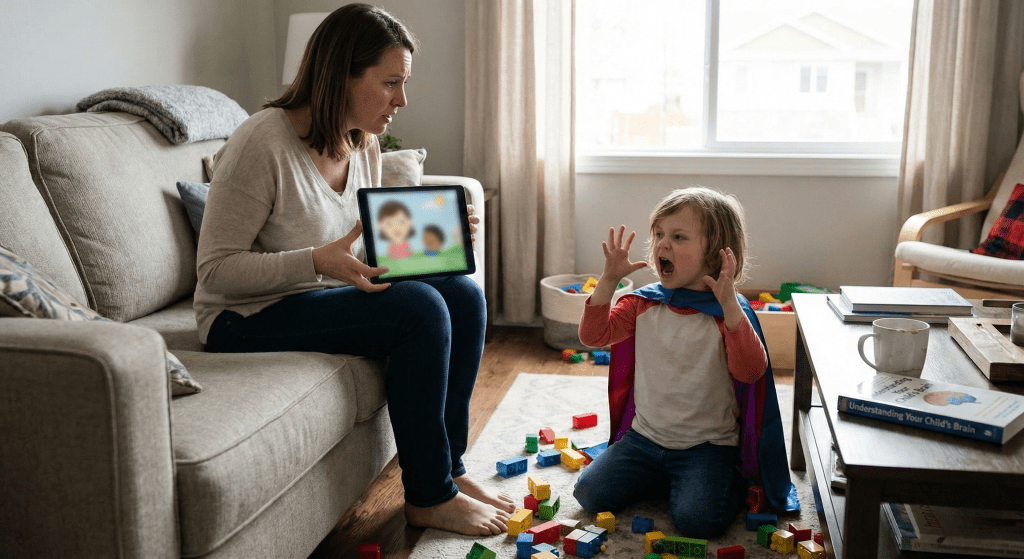
The post-screen meltdown is a common tableau for parents. Post-screen meltdown: After a tablet or TV session, certain kids devolve into crankiness, tantrums, or what seems like borderline crazy behavior. It’s not a moral failure or bad parenting. It’s a simple clash between a child’s unregulated nervous system and the fast-paced input of digital content.
Though screens are incredibly convenient, their rapid pace and immediacy of feedback can bump young brains out of calm mode, particularly between the ages of 3 to 7. Knowing the signs and the mechanics makes it easier to intervene early and restore equilibrium.
|
Sign Observed |
Description |
Possible Actions |
|---|---|---|
|
Irritability |
Quick mood swings, snapping, whining |
Calm redirection, soft voice, offer water/snack |
|
Tantrums |
Yelling, crying, physical outbursts |
Move to quiet space, deep breathing together |
|
Restlessness |
Pacing, unable to sit still, fidgeting |
Gentle physical activity, slow transition task |
|
Withdrawal |
Refusing interaction, zoning out, looking sad |
Gentle check-in, offer simple tactile activity |
|
Resistance to Transition |
Screaming, clinging to device, refusing next activity |
Clear warning, visual timer, structured alternative |
|
Sleep Disruption |
Trouble settling at night, waking up irritable |
No screens before bed, dim lights, calm routine |
1. Dopamine Crash
Dopamine, the chemical that governs reward and pleasure, is released in abundance after extended screen exposure. When the screen goes black, dopamine plummets. Kids can veer between high energy and meltdown. This ‘crash’ is usually the reason a child transitions from peacefully sitting on a couch to melting down at the dinner table.
Parents can look for this shift: one minute absorbed, the next minute melting down. When paired with slow, tactile activities, such as sorting, matching, or building, screen time becomes balanced, which smooths the transition and stabilizes mood.
2. Sensory Overload
Screens compress powerful sound, light, and motion into a tiny area. For little ones, this can rapidly push the sensory system into overload. A kid who looks “wired” or can’t settle post-show is typically overstimulated. Shut the device, turn down the lights, and present some calm, organized activity — puzzle, tracing, or even just lining things up.
Screen limits in already fraught environments, such as after school or before dinner, can reduce this sensory load.
3. Transition Shock
Kids do not do well with sudden switches. Transitioning from rapid digital input to real-world tasks can feel like slamming on the brakes. This jolt frequently sets off push back—tears, screams, muscling the equipment. Provide an explicit countdown or a visible timer.
Announce what’s next (“Screens off in two minutes, then we’ll do your picture match.”) Transition rituals, like a simple hand clap or a favorite chair, make this shift more predictable and manageable. It’s not negotiation; it’s routine that is the anchor.
4. Emotional Suppression
Screens have the ability to silence a child’s emotional cues. Then, emotions come rushing back—anger, grief, anticipation. Make room for these feelings. Query, ‘How’s your body feeling at this moment?’ without criticism or coercion.
Open-ended time with drawing or mild exercise lets the emotions work themselves out. Parents don’t have to repair feelings, just observe and embrace them as typical post-digital exposure.
5. Content Influence
Not all screen time is created equal. Fast, aggressive or chaotic media can set kids up for outbursts. Keep an eye on what’s playing. Pick stories or games with defined structure, slow pacing and uplifting content.
Talk about what they saw: “That cartoon was loud—how did that make you feel?” This brief dialog aids kids in processing and making sense of their experiences. Tiny Thinks™ is built for these moments by providing a Free Calm Pack and age-based Workbooks that reclaim attention, focus, and independent play when the real world needs quiet structure.
Your Child’s Brain on Screens

Screens, like it or not, are now woven into the fabric of most family lives. For numerous parents, particularly after a tough day or during a harried period, giving in and passing your kid a device is just pragmatic. When your kid appears hyperactive, scattered, or even irritable post-screen exposure, it’s important to know what’s going on in their evolving brain regarding digital media.
Under age seven, your child is in the prime window for constructing attention, sequencing, and emotional regulation skills. Their brains are wired for slow, predictable input — stacking blocks, sorting colors, repeating simple patterns. Fast, algorithmic screens can disrupt this process. When a child watches fast-cut videos or taps through games, their brain is awash in rapid stimulation and short reward loops.
This is not a morality issue. It’s simply a disconnect between what their brain requires to develop and what screens provide. Over two hours a day of screen time has been associated with sleep disruption, lack of exercise, and impulsivity. Kids who don’t sleep well are more prone to tantrums and bad behavior.
Numerous research indicates that children who watch over two hours of TV a day are 64 percent less likely to get the recommended 10 hours of sleep than children with less than 30 minutes of daily screen time. Sleep is crucial to attention, memory, and self-control, which are all rapidly developing during childhood.
You might find your kid grumpy, impatient or even hyper following time in front of the screen. It’s not just the device; it’s the transition. It’s difficult for young children to transition from an exciting digital environment to the slower tempo of home life, particularly if they’re fatigued, hungry or anxious. Their brains yearn for that next dopamine hit.
Without a predictable routine or an attractive alternative, meltdowns often ensue. Self-regulation, the ability to manage impulse and transitions, typically begins emerging between age eight and 13. Most three-to-seven-year-olds just don’t have the wiring for independent screen control yet. They require scaffolding, not discipline or lectures.
Parents who draw clear lines, troubleshoot together, and provide regular schedules experience the easiest transitions. Balance is key. Kids do best when their days intertwine activity, quiet tactile play and contemplative work. It nudges them toward activities that build focus, social skills and emotional strength.
Numerous families find that behavior is better when screens are replaced with hands-on, low-stimulation play, particularly at touchstone moments like after school, meals, and bedtime. Tiny Thinks™ is here for just this time. When your kiddo is bouncing off the walls post screen-time, a Free Calm Pack or age-appropriate Workbook provides instant, organized assistance.
These tools don’t distract—they transform your child from frenetic, fractured input to peaceful, deep thinking. No coercion is required. They gravitate back to these calm activities on their own, cultivating attention and patience, one soothing redundancy at a time.
The Hidden Environmental Triggers
Children’s post-screen reactions seldom occur in a vacuum. The environment around them—home routines, food, sleep, and even family energy—can silently sculpt how their nervous system reacts post digital feed. Parents often notice the “crazy” period after screens, but the triggers are often invisible: what’s eaten, how much rest, the pace of the day, and the tone in the room. Knowing these fragments illuminates and empowers moments that seem random.
Diet
- Balanced breakfasts with protein, such as eggs, yogurt, and seeds, help stabilize mood during the day.
- Replacing processed snacks with fruit or nuts can minimize blood sugar fluctuations.
- Normal meal times (no grazing) support improved attention and mood regulation.
- Hydration matters—sometimes “acting wild” is just mild dehydration.
- Be careful with caffeine. Some kids get it from chocolate or tea.
Sugary foods, especially when paired with screens, create a double spike: quick energy in the body and fast dopamine in the brain. Most parents are aware that following a screen session and a sugary snack, their child is louder, more impulsive, and less able to settle. This isn’t mischief; it’s biology. The brain’s reward center is flooded and then depleted, resulting in mood swings and challenges in ‘coming down’ to serene play.
An unhurried, well-composed meal before or after screen time can serve as a protective buffer. It is not a panacea, but a balancer. Observe if your child’s screen “fallout” is worse on days with more sugar or irregular meals. Maintain a basic log of meals, snacks, screen time, and major meltdowns. Patterns always expose themselves after a week or so.
Sleep
Sleep is regulation’s bedrock. When kids miss just 1 to 2 hours, their mood, attention, and frustration tolerance plummet. Too much screen time, particularly late in the afternoon and evening, interferes with sleep cycles. Since screens emit blue light, they suppress melatonin and delay sleepiness. Even brief sessions can push bedtime hours later.
Kids who screen before bed are more likely to be cranky, have difficult sleep onset, and wake up restless. This builds up every day. Over time, chronic sleep disruption from screens is tied to mood struggles, even depression. A dark, tech-free room, regular bedtime, and slow wind-down routine are some of the firmest scaffolds parents can provide for healthy mood and behavior.
Routine
Kids do well on structure. Even a consistent routine that includes mealtimes, play, and rest provides their nervous system with signals for what’s to come. When screens, particularly digital media, are accessed at random, the body never calms. Routines really do anchor the day by providing a natural way to corral chaos in both behavior and screen exposure. Structure reduces friction, which is crucial for managing challenging kids’ behavior.
Structure reduces friction. Creating visual schedules, particularly for kids 3–7, can relieve stress from parents and help kids predict when screens are in play and when it’s time to go quiet. Screen-free bursts, such as easy matching, tracing, and constructing, inserted into the daily flow re-establish serenity and aid the mind to reboot following digital stimulation.
Even 5 minutes of “green time,” such as outside, grass, or plants, can rebalance arousal levels and reduce frustration. For families looking for gentler transitions, Tiny Thinks™ has a Free Calm Pack for the moments of stress after school, pre-dinner, travel, and bedtime winddown.
Kids calm down, concentrate, and come back to them eagerly. No hype, no moralism, just a zen, screen-free fix that delivers when you need it, promoting healthy emotional development in children and reducing the potential downsides of excessive screen time.
Create Your Family Media Plan

A family media plan is a rule-first tool for molding healthy digital habits. One of the most important parts of this is that it provides structure and predictability to screen use, which prevents meltdowns and supports attention, particularly for 3 to 7 year olds.
In addition, an explicit plan makes transitions less painful, easing friction for both parents and kids.
-
Identify your family’s core needs: What problem is screen time solving in your house — dinner-time quiet, after-school stress relief, road calm? Make it clear why.
-
Set clear rules for when and where screens can be used: Examples include “no screens during meals,” “one screen at a time,” or “no screens an hour before bedtime.” These rules lower cognitive overload and promote better sleep and focus.
-
Involve children in the discussion: Ask them when they feel screens help or hurt. Ask them to suggest screen-free times. Rules will feel less dictated and more joint.
-
Define specific goals for media use: Are you looking to build calm, fill a transition, or support learning? Naming this makes every use deliberate.
-
Choose content together: Preview options and discuss what is “good” screen time for your family. Teacher-approved or soothing shows fare better for regulation than quick, algorithmic ones.
-
Utilize timers, clocks, or visuals so children see time limits. This makes boundaries real, not arbitrary.
-
Regularly review and adjust the plan: Children’s needs change. What works at four won’t fit at seven. Be flexible and modify rules as kids age.
Set Boundaries
Boundaries are the framework of any family media plan. Screens can inundate a toddler’s brain with rapid information, so explicit boundaries about screen time create safety and predictability.
A timer or visual countdown can assist children in understanding the passage of time so that screen transitions are not as jarring. Create your own family media plan — something to be done with consistency.
For example, if your rule is “no screens at the table,” then it should be every day, not just weekends. When limits move according to convenience, kids get mixed messages that can feed tantrums or bargaining.
Use devices such as wall charts or digital timers so the rules seem impersonal and external. Screen limits are not a punitive or positive reinforcement tool. They’re a thinking frame to assist kids who struggle to control their own impulses.
To enforce these limits calmly, without discussion or debate, models self-control and keeps the family structure intact.
Choose Content
Screen time isn’t all created equal. Rapid-fire, algorithmic content stimulates the brain yet leaves kids more difficult to settle down afterward. Selecting slower, educational or calm shows can ease transitions and minimize the ‘crazy’ acting out many parents observe.
Previewing keeps parents on their toes and sparks discussion about what’s being viewed. Discuss the content of programming. Ask simple questions: “What happened in that story?” or “Did you notice how the character solved the problem?
This keeps screen use engaged, not sedentary. Kids learn to question what they see, which fortifies pattern association and recall. Have your kids propose content as well.
When they feel heard, they are more apt to embrace boundaries and participate in conversations about what is beneficial or not.
Model Behavior
Kids see it all. When they see parents scrolling at dinner or during conversations, kids absorb these behaviors. Modeling healthy screen use by putting away devices during family time and opting for books instead of screens in quiet moments establishes an unspoken expectation.
Family activities count. Screen-free evenings, family meals, and quiet play communicate to kids that life doesn’t always go at digital speed. It’s not about “no screens ever,” but demonstrating that there are other ways to rest, connect, and fill time.
Even subtle shifts, such as disabling notifications or not leaving the TV on in the background, communicate what is important. Adults profit from these margins as well. Less screen din translates into more presence for both parent and kid.
Stay Consistent
Day-to-day rule changes baffle kids. Consistency grounds expectations and assists children in internalizing boundaries. When a kid knows the plan, the pushback disappears.
Routine check-ins help. Consult your child on the plan’s effectiveness. Account for holidays, travel, or aging and maintain the framework. Explain rules every single time.
With families discussing screens openly, kids come to trust the limit, not fear it. A steady plan is not about control; it is about establishing a rhythm kids can rely on.
Tiny Thinks™ is the screen-free, regulation-first anchor for these high-friction moments. When your child requires a pause post-school, a shift off a screen, or settling before bed, Free Calm Pack provides open, calm pages that captivate attention and reset focus.
Kids gravitate to these calm, hands-on habits independently, softening transitions and cultivating authentic intellectual muscle. For families seeking extra reinforcement, age-specific Tiny Thinks™ Workbooks subtly steer solo, obsessive play without adult coercion.
Managing Screen Time Aggression
Screen time aggression is a known beast for parents. A kid might throw a tantrum, scream, or hurl furniture following a digital session. This is not a personality defect. It’s a regulatory response. Quick, high-stimulation input from screens can overwhelm a young child’s sensory system, fracture their attention, and exhaust their reserves.
When the input is abruptly cut, the nervous system now running hot frequently spills over into aggression. This isn’t to say screens are ‘bad,’ but it is to say kids need help to reset. The tips below are about control, not guilt.
Stay Calm
Parent calm is your first stabilizer when a kid is being screen-time aggressive. Meltdown mode kids borrow their mom or dad’s nervous system cues. If the adult is steady, the child’s system can begin to reset. This is easier said than done, particularly at the end of a long day or a tantrum that interrupts dinnertime or bedtime.
Parents frequently tell me that they feel ‘triggered’ by these moments. It’s okay. The trick is to regard your own calm as tactical. Take a breath. Drop your shoulders. Say it in a monotone whisper. Sometimes, pausing for three deep breaths before reacting is all it takes to stop the escalation.
Patience is not waiting; it’s standing still while the child’s system catches up. All parents have lines. It’s not about being perfect, but more a measured response that provides the child with a regulatory anchor.
Validate Feelings
- “I see you’re really upset right now.”
- “It’s hard to stop when you’re having fun.”
- “You wish you could keep playing.”
- “I know, shutting off the tablet can be harsh.”
Hear without interjecting and you’ve communicated to a child, ‘your experience is important’. Active empathy is not about fixing the feeling or rushing them through it. It’s about sticking around long enough for the storm to blow over.
Kids who feel listened to don’t escalate as easily. Simple, direct phrases can reflect understanding without becoming mired in negotiation. It’s the little bridge that can often make the next step doable.
Redirect Energy
- Provide a hands-on activity such as matching cards, blocks, or sorting items.
- Suggest a physical activity: walk outside, jump, stretch, or dance.
- Set up a quick drawing or coloring prompt.
- Give a two-step challenge: “Can you build a tower taller than this cup?”
Physical or hands-on activities aid in discharging remaining tension. Toddler bodies need somewhere for all of that post-screen energy to drain. Creative projects help by switching attention to something they control.
Structure is key; open-ended choices frequently backfire. A little, winnable activity soothes the system faster than a nebulous, ‘go play.’ Consistency is more important than novelty. After a while, kids will seek out these activities themselves, particularly in a convenient, well-prepared environment.
Reconnect Offline
These shared offline moments reset the family’s rhythm. There’s no fancy scheduling necessary. Maybe it’s eating together, or reading a story, or building something together. Consistent, screenless rituals such as a nightly card game or afternoon walk provide kids reliable touchstones.
These moments establish trust and smooth over any residual scarring from prior aggression. Speaking candidly during these periods, not about screens but about anything, facilitates connection restoration. Parents who institute even a brief “electronics fast” of a few weeks regularly report a significant decline in aggression and tantrums, improved sleep and more grounded behavior.
It turns out that these easy, communal offline rituals are effective because they rebuild kids’ feelings of connection and control.
Tiny Thinks™ was made for these moments. When the post-screen noise is elevated and you need your kid to settle, the Free Calm Pack provides structured low-stimulation tasks that reset focus. Kids can open a page, pair shapes, trace a line, or construct a basic sequence without directions.
Many parents use the Calm Pack during high-friction moments: after school, screen transitions, travel, and mealtimes. For more support, age-specific Tiny Thinks™ Workbooks lead kids through serene, thinking-driven play, cultivating focus and self-directed drive.
They aren’t enhancements or bonuses. They’re magic shot relief tools that are immediate, reliable, and ever accessible.
Beyond Behavior: The Silent Costs
When a child behaves “crazy” after screen time, they’re not just hyper or in a bad mood. Our modern screens provide rapid, random stimulation—colors flashing, noise blaring, and scenes flipping every few seconds. This overloads attention systems for a young brain and leaves little space for controlled thinking.
Even little kids can go from zen to zany in a matter of minutes. This cost appears not just in outbursts but in the way kids subsequently have trouble settling, focusing, or simply enjoying quiet play. These silent costs are easy to miss. Most parents witness the tantrums, irritability or whining, but don’t always catch the patterns beneath.
Long screen time, particularly with rapid or violent content, makes it harder for kids to self-regulate. This is not merely conjecture. The APA’s research has linked too much screen time to issues with sleep, attention and socioemotional growth, impacts that too frequently linger long after the tablet is shut down.
For kids already prone to overstimulation, such as those with ADHD or Autism Spectrum Disorder, these social impacts may be more pronounced. It’s a reality for families, with almost 70% of children with ADHD and over 90% with autism using screens a lot. The aftermath is often visible: children who can’t transition, who resist winding down, who find it harder to focus on slower, tactile activities.
Over time, the routines can influence family life. When a child’s baseline is established by quick, algorithmic stimulation, dinner, car rides or going to bed turn into wars. Parents experience more power struggles and less independent play. Certain kids who play violent games might model aggressive behavior.
Even sleep, so important for development, can suffer when screen time is unmonitored. Here’s a quick summary table with some of these silent costs and their real life manifestations.
|
Silent Cost |
Behavioral Issue |
Long-Term Implication |
|---|---|---|
|
Attention Fragmentation |
Inability to focus, distractibility |
Delayed learning, poor school adjustment |
|
Overstimulation |
Irritability, tantrums |
Chronic mood instability |
|
Sleep Disruption |
Trouble falling asleep |
Reduced emotional resilience |
|
Modeling Aggression |
Aggressive play, defiance |
Social relationship problems |
|
Socioemotional Strain |
Withdrawal, clinginess |
Lower self-regulation skills |
Families don’t crash and burn when screens are involved. Screens are a utility for life. The habits underneath count. Each hour passed in rapid digital cycles is an hour not invested in cultivating patience, sequencing, or silent endeavor.
This is what proactive management, having calm, structured options at the ready, protects, not just the moment, but the child’s developing mind. Tiny Thinks is built for these high-friction moments: after school, before dinner, car rides, waiting rooms, and bedtime.
Think beyond behavior: the quiet toll. The Free Calm Pack provides low-stimulation, structured thinking activities kids can initiate themselves: dot to dot, simple line tracing, soft patterns. No parent policing necessary. The layout is aesthetically serene, and the flow is intuitive.
Within minutes, the “screen crazy” melts away. For families craving more support, the age-specific Tiny Thinks Workbooks take this strategy a step further by cultivating attention, focus, and frustration tolerance, one quiet page at a time.
Conclusion
Landing on solid footing after screen time sometimes seems too difficult. Many parents see the same pattern: a child who was calm a moment ago now spirals into wild, unpredictable energy or big feelings. Underneath, rapid digital input has melted the nervous system, running hot, craving more stimulation and fighting to calm down.
Little, well-defined routines, such as quiet, tactile play or uncomplicated pattern activities, provide the brain with a distinct route back to tranquility. Predictability, low noise, and a familiar routine assist kids in de-fragging their attention and transitioning back into the day. These moments count. With the right framework, your kids can reboot and your family can rediscover peaceful, bonded moments once the screens are put away. The answer is seldom more control; it is just smarter design.
Frequently Asked Questions
Why does my child act out after screen time?
Kids get a little looney from the screen. It can impact their temper and willpower. The brain requires some time to recalibrate after the visual and auditory assault of screens.
How much screen time is safe for children?
They say that kids should have, at most, 1 to 2 hours of recreational screen time a day, as excessive digital media use can lead to emotional difficulties and behavioral interventions.
What are common signs of post-screen meltdowns?
Symptoms include your child displaying challenging behavior, like acting crazy or becoming fidgety after time spent on digital devices.
Can screens cause long-term effects on my child’s behavior?
Excessive screen time, particularly with digital media like video games and smartphones, affects sleep, mood, and social skills, impacting kids’ attention and family relationships.
How can I help my child transition after screen time?
Establish firm boundaries and utilize timers for tech limits. Schedule peaceful activities after screen time, like reading or playing outside, to help your child transition.
What are environmental triggers that make screen time harder for kids?
Noisy backgrounds, irregular schedules, and insufficient sleep make teens more vulnerable and less capable when it comes to managing screen time with digital media. A calm, consistent environment can help.
What is a family media plan, and why is it important?
Which is why a family media plan means very specific rules around screen time. It balances screen activities with healthy habits, fuels positive behavior and builds family bonds.