
- Key Takeaways
- Understanding Cartoon Stimulation
- The Impact on Toddlers
- How to Choose Low-Stimulation Cartoons?
- Spotting Overstimulating Cartoons
- The Co-Viewing Connection
- Creating a Balanced Media Diet
- Conclusion
- Frequently Asked Questions
- What are fast-paced cartoons?
- How can fast-paced cartoons affect toddlers?
- What are signs of an overstimulating cartoon?
- How do I choose low-stimulation cartoons for my toddler?
- Should parents watch cartoons with their toddlers?
- How much screen time is safe for toddlers?
- Why is a balanced media diet important for toddlers?
Key Takeaways
- According to a study, quick-cutting animated shows contribute to the shortening of toddlers’ attention spans and increase difficulty engaging in calm or solo play.
- It’s just like fast paced cartoons that make toddlers irritable and emotionally challenged, especially if they watch them right before bed or for hours on end.
- Exposure to fast paced scenes and sound changes can cause sleep disturbances, so it’s critical to avoid screen time before sleep.
- Opt for calmer cartoons, which are slower paced shows with softer colors and gentle music, to support healthy emotional regulation and better learning.
- It’s co-viewing and talking through shows with your kid that transforms screen time into a shared, supportive activity that fosters communication and connection.
- Complementing screen time with books, outdoor play and hands-on activities fosters a more balanced and less overstimulated approach to early childhood.
Fast-Paced Cartoons and Toddlers are high-impact animated shows featuring rapid scene changes, speedy banter, and a highly stimulating environment. A lot of parents report that after these cartoons kids are hyper, distracted, or can’t settle down. Some families counter this effect with calming, hands-on options like Tiny Thinks activities to help children shift back into slower rhythms.
The fast paced format can overstimulate baby brains, making it hard for them to then calm down to nap. By recognizing how the speed of input influences attention, parents can select daily routines that encourage stronger focus and self-control at home.
Understanding Cartoon Stimulation
Cartoon stimulation is what kids get from cartoons — particularly those specially engineered with vivid colors, quick cuts and magical narratives. For toddlers, whose developing brains are still structuring attention, learning to sequence ideas and tame emotions, this sort of input really has a major influence on early neural pathways. Fast-paced cartoons specifically provide almost continuous images and sound effects, with very little downtime to metabolize or reflect. That intensity of pace can exhaust a young child’s working memory and prevent them from constructing a durable attention span.
When a toddler views rapid-fire, hyper-stimulating cartoons, their mind is compelled to remain in sync with the relentless tide of stimuli. Research shows that this can have real consequences. Exposure to fast-paced or fantastical cartoons can decrease inhibitory control, which is the skill that helps children pause, think, and act intentionally rather than impulsively. Executive function, the mental scaffolding behind attention, planning, and self-control, matures gradually throughout the preschool years. If a kid’s primary input is quick, random stimulation, their system becomes conditioned to seek it out. That’s when parents see the classic after-screen restlessness: trouble sitting still, jumping from activity to activity, or becoming easily frustrated when things slow down.
Stirring media tax more than attention. It hardwires emotional reactions. Fast cartoons can prime the nervous system, making some kids appear hyperactive, anxious, or unable to relax after exposure. Over time, this extreme screen input can drive children toward inattentive, impulsive patterns of behavior. Other families observe meltdowns immediately after screen time or discover that their child needs increasing amounts of stimulation to feel interested. The underlying mechanism here is simple: young children are still learning to interpret and integrate information. If it comes too fast, there’s no room for them to process plots or exercise patience and frustration tolerance. Even 6-month-old babies can distinguish between predictable and unpredictable action sequences—they require duration, not rapidity, to construct significance.
Moderation, balancing cartoon stimulation with slow, physical, and tactile activities, is the key. A lot of parents discover that when they reduce fast screen input and provide other options such as quiet puzzles, drawing, and sensory play, their child’s demeanor and concentration rebound. Executive function structure isn’t static; it’s environmentally and genetically malleable. Vigorous movement, free play, and soothing, rhythmic, repetitive activities help bring the nervous system into balance and promote self-regulation. Tiny Thinks™ is for these moments—for when screens have served their purpose, but you need your kid to calm down and think on their own. The Free Calm Pack is a simple entry point: calm, structured pages that draw children in when overstimulation is peaking.
For parents who want more, age-based workbooks expand the thinking framework, providing kids with repeatable, predictable work patterns they can initiate and complete independently. It’s not about swapping screens or measuring use. It’s about knowing you have a guaranteed tool in your arsenal when you need your kid dialed in, sedate, and prepared to rejoin reality.
The Impact on Toddlers

Fast-paced cartoons are a way of life for many families. Scenes jump every few seconds, sounds overlap rapidly, and characters twitch in jerky bursts. For toddlers, whose brains are still learning to filter and sequence information, this kind of input rewires how they focus, process emotions, and calm themselves to sleep. Tiny Thinks™ was based on an assumption of regulation above all else. Calm, predictable thinking work is not an alternative to screen time, but a refuge when overstimulation begins to appear at home.
Attention Spans
As toddlers watch flash cuts on screen, their brains orient to every new movement or noise as it emerges. This “bottom-up” attention is sensory-driven, not controlled by the thinking part of the brain. After only 9 minutes of rapid-fire TV, research finds that four-year-olds’ executive function plummets. They struggle to concentrate, complete a task, or transition between tasks.
In actual practice, you experience this when your toddler exits out of a cartoon and flits from toy to toy, can’t complete his puzzle or demands additional screen time. Their internal attention system is silenced. In time, heavy exposure trains kids to anticipate newness. They can’t play on their own or do anything that requires waiting. Studies show that toddlers who watch rapid-fire shows give up on easy activities more quickly than those who play with slower, tactile materials.
For parents, the solution is not to ‘ban’ screens. It’s about creating equilibrium. Drawing, matching, or easy sequencing play provides the brain with a different input. These activities foster lazy, internally motivated attention that allows kids to control themselves, particularly in the heat of the moment.
Emotional Regulation
Rapid-fire cartoons can set toddlers’ tempers aflame. The bright colors, loud noises, and rapid shifts have your little tots jittery, cranky, or more prone to meltdown when requested to change activities. The brain’s emotional centers get fired up, but the calming down skills have nowhere to rehearse.
Many parents notice the pattern: after a session with high-energy media, children are quicker to react, more resistant to transitions, and have a harder time settling for meals or bedtime. The connection is obvious: when arousal increases, control decreases.
Teaching regulation is not about lectures or rules. It’s about what kids exercise. Peaceful, regimented play, such as matching cards and light patterning, yanks their brains out of the express lane. These moments allow the nervous system to reset and cultivate the patience and frustration tolerance that screens can erode.
Sleep Patterns
Bedtime screen time, particularly exposure to fast, bright cartoons, is associated with increased bedtime resistance. The stimulation postpones the inevitable winding down. For toddlers, that translates to extended time to fall asleep, increased night wakings, and less restorative sleep overall.
Late-night viewing keeps the brain in ‘alert’ mode. It’s more difficult to make the screen-to-sleep switch. Replacing screens with soothing routines, such as dim lights, silent play, and calming stories, sets the body and mind for sleep. Slow, tactile activities, like those in the Tiny Thinks™ Free Calm Pack, provide a functional transition from stimulation to sleep.
How to Choose Low-Stimulation Cartoons?
It’s about providing a screen time barrier between your toddler’s brain and the numbing force of hyper-fast, algorithmic culture. It’s less a matter of screen-policing and more about constructing a predictable calm layer that helps kids settle, focus, and internalize what they’re seeing. Parents can use the following criteria to spot cartoons that support regulation and learning:
- Scene duration should be at least 8 to 12 seconds with no rapid cuts.
- Gentle storytelling with clear, simple language
- Soft, earth-toned visuals rather than bright, flashing colors
- Relaxed pacing with built-in pauses for processing
- Predictable story structures and gentle humor
- Calm, consistent audio and mild sound effects
- Positive character modeling and straightforward social lessons
- Educational themes over sheer entertainment
- Flexibility to match your child’s sensitivity and needs
1. Pacing and Edits
Low-stim cartoons go at that other pace. Scene changes are more prolonged. Eight to twelve seconds is a good guideline, which gives toddlers time to understand what’s going on. Intentional breaks between movements or dialogue enable kids to process, piece together new concepts, and follow along with the plot.
Fast cuts splinter focus and can soon fluster kids – particularly following an active day. Slow, steady pacing is key for building attention span and working memory. Parents could, for example, shortlist shows that employ measured pacing by default – think gentle classics or Scandinavian imports known for their unhurried tempo.
Toddlers do well with this slower pace. They learn to observe, order, and recall, rather than leaping from stimulation to opportunity.
2. Sound and Music
Audio can make or break these. Gentle soundtracks, soft voices and minimal sound effects help create a calm atmosphere. Loud, unpredictable or fast, jarring music increases arousal and can cause overstimulation.
Choose shows that establish a restful tempo with music and conversation. Shows with consistent soothing music are better for regulation and can carry over into your post-viewing quiet time.
Warning—some kids are hyper-sensitive to even slight sound variations. Pre-screening a show’s sound before you expose it protects you from surprises.
3. Color Palette
Bright, saturated colors and quick visual cuts can spike energy and cause fidgety behavior. Earth-toned, muted palettes do the opposite. They induce calm concentration.
Your kids’ emotions are fragile and can be easily influenced by what they see. Soft color palettes serve to balance mood and sustain engagement. Parents could use a visual cheat sheet to help screen for hyper-stimulating color palettes when selecting new shows.
4. Story Complexity
Toddlers digest single-event plots and concrete problems more readily than layered or abstract narratives. These complex stories can sometimes leave a child confused or frustrated if they lose track of cause and effect.
Seek out educational shows that feature straightforward storylines. Programming that reinforces fundamental concepts, such as shapes, numbers, and home routines, provides them with something to latch onto, repeat, and feel powerful mastering. A simple storyline promotes independence and understanding.
5. Character Behavior
What they witness, they tend to mimic. What Programs Should You Choose Low-Stimulation Cartoons? Shows that model empathy, cooperation, and calm problem-solving offer better social templates than ones with constant conflict or sarcasm.
Characters who demonstrate patience and kindness help reinforce emotional regulation. Don’t watch shows where aggression, manipulation, or screaming is the norm. Parents might maintain a short list of proven winners.
Low-stimulation viewing is personal. What calms one child may irritate another. Test things out, observe your child’s response, and modify.
Tiny Thinks™ is designed specifically for these moments. When your child needs to decompress after school, come down off a screen, or settle during travel or meal times, our Free Calm Pack delivers screen-free, scaffolded thinking work for independent, calm engagement. If your little one takes to it, age-specific Tiny Thinks™ Workbooks build on this peaceful foundation with additional richness and diversity.
No guilt, no finger wagging, just a really handy tool for parents who want calm, cogent children, particularly in the toughest of times.
Spotting Overstimulating Cartoons

Overstimulating cartoons are everywhere. They’re flashy and loud and meant to keep a young child’s attention every second. Others change scenes every 2 to 3 seconds, dragging kids into a whirlwind of noise and color. There could be more than 160 scene changes in a 30 minute episode. Characters talk fast, the music is loud, and scenes flash so quickly that a child can’t even keep up. That’s not merely style. It’s a formula that works for engagement but not always for regulation.
|
Characteristic |
Example/Explanation |
Potential Behavioral Impact |
|---|---|---|
|
Rapid scene changes |
New image every 2–3 seconds, up to 163 per episode |
Shorter attention span, restlessness |
|
Loud, layered audio |
Overlapping music, sound effects, and fast dialogue |
Increased arousal, difficulty settling |
|
Blinding colors, flashing lights |
High-contrast visuals, frequent flashes |
Overstimulation, agitation |
|
Unrealistic speech pace |
Fast, exaggerated voices, little pause |
Impaired listening, poor recall |
|
Nonlinear story structure |
Jumping between plots, unpredictable transitions |
Confusion, frustration |
Kids soak up this pace. For some, the effect shows up right away: trouble focusing, difficulty shifting to quieter activities, or meltdowns after the screen turns off. Others might appear “wired” or cranky. The mechanism is simple: fast, unpredictable input pushes a child’s brain into a hyper-alert state. Their bodies can’t downshift on their own. Afterward, everyday tasks like eating, taking turns, or going to bed are more difficult.
Not all cartoons are created equally. Some are less paced, have less frenetic visuals, and characters who talk in natural voices. These are generally less overstimulating and simpler for young minds to dissect. Watch for how your child reacts: do they want more and more, or do they settle and move on easily? Observe if they appear capable of making the shift from screen to silent. The trick isn’t just what they watch, but how they behave immediately afterward.
Tracking makes a difference. Maintain a minimal journal for a week. Record what kind of show it is, how fast it moves, and your kids’ behavior during and after. You might see patterns: perhaps certain cartoons leave your child restless, while others keep them regulated. This is far more useful than any rating; it’s personalized to your kid’s specific requirements.
Tiny Thinks™ is made for these moments — after school, the mealtime madness, travel or bedtime calms down. Some parents reach for a fast cartoon to “buy time,” but it’s often a trade: a few quiet minutes now can mean more dysregulation later. The Free Calm Pack is your soft landing. Kids can content themselves with a basic matching page, a quiet sequence, or a tracing line — all screen free, all designed for self-direction. A lot of parents begin with the Calm Pack, then transition to age-specific Tiny Thinks™ Workbooks for a consistent, low-stimulation regimen kids come back to on their own. No enforcement, no battles, just a consistent way to find your way back to focus and calm.
The Co-Viewing Connection
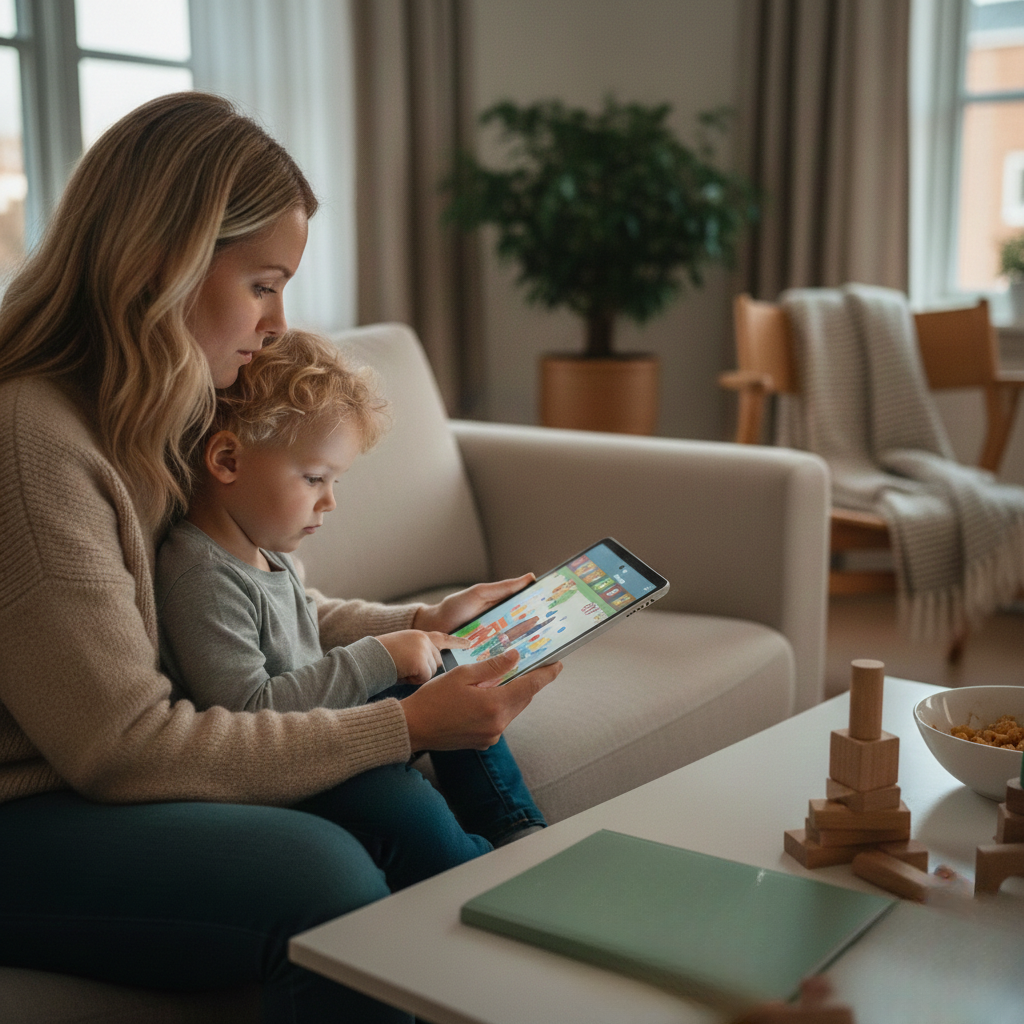
Co-viewing cartoons with toddlers is more than a passive act. It’s a tangible instrument of comprehension and connection. There’s a different experience when a parent sits down with a kid and co-views. They receive all sorts of cues from the responses, faces, and body language of adults. This shared focus supports developing brains to interpret what they’re seeing on screen and provides them a guide for navigating emotions, behaviors, and social interactions. The adult is a grounding anchor, a stabilizing force who can help to temper the effect of quick-fire, hyper-stimulus material.
Studies demonstrate that these moments of co-viewing can have a direct impact in supporting social and emotional growth. Kids learn to identify emotions, name them, and start to recognize why characters behave as they do.
This is particularly true with rapid-fire cartoons, where feelings, gags, and activities race ahead and can drown out an impressionable watcher solo.
As you co-view, parents have an opportunity to initiate mini discussions about what’s going on. For example, if a cartoon character shouts or gets frustrated, a parent can pause or comment: “He looks upset. So, what do you think happened? This soft interaction allows children to read emotions, observe cause and effect, and contemplate actions. These small check-ins build empathy and cooperation skills over time. They assist kids in practicing patience and communication, both of which are frequently lost in individual, rapid-fire viewing. For a three-year-old buzzed to a screen after a stressful day, simply hearing a parent muse, “Why did she do that?” can decelerate the pace and return the child to a regulated baseline.
The engagement doesn’t stop when the cartoon does. Post-viewing, parents can reinforce learning with low-key questions or simple activities. Requesting, ‘What was your favorite part?’ or having children sketch a scene further anchors memories and highlights story anatomy. This sort of follow-up is crucial. It gives developing minds an opportunity to exercise sequencing, working memory, and attention, all areas that rapid-fire, algorithm-driven content is likely to splinter. A consistent ritual, such as drawing together or discussing the story at dinner, communicates security and reliability that encourages regulation.
A deliberate viewing plan counts. Mixing fast, exciting cartoons with calm, slower paced content helps kids learn to switch between stimulation levels. For most families, this translates into switching up an energetic show with a well-loved, soothing story or calm, screen-less activity. This balance provides the nervous system a chance to reset and lessens dependence on screens for regulation. For parents coping with after-school meltdowns, travel waits or bedtime battles, this is where Tiny Thinks™ comes to the rescue. The Free Calm Pack and age-based Workbooks provide a consistent, guided anti-noise, anti-hype option. Simply peaceful, sight-based thinking implements for individual utilization. When a parent needs their child calmed and occupied, Tiny Thinks™ is the silent savior that delivers.
Creating a Balanced Media Diet
A balanced media diet isn’t about banning screens or appointing them the culprit. It’s about developing a framework that supports kids in managing, reflecting on, and experiencing the world in a well-balanced manner. Parents see what’s happening: many young children, even as young as two, watch up to 30 hours of cartoons weekly. Speedy shows capture attention, but leave kids more distracted, less patient, and craving instant gratification. This is not evidence of bad parenting. It’s instead the result of long-term exposure to rapid-fire input, combined with convenient availability and shrewd content engineering.
Balanced means screens can be in the mix, but not the star of the show. Families who establish consistent boundaries, such as a single show after school or screens exclusively on weekends, experience improved concentration and reduced meltdowns. Some parents discover that a few weeks screen-free resets their kid’s attention and mood. Others establish screen zones, such that screens are reserved exclusively for travel or long waits. The key is not the rule itself, but that it is predictable, repeatable, and simple for the kid to grasp.
Physical activity, outdoor play, and plain old reading provide a different type of input. A stroll to the park, shuffling picture cards, or flipping through a well-loved book allows the brain some time to calm down and put itself in order. These activities develop working memory, sequencing, and pattern recognition, abilities that cacophonous, rapid media seldom reinforce. When parents provide these alternatives as defaults, not penalties, kids start to hover over them on their own.
Food advertising in cartoons is an additional pressure point. Kids are impacted by what they view on screen, particularly when it features beloved characters. According to studies, cartoon characters on packaging can make junk food irresistible, influencing eating habits in subliminal ways parents do not always recognize. A balanced media diet, like a healthy food diet, is about long-term patterns, not one-off choices. The aim is to construct habits that endure, not to pursue daily goals or ideal days.
|
Activity |
Benefits |
Drawbacks |
|---|---|---|
|
Fast cartoons |
Immediate engagement, fun |
Short attention, overexcitement |
|
Educational media |
Learning, vocabulary, curiosity |
Screen fatigue, passive input |
|
Outdoor play |
Physical health, regulation |
Needs time, weather dependent |
|
Reading/books |
Language, focus, imagination |
Adult involvement for youngest |
|
Structured play |
Sequencing, patience, memory |
Requires setup, materials |
Tiny Thinks™ is designed for these real-life moments—the after-school crash, the screen comedown, the bedtime stall—when parents need a calm, screen-free solution that functions without hovering. Our Free Calm Pack is the starting point: simple, thinking-based pages that children can begin and return to independently. For families craving more, age-based Tiny Thinks™ Workbooks bring depth and structure. These aren’t rewards or upgrades; they’re relief valves. Predictable, tactile, and visually calm, they are intended to settle the mind and cultivate real concentration.
Conclusion
Fast cartoons get to toddlers quickly. The consequences stick around. Toddlers may hunger for the fast hits of color and noise, but their minds need something much slower — gentle pacing, room to process, and sweet, simple, predictable patterns. Parents notice the difference after the screen turns off: some children settle, others spiral. It’s not just what is on; it’s the speed and format behind it.
Opting for slower, calmer cartoons, establishing firm boundaries, and co-viewing whenever possible helps establish a media routine that promotes attention and regulation. In the hustle and bustle of family life, the objective isn’t polish. It’s discovering consistent, low-anxiety alternatives that allow kids to decompress, concentrate, and come back to themselves once the screen dies. Calm screens really do make a difference.
Frequently Asked Questions
What are fast-paced cartoons?
Fast-paced cartoons employ rapid scene cuts, bright colors and loud noises. These characteristics can effortlessly engage a toddler’s attention but might overstimulate their immature brains.
How can fast-paced cartoons affect toddlers?
Fast paced cartoons lead to short attention spans, difficulty concentrating and hyperactivity. They can make slower, real-life situations more difficult for toddlers to digest.
What are signs of an overstimulating cartoon?
Seek out quick scene switches, ear-bashing music, strobe lights and non-stop activity. These can overstimulate toddlers and impede learning.
How do I choose low-stimulation cartoons for my toddler?
Choose shows with easy plots, soft music, minimal scene changes, and gentle graphics. Good cartoons for this age are educational cartoons with crisp speech and slower pacing.
Should parents watch cartoons with their toddlers?
Co-viewing allows you to help guide your little ones, talk about what you’re watching and reinforce positive messages. It aids parents in detecting overstimulating factors.
How much screen time is safe for toddlers?
Specialists advise a cap of 1 hour daily for kids ages 2 to 5. Less is more, with increased opportunities for imaginative play and in-person connection.
Why is a balanced media diet important for toddlers?
It’s not about eliminating screen time, it’s about feeding your child a balanced media diet that includes physical play, reading, and social interaction. This nurtures healthy brain and emotional growth.