YouTube Kids is not a harmless “safe version” of YouTube because its algorithm still favors engagement over child development, and it’s easy for young kids to slide into hyperstimulating, low-quality content even with the controls on. Parents can no longer depend on settings, filters, or “kid-friendly” tags to ensure safety or quality.
Fast, flashy, autoplay-heavy videos on YouTube Kids are associated with attention span shortening, irritability, sleep issues, and emotional highs and lows in toddlers. Over time, this high-stimulation pattern can make calm play, reading, and real-world focus feel boring or even stressful to kids.
It’s deeply commercial, stuffed with ads and unboxing and brand entertainment that mix marketing and “fun” so tightly that toddlers can’t distinguish them. Early and frequent exposure to this kind of content can set a child’s mindset regarding what they should get, buy, or be entertained by things instead of experiences.
YouTube Kids promotes passive watching over active doing. There is less time crawling around and pretending, figuring out puzzles, and playing with friends. To fight this, families could conscientiously replace some daily screen blocks with basic open-ended play like building, drawing, storytelling, and outdoor activities that are age-appropriate and interest-based.
Establishing guidelines for when, where, and how long screens are used helps kids feel safe and prevents device battles. A written family media plan with rules for content, timing, and common spaces, along with cool, consistent follow-through, provides everyone a roadmap they can share instead of bargaining every time.
Kids grasp and are more willing to accept boundaries when parents talk transparently about their content, truly listen and lead by example in practicing balanced digital habits. When parents balance clear boundaries and candid discussions with their own transparent dedication to offline living, it’s far simpler to shift to peaceful, screen-free frameworks like Tiny Thinks that encourage genuine focus, self-control, and self-directed play.
If YouTube Kids is making transitions harder, attention shorter, or calm play feel impossible, removing the screen is only half the answer.
The tantrums. The jumpiness. The way calm play suddenly feels impossible.
This isn’t about “good” or “bad.”
It’s about what fast, autoplay content is quietly doing to a 3–7 year old brain.
If you're worried about screens and the future, start with the abilities children build today with paper and crayon.
Attention, persistence, confidence, and figuring things out for themselves aren't fixed traits. Children build them through thousands of small experiences they return to willingly.
It’s a kids app, but the rapid, bottomless feed can still break attention and increase stimulation. For kids ages 3 to 7, that can manifest as shorter attention, more whining, and harder transitions.
This guide decodes what YouTube Kids is actually doing to behavior, attention, and regulation — and what works in real life when you turn it off.
Why Is YouTube Kids A Concern?
YouTube Kids leverages an immense, ever-evolving video library designed for young children. While parents may appreciate the kid-friendly logo and cartoon icons, concerns arise because beneath that shiny veneer lies the same scale and commercial engine as YouTube. This combination of massive, algorithmic content could lead to behavioral issues for a 3 to 7-year-old brain still developing impulse control.
1. The Algorithm
YouTube Kids’ The algorithm is not designed for your child.
It is designed to keep your child watching.
A 5-year-old doesn’t choose the feed. The feed chooses the 5-year-old.
Tiny Thinks
It learns one thing: what keeps them hooked — and then accelerates it. is designed to maximize watch time and engagement, not to safeguard vulnerable attention systems or ensure age-appropriate quality. It learns what captures your kid’s stare and delivers more of it quickly.
Recommended videos are frequently wrapped in scream thumbnails, contorted faces and frenetic, jumpy editing. That has kids tapping and swiping, jumping from one snackable moment to the next before their minds ever need to decelerate or cogitate.
Even with parental controls on, the system can surface junk or weird videos since almost no humans audit each recommendation. One weird viewing decision and one click on a hyperbolic thumbnail can distort the entire feed for days.
This, over time, results in a narrow ‘filter bubble’ surrounding your kid’s watch history. The platform zooms to more of the same rather than wide, quiet, considered stimulation.
2. Inappropriate Content
YouTube Kids guardrails are better than the main app, but still weak. Reports persist of explicit, violent, or disturbing scenes seeping into “kid” videos, including characters children already trust.
Deceptive thumbnails, counterfeit episodes — ‘wrong heads,’ unlicensed cartoons, creepy nursery rhymes — fool kids and harried parents peeking from afar. Most parents don’t even realize that a behavior has changed until after the fact.
User complaints over the years show the same pattern: disturbing moments hidden inside otherwise normal videos and toxic comment sections when they are visible. According to estimates, more than one in three kids have encountered some form of damaging content on YouTube.
For a little kid, even one alarming clip can rattle sleep, induce clinginess, or manifest as new roughness in play.
3. Commercialism
YouTube Kids is packed with ads, product placements and branded ‘stories’. Even if you turn off some ad types, commercial logic still shapes what rises. Toy channels, unboxings, sugary snacks and characters tied to merchandise are prevalent.
Advertisers employ this viewing data to micro-target children with super-specific campaigns. Kids encounter identical characters in videos, commercials, and product aisles well before they can comprehend persuasion.
Unboxing videos and “toy tests” mix entertainment and advertising so densely that most adults have a hard time distinguishing them. This is even more difficult for a preschooler.
Early, consistent exposure to this framework can prime children toward “I need” thinking as the default background state.
4. Behavioral Impact
When YouTube Kids becomes the main after-school or pre-bed activity, many parents start to see the same shifts: more irritability, more resistance to limits, and less interest in quiet play.
Parents don’t usually notice it immediately.
They notice the pattern:
harder transitions
faster boredom
louder reactions
That pattern is not random. It’s stimulation withdrawal.
Rapid-fire video feed douses a kid’s brain in immediate dopamine hits. That can render normal life, standing in line, eating at a leisurely pace, and entertaining yourself with basic toys boring and aggravating, so whinging and impulsivity ramp up.
Screen Time Still Worries Me, Even if It’s YouTube Kids related research on screen media connects excessive, unsupervised use with sleep issues, heightened aggressive outbursts and decreased academic concentration.
As time goes on, endless solitary viewing erodes opportunities to practice conversation, turn-taking, and family values.
The table below summarizes common patterns parents report with heavy YouTube Kids use:
Screen pattern on YouTube Kids
Common child behaviors parents notice
Long, unsupervised viewing sessions
Tantrums when asked to stop, refusal to transition to other activities
Fast, noisy, highly animated channels
Hyperactive play, difficulty sitting for meals, constant “buzziness”
Frequent exposure to intense or scary themes
Nightmares, new fears, clinginess, sudden aggression in pretend play
Reliance on screen for every quiet moment
Boredom intolerance, “nothing to do” complaints, less creative play
5. Attention Span
Short clips, quick scene changes, infinite autoplay and massive selection all encourage a kid’s focus to exist in ‘next, next, next.’ The system conditions the brain to crave nonstop novelty for free.
The very same “TikTok mind” symptoms adults discuss — desiring instant stimulation and unable to remain with a single sluggish activity — now appear in 5-year-olds who binge on YouTube Kids. Parents talk about kids who can’t stick with a puzzle for two minutes but can watch videos for an hour.
Repeated exposure to this speed makes ordinary offline tasks feel too slow to tolerate: building blocks, drawing, listening to a story, even getting dressed. That pressure, which often manifests as defiance, is a regulatory gap underneath.
These attention patterns can accompany kids into later childhood, influencing how they learn, how they process frustration, and how antsy they feel when nothing is “streaming” at them.
For parents who desire a peaceful, screen-free counterbalance, Tiny Thinks™ is precisely designed for this void. The Free Calm Pack is a simple starting point: low-stimulation, picture-led pages that a 3 to 7 year old can begin alone after school, during dinner prep, or in a waiting room.
No noise, no activity, just pure, blatantly effective cognitive pacing that calms the nervous system without struggle. Since every page employs soft patterns, sequencing, and small challenge-solving cycles, children experience the identical “hook” they pursue on screens only through their own actions rather than autoplay.
That simplifies the transition from YouTube to paper without a tantrum. For families who experience steady benefits and crave additional scaffolding, the age-specific Tiny Thinks™ Workbooks bring this same peaceful design to bedtime wind-down, travel, and screen-transition routines.
Parents rely on them when things are unraveling and a kid “needs something” but additional screen time isn’t cutting it.
The Passive Consumption Trap
YouTube Kids is designed for staying, not doing. The kid’s job is to stay put and keep looking while the app continues dishing out the next shiny, quick flash. The platform handles the rest. The next video loads, the next thumbnail appears, the next stimulation arrives before the previous one has even settled.
For a child aged 3 to 7, that matters because attention does not grow through endless input. It grows through action: building, choosing, trying, stopping, restarting, and staying with one thing long enough to finish it.
At this age, attention, planning, and self-control grow through active use: stacking blocks, drawing a map, and retelling a story with toys.
This crowds out slower, more generative activity: pretend play, drawing, building, sorting, storytelling, and simple problem-solving. Over time, it can shift what feels normal.
Blocks feel slow. Drawing feels effortful. A picture book feels quiet in the wrong way. Even getting dressed or sitting at the table can start to feel “too boring” after fast, autoplay content has set the pace.
The exact reasons are debated, but the basic mechanism is simple: more passive time leads to less active, challenging use of the mind and body. There is another cost: boredom never gets to do its job.
Boredom is often the doorway to invention. But when a child gets used to instant digital relief, that doorway closes quickly. The moment the screen goes off, they can feel stranded instead of resourceful — restless, irritable, and unsure what to do next.
Passive content removes the need to think.
No planning. No problem-solving. No effortful recall. No natural stopping point.
A child can take in large amounts of content without having to generate much of their own. That is the trap. The brain looks occupied, but many of the skills parents actually want — patience, flexible thinking, frustration tolerance, independent play — are getting less practice, not more.
On YouTube Kids, autoplay strengthens that pattern. A child taps one video and the system does the rest. There is no built-in stopping point and no natural pause that asks, “What should I do next?”
Many families try to contain this with limits: one hour a day, weekends only, or screens reserved for long trips and waiting rooms. Limits help. But limits alone do not rebuild attention.
The deeper question is what happens when the screen goes away. What replaces it?
Fast, autoplay-fed content trains the brain to expect stimulation. Slower, tactile activity trains the brain to stay with one thing.
Tiny Thinks does not require parents to become anti-screen. Screens are a tool, and many families use them deliberately. The issue is what happens when passive watching becomes the default answer to every hard moment: after school, during dinner prep, in waiting rooms, on car rides, and before bed.
This is the gap Tiny Thinks is built to fill. Not as entertainment. Not as a guilt message. As a replacement structure.
When a child is restless after YouTube Kids, they usually do not need more stimulation. They need something slower that still holds them.
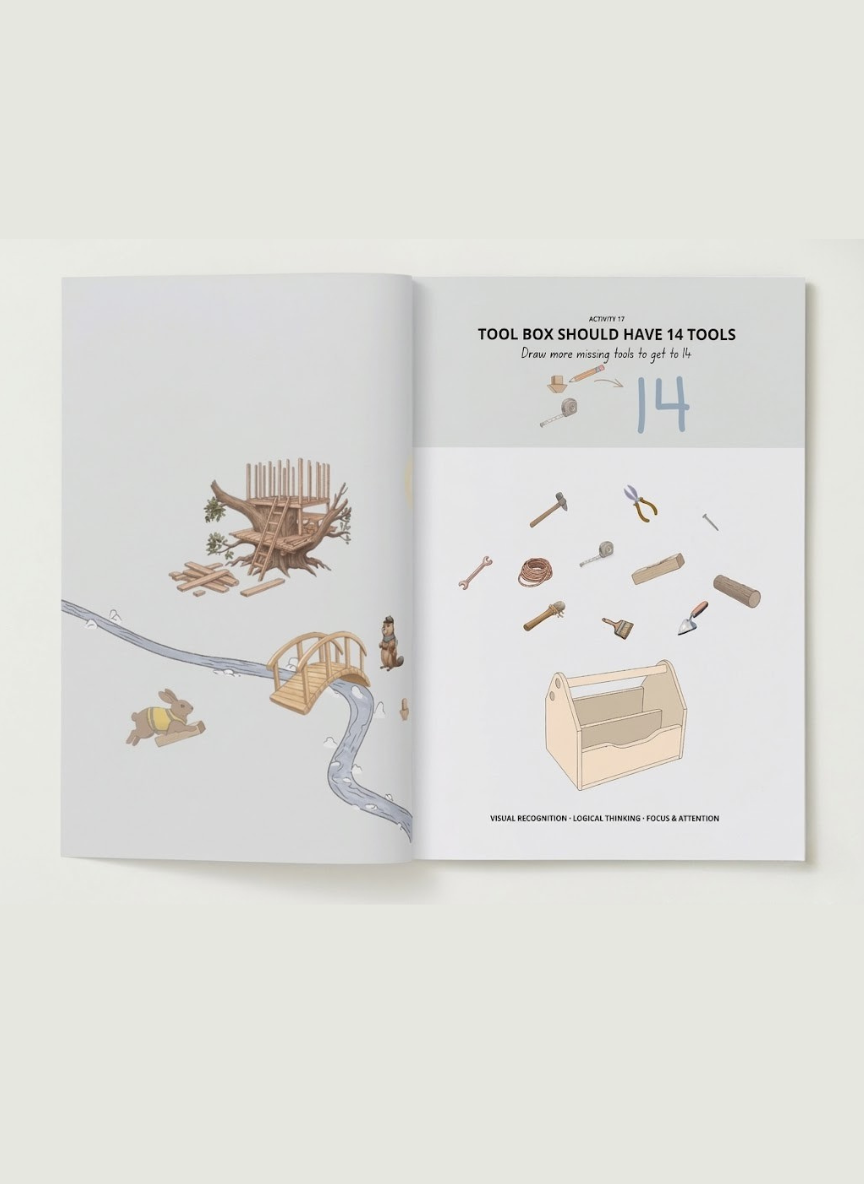
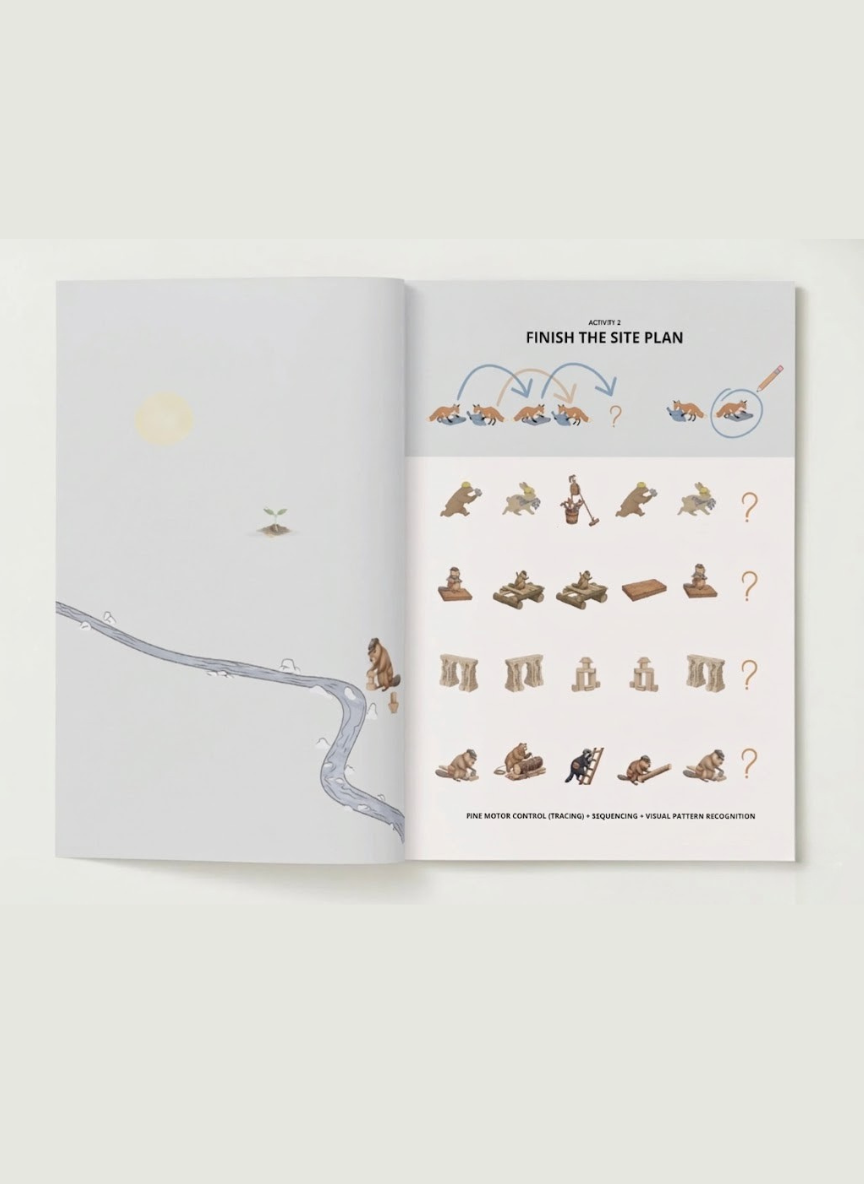
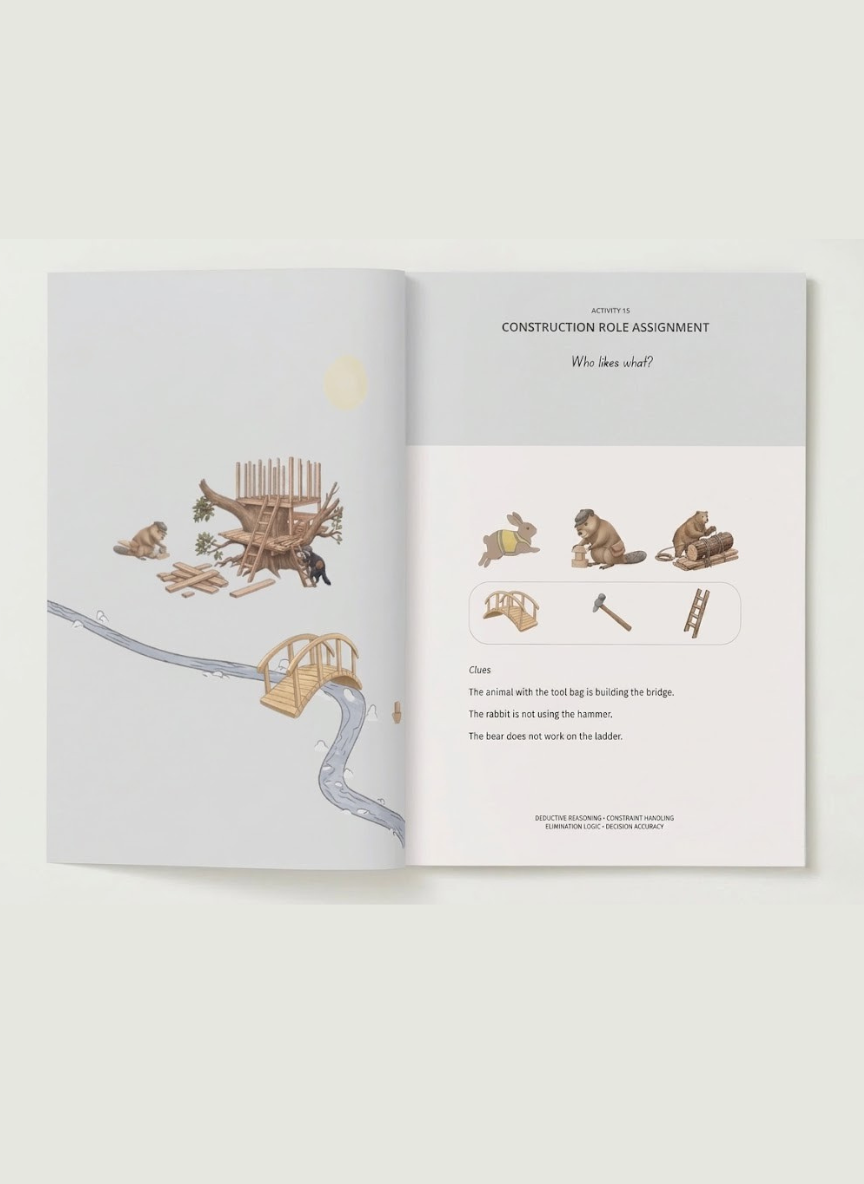
The Free Calm Pack gives parents that bridge: visually quiet, low-stimulation pages with one clear task at a time. A child can trace, match, complete, and finish. That visible finish point matters. It helps the nervous system settle instead of chase the next hit of input.
Over time, the routine becomes predictable: the screen goes off, and one calm page begins. For families who want more consistent support, Tiny Thinks Workbooks extend the same logic into everyday routines with quiet design, clear sequencing, and repeatable thinking tasks.
Attention is not built through consumption. It is built through effort, friction, and staying.
Tiny Thinks
This is where many parents get stuck: the screen goes off, but nothing else holds.
The Free Calm Pack gives your child something calmer to move into.
The Illusion of Educational Content
Many parents search “educational” on YouTube Kids and feel reassured by what they see: phonics, numbers, colors, math, problem-solving. The titles sound useful. The thumbnails look safe.
But “educational” on a platform is a label, not a standard.
Much of what gets labeled educational is still built first for retention: fast edits, bright visuals, catchy songs, character hooks, and quick rewards. That can look productive because the child stays engaged. But engagement is not the same as development.
For children ages 3 to 7, real learning requires more than exposure. The child has to notice, think, try, remember, and use the idea again away from the screen.
You can see the difference in real life. A child may remember the song, repeat the phrase, or recognize the character — but still struggle to apply the idea in a quiet, real-world moment.
That usually means the content landed as stimulation, not understanding.
On YouTube Kids, “educational” content can also sit right beside entertainment logic and commercial logic. That matters because the platform does not reward what is slow, clear, and cognitively useful. It rewards what gets clicked, watched, and repeated.
The difference between real learning and platform “learning” is clearer than it looks:
If children do not have to think, they is not learning. they are watching and consuming.
Real educational content is slow enough for a child to process. Real educational content builds one idea at a time. Real educational content asks something of the child. Real educational content still matters when the screen is off. Most platform content fails at least three of those tests.
Tiny Thinks
There are wider dangers to this mirage. Kids under 12 don’t completely understand how ads function, so ‘educational’ formats combined with marketing are especially potent. Small kids are not just watching, but posting videos and mimicking trends that they barely even understand.
Tiny Thinks sits on the opposite side of this problem.
No autoplay. No feed. No character-driven reward loop. No demand to keep watching.
Just one quiet page, one manageable challenge, and one visible finish point.
That is closer to how early learning actually works: slower input, active thinking, and completion. The Free Calm Pack gives parents an immediate version of that structure, and the workbooks extend it into everyday routines.
Children do not build focus by consuming more “educational” media. They build it by doing.
Tiny Thinks
A New Path Forward
A better path does not start with blame. It starts with clarity.
The real problem is not just that fast, autoplay content pulls a young brain toward constant novelty. It is that many children do not have a strong enough offline structure to help them settle once that content stops.
Parents do not need perfect control over the internet. They need stronger defaults at home.
When a child knows what happens after school, during dinner prep, in waiting rooms, and before bed, screens stop being the only reliable answer.
Algorithms will have to pivot toward safer, slower, more educational content for children, with more transparency and accountability about how moderation actually functions. Until then, families need their own armor and systems to safeguard attention and nervous systems, not just from “bad” content, but from nonstop stimulation itself.
Most parenting advice focuses on restriction. Very little focuses on replacement.
Reclaim Playtime
Reclaiming playtime means screens stop being the automatic filler for every hard moment.
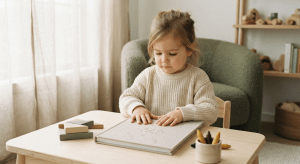
Children ages 3 to 7 still need long exposure to open-ended, low-stimulation activity: building, drawing, pretend play, picture books, sorting, movement, and simple hands-on tasks.
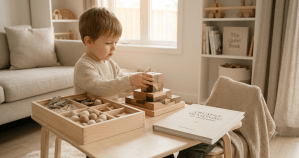
A 20 to 30 minute slot after school before any screen transforms the entire evening. The child’s nervous system settles first, rather than being driven upward by quick-cut visuals. Open-ended toys help here: wooden blocks, plain figures, simple puzzles, blank paper, tape, cardboard boxes.
These don’t ‘entertain’ in the way a video does; they prompt the child to create the next action. It’s in that invitation where attention, sequencing, and problem-solving flourish.
These activities matter not because they look wholesome, but because they require the child to generate the next step instead of receiving it.
Age 3–4: large blocks, chunky puzzles, matching cards, simple pouring and scooping
Age 4–5: small-world play (cars, animals), storytime baskets, simple board games
Age 5–6: Early mazes, pattern copying, inventing shops or kitchens with household items
Age 6–7: Simple construction sets, map drawing, early logic puzzles, independent reading corners
Set Boundaries
Boundaries work best when they are predictable. Children handle limits better when the rules feel stable: when screens happen, where they happen, how long they last, and what comes after.
Parental controls then become a support tool, not the sole line of defense. A family media plan can include:
Daily limits: Specific total minutes per day and per session
Context rules: No personal devices in bedrooms, at meals, or during homework.
Content filters include approved apps or channels only, autoplay is off, and age filters are on.
Review rhythm: Weekly check-in to adjust limits and talk about what was watched.
The goal is not constant negotiation. The goal is removing negotiation from the system.
It’s this adherence to the plan, even when other families are slack, that the real gain lies. Consistency helps teach the child that screens are a piece of life, not the focal point.
Communicate Openly
Children usually accept boundaries faster when the boundary makes sense to them.
A child does not need a lecture on algorithms. But they can understand this: some videos make the brain feel too fast inside.
Simple questions work well: “What do you like about this video?” “How does your body feel after watching?” These questions help the child observe overstimulation rather than have it diagnosed for them.
Talk about ads, tracking, and what’s real versus touched-up can begin early, using simple examples. A cartoon roasting on a baggie can start a conversation about why the company wants to talk to them.
By involving kids in the family rules, such as asking, “What feels like a fair amount of video time?” they have a stake in the system and enforcement becomes less of a power struggle.
Model Behavior
Children notice what adults reach for in empty moments.
If every pause gets filled by a phone, the child learns that stillness is something to escape, not tolerate.
Putting phones in a basket at dinner, telling stories, and saying, ‘I’m shutting my laptop now, my brain needs a nap’ provide specific examples. Parents can share both upsides and downsides of their own media use: enjoying a recipe video but feeling wired after too much social media.
Then, instead of only taking screens away, they show what they reach for instead: reading, sketching, methodical chores, or a calm puzzle. This is the hole Tiny Thinks™ fills.
When your preschooler is having a post-school meltdown, battling screen transitions, or bouncing through dinner, parents need something calm, immediate, and structured that a 3 to 7-year-old can initiate solo and actually stick with. Tiny Thinks is regulation-first and screen-free on purpose: slow visual design, clear sequences, and small cognitive “wins” that pull a scattered mind into order without adult prompting.
Free Calm Pack is the lowest-friction entry point. Parents can print a few pages, keep them in a simple folder or tray, and pull them out at the exact moments they’d usually reach for YouTube Kids: in the car, at a restaurant, during the pre-bed crunch.
Before long, countless families are weaving in age-specific Tiny Thinks Workbooks to create a trusted ‘calm thinking shelf’ at home. There are no ethics on screens. There is no stressful need to “all in.” This is just a pragmatic, proven alternative for when a child’s system needs to decelerate and ponder.
Beyond The Screen
The deeper question is not just how much screen time a child gets. It is what kind of mind the rest of the day is training.
Screens are one input. Family rhythms are the system.
Screen-free time gives children practice in the exact skills fast video cannot build well: waiting, turn-taking, flexible thinking, narration, self-initiation, and staying with something when it is no longer instantly rewarding: waiting, turn-taking, problem-solving, and flexible thinking. When a toddler builds block towers, bargains during make-believe, or crafts a tale with action figures, they’re continually replanning, managing minor frustration, and keeping order in memory. Those are the same skills that subsequently underpin reading, sitting through class, and weathering boredom without a meltdown.
Parents at every income level recognize they should provide this, but busy days, exhaustion, and space constraints can silently nudge the family back to the screen. Storytelling, art, music, and pretend play are the pragmatic counterbalances. A three-year-old recounts how the day went as you sketch it out together on scraps of paper, reinforcing sequencing and language.
A five-year-old mimicking a basic beat on the table with a spoon exercises auditory attention. A six-year-old operating a make-believe store with empty boxes and play cash practices social roles, number sense, and impulse control. These don’t require fancy desks or new gadgets; they require short, repeatable formats your kid can get going on his own once he’s learned the pattern.
Under all of this, sit shared experiences. A silent door-knob walk naming patterns, a basic family card game, or a 10-minute nightly ‘tell me one good thing, one hard thing’ talk cultivates communication skills like no ‘educational’ video ever can. As children get older, their day naturally shifts toward more sitting and more screens, and they notice more of what is on those screens: background arguments, scary thumbnails, subtle jokes you would rather skip.
That’s when the quality of what fills the non-screen time becomes more important, not less. Some families build structure through regular screen-free events: a weekly “drawing and music” hour, a Sunday puzzle block, or a simple monthly family challenge like “no screens at dinner all week.” For a lot of parents, particularly in high-stress or lower income environments, screens quite understandably serve as the simplest respite.
Otherwise, “ten minutes” cascades into an hour and issues with temper, sleep, and behavior intensify. This is the void Tiny Thinks™ exists to quietly fill. It doesn’t eliminate all screens and it doesn’t demonize YouTube Kids. It gives you a calm default for the hardest pressure points: after school, before dinner, in a waiting room, on a plane, and during bedtime wind-down.
The Free Calm Pack provides easy, printable, repeatable thinking pages you can print and stow in a folder or bag. A child masters the pattern once, then can yank a page, launch unaided, and stick with it until their nervous system downshifts. Age-based Tiny Thinks™ Workbooks take the same approach further: low-visual-noise layouts, clear sequencing, and small cognitive “wins” that reward staying with one thing at a time.
Parents remain in control of when and where screens appear. Tiny Thinks™ provides you with a tangible point to grab onto when you want your kid calm and thinking, not scrolling through social media feeds.
The Tiny Thinks Solution
Tiny Thinks is not trying to out-entertain YouTube Kids. It solves the problem YouTube Kids leaves behind.
What do you hand a child when the screen goes off and their system is still asking for more?
Tiny Thinks gives parents a practical replacement system for ages 3 to 7: paper-based, visually calm, cognitively active pages that help a child shift from passive input to active attention.
This is not just “something to keep them busy.” It is attention training disguised as calm play.
Screens are a technology. Our families trust them for childcare gaps, long days, and sanity. The true pressure point is what rapid, autoplay content does to a 3 to 7 year old’s attention, not whether a screen is “good” or “bad.
The broader landscape is changing. Regulators across multiple countries now report that children see harmful content online, and over a third of children had viewed harmful content on YouTube. What once appeared to be the most ideal approach at first glance—’kid-friendly’ apps, filters, and isolated platforms—now feels thinner under pressure. Some nations are going as far as banning social media for under-16s.
In a few instances, that includes YouTube accounts, which surprises numerous parents as YouTube had always seemed like a fun house rather than a social network. Teenagers and parents ought to be shocked by plans to ban YouTube for under-16s because day after day, it’s seeped into everyday family life.
Tiny Thinks steps into this gap with something simple: a predictable, paper-based thinking system for ages 3–7 that does not depend on connectivity, algorithms, or moderation policies. It’s the only practical, structured system built for calm, screen-free thinking play in this age band. Every page is designed to slow the nervous system: clean layouts, minimal color, clear sequences, and no flashing rewards.
One little problem at a time, a child sees a tiny, thinkable solution. The work is quiet and deep: matching, simple mazes, gentle pattern-building, step-by-step drawing, early logic puzzles. These are not random activities. They are curated, developmentally appropriate tasks that build creativity, focus, and emotional regulation in the way you actually see at home: a child stays at the table five minutes longer.
They can wait for food without begging for a phone. The post-screen meltdown softens because their brain has something slower to hold onto. For parents, Tiny Thinks is a method of attention reclamation with no battle necessary. You print the Free Calm Pack, put it in a thin folder, and reach for it at the exact moments you used to reach for YouTube Kids: after school, while cooking, in a waiting room, during the pre-bed crash.
Eventually, kids begin to initiate it themselves because the system is predictable and conquerable. From there, age-based Tiny Thinks Workbooks expand that same peaceful structure into everyday life, so you’re subconsciously developing lifelong learning skills without relying on digital media to shoulder the burden.
Looking for a repeatable screen-free system that actually holds your child’s attention?
YouTube Kids is not just a content choice. It is a pacing choice.
And for children ages 3 to 7, pacing matters. Fast, autoplay input can make real life feel slower, harder, and less rewarding than it should. That is why behavior shifts. That is why attention gets shakier. That is why turning the screen off often feels worse before it feels better.
The answer is not panic. It is replacement.
When children have calmer, more active, more thinkable alternatives, the screen stops carrying so much weight.
A flight, a café, a rainy afternoon, cozy evenings. Children are always practicing something.
In these everyday moments, children are practicing attention, persistence, confidence, and figuring things out for themselves. Tiny Thinks Workbook series gives them shapes how they approach challenges later.
YouTube Kids isn’t ‘all bad,’ but it can be dangerous without parental control. The app promotes passive viewing and algorithmic videos, which can lead to behavioral issues in young children. When used with moderation and parental settings, it can be safer.
Why is passive screen time on YouTube Kids a problem?
Passive watching on platforms like the YouTube Kids app implies that young children simply consume content without engaging deeply. This can decelerate language, attention, and problem-solving abilities, and excessive use may further supplant actual world play and in-person interaction, which are crucial for social development.
Is the educational content on YouTube Kids actually helpful?
A few of the recommended videos on the YouTube Kids app are genuinely educational, but most are simply tagged that way. Algorithms prioritize clicks and watch time over content quality, which can lead to behavioral issues in young children as they consume excessive media exposure.
How much YouTube Kids time is safe per day?
Health experts recommend that parents restrict screen time for toddlers to around 1 hour a day of quality content, particularly through apps like the YouTube Kids app. What matters most is context: active adult co-viewing, clear time limits, and plenty of off-screen play, reading, and social time.
How can I make YouTube Kids safer for my child?
Put hard limits on time and monitor your child’s social media use. Watch together when you can, and consider using the YouTube Kids app to ensure they access appropriate content. Discuss with your child about what they watch and how it makes them feel to address any behavioral issues.
What should I encourage my child to do beyond the screen?
Offer activities that build thinking and creativity for young children, such as drawing, building, and reading together, as these support language, self-control, and social development far better than excessive use of screens or social media apps.
What is the Tiny Thinks solution and how is it different from YouTube Kids?
Tiny Thinks emphasizes active learning, not mindless videos, making it a recommended app for young children. It provides brief, directed tasks created by child development specialists, transforming screen time into offline development while addressing concerns about excessive use of social media apps.
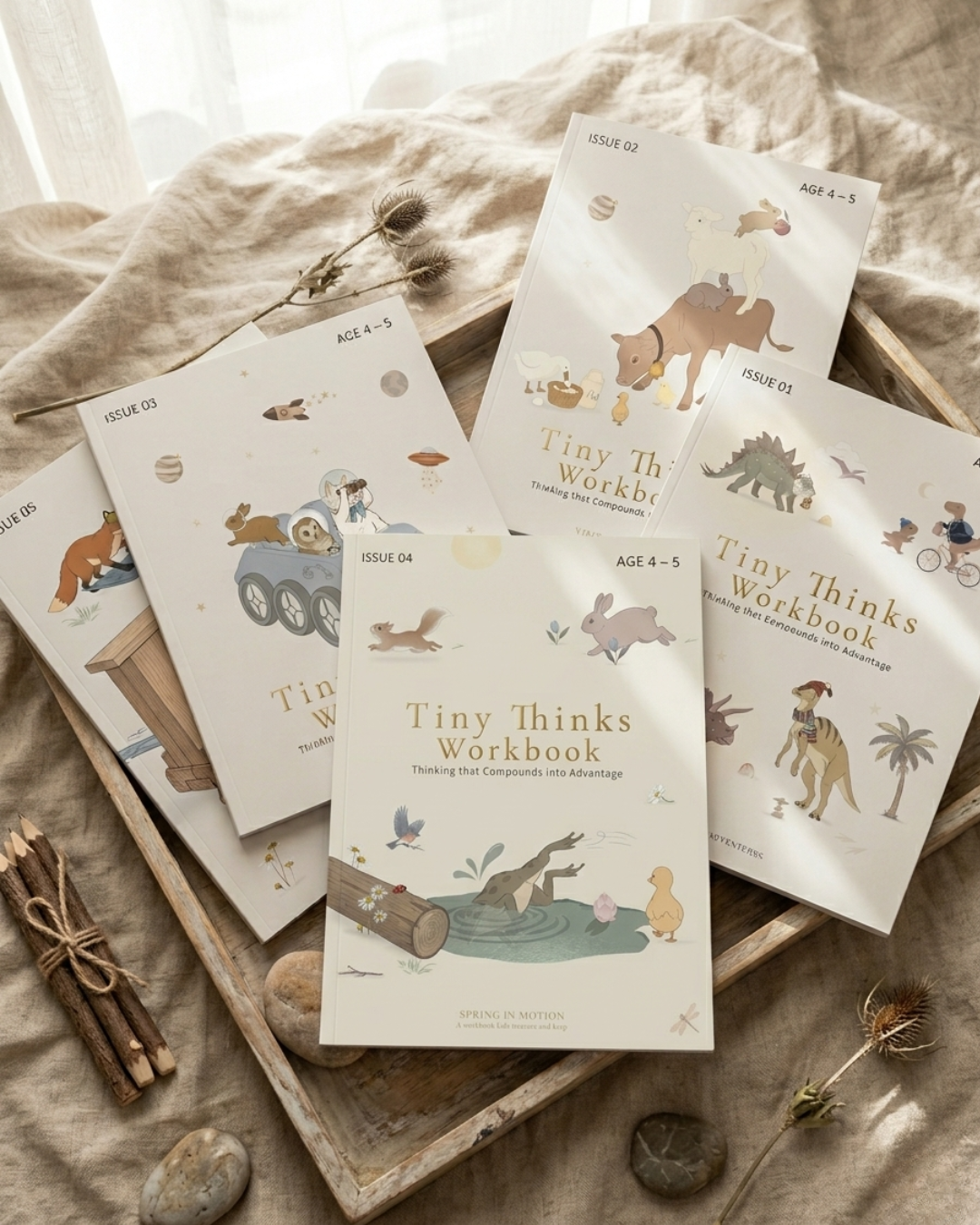
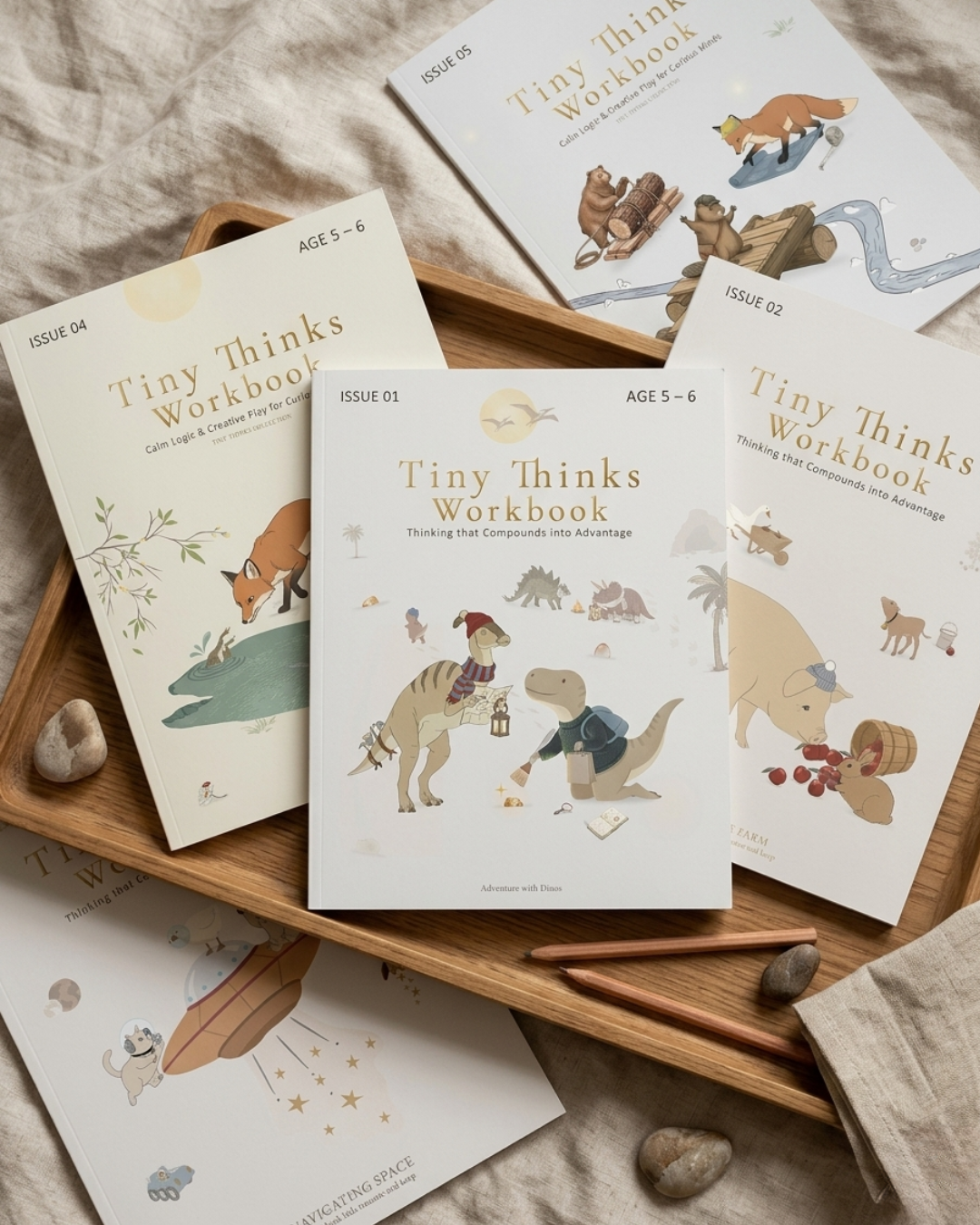
Each age bundle includes five themed workbooks built around The Pre-Seven Learning Method™ — a progressive screen-free system for attention, persistence, reasoning, planning, independent thinking, and creativity before age seven.
Ages 3–4
The Attention Architect
For the child beginning to sit, notice, match, sequence and finish short thinking tasks.