


- Key Takeaways
- Brain Development and Screen Time
- Cognitive and Social Differences
- Physical Health Considerations
- The Content Quality Spectrum
- Creating a Digital Nutrition Plan
- Beyond the Screen
- Conclusion
- Frequently Asked Questions
- How does screen time affect toddlers compared to preschoolers?
- What are the recommended screen time limits for toddlers and preschoolers?
- Can screen time affect physical health in young children?
- Is the type of content important for young children’s screen time?
- How can parents create a healthy digital plan for their children?
- Do toddlers and preschoolers learn differently from screens?
- What are good alternatives to screen time for young children?
Key Takeaways
- Toddlers and preschoolers’ brains are at an early stage of development and are very sensitive to screen time.
- Toddlers do best with hands-on experiences and time in pretend play. Too much screen time can inhibit their emotional and cognitive growth.
- Preschoolers are primed for learning and social engagement, though both the quality and quantity of screen content affect their linguistic, attentive, and social development.
- Excessive screen time can interfere with sleep, physical activity, and the development of crucial skills like empathy, problem-solving, and motor development. By prioritizing hands-on play and outdoor activities, you help support well-being.
- As parents, you can lay the groundwork for healthy habits by establishing clear screen time limits, selecting quality content that is age-appropriate, and remaining engaged during media usage.
- By modeling balanced screen habits yourself and encouraging unstructured, screen-free play, you’re supporting their focus, creativity and emotional growth.
When screens turn off and your child spirals into restlessness or irritability, this is what families use instead. The Tiny Thinks™ Free Calm Pack gives children a calm, structured thinking activity they can enter immediately—no negotiation, no stimulation rebound.
Screen time toddlers vs preschoolers
Toddlers, who still lack robust self-regulation, tend to hemorrhage mood and attention after screens.
Preschoolers, with their more structured thinking, may settle better but can still get overstimulated by rapid fire content.
Each age group processes stimulation differently, which shapes the results parents observe at home.
Knowing these differences helps you support calmer transitions and routines for your little ones.
Brain Development and Screen Time
Early childhood is a prime time for brain development, when kids’ attention systems, language networks, and self-regulation circuits are forming quickly. The impact of screen time on these processes differs between toddlers and preschoolers, as their brains react differently to external input and stimulation. It’s not “screens” in general that are the problem; it’s the speed and unpredictability of fast, autoplay-driven content that interrupts the slow-developing attention span and emotional regulation skills young kids require.
Deliberate, tempered screen exposure paired with tranquil, organized non-screen options cultivates more robust brain growth than free access to max-stimulation media.
1. The Toddler Brain
Toddlers from one to three are in the most sensitive window of neuronal development. Their brains are wiring connections for language, self-control, and emotional awareness from every interaction. Fast, visually cluttered screen media can quickly overwhelm this delicate system. More TV exposure between 6 and 18 months is associated with emotional reactivity, aggression, and more externalizing behaviors.
Toddlers crave touch, repetition, and eye-to-eye contact. Passive screen time doesn’t trigger the same brain pathways as active play or human interaction. Too much screen time leaves toddlers less able to calm, concentrate, or partake in languorous, unstructured play, which are skills that will ground future learning.
Active play, such as easy puzzles, matching, or soothing sorting games, provides toddlers the cognitive workouts that screens cannot.
2. The Preschooler Brain
Preschoolers, three to five, are ready to learn, play socially, and work on self-regulation. Their brains are more mature than toddlers’ but still susceptible to overstimulation. Faster, more frequent use of screen-based media was linked to reduced white matter integrity that supports language, executive function, and emerging literacy.
Preschool children who have more than the recommended 0.5 to 1 hours of non-essential screen time a day tend to have less mature brain organization and poorer emotional understanding skills by school age. Quality matters: slow, predictable, interactive content is less disruptive than rapid-fire animation.
To shield brain development, organize screen time with defined boundaries and provide replacement habits such as pattern blocks, line tracing, or easy beat games, particularly during stress periods like after school or long travel.
3. Attention Spans
Young children’s brains develop their attention based on what requires their attention most. Rapid, intermittent screen stimulation shards attention, leaving children less able to focus in real life. Research associates screen time with decreased functional connectivity in the brain’s attention networks and with inattention symptoms in preschoolers.
Constructing attention demands slow, rhythmic input over and over again. Child-directed, screen-free activities such as matching cards, easy mazes, or calm sorting activities rejuvenate focus. Parents can aid focus by sticking to the 0.5 to 1 hour daily screen time recommendation and instead filling transition times with soothing, tactile options.
4. Language Acquisition
Language blooms fastest with back-and-forth interaction. Certain types of interactive media can encourage vocabulary development, but passive screen time pushes back spoken language, particularly in early toddlers. About Brain Development and Screen Time connection between preschool screen time and lower white matter organization in language-related regions.
Face-to-face conversation, reading aloud, and hands-on play all provide richer language input than even “educational” videos. Whether it is simple storytelling, sequencing picture cards, or naming games, these activities encourage children to use and stretch their language in ways screens rarely do.
5. Executive Function
Executive function—attention control, working memory, flexible thinking—anchors school readiness and emotional regulation. Fast or wild screen time can sabotage this skill development by restricting real-life practice. Research suggests that too much screen time in preschool years decreases brain connections in networks that support executive function and literacy.
Real-world play is critical. Building towers, obeying two-step instructions, or tracing slow, monotonous patterns all develop executive skills. These calm, predictable routines like those in Tiny Thinks™ provide kids the framework their brains crave to start, stay with, and succeed on their own.
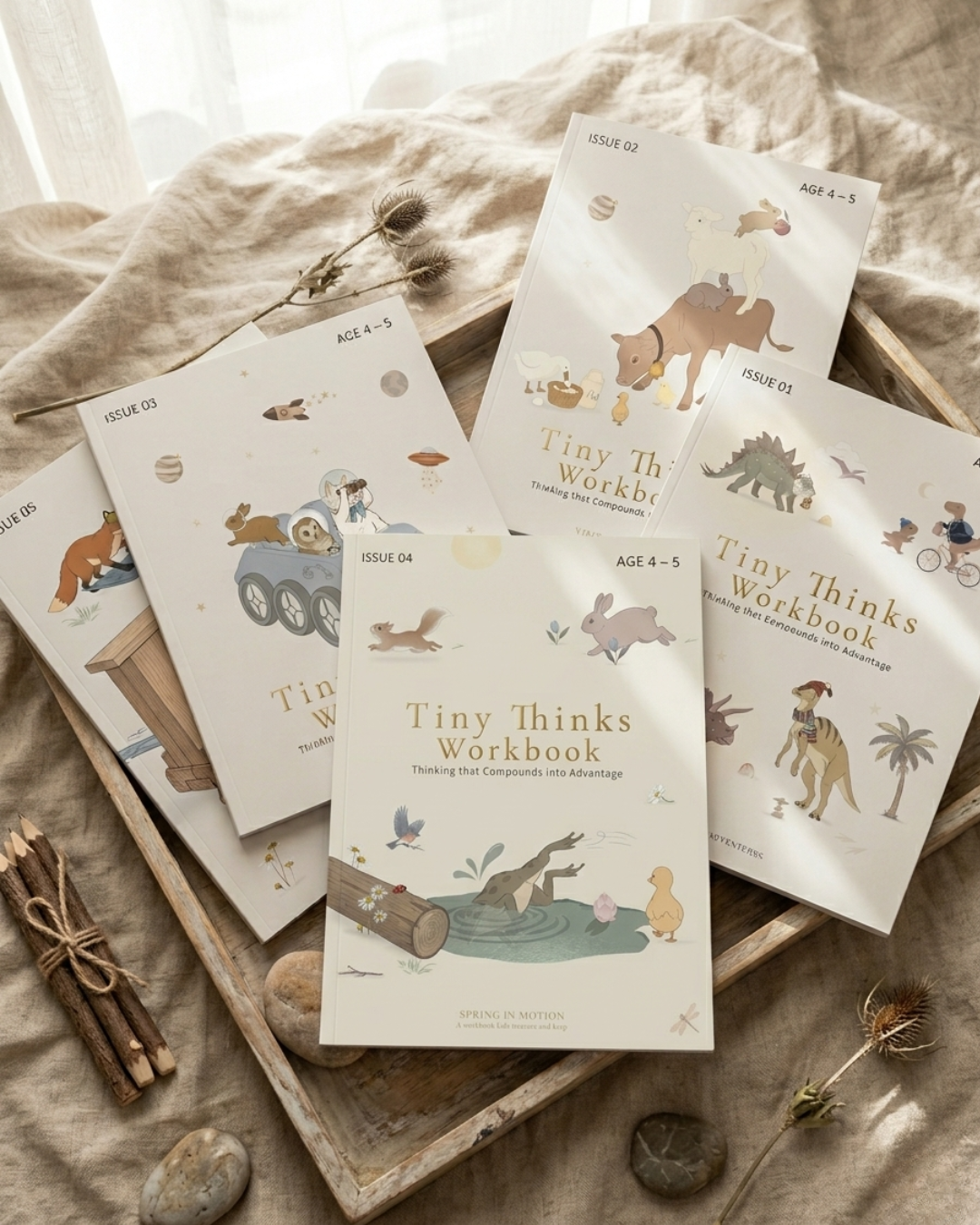
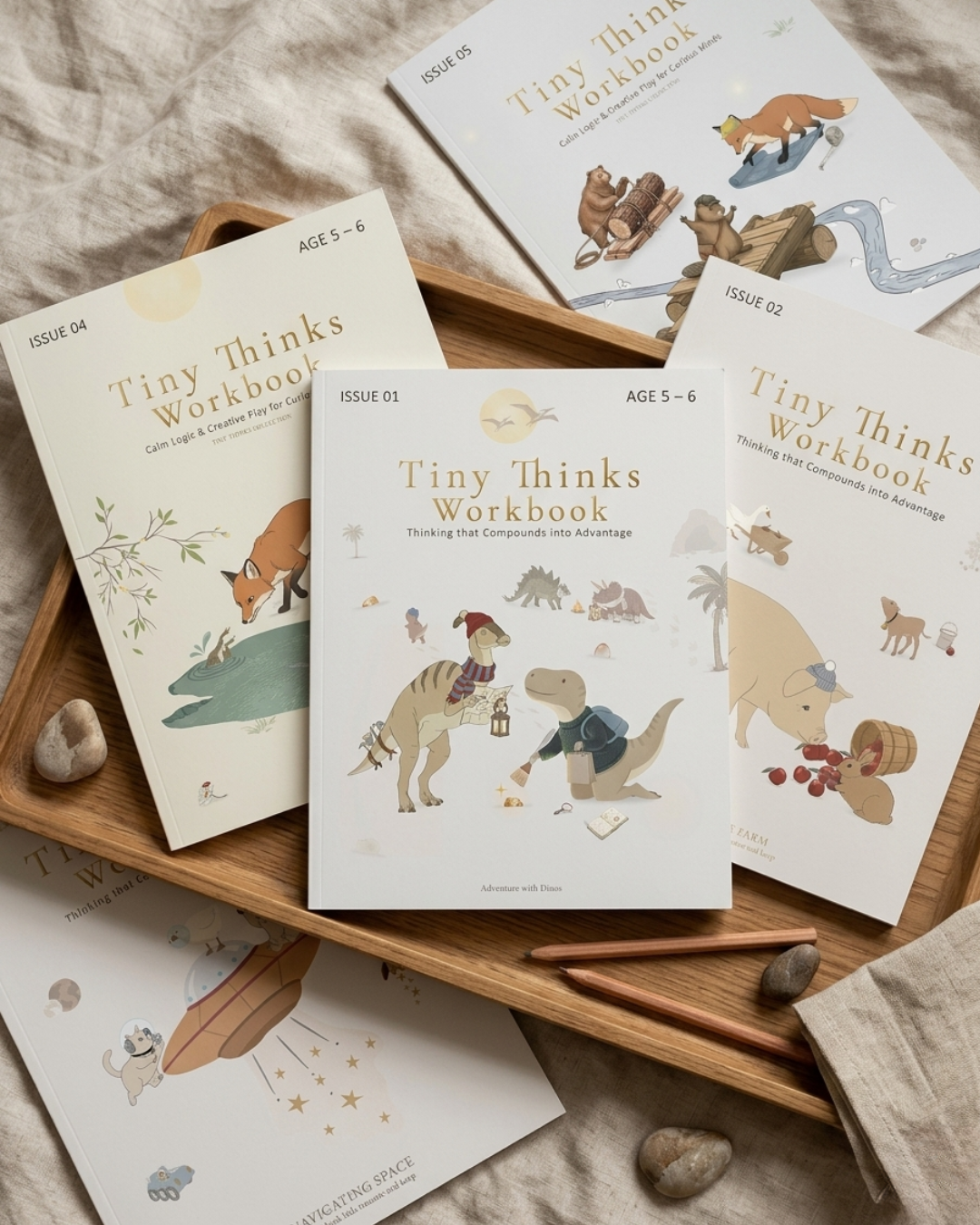
Tiny Thinks™ is designed for these exact moments: after school crashes, screen transitions, waiting rooms, dinner chaos, and bedtime wind-down. About Brain Development and Screen Time.
After school or after a screen session, children need something their brain can settle into—not another decision. Tiny Thinks™ Workbooks provide slow, predictable thinking play that replaces screen wind-down with focus children can sustain on their own.
No Heading 2, Free Calm Pack provides parents with immediate, no-brain-required assistance when they spot attention splintering but desire a relief device that resets concentration quickly. Every page is paced, calm, and beautifully plain so kids can begin, continue, and revisit by themselves.
For older kids, age-specific Tiny Thinks™ Workbooks carry these benefits further, reinforcing regulation and independent thought when life is noisy. No hype. No strain. No moralizing! Just a peaceful, screen-less padding waiting to flatten your kid when you need them centered and cogitating.
Cognitive and Social Differences
Cognitive and social development in infancy is influenced by everyday experience. With screens becoming an integral part of family life, it’s crucial to know how screen time impacts toddlers and preschoolers differently. Screens aren’t “bad,” and parents aren’t failing to use them. How screens are used—and what they supplant—counts for growing minds.
|
Developmental Domain |
Toddlers (1–3 years) |
Preschoolers (3–5 years) |
|---|---|---|
|
Attention Span |
Rapid shifts, easily fragmented |
Growing ability to focus for minutes |
|
Language Development |
Screen time slows early vocabulary |
Educational content can support, but excess harms |
|
Executive Function |
High sensitivity to fast input |
Working memory benefits from limits |
|
Social Skills |
Needs live, real-world feedback |
Peer play builds cooperation, empathy |
|
Peer Interaction |
Parallel play, learning turn-taking |
Cooperative play, negotiating rules |
|
Imagination |
Sensory play builds creativity |
Storytelling, role play thrive offline |
Play
Play is the backbone of early learning. Toddlers and preschoolers develop focus, memory, and social skills through block-stacking, make-believe, and ordinary object tinkering. When screens crowd out silence, there’s less time for the play that hardwires the brain for patience and problem-solving.
Screens, particularly rapid-fire, random-access screens, push aside tiny pockets of play—post-dinner, pre-bedtime, car play. It’s not even about purging screens, it’s about taking back those scraps for hands-on, unfettered creativity. Simple routines work: a puzzle on the kitchen table, a matching game pulled out at dinner prep, a calm pattern to trace before bed.
Imaginative play organically expands attention and lets kids work on sequencing and negotiation. Tiny Thinks™ Workbooks, with their serene images and soft nudges, reset flurry minds into still concentration. Even a few minutes a day can get kids calmed down and start their own play, no nagging required.
Empathy
Empathy develops in the slow moments, face-to-face, not face-to-screen. Toddlers read emotion in tones and movements. Fast, algorithm-driven screen content can crowd out those moments, making it more difficult for kids to attune to others’ cues.
Excessive screen time can make children less practiced at observing emotions and reacting with empathy. Modeling of empathy counts. When parents label emotions—”You seem frustrated”—or tenderly recount a sibling spat, kids are learning the language of insight.
- Read picture books about emotions and discuss the characters’ feelings.
- Use puppets or plush toys to role-play the simple problem scenarios.
- I would encourage kids to join in with some small kindness deeds around the house.
- Take a break from playing to ponder how someone else feels.
Problem-Solving
Screen time, particularly passive watching, can short-circuit the slow work of figuring things out. Toddlers and preschoolers require authentic materials and time to experiment, to fail and try once more. This develops the executive function skills: attention, planning, and flexible thinking that screens by themselves can’t provide.
Guided play, such as following two-step directions or replicating a block tower picture, develops patience and confidence. Tiny Thinks™ pages are structured for this: slow, repeatable challenges, always within reach, always predictable.
- Set out sorting or matching games for solo play.
- Offer a simple maze or pattern to trace.
- Encourage taking turns building with blocks or stacking cups.
- Let children “fix” or “design” with safe household items.
Tiny Thinks™ is for parents who want a zen, reusable weapon at hard moments—after school, transitions, the doctor’s office. The Free Calm Pack is a nice soft landing zone. For kids prepared to capitalize on that focus, age-specific Workbooks scale out the system. Nothing forced, nothing hype. Just a silent, disciplined backup that activates when you need it most.
Physical Health Considerations
Physical health in early childhood is influenced by daily routines, such as children’s screentime, physical activity, and sleep. It’s not screens as a contemporary tool that are the issue, but rather how rapid, hyperstimulating content can displace beneficial patterns, particularly when toddlers and preschoolers are still establishing foundational habits. Parents often notice the difference immediately after long screen stretches: more restlessness, harder bedtimes, and a drop in active play.
Tiny Thinks™ is there to capture these moments, not as discipline, but as a useful, calming alternative when a kiddo needs to calm and reset.
Sleep Patterns
Screen time, particularly before bed, may disrupt sleep in toddlers and preschoolers. Tablets, phones, and televisions emit blue light that interferes with melatonin production and throws off natural sleep cycles. This translates to kids hitting the sack later, waking less refreshed, and having difficulty controlling their own behaviors through the following day.
Establishing an early, screen-free bedtime routine signals your body that it’s time to slow down. Dimming lights, reading, or gentle tactile activities facilitate children’s transition to sleep. Just a half-hour buffer between screens and lights-out can make your sleep both deeper and longer.
Designing a screenless sleep sanctuary, with no devices in the bedroom, dim lighting, and consistent routines, provides your body obvious signals for rest. In the longer term, these habits promote improved mood, focus, and grit.
Motor Skills
Kids require both gross and fine motor activity daily to build healthy skills. When screen time goes too long, hands and bodies are largely still. Swiping and tapping don’t develop strength or dexterity. This is particularly important for toddlers, who depend on physical play to build their muscles, balance, and coordination.
Studies indicate that Canadian preschoolers average 2 hours of screen time daily, while less than 15 percent attain suggested physical activity targets. Active play — stacking blocks, climbing, drawing or simple balancing games — are all directly supportive of both fine and gross motor development.
These times cultivate confidence and patience, things that digital stimulus cannot substitute. Parents can weave in movement naturally: walking to the store, sorting laundry, and playground time. It’s not about purging screens; it’s about ensuring that every day incorporates some genuine, tactile engagement.
Healthy Habits
Screen time habits do matter. Overuse is associated with poor diet, increased risk of obesity and less time spent reading or engaged in interactive play. When parents exhibit balanced screen habits themselves, tucking phones out of sight at the dinner table and opting for activities instead of solo screen time, they’re sending a direct message about what matters.
Establishing soft, consistent boundaries encourages kids to develop self-discipline. Most families find success with simple routines: screens after active play, never at meals, and always off before bed. All of these small shifts, ten minutes less screen time a day, return time for storytelling and active play.
- Drawing or coloring together
- Preparing food as a team
- Building with blocks or puzzles
- Music and dance breaks
- Sorting household objects by color or size
Tiny Thinks™ offers a Free Calm Pack designed for these real pressure points: after school, mealtime chaos, travel, waiting, and bedtime. Workbooks extend these foundations, providing children reliable, low-stimulus cognitive habits that calm the nervous system and encourage autonomous concentration.
There are no prompts, no incentives, just a serene, replicable framework.
The Content Quality Spectrum
Not all screen time experiences impact kids equally. What kind of content kids are consuming – passive, interactive or co-viewing – matters way more than minutes. Quick, random content splinters attention and control, whereas slow, organized information develops concentration. The true danger lies not with screens as such, but with the interface of what’s onscreen and the tempo imposed by its structure.
Parents are able to make these distinctions. Here, the chart provides a simple perspective on how content categories affect early evolution.
|
Content Type |
Cognitive Impact |
Regulation Impact |
Risks |
Examples |
|---|---|---|---|---|
|
Passive Viewing |
Low engagement, weak memory |
Overstimulates, fragments |
Reduced focus, hyperactivity |
Cartoons, autoplay videos |
|
Interactive Media |
Supports thinking, memory |
Can regulate, if paced |
Overload if too fast |
Educational apps, puzzles |
|
Co-Viewing |
Builds language, reasoning |
Regulates through connection |
Depends on content chosen |
Watching and discussing media |
|
Violent/Inappropriate |
Distorts patterns, stress |
Disrupts, dysregulates |
Fear, aggression, withdrawal |
Action films, mature games |
No media is especially risky for this age group. It can skew pattern recognition, increase baseline stress, and erode faith in the world. A lot of parents see crankiness, bad dreams or outbursts of violence following, even if it appears to be unwitting.
Post content in preview and set simple, transparent rules about what is permitted. When you can, make it soft and slow. Before you let them press play, check out what your kid is going to see. Scan for speed, tone, and themes. Is the pace frenetic? Are there jump scares or grim narratives?
Prefer slow, predictable media when screens are necessary. Kids are sponges for the obvious and the subtle.
Passive Viewing
Passive viewing is when kids just watch screen content without engaging, asking questions or moving. This represents the default mode of screen time for toddlers and preschoolers, such as streamed shows or whatever random YouTube playlist. The danger is that the brain slides into a passive mode, soaking up pictures and noises but not really engaging in active thought.
Over time, intensive couch potato can steep children in a culture of distraction that makes it difficult to concentrate, recall sequences, or initiate. Their attention span becomes attuned to rapid, external stimulation. When the screen is off, they’re fidgety and cranky, unable to calm down.
Active, guided content—such as age-appropriate puzzles or tutorial videos—fuels thinking. Even better, it is to keep screens off and use tactile, calm options. If screens are involved, keep it short and have a visible timer for the kids. Provide a comforting hands-on activity afterwards.
Interactive Media
Touchscreens encourage kids to tap, select, or react whether it’s tapping answers, tracing shapes, or assembling virtual puzzles. This can facilitate working memory, patterning, and even early computation, particularly for ready-to-instruct preschoolers.
The trick is pacing. Quick, glitzy “learning” apps can backfire, inducing the very same overstimulation as passive video. Search for apps with deliberate animation, distinct stages, and few diversions. Parents should participate for the initial uses, role modeling how to think, not just react.
Top scores are earned by media that beckons kids to craft—sketch, construct, order. These activities are conducive to real-life skills and can even transform into an entryway to screen-free play. Promote breaks and consistently counteract screen time with actual, hands-on experiences.
Co-Viewing
Co-viewing is watching or utilizing media together, not simply occupying the same space. This is powerful for language, connection, and meaning making. When a parent comments on what’s going on—‘Why do you think she’s sad?’ or ‘What do you think will happen next?’—kids learn to think, not just watch.
It’s not about policing or quizzing. It’s about being in the moment, observing, and occasionally stopping to chat. Make it a habit. Pick a short show a couple times a week and watch it together, discussing the plot or the process.
Consistent co-viewing cultivates reflection and discussion habits that extend well beyond the screen. Take these times as opportunities to be examples of tranquility, interest, and compassion.
Tiny Thinks™ is there for exactly these pressure points when you need your child to settle and focus, sans the friction of fast screens. The Free Calm Pack delivers simple, structured, screen-free activities that work anywhere: after school, during travel, before bed.
Kids can begin independently, remain absorbed, and come back to them again and again. For more intense concentration, age-specific Tiny Thinks™ Workbooks provide step-by-step, low-stimulation exercises to foster focus, memory, and independent thought. No judgment, no hype, just structure that works when you need calm.
Creating a Digital Nutrition Plan
A digital nutrition plan defines the shape of screen time, just as a nutritious diet guides eating. It’s not about rejecting screens, but about creating predictable, manageable routines that support attention, self-regulation, and family connection. It’s about balance, scheduling time for exercise, reading, and slow thinking, while making sure screens support the kid, not vice versa.
Set Boundaries
Clear screen time boundaries help toddlers and preschoolers know what to expect. Predictability reduces stress and tantrums. When it comes to kids between the ages of 2 to 5, several experts suggest a maximum of an hour of quality screen time daily, with little to no mobile media used for children under two.
Families can fortify these boundaries by setting screen-free zones, like at meals or in the hour before bed, to cultivate beneficial habits. Consistency is key. Kids do best when the rules are consistent day to day and adult to adult.
It helps to explain the reasons behind the limits: “Screens are fast. Our brains require downtime to rest and develop in different ways.” This isn’t about ‘bad’ screens—it’s about what helps kids calm and concentrate.
Many parents employ visual timers, written schedules, or even basic picture charts to note when screens are accessible. Others replace screens during hard moments with a soothing, tactile activity like Tiny Thinks™ Free Calm Pack, providing fast relief when regulation is tenuous.
Choose Wisely
All media is not equally bad. Selecting age-appropriate, educational content guards attention and nurtures early learning. Appraise media for pace, visual clutter and if it promotes thought or passive consumption.
Seek out peaceful, predictable programs that encourage your child to stop, predict, or mimic rhythms instead of shows that depend on rapid movement or ongoing reinforcement. A number of international organizations, including Common Sense Media, evaluate content for developmental appropriateness and quality.
Above all, favor content that is age and stage appropriate for your kid. Look for digital experiences that you can break down and talk about, not infinite autoplay. Our Tiny Thinks™ workbooks and activities are screen free by design, perfect for independent activity and real thinking, not mindless amusement.
They fill the same time slot as a screen, but with a different cognitive effect: slow, quiet, and absorbing.
Stay Involved
Kids really do well when they have parents that are engaged with their media use. Watching with, inquiring with, musing with one’s children about what’s on the screen transforms inert time into active, engaged, shared learning. This allows kids to work through what they’re seeing and relate it to their lives.
Even brief chats—“What did you notice? How’d that character solve the problem?”—develop understanding and tolerance. Other times, folding media into collective family rhythms, like Friday night movie or an instruction-based drawing circle, renders screens a unifier, not a separator.
When parents see a child’s attention waning post screen-time, swapping in something tactile like a Tiny Thinks™ Calm Pack helps reestablish regulation and recenter the child.
Model Behavior
Kids learn screens by watching us. Mom and dad make the house rules. If screens are ever present at the table or consume every idle moment, kids internalize that such input should always be there.
Showing balanced usage by tucking devices away at mealtimes and opting for a book or walk instead of scroll time sends kids the message that screens are a tool, not the star of the show. Other families develop household media plans, with all members, including adults, agreeing on screen-free times and locations.
Others simply narrate their choices by saying, “I’m putting my phone away because I want to focus on you now.” Tiny Thinks™ is here for these authentic moments.
So when you need a peaceful, screen-free option after school, in transit, or in a waiting room, the Free Calm Pack or age-based workbooks provide scaffolding kids can step into themselves — no coercion, no haggling, just peaceful concentration.
Beyond the Screen
Screen time is already a fact of early childhood life. Most families use screens as a tool for practical reasons: quick transitions, after-school decompression, or keeping a child quietly occupied when needed. It’s not screens that are the problem, but the rapid, unpredictable, overloaded content powered by fast autoplay technology.
These toys are attention shattering, so they can’t really settle down, concentrate, or start to play on their own later. Screen-free alternatives still count for 3 to 7 kids, not so much as a substitute but as a relief valve, particularly for soothing after overstimulation.
Unstructured Play
Unstructured play lays the groundwork for developing creativity, adaptable minds and initial problem-solving. When kids come up with their own games, construct weird towers, or tell tall tales, they’re doing more than amusing themselves. They’re rewiring their brains for attention and grit.
This sort of play allows kids to try things out, make errors and try again without an adult outcome in mind. Screen time — particularly rapid-fire content — can push aside chances for this essential unstructured play. Little kids who are on screens too much might display impatience and a diminished attention span.
Some teachers observe 3-year-olds wandering the classroom, incapable of engaging in play unless it is immediately rewarding. A blank, open-ended world — a basket of blocks, blank paper and crayons, a cardboard box — beckons slow thinking and deep involvement.
Parents don’t need to come up with elaborate activities. Allow your kids room to be bored and discover their own path. Free-range play, off-screen, spontaneous — it’s more than a fun activity. It’s the authority vector that reestablishes control, patience and sticking with a task.
Social Interaction
Emotional growth, like language skills, requires real, face-to-face social interaction. Kids require time to decode faces, bargain with others, and learn to share. Extra screen time takes away from these interactions.
In homes where background TV is constantly blaring, kids get less practice listening and responding, which can impact language and self-regulation. Helping organize playdates or group activities on a consistent basis fills in these cracks. Not every family has the extensive network, but even one steady friend or cousin can move the needle.
Brief, successive social interactions, such as constructing a block tower as a team, sharing a cookie, or unadulterated make-believe, do more for social development than any app. Certain kids rebel or get upset if play isn’t effortless. This is usually an indication that their nervous system is anticipating immediate stimulation.
Slow, predictable routines help here. Set up a regular afternoon puzzle or a morning matching game with a parent or sibling.
Outdoor Time
Outdoor play is an immediate reset for a kid’s nervous system. Movement, sun, and fresh air all contribute to supporting healthy attention and physical development. Nature exposure has been associated with improved regulation and mood as well as enhanced cognitive capabilities.
Even a stroll to a nearby park or a bit of time in a petite backyard provides blessings. You don’t need structured outdoor time at this age! Allowing kids to dig, climb, or just spy on ants at work develops their patience and powers of observation.
For urban or space-shorted families, a daily walk or trip to an open-air market provides young kids the sensory reprieve they require. When you make at least 60 minutes of outdoor play a priority each day, children come back inside calmer and more focused.
Screen-less rites are most effective when they’re regular and easy to re-enter. Tiny Thinks™ is there for these in-between moments—post screen, on the go, around the dinner table, before bedtime—when kids require calm regulation and untethered reflection.
The Free Calm Pack is a practical starting point: simple, minimal activities that settle busy minds. For deeper focus, age-based Workbooks provide kids a framework to drift back towards without parent enforcement or overstimulation.

Conclusion
Screen time is not the same for toddlers as it is for preschoolers because their brains and needs are different. The littlest ones experience screen impact faster—scattered focus, rapid irritation, difficulty calming. Toddlers can tolerate a little, but still require defined, slow boundaries to develop self-control. What counts is not simply the minutes logged, but the quality of what’s on the screen and what’s going on off it. Consistent, calm rituals in front of screens—easy memory card games, soft number sequences, physical play—rebuild attention and calm.
They can’t micro-manage every second in front of a screen, but structure goes a long way. These calm, repeatable thinking activities provide kids with a dependable path back to themselves, regardless of their screen habits. Ultimately, it’s about balance, clarity, and cultivating real-world attention that endures.
When screens stop working—at bedtime, during travel, or in public spaces—families rely on Tiny Thinks™ as the default alternative. Start with the Free Calm Pack to reset attention without adding stimulation.
Frequently Asked Questions
How does screen time affect toddlers compared to preschoolers?
Screen time affects toddlers’ brain and social development more than preschoolers. Toddlers require more hands-on play to thrive, while preschoolers do well with some exclusive screen-based content.
What are the recommended screen time limits for toddlers and preschoolers?
For example, experts suggest zero screen time under 18 months, discounting video chat. At 2 to 5 years, restrict screen time to 1 hour per day of high-quality programming.
Can screen time affect physical health in young children?
Yes, excess screen time can cause less physical activity, sleep issues, and eye strain in toddlers and preschoolers. Active play and movement are great for healthy development.
Is the type of content important for young children’s screen time?
Content quality matters a lot! Educational, age-appropriate, and interactive shows support learning and development, while fast-paced or violent content can be detrimental.
How can parents create a healthy digital plan for their children?
Screen time toddlers vs preschoolers. Complement screen time with outside play, reading, and family time.
Do toddlers and preschoolers learn differently from screens?
Sure, toddlers absorb information through direct experience, whereas preschoolers can begin to comprehend and be educated by low-level interactive media with parental supervision.
What are good alternatives to screen time for young children?
Nothing beats reading together, outdoor play, creative arts, and family games as a replacement. These activities foster language, social, and physical development in toddlers.