- Key Takeaways
- Why Common Advice Fails
- The Real Nature of Attention
- How to Build Focus in Kids
- Structured Thinking in Action
- From Busy to Engaged
- The Parent’s Role
- Conclusion
- Frequently Asked Questions
- How long can a child realistically focus?
- Is my child’s short attention span a problem?
- What actually improves attention span in kids?
- How is “real focus” different from just keeping kids busy?
- How can parents help kids stay focused during homework?
- What role does structured thinking play in attention?
- When should I worry that my child’s attention issues might be ADHD?
Key Takeaways
- Most advice on focus tells parents to reduce distractions, less screen time, better routines, calmer environments.That can help. But it doesn’t build attention.Focus is a skill. And it only develops when children repeatedly practice staying with structured, mildly challenging tasks.
- Attention is a trainable skill — and it only develops when children repeatedly practice structured, step-by-step thinking. When kids participate in incremental, sustained tasks, over time they develop working memory, executive function, and the ability to stick with challenging things for longer.
- Building focus works best when parents isolate attention as its own skill, beginning with brief bouts of single-task activity that slowly increase in length and challenge. Parents can use timers, checklists, and simple progress notes to make growth visible and harmonize challenges with each child’s current level.
- Activities involving structured thinking — sequential, pattern or logic puzzles — don’t just occupy kids; they require planning, problem solving and mental endurance. Selecting some repeatable, low-stimulus activities and gradually deepening their intricacy allows kids to exercise genuine concentration without constant newness.
- The essential pivot is from occupying kids to keeping them engaged in substantive, active work where they have to make decisions, solve problems, and persist. Active engagement exercises attention and cognitive processing, while passive consumption such as extended video exposure encourages short and disjointed attention.
- Parents promote the best attention growth by directing, not entertaining, guiding their children, modeling their own focus, and honoring effort, not genius. With patient, consistent practice and clear expectations, kids find that focus is a muscle they can develop, control, and take pride in.
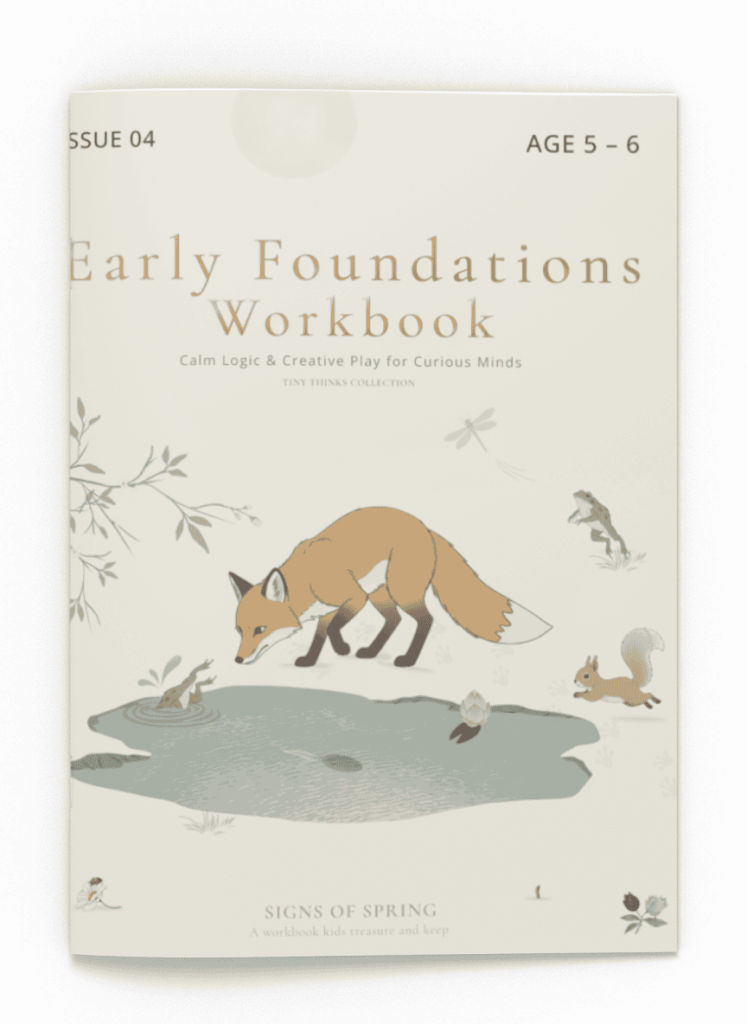
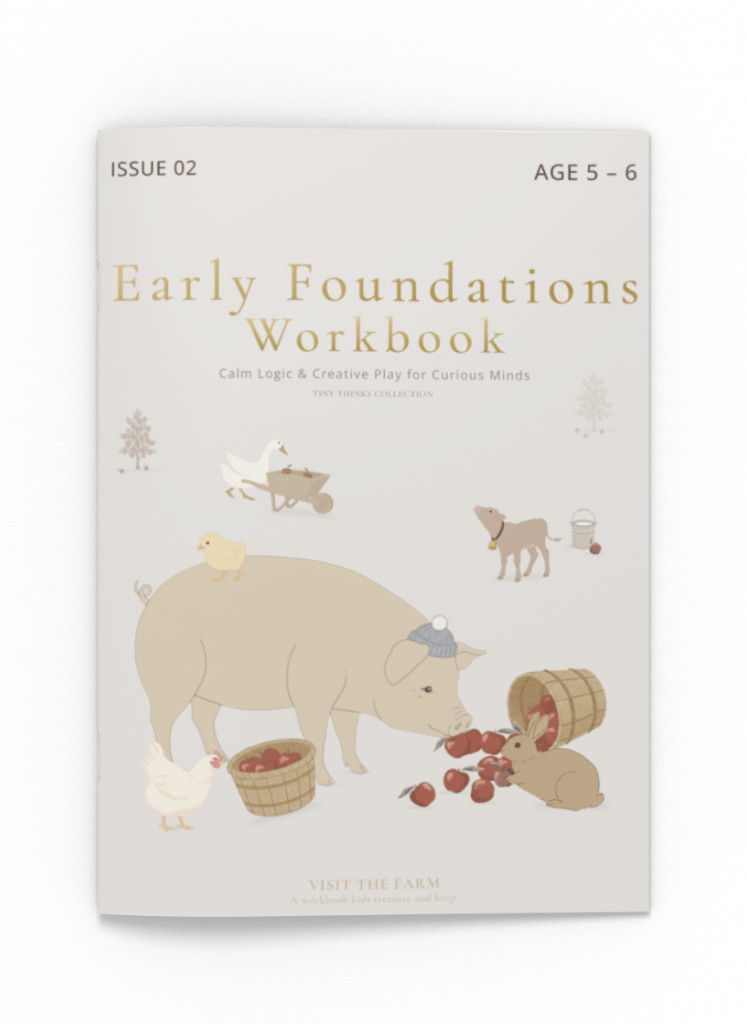
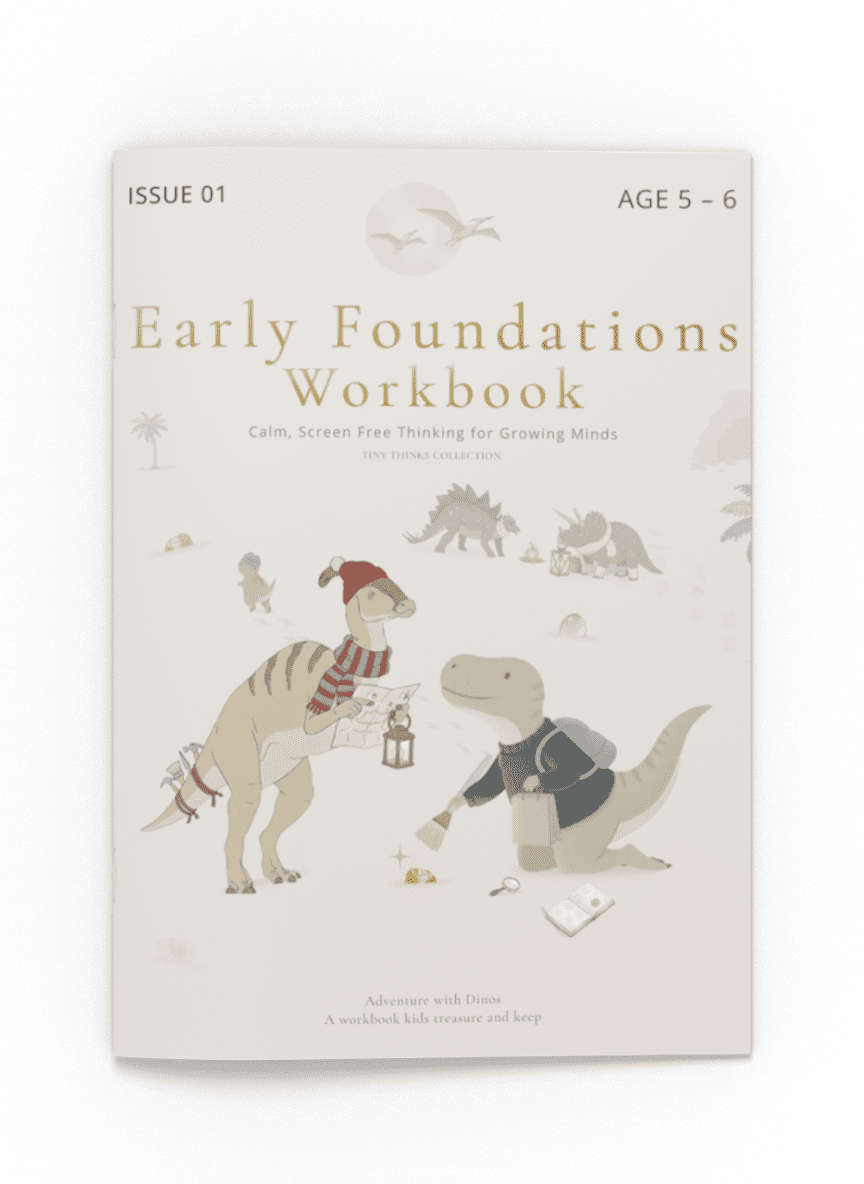
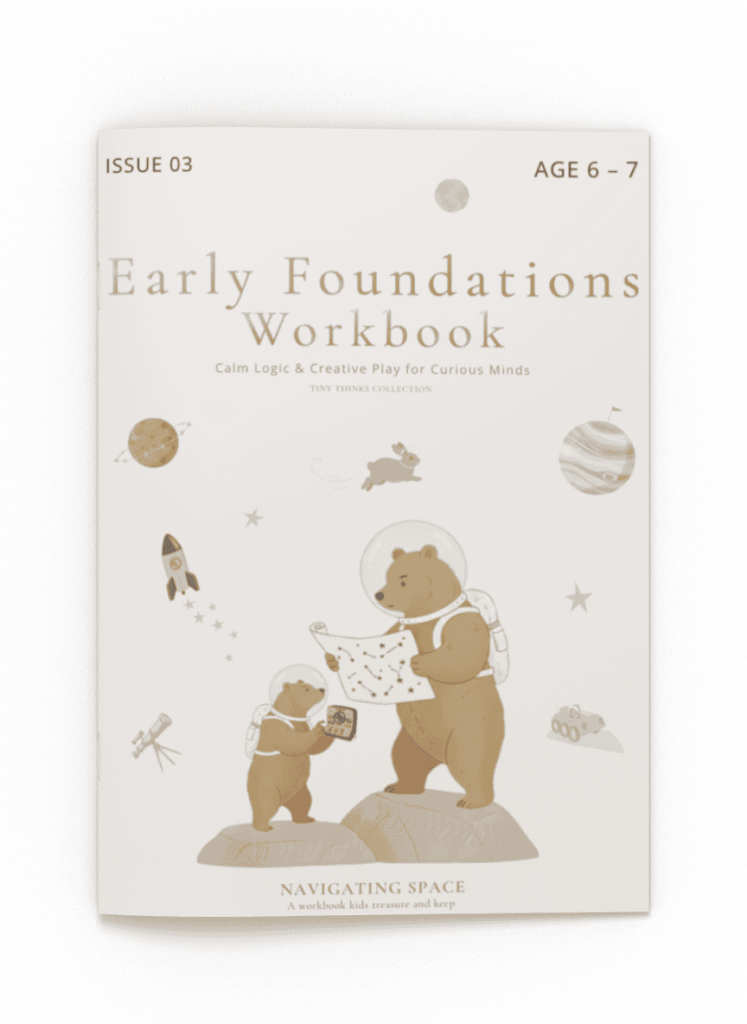
- Tiny Thinks is designed exactly for that — a structured, repeatable way to build focus in the moments where parents usually reach for screens.
===
Many parents searching for how to improve focus in kids are told to reduce screens or fix routines — but that alone doesn’t build attention.
Attention span in kids is fundamentally how long a child can stick with one thing before their mind leaps elsewhere and it lies at the heart of many daily battles at home. As parents, we tend to observe it most post-school, during screen changes, or when requesting solo play. Knowing what forms attention span and how rapid-fire digital content breaks it lays out a brighter roadmap to more peaceful, productive days.
Why Common Advice Fails
Screen Limits Don’t Build Focus
Most attention advice focuses on managing the child’s environment.
Less screen time. Better routines. Calmer spaces. These reduce distraction. They do not build focus.
Many parents searching for answers are really asking a deeper question — why kids can’t focus
The Screen Time Myth
Limiting screen time reduces overstimulation.
It does not teach a child how to focus.
Focus develops when a child is asked to stay with one task, think through steps, and finish without constant novelty.
Screens are important because rapid, autoplay-driven content conditions the brain to anticipate continuous newness and mini-rewards. From an early age, the mind becomes so accustomed to multitasking that it can no longer maintain one train of thought. The modern age has rewired attention for fast switching, not slow follow-through.
Undoing the tablet doesn’t automatically undo that tendency. It simply exposes the underlying gap: the child has never practiced staying with one quiet, mildly effortful task for even a few minutes. Attention problems show up in low-tech homes, rural settings, and device-light classrooms for the same reason: the skill of sustained focus has not been deliberately trained.
Screen time at school and at home clearly has a part. Endless switching between apps, videos, and tabs frequently interspersed with homework trains the brain to flitter. Hard daily caps help, but caps alone don’t teach focus. Concentration develops when a kid has frequent opportunities to slog through little, well-defined cognitive feats that are sufficiently challenging without being distracting.
This is the gap most parents hit: removing screens doesn’t automatically create focus. Something still needs to build it.
Fast, autoplay content trains the brain for constant novelty rather than sustained focus. This is why many parents notice attention issues even after reducing screen time — the underlying pattern remains.
Some children also become more reactive, frustrated, or aggressive after extended exposure to fast content.
The Routine Trap. Routines Don’t Train Attention
Routines create structure. They do not train attention.
A child can move through a well-run day and still avoid anything that requires real focus.
That is, the issue is when we believe that a well-managed day naturally constructs focus. Many family schedules are packed with short, low-demand segments: 10 minutes of this toy, then a snack, then a quick show, then a new activity. Your child appears “busy” and relatively compliant, but never has to maintain focus past a short interval. Expectations are often unrealistic too: general guidance suggests roughly 2 to 3 minutes of focused attention per year of age. That means a 4-year-old who can handle 8 to 12 minutes is actually doing quite well, while adults are frequently expected to endure much more, particularly in groups.
As tight routines stress, eventually they start to hide short attention spans. The day flies before the child ever reaches the brink of their cognitive fatigue. They almost never come across assignments that say, ‘hang in there, get a little bored or stretched, and carry on.’ Real attentional control emerges from these moments of mild stretch, not from perfectly scheduled days.
Routines matter because they create space.
But what happens in that space determines whether focus develops.
Tiny Thinks™ employs that stable frame, after school, before dinner, and wind-down at night—to insert calm, repeatable thinking pages that really exercise the ‘stay with it’ muscle, not just grease the schedule.
The Environment Fallacy
A quieter room can help a child settle. It cannot build the skill of attention on its own.
Focus is not an automatic byproduct of less noise. It grows through repetition: start, stay, finish.
A quiet setting assists, too, reducing incoming noise and visual distraction. Even in a sparse, artfully curated environment, a kid will still ping from this to that if nobody’s cultivated the internal skill of staying.
Attention is not an automatic byproduct of quiet. It is the result of thousands of small repetitions of: start, stay, resolve. Kids in super-rigid, low-distraction schools and homes still flounder, particularly younger ones within a grade who are expected to perform like kids up to a year their senior. Age differences alone can alter what realistic attention appears to be, yet the requirement remains constant.
The general culture tugs really hard the other way as well. Teens – and younger and younger – can’t focus following years of managing phones, social feeds, and content. Electronic usage has helped to create real problems, and ADHD diagnoses have soared. At least 4.5 million children in the U.S. Suffer from it, and it rose 35% in previous years. Kids do homework with music blaring, IM messages pinging, and a second monitor in close proximity. The mind learns to manage snippets, not substance.
The Real Nature of Attention
Attention is not an immutable “attention span number” inherent in a child. It’s a trainable system that flourishes or atrophies given daily input, particularly in ages three to seven when the brain is wiring central attention habits.
A Skill, Not a Trait
Attention is not something a child simply has or lacks.
It is a skill that develops with practice.
The typical explanations, “she’s just a distracted type,” “he was born focused,” obscure what is really going on. A child who can watch fast video for 40 minutes but cannot stay with a puzzle for 4 does not lack attention.
They haven’t practiced the kind of focus that requires effort.
Average spans serve to establish expectations, not boundaries. Most specialists employ a ballpark figure of 2 to 3 minutes of attention per year of age, with some scientists positioning the high end nearer to 5 minutes per year. A 4-year-old might sensibly maintain attention for 8 to 12 minutes, occasionally 20 minutes, on a well-matched, interesting activity. That range is elastic. It grows with exercise and shrinks with long-term overexposure.
One in five kids have a learning or attentional disorder. Even then, attention is trainable. This is not about pursuing some magic number. The hope is to view attention instead as a skill you can mold with tranquil, consistent practice—much more like learning to read than a hardwired personality characteristic.
The Cognitive Muscle
Attention strengthens with use.
If most input is fast, passive, and effortless, that strength does not develop.
When you need something that actually holds their attention
Most attention problems aren’t about discipline — they’re about lack of structured practice.
The Tiny Thinks Free Calm Pack gives you simple, screen-free pages designed for real-life moments: after school, during dinner, travel, or waiting time.
Children start, stay, and finish — without constant input. Download the Free Calm Pack.
How Focus Develops
-
Attention begins as sparks. In our youth, attention comes in bursts. That 2 to 3 minutes a year of age is not a failure; it is the raw material. A 3-year-old tracing a picture line for 6 minutes is operating close to max.
-
The brain simply becomes accustomed to actualizing and remaining. With repeated, tranquil practice, kids become increasingly good at selective attention—remaining with one thing while tuning out the background din. Simple supports help: clear surfaces, one task at a time, maybe a small fidget object like a spinner or putty to settle the body while the mind works. While these devices can calm nervousness and gently stimulate attention-related sensory systems, particularly in chaotic environments such as doctor’s waiting rooms or transit.
-
Frustration is our guide, marking the boundary of our unfolding. If tasks are a bit hard, you observe restlessness, “I’m bored,” or rapid giving up. That edge is where ability extends. If each is simple, the muscle never loads. If all is overwhelming, it closes down. There will be step backs and wobbles. That is just part of healthy training.
-
Capacity grows with tuned, consistent practice. Advancement results from consistent, appropriately sized pushes, not periodic sprints. Parents track small changes: “She stays with this matching page two minutes longer,” “He now finishes three steps without my reminder.” When interactive play is replaced with endless rapid-fire screens, those gains plateau. Over time, that can resound as diminished motivation and attention.
Tiny Thinks™ are designed precisely for this developmental window. It presupposes you already use screens as utility and doesn’t observe that as an issue to fasten. Instead, it gives you a low-friction alternative for the moments when you need calm, structured focus after school, during dinner prep, on flights, in waiting rooms, and before bed.
The Free Calm Pack is the simplest access point. It gives your child short, tightly structured thinking pages that are intentionally quiet: simple visuals, clear steps, and no characters chasing attention. A child can begin one page by himself, finish a small mental “workout,” and frequently decide to press on because the sensation is manageable, not daunting.
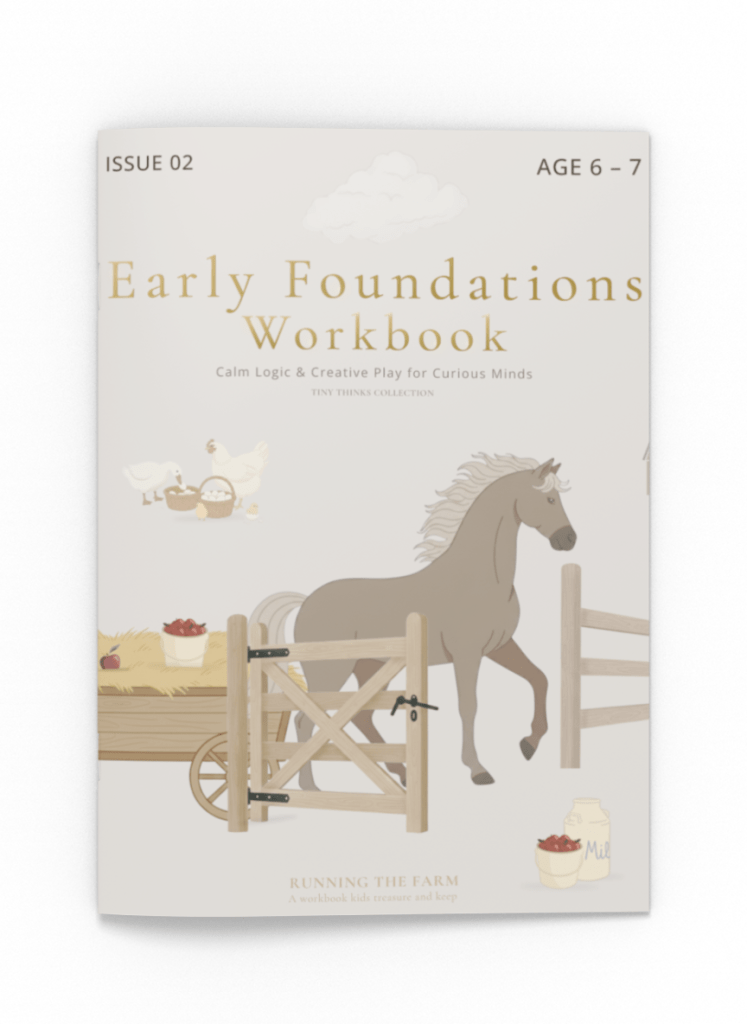
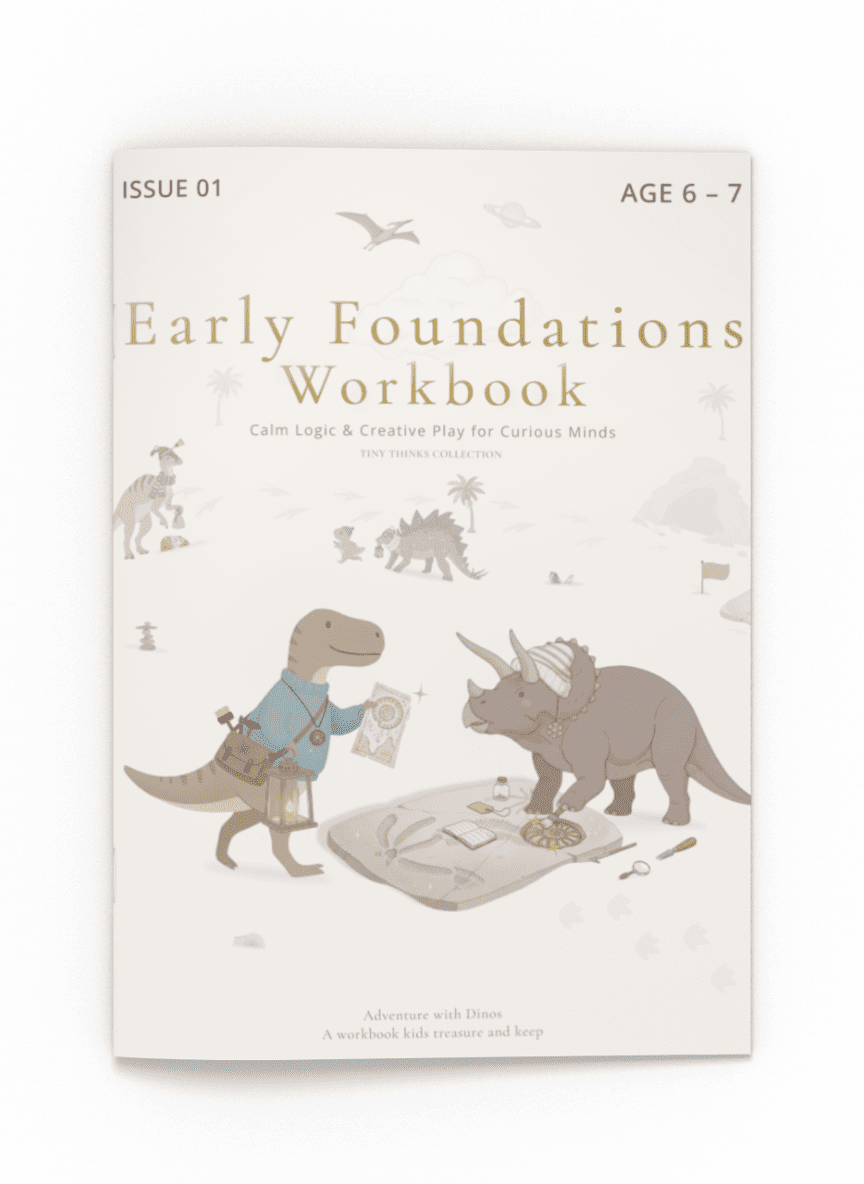
From there, age-appropriate Tiny Thinks™ Workbooks step up the intricacy in cautious jumps. A 3-year-old might trace and match, or a 6-year-old might do multi-step logic or pattern chains. Each page loads attention just enough to build strength while making the environment visually low-noise so working memory can actually do its job. Over time, that repeated, screen-free, regulation-first practice builds the kind of attention that transfers: sitting through a story, staying with early reading, and handling small frustrations without giving up.
How Focus In Kids Is Actually Built
Focus is built directly. Not indirectly.
It grows when children are given structured tasks that require them to start, stay, and finish — repeatedly, and with increasing challenge.
If focus is built through structured thinking, then parents need something that actually delivers that in real life. That’s where Tiny Thinks fits.
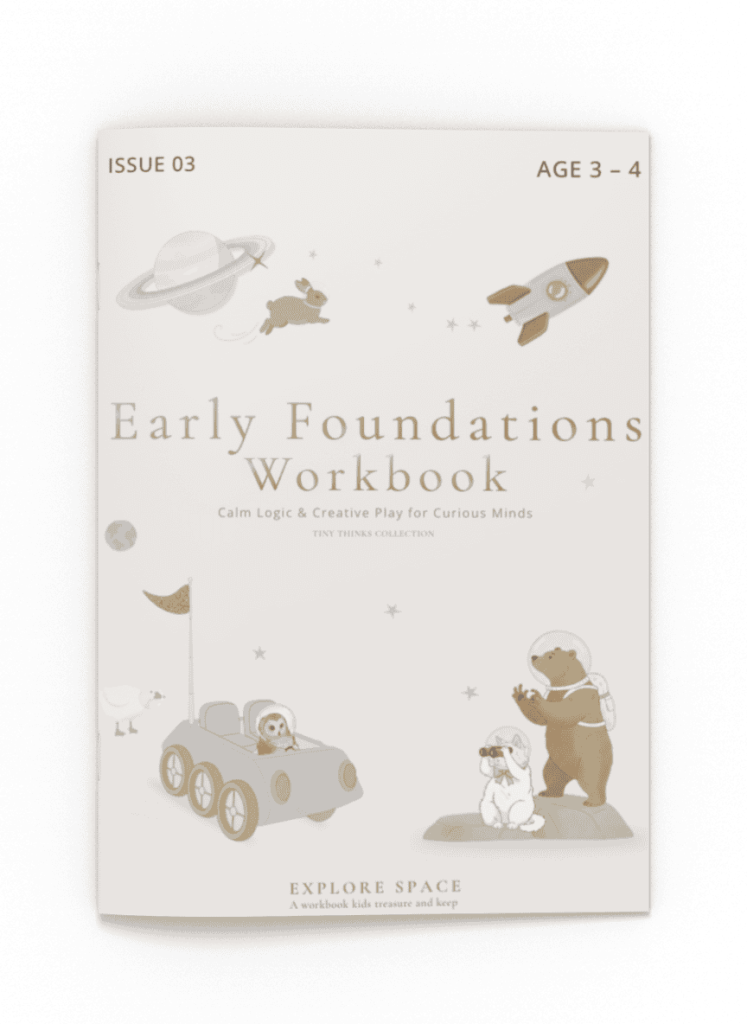
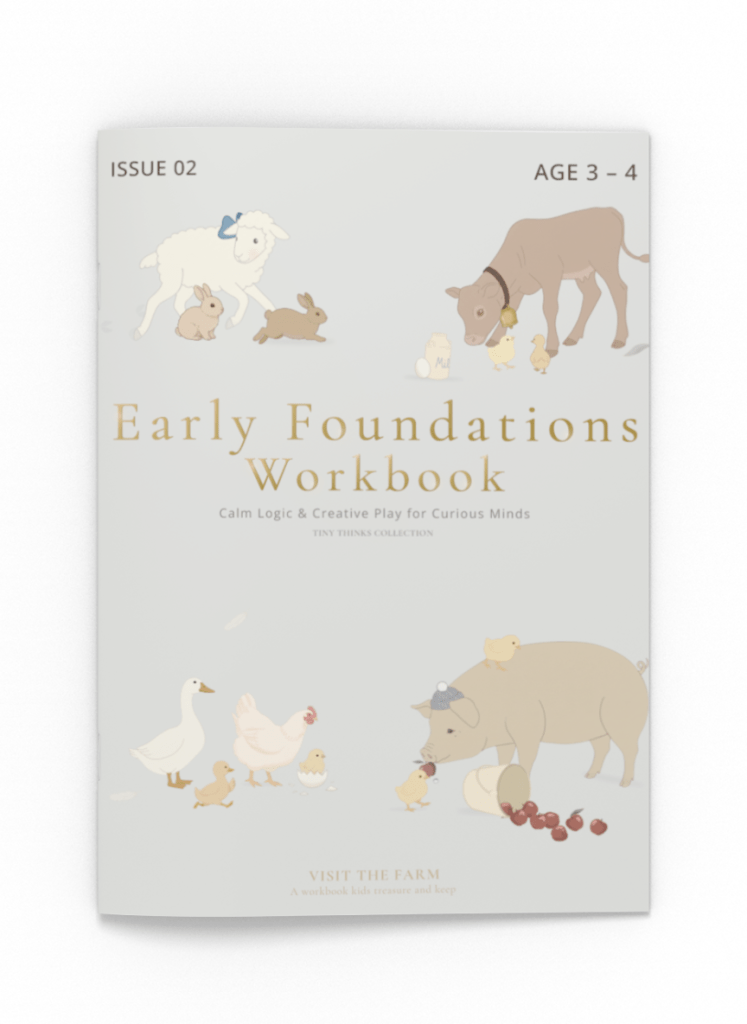
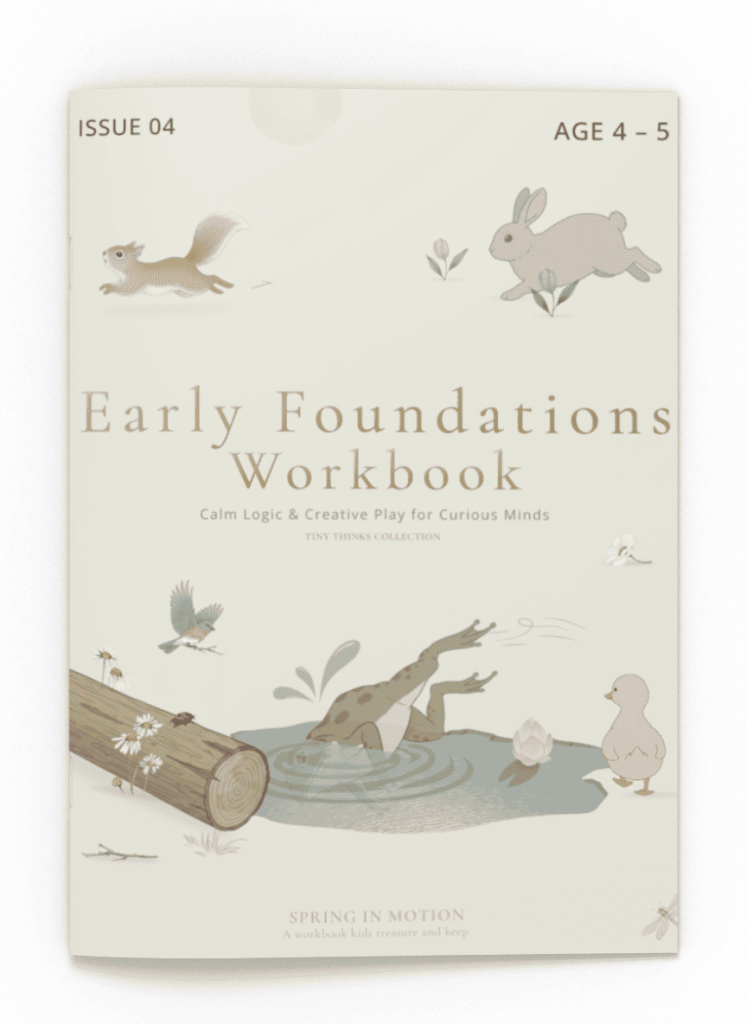
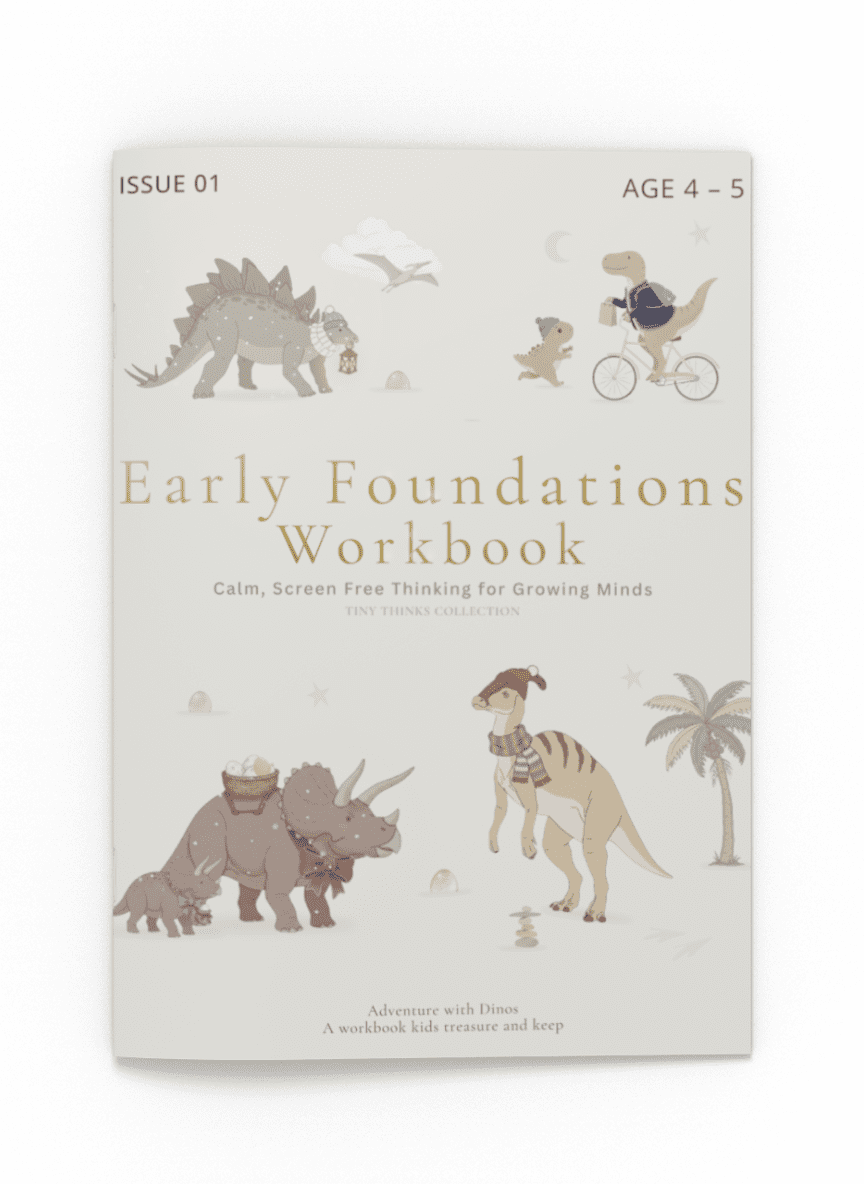
- Provide a single, screenless thing to do one at a time in high-friction moments.
- Fit task length to existing attention span, then gradually expand.
- Raise difficulty in small steps, not big jumps.
- Repeat the same formats so the brain knows what to expect.
- Celebrate effortful staying with it more than speed or perfection.If you don’t build attention, screens will.Focus doesn’t improve randomly.It’s built through repeated, structured thinking — starting simple and progressing step by step.This is why children engage more deeply when they’re given something designed to develop attention — not just keep them busy.
1. Isolate the Skill
Focus builds faster when children do one thing at a time.
Not multiple options. Not constant switching. One clear task. Give single-task assignments: trace one path, match ten pictures, copy one simple pattern, and listen to one short story without toys nearby. No blending, no multitasking.
Isolate ‘focus practice’ from running, playing with friends, or any other noisy activity. A kid can definitely learn from those, but they drag focus all over the place. Attention training is most effective at a calm table, on the floor mat, or in bed before sleep with minimal visual distractions.
Use small, neutral tools: a 5-minute timer, a tiny checklist with two boxes, and a “focus line” they color in while they stay with the task. That displays, ‘you focused for this long’, not ‘you were good’.
Note simple data: “Yesterday you stayed with the puzzle for 3 minutes. Today you got to 5.” This type of tally allows you to notice advancements well before they seem apparent.
2. Start Small
Start where your child can succeed, then extend from there.
Attention grows through completion, not overwhelm. If they usually last 3 minutes on anything, set up a 2 to 3 minute task first: a 6 piece puzzle, one page of matching, a tiny stack of picture cards to sort.
Early wins count. A kid who completes and hears, “Wow, you really stuck with that,” is much more inclined to take on a marginally longer challenge the next day. When you observe symptoms of overload, such as fidgeting, crazy denseness, or hasty rage, minimize the assignment rather than powering on.
3. Increase Difficulty
As focus improves, increase the challenge gradually.
From one step to two. From simple to slightly more demanding. For instance, match the shapes, then trace them, then put them in size order. Supplement with light pattern work and logic puzzles that demand such close looking and information-holding.
Activate the frontier. Mild struggle is productive, continuous meltdown is not. If a kid zips through without thinking, ramp it up. If they stall, truncate! A simple progression chart on your fridge—“1-step → 2-step → 3-step” with dates—keeps you honest about gradual growth.
4. Repeat Consistently
Focus is built through repetition, not occasional effort.
Without repetition, progress doesn’t hold. Reserve a predictable 10 to 15 minute block after school snack, pre-dinner, or right before bed, where the expectation is, “This is our calm thinking time.
Use the same visual template most days—an old reliable workbook, a deck of cards, an easy tray layout. The brain relaxes when it knows the plan, which liberates energy for focus instead of decoding new rules every time.
A simple visual schedule on the wall, snack leads to calm page and then to free play, cuts down on bickering and haggling. The habit, not your disposition, is the compass.
5. Maintain Progression Without Resetting
Name the process, not the product: “You kept going even when the pattern was tricky.” “You stuck with this for 6 minutes.” That teaches your kid that focus is an action they take, not a trait they possess.
If you reward, connect it to grit and come back. For example, a very easy chart on which they make a tick every time they return to their quiet work without being reminded to do so twice. The message is that coming back to focus matters.
Tiny Thinks™ is designed precisely for this type of low-drama focus training. The Free Calm Pack provides brief, single-task pages—matching, straightforward trails, early designs—that sequester attention without shiny distraction or plot saturation. Parents use it in the real pressure zones: after school, during screen cooldown, at restaurants, in travel seats, before lights-out.
Because every page is quiet and predictable, children learn the routine quickly: sit, focus, finish, maybe choose another. You can then graduate to the age-based Tiny Thinks™ Workbooks, which gently increase steps, patterns, and working memory load, so challenge increases while the visual language remains consistent.
Screens still have a role as instruments. The change is this: when you need your child settled and thinking calmly, you reach for structured, screen-free pages that train attention directly instead of faster content that scatters it.
What Structured Thinking Looks Like in Action
Structured thinking builds focus because it requires children to hold information, follow steps, and finish tasks.
The most effective way to build attention is through repeatable, structured tasks.
That is what attention actually is.
|
Type of challenge |
What the child actually does |
Attention skill trained |
|---|---|---|
|
Sequential tasks |
Follow steps, check what’s next, correct mistakes |
Working memory, sustained attention |
|
Pattern recognition |
Notice, predict, and create visual or verbal patterns |
Selective attention, cognitive flexibility |
|
Logic puzzles |
Test ideas, rule things out, explain thinking |
Inhibitory control, problem-solving stamina |
Across all three, the heart is the same: step‑by‑step problem solving. The child has to recall what preceded, observe what is occurring and make the choice of what action to take. That loop is what extends attention across time. Attention is not static; it develops through numerous brief cycles of concentration, mild effort and closure.
Kids really do well when they are permitted to wade through minor discomfort in these assignments. Completing ‘just one more piece’, ‘one more row’, or ‘one more clue’ before quitting is important. That ‘one more thing’ edge is where resilience and persistence construct, provided the work is obvious, bounded, and not blanketed with noise or options.
Sequential Tasks
A sequential task is just about anything with a “first, then, next, last” type of structure. A 4-step recipe, a stupid-easy model to construct, or a ‘get dressed’ card stack all qualify. The child has to remember the present step, suppress the temptation to leap ahead, and continually update their memory as they advance. All of this exercises working memory and sustained attention in the moment.
Visual frameworks are important. Checklists, picture strips, or little boxes to check off provide the brain with an external location to cache information. This reduces cognitive load and keeps the attention system engaged since the child still needs to verify, compare, and decide if a step is really done. Clear possibilities and boundaries — ‘we do this list front to back’ — guard concentration from peripheral interference.
Intricacy can increase gradually. For a 4-year-old, a couple of steps might suffice, with the typical ‘age times 5 minutes’ guideline, allowing 20 minutes of possible concentration – but only if the task matches their ability. Over months, you can ramp them up from 3 to 5 to 6 steps while observing whether they manage to keep up with the sequence without frequent adult salvage.
Pattern Recognition
Pattern work clicks the mind into anticipation mode. When a child extends a color pattern (red–blue–red–blue), lines up blocks big-small-big-small, or sorts buttons first by shape and then by size, they have to attend selectively to one feature while ignoring others and flexibly switch when the rule changes. That is attention and flexible thinking at work, not mindless duplication.
Real‑world patterns can be much more powerful than printed ones. Observing the order in a morning routine, arranging shoes by size, or locating ‘every other’ stair on a staircase connects attention exercise to everyday activities. You can sneak in retrieval practice by asking every 10 to 15 minutes, “What’s next in our pattern?” or “What was our rule again?” These light recalls, repeated frequently, harden focus without theatrics.
Measuring incremental improvement, such as fewer oversights, quicker finishing, and reduced coaching, provides you a tangible feeling of development. When your kiddo can hang with a pattern game just 3 to 5 minutes longer than last month, or swap sorting rules with just a pause, you’re witnessing attention span expand by play, not pressure.
These activities also strengthen early reasoning and thinking skills.
Logic Puzzles
Logic puzzles draw a lot of these systems to a head. A straightforward “which picture does not belong,” a 4-piece maze, or early “guess the animal” riddle requires the child to retain hints, test hypotheses, and discard those that don’t work. They have to suppress knee-jerk responses, linger on the question, and endure “not yet sure” — the essence of self-control in preschool.
When you ask a child to explain their thinking—“Tell me how you knew that piece goes there”—you nudge them to slow down, re‑run the steps in their mind, and practice organized retrieval. Short, verbal walk‑throughs like this, sprinkled every 10 to 15 minutes during play, function as built‑in retrieval practice. They keep cognition engaged without morphing the moment into an exam.
Switching up puzzle types counts more than always upping the challenge. One day it could be visual odd‑one‑out, another day path‑finding maze, another a simple “if–then” riddle. The diversity maintains interest while exercising multiple facets of control. Over these, kids learn to sit still a little longer, complete ‘just one more’ puzzle, and seek out peace and quiet for their own structured thinking.
Tiny Thinks™ is designed specifically around these structured thinking requirements. The Free Calm Pack gives a low-risk entry: a handful of visually quiet pages that guide children through short sequences, patterns, and logic steps with minimal instruction. Parents can even whip it out in after-school crashes, during screen transitions, or in waiting rooms and see how fast the nervous system moves from fidgety scanning to task-based focus.
Because the layouts are uncluttered and the options restricted, kids can figure out where to begin and what to do next without intense adult guidance. That defined structure with a touch of challenge is what allows a 3 to 7 year old to hit their natural focus band, typically their age multiplied by around 5 minutes, without melting or seeking additional stimulation.
For families who find their child consistently falling into the Calm Pack and asking “for another,” the age-based Tiny Thinks™ Workbooks spread the same architecture out over more pages and slightly longer thought chains. They remain screen-free and low-stimulation, but they subtly increase requirements on working memory, sequencing, and pattern reasoning, so attention and self-regulation can continue developing month after month.
From Busy to Engaged and Focussed
Many children stay busy all day without building focus.
They move, switch, and react — but don’t practice staying with one thing.
Children with short attention spans usually look scattered in predictable ways: they start tasks but do not finish, they bounce when a toy gets even slightly hard, and they avoid longer stories or any text that asks for steady focus. That’s not a personality defect; it’s in their daily schedule. Rapid random input trains rapid random attention. Slow, measured input conditions slow, measured attention.
Quality of activity counts more than quantity of things offered. Five tranquil, architected tasks in a day will accomplish more attention work than fifty flips between toys, apps, and errands. A simple mental rule helps: “Is my child thinking here, or just absorbing?” Whenever the solution is thought, you’re in the region where attention span can develop.
Active vs. Passive
Active tasks require thinking. Passive ones do not.
If a child mostly consumes passive input, their attention is not being trained.
Passive activities aren’t just screens. Forces, never mind those with zero cost, are everywhere. Free, automatic stickers, push-button light toys, or autoplaying videos all eliminate the requirement that you sustain a thought. The kid’s activity replicates busyness, but the attention muscle is on vacation. Over time, this kind of input often reinforces shorter spans. Anything that does not change quickly feels “boring.
Moving to active doesn’t mean abandoning screens altogether. Tiny Thinks™ approaches screens as a functional instrument. The problem is not the gadget but rapid autoplay content that overloads a still-developing system. If the nervous system logs hours in instant change mode, holding a puzzle for even 8 to 12 minutes, a common span for a 4-year-old, will seem unfeasible.
Active, thought-based work requires nourishment from the body too. A 2021 study discovered that children with higher levels of activity were better equipped with self-regulation and “cognitive readiness” for preschool. In daily life that looks simple: kids settle better when they have moved, eaten, and slept. A child who has run, hiked, or chased during a game of tag outside will more easily settle a quiet maze or matching page than one who has been strapped into a car or stroller all day.
The Goal of Play
The goal is not to keep children busy.
The goal is to build attention.
Structured play provides that absent spine. It provides a well-defined assignment with a start, middle, and end. For instance, “Build a road that connects these two houses using exactly 10 blocks,” or “Find all the blue objects in this room and line them up from smallest to largest.” The kid still plays, but must now plan, sequence steps, and hold a goal. That’s attention training, cloaked in play.
Chopping it down into short, defined chunks keeps it real. A young child might only have 8 to 12 minutes of clean focus, older kids might muster 20 to 30 minutes, etc. Rather than a one-hour “project,” employ three 15-minute stints with mini brain breaks for movement or snacks in between. This fits how their attention naturally operates and still provides the gratification of finish.
The surroundings do some of the heavy lifting. A shelf with good quality toys or quiet workbooks helps make it easier for a child to stick with one thing. A wall plastered in choices pulls them into ceaseless skimming. Healthy space, less stuff, and obvious decisions de-stress the mind. Kids can then put more brain power into the work at hand rather than what to touch next.
Tiny Thinks™ is built exactly for these high-friction moments: after school, screen transitions, mealtime, travel, waiting rooms, and bedtime wind-down. The Free Calm Pack gives parents a low-effort way to offer short, structured pages that nudge children from busy into engaged: matching, simple mazes, pattern building, and gentle sequencing. The design is quiet intentionally, so nothing screams for attention but the thinking itself.
For families who see their child settle into that kind of focused calm, age-based Tiny Thinks™ Workbooks extend the same structure a bit further: slightly longer tasks, more steps to remember, and more patterns to track. They perform optimally when coupled with the basics of sleep, food, and movement each day, so the kid comes to the page prepared to contemplate, not already burned out.
The Parent’s Role
Parents shape attention through what they repeatedly give children to engage with.
Not by entertaining more, but by guiding toward focus-building activities.
Guide, Don’t Entertain
When children say they are bored, the instinct is to fix it.
But attention grows when parents don’t immediately replace that moment with stimulation.
15 minutes a day of solo time where the child takes the lead is one practical anchor. No screen, no agenda. The parent enters the child’s selected play, labels what they observe (“You’re lining all the cars in a row”), and does not control. It’s not about doing more; it’s about being 100% present in a small, predictable window that weaves together connection and attention into a strong braid.
Organized assistance remains significant. Breaking a task into small chunks lowers the cognitive load. First match these four cards, then we’ll look at the next four.” This allows the kid to taste victory without drowning them. It assists a parent in noticing when inattention is age-typical and when it consistently deviates from what is expected for that child.
Ownership thrives when kids sense their work is observed. Particular, low-significance praise like “you stuck with that puzzle even when it was challenging” or “you completed your three-page workbook” supports concentration more than grand rewards. Eventually, you’re educating that focus is their ability, not a thing grownups permanently patch onto them.
If you don’t build attention, something else will
Focus doesn’t improve randomly.
It’s built through repeated, structured thinking — step by step.
Tiny Thinks workbooks are designed to do exactly that, progressing with your child as their attention grows. Explore Workbooks by Age.
Model Concentration
Children learn how to focus by watching how adults focus. Sitting next to your child with a serene, engaging activity of your own — reading, planning, quiet work — demonstrates what sustained focus looks like in real life, without any monologue about ‘you should concentrate’.
Narrating your strategies gently makes the process visible: “I’m tempted to check my phone, but I’m going to finish this page first,” or “when this gets hard, I take a slow breath and do the next small part.” These brief remarks desensitize distraction and demonstrate easy techniques for remaining with an assignment.
So families can foster a silent ethic of hard work. Not with praise for “being smart,” but with recognition of process: “You kept going after that mistake,” “You tried a different way when the tower fell.” This is important as a 4-year-old’s actual focus window is going to be very different than a 10-year-old’s and comparing siblings or friends typically just muddies the waters. A few kids do well with sensory tools—putty, a soft cube, a small spinner—to calm their body so their mind can drop anchor. Some require more visual organization and less out in front of them. The point is customization, not imposing one approach.
Tiny Thinks™ snugly inside the Parent’s Role–no screen shaming here! As a parent, it’s easy to depend on quick, autoplay content to make it through after-school fatigue, a road trip, or dinner cooking, and that’s fine. The problem to notice is not screens, but quick, random input that causes the brain to stay in a “next, next, next” mode.
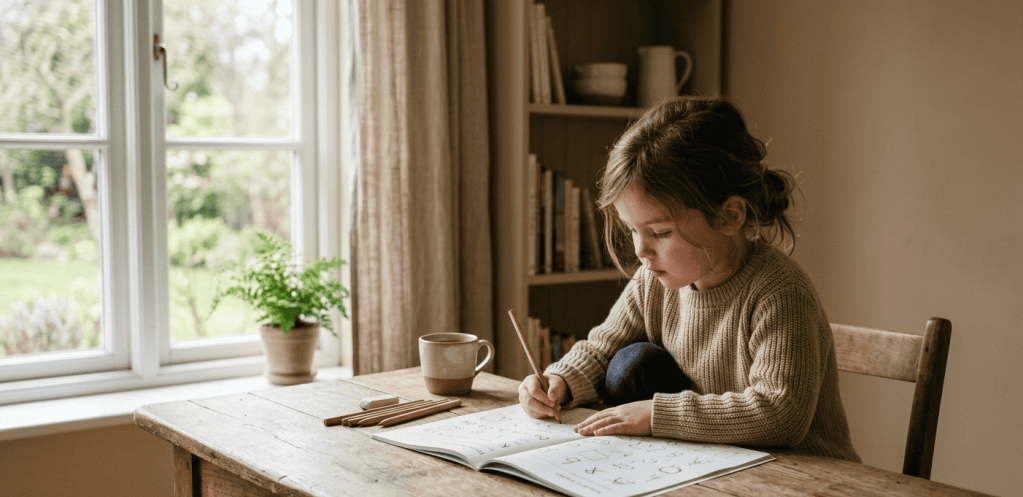
For those times when your kid is wired and scatterbrained, parents require a bailout device that’s pre-formatted, serene, and effortless to launch. The Tiny Thinks™ Free Calm Pack does exactly this: short, low-stimulation thinking pages that a 3–7-year-old can enter without instruction—matching, simple sequencing, quiet pattern work. You print, place it on the table with a pencil, and state one clear boundary: “This is your calm page while I cook.” Most importantly, many kids start to return to that same type of page on their own, the real victory.
From there, age-specific Tiny Thinks™ Workbooks scale the same principle. No blaring distraction, no pursuit of newness, just carefully escalating challenge that exercises attention, working memory, and frustration tolerance in modest, doseable bursts. Parents stay in the guide role: they set the time, offer the workbook as the go-to alternative in high-friction moments, and then step back. It takes some of the regulatory burden off of the parent, so they don’t have to nag, lecture, or negotiate every time.
Conclusion
Focus is not something children simply have. It is built.
And it is built through structured, repeated thinking — not through managing distractions alone.
Once that is clear, the goal changes. It’s no longer just about reducing screens. It’s about giving children something that actually builds attention.
Brief post-school concentration, spacing out during dinner, or jumping from toy to toy often indicates overwhelm, not a “damaged” attention span. When the setting changes from quick, flickering rewards to still, sustainable cogitation, the majority of kids demonstrate more ability than parents assume.
Parents don’t require immaculate scripts or limitless ingenuity. They require an uncomplicated, consistent framework their child knows and comes back to. When that structure is in place, attention is less about constant wrangling and more about observing a young mind learn the art of settling, staying and thinking.
Tiny Thinks is designed exactly for that — a structured, repeatable way to build focus in the moments where parents usually reach for screens.
Frequently Asked Questions
How long can a child realistically focus?
As a general rule, kids can pay attention for 2 to 5 minutes per year on a given activity. For example, a 6-year-old might handle 15 to 30 minutes. Concentration relies on sleep, interest, environment, and how the assignment is broken up.
Is my child’s short attention span a problem?
Not necessarily. So what if no children are really distracted — their assignments are simply too difficult, too simple, or dull. If focus issues occur across environments and impact learning, friendships, or daily life, then it’s worth bringing up with a pediatrician or child psychologist.
What actually improves attention span in kids?
Defined routines, ample sleep, and minimizing background distractions assist. Short, structured activity with breaks builds attention. Step-by-step instructions, visual supports, and practice with problem-solving and planning build attention gradually.
How is “real focus” different from just keeping kids busy?
Busy means many tasks. Focused means one deep, meaningful task. Real focus is thinking, struggle, and comprehension. It is better to have a few well-chosen activities than a jam-packed day with switching of gears.
How can parents help kids stay focused during homework?
Establish a calm, regular study environment. Divide work into brief steps separated by short breaks. Provide explicit direction and eliminate electronic diversions where feasible. Set a start time and an end time. Commend effort and advancement, not just the right answer.
What role does structured thinking play in attention?
Structured thinking gets our kids to organize their ideas, map out their steps, and execute. When kids understand “first, next, last,” they aren’t overwhelmed and can maintain focus for longer. Tools such as checklists, timers, and simple diagrams reinforce this ability.
When should I worry that my child’s attention issues might be ADHD?
Consider an evaluation if your child is very distractible, impulsive, or restless in most places (home, school, social situations) for at least six months and it clearly affects learning or behavior. Only a qualified professional can diagnose ADHD.