
Key Takeaways
- Kids’ focus is influenced by brain development, mood, and their daily environment, including modern disruptors such as screens and noise.
- When you establish a routine, dedicated study areas, and show them with a schedule visually, kids can more easily slide into focus mode and avoid feeling overwhelmed.
- By reducing screen time, choosing appropriate media, and promoting device-free periods, parents can help their kids develop better focus.
- Even though the little ones can’t concentrate, you can build focus stamina with quick, fun exercises, rewards, and turning boring tasks into games.
- Nutrition, sleep, and regular movement all play a key part in supporting kids’ brains throughout the day.
- With patience, clear communication and a team-oriented approach, families can tackle focusing issues as a unit and cultivate success for the long haul.
When screens leave kids wired and unfocused after school, parents use the Tiny Thinks™ Free Calm Pack to bring attention back to the table without negotiation.
Kids can’t focus when their brains are flooded with rapid-fire input, non-stop noise, and erratic schedules. Kids in the 3-7 age range can’t focus because overstimulation is prevalent, especially following a day of screens, overscheduling, or transitions.
Short attention spans aren’t a phase; they are often a sign of a nervous system that requires regulation. Knowing why focus slips in these everyday moments provides parents with straightforward actions that support attention and control.
Understanding Child Focus Problems
Children 3-7 years old encounter focus issues in essentially any scenario. Their focus fractures quickly; noise, activity, or a stray toy could knock them off. This isn’t merely about discipline or motivation. Little brains are wired for wide attention, scooping up more data than required and getting distracted.
Even when they know what the task is, they still overexplore. This curiosity-driven collection is natural and to be expected at these ages. As children develop, their attention span and executive functioning, things like impulse control, working memory, and organization, gradually mature. Younger children, particularly three- and four-year-olds, often require more assistance with transitions and remaining engaged in a single activity.
Stress, anxiety, or overstimulation from their busy surroundings can blur their focus even more. For parents, this implies that focus troubles aren’t about sloth or lack of effort but instead a developmental phase. Nurturing rhythms, quiet spaces, and consistent scheduling aid kids in calming down, gaining control, and processing detail with greater ease.
Brain Development
Children’s brains are still developing and grow in stages, each impacting their ability to focus. At three, the prefrontal cortex, which governs attention and self-control, is still immature. Cognitive skills such as working memory and flexible thinking are only beginning to form.
Children within this range quickly forget directions or are distracted by new stimuli.
|
Cognitive Skill |
Typical Age of Onset |
Focus Stage Example |
|---|---|---|
|
Working Memory |
3-7 years |
Remembering 2-step tasks |
|
Impulse Control |
4-7 years |
Waiting before speaking |
|
Task Initiation |
3-6 years |
Starting a puzzle alone |
|
Flexible Thinking |
5-7 years |
Switching between tasks |
Symptoms of developmental delays might be chronic trouble complying with basic instructions, over-the-top tantrums when plans shift, or difficulty with activities that other kids do with ease. Nurturing your child’s brain through sleep, healthy food, simple routines, and quiet time helps sustain attention.
Emotional State
A child’s emotions have a strong impact on their focus. Frustration or anxiety constricts their focus onto itself, preventing the completion of even uncomplicated activities. Their body reacts to stress by fidgeting, whining, or shutting down.
- Clenched fists or jaw
- Snapping at siblings or adults
- Refusing tasks they normally enjoy
- Tears during minor setbacks
Supporting emotional regulation is key. Slow breathing, soft redirection, or a snuggle nook can assist. Predictable routines are safe and they provide children with the courage to pay attention. Soothing, device-less activities such as matching games or doodling ground emotional resilience and ground concentration.
Modern Distractions
In homes filled with screens, noise, and clutter, kids can’t focus because their nervous systems stay in a constant state of alert.
Screens and noise and clutter derange young minds everywhere at home, in cars, and in waiting rooms. Rapid-fire input, such as YouTube Kids, ignites dopamine spikes and has kids hopped up and jittery. Cluttered rooms with an overload of toys or background noise increase distraction.
Peers, even among preschoolers, are a source of focus problems; one child’s enthusiasm is contagious. Social media, while more applicable for older kids, nonetheless establishes the tenor for overstimulation. Distractions cause attention span issues.
At these points, parents commonly reach for screens to buy peace. Predictable paper tasks, like those in Tiny Thinks™ Free Calm Pack, instead decelerate input and help kids to settle and focus.
During screen comedown moments at home or in public spaces, the Free Calm Pack gives kids a quiet task they can start immediately.
Physical Needs
Screen time directly impacts focus, especially for kids with concentration issues. Children often get used to instant gratification and rapid-fire stimuli, which reduces their tolerance for slower-paced activities such as homework or play. Digital distractions can significantly reduce academic performance by fracturing attention and making it harder for students to develop essential executive function skills.
Not all screen content is created equally. While educational videos can be beneficial, alternating between educational and entertainment content disrupts the brain’s regulatory systems. Establishing soft boundaries around screen time, particularly during pivotal transitions like dinnertime or after school, restores calm and helps students focus more easily on their schoolwork.
Parents notice improvements quickly when they exchange screens for hands-on, guided projects. Chunking large tasks into small steps and using simple timers, such as five minutes of hyper-focused play, does wonders for task initiation and concentration. Tiny Thinks™ Workbooks are designed specifically for these moments, providing age-appropriate activities that cultivate early attention skills kids actually love.
The Digital Dilemma
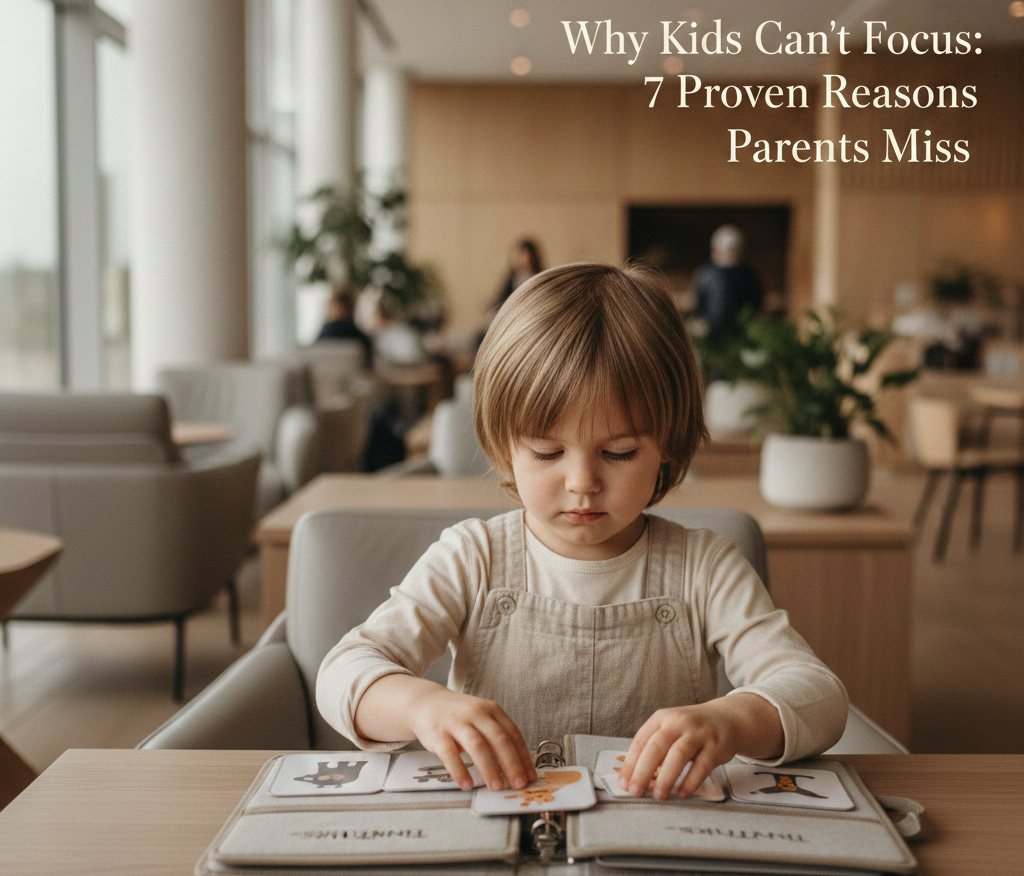
3-7 year-olds today learn and play in a digitally saturated world. Virtually every family depends on screens for connection, entertainment, and even learning. Research and daily experience demonstrate that screens, in particular, rapid-fire, algorithmically generated content, can interfere with attention, self-regulation, and concentration.
Research indicates a subtle, slow-burning decline in capabilities such as spatial working memory, with studies observing a diminutive yet detectable effect over the past few decades. Worries about tech addiction, attention poverty, and overload are reasonable, but the problem is complex. Parents and caregivers continue to be our most important guides, able to set a tone and a structure for healthy screen use and provide counterprogramming that restores calm and helps young minds develop real concentration.
Screen Time
Not all screen time is created equal. Educational content, unhurried, age-appropriate, and interactive, can underpin early learning and add value when implemented intentionally. Entertainment, particularly that engineered for fast consumption, such as YouTube Kids or quick-cut cartoons, primes dopamine, splinters attention, and leaves children less able to self-regulate.
This is particularly the case for 3 to 7-year-olds, who are still wiring the foundations of attention and emotional regulation in their developing brains. Addictive, fast-paced shows like these hold kids captivated and too often leave them cognitively wired and unable to settle into subsequent quieter activities. Symptoms of dysregulation, restlessness, irritability, short attention span, tend to emerge shortly thereafter.
Opt for content that’s active, such as a basic drawing app or interactive storybook, over mindless scrolling. After all, even the best content can’t compete with the benefits of hands-on, screen-free play.
Content Type
Smart digital habits start with content curation. Parents can assist by pre-screening what their child is viewing or playing, emphasizing thinking games, games with a slow pace, and games that are open-ended. When working on homework or during quiet time, confining background noise and pop-up distractors can keep you focused.
Some families swear by focus tools like timer apps or minimalist child-friendly task managers. Young children frequently respond better to periodic breaks and consistent downtime. Short, frequent breaks from screens reset your attention and reduce fatigue.
For kids aged 3 to 7, this could translate to five minutes of silent coloring or picture books after every 15 to 20 minutes of screen time. Adults can lead by example, setting their own devices aside and engaging in unplugged play, reinforcing the importance of focus and connection in daily life.
Digital Habits
A quiet, organized space ground concentration and study. Establishing a daily rhythm of screen-free meals, after-school silence, and bedtime rituals lets kids know what to expect and curtails the impulse to grab a device at every pause. Work can be divided into tiny winnable goals.
For a four-year-old, it could be completing a puzzle, shape-matching, or coloring one page at a time. Hang in there. Like most kids, they require frequent prodding and a light push to stick with an activity.
Parents that observe screen addiction symptoms, such as persistent phone requests and tantrums when screens are shut off, can more softly pivot the ecosystem by providing substitutes. The Free Calm Pack is designed for these exact moments: structured, paper-based activities that reset busy brains and spark independent, focused play without overstimulation.
For families willing to go deeper, age-specific Tiny Thinks™ Workbooks deliver a pre-fab routine for travel, dinner, and quiet time. Kids love them, parents feel more at ease, and concentration is back, no fight.
Why calm, sit-down activities work when screens don’t?
Travel days (and long waits) overload children in a quiet way. Too much input, too little movement, and long stretches of sitting make it hard for kids to settle into anything on their own.
What helps most in these moments isn’t stimulation or distraction, it’s gentle structure.
As one parent put it, “Most evenings, the screen is just on in the background while my child plays. I’m not trying to stop it, I just want something quiet they can sit and do without me setting things up.”
Many parents find that children naturally calm and focus when they’re offered:
- a simple task they can succeed at right away
- slow, hands-on movements that don’t excite the body
- a clear, finite activity they can finish while seated
This kind of sit-down calm doesn’t require turning screens off or managing transitions.
Children ease into it on their own, and screens fade into the background.
How to Help Kids Concentrate
Concentration is particularly hard for 3 to 7 year olds, whose active minds are irresistibly pulled by every new sound, movement, or sensation. Most parents find focus fades fastest during transitions or in busy, cluttered environments. The good news is that supporting focus at this age is less about strict rules and more about creating calm, predictable environments and routines that help children’s nervous systems settle.
1. Structure the Environment
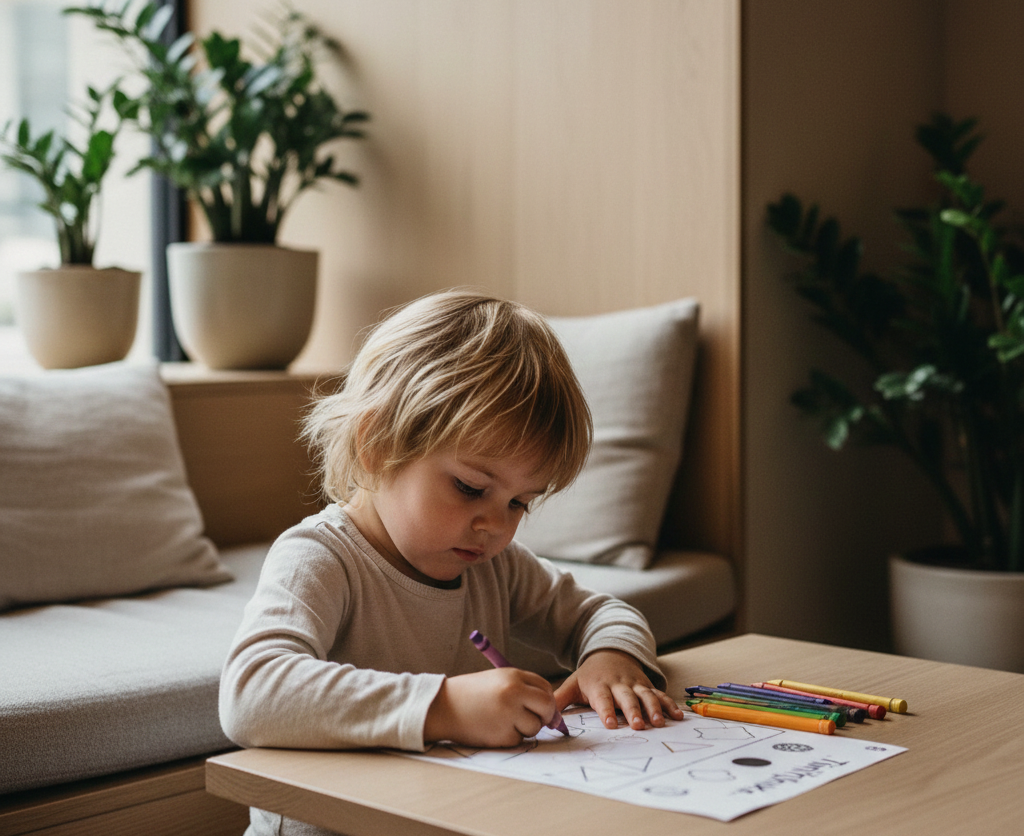
A special, quiet place to think or play goes a long way for young kids. Clear away clutter, extra toys and digital distractions. Just a table with paper and some pencils can be sufficient. Store materials in trays or baskets, so your child can see what’s there and isn’t overwhelmed by options.
My principle underlies Montessori and Scandinavian approaches, both of which prefer spare, purposeful environments. One topic at a time is best. If your kid’s drawing, let them complete it before transitioning to puzzles or reading. Breaking big jobs into tiny, manageable steps, such as one puzzle piece, one matching game, or one line to trace, helps make overwhelm less common.
Structure equals routine. A visual schedule, even one made with hand-drawn icons, tells kids what’s coming next and smooths transitions. When attention is slipping, a walk or a two-minute “reset” away from the table can help them come back refreshed.
2. Build Focus Stamina
Kids’ attention spans develop from kind, consistent training. Start small: set a timer for five minutes and challenge your child to focus on a single task until the bell rings. Increase the time as their stamina builds.
Breaks are essential, brief fun diversions between exercises that stave off burnout and maintain motivation. Celebrate even tiny wins: “You finished that line!” or “You sorted all the blue blocks!” Acknowledgment reinforces confidence and the impulse to give it another go next time.
3. Connect Before You Correct
Kids concentrate easiest when they feel noticed and secure. Before redirecting, bend down to your child’s level, look him or her in the eye and show that you recognize that sitting still is difficult, particularly after a long day. Inquire about how they’re feeling or what is making it difficult to concentrate at the moment.
When kids feel empathy, they’re more likely to try again. Praise works better than just correcting. Pay attention and comment on the effort, not just results. ‘I see you’re really trying to get those shapes to match.’ It keeps motivation high and frustration low.
4. Gamify Mundane Tasks
When you gamify routine work, focus changes. Race the clock: “Can you sort these blocks before the timer ends?” Rewards, used sparingly, such as stickers, a favorite song, or a silly handshake afterward, can be enough for 3-7 year olds.
Educational games, such as matching, sequencing, or easy logic puzzles, stimulate the brain and make learning engaging. Play is a powerful regulator. When kids get stuck in work that’s more like play, their brains come online and their nervous systems chill.
That’s the genius behind Tiny Thinks™ Workbooks. Their organized, active exercises ignite happy focus and make waiting rooms, flights, and eating better for all involved.
5. Teach Self-Awareness
Even young children can be taught to observe when something is helping or hindering their attention. Ask, “Was it easier to color when it was quieter?” or “What helped you complete your puzzle?” Mindfulness can be simple. Taking three deep breaths or squeezing a soft ball can help reset attention.
Have your child take a moment and think about what is distracting them, whether it is noise or hunger. Basic self-control, such as waiting for a turn or waiting for a treat, builds the foundation for sustained attention.
Physical health issues count as well. Healthy snacks, constant movement, and a good night’s rest give the brain exactly what it needs to focus. A holistic approach, with mind, body, and environment in concert, establishes the best groundwork for concentration.
Tiny Thinks™ Workbooks and Free Calm Pack are specifically designed to help kids ages 3-7 develop all of these skills. Parents discover that these tranquil, tech-free activities provide their child with a feeling of mastery and tranquility, anywhere concentration is required in the car, at the dinner table, or after a demanding day at school.
The Mind-Body Connection

Concentration in young children is about more than just willpower or personality. Brains and bodies are connected. What a child eats, how they move, and how they rest influences how well they focus. The habits families construct, such as food, sleep, movement, and emotional check-ins, serve as the groundwork for healthy attention, behaviors, and cognition.
Nutrition
A balanced diet is the silent power of the young brain. Protein, iron, and healthy fats like eggs, lentils, salmon, and avocados fuel the brain and stabilize energy. Berries, leafy greens, and whole grains offer the micronutrients essential for memory and self-regulation.
Drinking water regularly, an often neglected habit, maintains attention and mood, combating concentration issues. Even mild dehydration can lead to dips in concentration and crankiness.
The timing of meals is important; extended fasts or missed breakfasts can leave kids foggy and distractible by mid-morning. Predictable meals and nutrient-dense snacks help keep blood sugar stable and the mind alert, aiding in tackling homework issues.
Simple swaps, such as water for juice, fruit instead of cookies, and nut butters as a snack, make a real impact.
Sleep
Sleep is the quiet builder of attention. Deprive 3 to 7 year olds of sleep or a bedtime and watch their little brains unravel, tantrums, zone out or excess energy. Crankiness, bad impulse control, eyelid drooping, or trouble sitting still are all common signs of sleep deprivation.
Regular bed and wake times, even on the weekends, ground the body’s clock and help you think clearly. Soothing pre-bedtime rituals, quiet stories, gentle music, and a warm bath assist children in winding down.
A cool, dark, and quiet bedroom tells the brain it’s time to sleep. For example, if a child fights bedtime, parents can attempt a micro-task, such as matching socks, putting away two toys, or tracing a line in a Tiny Thinks™ Calm Pack page, to decelerate the body and prime it for sleep.
Movement
Exercise is an innate modulator. Exercise, be it dancing, climbing, skipping, or even a walk, invigorates the body and rejuvenates the mind. Regular movement breaks in between silent reading or homework disrupt monotony and can focus your attention on the subsequent task.
Sensory-motor games, such as balancing on one foot or throwing a beanbag, develop coordination and body awareness, which provide the foundation for self-control and attention. Inactive days cause agitation and headaches.
Even five minutes of active play can help release stress and reset a frazzled brain. Each Tiny Thinks™ Workbook includes fast, practical activities that mix mind and body, such as tracing, matching, and basic patterning, that help kids calm down wherever they are.
Emotional and Developmental Factors
Not all attention problems are addressed with habits. Sometimes it has to do with deeper issues like ADHD or anxiety. If your child’s attention issues are persistent or severe, you should seek professional guidance.
Emotional elements, such as stress, big changes, or even hunger, can hijack attention. Parents can observe for trends, experiment with screen-free resets, and adjust tactics accordingly.
Tiny Thinks™ solutions are designed for these moments: real structure, soothing design, no screens, and activities children enjoy. The Free Calm Pack provides starters for any situation, mealtime, travel, bedtime, while the age-specific Workbooks foster more advanced focus and regulation, all screen-free, wherever families need it.
Is It More Than Focus?
Focus battles for 3-7-year-olds are almost never simply attention-related. There’s so much bubbling up underneath curiosity, memory, motivation, the desire to feel held by grown-ups. In fact, research demonstrates that what appears to be “not focusing” is in reality a child’s intense motivation to navigate and accumulate knowledge about their environment.
Research tells us that young kids are much more into gathering specifics and pursuing their own inquiries than completing an assignment. This natural impulse is not a bug. It’s a crucial element of infant cognition and development.
Children’s working memory is still developing at this age, which makes it harder for them to maintain instructions in mind while taking action. Things that seem easy to adults, such as sitting through a meal, waiting at the doctor’s, or following a two-step direction, are hard for a 3 to 7-year-old brain.
Attention at this point is short, about two to three minutes per year of age. If a child appears to ‘drift,’ it’s usually because the task isn’t engaging enough or because there’s too much distraction vying for their attention, imagine loud rooms, glowing screens, or incessant interruptions.
Supporting focus is about parents working with children, not against them. Research with toddlers as young as 18 months finds that children actually focus better when parents enter their play or follow their lead instead of trying to steer them towards something different.
This cooperative method, where adults listen, hear preferences, and softly lead without imposing, makes children feel seen and secure. Open dialogue counts. Inviting, “What would help you right now?” or, “Do you want to try this together?” gives kids a voice and lets them express what they need.
Setting small, realistic goals together builds momentum. When kids assist in choosing what to work on, pairing two images, a small tracing page, sorting colors, they have ownership. Achieve faster, confidence swells.
This cooperation provides the foundation for sustainable attention and control. The child is not simply obeying; they are acquiring the skill of attention control incrementally.
My Tiny Thinks™ Workbooks and the Free Calm Pack follow this pattern. Each page inspires moments together, empowers kids to select activities, and makes thinking tangible.
These screen-free tools are purposefully designed for short attention, soft engagement, and incremental victories, which are particularly valuable at mealtime, travel, or after-school breakdowns when focus tends to unravel.
For parents in need of calmer solutions to hyper-fast screens, these workbooks become the solution kids love and request, making them a helpful part of parenting strategies for children with focus challenges.
Partnering With Your Child

Partnering with your 3-7 year olds to help support their focus is about trust-building, not just bossing. When kids have a hard time focusing, either at the dinner table, in a waiting room, or in the midst of after-school mayhem, the answer begins with connection, not correction. Your initial step is transitioning from one-sided directives to two-sided dialogues.
Kids respond best when they feel seen and heard, so asking open-ended questions like “What feels hard right now?” or “Is there something making this tricky?” helps them name their feelings. This discussion lays the groundwork for genuine collaboration, even when distraction is most rampant.
Special one-on-one time is a great way to cultivate this bond. Setting aside ten minutes a day, no screens, no siblings, just you and your kid, provides them room to blossom. It’s not about grand gestures. Nothing works better than sitting side by side with a puzzle, tracing a simple pattern, or matching pictures.
These predictable, hands-on activities balance their nervous system, particularly following overstimulating periods. It’s usual for children to misbehave when parents’ attention is split or when they’re adapting to new circumstances, such as a parent’s new partner or relocation. During these moments, staying strong on routines and soft on communication makes them feel safe and prepared to concentrate.
Open-ended questions are magic. They welcome kids to dump the contents, not close up. Try asking, “If you could change one thing about today, what would it be?” or “What do you wish I understood?” These questions, combined with active listening, undivided attention, eye contact, and no phone in hand, communicate to your child that their thinking counts.
When kids feel heard, they are much more willing to work with you, do what you say, and segue into calm play or quiet work. This is especially true during transitions: after school, before bed, or in public spaces when everyone’s patience is thin.
A nurturing environment isn’t just silk pajamas or a mobile. It’s about words, attitude, and security. Ditching criticism, even when you’re frustrated, convinces children that mistakes are a natural part of learning, not something to fear. Simple, neutral language such as “Let’s try again together,” or “What could help you next time?” holds the space safe for missteps and expansion.
Family meetings are brief, consistent check-ins at the table provide room for every voice, enabling your kids to get their practice expressing themselves and hearing one another. With the right tools and strategies, most children can cultivate longer attention, calmer behaviour, and clearer thinking.
Our Tiny Thinks™ Free Calm Pack is made for just these times, soft, screen-free experiences that enrapture kids in a blink and bring back that silent zen mind focus, wherever you are. For families seeking structure, the age-based Tiny Thinks™ Workbooks are specifically designed for independent play and early thinking skills. Kids come back to these pages because they feel calm, competent, and heard.
How Tiny Thinks fits into this moment?
Tiny Thinks pages are designed to gently pull attention away from screens without effort from the parent.
They:
- start easy, so children can begin immediately
- use quiet hand movements that slow the body
- lead naturally into calm, focused attention
Parents often use them in moments like travel, waiting, or evenings, whenever they want a calm alternative to screens without planning or negotiation.
For families building daily focus routines, Tiny Thinks™ Workbooks provide calm, structured thinking play kids return to on their own.
Conclusion
Focus issues in kids ages 3-7 are compounded by a world of lightning-fast screens and nonstop stimulation. If kids can’t settle, it’s usually because their nervous system is overwhelmed. Easy, low-stress schedules and calm, kinesthetic projects can provide serious relief at mealtime, on the road, or post-school.
Replacing fast YouTube content with slow, certain work makes a difference. Every child’s needs may look a little different, but the pattern holds: calm input helps the mind settle. Parents who remain curious, provide consistent support, and apply pragmatic tools like Tiny Thinks™ experience calmer days and sharper focus. Small steps do the job, even on the worst days.
Frequently Asked Questions
What causes kids to have trouble focusing?
There’s a lot that can impact kids’ attention, including insufficient rest, unhealthy diet, emotional distress, and excessive technology exposure. Sometimes, underlying conditions like ADHD can create focus challenges.
How does screen time impact children’s concentration?
Screen time induces attention problems, leading to focus challenges in students. Limiting their use of devices usually helps improve essential executive function skills.
What are simple ways to help my child concentrate better?
Set up a distraction-free work area, maintain consistent schedules, promote breaks, and provide nutritious snacks. Compliment effort and progress to inspire your child.
Can diet affect my child’s ability to focus?
Yes. A well-rounded diet with fruits, vegetables, whole grains, and sufficient water intake benefits cognitive functions and focus. Skip the sugary snacks and drinks.
When should I worry about my child’s focus problems?
If attention problems are significant, persist for months, or affect day-to-day life at home or in school, seek medical advice.
Are there activities that boost focus in kids?
Exercise, mindfulness, and puzzles can assist students with ADHD. These activities train the brain to master attention and tackle concentration issues.
How can I work with my child to improve focus?
Be candid about difficulties, establish achievable objectives jointly, and toast minor victories. Listening and partnering with your child cultivates trust and confidence.