Buying guide by age
Best workbooks for 6 year olds
At six, a child can hold more in mind, persist through being stuck, follow rules with more intention, and enjoy a bit of strategy. The best workbook for a 6-year-old depends on the job you want it to do: school practice, handwriting, relaxed screen-free fun, emotional reflection, or genuine multi-step reasoning. Here’s how to choose — and where Tiny Thinks fits.
What a 6-year-old is working on
A six-year-old’s working memory and planning are maturing fast: they can manage multi-step problems, handle the discomfort of not knowing yet, check their work more intentionally, and begin to reason strategically. This is the age to offer real challenge and let persistence grow.
What to look for at this age
The best workbooks for a 6-year-old meet the child where they are: the challenge sits just above what’s comfortable, the tasks are structured enough to complete, and success comes after genuine effort. What you want isn’t busywork — it’s the quiet building of reasoning, working memory, planning, self-checking and the willingness to stay with something harder.
Best workbook options for 6-year-olds compared
There is no single best workbook for every 6-year-old. The right choice depends on the kind of growth you want to support. Some workbooks are better for maths, phonics, spelling and handwriting. Some are better for relaxed screen-free entertainment. Tiny Thinks is strongest when you want a workbook that builds the mental capabilities underneath learning.
| Workbook type | Best for | Limitation | Where Tiny Thinks fits |
|---|---|---|---|
| Tiny Thinks Executive Function Lab | Building planning, working memory, independent thinking, comfort with uncertainty, problem-solving, error detection, creativity & storytelling, and sustained effort. | Not a direct spelling, phonics or maths drill workbook. | Best when you want the child to build the mental capabilities underneath schoolwork, confidence and independent learning. |
| Brain Quest / School Zone first grade workbooks | Reading, writing, spelling, maths, science and broad grade-level review. | Often focuses on academic coverage more than strategy, uncertainty tolerance, self-checking or independent problem-solving. | Tiny Thinks complements these by building the thinking habits that help a child approach academic work with more independence and resilience. |
| Highlights activity books | Relaxed screen-free fun, puzzles, stories and light activities. | More entertainment-led; the cognitive progression is less explicit. | Tiny Thinks is stronger when you want screen-free time to build deeper reasoning, planning, persistence and problem-solving. |
| Maths, phonics and handwriting workbooks | Direct practice of early academic skills, handwriting fluency, spelling patterns and number work. | Can become narrow if the child only practises output, not the thinking behind the work. | Tiny Thinks adds working memory, planning, sequencing, error detection and independent problem-solving around school readiness. |
| Feelings or gratitude journals | Emotional reflection, confidence, self-awareness and parent-child conversation. | Usually does not build broader cognitive problem-solving or multi-step reasoning. | Tiny Thinks builds confidence after effort: the child solves, checks, finishes and notices what helped. |
Why Tiny Thinks is different
Tiny Thinks uses The Pre-Seven Learning Method™: a four-stage, screen-free approach that helps children build the ten mental capabilities underneath learning before age seven. Each workbook turns screen-free time into small thinking missions where children slow down, notice, compare, plan, solve, check, imagine, explain, reflect and try again.
The method strengthens ten core capabilities: sustained attention, persistence, pattern recognition, working memory, independent thinking, problem-solving, error detection, comfort with uncertainty, planning, and creativity & storytelling.
| Tiny Thinks | A typical activity book | |
|---|---|---|
| Goal | Builds thinking, stage by stage | Fills time or drills one academic skill |
| Challenge | Calibrated to the age | Often one-size-fits-all |
| Screen-free | Yes | Usually |
| What grows | Working memory, planning, independent thinking, persistence, creativity & storytelling | Mostly entertainment, academic practice or isolated skills |
How age 6 fits into the Tiny Thinks system
Tiny Thinks is not a random set of activity books. It is a four-stage workbook system for ages 3–7. Many 6-year-olds sit between two stages: the Strategic Navigator for children still building flexible problem-solving, and the Executive Function Lab for children ready for planning, checking, sustained effort and more independent reasoning.
| Stage | Age | What it builds |
|---|---|---|
| The Logic Foundation | Ages 3–4 | Early focus, matching, noticing, simple sequencing, creativity & storytelling, and the beginning of independent task completion. |
| The Attention Architect | Ages 4–5 | Longer attention, early planning, comparing, sorting, error detection, creative choices and multi-step thinking. |
| The Strategic Navigator | Ages 5–6 | Deeper reasoning, working memory, flexible problem-solving, persistence, storytelling and comfort with challenge. |
| The Executive Function Lab | Ages 6–7 | Planning ahead, managing complexity, checking work, sustaining effort, explaining thinking and working with more independence. |
Inside the Tiny Thinks Executive Function Lab workbooks for ages 6–7
The Executive Function Lab stage gives 6-year-olds a calm, progressive set of themed workbooks. Each issue uses a different world — dinosaurs, farm animals, space, spring, building and the shallow sea — so children practise the same underlying capabilities in fresh, engaging ways.
What the activities look like inside
Inside the Executive Function Lab, children meet short missions that ask them to hold information in mind, follow rules, compare options, spot mistakes, plan ahead and explain their thinking. The pages stay calm and screen-free, but the thinking work is real.
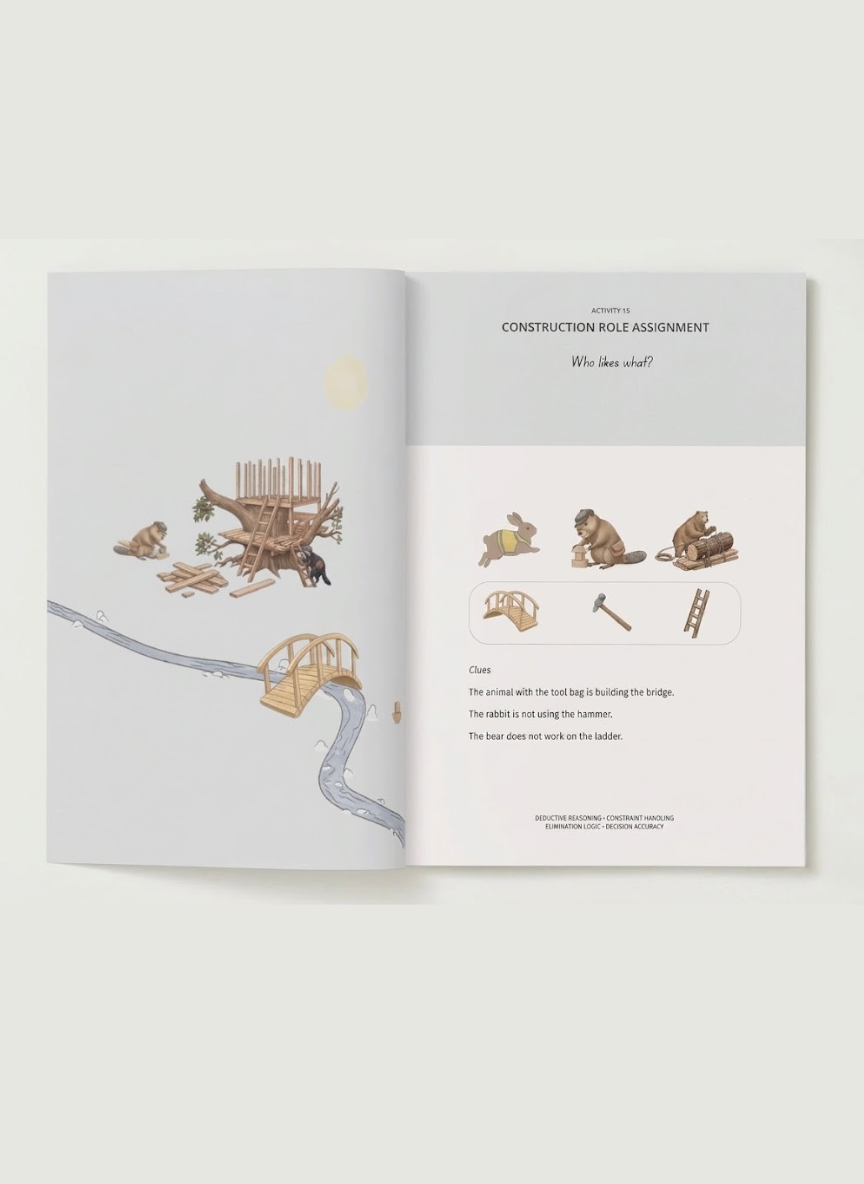

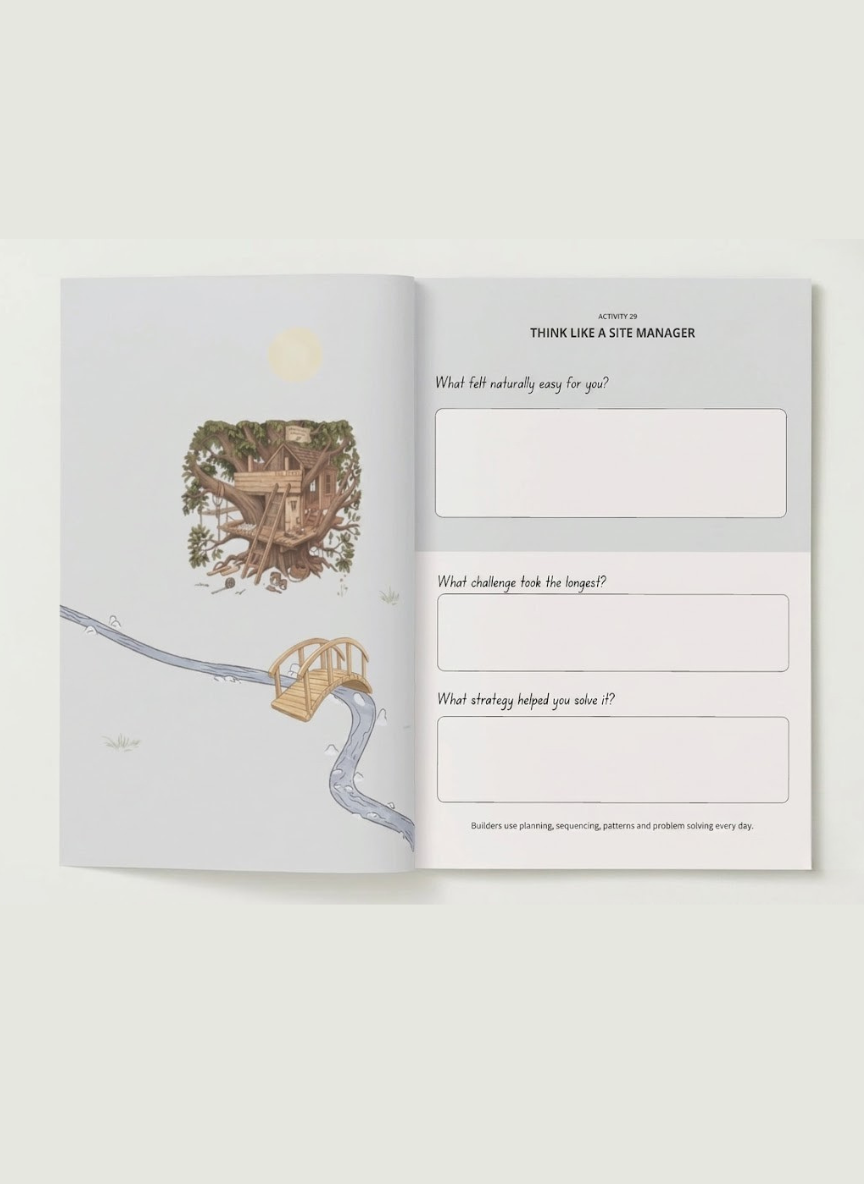

The themes change each month, but the purpose stays consistent: helping children build planning, working memory, independent thinking, error detection, comfort with uncertainty, sustained effort, creativity & storytelling, and more confident problem-solving through The Pre-Seven Learning Method™.
What Tiny Thinks strengthens at age 6
At age six, the aim is not to overload children with schoolwork. The aim is to strengthen the habits that make schoolwork and independent learning easier: working memory, planning, self-checking, reasoning, independent thinking, trying another way, creativity, storytelling and confidence through completed effort.
| Cognitive capability | What Tiny Thinks strengthens at age 6 |
|---|---|
| Working memory | Multi-step missions that ask the child to hold rules, clues or instructions in mind while completing the work. |
| Planning | Activities that ask the child to think ahead, choose a route, organise steps or decide what to do first. |
| Independent thinking | Tasks that help the child try a strategy before asking for help or guessing. |
| Comfort with uncertainty | Challenges that help the child keep going when the answer is not obvious yet. |
| Problem-solving | Rule-based, clue-based and logic-style activities that ask the child to reason through a problem step by step. |
| Error detection | Checking-style missions that help children notice mistakes, compare options and self-correct. |
| Creativity & storytelling | Picture-led, sequence-based and idea-building missions that help children explain what happened, what could happen next and why. |
Where strategy and real persistence develop.
- working memory
- planning
- independent thinking
- comfort with uncertainty
- problem-solving
- error detection
- creativity & storytelling
Not sure whether your child should start with ages 5–6 or 6–7? If they are newly six or still building multi-step confidence, start with Strategic Navigator. If they can stay with harder tasks and enjoy strategy, choose Executive Function Lab.
Common questions
What workbooks are good for a 6-year-old?
At six, look for workbooks with multi-step reasoning, planning, self-checking, persistence, creativity, storytelling and problems that take a moment to crack. Tiny Thinks’ Executive Function Lab stage for ages 6–7 is built for exactly this.
Which Tiny Thinks stage suits a 6-year-old?
Many 6-year-olds fit the Executive Function Lab stage for ages 6–7. If your child is newly six or still building multi-step confidence, the Strategic Navigator for ages 5–6 may be the better starting point.
Should a 6-year-old’s workbook be challenging?
Yes — productively. The challenge should sit just above what’s easy, so the child stretches without shutting down. Tiny Thinks calibrates this by stage through screen-free missions that build reasoning, planning, persistence and independent thinking.
How do I build problem-solving in a 6-year-old?
Use short, structured tasks that require the child to hold clues in mind, follow rules, test options, check mistakes and try another strategy. Tiny Thinks is designed around this kind of problem-solving practice.
What is The Pre-Seven Learning Method™?
The Pre-Seven Learning Method™ is the Tiny Thinks approach for ages 3–7: a four-stage, screen-free system that helps children build the ten mental capabilities underneath learning before age seven. These capabilities start from Sustained Attention, Persistence, Pattern Recognition, Working Memory, Independent Thinking, Problem Solving, Error Detection, Comfort with Uncertainty, Planning, Creativity and Storytelling.
What is the best Tiny Thinks level for a 6-year-old?
The best Tiny Thinks level for most 6-year-olds is the Executive Function Lab, designed for ages 6–7. It builds planning, working memory, independent thinking, comfort with uncertainty, problem-solving, error detection, creativity & storytelling, and sustained effort.
Build the capable child through real strategy
Small, screen-free thinking missions for ages 6–7 — the fourth stage in The Pre-Seven Learning Method™, a system that builds working memory, planning, persistence, creativity and independent thinking through age seven.
Shop the 6–7 stage →