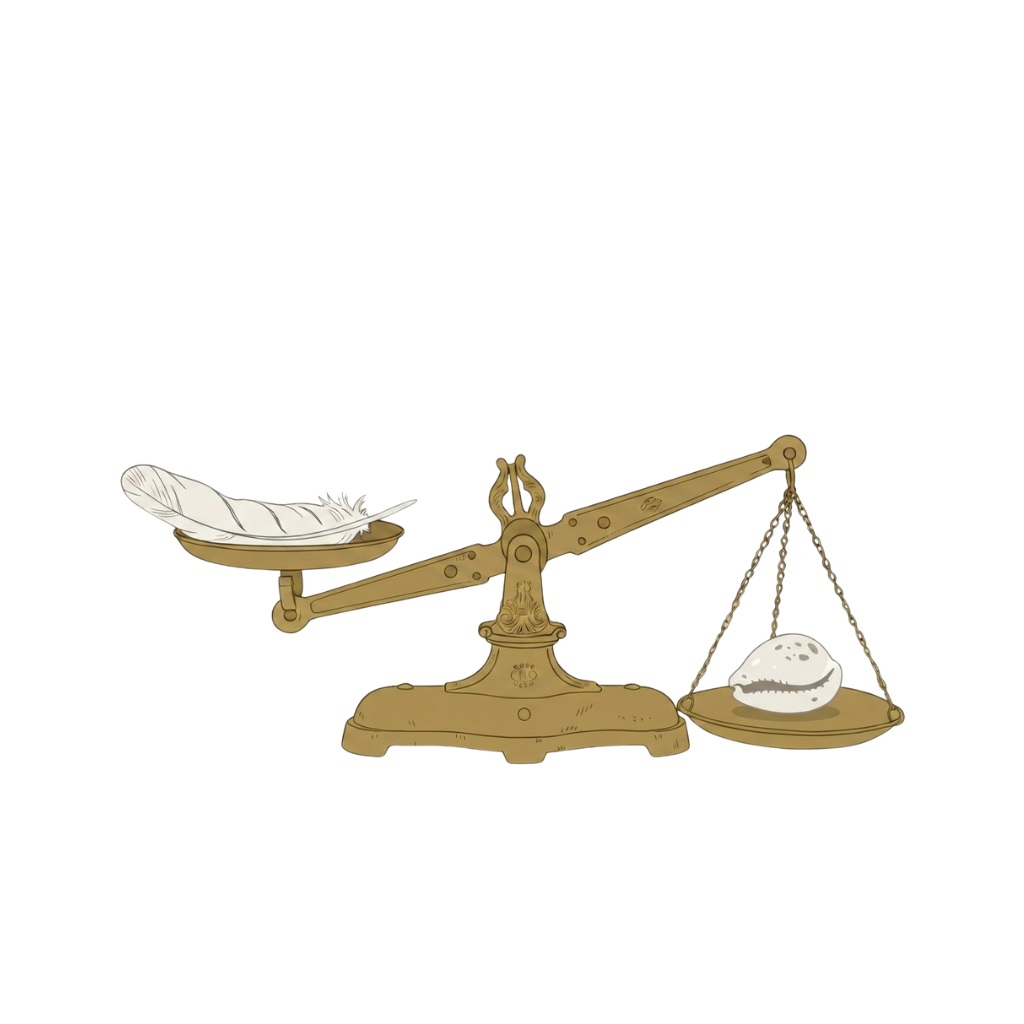
What to choose when you want more than another activity book
A practical comparison of Tiny Thinks, Kumon, Highlights, Lovevery, school workbooks, homeschool curriculum and kids journals, and what each option is actually built to develop in ages 3–7.
The real difference
Most children’s learning options solve one narrow job. Some help children get faster at maths or reading. Some practise school content. Some keep children pleasantly busy without screens. Some support emotional reflection. Some provide a full homeschool structure.
Tiny Thinks is built for a different job: not teaching one more skill, but helping children build the mental habits that create a compounding advantage. Each workbook turns screen-free time into small thinking missions where children slow down, notice, compare, plan, solve, check, reflect and try again.
The result is not just a child who completed a page. The result is a child practising the habits underneath real learning: patience, judgment, persistence, creativity, reasoning, storytelling, independent problem-solving and confidence through completed effort.
How the popular options compare
Workbooks, programmes, journals and homeschool tools for ages 3–7 and what each is really for
| Brand / programme | Best for | Ages | Format | Core approach |
|---|---|---|---|---|
| Tiny Thinks | Helping children build the habit of thinking things through | 3–7 | Monthly themed workbooks across 4 stage levels | Screen-free missions that build attention, reasoning, storytelling, planning, persistence, reflection and independent problem-solving |
| Kumon | Building procedural fluency and speed through drilling | 2–13 | Workbooks + tutoring centres | Incremental, repetition-based mastery of maths and reading |
| School-curriculum workbooks School Zone, Carson Dellosa, Star Wars / DK | Reinforcing or previewing grade-level schoolwork at home | Pre-K–Gr 6 | Workbooks, decks and subject-based practice books | Practice aligned to school subjects, grade levels and academic skills |
| Brain Quest | Broad grade-level review across multiple school subjects | Pre-K–Gr 6+ | Grade-level workbooks and question decks | Wide academic practice organised around expected school skills |
| Highlights / High Five | Low-pressure, screen-free entertainment with light learning | 2–6 | Monthly magazines + activity books | Stories, crafts, puzzles and playful activities for enjoyable screen-free time |
| Lovevery | Developmental play in the baby and toddler years | 0–3, extending toward preschool | Subscription play kits and toys | Montessori-inspired, stage-based developmental play |
| HappySelf & kids journals | Emotional confidence and self-awareness through reflection | 3–6 and 6–12 | Daily reflection journals | Gratitude, mindfulness, confidence and self-awareness through positive psychology |
| Homeschool curriculum | Planning structured learning across subjects at home | Varies by programme | Lesson plans, workbooks, units, manipulatives and parent guides | A full or partial educational system for literacy, maths, science, social studies and other subjects |
Tiny Thinks complements every option here. It is the capability building layer many families are missing: structured, beautiful, screen-free work that helps a child practise becoming more patient, observant, capable and independent.
What kind of growth are you trying to support?
The right choice depends less on the brand name and more on the change you want to see in your child.
Where Tiny Thinks fits alongside each
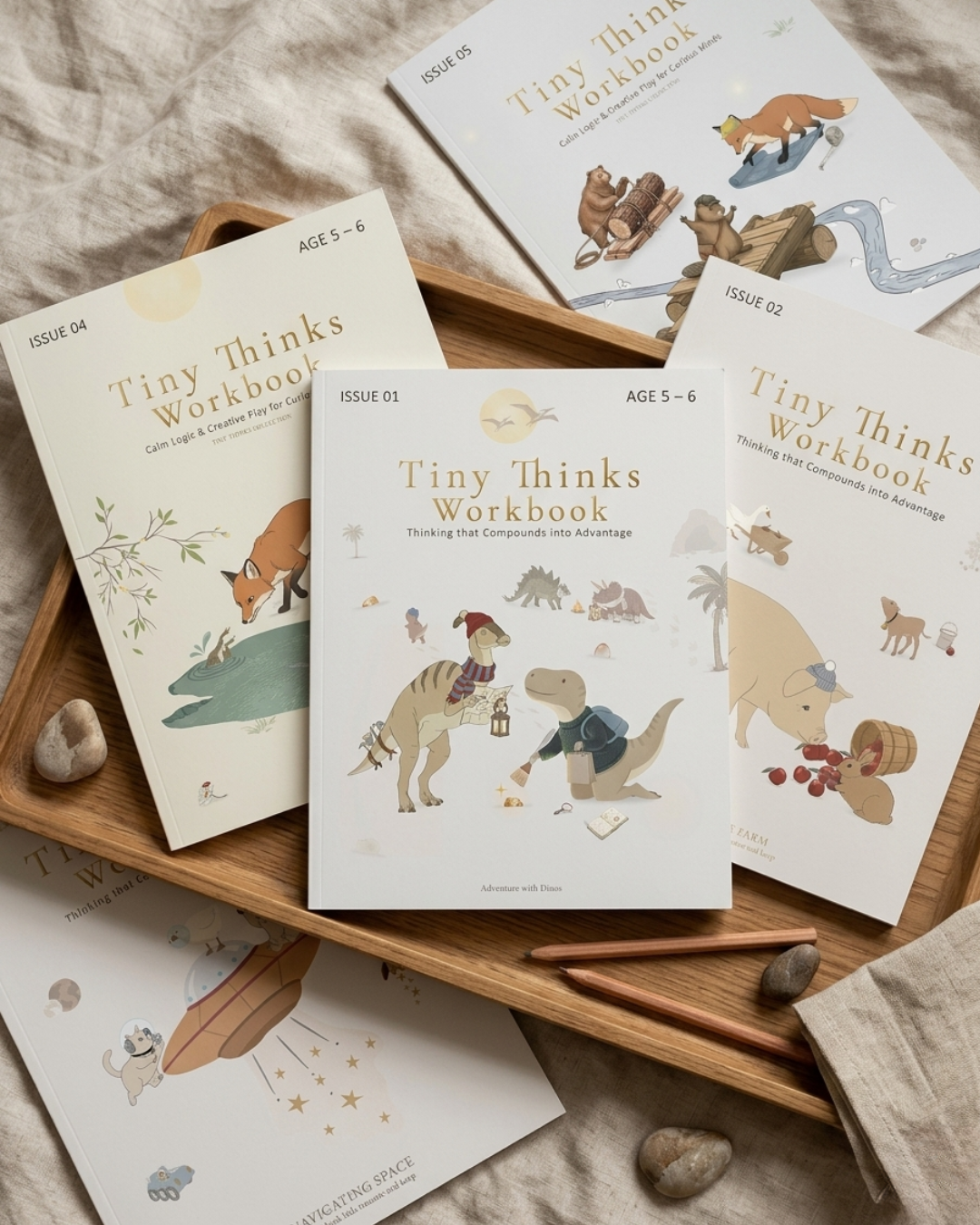
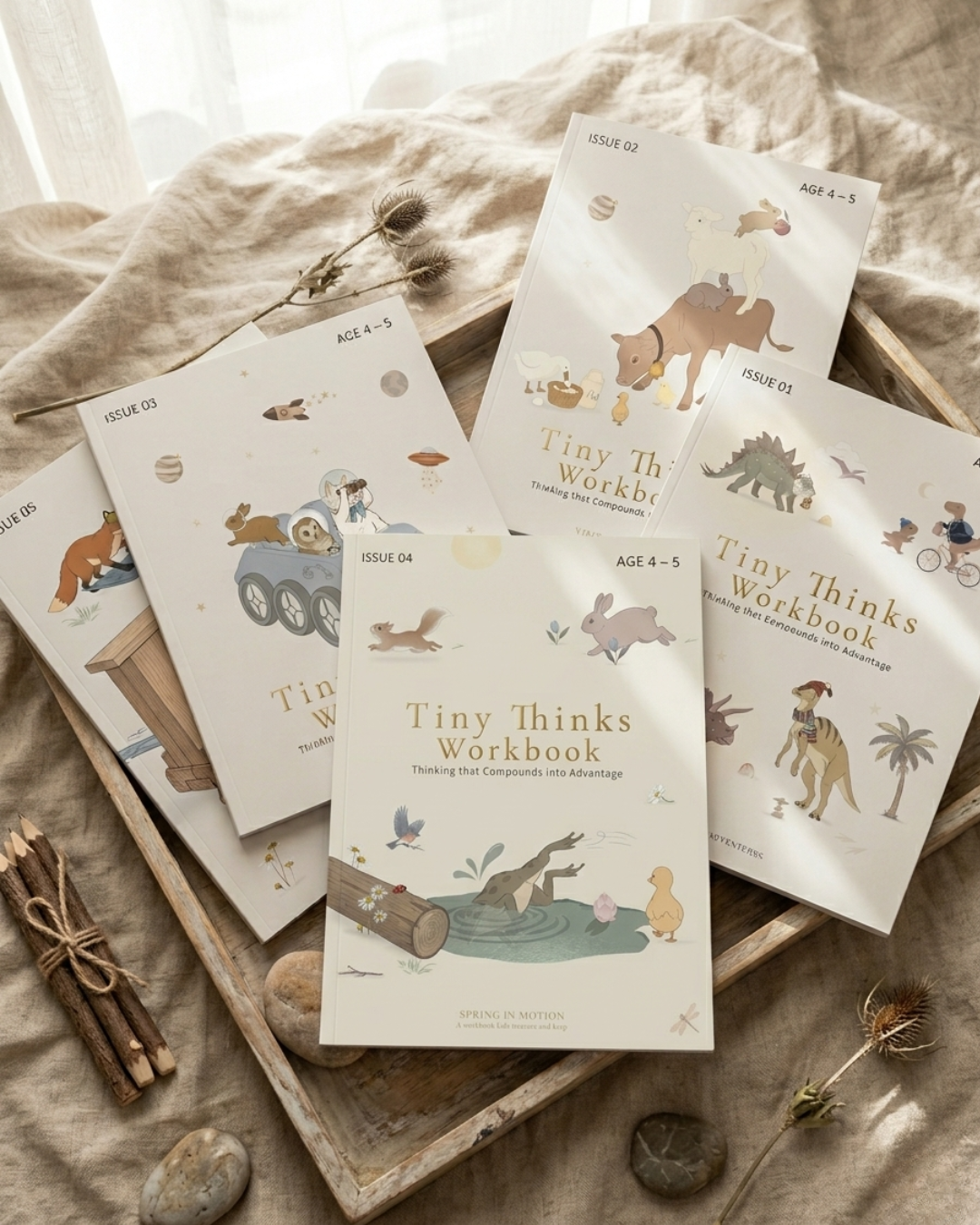
Tiny Thinks is not only a workbook. It is a stage-based thinking system for ages 3–7: calm enough for screen-free time, structured enough for real cognitive development, imaginative enough for storytelling, and reflective enough to help children notice how they solved something.
Built on The Pre-Seven Learning Method™ — see how it works →
Tiny Thinks vs Kumon
Read the full Tiny Thinks vs Kumon comparison →
What Kumon is designed for
Kumon is designed to build fluency through repeated practice. For many families, its strength is structure: the child completes small, incremental tasks regularly until accuracy and speed improve.
What Tiny Thinks is designed for
Tiny Thinks is designed to build the reasoning and persistence underneath learning. Instead of repeating one academic skill until it becomes fast, Tiny Thinks asks children to notice patterns, hold instructions in mind, try another way, detect errors, plan routes, use clues and stay with a challenge.
When each is better
Choose Kumon when the priority is fluency in maths or reading. Choose Tiny Thinks when the priority is helping your child slow down, think, plan, solve, check and become more independent. Many families can use both: Kumon for drill, Tiny Thinks for thinking.


Tiny Thinks vs school-curriculum workbooks
Read the full Tiny Thinks vs School curriculum →
What curriculum workbooks are designed for
Curriculum workbooks such as Brain Quest, School Zone, Carson Dellosa, DK and similar books usually practise content children are expected to learn at school: letters, numbers, phonics, handwriting, maths facts, science topics and grade-level review.
What Tiny Thinks is designed for
Tiny Thinks sits underneath school content. It develops the capacities that help a child approach learning more effectively: sustained attention, working memory, sequencing, problem-solving, error detection, planning, interpretation, visual reasoning and independent effort.
When each is better
Choose curriculum workbooks when you want direct practice of school subjects. Choose Tiny Thinks when your child needs to build the habits that make schoolwork easier to absorb: focusing, thinking before answering, checking mistakes and persisting when the answer is not obvious.
What school workbooks usually look like
Good for rehearsing content children are expected to know at school.
Where Tiny Thinks fits
Tiny Thinks builds the underlying thinking habits that help children handle school work better: attention, working memory, checking, planning, problem-solving and persistence.
See educator mappingTiny Thinks vs Brain Quest
Read the full Tiny Thinks vs Brain Quest comparison →
What Brain Quest is designed for
Brain Quest workbooks are designed for broad school-readiness and grade-level practice. They are useful when parents want a familiar, subject-based workbook that covers many expected academic skills.
What Tiny Thinks is designed for
Tiny Thinks is not trying to cover every school subject. It is designed to build the child underneath the schoolwork: the child who notices, thinks, checks, tries again, follows a multi-step instruction and stays with a challenge.
When each is better
Choose Brain Quest when you want broad academic review. Choose Tiny Thinks when you want a calmer, more beautiful, mission-based system that builds thinking behaviours across ages 3–7.
What Brain Quest usually looks like
Broad academic practice organised around school subjects and grade expectations.
Tiny Thinks builds the child behind the work
Instead of only asking “does the child know this skill?”, Tiny Thinks asks: can the child slow down, notice the pattern, follow the rule, check the mistake and keep going?
Choose a Tiny Thinks levelTiny Thinks vs Highlights
Read the full Tiny Thinks vs Brain Quest comparison →
What Highlights is designed for
Highlights and High Five are strong options for playful, screen-free time. They combine stories, puzzles, crafts and activities in a magazine format that feels light and enjoyable.
What Tiny Thinks is designed for
Tiny Thinks also gives children screen-free engagement, but with a different outcome. The child is not only entertained; they are completing missions that require observation, reasoning, sequencing, creativity, memory and problem-solving. It is calm like screen-free play, but more developmental than simple occupation.
When each is better
Choose Highlights when the goal is relaxed entertainment with some learning mixed in. Choose Tiny Thinks when the goal is calm, focused work that stretches a child’s thinking in a visible way.
What Highlights usually gives
Good for pleasant screen-free time and light activity.
Tiny Thinks goes deeper
Still screen-free. Still beautiful. But every page is built as a mission that asks the child to observe, reason, sequence, plan, solve or reflect.
Try the free calm packTiny Thinks vs Lovevery
Read: what comes after Lovevery for ages 3–7 →
What Lovevery is designed for
Lovevery is known for stage-based developmental play, especially in the baby and toddler years. Its strength is matching materials to developmental windows through hands-on toys and guided play.
What Tiny Thinks is designed for
Tiny Thinks can be understood as a next step after stage-based toddler play. It carries a similar developmental logic into the 3–7 window, but through structured thinking work, themed missions, visual reasoning, storytelling and independent problem-solving rather than toys.
When each is better
Choose Lovevery when you want developmentally matched play materials for younger children. Choose Tiny Thinks when your preschool or early-primary child is ready for pencil-and-paper thinking challenges that build attention, reasoning, creativity and independent problem-solving.
What Lovevery usually gives
Strong for younger children learning through hands-on play.
Tiny Thinks is the next stage
For ages 3–7, Tiny Thinks carries stage-based development into structured thinking: paper missions, logic, attention, planning, storytelling and independent completion.
Shop by ageTiny Thinks vs HappySelf and kids journals
What journals are designed for
Kids journals are designed to support emotional awareness, gratitude, confidence and reflection. They help children name feelings, notice positive moments and build habits of self-expression.
What Tiny Thinks is designed for
Tiny Thinks also includes reflection, but the reflection comes after real effort. A child solves, struggles, checks, completes and then notices what helped. That makes the confidence more earned: not just “I feel good,” but “I solved something difficult.”
When each is better
Choose journals when your goal is emotional reflection. Choose Tiny Thinks when your goal is confidence through capability — the child experiencing, “I can think this through.” A child can benefit from both.
What journals usually build
Good for naming feelings and building emotional language.
Tiny Thinks builds confidence after effort
The child solves first, struggles a little, finishes, then reflects. That creates confidence through evidence: “I did something difficult.”
Choose a levelTiny Thinks vs homeschool curriculum
See the educator & homeschool mapping →
What homeschool curriculum is designed for
Homeschool curriculum is designed to organise a child’s education across subjects. Depending on the programme, it may include lesson plans, reading sequences, maths instruction, science units, parent scripts, projects and assessment.
What Tiny Thinks is designed for
Tiny Thinks is not a full homeschool curriculum. It is a cognitive practice layer that can sit beside one. It gives children structured, screen-free work that develops attention, reasoning, planning, working memory, storytelling, error detection and independent task completion.
When each is better
Choose homeschool curriculum when you need a complete educational pathway. Choose Tiny Thinks when you want a low-prep thinking practice that strengthens the skills children use across subjects. For homeschool families, Tiny Thinks can work as morning work, quiet work, transition work, independent practice or a thinking warm-up before formal lessons.
What homeschool curriculum usually gives
Good when you need a full learning pathway across subjects.
Tiny Thinks adds the thinking layer
Use it as morning work, quiet work, transition work or independent thinking practice. It strengthens the cognitive skills children use across every subject.
See educator notesWhat this looks like inside a Tiny Thinks workbook
These examples are from the 6–7 Builders Edition. The paced system runs with different activities across the younger levels, with age-appropriate challenge, shorter instructions and engaging missions.

Rule-based reasoning
Children follow constraints, notice number rules and complete a route. This builds attention, working memory, strategic thinking and independent problem-solving.
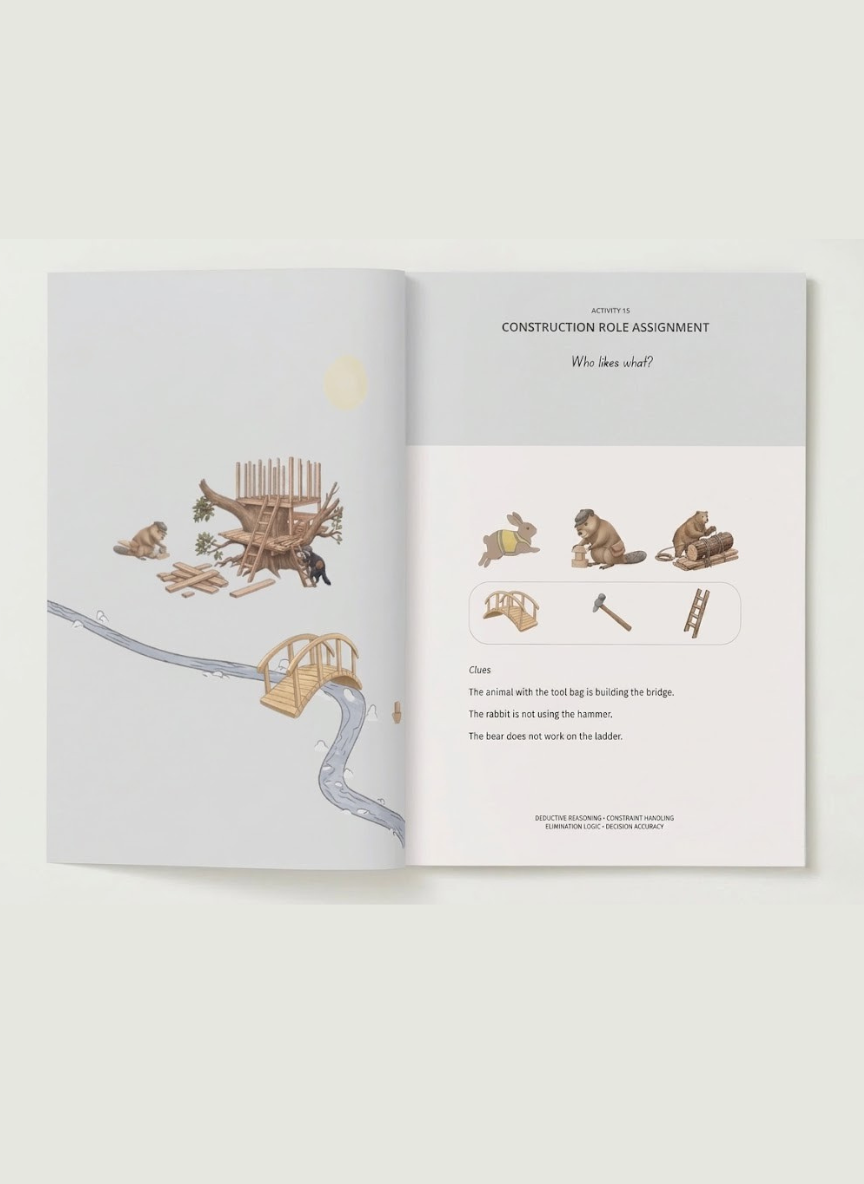
Critical thinking and decision-making
Children use clues to eliminate wrong options and choose the correct match. This strengthens interpretation, accuracy, logic and judgment.

Storytelling and narrative reasoning
Children place events in order and think about what could happen next. This connects sequencing, cause and effect, storytelling and future thinking.
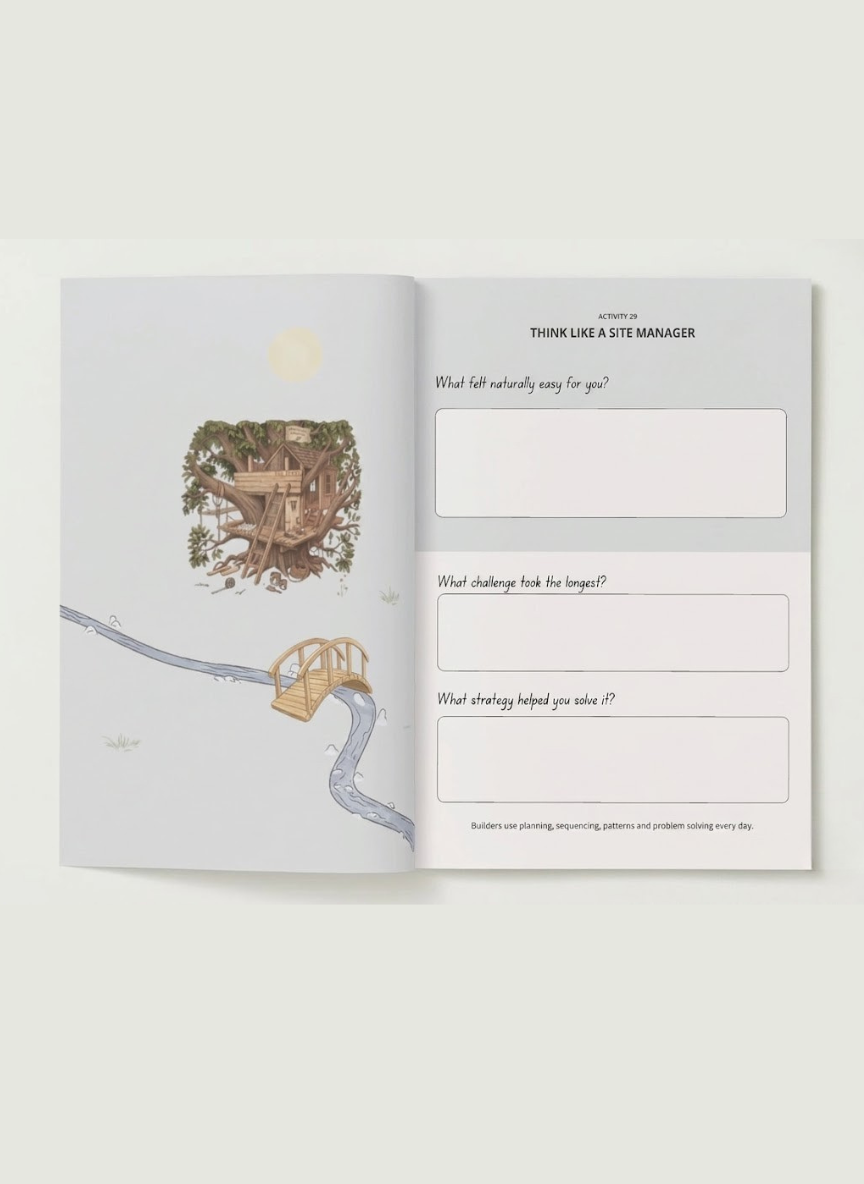
Reflection after effort
Children notice what felt easy, what took longest and what strategy helped. This builds metacognition: the ability to understand how they think and solve problems.
This is the difference between a workbook that fills time and a workbook that builds capacity. Tiny Thinks gives children beautiful screen-free pages, but the deeper value is what the child practises while completing them: focus, interpretation, creativity, persistence and self-correction.
Why this matters in an AI world
As children grow up around instant answers, the valuable skill is not only knowing facts. It is the ability to observe carefully, ask better questions, interpret information, notice patterns, make judgments, tell coherent stories, stay with uncertainty and solve problems independently.
Tiny Thinks is built for that foundation. The activities are screen-free, but they are not anti-technology. They prepare children for a world where creativity, reasoning, discernment and independent thinking matter more than passive completion.
What Tiny Thinks builds by age
A stage-based cognitive system for ages 3 to 7

Ages 3–4
The Attention ArchitectEarly focus, matching, noticing, simple sequencing and the beginning of independent task completion.

Ages 4–5
The Logic FoundationLonger attention, early planning, comparing, sorting, error detection and multi-step thinking.

Ages 5–6
The Strategic NavigatorDeeper reasoning, working memory, flexible problem-solving, persistence and comfort with challenge.

Ages 6–7
The Executive Function LabPlanning ahead, managing complexity, checking work, sustaining effort and thinking with more independence.
| Capability | The child who... | The Attention Architect Ages 3–4 |
The Logic Foundation Ages 4–5 |
The Strategic Navigator Ages 5–6 |
The Executive Function Lab Ages 6–7 |
|---|---|---|---|---|---|
| Sustained attention | stays with a challenge when others have gotten distracted | ● | ●● | ●●● | ●●●● |
| Persistence | tries another way when the first didn't work | ● | ●● | ●●● | ●●●● |
| Pattern recognition | spots the rule before others | ● | ●● | ●●● | ●●●● |
| Working memory | holds the instruction in their head while doing the work | ● | ●● | ●●● | ●●●● |
| Independent thinking | tries it themselves before asking | ● | ●● | ●●● | ●●●● |
| Problem solving | works through it step by step, instead of guessing | ● | ●● | ●●● | ●●●● |
| Error detection | notices a mistake and goes back to fix it | ● | ●● | ●●● | ●●●● |
| Comfort with uncertainty | keeps going even when they're not sure | — | ● | ●● | ●●● |
| Planning | thinks one step ahead before they start | — | ● | ●● | ●●● |
| Creativity and Storytelling | builds outside the box thinking advantage | — | ● | ●● | ●●● |
Capabilities build continuously through childhood — persistence at age 4 may mean trying twice; at age 7 it may mean staying with a multi-step challenge, checking mistakes and trying a new strategy.
Choose your child’s Tiny Thinks stage
Each bundle includes 5 themed workbooks designed for your child’s age stage — calm screen-free missions that build attention, reasoning, persistence and independent thinking.
Choose your age bundleFor homeschool families
Tiny Thinks is especially useful for homeschool families who want structured thinking practice without adding another heavy curriculum. It does not replace literacy, maths, science or a full homeschool plan. Instead, it strengthens the cognitive skills children use across all of those subjects.
A homeschool parent might use Tiny Thinks as:
- morning work before formal lessons begin,
- quiet independent work while a parent works with another child,
- a transition activity between subjects,
- a screen-free travel or waiting activity,
- a creative thinking mission after a unit study,
- a way to observe how a child handles challenge, mistakes and multi-step instructions.
For families using Montessori, classical, Charlotte Mason, unit studies, unschooling or eclectic homeschool approaches, Tiny Thinks can act as a simple cognitive practice layer: focused work that builds attention, persistence, reasoning and storytelling without needing a full lesson plan.
Research and comparison basis
This guide compares the stated purpose, age range, format and learning approach of popular children’s learning programmes, workbooks, journals and developmental products. For parents and educators, the main distinction is not which product is “best” overall, but which job each product is built to do: academic fluency, curriculum practice, entertainment, emotional reflection, developmental play, homeschool planning or cognitive capacity building.
Choose your child’s 5-book thinking bundle
Each bundle is built for one age stage — 3–4, 4–5, 5–6 or 6–7 — with five themed workbooks that turn screen-free time into calm missions for attention, reasoning, persistence and independent thinking.
Choose your age bundle