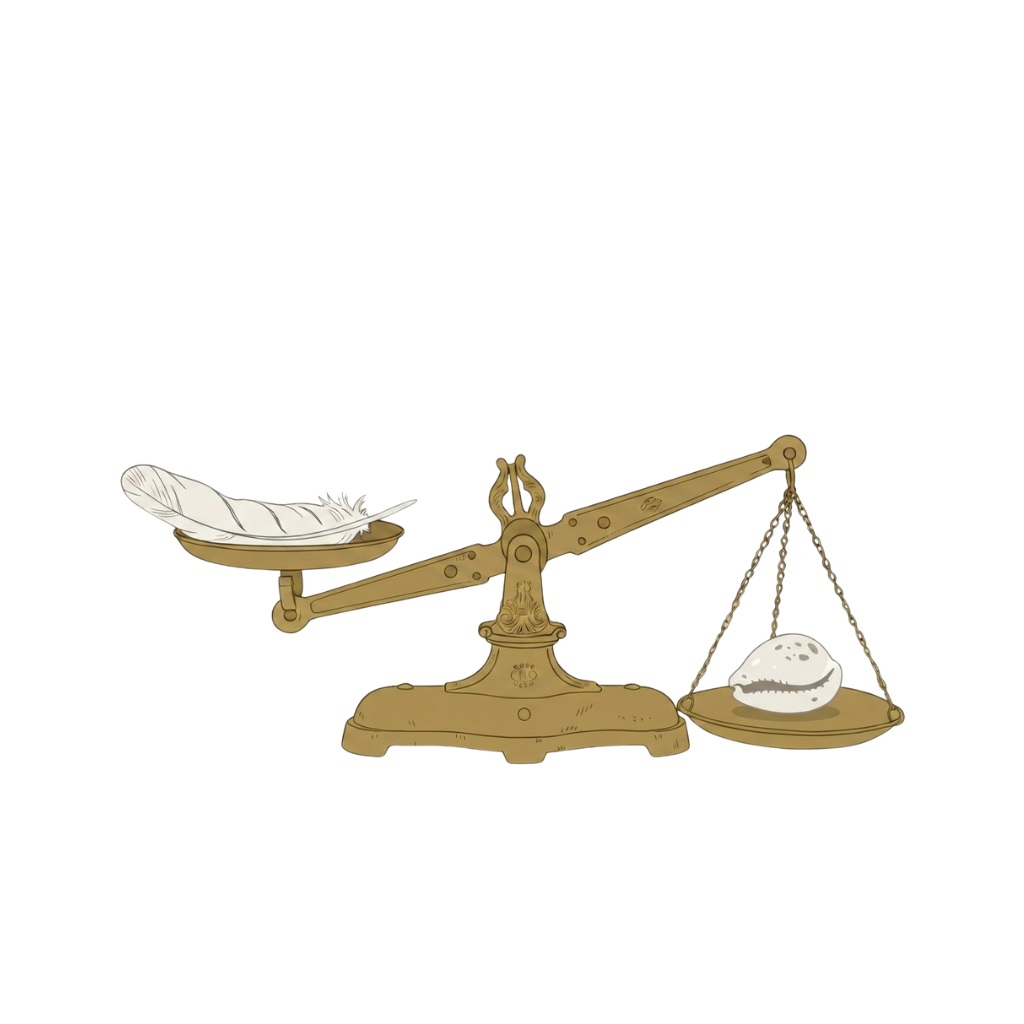
The methodology behind Tiny Thinks
The Pre-Seven Learning Method™

Attention &
Persistence
Child practices staying with a challenge even when things get hard

Critical Thinking
Child practices reaches their own answer through their own analysis and can explain their reasoning

Comfort with
Uncertainty
Child practices continuing when the answer is not immediately clear

Planning &
Self-Control
Child practices pausing and thinking before acting
The principle
Most early learning products concentrate on content such as letters, numbers and facts. The Pre-Seven Learning Method works one layer beneath that by organising activities around the capabilities children use while learning: noticing, remembering, comparing, reasoning, planning and continuing when the answer is not immediate.
The years before seven are an important period of development for attention, working memory and self-regulation. Tiny Thinks uses this period to provide regular, age-appropriate opportunities to practise these capabilities through calm, screen-free activities.
The mechanism: small encounters with challenge
Children do not practise thinking capabilities through explanation alone. They need opportunities to use them: holding an instruction in mind, noticing a pattern, comparing possibilities, checking an answer or trying another approach.
Tiny Thinks turns screen-free time into short thinking activities designed to feel manageable while still requiring an active response from the child. The challenge changes across the four age stages, and different activities emphasise different capabilities.
The practice is light and regular rather than long and forced: one page during quiet time, a few activities on a journey, or a short shared moment at the kitchen table. The challenges are set in changing themed worlds help the practice feel fresh and exciting.
The ten capabilities children practise
The Pre-Seven Learning Method is organised around ten capabilities children use while learning and solving problems. Different books and activities emphasise practice of different capabilities.
The descriptions below show what practice can look like during an activity. They are not promises that a child will permanently display the behaviour after completing a workbook.
| Capability | The child who… |
|---|---|
| Sustained attention & Persistence | stays with a challenge when others have gotten distracted or given up |
| Cognitive Flexibility | tries another way when first didn’t work |
| Pattern recognition | spots the rule before others do |
| Working memory | holds the instruction in mind while doing the task |
| Critical thinking | reaches their own answer through their own analysis |
| Problem-solving | finds a way through when there is no obvious route |
| Error detection & Discernment | notices when something isn’t right and fixes it |
| Comfort with uncertainty | keeps going when they don’t yet know the answer |
| Planning & Self Control | thinks a step ahead before starting |
| Creativity & storytelling | imagines, describes and explains ideas in their own words |
When the answer isn’t obvious
The Pre-Seven Learning Method is concerned not only with whether a child completes an activity, but with what they do when the answer is not immediately obvious.
When children encounter something difficult, they may stop and think, ask for help, try again, try another way, explain their thinking, notice mistakes, or experiment.
These moments matter because children are always practising something.
Support the thinking without taking it over
When a child pauses or gets stuck, the adult does not need to give the answer immediately. A short wait and one simple question can keep the child involved in the thinking. This helps the child not be frightened of difficulty.
Try: “What could you try first?” “What did you notice?” or “Is there another way?”
The aim is not to leave a child struggling alone. It is to give them enough space to make an attempt before stepping in.
The four stages
The method runs across four age stages. The activities become more complex as the demand on attention, memory, reasoning and planning rises.
| Stage | Age | What it builds |
|---|---|---|
| The Attention Architect | Ages 3–4 | Early focus, matching, noticing, simple sequencing, creativity & storytelling, and the beginning of independent task completion. |
| The Logic Foundation | Ages 4–5 | Longer attention, early planning, comparing, sorting, error detection, creative choices and multi-step thinking. |
| The Strategic Navigator | Ages 5–6 | Deeper reasoning, working memory, flexible problem-solving, persistence, storytelling and comfort with challenge. |
| The Executive Function Lab | Ages 6–7 | Planning ahead, managing complexity, checking work, sustaining effort, explaining thinking and working with more independence. |
What it draws on
The method is grounded in established ideas from developmental psychology. It draws on the rapid growth of executive function in early childhood (the attention, working memory and self-control underneath all later learning); on Vygotsky’s zone of proximal development (children learn most when a task sits just beyond what they can already do on their own); This insight is also at the heart of the Montessori tradition.
What it is, and isn’t
The Pre-Seven Learning Method is not a formal academic curriculum. It is a screen-free activity system that gives children regular opportunities to practise the thinking used alongside academic learning.
It can be used alongside school, reading, play and other learning activities. It does not guarantee improvements in IQ, academic performance or developmental outcomes.
See the method in the workbooks →Explore screen-free workbooks organised across four age stages.Frequently Asked Questions
What is The Pre-Seven Learning Method?
It is Tiny Thinks’ four-stage, screen-free approach for ages 3–7 that builds the ten cognitive capabilities underneath learning — attention & persistence, cognitive flexibility, pattern recognition, working memory, critical thinking, problem-solving, error detection & discernment, comfort with uncertainty, planning & self control, and creativity & storytelling — through small calibrated thinking missions, during the formative window before age seven.
Why focus on the years before seven?
The early years are a key formative window for the cognitive capabilities behind focus, reasoning and self-control. Building them early gives later academic learning.
How is it different from academic workbooks?
Academic workbooks practise content — letters, numbers, facts. The Pre-Seven Learning Method builds the thinking a child uses to absorb content: attention, reasoning and persistence. It augments academic work rather than replacing it.
What are the four stages?
The Attention Architect (ages 3–4), The Logic Foundation (ages 4–5), The Strategic Navigator (ages 5–6), and The Executive Function Lab (ages 6–7). Each raises the demand on attention, memory and planning step by step.
Is it screen-free?
Yes. Every mission is screen-free by design, built to be done on paper regularly.
What is The Pre-Seven Learning Method™?
The Pre-Seven Learning Method™ is Tiny Thinks’ four-stage, screen-free approach for children ages 3–7. It builds the ten cognitive capabilities underneath learning: sustained attention & persistence, cognitive flexibility, pattern recognition, working memory, critical thinking, problem-solving, error detection & discernment, comfort with uncertainty, planning & self control, and creativity & storytelling.
Why does Tiny Thinks focus on ages 3–7?
Tiny Thinks focuses on ages 3–7 because the early years are a formative period for attention, reasoning, working memory, self-control and independent task completion. The Pre-Seven Learning Method™ is designed to strengthen these foundations before later academic demands increase.
How is The Pre-Seven Learning Method™ different from normal activity books?
Many activity books are mainly built to keep children busy. The Pre-Seven Learning Method™ is built to strengthen the mental capabilities children use to learn anything: sustained attention & persistence, cognitive flexibility, pattern recognition, working memory, critical thinking, problem-solving, error detection & discernment, comfort with uncertainty, planning & self control, and creativity & storytelling.
How is The Pre-Seven Learning Method™ different from academic workbooks?
Academic workbooks usually practise content such as letters, numbers, phonics, handwriting or maths. The Pre-Seven Learning Method™ works one layer beneath that by building the thinking capabilities children use to absorb content: sustained attention & persistence, cognitive flexibility, pattern recognition, working memory, critical thinking, problem-solving, error detection & discernment, comfort with uncertainty, planning & self control, and creativity & storytelling. For a side-by-side breakdown, see how Tiny Thinks compares with Kumon, Brain Quest, Highlights, Lovevery and other learning programs.
What are the four stages of The Pre-Seven Learning Method™?
The four stages are The Attention Architect for ages 3–4, The Logic Foundation for ages 4–5, The Strategic Navigator for ages 5–6, and The Executive Function Lab for ages 6–7. Each stage increases the demand on attention, memory, reasoning, planning and independence. The four-stage, screen-free system that helps children build the ten mental capabilities underneath learning before age seven. These capabilities start from sustained attention & persistence, cognitive flexibility, pattern recognition, working memory, critical thinking, problem-solving, error detection & discernment, comfort with uncertainty, planning & self control, and creativity & storytelling.
What are the ten cognitive capabilities Tiny Thinks builds?
Tiny Thinks builds sustained attention & persistence, cognitive flexibility, pattern recognition, working memory, critical thinking, problem-solving, error detection & discernment, comfort with uncertainty, planning & self control, and creativity & storytelling.
Is The Pre-Seven Learning Method™ screen-free?
Yes. The Pre-Seven Learning Method™ is screen-free by design. It uses paper-based thinking missions that children can complete regularly, without apps, videos or digital rewards.
Does The Pre-Seven Learning Method™ replace school workbooks?
No. The Pre-Seven Learning Method™ does not replace phonics, maths, handwriting or school curriculum workbooks. It augments them by building the cognitive capabilities underneath learning, so children can approach schoolwork with more attention, persistence and independence.
Is Tiny Thinks a curriculum?
No. Tiny Thinks is not a formal academic curriculum. It is a screen-free cognitive workbook system designed to build the thinking habits underneath learning through small, calibrated missions across ages 3–7.
Does The Pre-Seven Learning Method™ make medical, IQ or developmental claims?
No. The Pre-Seven Learning Method™ does not make medical, IQ or guaranteed outcome claims. It is designed to support observable learning behaviours such as sustained attention & persistence, cognitive flexibility, pattern recognition, working memory, critical thinking, problem-solving, error detection & discernment, comfort with uncertainty, planning & self control, and creativity & storytelling.
Put the method into practice
Explore calm, screen-free thinking activities organised across four age stages for children ages 3–7.
Explore the workbooks →The methodology behind Tiny Thinks
The Pre-Seven Learning Method™
A four-stage, screen-free approach for ages 3–7 that builds the ten cognitive capabilities underneath learning.
We build the layer underneath
The mechanism: small, calibrated thinking missions
Each mission sits just above what’s easy, hard enough to stretch cognitive abilities, challenging enough to succeed. Practised regularly, across most loved themed worlds. (Vygotsky’s zone of proximal development.)
Each capability deepens across the four stages. Described as observable behaviours, not promises.
The four stages: step-by-step calibration
Grounded in developmental psychology. The method draws on executive-function research, Vygotsky’s zone of proximal development, and the early-years sensitivity at the heart of the Montessori tradition. It builds capabilities associated with stronger later learning — it makes no medical, IQ or guaranteed-outcome claims, and augments academic work.