

Why Does My Child Give Up So Easily? (And What Actually Helps)
Key Takeaways
- Children give up easily mostly because of how they read difficulty. If they believe ability is fixed, a hard moment feels like proof they “can’t,” so they quit. If they believe effort changes things, the same moment feels like a cue to try a different way.
- The kind of praise a child hears shapes this. Research by Carol Dweck and colleagues found that praising effort and strategy builds persistence, while praising a child for being “smart” can quietly undermine it, especially after failure (Mueller and Dweck, 1998).
- It starts earlier than most parents think. A long-term study found that the praise parents gave children as toddlers predicted how persistent and challenge-seeking those children were five years later (Gunderson et al., 2013).
- Giving up easily is common, and it is not a character flaw. It points to buildable capabilities, persistence, comfort with not knowing, and self-control, not to a fixed trait.
- The most useful response is not a pep talk. It is small, repeated practice at staying with manageable difficulty, plus a change in what you praise.
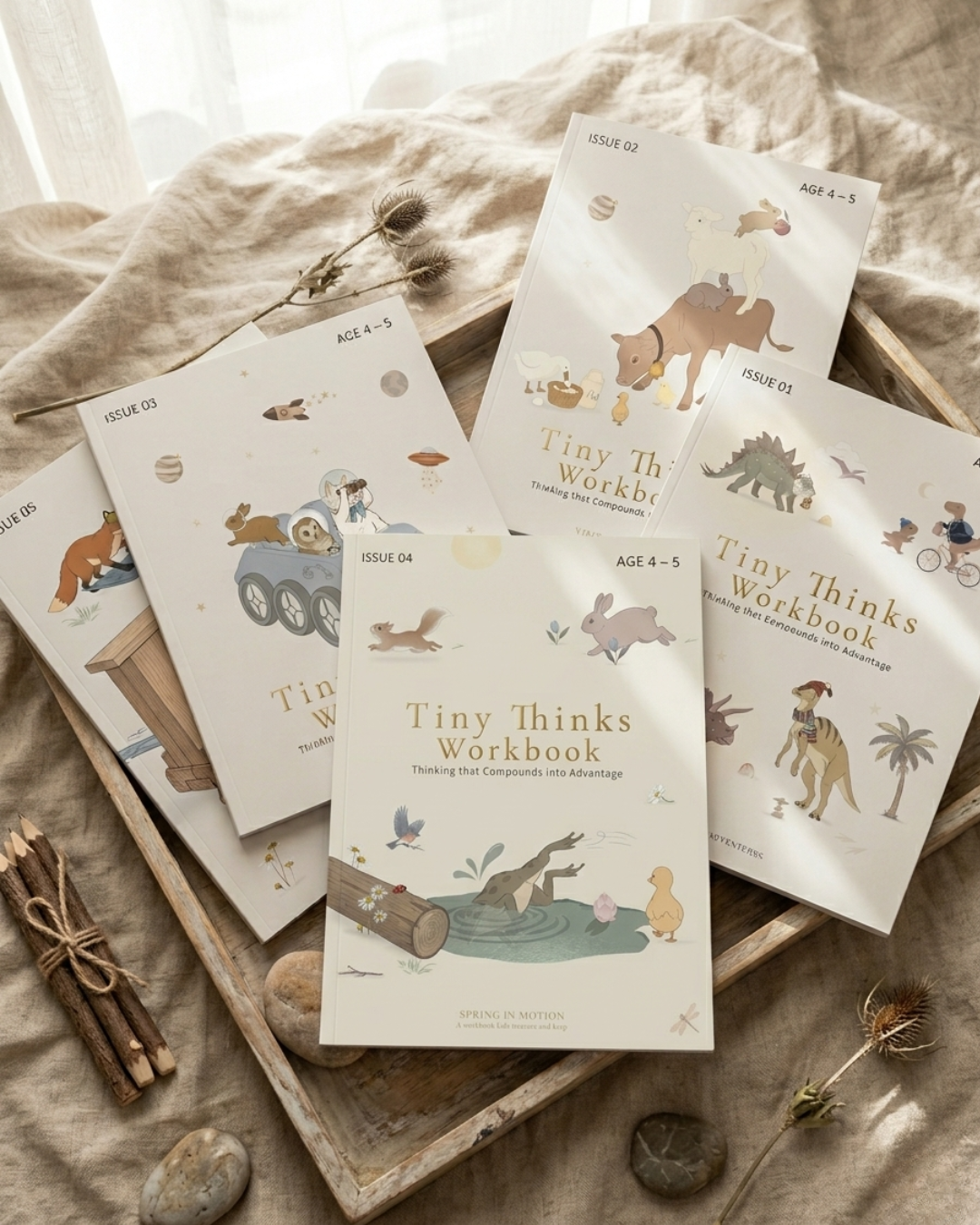
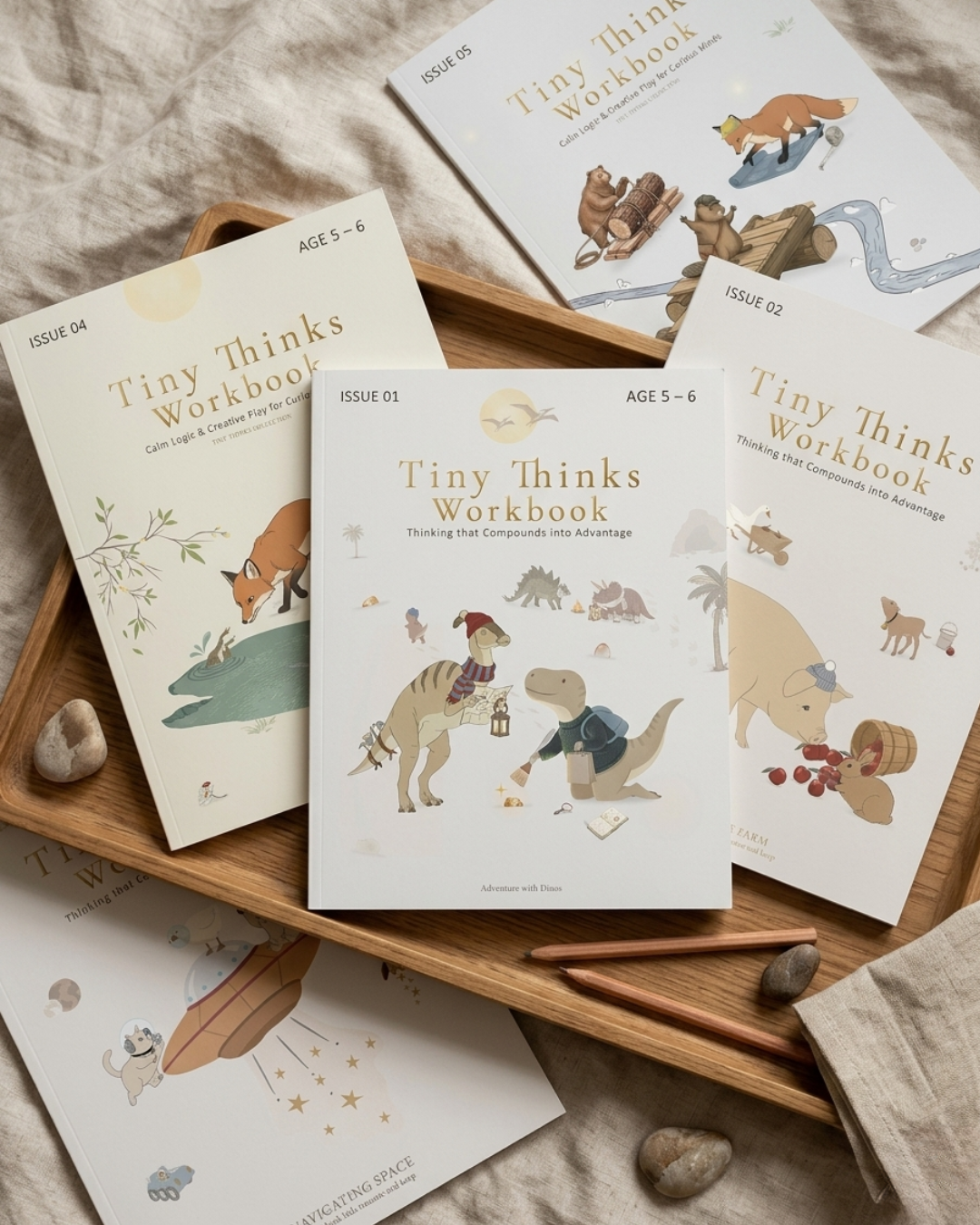
- Persistence is 1 of the 10 capabilities that the Pre-Seven Learning Method builds: short, screen-free workbooks matched to your child’s stage between 3 and 7, a few calm minutes at a time to gain a real advantage. Start free with the Calm Pack.
Why does my child give up so easily?
Most children give up easily because they read difficulty as a verdict rather than a stage. When something feels hard, “this is hard” quietly becomes “I’m not good at this,” and quitting starts to feel like the safe move. Whether a child keeps going depends less on ability than on how they have learned to interpret the hard moment.
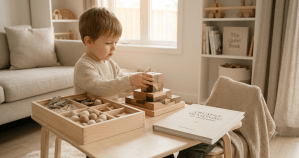
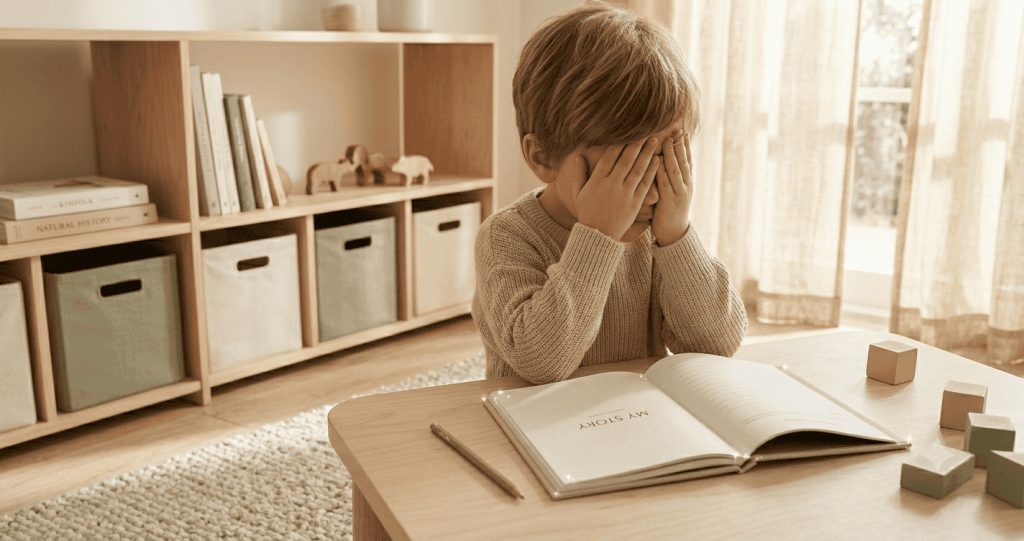
If you have watched your child crumple a drawing and say “I’m bad at this,” or abandon a block tower the second it wobbles, you know the feeling. It can look like they do not care. Usually it is the opposite. They care so much that being stuck feels unbearable.
Three things tend to be underneath it. The child has learned to see ability as something you either have or you do not. The task is mismatched, too hard or sometimes too easy. Or the frustration of being stuck is bigger than the self-control they have so far to sit with it. None of these are fixed, and all of them respond to small, calm practice.
Is it normal for a child to give up easily?
Yes. Giving up when something feels hard is extremely common in early childhood, and it is not a sign of a lazy or difficult child. Young children are still building the very capabilities that staying with difficulty requires, so the behavior is developmental, not a flaw in your child.
What changes the long-term picture is not whether a child gives up sometimes, but whether they slowly build the habit and the capability to stay with hard things a little longer over time. That habit is buildable, and the years before seven are when it starts forming.
What does giving up easily actually point to?
Giving up easily usually points to three capabilities still under construction, not to a fixed trait:
- Persistence: staying with a task past the first wall instead of stopping at it.
- Comfort with uncertainty: tolerating the uncomfortable feeling of not knowing yet.
- Self-control: managing the frustration of being stuck without quitting or melting down.
These are three of the ten thinking capabilities the Pre-Seven Learning Method is built around. Seeing the behavior this way matters, because “my child gives up” is discouraging, while “my child is still building persistence” is something you can actually work on.
How praise quietly shapes whether a child keeps going
One of the most reliable findings in this area is that the kind of praise a child hears changes how they handle difficulty. In a well-known set of studies with school-age children, Carol Dweck and Claudia Mueller found that children praised for being smart, after they later hit a hard task and failed, gave up faster, enjoyed the task less, and did worse than children who had been praised for their effort (Mueller and Dweck, 1998). Being told you are clever turns failure into evidence that maybe you are not. Being told you worked hard turns failure into a signal to work differently.
This is not just a lab effect. In a long-term study that recorded parents praising their toddlers at home, the children who heard more praise of their effort and strategy were, five years later, more persistent and more likely to believe that ability can grow (Gunderson et al., 2013). The pattern was set young, in ordinary moments.
The practical version is simple. Praise the process, not the person. Instead of “you’re so smart,” try “you really stuck with that,” or “you found another way to do it,” or “that was tricky and you kept going.” It feels small. Over years, it is not.
What can I do when my child gives up?
The most useful things are small and repeatable:
- Change what you praise. Notice the effort and the strategy out loud, not the cleverness.
- Calibrate the challenge. A task just slightly beyond what is easy builds persistence. A task far beyond it builds avoidance.
- Name the hard part. “This is the tricky bit. Everyone slows down here.” It turns difficulty into something expected rather than alarming.
- Let them see you struggle and stay with it. Children copy how the adults around them handle being stuck.
- Build the habit in low-stakes moments, not high-pressure ones. Persistence practised over a puzzle transfers to harder things later.
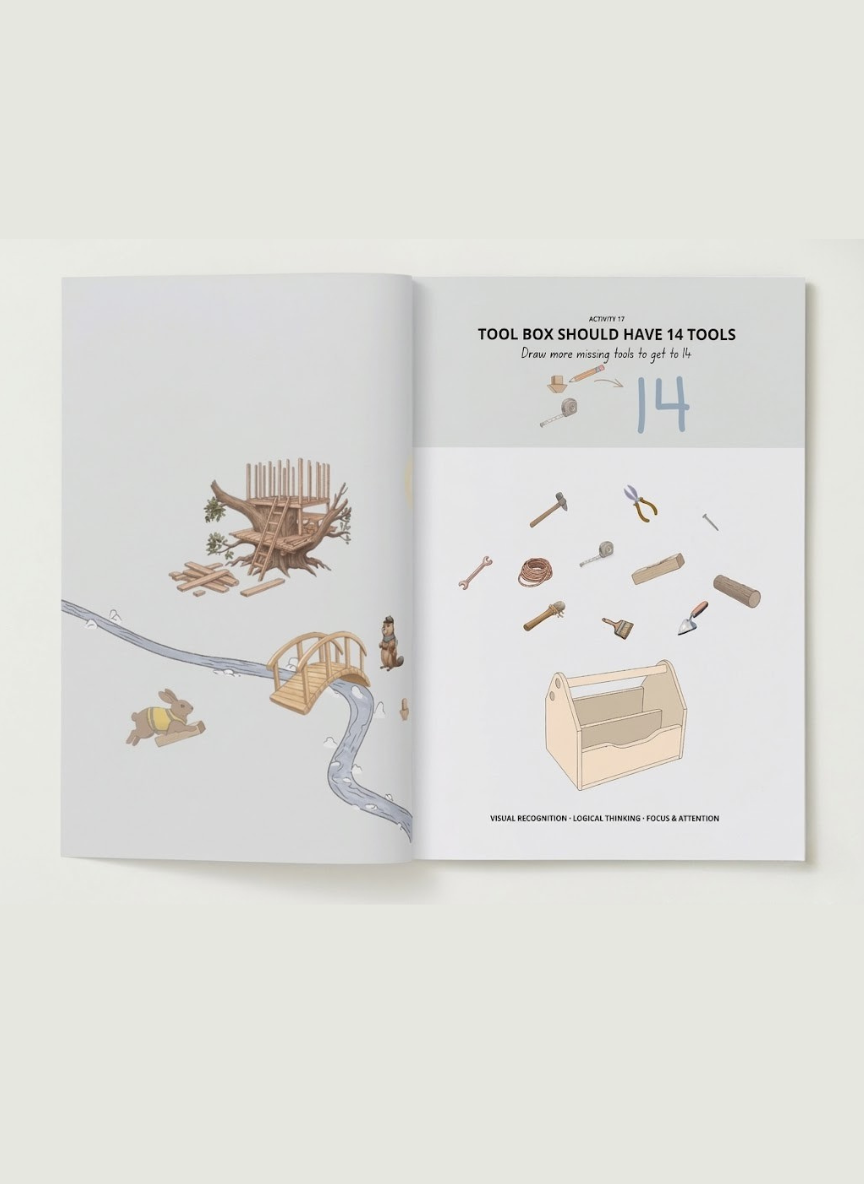
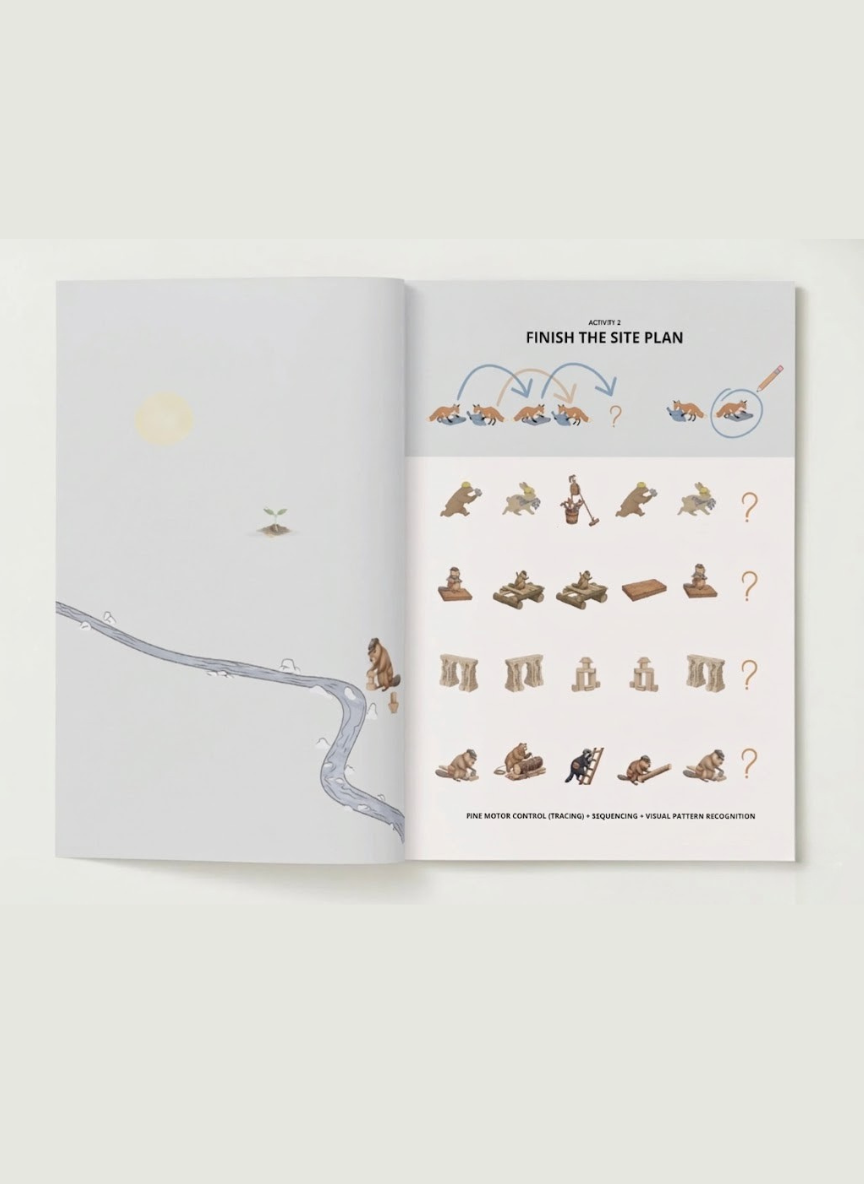
This is the quiet work the Pre-Seven Learning Method is designed for: small, screen-free chances to stay with manageable difficulty, matched to your child’s stage, in calm moments rather than stressful ones. You can see how it works on the Pre-Seven Learning Method page, or start with the free Calm Pack.
How do you build persistence before age 7?
Through small, repeated practice at staying with difficulty that is sized for the child, plus the feedback that frames effort as the thing that matters. A three-year-old is working on staying with one thing for a little longer. A six-year-old is working on what to try when the first attempt fails. The capability grows in stages, which is why the practice should too.
Persistence is one of those capabilities a child carries far beyond early childhood. The habit of staying with a hard thing, instead of reading the hard thing as a stop sign, is one they use in school and well past it, whatever they grow into. You can explore the workbooks by stage when you are ready, or start free with the Calm Pack.
Frequently asked questions
Why does my child give up so easily? Most often because they read difficulty as a sign they lack ability, rather than as a normal stage of learning. When “this is hard” becomes “I can’t,” quitting feels safer than trying. How a child interprets the hard moment, more than the difficulty itself, decides whether they keep going.
Is it normal for my child to give up when something is hard? Yes, very. Young children are still building persistence, frustration tolerance, and self-control, so giving up easily is developmental rather than a flaw. It responds well to small, calm practice over time.
What should I do when my child gives up? Praise their effort and strategy rather than their cleverness, keep the challenge just slightly beyond easy, name the hard part as normal, and let them see you stay with difficult things. Build the habit in low-pressure moments.
Does praising my child for being smart actually backfire? It can. Studies found that children praised for being smart gave up faster and did worse after failure than children praised for effort, because being clever feels fixed while effort feels changeable (Mueller and Dweck, 1998). Praising the process is the safer habit.
At what age should my child be able to stick with a hard task? There is no switch that flips. The ability builds gradually through the early years, which is why small, stage-matched practice works better than expecting sustained focus all at once.
Is my child giving up easily a sign of a problem? Usually not. It is common and buildable, and it points to capabilities still forming rather than to a fixed trait. If giving up comes with broader distress that worries you, it is always reasonable to speak with your pediatrician.
How do I encourage my child without pushing too hard? Keep the challenge sized so success is possible with effort, encourage the trying rather than the result, and let them experience a little manageable struggle. The goal is staying with difficulty, not removing it.
Will my child grow out of giving up easily? Persistence grows with practice and the right kind of feedback, so it tends to improve, especially when effort is noticed and difficulty is sized well. It is a capability that develops, not a fixed part of who your child is.
Start building persistence
The Pre-Seven Learning Method turns this into something you can do at home: short, screen-free workbooks matched to your child’s stage, giving the thinking underneath focus, persistence, and problem-solving small, regular practice. Not drills, not screens. A few calm minutes that build the mental capabilities underneath that supports the child in academics and gives an advanage for life. Start free with the Calm Pack, or explore the workbooks by stage.
References
- Mueller, C. M., & Dweck, C. S. (1998). Praise for intelligence can undermine children’s motivation and performance. Journal of Personality and Social Psychology.
- Gunderson, E. A., et al. (2013). Parent praise to 1- to 3-year-olds predicts children’s motivational frameworks 5 years later. Child Development.