


Key Takeaways
- Cognitive flexibility in children means being able to switch strategies, rules, or plans when the first approach stops working.
- A child who melts down over a changed plan is usually not being defiant. They are often stuck between one strategy and a new one they have not practised yet.
- Rigid thinking is common and often age-typical between three and seven, especially when a child is tired, rushed, or facing an unfamiliar change.
- Cognitive flexibility is one of the executive functions, alongside working memory and self-control, and it develops gradually rather than arriving all at once.
- Small, low-stakes practice such as switching a game rule mid-play or naming a Plan B before an outing gives children safe repetition with change.
- Cognitive flexibility is one of ten capabilities built by The Pre-Seven Learning Method, a screen-free, phased approach for ages 3 to 7 that uses small thinking missions rather than academic drills.
What Cognitive Flexibility Means in Children
Cognitive flexibility in children is the ability to shift from one way of thinking or acting to another when the situation changes. It is not the same as being agreeable or easygoing. A flexible thinker can hold a plan loosely enough to try a second one when the first does not work.
Picture a child building a block tower who watches it topple. A less flexible response is to keep stacking the same way, faster and more forcefully, hoping it holds this time. A flexible response is pausing, noticing what happened, and trying a wider base. That pause and pivot is the skill in miniature.
Researchers who study executive function usually describe cognitive flexibility as one of three core executive functions, alongside working memory and inhibitory control. This comes from foundational work by Adele Diamond, whose widely cited 2013 review describes how cognitive flexibility develops alongside working memory and inhibitory control as part of children’s executive functioning
What Flexible Thinking Looks Like Before Age Seven
Flexible thinking looks different at three than it does at six, and expecting the same response at every age sets parents up to worry unnecessarily.
- Ages 3 to 4: children start to notice small changes, like a different route home or a swapped snack, though they may still need help naming what changed.
- Ages 4 to 5: children can begin comparing two options and choosing between them, such as picking a red cup instead of the usual blue one without distress.
- Ages 5 to 7: children start shifting strategies mid-task, explaining why they chose a new approach, and recovering after an unexpected outcome, like a game not going their way.
A five-year-old who insists on one exact route to the park is not behind. A seven-year-old who still cannot recover from a small surprise without a long meltdown may benefit from more deliberate practice, which is different from something being wrong.
Signs a Child Is Struggling With Flexibility
Some children show flexibility struggles through visible behavior long before anyone names the underlying skill.
- The child who insists a picture must be colored a specific way and cannot let a smudge or a wrong color go.
- The child who refuses to try a different puzzle piece even after the first one clearly does not fit.
- The child who has a full meltdown when a favorite show is unavailable or a planned outing is canceled.
- The child who cannot accept losing a board game and insists on restarting from scratch every time.
- The child who freezes when a teacher changes an instruction partway through an activity.
These moments often get read as stubbornness or an attitude problem. Underneath, they usually point to a child who has one strategy loaded and no practiced way to load a second one.
Why Cognitive Flexibility Matters Developmentally
Cognitive flexibility is one of the three foundational executive functions identified in developmental research, and it underlies a wide range of everyday skills. Diamond’s 2013 review connects flexible thinking to problem-solving, perspective-taking, and the ability to adjust behavior when rules or expectations change (Diamond, 2013).
In practical terms, this shows up in a classroom when a worksheet format changes and some children adapt within seconds while others stall completely. At home it shows up when a parent swaps the bedtime story order and a child who usually copes well suddenly cannot settle.
Flexibility struggles are often seen alongside difficulties with problem-solving and comfort with uncertainty. These are three of the ten capabilities the Pre-Seven Learning Method is built around: cognitive flexibility, problem-solving, and comfort with uncertainty. None of these are fixed traits. They are capabilities children get better at with repeated, low-pressure practice.
Cognitive Flexibility Versus Obedience
Cognitive flexibility is not the same as compliance, and this distinction matters more than most advice acknowledges. A child who simply goes along with whatever an adult decides is not practicing flexibility. They are practicing obedience, which is a different skill entirely.
Real flexible thinking involves the child generating or choosing between options, not just accepting an adult’s override. A child who is told once to stop crying and switch activities has not necessarily built anything. A child who is offered two real choices, tries one, notices it is not working, and reaches for the other has practiced the actual skill.
This is why forcing quick compliance during a meltdown rarely builds flexibility, even when it stops the meltdown in the moment.
How Parents Can Respond When a Child Gets Stuck

The goal in the moment is not to explain the logic of the change. Most parents already know that explaining calmly during a meltdown often makes things worse, not better, because a dysregulated child cannot process reasoning yet.
- Name what happened in simple words: this game changed, that plan changed, this is new.
- Offer two concrete options rather than an open-ended alternative. Two choices feel manageable. Ten feel like more chaos.
- Use the words Plan A and Plan B out loud, even for small things, so the language becomes familiar before it is needed in a hard moment.
- Let the child sit with the discomfort briefly rather than rescuing immediately. A few seconds of frustration is often where the shift happens.
- Praise the attempt to try something new, not just the successful outcome.
Some children need a warning before a transition, not a surprise, even a small one, like a different colored cup. Sudden changes without any lead time tend to backfire, while a five-second heads up can prevent a stuck moment altogether.
Tiny Thinks treats these small Plan A and Plan B moments as useful practice, not as a test of whether a child is being “good.” The aim is to give children repeated chances to try another way while the stakes are still small.
Best Activities for Building Flexible Thinking
Flexible thinking is practiced most effectively through small, repeatable moments rather than one big lesson.
- Rule-switching games: play a familiar game like Simon Says, then midway through, switch the rule and see if the child can adjust without protest.
- Alternative-solution challenges: ask a child to solve the same simple problem two different ways, like stacking blocks a second time after the first tower falls.
- Role reversal: let the child give the instructions for a moment while the adult follows, which builds perspective-taking alongside flexibility.
- Board games with turn-taking and losing: games like Uno or simple matching games give repeated, low-stakes practice at not getting your way.
- Planned small surprises: swap the usual snack or take a different route occasionally, on purpose, in a context where the stakes are genuinely low.
Many families notice that naming Plan A and Plan B out loud during ordinary moments, not just hard ones, makes the language familiar enough to use during an actual transition.
What Is The Pre-Seven Learning Method?
The Pre-Seven Learning Method is a four-stage, screen-free approach for children ages 3 to 7 that builds ten cognitive capabilities underneath learning and academics through small, calibrated thinking missions during the formative years before age seven.
Cognitive flexibility sits inside this method as one of the ten capabilities, closely linked to problem-solving and comfort with uncertainty. A child who tries another way when the first didn’t work is practicing exactly the kind of strategy-shifting the method is designed to give repeated, gentle chances to strengthen, through small missions rather than lectures or drills. For more examples, see Cognitive Flexibility Activities for Kids Ages 3–7.
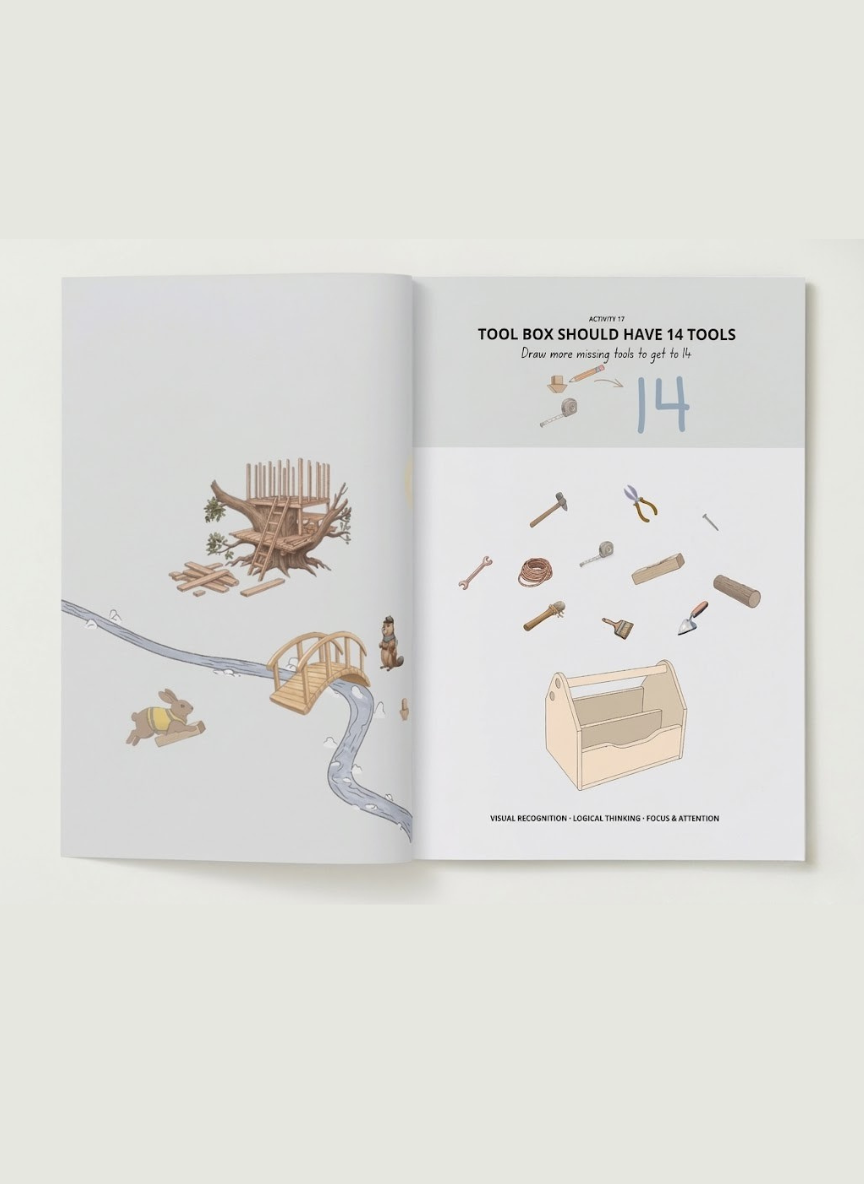
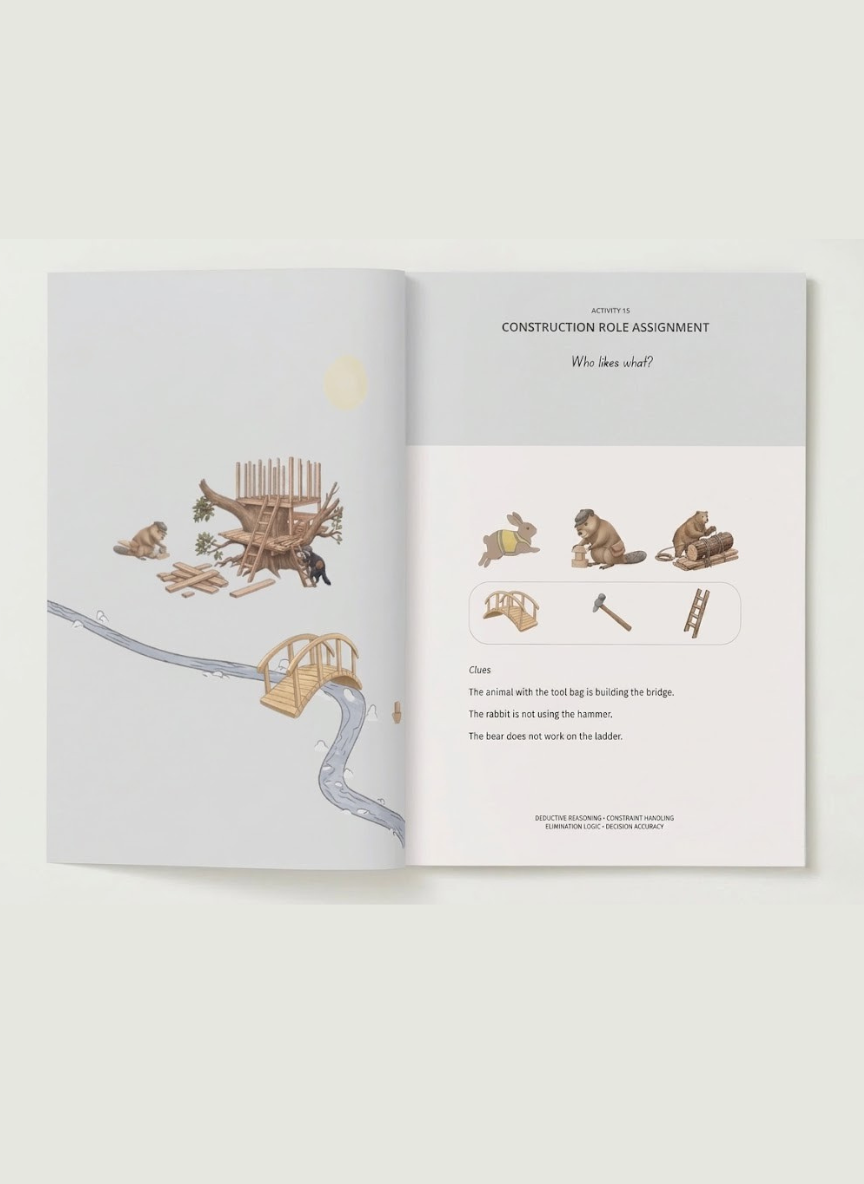
In Tiny Thinks activities, this often looks like a child meeting a puzzle, picture prompt, or thinking task where the first idea is not the only possible route. That kind of small shift is the practice point.
When Rigidity May Need Extra Support
Some rigidity is genuinely age-typical, especially under three, tired, hungry, or overstimulated conditions at any age. Most children become more flexible gradually across the preschool and early school years without any special intervention.
That said, if a child’s rigidity is extreme, occurs across nearly every setting, or is accompanied by other concerns like limited speech, sensory sensitivities, or difficulty with social interaction, a conversation with a pediatrician is a reasonable next step. This is context, not a diagnosis, and cognitive flexibility difficulties alone do not indicate autism or ADHD. Many children who struggle with transitions at five are simply still building a skill that continues developing well into the school years.
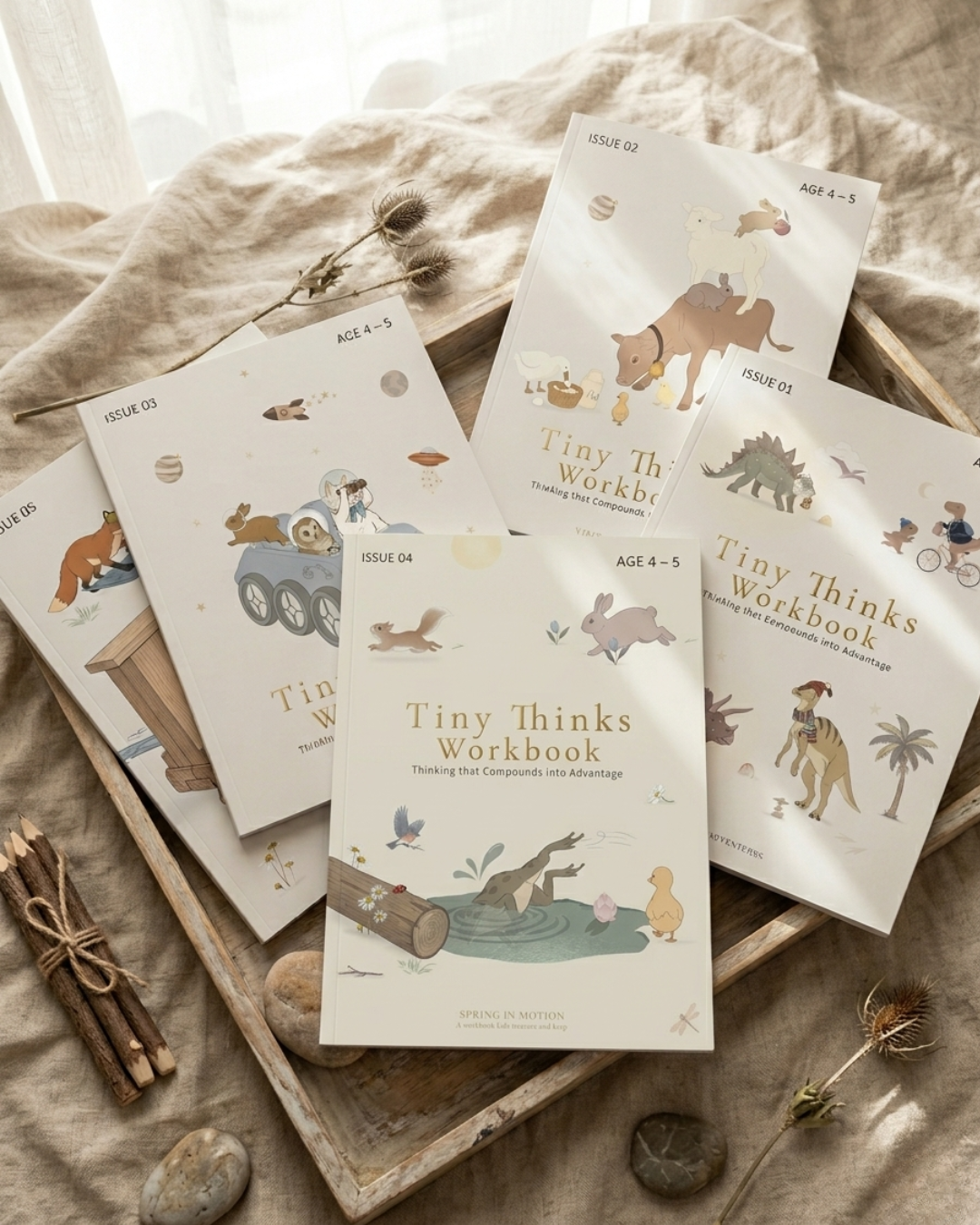
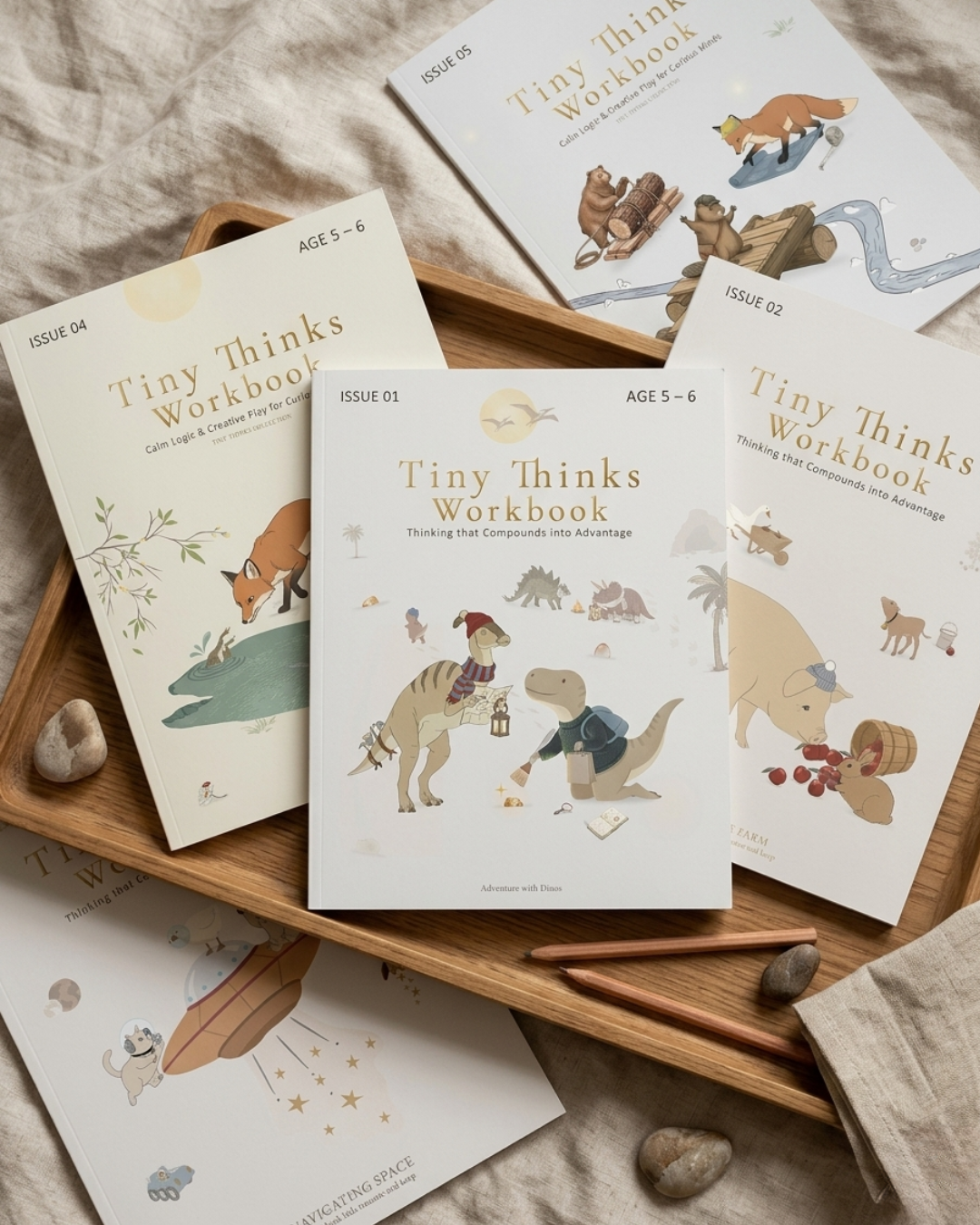
If you want a simple next step at home, Tiny Thinks workbooks give children short, screen-free chances to practise trying another way through The Pre-Seven Learning Method, without turning flexibility into a lecture. Start with the free Calm Pack for low-pressure thinking activities, or explore the Tiny Thinks workbooks for regular practice with flexible thinking, problem-solving, and comfort with uncertainty.
Frequently Asked Questions
What is cognitive flexibility in children?
Cognitive flexibility in children is the ability to switch strategies, rules, or plans when the first approach is not working, rather than getting stuck repeating it.
Why does my child melt down when plans change?
A sudden plan change often catches a child with only one strategy loaded, and switching to a second one is a skill that takes repeated practice to build.
Is rigid thinking normal at age five?
Some rigidity at age five is common and often reflects a skill still developing, since most children continue building flexible thinking through the early school years.
How do I teach my child to try another way?
Offer two concrete choices instead of open-ended options, name a Plan B out loud, and let small frustrations sit for a few seconds before stepping in. Everyday practice like this is what the Pre-Seven Learning Method focuses on in the years before seven.
Could this be ADHD or just immaturity?
Rigidity alone is usually part of typical development, not a sign of ADHD, but a pediatrician can help if it appears alongside several other concerns.
What games help flexible thinking?
Rule-switching games like Simon Says with a mid-game rule change, turn-taking board games, and small planned surprises all give children safe practice with change.
Is cognitive flexibility an executive function?
Yes, cognitive flexibility is one of the three core executive functions identified in developmental research, alongside working memory and self-control.
What are examples of cognitive flexibility?
Examples include trying a new puzzle piece after the first does not fit, accepting a swapped snack without distress, or adjusting to a changed instruction mid-task.
Should I stop accommodating my child’s preferences?
Not entirely. Some structure and predictability genuinely help children feel safe, and the goal is small, low-stakes practice with change rather than removing all routine.