


Key Takeaways
- Thinking skills for kids are not one skill. They include noticing, comparing, predicting, explaining, and revising an idea after new information shows up.
- Critical thinking in young children looks like reaching their own answer through their own reasoning, not repeating a fact they memorized.
- Between ages 3 and 4, children mostly notice and name differences. Between ages 5 and 7, they start comparing reasons, testing ideas, and explaining conclusions.
- Puzzles alone do not build reasoning. What builds reasoning is the conversation around the puzzle, especially questions that ask a child to explain their thinking.
- A child who says I do not know is often missing practice thinking out loud, not missing intelligence.
- Critical thinking is one of ten capabilities in the Pre-Seven Learning Method, a screen-free approach for ages 3 to 7 that builds thinking skills through small, everyday reasoning moments rather than worksheets.
Thinking skills for kids develop most in the years before age seven, and mostly through ordinary conversation rather than special exercises. A child builds reasoning by noticing something, guessing why it happened, and then explaining that guess out loud to someone who asks a good follow-up question. Puzzles and games can support this, but the thinking happens in the talking, not in the puzzle piece. For a wider overview, see Reasoning and Thinking Skills for Kids Ages 3–7.
Many parents notice the same thing around age four or five. Their child can recite facts, sort colors, finish a puzzle fast. But hand them a slightly open-ended question and the answer is a shrug, or I do not know, or a guess thrown out just to end the conversation. That gap between knowing things and reasoning through things is exactly what thinking skills are.
What Are Thinking Skills for Kids?
Thinking skills for kids are the mental habits children use to make sense of new information: noticing details, comparing options, predicting outcomes, explaining reasoning, and checking their own conclusions. They are different from knowledge. A child can know that the sky is blue without ever reasoning about why it looks that way at sunset.
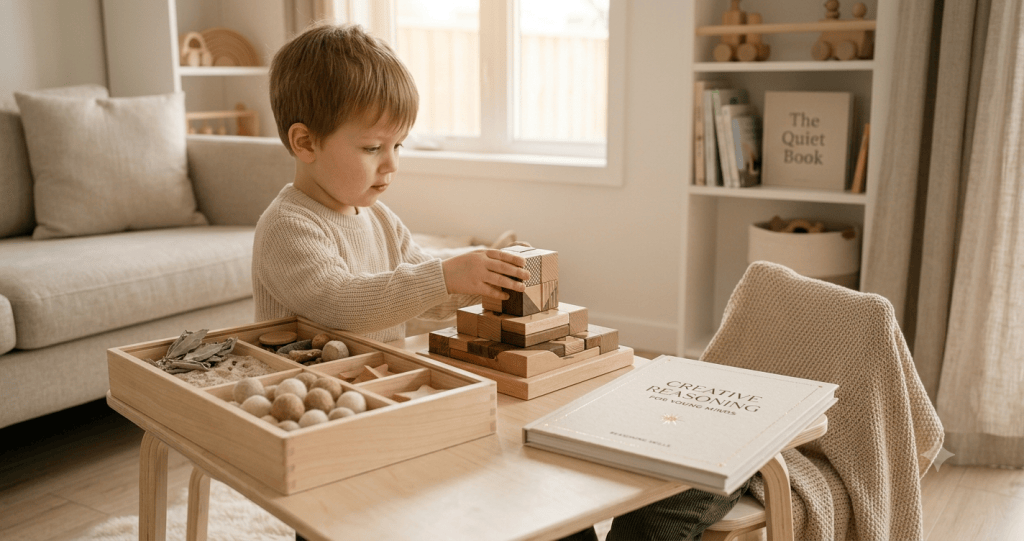
Critical thinking, specifically, means reaching a conclusion through your own analysis rather than repeating what you were told. For a five-year-old, that might look like figuring out why the tower keeps falling on one side, rather than being told to add more blocks at the base.
Thinking skills for kids sit inside a broader group researchers sometimes call higher order thinking skills for kids: reasoning, evaluating, and creating, as opposed to simply remembering and recognizing. Higher order thinking is not more advanced vocabulary. It is more independent reasoning. Parents interested in how reasoning and higher-order thinking develop in children can explore this review of cognitive development research.
Why Thinking Skills Matter Before Age Seven
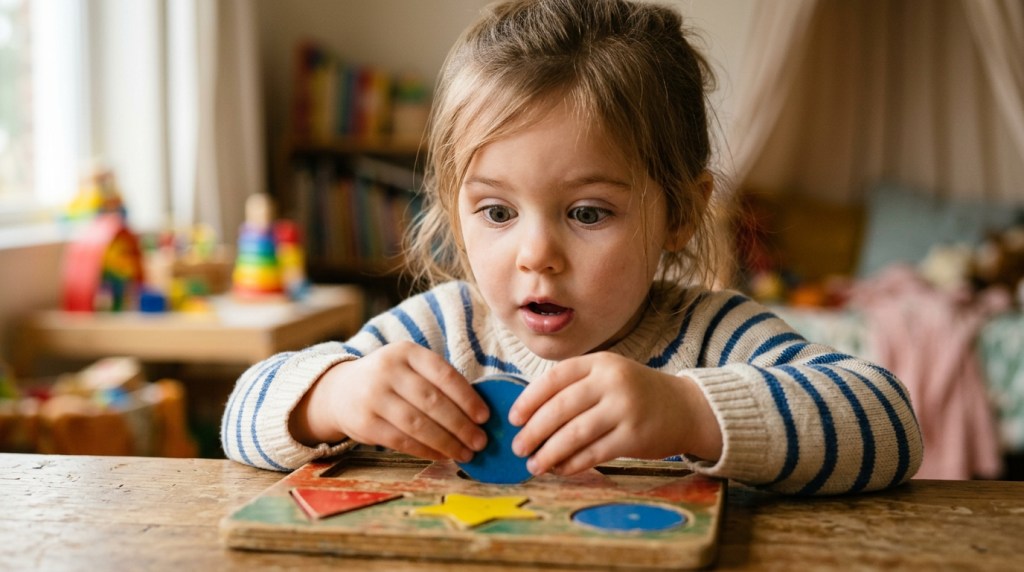
The years before seven are when children first start reasoning about cause and effect, comparing two possibilities, and explaining why they chose one answer over another. These are early, wobbly versions of skills they will lean on for the rest of school and life: figuring out a math problem with no obvious method, deciding which argument in a disagreement actually makes sense, noticing when something does not add up.
Some children arrive at school already comfortable saying I think it is this, because. Others have mostly practiced giving the expected answer quickly. Neither pattern is fixed. But the gap tends to show up early, often around routine moments like a puzzle, a bedtime story, or an argument over which shoe goes on which foot.
Thinking Skills Are Not Just Critical Thinking
Critical thinking for kids works alongside several related capabilities, and it is worth telling them apart. Pattern recognition is spotting the rule before someone states it, like noticing every red block is smaller than every blue one. Problem-solving is finding a workable path when there is no obvious one, like figuring out how to reach a toy on a high shelf without being handed a chair. Cognitive flexibility is trying a different approach when the first one fails, rather than repeating the same failed strategy louder.
These are four of the ten capabilities the Pre-Seven Learning Method is built around. A child working on a tricky puzzle is often exercising all four at once: noticing a pattern, solving a placement problem, adjusting strategy, and reasoning through why a piece does or does not fit. None of them require a worksheet. They require a task interesting enough to hold attention and a parent willing to ask one more question before giving the answer.
What Is The Pre-Seven Learning Method?
The Pre-Seven Learning Method is a four-stage, screen-free approach for children ages 3 to 7 that builds ten cognitive capabilities underneath learning and academics through small, calibrated thinking missions during the formative years before age seven.
Critical thinking sits at the center of the method’s Explain pathway, which focuses on helping a child move from noticing something to reasoning about it out loud. Early on, this looks like naming what is different between two objects. By six or seven, it looks like comparing two reasons and explaining which one makes more sense. The method treats this as a skill built in small, repeated moments, not a subject taught in one sitting.
Best Activities That Build Thinking Skills
Critical thinking activities for kids work best when they involve more than one right way to approach them. A few that hold up well across ages 3 to 7:
- Sorting objects by a rule the child chooses, then asking them to explain the rule to someone else.
- Predicting what happens next in a story before turning the page, then checking whether the prediction held up.
- Comparing two objects or choices and asking which one they would pick and why.
- Simple strategy games like tic-tac-toe or matching games, where losing becomes a chance to ask what they might try differently.
- Real-world problem-solving, like figuring out how to fit groceries into bags or how to reach something without help.
Critical thinking skills games for kids do not need to be branded or elaborate. A deck of cards sorted by a made-up rule does the same reasoning work as a boxed game, often with less resistance because the child made the rule themselves.
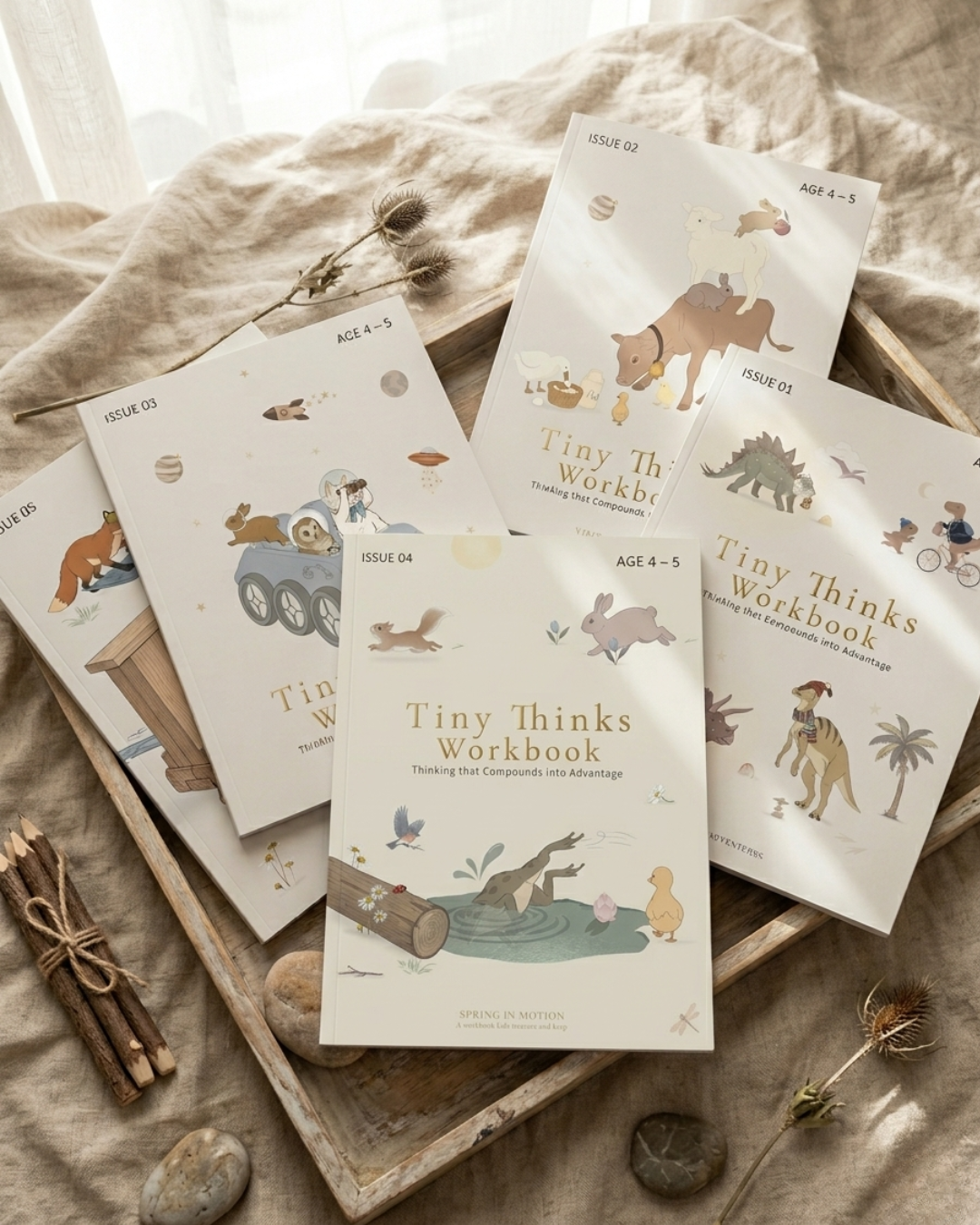
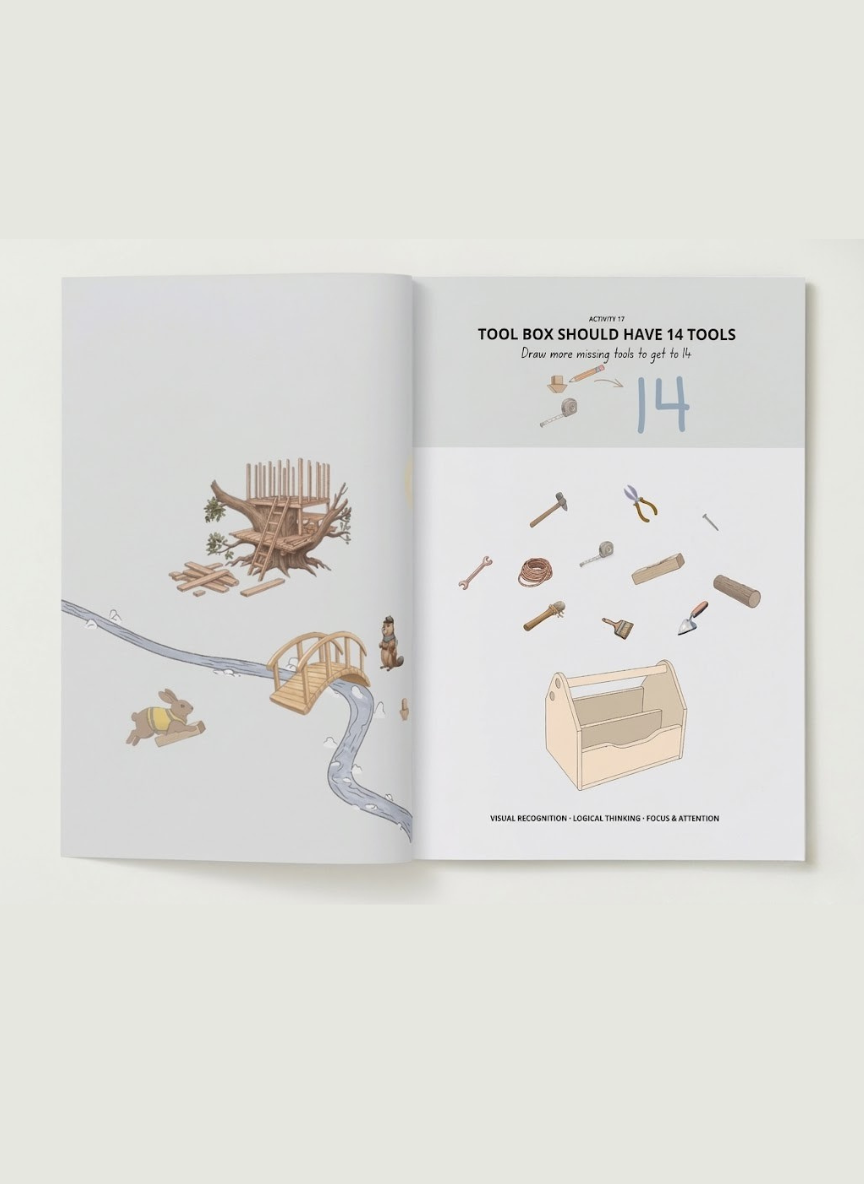
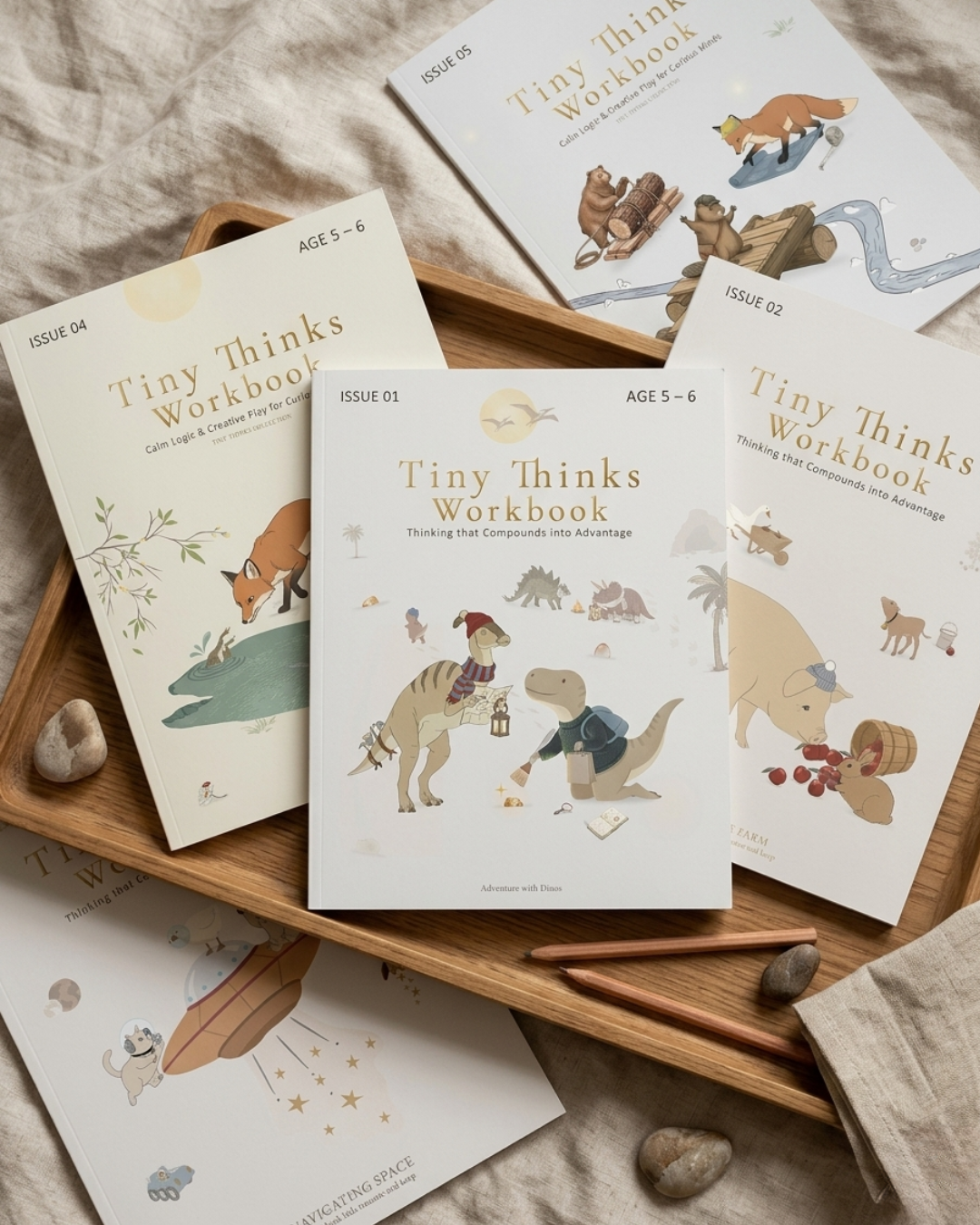
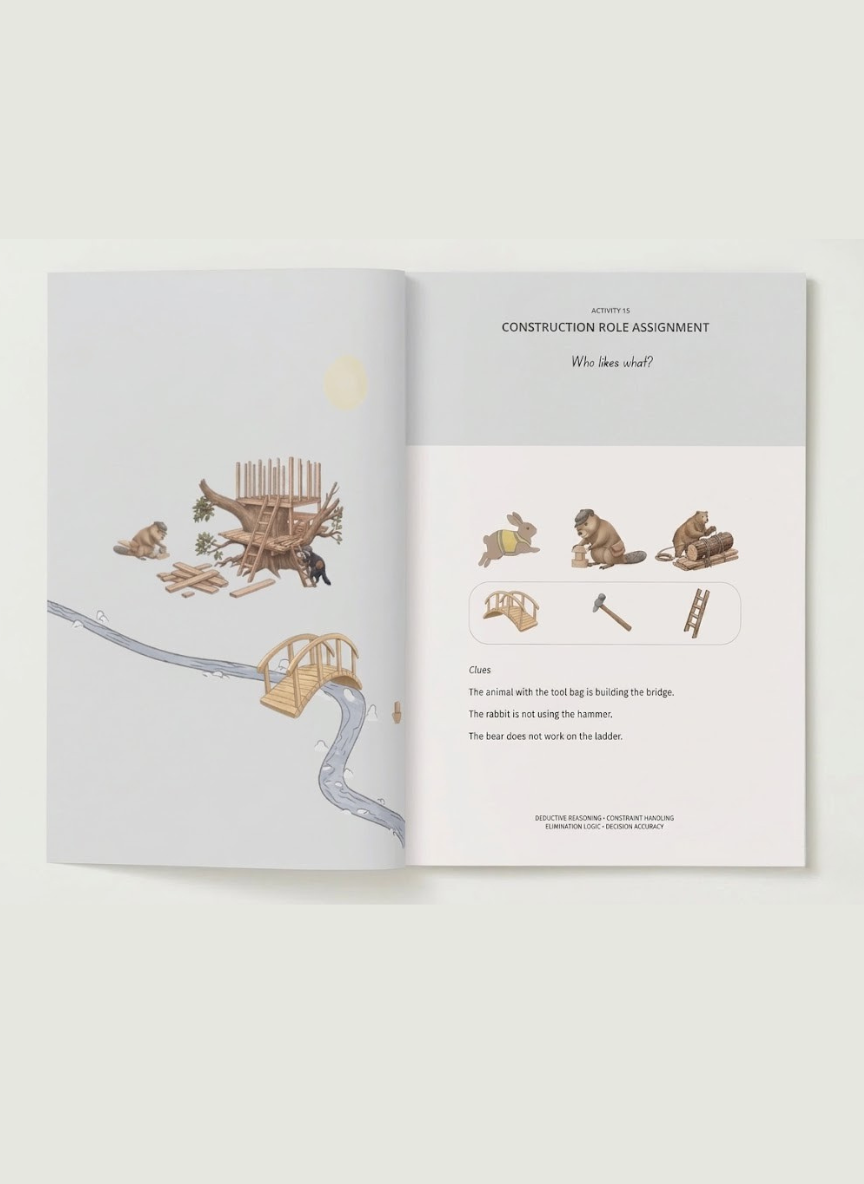
This is the kind of small reasoning moment Tiny Thinks is designed to protect: not a big lesson, but a short chance to notice, choose, explain, and try again.
What Parents Should Say During Thinking Activities
The language around an activity does more work than the activity itself. A few prompts that make reasoning visible without supplying the answer:
- What do you notice first?
- Why do you think that happened?
- What else could it be?
- How did you figure that out?
- What would you try next?
These questions ask a child to reach their own answer through their own analysis, which is the observable heart of critical thinking. Giving the answer quickly feels kind in the moment, but it removes the exact step where reasoning was about to happen.
How Thinking Skills Develop from Ages 3 to 7
There is a rough progression, though not a strict timeline. Between ages 3 and 4, children mostly notice and name differences: this one is bigger, that one is rough, these two are the same color. This noticing is the raw material reasoning is built from later.
Between ages 5 and 7, children start comparing reasons, testing ideas, and explaining conclusions. A five-year-old might say the ball did not roll because the rug stopped it. A seven-year-old might compare two possible reasons and decide which one actually fits what they observed. This shift from naming to reasoning is gradual, and children move through it at different speeds depending on how much practice they get talking through their thinking, not just performing tasks correctly.
Common Mistakes Parents Make
A few patterns come up often, and none of them mean a child is behind:
- Jumping in with the answer as soon as a child hesitates, which removes the chance to reason it out.
- Choosing puzzles or riddles that are too hard, which turns a thinking moment into a shutdown.
- Treating games as something to win rather than something to think through, which shifts focus away from reasoning.
- Relying mainly on worksheets, which often reward the right answer without asking a child to explain how they got there.
Worksheets are not harmful on their own. The issue is that a worksheet rarely asks a child to defend an answer out loud, and that defending is where most of the reasoning practice actually happens.
How to Know Your Child Is Thinking More Deeply
A few observable signs tend to show up before big changes do: a child starts explaining why an answer makes sense without being asked, revises a guess after noticing new information, compares two options out loud before choosing, or returns to a hard puzzle later in the day without being reminded.
One version of this is easy to miss because it looks quiet rather than dramatic. A child works through a sorting puzzle, gets it wrong once, pauses, looks at the pieces again, and quietly re-sorts them into a new arrangement, arriving at an answer nobody suggested to them. That pause and re-sort is the whole skill in miniature: noticing something was off, reasoning through why, and reaching a different answer through their own analysis.
In Tiny Thinks terms, that quiet pause matters as much as the finished answer, because it shows a child staying with uncertainty long enough to reason.
Is My Child Behind If They Say I Don’t Know?
No. I do not know is often a habit of pausing rather than a sign of ability. Many children say it as a placeholder while they decide whether the question is safe to answer, especially if past guesses were quickly corrected.
What helps is responding with a smaller, easier question rather than repeating the original one louder. If a child cannot explain why the block tower fell, try asking which side looks different first. Smaller steps rebuild the habit of reasoning out loud.
If you want a simple way to practise this at home, Tiny Thinks workbooks use The Pre-Seven Learning Method to give children short, screen-free chances to notice, compare, explain, and try another way. You can start with the Free Calm Pack, or browse the Tiny Thinks workbooks for more guided reasoning practice.
Frequently Asked Questions
What are thinking skills for kids?
Thinking skills for kids are mental habits like noticing, comparing, predicting, explaining, and checking conclusions, used to reason through new information rather than simply recall facts.
How do you teach children critical thinking?
You build critical thinking mainly through conversation: asking a child to explain their reasoning, predict outcomes, and compare options, rather than through direct instruction alone.Everyday practice like this is what the Pre-Seven Learning Method focuses on in the years before seven.
What activities improve thinking skills?
Sorting games, story predictions, strategy games, and real-world problem-solving all support thinking skills, especially when paired with questions that ask a child to explain their choices.
At what age does critical thinking develop?
Early forms of reasoning begin around ages 3 to 4 with noticing and naming differences, and develop further between ages 5 and 7 as children start comparing reasons and explaining conclusions.
How can parents build reasoning at home?
Parents can build reasoning at home by asking open questions like why do you think that happened during everyday moments, rather than relying only on structured activities.
Are puzzles enough to build critical thinking?
Puzzles alone are not enough. The reasoning practice comes mainly from the conversation around the puzzle, especially questions that ask a child to explain their strategy.
My kid always says I don’t know. What helps?
Asking a smaller, more specific question usually helps more than repeating the original question, since I do not know is often a pause rather than a lack of ability.
How do I teach reasoning without pressuring them?
Keep activities short, let the child choose the rule or strategy where possible, and treat wrong answers as information to explain rather than mistakes to correct immediately.
Is age three too early for thinking skills?
No. Age three is considered part of the foundational stage, where children practice noticing and naming differences, which supports more complex reasoning later.
Should a six-year-old explain their answers?
By age six or seven, many children can begin explaining why an answer makes sense, though the depth of explanation varies widely and develops gradually.