


- Key Takeaways
- Why Preschoolers Struggle to Focus
- The Attention Span Myth
- How to Improve Preschool Attention Span
- Measuring Real Progress
- When to Seek More Support
- Your Partner in Calm, Focused Play
- Conclusion
- Frequently Asked Questions
- What is a typical attention span for preschoolers?
- Why do young children find it hard to pay attention?
- Can you really improve a preschooler’s attention span?
- What are some simple ways to boost attention span at home?
- How can you tell if your child’s attention span is improving?
- When should parents seek professional help for focus issues?
- Are screen time limits important for attention span?
Key Takeaways
- Preschoolers have inherently short attention spans. Over-stimulation and distractions can make it even more difficult for them to focus.
- Constructing a quiet, predictable world with intentional routines can help your children calm down and improve their concentration.
- It’s not about how long a child can sit still. It’s rather the quality of engagement. Hands-on, curiosity-driven play builds attention muscles.
- Nutritious food, regular hydration, and restricted sugar intake undergird brain development and promote long attention spans.
- Screen-free activities such as outdoor play, puzzles, and imaginative games cultivate independent thinking and longer attention spans.
- Tracking little milestones and tweaking your strategy guarantees progress. Seeking additional assistance can help if concerns linger.
For attention span preschool tips, organized, low-stimulation play fosters focus and independence. Preschoolers don’t always settle easily after frenetic screen time or activity-packed days, so calm, Engaging Activities to Enhance predictable tasks are crucial to developing attention skills.
With the help of simple, predictable routines and visually ‘quiet’ materials, preschoolers begin to sequence their own actions and remain focused. Knowing these needs lets parents craft environments that nurture organic attention development.”The guide on screen-free activities for kids ages 3–7 covers practical, calm alternatives that support attention across this age range.
Why Preschoolers Struggle to Focus
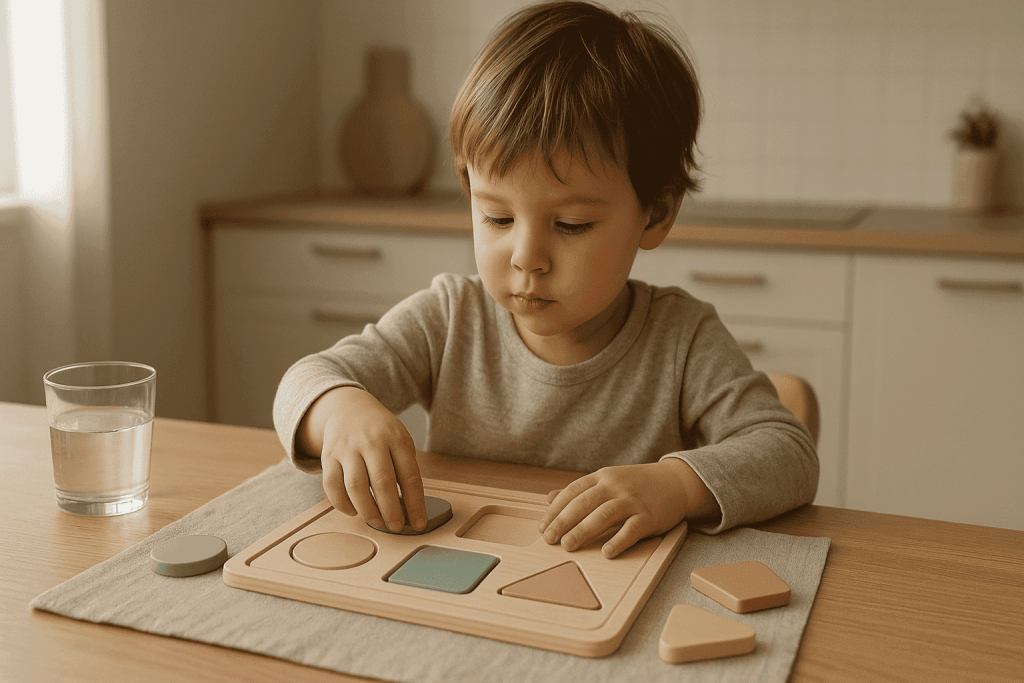
Preschoolers inhabit a world that’s too quick for their brains. Their attention spans are short at this age, anywhere from 6 to 12 minutes, varying by child and task. It’s not a bug, it’s a feature. Their brains are busily constructing these pathways, ones for thinking, ones for feeling and ones for communicating. Curiosity pushes them forward to investigate, to feel, and to shift attention from one object to another. This innate drive implies that deep attention is elusive, even in the quietest environments.
Our contemporary homes and classrooms pile on additional obstacles. Noise, clutter, hyperactivity and the impulsive on-demand surge of digital content can inundate a young child’s attention architecture. Most kids aren’t distracted by decision; their brains are simply reacting to too much stimulation. For instance, a kid may begin to scribble a single line when a brother yells or a phone rings, and that minuscule focus window slams shut.
The messier the environment, the more difficult it is for a child to get comfortable and stay with any one activity. Fast, unpredictable content can condition a young child’s attention system to expect frequent transitions and immediate novelty. When that’s the dominant input, slower, quieter activities can feel unsatisfying by comparison, which is part of why transitions are often hard.
Certain kids are just inherently more fidgety or more sensitive to these influences than others. If a child is worried, uncomfortable, or just tired, their attention spirals downward. This is why a starving four-year-old can’t make it through a story, no matter how captivating. Every child’s rhythm is unique and their attention regulation will vary from day to day.This variability is normal and expected. The child who focused well yesterday and is scattered today hasn’t lost ground, their system is responding to how the day felt. What matters is the pattern over weeks, not the performance on any given afternoon.
Structure helps. Activities with clear steps and an observable end-point tend to hold attention longer than open-ended play. When a child knows what to do and can see when something is finished, they settle more easily. For families looking to build this at home, the Free Calm Pack is a calm, no-cost starting point, simple activities children can pick up on their own after school or during transitions.
The Attention Span Myth
The attention span myth A lot of folks assume it’s an innate characteristic, something determined by age or a gauge of development only. The reality is a child’s attention is forged by their everyday experience, the rhythm of their day and the surrounding context. Attention isn’t a timer that drains; it’s a system that can be trained, supported, and overstimulated.
The myth, repeated everywhere, that kids today have “shorter attention spans than goldfish” simply doesn’t hold up. Goldfish don’t read Dr. Seuss! Kids can and frequently do concentrate for extended periods on interesting, carefully designed activities. If your kid can sit enchanted through a 2,000-word tale like The Lorax or construct a block tower for a quarter of an hour, it’s not the span that’s lacking; it’s the right sort of input.
Attention is activity-specific. Research consistently shows that fast, fragmented digital content makes it harder for children to sustain focus on slower, quieter tasks not because their brains are broken, but because attention adapts to the pace of its input.The Pre-Seven Learning Method is built around this, the understanding that sustained attention develops most readily in the years before seven, through repeated, low-pressure practice, not instruction.These figures indicate the design of digital spaces, not a hard brain capacity.
A child who sits absorbed in a puzzle for fifteen minutes, not because they were told to, but because the activity felt just right is demonstrating exactly the kind of attention that builds over time. The task didn’t train them; the repeated experience of finishing something satisfying did.
When the content is quick, random and ever-shifting, even grown-ups hop from one thing to another. For kids, autoplay videos or algorithmic apps give them this same fragmented input, rendering it even more difficult for them to hang on to anything that isn’t immediately gratifying.
It’s not that preschoolers can’t pay attention, it’s that swift, loud, or frenetic activities splinter their focus. It’s not how long, but how good. There’s something about a quiet, tactile, regimented task, such as matching shapes, tracing lines or completing a simple visual pattern that allows the brain to relax.
By infusing play with story and light challenge, you develop focus. As picture book word counts plummet, now only 458 on average for ages 3–7, windows of consistent connection contract. That same child who squirms their way through a nature doc might become captivated by a storybook or a slow, tactile puzzle.
How to Improve Preschool Attention Span
The key to improving attention span in preschoolers is less about restriction and more about creating regulation-supportive calm and structured environments. Parents notice the struggle: after school, energy spikes, screen transitions, and dinner chaos all test a child’s focus. The real challenge is rapid, unpredictable stimulation that exceeds a young brain’s ability to settle to bolster attention, families require practical, replicable techniques that accommodate real life.
1. The Right Environment
A neat, organized play space prepares kids’ brains for attention. Reducing strewn toys, ambient noise, and visual clutter calms a child down. Comfy seating and soft lighting reduce sensory load so that your little one can more easily shift between active and still moments.
When materials are labeled and within reach, kids can locate what they need and clean up on their own, fostering both confidence and attention. Security and predictability allow kids to wander fearlessly with a sense of knowing their borders, which diminishes stress and encourages sustained involvement.
2. The Power of Routine
Kids flourish on routine. Predictable schedules (morning to bedtime) anchor the day, allowing attention shifting from one task to another to be easier. Visual schedules picture charts or simple drawings, depict what comes next, smoothing transitions and minimizing pushback.
When children assist with routine tasks, such as table setting or plant watering, they engage in sequencing and attention in an organic way. Routines should adapt over time: a fresh twist on breakfast, a new bedtime story, or changing up the order keeps things interesting while retaining structure.None of this requires a strict schedule. What children respond to is predictability knowing roughly what comes next not regimentation. A loose rhythm works just as well as a timetable, as long as it’s consistent.
3. The Fuel for Focus
A rested, well-fed preschooler will pay more attention. Healthy meals and snacks with lots of fruits, vegetables, whole grains, and protein nourish his brain and give him consistent energy. Hydration is underappreciated; offering water often counts.
Excess sugar causes spikes and crashes, which makes concentration more difficult. Easy swaps, like fruit over candy, foster more sustained attention. Tired or hungry kids can’t self-regulate efficiently, so naps and snack breaks are key pieces of the attention jigsaw.
4. The Screen-Free Shift
The problem with screens isn’t the technology per se. It’s the speed and unpredictability of most content. Calm, screen-free solutions are puzzles, blocks, and board games that promote problem-solving and patience. Outdoor play stabilizes energy, builds gross motor skills, and rejuvenates attention.
Establishing defined, gentle limits around screen time by leveraging timers or visual cues imparts balanced habits without drama. Preschoolers who are able to bounce back voluntarily to slower, tactile pursuits develop attention stamina for higher-stimulation periods.
5. The Thinking Play Method
Play is the motor of attention. Open-ended play (blocks, drawing, imaginative scenarios) keeps kids engaged and encourages independent thinking. Inquiring, “What’s next?” or “How’d you work that out?” while playing builds deeper thinking.
Group activities such as easy team games or collaborative art instill communal attention and patience. Storytelling, role acting, and joint pretending hold attention and stretch it organically, long after high-octane screens have lost the audience.
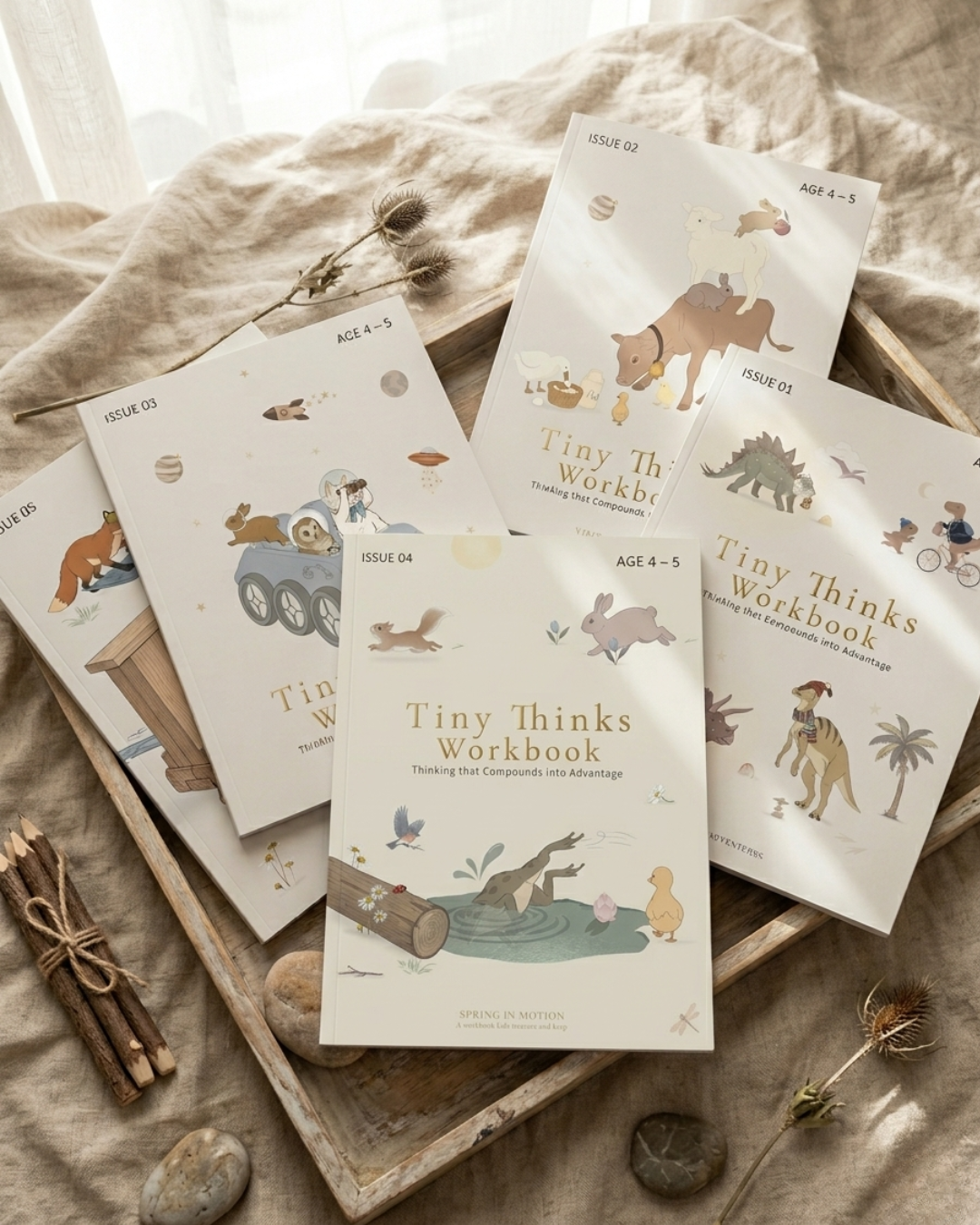
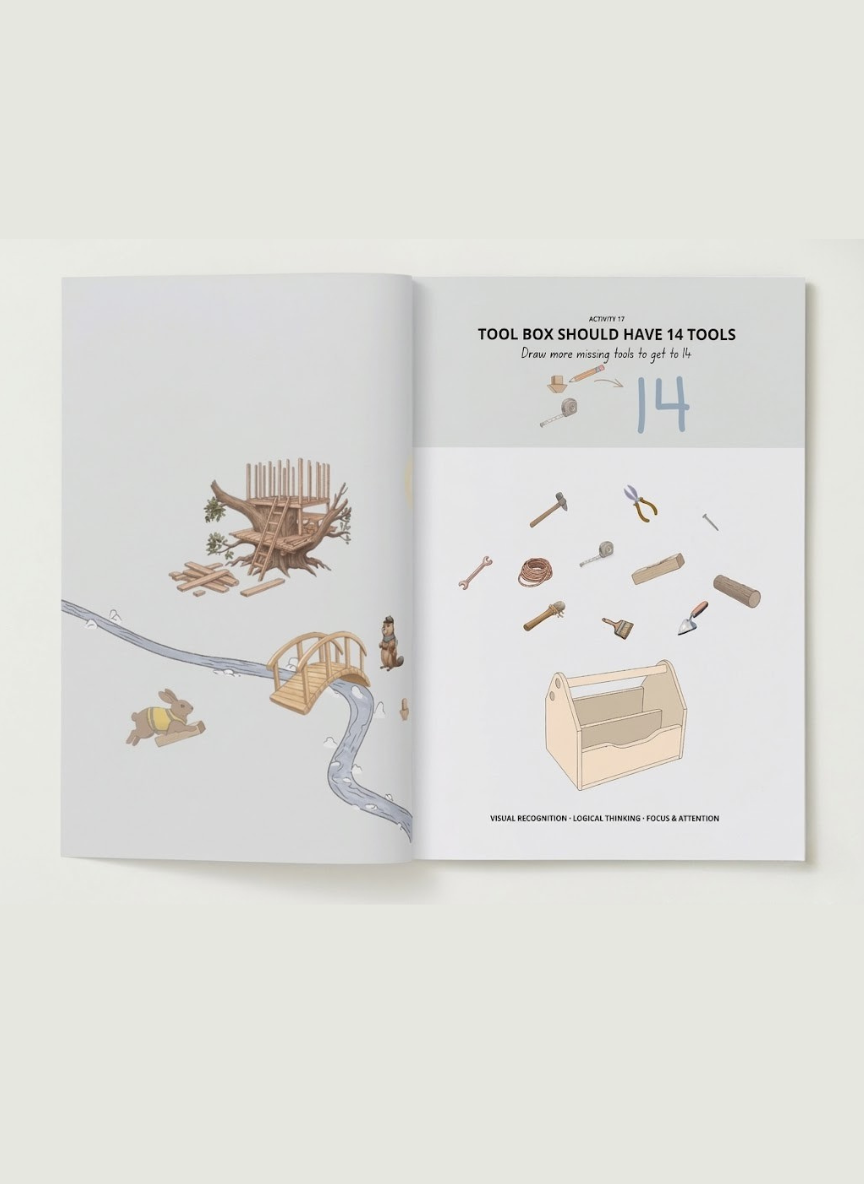
Tiny Thinks™ is designed for these occasions. The Free Calm Pack is a quick, sure-fire way to calm kids down post-screen or post-school. Cool, visually calm workbooks take kids through thinking sequences, no hype, just structure that works.
This isn’t a reward or punishment. It’s a reprieve when concentration counts.Educators supporting attention and focus in group settings can find structured resources at Tiny Thinks for Educators.
Play is where attention is first practised in a way that sticks. A child who finishes a matching game, puts the pieces back, and starts again on their own is doing something significant, they’re choosing to sustain focus because the experience felt achievable and satisfying. That’s the root of attention, and it forms long before formal learning begins.
Measuring Real Progress
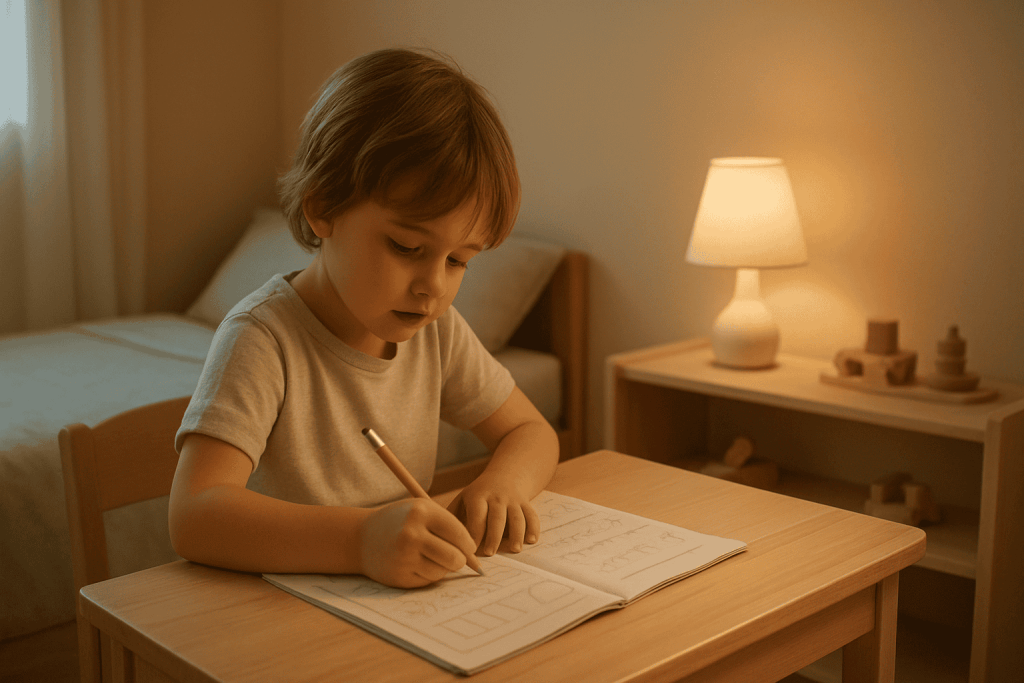
Progress with focus is less apparent, particularly with small children who are constantly shifting from one thing to the next. Measuring real progress involves observing subtle changes in the duration, depth, and autonomy that a child can direct their focus throughout various segments of their day. They want to know if their initiative to establish a more peaceful, ordered schedule is having an impact.
Dependable measurement should be low-tech, natural, and adapted to everyday life, not just the classroom. For measuring real progress, a simple checklist is usually the most handy. While playing, eating, reading, or waiting, write down the ways your child interacts.
Note: Did they settle into the task with minimal prompting? Did they go back to it after a diversion? How many stuck with it before quitting? Affective cues matter as well smiles, tranquil focus, or loose limbs all indicate good flow. For a lot of 3 to 7 year olds, a concentrated effort of five minutes on one thing is a triumph.
Engagement checklists might include: shows interest without reminders, completes a simple pattern or puzzle, asks for more, or transitions calmly at the end. Don’t forget to celebrate small wins. If your kid can work two more minutes quietly constructing or can transition back to some calm activity after a screen, that’s progress.
Mark these moments with a soft word, a smile, or a sticker chart if that resonates for your family. It’s to remind them that slow, hard, focused work is good and it feels good, not only for future academic success but for immediate tranquility now.
It’s important to adapt your strategies. If you find that your kid’s attention wanes when they’re tired or hungry, shift the timing for structured play. If a toy or workbook page holds their attention, leverage that.If a child is finding it hard to settle, a single calm, hands-on activity, something with a clear start and finish, can help reset their focus. fewer toys and less visual noise naturally support longer, deeper play.
Behavioral engagement is a strong indicator. The families who notice the most steady progress are often the ones who made the environment simpler, fewer options, a consistent spot, familiar materials rather than the ones who tried new activities. Children return to what feels manageable, and that return is the practice.Kids that come up with calm play on their own, persevere, and revisit are constructing the base for later learning. Research and lived experience alike demonstrate that positive, structured interactions cultivate motivation and resilience.
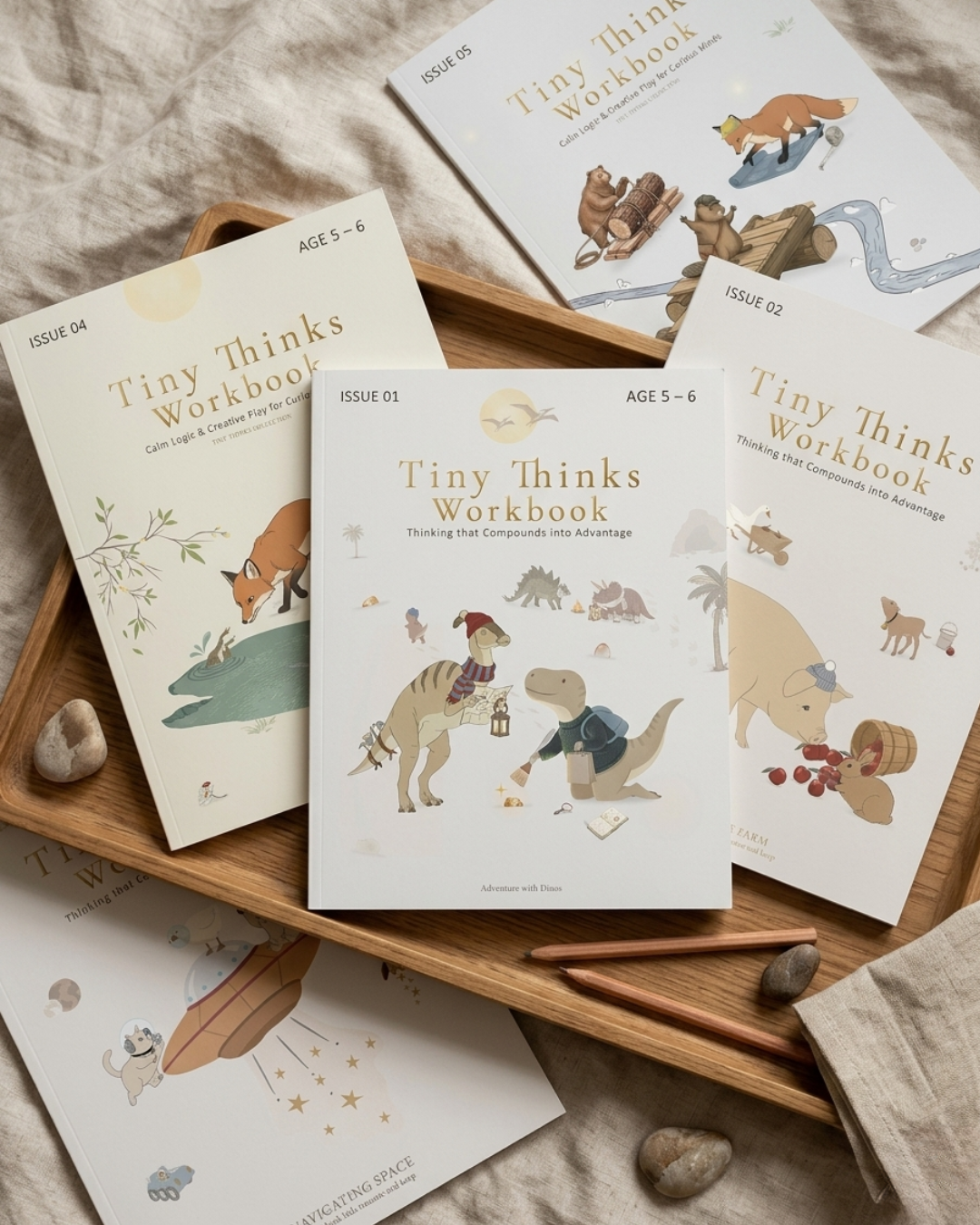
For families building attention habits at home, age-based Tiny Thinks Workbooks offer calm, sequenced thinking practice children return to on their own.
When to Seek More Support
Most parents observe when a child’s attention is less than typical. Perhaps your 4-year-old forgets where she left off, jumping from puzzle to puzzle and leaving pieces scattered across the room, or your 6-year-old loses interest before she finishes a drawing. A little distraction is normal, but if you notice recurring patterns, such as endless fidgeting, difficulty following even simple two-step directions, or frequent meltdowns when asked to pay attention, it might be time to dig deeper.
A quick table helps clarify:
|
Activity |
Impact on Attention Span |
|---|---|
|
Fast, autoplay videos |
Fragments, reduces sustained focus |
|
Picture books (longer texts) |
Supports, lengthens focus |
|
Tactile, structured play |
Builds, restores attention |
|
Unstructured digital games |
Overloads, promotes rapid switching |
|
Interactive storytelling |
Deepens, maintains engagement |
|
Sign of Inattentiveness |
Recommended Action |
|---|---|
|
Leaves tasks unfinished |
Break tasks into smaller chunks, offer “one more thing” before stopping |
|
Easily distracted by noise or movement |
Use calm, predictable routines and reduce background noise |
|
Has trouble sitting still |
Offer tactile tools, stress balls, putty, soft spinners |
|
Needs frequent reminders to return to activity |
Engage briefly, ask questions, suggest next steps |
|
Overwhelmed by open-ended play |
Choose activities with clear goals (blocks, simple puzzles) |
Children’s attention varies widely: a 3-year-old may focus for 3 to 15 minutes, while a 6-year-old might manage 10 to 30 minutes. This variation can depend on age, temperament, and environment. If you’re constantly managing, reminding, or rescuing your child from frustration, it’s time to check in with teachers or a child development specialist. They can help you figure out if your child’s attention is in the normal range or if there’s an underlying need, such as sensory processing issues or anxiety, that requires additional support.
Sometimes, simply changing structure at home can assist. Routines with defined rhythms snack, silent activity, exercise, read aloud, establish structure. For kids who have difficulty settling, sit with them for the initial few minutes, inquire about what they desire to construct or sketch, and propose a minor subsequent action. Pushing for one more block or one more color before transitioning encourages both focus and frustration tolerance.
For example, tools can support regulation. A lot of kids find support in basic things like a smooth stone, a bit of putty, or a spinner to hold on to when thinking. These tactile crutches provide the hands with an occupation and help ground roaming minds. For very hectic situations, consider employing a visual schedule or timer to divide work into two 20-minute chunks separated by a brief five-minute rest period.
If you’ve experimented with routines, tactile aids, and small goals but still watch your child flounder, or if the inattention is bleeding over to relationships or learning, don’t hesitate. If you’ve tried routines and small goals but still see consistent struggles, it is worth speaking with a teacher or child development professional.
Your Partner in Calm, Focused Play
Your partner in calm, focused play, Tiny Thinks steps in as a quiet, structured solution for parents pressed by daily pressure points after school, mealtime, travel, and those long moments in waiting rooms. It’s not about fixing screen use or parenting judgment. Instead, Tiny Thinks offers a different layer: calm, screen-free, and regulation-first play that restores attention and supports self-direction in children ages 3 to 7.
This isn’t about keeping kids occupied or amused. It’s about sculpting a dependable thinking ritual, one that guides young brains to settle, sequence, and focus, particularly when the world feels overstimulating or frazzled. Calm, focused play is the foundation of early attention span cultivation. When kids are provided with reliable, low-noise activities such as basic picture matching, tracing lines, or sequential pattern-building, their nervous systems start to decelerate.
Fast, unpredictable content can make it harder for children to settle into slower activities. In the early years, calm, repeated practice not passive consumption is what builds attention over time.
Play that is intentional and contained only a handful of toys or activities at a time gives kids the room to dig in, solve, and come back. Too many choices or too much noise, and you see the classic bouncing: hopping from one toy to another, asking for screens, or drifting into frustration. This is not a discipline issue. It’s a sign that the cognitive strain is overwhelming and the context is too cluttered.
Magically is a banned pattern, dramatic and without observable value. The pages are visually soothing, recyclable, and designed for autonomous implementation. A child can begin independently, discover a constructive rhythm, and gain confidence without requiring constant adult guidance. Parents observe that stress, be it from a taxing day or a noisy environment, compresses patience and frustrates concentration for their child.
A little bit of structured play, or even just a few minutes outside, can reset the system.Tiny Thinks turns ordinary quiet moments into thinking practice children come back to on their own.
Conclusion
To support attention in preschoolers, it’s about structure, not stimulation. Most kids thrive on peaceful, predictable rhythms and quiet activities that encourage them to decelerate and reflect. Fast, new input pushes their systems to the brink. Pattern tasks, gentle sequencing, and predictable play all simple things build real stamina over time. Progress is not about speed, even if it feels like it. Tiny, persistent moves, such as a preschooler drifting back to a silent page unaided by treatment, indicate the method is effective. Once frustration abates and self-directed attention extends, the rewards are obvious.Built for the years before seven, when the thinking habits that last attention, persistence, working it out first take shape.
Preschool attention spans are short by design a 4-year-old managing 8–12 minutes on one task is developing normally.
Environment matters more than willpower: low clutter, predictable structure, and activities with clear endpoints help children settle.
Consistent short sessions build attention more reliably than occasional longer ones.
Progress looks like a child returning to an activity unprompted, finishing something small, or transitioning calmly not perfect focus.
If attention struggles persist across different settings and routines, speak with a teacher or child development professional. The Free Calm Pack is a quick, sure-fire way to calm kids down post-screen or post-school. Cool, visually calm workbooks take kids through thinking sequences, no hype, just structure that works.
None of this is about academic preparation. A child who learns to stay with something to try a different approach when stuck, to finish and feel the satisfaction of finishing is building the thinking habits that formal learning depends on. That groundwork is laid in ordinary moments, well before school begins.
Tiny Thinks Workbooks give children calm, structured thinking practice the kind they return to on their own in everyday quiet moments at home. Browse age-based workbooks.
Frequently Asked Questions
What is a typical attention span for preschoolers?
Preschoolers typically pay attention for 5 to 10 minutes on a single task. This is natural and depends on age, interest, and surroundings.
Why do young children find it hard to pay attention?
Their brains are still maturing. Anything new and distracting can grab their attention. This is a normal aspect of early childhood development.
Can you really improve a preschooler’s attention span?
Yes. Consistent schedules, simple directions, and brief, interesting tasks can assist kids in developing stronger concentration in the long run.
What are some simple ways to boost attention span at home?
Provide quiet play, minimize distractions, and break it up with breaks. Reading together and hands-on projects can work wonders.
How can you tell if your child’s attention span is improving?
Observe whether your child plays longer with toys, finishes simple tasks, or listens to short stories. Mini incremental progress is a good indicator.
When should parents seek professional help for focus issues?
If a child’s inattentiveness upsets everyday life or education or you have other developmental concerns, seek advice from a pediatrician.
Are screen time limits important for attention span?
Yes. Excessive screen time can impact concentration. Setting boundaries and active playtime foster healthy attention skills.