


My Child Acts Before Thinking: Building Self-Control in Young Children
Key Takeaways
- Young children act before thinking because self-control is one of the slowest capabilities to mature. The brain system behind it, in the prefrontal cortex, keeps developing right into adolescence (Harvard Center on the Developing Child).
- Self-control and planning are really one capability with two halves: the pause that stops an impulse, and the look ahead that works out what to do instead.
- It matters more than almost anything else you can build early. A study following 1,000 people to age 32 found childhood self-control predicted adult health, finances, and staying out of trouble, independent of IQ (Moffitt et al., 2011).
- Self-control can be built. Research shows young children’s executive functions improve with enjoyable, repeated practice sized to the child, though gains are clearest in the short term and broad transfer is less certain (Diamond and Ling, 2016).
- Lectures and punishment rarely build it. Small, calm practice at pausing and planning does more than telling a child to think first.
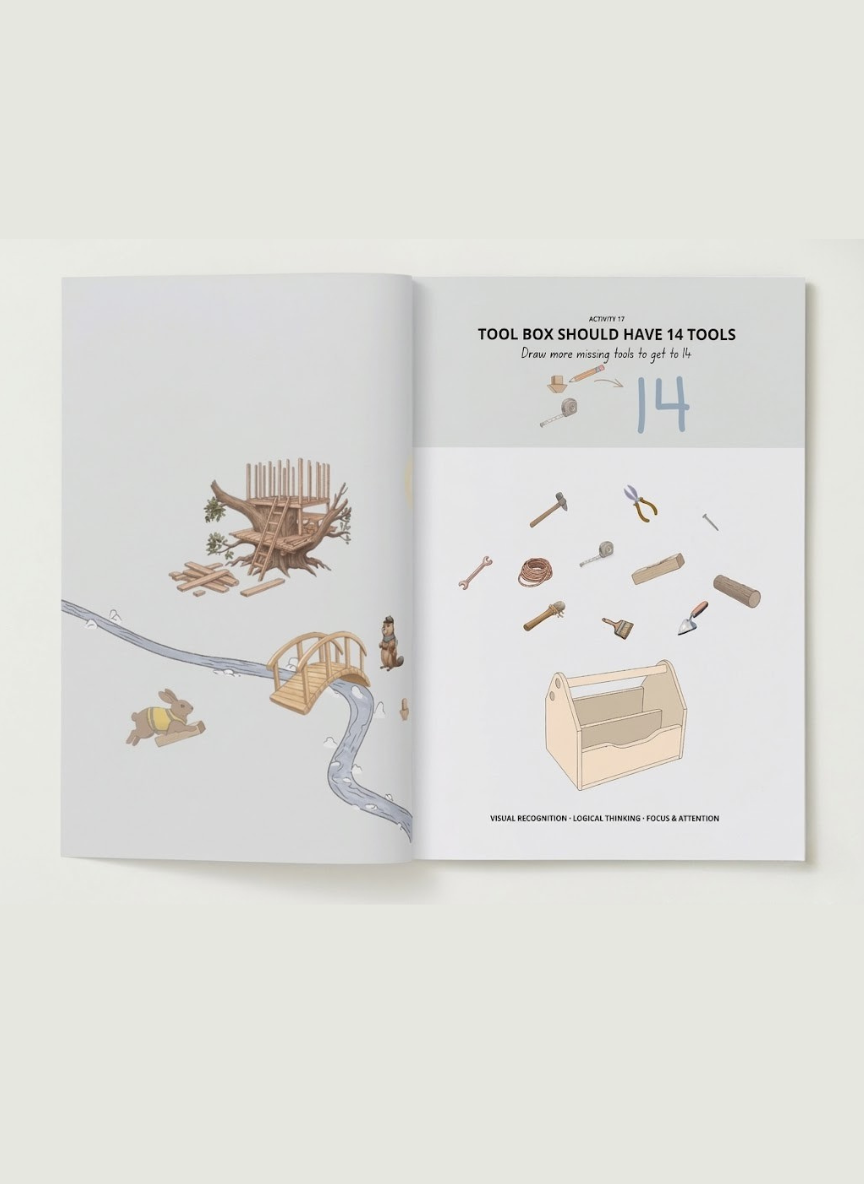
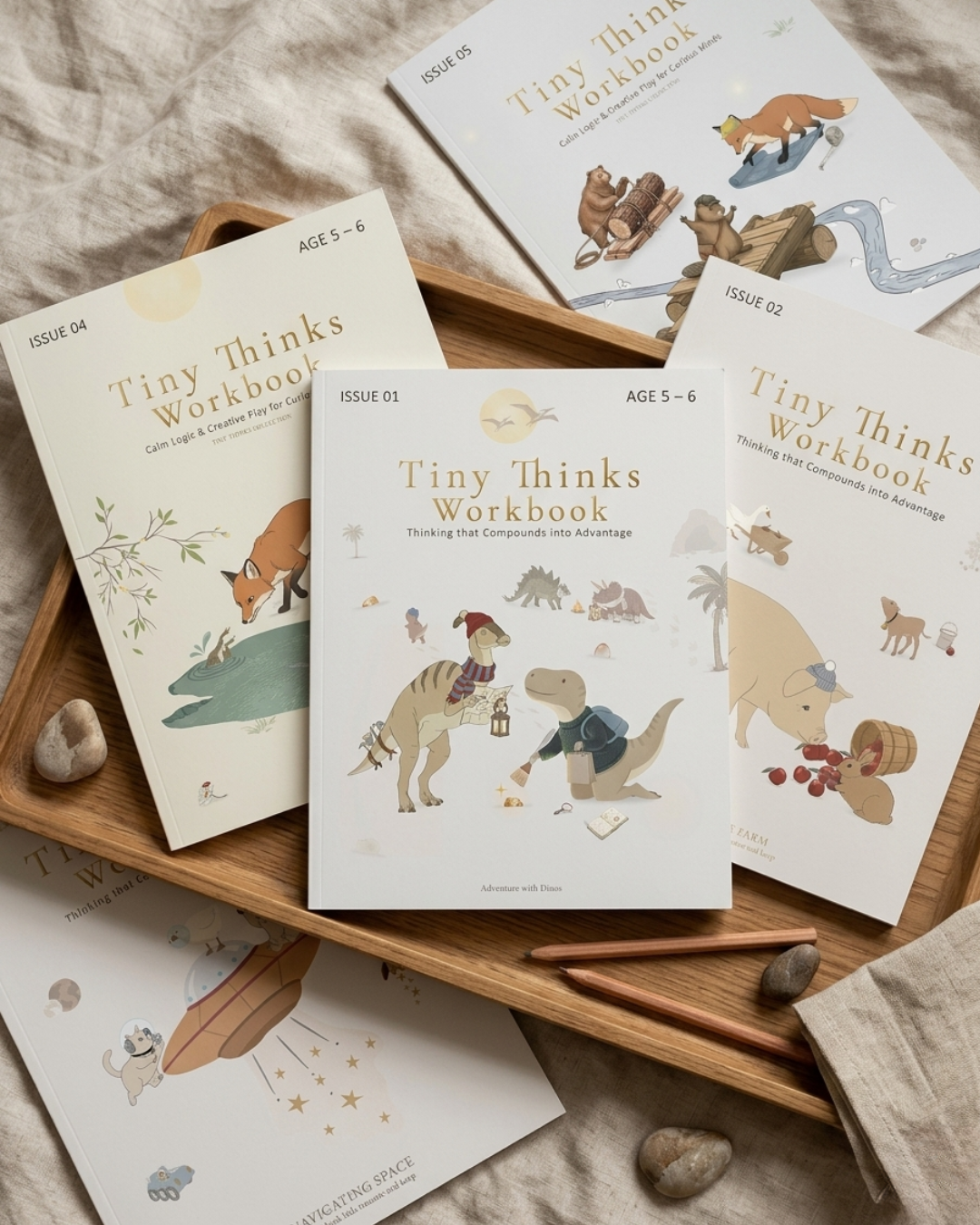
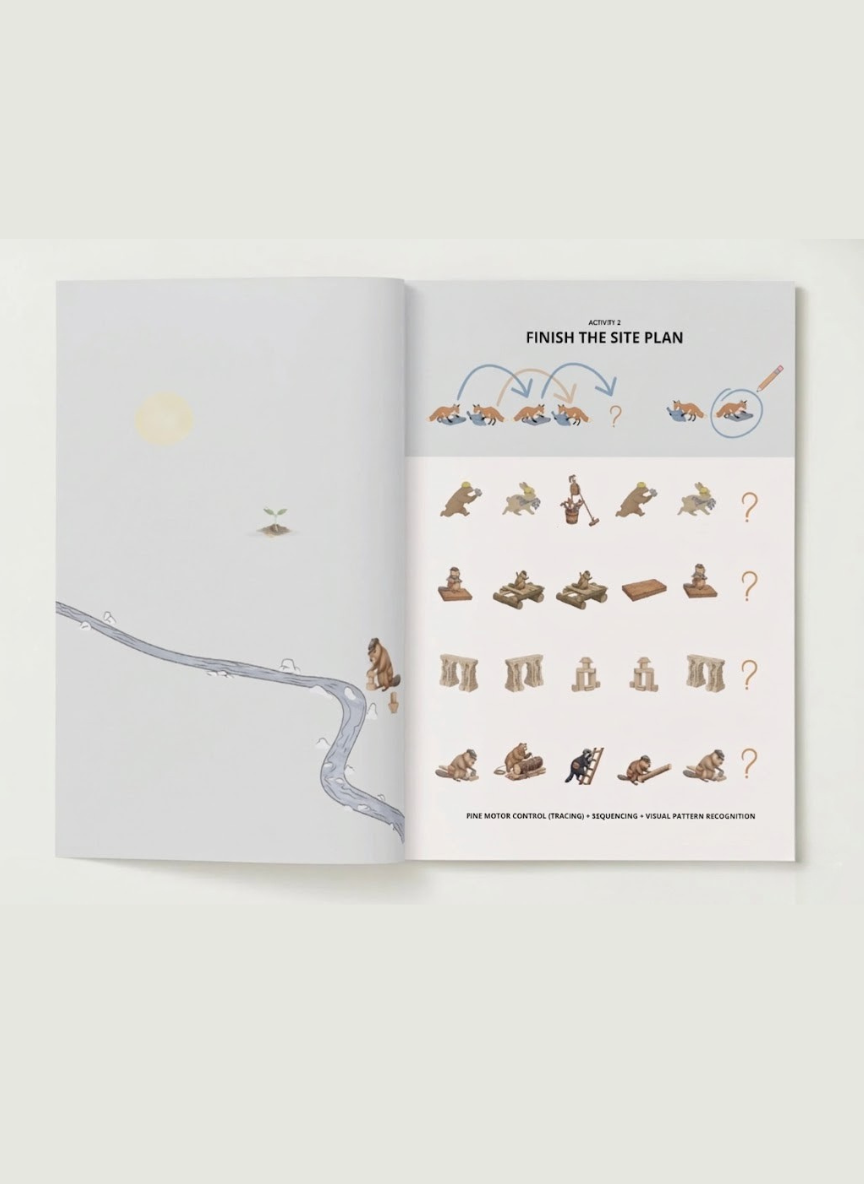
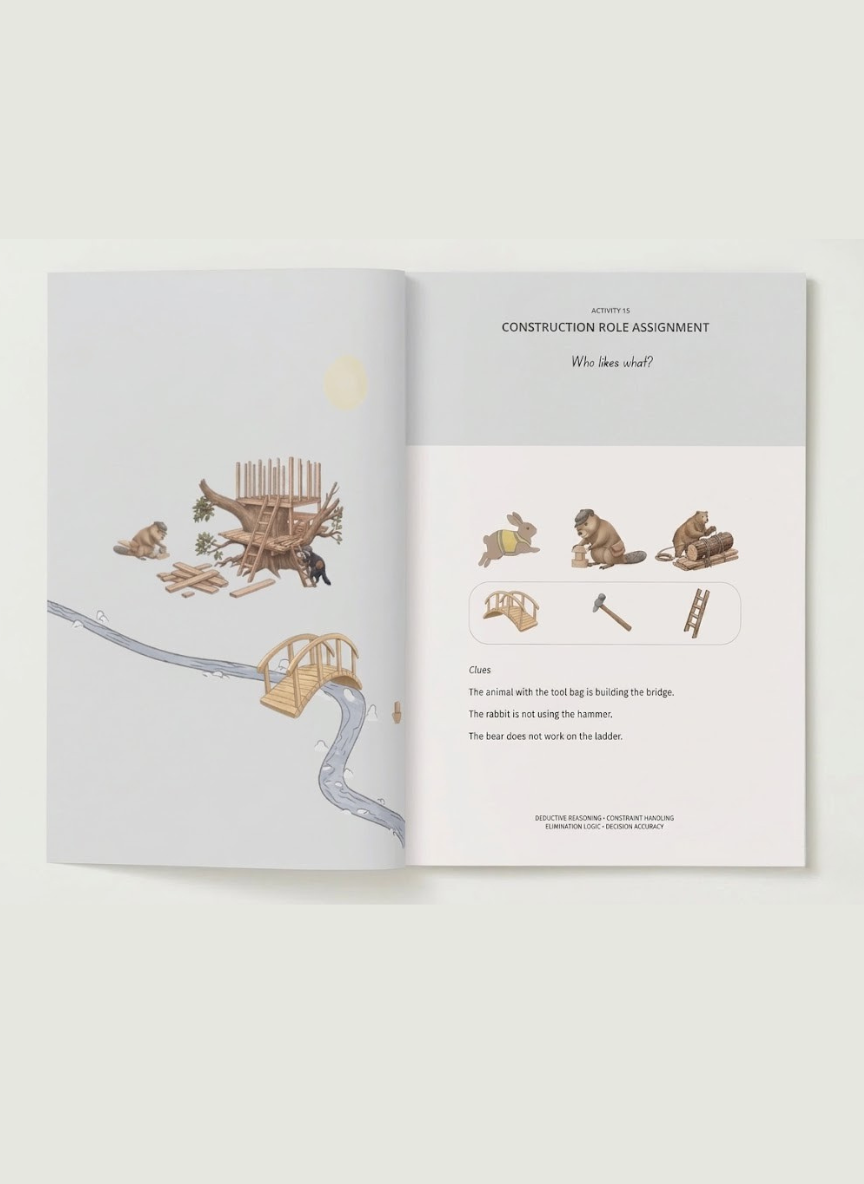
- Self-control is 1 of the 10 capabilities the Pre-Seven Learning Method builds: short, screen-free workbooks matched to your child’s stage between 3 and 7, a few calm minutes at a time to give an advantage. Start free with the Calm Pack.
Why does my child act before thinking?
Young children act before thinking because the part of the brain that lets us pause, plan, and resist an impulse is one of the last to mature. The prefrontal cortex, which runs self-control, develops slowly across childhood and keeps maturing into adolescence (Harvard Center on the Developing Child). A young child feels the impulse fully, but does not yet have strong brakes.
If you have watched your child reach for the toy before asking, shout the answer before the question is finished, or run ahead in a car park without stopping, you know the feeling. It is rarely that they decided to ignore the rule. The impulse simply arrived faster than the brakes.
It is worth defining the thing plainly. Self-control is the ability to pause and stop an automatic urge long enough to choose. Planning is the ability to think ahead and work out the steps before acting. Together they are what let a child act on purpose rather than on impulse.
Is it normal for my child to be so impulsive?
Yes. Acting on impulse is normal and expected in early childhood, because self-control is still developing and develops gradually. A preschooler who grabs, blurts, or cannot wait is usually right on track, not badly behaved.
It is worth gentle attention, not worry. If impulsiveness is severe, happens across every setting, and is affecting daily life in a way that concerns you, it is always reasonable to talk it through with your pediatrician. For most young children, though, acting before thinking is simply part of being young.
What does acting before thinking actually point to?
Acting before thinking points to two capabilities still under construction, not to a behavior problem:
- Self-control: the brake, stopping the urge long enough to choose.
- Planning: the look ahead, holding a goal and working out the steps.
These sit alongside attention and working memory in what researchers call executive function, the brain’s set of self-management skills. They are two of the ten thinking capabilities the Pre-Seven Learning Method is built around. Seeing the behavior this way matters, because “my child has no self-control” is discouraging, while “my child is still building the pause” is something you can work on.
Does self-control really matter that much?
It may matter more than almost any other capability you can build early. In a study that followed 1,000 people from birth to age 32, the children with greater self-control grew into adults with better health, stronger finances, and far less likelihood of legal trouble, and this held across the whole range and independent of their IQ and family background (Moffitt et al., 2011). Self-control did not just predict a test result. It predicted the shape of a life.
That is the quiet reason this capability is worth the patience. It is one of the capabilities that keeps mattering whatever future a child grows into.
Can self-control be taught?
Yes, within honest limits. Research shows that young children’s self-control and other executive functions improve with the right kind of practice: enjoyable, active, repeated, and sized to the child, with a little feedback along the way (Diamond and Ling, 2016). Preschool is actually when the brakes develop fastest, which makes it a good time to practise.
The honest caveat is that the clearest gains tend to be short-term, and how far they transfer to everything else and how long they last is less certain. So think of self-control as a muscle you build with regular use, not a switch you flip once. The conditions that research finds work best, small, enjoyable, repeated practice adjusted to the child, are exactly the conditions the Pre-Seven Learning Method is designed around. You can see how it works on the Pre-Seven Learning Method page, or start with the free Calm Pack.
What can I do to help my child with self-control?
The most useful things are small and repeatable:
- Name the plan out loud before acting. “First shoes, then door.” It gives the look-ahead something to hold.
- Build in the pause. “Let’s take one breath before we decide.” You are practising the brake on purpose.
- Use waiting games and turn-taking. Simple, fun practice at holding off is real self-control practice.
- Keep challenges sized so success is possible. A pause a child can manage builds the habit. One they cannot just builds frustration.
- Let them see you stop and think. Children copy the adults who model the brake.
- Notice the pause when it happens. “You waited. That was hard, and you did it.”
How do you build planning and self-control before age 7?
Through small, repeated practice at pausing and looking ahead, sized for the child and stretched slowly. A three-year-old is working on waiting a moment before grabbing. A six-year-old is working on holding a plan in mind and resisting the urge to rush at the first step. The capability grows in stages, which is why the practice should too.
The thing every parent quietly hopes for is not a child who is simply obedient. It is the child who, in the moment that matters, stops, thinks, and chooses for themselves, the one who is in charge of their own impulses rather than ruled by them. That kind of self-governance is not a temperament a child is born with. It is built, in small moments, before seven, and it is one they carry into whatever future they grow into. You can explore the workbooks by stage, or start free with the Calm Pack.
Frequently asked questions
Why does my child act before thinking? Because the brain system behind self-control, in the prefrontal cortex, is still immature and develops slowly across childhood. Young children feel an impulse fully but do not yet have strong brakes, so they often act before the pause can catch up.
Is it normal for my preschooler to have no self-control? Yes. Acting on impulse is a normal, expected part of early childhood, and self-control builds gradually over years rather than arriving all at once. For most children it is developmental, not a behavior problem.
At what age does self-control develop? It develops across the whole of childhood and into adolescence, with the brakes developing especially fast in the preschool years. There is no single age at which a child suddenly has it.
Can self-control be taught to a young child? Yes, within limits. Young children’s self-control improves with enjoyable, repeated practice sized to their level, though research is clearer on short-term gains than on how far they transfer (Diamond and Ling, 2016). Regular, calm practice does more than one-off lectures.
How do I help my impulsive child? Name plans out loud, build in a deliberate pause before acting, use waiting and turn-taking games, model stopping to think, and notice the pause when it happens. Keep the challenge sized so the pause is possible.
Is my child’s impulsiveness a sign of ADHD? Not on its own. Impulsiveness is extremely common and expected in young children, and only a qualified professional can assess for ADHD. If it is severe, persistent, and present across settings, it is reasonable to seek that assessment.
Does self-control in childhood really matter later? Yes. A long-term study found childhood self-control predicted adult health, finances, and staying out of trouble, independent of IQ (Moffitt et al., 2011). It is one of the most predictive capabilities a child builds early.
What is the difference between self-control and attention? Attention is staying with one thing. Self-control is stopping an impulse to do something else, and planning is thinking ahead before acting. A child can have one without the other, which is why they are practised differently.
Start building self-control
The Pre-Seven Learning Method turns this into something you can do at home: short, screen-free workbooks matched to your child’s stage, giving the thinking underneath focus, persistence, and problem-solving small, regular practice. Not drills, not screens. A few calm minutes that build the mental capabilities underneath that supports the child in academics and gives an advanage for life. Start free with the Calm Pack, or explore the workbooks by stage.
References
- Harvard Center on the Developing Child. Executive function and self-regulation.
- Moffitt, T. E., et al. (2011). A gradient of childhood self-control predicts health, wealth, and public safety. PNAS.
- Diamond, A., & Ling, D. S. (2016). Conclusions about interventions, programs, and approaches for improving executive functions that appear justified and those that, despite much hype, do not. Developmental Cognitive Neuroscience.