My Child Forgets What I Just Asked: Helping Working Memory Grow
Key Takeaways
- When a child forgets an instruction seconds after hearing it, it is usually their working memory running out of room, not defiance or not listening.
- Working memory is the mental workspace where a child holds information briefly while they use it, like keeping a two-step instruction in mind long enough to carry it out.
- How much a child can hold in mind matters more than how clever they are. Following children from age 5 to 11, researchers found working memory at 5 predicted later reading and math better than IQ (Alloway and Alloway, 2010).
- You cannot train working memory bigger, so the goal is to support it, not inflate it. A large meta-analysis found brain-training improves the practised tasks but does not reliably carry over to real skills like reading or math (Melby-Lervåg, Redick and Hulme, 2016).
- What does help is reducing the load and giving working memory small, regular practice, so a child gets comfortable holding a thought and following it through.
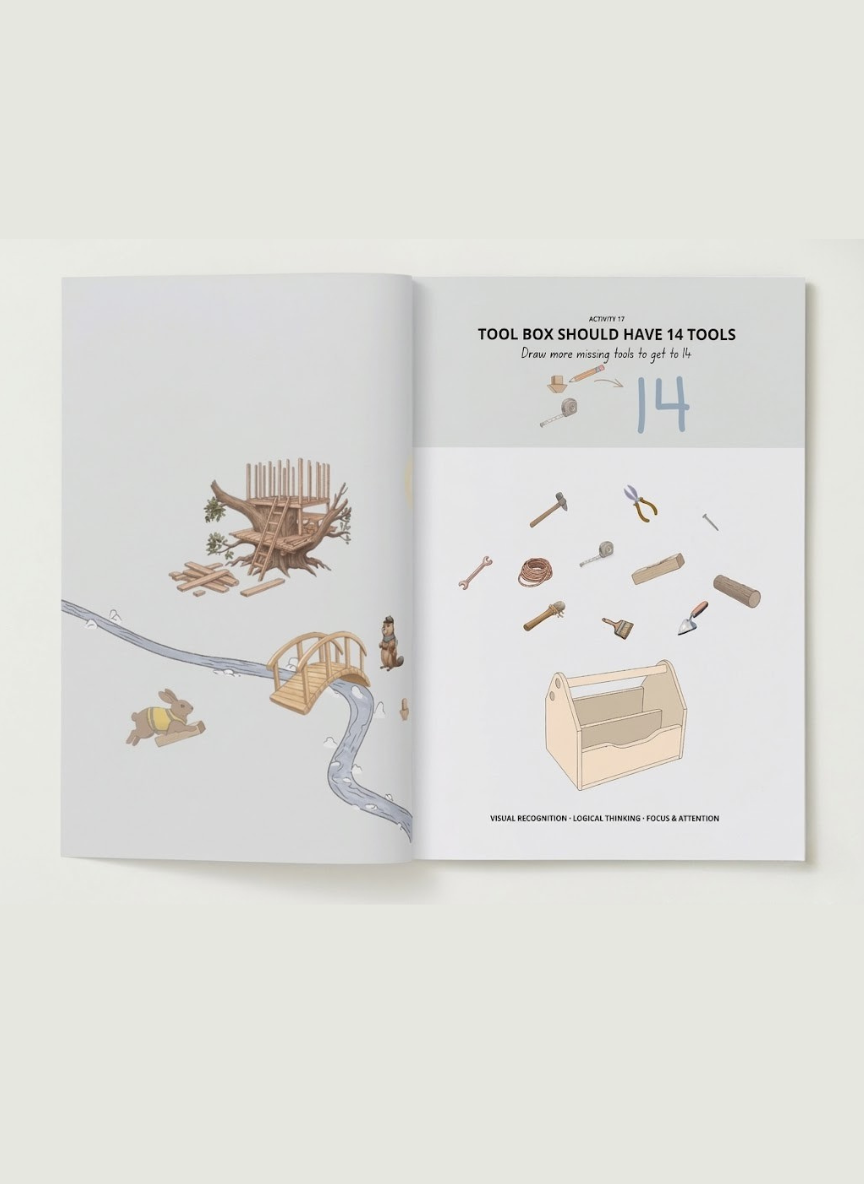
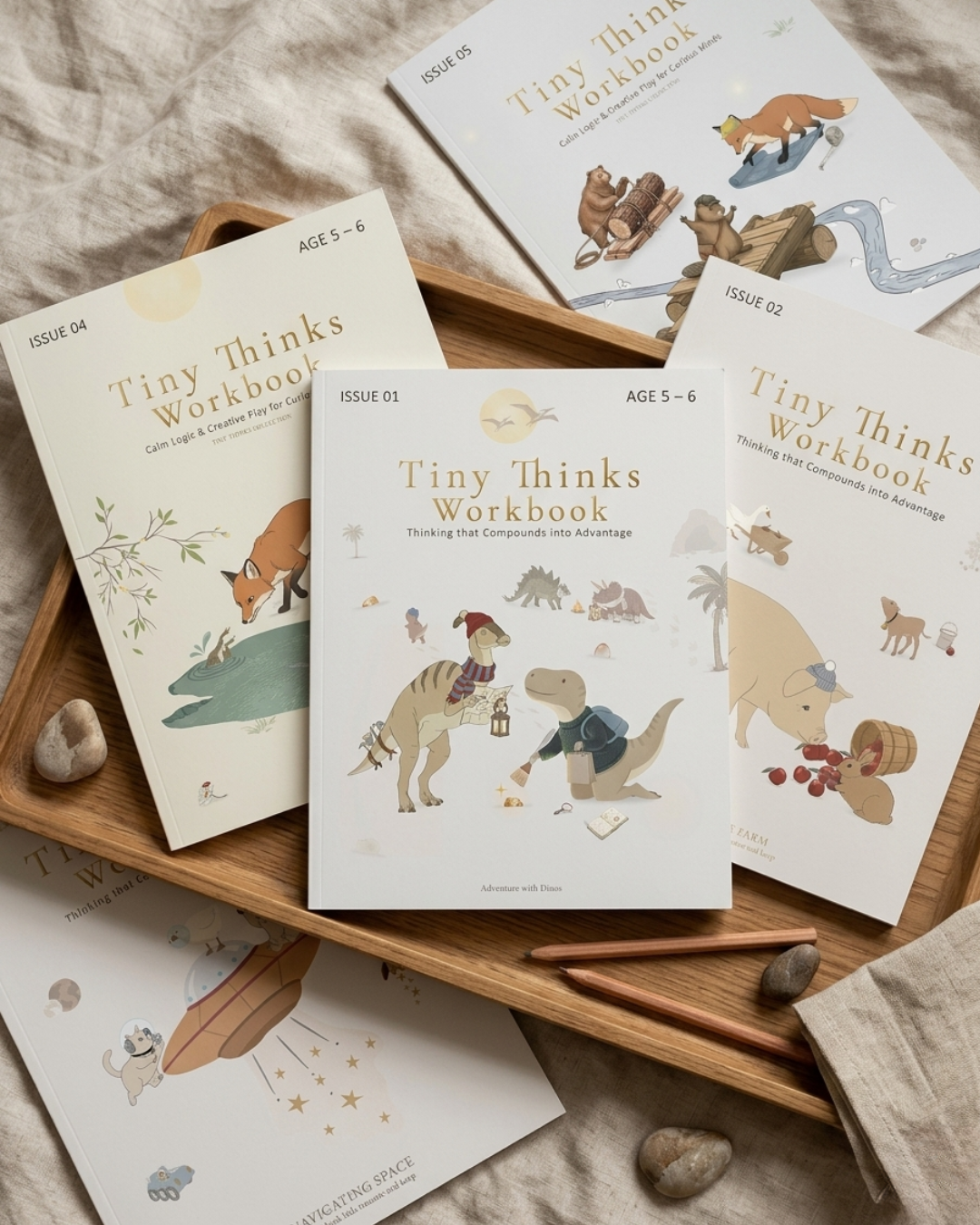
- Working memory is 1 of the 10 capabilities that Pre-Seven Learning Method builds: short, screen-free workbooks matched to your child’s age between 3 and 7, a few calm minutes at a time. Start free with the Calm Pack.
Why does my child forget what I just asked?
When a child forgets an instruction almost as soon as you give it, it is usually because their working memory has run out of room, not because they are ignoring you. Young children can only hold a small amount in mind at once, so by the time they have walked to the next room, the instruction has often slipped away.
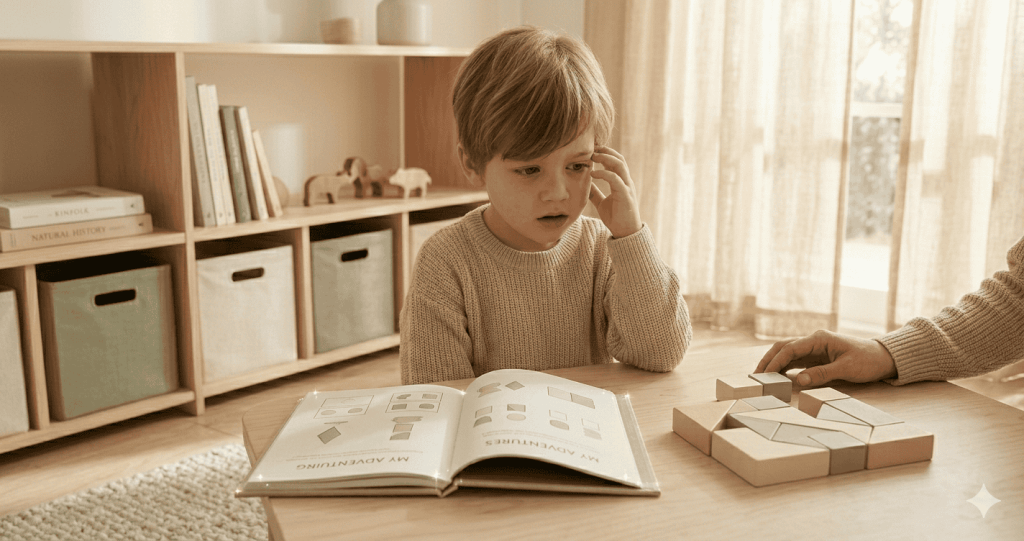
If you have sent your child upstairs for socks and watched them come back empty-handed, or asked them to “put your shoes on, get your bag, and wait by the door” and seen them do the first thing and forget the rest, you know the feeling. It looks like not listening. Far more often, they listened, and the words simply did not stay.
Researchers have noted that children with weaker working memory are frequently misread as inattentive or unmotivated, when what is really happening is that they are overloaded (Alloway and colleagues, 2008). The instruction was not too boring. It was too long to hold.
What is working memory?
Working memory is the ability to hold information in mind for a short time while you use it. It is the mental workspace a child uses to keep a few numbers in their head while adding them, to hold the start of a sentence while finishing it, or to remember step two of a task while doing step one.
It has a limited capacity, and in young children that capacity is small and still growing. This is why a three-step instruction that feels simple to an adult can quietly overwhelm a four-year-old.
Is it normal for my child to forget instructions?
Yes. Forgetting instructions is normal and expected in early childhood, because working memory is still developing and holds only a little at a time. A young child who cannot follow a string of instructions is usually right on track, not careless.
It is worth gentle attention, not worry. If forgetfulness is severe, persistent, and clearly out of step with other children their age, it is reasonable to mention it to your pediatrician. For most children, though, a short memory for instructions is simply part of being young.
What does forgetting instructions actually point to?
Forgetting instructions points to working memory still under construction, not to a careless or difficult child. Working memory sits alongside attention and self-control in what researchers call executive function, the brain’s set of self-management skills. It is one of the ten thinking capabilities the Pre-Seven Learning Method is built around.
Seeing the behavior this way changes the response. “My child never listens” leads to frustration. “My child’s working memory is still small” leads to shorter instructions and small practice, which actually help.
Does working memory matter for learning?
It matters a great deal, often more than raw intelligence. In a study that followed children from age 5 to age 11, working memory at the start of school predicted later reading and math more accurately than IQ did, and it was not simply a stand-in for IQ but a separate skill with its own link to learning (Alloway and Alloway, 2010).
That is the quiet reason it is worth supporting early. Working memory is the capability underneath following instructions, reasoning through a problem, and holding a plan, and a child uses it in school and in whatever future they grow into.
Can I improve my child’s working memory?
Up to a point, and not in the way the brain-training apps promise. Working memory has a limited capacity that grows naturally with age, and a large meta-analysis found that working memory training programs improve the trained tasks themselves but do not reliably transfer to broader skills like reading, math, or general intelligence (Melby-Lervåg, Redick and Hulme, 2016). So the goal is not to inflate your child’s working memory.
What does help is two things. First, reduce the load, so your child can succeed with the working memory they already have. Second, give that working memory small, regular practice, which builds comfort, useful habits like repeating and chunking, and the everyday experience of holding a thought and following it through. That is supportive practice, not a promise to make a child smarter. The conditions that suit it, small, calm, repeated, and sized to the child, are the ones the Pre-Seven Learning Method is designed around, or you can start with the free Calm Pack.
What can I do to help my child remember?
The most useful changes are small and practical:
- Shorten the instruction. One step at a time holds far better than three in a row.
- Make it concrete. Point, show, or leave a simple visual reminder rather than relying on words alone.
- Ask them to say it back. Repeating the instruction out loud helps it stay.
- Chunk it. “Shoes, then bag” is easier to hold than a long sentence.
- Pause and check in. A quick “what is next?” catches the thread before it is lost.
- Practise in play. Simple memory and sequence games give working memory a gentle workout without pressure.
How do you build working memory before age 7?
Through small, regular practice at holding and using a little information, sized for the child and stretched slowly. A three-year-old is working on holding one thing in mind. A six-year-old is working on holding a short sequence and acting on it in order. The capability grows in stages, which is why the practice should too.
The thing every parent quietly hopes for is not a child who can be nagged into remembering. It is the child who hears the plan once, holds it, and carries it out on their own, without being walked through every step. That kind of follow-through is built, in small moments, before seven. You can explore the workbooks by stage, or start free with the Calm Pack.
Frequently asked questions
Why does my child forget what I just asked? Usually because their working memory, the small mental space that holds information briefly, has run out of room. Young children can only hold a little at once, so longer instructions slip away before they can act on them. It is rarely about not listening.
Is it normal for my child to forget instructions? Yes. Working memory is still developing in early childhood and holds only a small amount, so forgetting multi-step instructions is normal and expected rather than a sign of carelessness.
What is working memory in simple terms? It is the mental workspace where a child holds information for a short time while using it, like keeping a two-step instruction in mind long enough to do both steps.
Does working memory affect learning? Yes, strongly. A long-term study found working memory at age 5 predicted reading and math at age 11 better than IQ did (Alloway and Alloway, 2010). It underlies following instructions, reasoning, and holding a plan.
Can working memory be improved in children? It can be supported, but not inflated. Training programs improve the trained tasks without reliably transferring to broader skills (Melby-Lervåg, Redick and Hulme, 2016), so the useful approach is reducing the load and giving working memory small, regular practice.
How can I help my child remember instructions? Keep instructions short and one step at a time, make them concrete or visual, ask your child to repeat them back, and practise with simple memory games. Reducing the load helps more than repeating yourself louder.
Is my child’s forgetfulness a sign of a problem? Usually not. It is common and developmental. If it is severe, persistent, and clearly different from other children their age, it is reasonable to raise it with your pediatrician.
At what age does working memory improve? Working memory grows steadily across childhood, with clear gains through the early years. Small, stage-matched practice supports it along the way.
Start building working memory
A short memory for instructions is not a flaw in your child. It is a capability that is still growing, and one you can support in small, everyday ways. The Pre-Seven Learning Method gives you a phased, screen-free way to give working memory gentle, regular practice at home. Start with the free Calm Pack, or explore the workbooks by stage.