
- Key Takeaways
- The Unseen Struggle
- What Is Working Memory?
- Beyond Flashcards
- Effective Working Memory Activities
- Create A Memory-Boosting Routine
- The Calm Play Solution
- Conclusion
- Frequently Asked Questions
- What is working memory and why is it important for kids?
- How can I tell if my child has working memory difficulties?
- Are there games that help improve working memory in children?
- How often should kids do working memory activities?
- Can working memory be improved at home?
- Do digital apps help with working memory?
- What is a calm play solution for working memory?
Key Takeaways
- Working memory woes can throw havoc on daily routines, lead to academic slide, and impact kids’ friendships and self-esteem.
- Building strong working memory is not just about memorization. It underpins reasoning, problem solving, and meaningful learning in everyday life.
- Plays, hands-on activities like storytelling, sensory play, and movement games actively strengthen memory skills without overburdening kids.
- By weaning your child off of screens and into more interactive, screenless activities, you can boost her attention, focus, and memory development.
- Brief, regimented workouts with frequent breaks make building memory achievable and keep children invested without being overwhelmed.
- Promoting grit and growth instead of polish builds kids’ self-assurance, tenacity, and learning longevity.
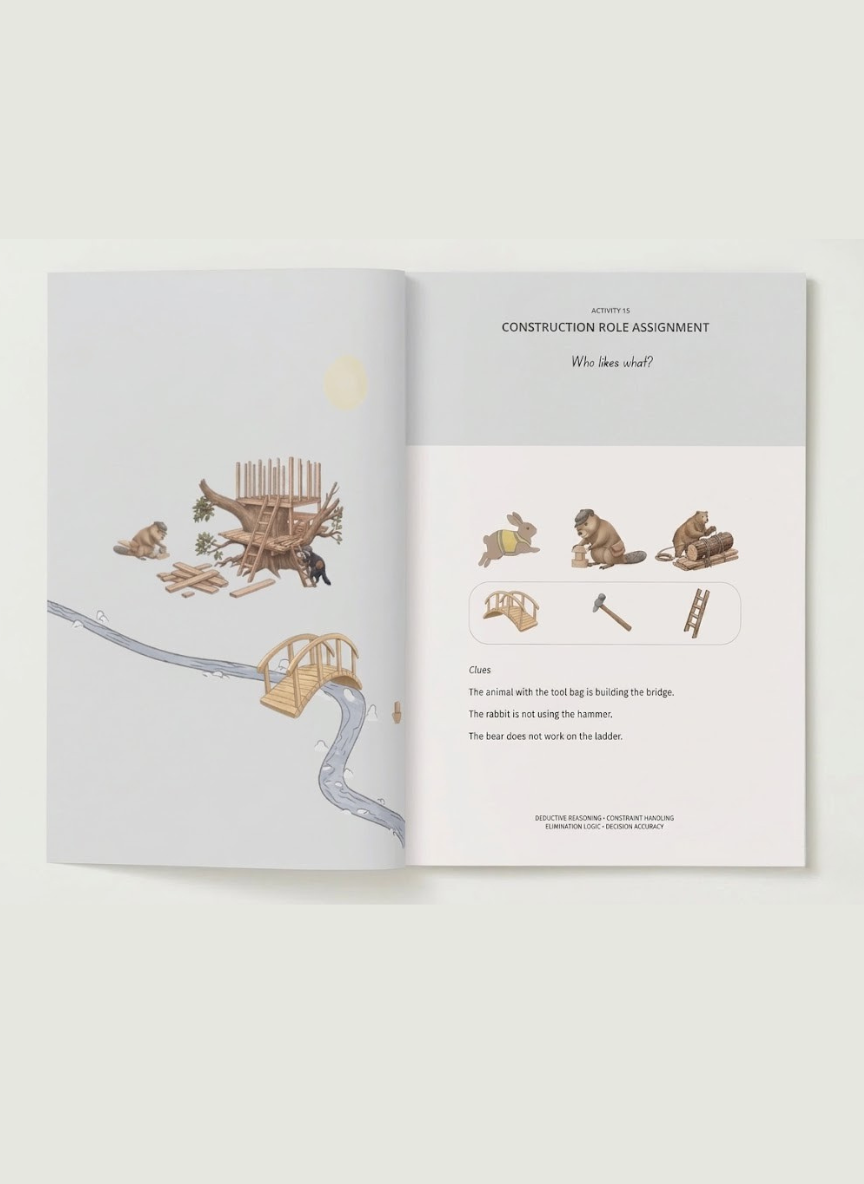
Working memory activities for kids include any structured experiences that assist children in maintaining and applying information in short bursts, fueling skills such as multi-step directions and tasks. Tiny Thinks’ Free Pack includes fun printable activities that help strengthen working memory skills.
In early childhood, working memory is the foundation for sequencing, focus, and solo play. Calm, low-stimulation activities, such as matching, simple pattern games, or step-by-step puzzles, reduce overload and let kids develop mental stamina gradually.
The Unseen Struggle
Working memory is the unsung hero of a child’s capacity to take in directions, retain information, and execute even the most basic daily tasks. When working memory is frail, days get crafted by its difficulties, sometimes in surprising ways to both kids and parents. This struggle is unseen, yet it generates tension at home, in the classroom, and on the playground.
Every friction point — a stumbled morning routine, a forgotten instruction — comes back to the brain’s ability to hold and use information at the right moment.
Daily Frustrations
Most parents recognize the symptoms before they label them. A kid forgets where they put their backpack, requests directions one more time, or can’t recall what comes after teeth brushing. These aren’t laziness or disobedience; they’re often signs that working memory is being stretched beyond what’s comfortable right now.feeble” to “developing” — so it reads: “Children with developing working memory tend to reread directions” , lose their place during multi-step tasks, or drift away from activities because the thread of ‘what’s next’ slides from their consciousness. Even kids themselves sense these holes.Phrases like ‘I forget what you told me’ or ‘Wait, what was I supposed to do?’ are common.
They can spark frustration or even shutdown, particularly during stress-inducing times such as getting out the door or off screens.
The more reminders, the more pressure a child experiences, which in turn further weakens attention and memory. Attention control serves as the bedrock; without it, the smartest of routines fall apart.This is why working memory isn’t just a school skill — it’s the quiet infrastructure behind how a child moves through their day. A child who can hold two steps in mind while putting on shoes is exercising the same capacity they’ll later use to follow a classroom instruction or work through a multi-step problem.
School Troubles
- Homework completion depends on keeping both instructions and content in mind.
- Kids may forget what the assignment was halfway through.
- Holding on to classroom material becomes a battle, particularly with rapid-fire lectures.
- Test-taking is harder. Recalling steps, facts, or procedures under pressure is demanding.
These working memory strugglers will read and re-read passages and forget a direction before finishing the question. Mnemonics such as ‘Roy G. Biv’ for the colors of the rainbow can assist too, only if a child’s memory apparatus is nurtured and serene.
Things like glancing at a picture for a minute and then writing down what you remember construct memory muscles without inflaming the senses
Social Hurdles
|
Social Skill |
Memory Challenge |
Impact on Relationships |
|---|---|---|
|
Remembering Names |
Forgetting new friends’ names |
Trouble connecting |
|
Following Conversations |
Losing track in group talk |
Feeling left out |
|
Recalling Details |
Forgetting what others shared |
Missed opportunities for bonding |
After group discussions, name remembering, and detail keeping, memory skills are important. When these fail, kids can appear inattentive and bored, but really they’re overwhelmed.
Card games such as Uno, Go Fish, and Crazy 8’s engender these memory abilities in a fun, non-academic manner. With better memory, they can participate in group play, exchange tales, and feel a part of the bunch.
That’s what Tiny Thinks™ is here for. The Free Calm Pack provides calm, paced activities that silently develop working memory, attention, and sequencing without noise or stress.
What Is Working Memory?

Working memory is our brain’s version of a scratchpad — the capacity to hold, manipulate and use information from the recent past. It’s not just memorization; it’s the cognitive workbench where kids synthesize what they’ve just experienced with their prior knowledge, determining their next move. This capacity becomes the basis for acquiring new skills, solving problems, and making decisions in daily life.
A good working memory allows kids to better follow multi-step instructions, organize their thoughts, and adapt to new situations. How to improve focus in kids explores how attention and working memory develop together in the early years.
1. The Brain’s Notepad
Working memory is like a mental scratchpad — a temporary storage unit for the brain to scribble ideas, directions, or pictures and then utilize them or throw them away. For instance, a kid may overhear ‘Shoes on, backpack in hand, meet me at the door.’ Each piece needs to be maintained in working memory and then executed in turn.
This system relies on two main elements: the phonological loop, which stores sounds and spoken words like remembering a phone number, and the visuospatial sketchpad, which holds images or spatial information such as recalling the arrangement of blocks. Both visual and auditory memory play big roles.
When a kid looks at a puzzle, their visuospatial sketchpad keeps in mind where pieces might go. When listening to a story, their phonological loop records what is going on. The central executive is like a manager, determining what to maintain, what to discard, and how to arrange it. When working memory works well, kids can take in directions, remember steps, and adjust on the fly with less exasperation.
2. Beyond Rote Memory
Rote memorization involves just repeating information until it sticks. Working memory allows children to not just hold information but to do something active with it—to restructure it and transform it. This doesn’t just involve recalling that “2 plus 3 equals 5,” but keeping those digits in mind while solving a word problem.
It’s the difference between parroting information and applying information to grasp the big picture. Critical thinking and reasoning such as comparing, categorizing, and predicting rely on robust working memory. When a kid encounters a problem, their working memory enables them to consider alternatives, experiment with solutions, and refine their strategy.
This process is crucial for agile, autonomous cognition.
3. The Learning Engine
Working memory fuels the learning process by assisting kids in linking new concepts to prior knowledge. In a classroom, this could manifest in hearing a story, then remembering information well enough to answer questions or make inferences. It is this combination of the phonological loop, visuospatial sketchpad, and central executive that is the foundation of academic success.
These skills are closely connected to executive functioning, which are the brain processes that allow you to plan, organize, and monitor yourself. When working memory is robust, kids readily adhere to multi-step directions, complete assignments, and bounce back from interruptions.
This makes learning easier and less painful.The Pre-Seven Learning Method is built around this window — the years before formal school when working memory, attention, and persistence are first taking shape through play and repetition, not instruction.
4. Why It Matters
Robust working memory has long-term advantages. Children with strong working memory sail through daily routines, regulate emotions, and resolve problems more effortlessly. Better memory skills fuel better cognition, helping you learn and apply new information.
These skills breed emotional intelligence, as kids remember how previous interactions went and adapt their reactions. As a result of its long-term impact, strong working memory promotes lifelong learning and flexibility. Kids can deal with transition, experiment, and remain inquisitive.
For families looking to build working memory through everyday quiet moments, the Free Calm Pack is an easy, no-cost place to start.
No guilt or stress, simply an effective device to allow your kid’s mind to reset and turn on.
Beyond Flashcards
Old fashioned flashcards have been the default for memory work. They’re known, foreseeable, and convenient to grab at home. For young children, particularly those ages 3–7, flashcards frequently provide repetition at the cost of real engagement.
While rote memorization will build quick short-term recall, it seldom builds the deeper flexible working memory required for everyday thinking. The majority of parents observe that kids can spit back a card set but choke when they’re asked to remember or apply it in the wild.Change to: Many parents notice that children can recall a card set but struggle to apply the same information in a new context.
This is not a failure of effort or intelligence; it’s a failure in tool selection caused by a mismatch between the tool and the developmental stage.What works better at this age is repetition that doesn’t feel like repetition — the same game played again because it was satisfying, the same sequence revisited because it felt achievable. That’s how working memory actually builds in children under seven.
The Play Paradox
Play is the native tongue of early childhood. They play and in playing, children test, repeat, and stretch their memory powers without the burden of having to be “right” or “wrong.” Whether inventing new rules for a block game or retelling a story in their own words, your kid is flexing his working memory.
Organized games such as “Simon Says,” in which memorizing sequential directions is important, provide mild-pitch scaffolding for these abilities. At the same time, unstructured play—imaginative stories, pretend shops, or building forts—allows memory skills to develop naturally through storytelling and autonomy.
There’s a fine line. Too much structure and it will feel like a test, too little and you miss the chance to grow. Interspersing simple schedules, like repeated prompts for daily activities or memory matching games, with room for unstructured fun introduces a cadence most kids can adjust to.
Parents can weave playful learning into daily routines: ask a child to recall the steps to get ready in the morning or invent a rhyme at the dinner table to remember tomorrow’s plans. Even simple visualization, such as imagining a shopping list before you enter the market, can enhance retention while keeping it breezy.
The Screen Trap
Screens aren’t the villain. They are a fact of life in most households and can be helpful in small doses. The true concern lies with rapid, autoplay content that shards attention and inundates working memory.
Educational apps promise learning but provide superficial engagement rather than deep, metacognitive effort. Young children exposed to frequent screen input might struggle to calm down, recall multi-step directions or play independently.
Hands-on activities, such as drawing, building, or even simple sequence games like “What’s Missing?” restore regulation. It’s these activities that involve multiple senses that help memory stick. Whether you’re highlighting or underlining key story details, inventing silly acronyms together, or using mnemonics like easy rhymes, all convert memory work into something tactile and personal.
Concentrated on a singular activity, absent of battling screen noise, is when genuine working memory development occurs.
Effective Working Memory Activities

Working memory is the mind’s scratchpad, assisting kids as they keep track of instructions, juggle solutions, and plan ideas. Kids between the ages of 3 to 7 years old need working memory to remember multi-step directions, recall stories, or navigate their daily routines. When working memory is robust, daily life flows better with transitions that are less frazzling, assignments completed without prompting, and information absorbed more easily.
The most effective working memory activities are quiet, organized, and replicable, crafted to nestle into actual family routines without creating sensory overload.Educators looking to support working memory in group settings can find structured resources at Tiny Thinks for Educators.None of these need to feel like practice. The child who replays the same matching game three afternoons in a row isn’t being repetitive — they’re building the mental stamina that later shows up as the ability to sit with a hard problem rather than giving up.
Sensory Play
Hands-on activities support memory in a concrete ways When a child kneads dough, sorts smooth stones, or matches textured cards, they’re not just playing—they’re wiring new pathways that support attention and recall. Sensory bins with rice, beans, or fabric squares encourage return digging. Memory matching with objects under cloth or your child tracing letters in sand or salt trays are effective activities.
These active tasks reduce the speed, providing the brain time to concentrate and commit to memory. Sensory play is most effective when visually tranquil and limited in breadth. Three or four things, not fifteen. One bin, not a tableful. This prevents overstimulation and encourages independent initiation.
Children often return to these simple setups on their own, building memory through repeated, hands-on engagement.Even the motor activity of holding a crayon or pencil, tracing circles and copying patterns, helps ground information in working memory, far more than screen-tapping or video-viewing.
Storytelling Games
Storytelling is a mild working memory exercise. When children retell a story, they keep sequences, details, and characters in mind. Retelling can be as straightforward as recalling what happened in a beloved picture book or as inventive as improvising a story from a set of image cards. Things like picture cards or drawn storyboards offer some structure, but not too much.
Imagination helps children ground new material. Try a “chain story” game: each person adds a sentence, and the child repeats the story from the beginning each time. Guided imagery and mnemonics, converting information into easy to remember rhymes or images, can help information linger.
These games reward concentration and memory, not rapid-fire or newness, cultivating faith in your memory abilities.
Movement Games
Physical activity bolsters memory by bridging body and mind. Games such as “Simon Says,” where children have to recall and execute a series of commands, put working memory in motion. Try a simple circuit: hop three times, touch your toes, then clap. See if your child can remember and perform the steps in order, then reverse them.
Memory games on the move can become family traditions! Even age-old memory card games are more interesting when played on the floor, with big cards and requiring kids to get up and hunt. Coordination and memory are strengthened simultaneously, free of screens and complex regulations.
Strategy Games
Strategy games — matching pairs, simple board games, or puzzles — build planning, attention, and memory. These games involve keeping rules in mind, keeping track of what’s been played, and planning ahead. Play games like “Memory” or “Go Fish” that get your child actively practicing recall and using visual clues.
Step-based board games, such as rolling the dice and moving the piece forward or following the color pattern, bolster sequencing and problem solving. You guessed it: practice. Have your child talk through moves, what worked, and practice strategies.
Having your kids take notes or make simple diagrams can assist them in recalling game rules or strategies, making working memory a natural by-product of repetition and reflection.
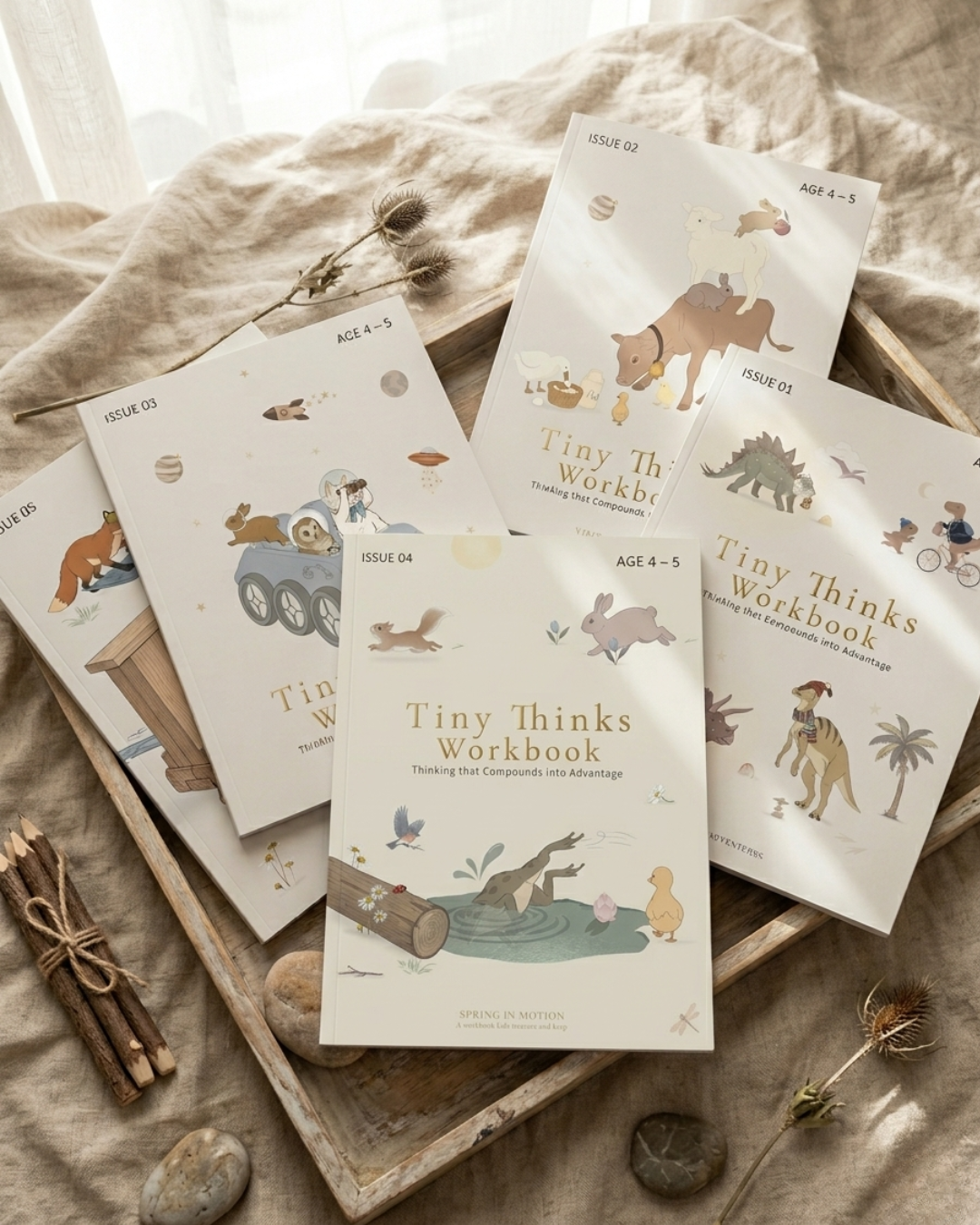
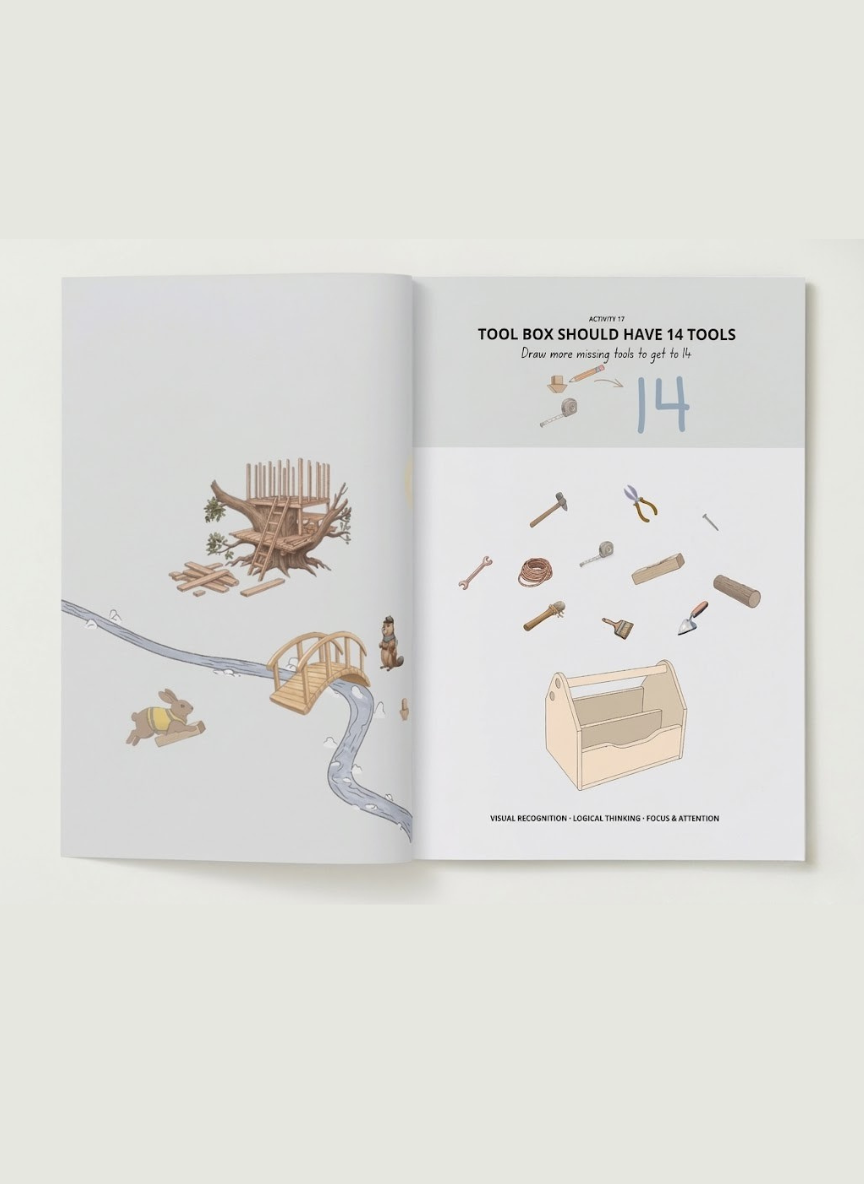
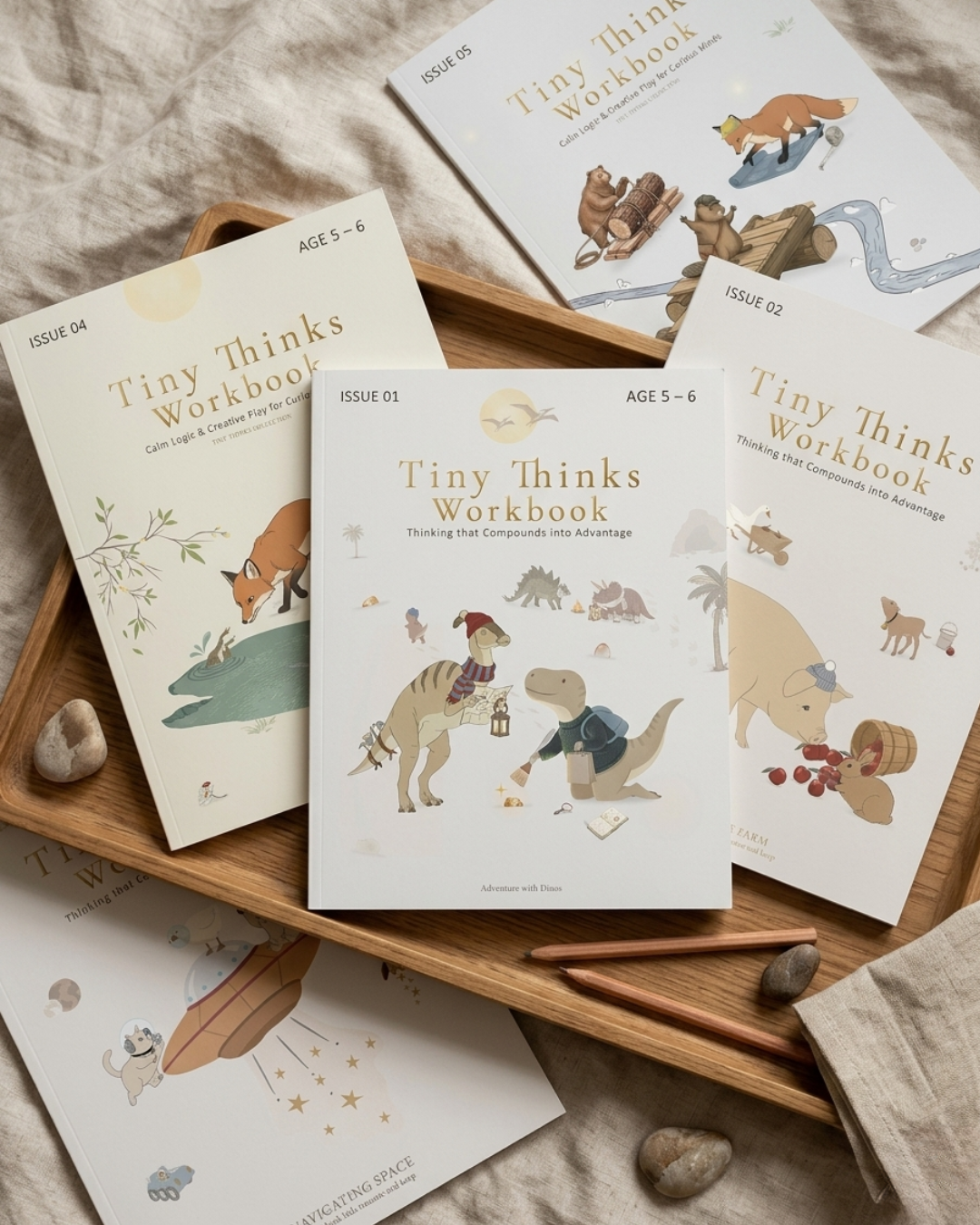
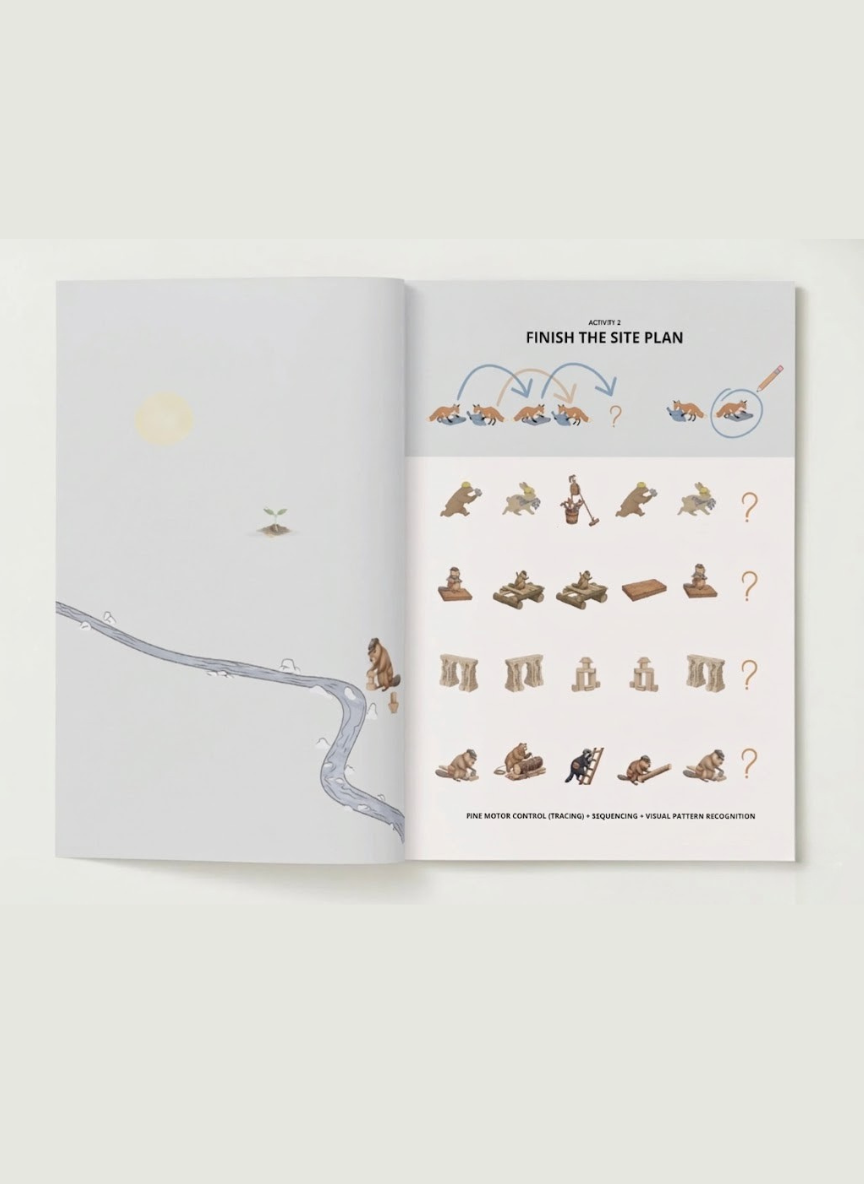
For families building these habits at home, age-based Tiny Thinks Workbooks offer calm, sequenced thinking practice — the kind children return to on their own.
Create A Memory-Boosting Routine
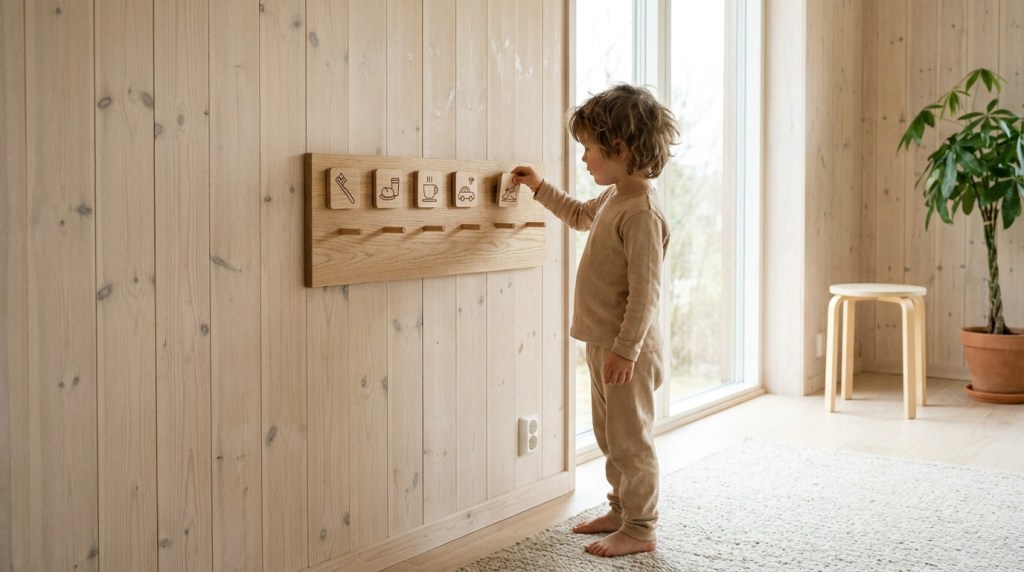
A consistent, memory-boosting routine is not about passing time. It’s about creating a soothing, predictable pattern that assists your child in growing working memory, attention, and sequencing, particularly at frantic times when concentration crumbles. Structure is the heart of this work.Children who have a predictable thinking rhythm — even just ten minutes after school with the same kind of activity — tend to settle into focused tasks more readily over time. It’s not the complexity of the activity that matters; it’s the consistency.
It helps regulate energy, keep frustration low, and allow children to invest just enough effort without feeling overwhelmed.
About: Craft A Memory-Boosting Habit
Memory thrives in consistent, brief spurts, repeated each day, with slight stretch and obvious, manageable stages.
- Anchor memory boosting activities to a particular time of day to keep the routine predictable.
- Alternate between verbal and visual tasks: mix stories, gesture games, and picture matching.
- Use short, focused sessions (10–15 minutes) to avoid overload.
- Break tasks into small, manageable steps.
- Incorporate movement and gestures to support memory.
- Leverage familiar games such as Crazy Eights, Go Fish, and Uno for logic and recall.
- Celebrate effort, not just right answers.
- Wherever possible, let kids choose the order or type of activity.
The 15-Minute Rule
Short, focused memory work, no more than fifteen minutes, keeps children engaged without tipping into overwhelm. The brain’s working memory system is limited, particularly for young children.
By making sessions short, you allow the phonological loop and visuospatial sketchpad time to process small, digestible chunks of information. This is why games like Uno or Go Fish work. They require remembering simple rules, tracking cards, and sequencing moves, all within a low-pressure, time-limited window.
Breaks are important. Once fifteen minutes have passed, allow the child to move, stretch, or get a drink. This avoids cognitive saturation and allows the central executive to recharge.
Quick memory exercises that fit daily routines include repeating three numbers in reverse order, acting out a story with only gestures, or naming landmarks on a walk and miming each one.
Connect Before You Direct
Memory work begins with connection. Before providing any assignment, plop down next to your kid and watch for a minor—no directives, just presence. Rapport trumps correction.
A child who is seen is more ready to be challenged and less bent on resisting. Active listening in memory work—nodding, eye contact, echoing their words—says SAFE. Emotional connection wires the brain for recall.
When a child feels supported, the central executive system coordinates memory and attention more efficiently. Supportive environments can range from laughing together over a ridiculous mnemonic, such as “Roy G Biv” for rainbow colors, to retelling a story with only gestures as a team.
Try ‘Four Corner Emotion,’ where your child repeats a phrase with shifting emotions to construct emotional and cognitive flexibility.
Celebrate The Effort
Checklist for meaningful, memory-building rewards:
- Sticker Journal: Put a sticker for each time you sit down to work, whether you made it through or not.
- Movement Breaks: Once hard work calls, reward it with a 5-minute dance or yoga stretch.
- Choice Time: Offer an extra five minutes to choose their next memory game.
- Verbal Praise: Name the effort (“You remembered three steps in a row!”).
- Mini-Treasure Box: Let your child pick a small token for consistent participation.
Growth mindset grows from process. Recognize and label grit, not just correct responses. When sincere and targeted, positive reinforcement sustains continued memory skill practice.
Tiny Thinks activities are built for exactly these moments — after school, mealtimes, or waiting rooms — when a child needs to settle and focus. They’re ideal because calm, screen-free alternatives matter most when your attention has already scattered.
The Free Calm Pack is a good starting point — brief, intentional activities children can pick up on their own.
The Calm Play Solution
When play is calm, predictable, and structured for independent starting, children have room to practise working memory without becoming overloaded.
Tiny Thinks slots into real life—after school, during mealtime transitions, bedtime, or travel—when a child needs to calm down and think, not just be amused. Organized play is the name of the game. When play is predictable and visually calm, it leaves room for kids to practice working memory and executive function skills without becoming overloaded.
Games based on matching, sequencing, and pattern recognition—think picture cards, basic tracing, or easy puzzles—allow children to practice maintaining information in working memory and completing a series of actions, all within a controlled environment. These are not flashy, competitive activities. They are about thought, not conquest.
For example, a kid could quietly play for five minutes matching shapes or tracking a visual sequence while working the very same mind muscles they will later employ in reading, math, and self-regulation. That’s because the magic of memory-boosting play lies in its repeatability and structure. Everyday tasks can become working memory exercises: setting the table in a specific order, recalling two or three-step instructions, or sorting objects by size or color.
As we mentioned earlier, parents can model their own thinking out loud—“First, I put down the plate, then the fork, then the cup”—to help kids see how to organize information and action. This type of modeling develops a child’s planning and self-regulation skills, which are the core of robust executive function.
A calm, uncluttered space makes independent starting easierl. Kids thrive when the room is clear, the expectations are well-defined, and your supplies are enticing, but not overwhelming. Tiny Thinks turns ordinary quiet moments into thinking practice children come back to on their own.
Conclusion
Assisting working memory in young children doesn’t have to involve high-pressure drills or complex games. For example,These calm mini projects, such as sequential matching, visual sequencing, and brief memory games, provide just the right level of stimulation without causing overwhelm.Over time, these calm habits build working memory in ways that show up in everyday life — in transitions, in following through, in settling to a task. For most families, the surest wins come from consistent, low-arousal play that’s simple to reproduce.
None of this is about getting ahead academically. It’s about giving children the thinking groundwork — the ability to hold a thought, follow through, and try again — that formal learning later depends on. That foundation is built in ordinary moments, long before school begins. It’s about developing the type of daily habits that foster genuine enduring development in focus and autonomy.Built for the years before seven, when the thinking habits that last — attention, persistence, working it out — first take shape.
Frequently Asked Questions
What is working memory and why is it important for kids?
Working memory is the capacity to retain and utilize information for brief durations. It enables children to follow directions, work through problems, and acquire new skills. Strong working memory supports both school and social achievement.
How can I tell if my child has working memory difficulties?
Red flags such as difficulty following multi-step instructions, recent forgetfulness, or repeated reminders. If these difficulties occur frequently, your little one could benefit from working memory exercises.
Are there games that help improve working memory in children?
Indeed, matching cards, Simon Says, and simple memory games can enhance working memory. These activities are enjoyable and motivate children to exercise their brains in remembering and utilizing information.
How often should kids do working memory activities?
Schedule for brief, daily sessions. Consistency is greater than time. Only 10 to 15 minutes a day can help make working memory stronger over time.
Can working memory be improved at home?
Of course. Parents and caregivers can very simply use activities such as reading together, memory games, and storytelling to reinforce working memory skills in the daily routine.
What is a calm play solution for working memory?
Calm play means quiet, focused activities puzzles, matching games, simple sequencing that let children practise working memory without pressure or overstimulation. These are the kinds of tasks children often return to on their own.
Tiny Thinks Workbooks give children calm, structured thinking practice — the kind they return to on their own in everyday quiet moments at home. Browse age-based workbooks