

- Key Takeaways
- The Screen Time Dilemma
- Rediscover Your World
- Activities for Every Age
- The Power of Community
- Building Screen-Free Habits
- A Global Perspective
- Conclusion
- Frequently Asked Questions
- What are some fun alternatives to screen time for children?
- How can adults reduce their screen time effectively?
- Why is it important to limit screen time?
- What are simple screen-free activities for families?
- How can communities support less screen time?
- Is screen-free time beneficial for teenagers?
- How can I make screen-free habits stick?
Key Takeaways
- Reducing fast, autoplay-driven screen time gives young children more chances to settle, focus, and engage independently.
- Discovering the outdoors, enjoying local sights, and indulging in crafts or exercise provide invigorating alternatives to screen-based pastimes.
- Mindful minutes meditation, gratitude, conversations, develop emotional insight and fortitude.
- Deepening social bonds through family dinners, volunteering, or club participation cultivates belonging and community.
- Learning useful skills and setting up age-appropriate activities keeps all of you inspired and motivates lifelong learning.
- If you set clear family rules for screen-free hours and model device-free behavior, you create healthier habits for everyone in the house.
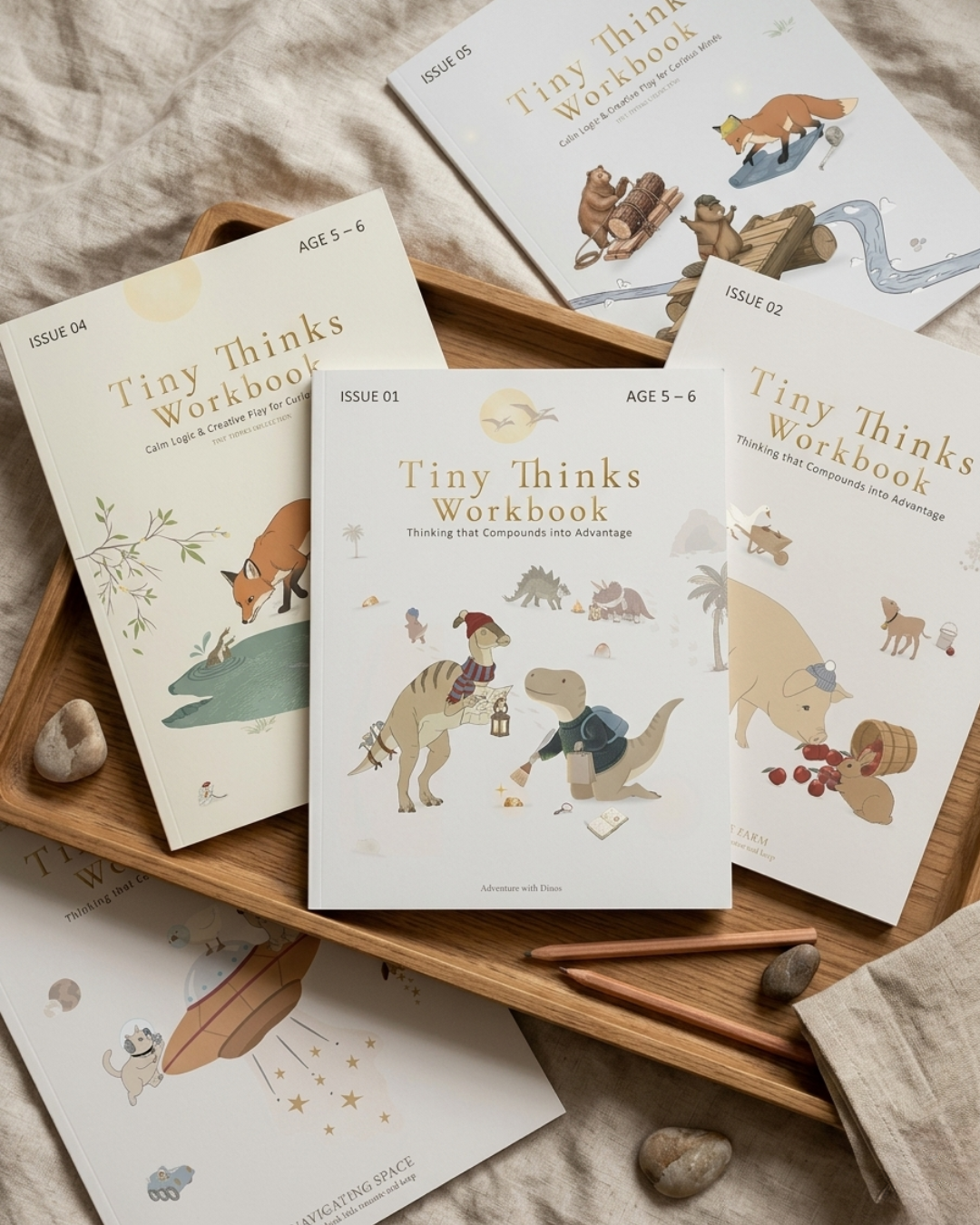
- Tiny Thinks™ offers calm, structured thinking activities families fold into ordinary moments, a natural way to build the attention and reasoning children carry into school
Finding Engaging Activities to Do instead of screen time comes down to discovering alternatives that genuinely hold a child’s attention and help them settle. Many families notice that without a calm, familiar alternative already in place, children cycle through options and discard them quickly.
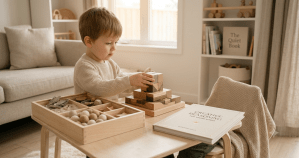
Calm, structured thinking play like simple matching games, tactile sorting, or pattern tracing supports focus and independent engagement. Tiny Thinks provides these kid-directed, low-stim alternatives made for those everyday family pressure points.
The Screen Time Dilemma
Dilemma of screen time Screen time is now a part of everyday life for many families. They plug holes in travel, post-school burnout, waiting rooms and mealtime madness. The real dilemma isn’t whether screens are good or bad; it’s how fast, always-on content fragments young attention and what that means for a child’s ability to settle, focus, and think independently after the screen goes dark.
Parents notice the shift when screens stop helping and start making transitions harder. A child who struggles to initiate a quiet task, or who becomes impatient with anything slower, these are signs worth paying attention to What parents are observing isn’t a screen problem, it’s an attention system that has adapted to fast, reactive input. The shift back to slower activity takes time and repetition. The good news is that children don’t need special programmes or elaborate routines to make that shift. They need familiar, low-stakes activities they can return to on their own.
| Negative Impact | Mental Health | Attention Span/Thinking |
| Depression, anxiety, ADHD | ✔️ | |
| Aggression, bullying | ✔️ | |
| Shorter attention span | ✔️ | |
| Lower frustration tolerance | ✔️ | |
| Weaker executive function | ✔️ | |
| Social avoidance | ✔️ | |
| Academic struggles | ✔️ | ✔️ |
Screen boundaries restore structure. For some families, keeping devices out of bedrooms at night has brought calmer sleep. Others established strict “screens off” schedules before dinners or after school. The aim isn’t to police every minute, but to provide young brains with more predictable, slower rhythms that nurture attention formation and self-regulation.
When parents transition from counting minutes to seeing behavior, such as how quickly a child can settle and how long they can stay with a straightforward task, they get a much better sense of what’s working. Reducing fast, autoplay-driven screen time brings visible benefits: longer stretches of calm, more independent play, and less reactivity when things don’t go as planned.
Kids start to accept more of the world waiting, transitions, and quiet without requiring immediate stimulation. The transition isn’t moral; it’s instead about providing kids with a basis for concentration and adaptable cognition.
Rediscover Your World

Stepping back from screens doesn’t mean rejecting technology, it means giving children more time with slower, more varied input.
It is a way to reset the processing speed, observe one’s surroundings, and reconnect with small, meaningful details.Stepping back from fast, unpredictable content makes room for slower, more varied input the kind that helps children settle and notice more.
1. Creative Pursuits
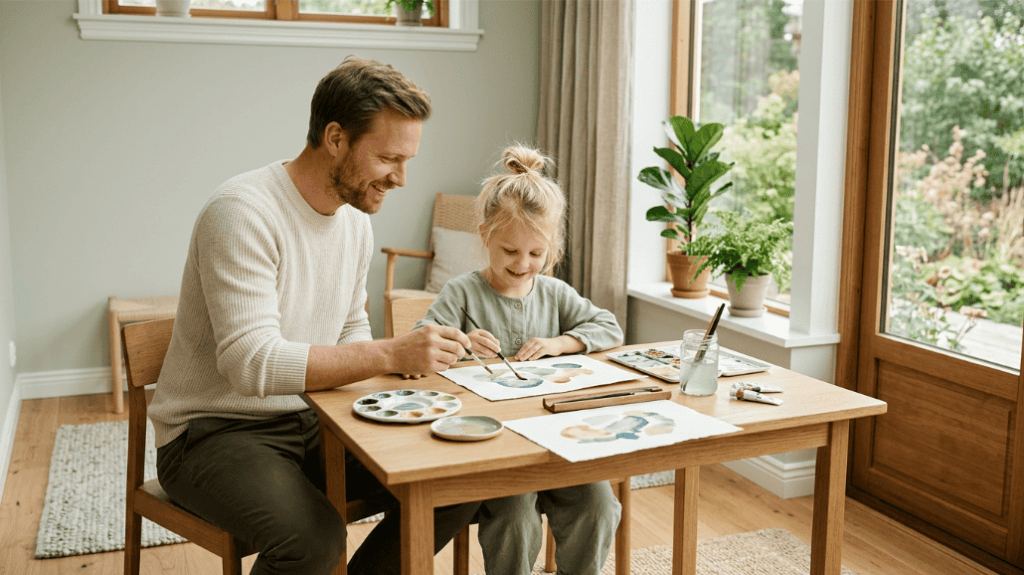
A simple at-home project with recycled boxes or old magazines can turn an ordinary afternoon into something children stay with. Kids can construct, paint, or create with whatever is lying around, no costly materials required.
We’ve seen some families enroll in local art classes or weekend workshops for the structure and skill-building, but creative expression can be as informal as penning doodles at the kitchen table. Whether journaling, story writing, or comics, giving children room to process their thoughts and feelings while parents model their own creative rituals is important.When children see adults engage in something creative sketching, writing a list, folding paper without a screen, it normalises the act of making something. That modelling matters more than most parents expect. Children absorb what they observe adults choosing to do with their attention.
Family game nights with board games, collaborative puzzles, or even a deck of cards redirect the emphasis to collective problem solving and laughter, not passive consumption.
2. Physical Movement
A walk every day, even around the block phone-free, restores kids to their senses. A few yoga stretches on the living room rug, dancing to some soothing music, or an impromptu game of tag in a nearby park can work wonders for your mood and attentiveness.
Some households explore team sports or group fitness for that added social connection, while others establish step challenges to inject fun and routine into moving. A new activity such as biking, swimming, or rock climbing can shatter monotony and develop confidence, particularly if the child has a hand in selecting it.
3. Mindful Moments
Practicing mindfulness as a family can be straightforward: one minute of deep breathing, a gratitude circle before bed, or simply naming sights and sounds during a walk. A few families prepare a quiet corner at home for reflection, with subdued lighting and a couple of treasured mementos.
Others prompt kids to discuss their day’s highs and lows, assisting in the development of emotional intelligence without force. For some, a few minutes of peaceful observation, such as cloud-watching or bird-listening, can reset the nervous system after a hectic day.
4. Social Connections
Regular family meals, even if quick, provide anchor points of connection. Reconnecting, whether it’s with friends over coffee or organizing local playdates, preserves the social bonds screens all too easily damage.
Volunteering together, picking up litter or volunteering at a community event, grounds children in their broader world and imbues them with purpose. Whether it’s a book, music, or gardening club, joining clubs or interest groups broadens your social circles and exposes you to new interests.
5. Practical Skills
Cooking a dinner together, experimenting with a new recipe, or simply preparing vegetables can instill the values of patience and practical math. A garden even a tiny pot draws your kids back into the rhythms of nature and the joys of nurturing life.
Some families go for workshops sewing, woodworking, coding while others begin modestly with fixing stuff around the house or constructing a birdhouse. These projects give children something to see through from start to finish, building patience, confidence, and a sense of completion .
Local Attractions to Visit Instead of Staying Indoors:
- Community parks and playgrounds
- Nature reserves or botanical gardens
- Public libraries
- Children’s museums
- Local art galleries
- Historical landmarks
- Outdoor markets
- Family-friendly hiking trails
For families looking to build these independent thinking habits at home, the Free Calm Pack offers a calm, structured starting point simple activities children can pick up on their own.
Activities for Every Age

Opting for screen-free moments is not a rejection of technology. It is a way to provide kids the kind of input their still-developing brains crave, which is consistent, slow, and kinesthetic. Each age has different needs and capacities, so organizing options that really capture attention is vital.
For little ones, story time is an easy method of developing imagination and focus. Short, picture-led stories let kids expect and track a very basic narrative. Telling the same story each day encourages them to identify the rhythms and remember. For on-the-go parents, a felt board story or mini set of picture cards will do. Little ones can narrate known tales or create new ones with some picture cues. This repetition isn’t dull; it’s how intention develops.The Pre-Seven Learning Method identifies creativity and storytelling alongside sustained attention and working memory as capabilities that develop most readily in these early years through exactly this kind of repeated, low-pressure practice.
A child who hears the same picture-book story three days in a row isn’t bored they’re consolidating. They’re tracking what comes next, noticing the pattern, and experiencing the satisfaction of knowing how it ends. That experience, repeated across dozens of stories and simple activities, is how sustained attention develops long before a child sits in a classroom.
Exercise is one of the most underrated regulators. Brief bursts of exercise, like bike rides, scootering, or walks around the block, help kids burn off fidgety energy and disengage from screens. Even in cramped spaces, a scavenger hunt checklist can systematize the action and thought. For little ones, the list could be ‘find something soft’, ‘find something red’, or ‘find a round rock’.
For older kids, the clues can incorporate basic riddles or sequencing, like ‘collect three leaves, then arrange your shoes from smallest to biggest’. The checklist format offers an independent start and a defined finish. It encourages self-regulation and minimizes power struggles.
Activities for all ages believe it or not, certain children cool down best with tactile, hands-on play. Clay, playdough, kinetic sand and silly putty provide quiet, repetitive input that soothes the nervous system and fosters patience. Creating easy homemade instruments such as stretching rubber bands over an empty tissue box or jars of dried beans allows kids to experiment with cause and effect without requiring continuous adult supervision.
Older kids might prefer origami or friendship bracelets. Such activities encourage sequencing and fine motor skills and allow kids to witness tangible results of their work, which helps build frustration tolerance.
Older kids love the opportunity to be in charge and instruct. Having them teach a little sibling how to fold paper, string beads, or recite a beloved poem provides a sense of control and responsibility. This could be as easy as assisting with a natural materials mandala setting leaves, stones, and twigs in a circle or instructing a story from rote.
Family rituals like learning a poem together or swapping stories at dinner inject predictability into high-friction times like dark winter evenings or after school.
Tiny Thinks turns ordinary quiet moments into thinking practice children come back to on their own .Age-based Tiny Thinks Workbooks build on the same structure, sequencing, pattern recognition, and independent initiation, in a calm, repeatable format.
The Power of Community

Community is a concrete means to offer kids the kind of nourishing, serene experiences that don’t involve screen.Research consistently points to community connection as one of the most reliable supports for children’s wellbeing and attention. Everyone’s stress goes down, their feeling of relatedness goes up, and children and adults feel more secure and supported.
For young kids, particularly those exhibiting signs of attention fracturing or post-screen restlessness, real-world community presents a slow, grounding pulse that digital input can’t.
A well-supported kid is not merely occupied, they’re noticed, accepted, and appreciated. Group activities such as volunteering or participating in local events provide your child with invaluable opportunities to practice patience, turn-taking, and working memory.
These aren’t merely social skills, they’re fundamental components of cognitive control. Being outside with others, be it at a park clean-up or neighborhood fair, provides soft sensory input and a natural rhythm of order. It’s slower, you can see the transitions and you have clear expectations.
This is how attention arises through routine, repeated experience, not through newness or velocity. Community is not a magic formula. It might be as spontaneous as stopping by a farmer’s market and allowing your child to assist in choosing fruit or as consistent as attending library story hour once a month.This is also why community experiences support attention in a way that fast, digital content cannot.
A child waiting their turn at a farmer’s market, helping sort donations, or watching a familiar ritual unfold is having exactly the kind of slow, patterned experience that builds the patience and self-regulation formal learning depends on Even volunteering side-by-side for a local effort, whether it’s sorting donations or planting trees, provides kids with an immediate sense of contributing and belonging. These instances construct sequence (first we do that then this), pattern recognition (this is a familiar face, this we do every day), and self-initiation (I’ll find a job to do, I don’t have to be asked).
Here’s a simple way to see the range of possibilities:
| Community Opportunity | Example | Benefit for Children |
| Local events/festivals | Attend a cultural fair | Builds curiosity, social confidence |
| Farmers’ markets/craft fairs | Pick produce, meet artisans | Supports working memory, patience |
| Volunteering | Park clean-up, donation sorting | Teaches contribution, builds regulation |
| Outdoor group activities | Nature walks, community gardening | Provides calm sensory input, connection |
| Hosting gatherings | Potluck dinner, game night | Fosters belonging, turn-taking skills |
When a kid participates in something bigger than themselves, they understand how what they do counts. They see grown-ups demonstrate teamwork. They observe the lazy, inevitable drift of collective habits.
This is the antithesis of hyper-accelerated, algorithmically mediated stimuli. It’s the type of
Building Screen-Free Habits
Forming good screen-free habits for young kids is about crafting a structure, not imposing a limit. Most families already leverage screens as an effective instrument, particularly in critical moments. The real problem is not screens; it is the frenetic pace and randomness of most digital content. Fast, algorithmically driven content can make it harder for children to settle into slower, self-directed activities afterwards slow, tactile, predictable activities re-establish regulation and construct more robust attention.
As with any habit, a dependable screen-free ritual begins with specificity. Set one or two times a day when screens go down for everyone. Morning is best beginning the day screen-free boosts concentration, stabilizes mood and can minimize physical complaints such as eye strain or restlessness.
A calm, screen-free morning routine helps establish a predictable rhythm for the day . Through these screen-free hours, maintain a list of convenient, satisfying alternatives on hand. Ages 3 to 7, though, flourish on choices that they can initiate and complete on their own. Other families employ a basic visual board or small basket to provide options.
Examples might include:
- Matching and sorting objects by color or pattern
- Simple puzzles or sequencing cards
- Drawing, tracing, or sticker activities
- Listening to audiobooks or quiet music
- Building with blocks or natural materials
- Mindful breathing exercises or gentle stretching
- Looking at books together, or following a picture story
- Practicing gratitude or short prayers
- Assisting with minor tasks, such as watering plants or organizing napkins
- Creating a morning playlist for a predictable, calm start
Demonstrating screen-free behavior provides a model for this habit that’s as valuable as what you’re doing. Children notice when adults engage in device-free moments: reading an actual book, making a to-do list by hand, or setting out clothes for the next day. These behaviors establish a public example and indicate that screens are just another instrument, not the default.
For most, it’s not the initial minutes, but maintaining the habit. Structure assists. A predictable habit, even if for only 20 to 30 minutes, conditions adults and children alike to anticipate and enjoy calm, screen-free time. For some families, light transitions, such as a brief yoga or breathing exercise, signify the beginning and end of these periods.
A Global Perspective
From around the globe, families are contending with the ubiquity of screens from home to schools and public spaces. It’s not just a U.S. Thing. Whether you are in a busy city in Europe, a rural village in Africa, or a suburb in Asia, the question is the same: how do we help children regulate their attention and use their minds well, without defaulting to screens for every pause in the day?
It’s not about judging screens; it’s about providing consistent, practical options that accommodate real lives. So many other cultures have ages-old traditions of screen-free play and learning. In Japan, kids fold origami, which is organized, soothing, and mesmerizing. In Kenya, kids play mancala, a stone counting game on hand-carved boards.
In Scandinavia, the heritage of ‘friluftsliv’ (open-air living) has urban families on daily nature quests come rain or shine. These aren’t activities; they are infrastructure that scaffold focus, identify patterns, and enable self-directed action. They work because they are predictable, tactile, and low-stimulation. They do not need endless adult prompting, kids understand how to begin, what to do next, and when they have achieved success.
Technology has transformed childhoods across the planet. Parents dread summer holidays when free time sometimes bleeds into mindless screen hours. Very strict limits sometimes increase a child’s focus on screens rather than reducing it , consistency and predictable alternatives tend to work better . They’re right that the presence of screens is not the true problem the real problem is the fast and chaotic autoplay-fueled content that shreds young attention and makes settling down more difficult.
All over the world, moms and dads are seeking to find a balance of attention, activity, and stillness. Others inject family-based digital rules such as the “Grandma rule” “only post what you’d show your grandmother” to encourage kids to take a moment and consider before posting. Others focus on building routines that anchor the day: outdoor games, shared meals, quiet reading, and simple crafts.
Travel, even virtual travel, allows children to discover that technology-free existence comes in lots of forms. Whether it is exploring a local park, taking a virtual tour of a museum across the ocean, or learning a traditional game from another culture, it can open up new doors. These experiences demonstrate that regulation is not merely about “doing without” but about discovering captivating, slow experiences that cultivate attention and autonomy.
The families who make the most progress with this are rarely the ones who found the perfect activity or the strictest system. They’re the ones who picked one or two simple, repeatable things and made them consistently available. Children find their way to those things. Given the right conditions, they return to them on their own not because they were told to, but because the activity felt manageable and the experience of finishing it felt good.
The most effective screen-free alternatives aren’t the most novel, they’re the ones children can start on their own and return to across multiple days.
Simple, repeatable activities (matching, sorting, tracing, building) build attention and sequencing more reliably than one-off enrichment activities.
Community, shared meals, and outdoor time provide the slow, predictable input that helps children’s attention systems settle after fast digital content.
Building screen-free habits works best when alternatives are already in place, not introduced at the moment a child is already struggling to settle.
If a child consistently cannot settle into any slower activity despite routine changes, it may be worth discussing with a teacher or child development professional.
Tiny Thinks Workbooks give children calm, structured thinking practice, the kind they return to on their own in everyday quiet moments at home. Browse age-based workbooks.
The most important factor isn’t which activity a child does, it’s whether the activity is already available, already familiar, and simple enough to start alone. Children are far more likely to reach for something they’ve done before and found satisfying than something new that requires adult set-up or explanation.
Conclusion
Finding good alternatives to screen time is less about inventing endless activities and more about making one or two familiar, calm options consistently available .Most families have varying versions of the same pressure points noon-day afternoons, waits, and hectic meals where screens fill the cracks but don’t really calm. Tiny Thinks offers a different path: slow, predictable activities that help children settle, think, and engage independently. Cross-culturally and across routines, the same is true: consistent, tactile stimulation aids little brains to concentrate and reboot. Small nudges like a daily pattern puzzle or easy matching game start to form habits.
Over time, these habits give children a reliable way to settle independently and give parents more breathing room in the hardest parts of the day. Built for the years before seven, when the thinking habits that last attention, persistence, working it out first take shape. For families looking to build these independent thinking habits at home, the Free Calm Pack offers a calm, structured starting point simple activities children can pick up on their own.
Frequently Asked Questions
What are some fun alternatives to screen time for children?
Kids could play outside games, do artsy stuff, read, solve puzzles, and do construction-type things. These activities cultivate creativity, social skills, and physical well-being.
How can adults reduce their screen time effectively?
Adults can attempt hobbies such as cooking, gardening, sports, or reading. Scheduling device-free hours and activities with friends or family decreases screen dependence.
Why is it important to limit screen time?
It helps prevent eye strain, improves sleep, and encourages physical activity. It promotes improved mental health and social bonds.
What are simple screen-free activities for families?
Families could cook together, play board games, take walks, and initiate a communal craft project. They fortify family connections and build memories.
How can communities support less screen time?
Communities can hold group activities such as sports, art classes, or hiking. These offer screen-free chances to socialize and learn.
Is screen-free time beneficial for teenagers?
Yes, screen-free time empowers teens to master new skills, forge friendships and cultivate healthy habits. It reduces stress and increases focus.
How can I make screen-free habits stick?
Begin with small, clear goals and replace screen time with fun alternatives. Bring friends or family in for support and track your progress.