


For graduating families
What comes after Lovevery for ages 3–7?
Lovevery built its name on stage-based developmental play in the baby and toddler years. If you loved that approach and your child is now three to seven, Tiny Thinks is a natural next step: the same stage-by-stage logic, carried forward into focused thinking work on paper.
Why families look for a next step
Lovevery’s appeal is developmental intentionality — the right stimulation at the right stage. As children move past the play-kit years, parents who valued that often want something that keeps the developmental thread going, but suits an older child who can sit, reason and work through a task.
How Tiny Thinks carries the approach forward
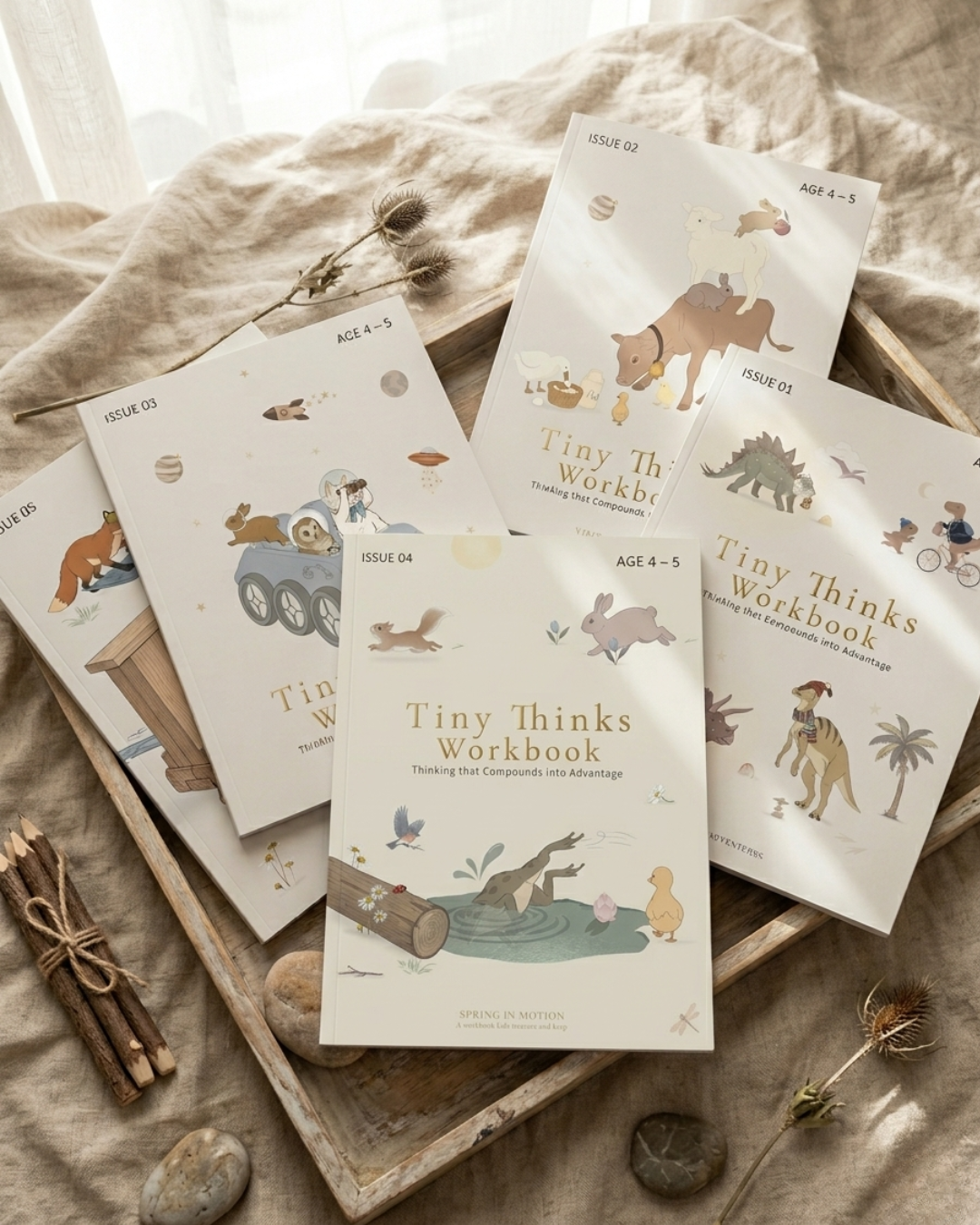
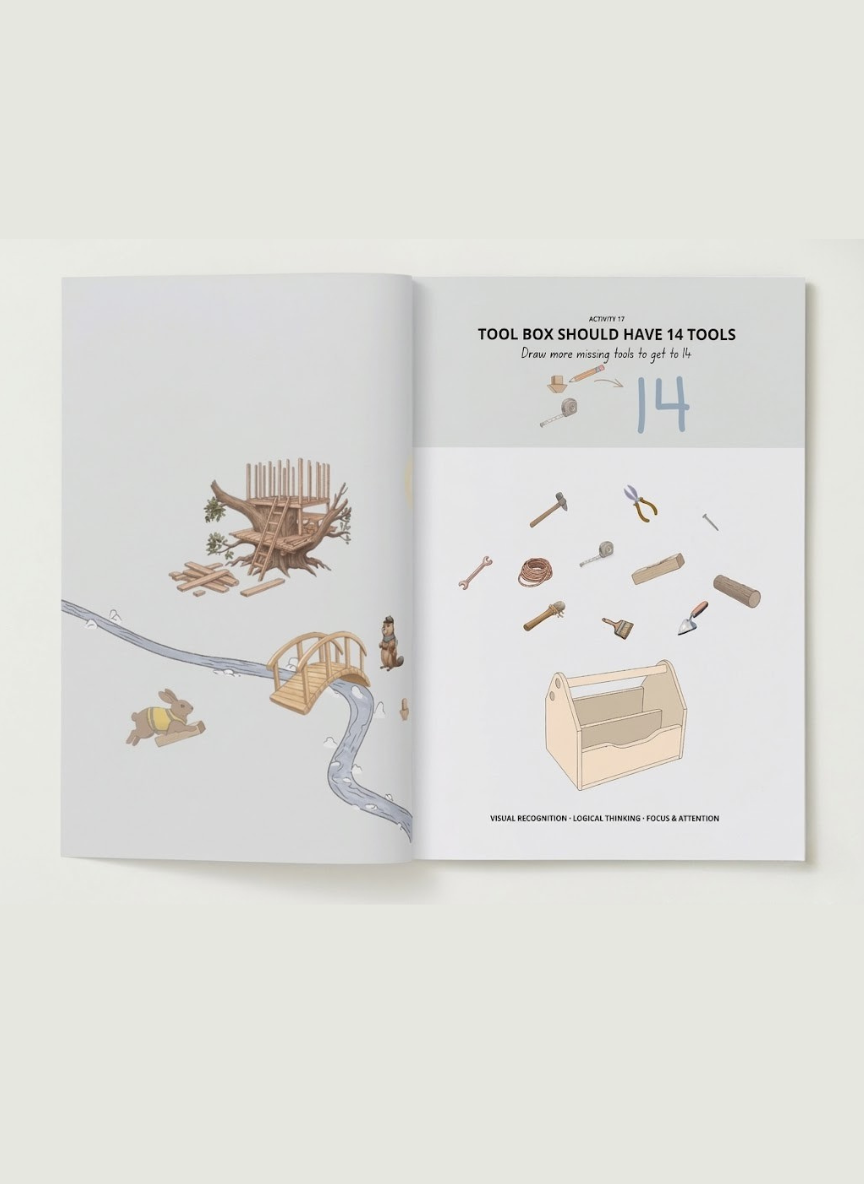
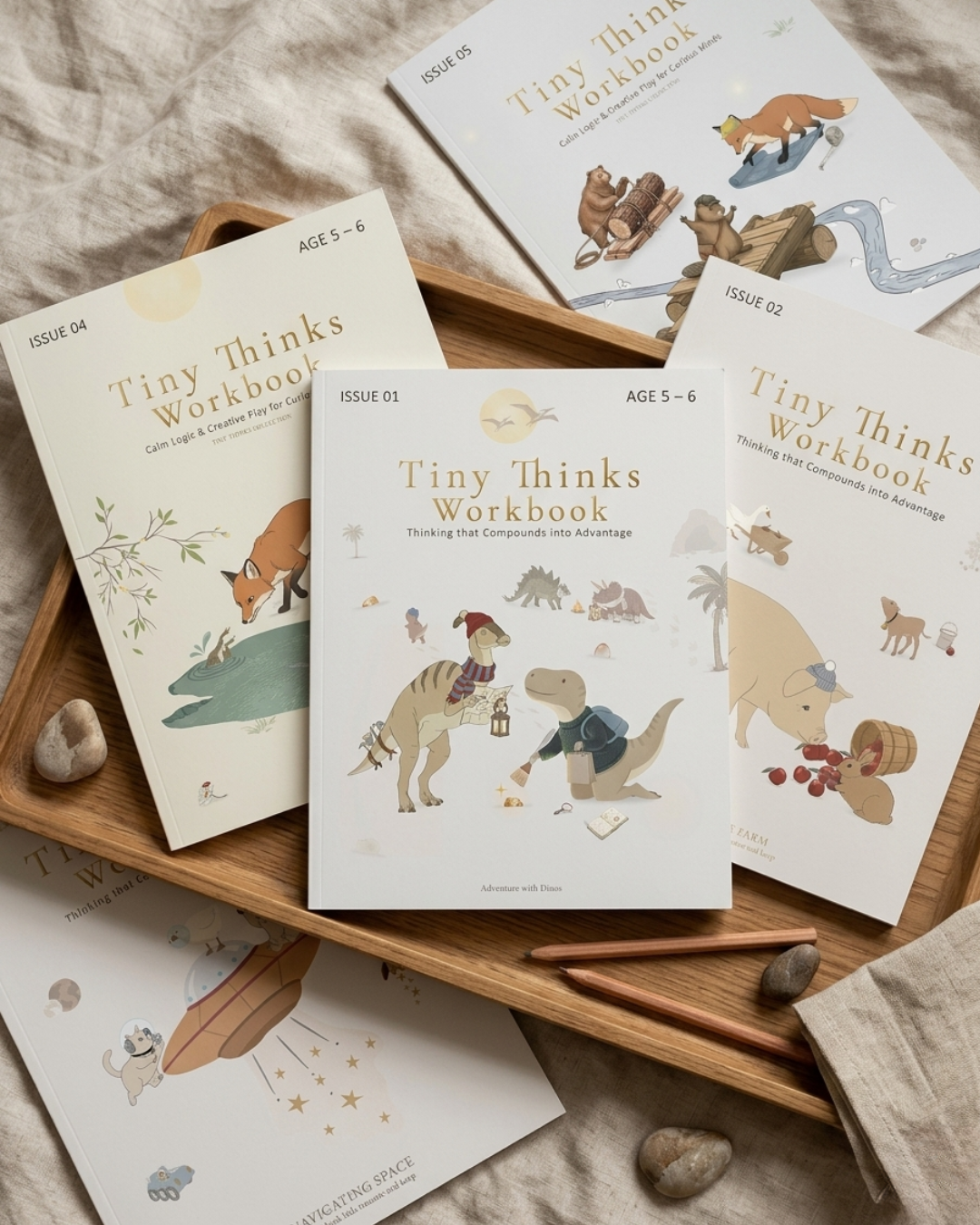
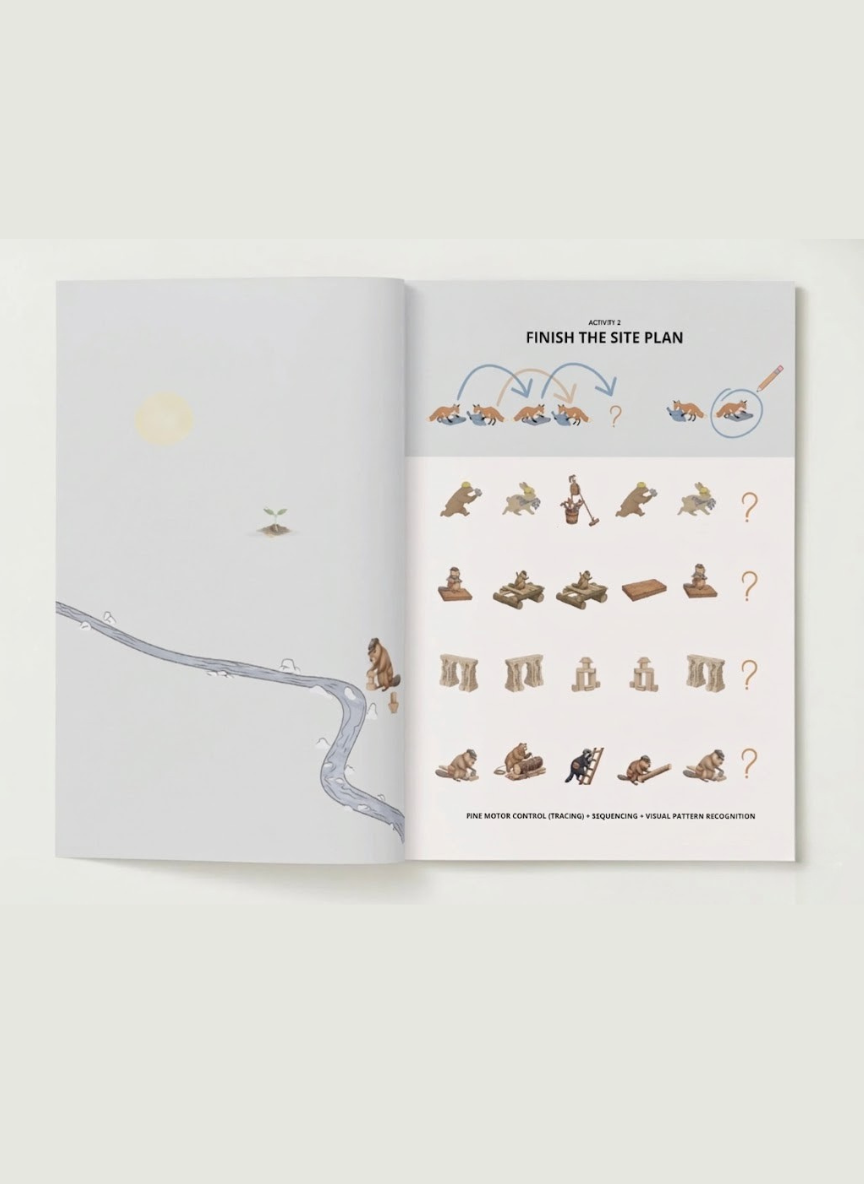
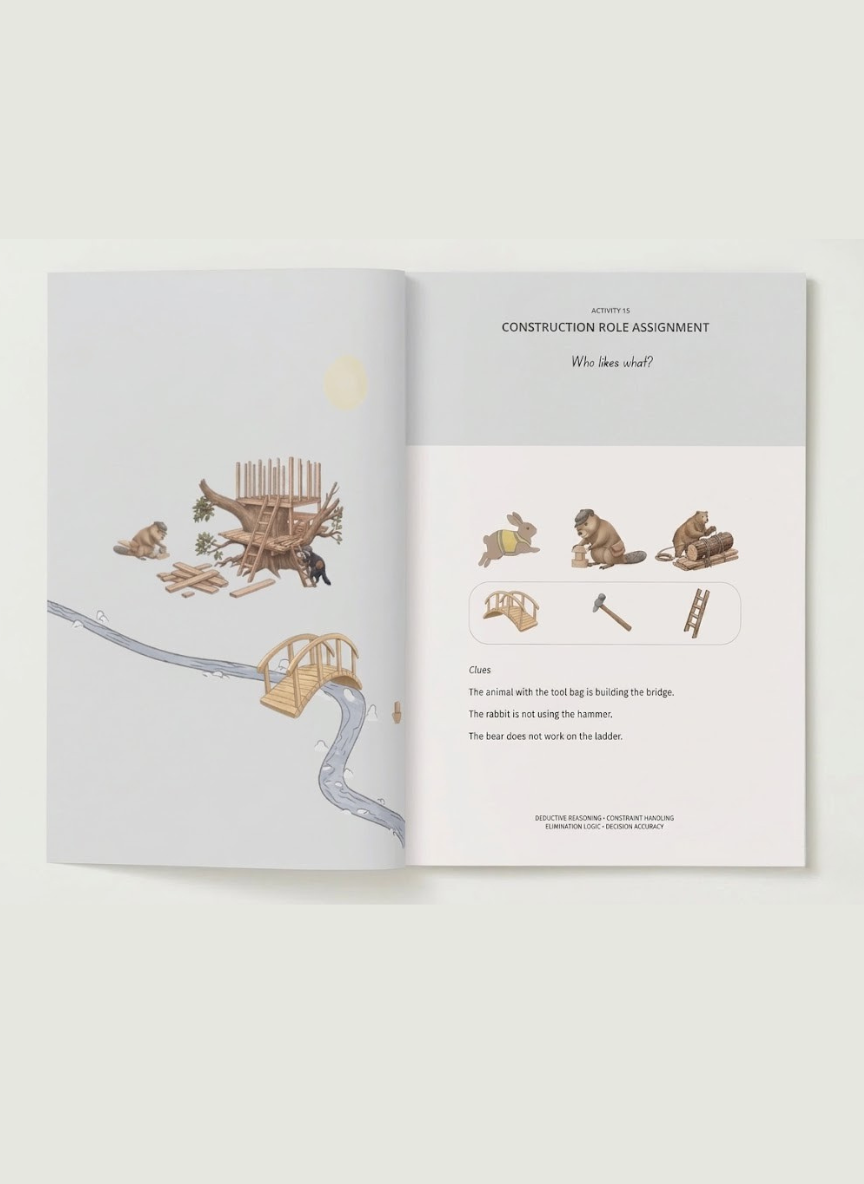
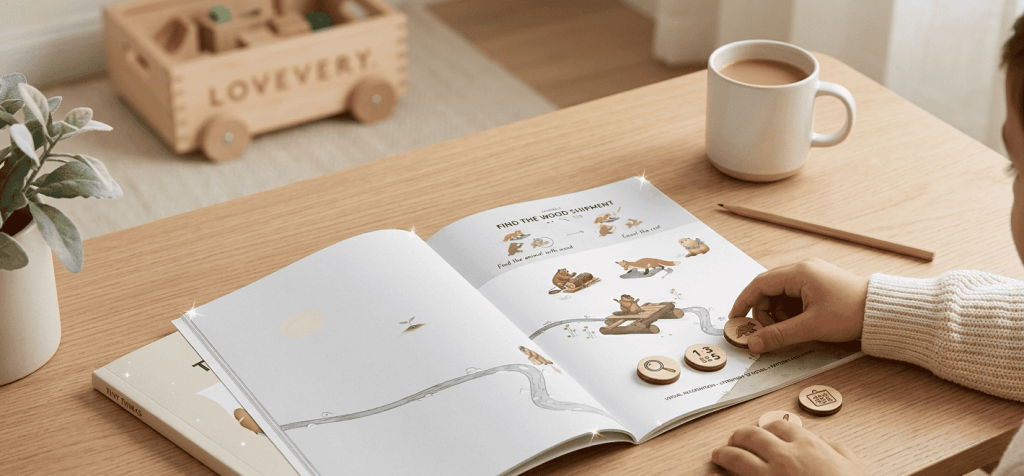
Tiny Thinks keeps the stage-based structure — four levels, from ages 3–4 up to 6–7 — but the play becomes thinking: visual reasoning, sequencing, planning, storytelling and independent problem-solving. Screen-free, beautifully made, and calibrated so a child works just at the edge of what they can manage.
If you're worried about screens and the future, start with the abilities children build today with
paper and crayon.
The same philosophy, the next chapter
Think of it as developmental play becoming developmental thinking: the intentional, stage-by-stage spirit you already trust, in a form built for a growing child.
| Tiny Thinks | Lovevery | |
|---|---|---|
| Best years | Ages 3–7 | The baby & toddler years |
| Approach | Stage-based thinking missions | Stage-based developmental play |
| Format | Screen-free workbooks | Play kits & materials |
| Focus | Attention, reasoning, planning | Sensory & early developmental play |
The natural next step for families who think about development in stages.
- sustained attention
- persistence
- pattern recognition
- working memory
- independent thinking
- problem-solving
- error detection
- comfort with uncertainty
- planning
Not sure which level fits? Reply with your child’s age and we’ll point you to the right one.
Common questions
Is Tiny Thinks similar to Lovevery?
It shares Lovevery’s stage-based, developmental philosophy — the right challenge at the right stage — but it’s its own method, built around screen-free thinking work on paper rather than play kits. A natural progression for families who want to keep that developmental approach as their child grows.
What age does Tiny Thinks start?
Tiny Thinks begins at ages 3–4 with the first stage and runs through to 6–7, so it picks up around the age many families are moving on from early play kits.
Build the capable child
Small, screen-free thinking missions for ages 3–7 — the kind of practice that compounds into a real head start by seven.
Shop the workbooks →