


- Key Takeaways
- The Magical Preschool Brain
- Key Cognitive Milestones Ages 3-7
- What Shapes Their Growth?
- Beyond Milestones: The Real Goal
- Nurturing Your Little Thinker
- When to Seek Guidance
- Conclusion
- Frequently Asked Questions
- What are the main cognitive milestones for children ages 3 to 7?
- How can I support cognitive development at home?
- Why is play important for brain development in young children?
- When should I be concerned about my child’s cognitive development?
- What factors influence cognitive growth in ages 3 to 7?
- How do language skills develop during ages 3 to 7?
- Can screen time affect cognitive development in young children?
Key Takeaways
- Early childhood is a period of explosive brain growth and it’s important to support cognitive development through hands-on, concrete activities and pretend play.
- Concrete thinking aids children ages 3 to 7 in grasping their world, so utilize tangible items and everyday activities to demonstrate foundational concepts.
- Imagination powers both creativity and problem-solving. Promote stories, dress-up, and open-ended materials for lush cognitive growth.
- Language, memory, logic, and focus all rapidly develop in these years. Honor tiny victories and foster progress with talk and schedules.
- By curbing screen time and offering quiet, interesting surroundings, kids learn to focus and think for themselves.
- Emotional connection, healthy food, and free play foster resilience, empathy, and a love of learning that lasts a lifetime.
This is the slow development ages 3 to 7 in which young kids construct attention, sequencing, memory, and self-directed thinking skills.
Instead of the impulsive reactionary thinking of early childhood, kids transition into more structured thought during these years. Little, predictable routines help the brain structure information and moderate stimulation.
Parents see this development in the course of daily life — after school, at dinner, during calm play — when more deliberate, hands-on activities cultivate stillness and concentration.
The article below investigates how to support these changes in practice.
The Magical Preschool Brain
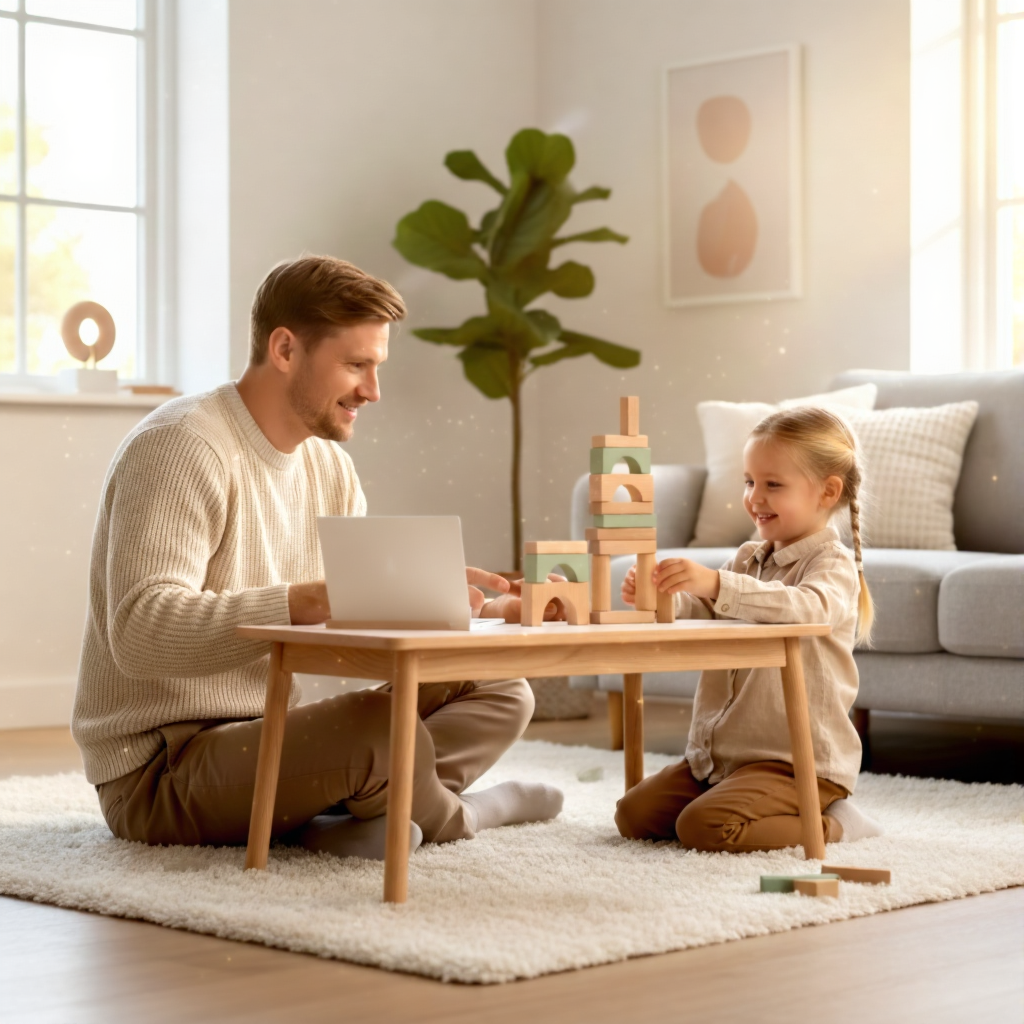
Your preschool brain is a quick-witted, pattern-finding machine. Between 3 and 7 years of age, children’s brains form millions of neural connections each second. These links create the basis for focus, memory, language and logic. Cognitive growth at this age is visible in everyday life: the child who lines up cars by color, explains rain by saying the sky is sad, or pretends a stick is a magic wand.
Parents witness sparks of interest, impulsive anger and occasional episodes of intense concentration. It’s not a stage of performance or accomplishment, but one that wires the brain to think, adapt and regulate itself across shifting contexts.
Rapid Connections
Kids make connections like crazy. They observe patterns, connect cause and effect, and try out solutions. A dropped cup that spills becomes a lesson about gravity, not just a mess. Now comes symbolic thinking — a box becomes a spaceship, a spoon becomes a microphone. Such moments are not mere play — they are the mind doing crucial exercises in flexibility and perspective.
Early support counts. Basic sensory activities, such as pouring water, sorting blocks, and matching pictures, provide the brain vital exercise. Story time can spice up quiet time with playful activities that develop important early learning skills. Children show readiness for these experiences in small ways: stacking, repeating, and asking “why?
If your child has a hard time following two-step directions or rarely pretends, it could be an indicator that additional monitoring and assistance is required. Structure does help. Low-stimulation, repeatable activities are critical. They enable the brain to practice, fail, and try again without overload.
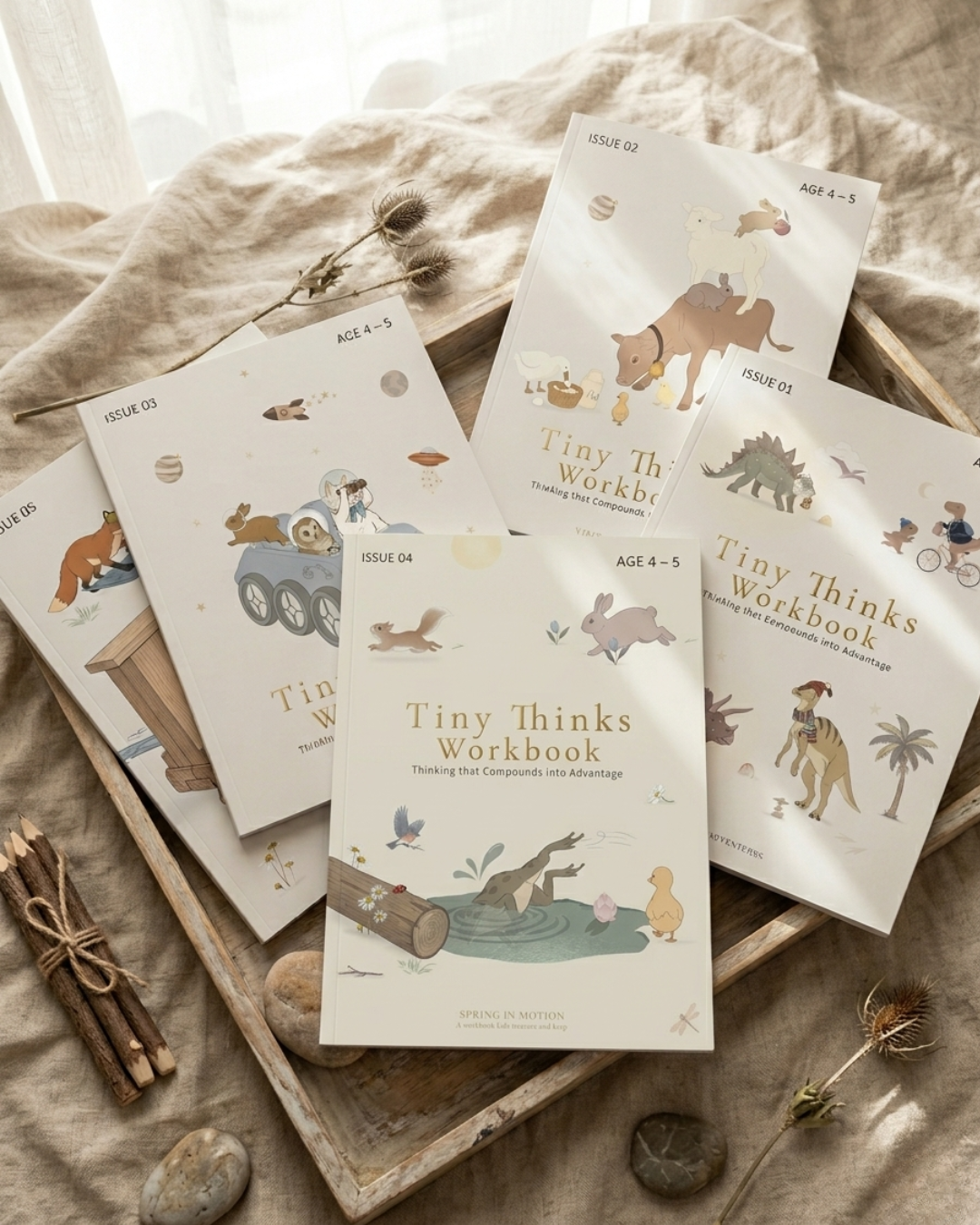
Tiny Thinks™ grew from this need: structured, screen-free experiences designed to settle children and build focus.
Concrete Thinking
Preschoolers think concretely. Abstract concepts are inaccessible, but concrete activities like matching shapes, counting fruit, and sorting socks resonate. This type of thinking anchors kids to reality. When a kid arranges buttons in size order or pours a cup to the brim, she is mastering order, measurement, and elementary logic.
From this perspective, ordinary objects are the perfect lesson. Spatulas for sizing, buttons for hues, and cups for volume—kids absorb most when their hands and senses engage. Short, replicable activities foster confidence and independence. A parent could lay down an easy pattern to replicate or have a child identify, say, ‘all the red things’ in a room.
These micro-behaviors bolster tangible cognition. Knowledge develops via engagement. Kids still get conservation wrong and think that water in a tapered, tall glass is ‘more’ but these slip ups are just par for the cognitive growth course. Playful correction and repetition lay a foundation for eventual abstract reasoning.
Blooming Imagination
The imagination explodes between 3 and 7. They make up tales, conjure up friends, and role play. Telling stories, whether with puppets or just telling stories with toys, allows kids to try out concepts, feelings, and solutions in a protected context. Symbolic play, such as a block being a phone or a scarf being a cape, is omnipresent and healthy.
Symbolic play aids problem-solving. For instance, a little one might play doctor to work through anxiety or establish a grocery store to learn counting and fairness. Imaginative materials deepen these skills:
| Material | Benefit |
|---|---|
| Wooden blocks | Spatial reasoning, sequencing |
| Dress-up clothes | Role-play, empathy |
| Puppets/figures | Narrative, perspective-taking |
| Scarves/fabric | Symbolic thinking, creativity |
| Cardboard boxes | Open-ended construction, planning |
Daydreaming is not frivolous; it’s how preschoolers work through problems and test limits. As stories get longer and richer, the brain rehearses nimble thinking and self-control.
Tiny Thinks™ is made for these moments. When kids need to decompress after school, shift off screens, or mellow out before bed, structured thinking pages provide a soothing, tactile option. The Free Calm Pack is for frequent, independent use—no parent policing required.
For continual support, age-specific Workbooks deliver noise and pressure free sequences that develop attention and reasoning.
Key Cognitive Milestones Ages 3-7
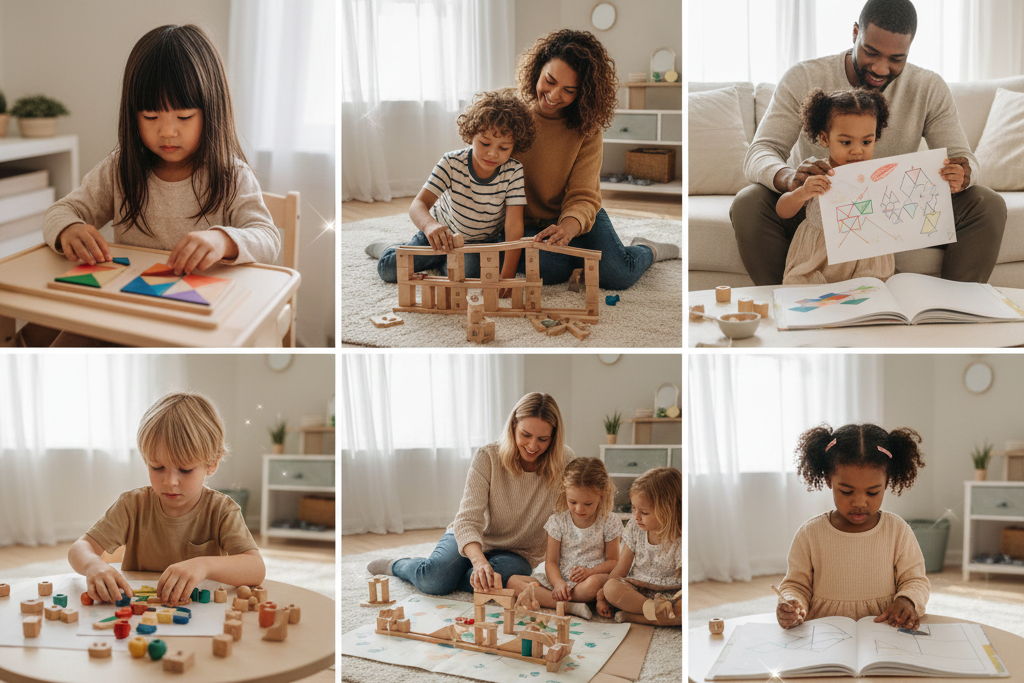
The 3-7 year-old range is a period of quick, obvious cognitive, linguistic, and independent growth. This encompasses the pre-operational stage when children begin to rely on symbols, language, and mental images and ends as they start to employ logic more consistently. Cognitive milestones inform parents, track progress, and do not measure worth.
Screens aren’t the story or the villain here. Regulation and structure are important.
1. Language Explosion
Children’s vocabulary grows at a rapid pace from 3 to 5. Most 3-year-olds transition from labeling things to describing what’s happening and inventing fantasies. At four, most will tell you the endings of stories, identify colors and define ‘same’ and ‘different’.
Simple songs, rhymes and back-and-forth chats solidify understanding. Reading books together develops vocabulary and attention. Prompt picture-based retelling or have them complete sentences. Everyday talk, such as narrating routines, labeling feelings, and questioning decisions helps kids step into the dialogue themselves.
Storytelling, silly songs, and pretend games enrich language skills and social intuition.
2. Sharpening Memory
Memory is the foundation for learning. Three to five year olds remember steps for common routines such as handwashing and table setting. Games like “I Spy,” match the pair, and short scavenger hunts enhance recall and sequencing.
Repeat and rehearse — have your child recall a shopping list, or what went in order in a story. By age five, most kids remember number sequences, such as counting to ten and reciting the alphabet, and can recall steps in all but the most complex multi-part directions.
Physical-token, not screen-based, memory games best support this.
3. Emerging Logic
Logic blooms with puzzles, patterns, and cause-and-effect play. Between four and seven, children begin to perceive correlations between cause and effect. They start to tackle easy logic puzzles, comprehend fundamental rules, and justify their reasoning.
Ask your child what happens if a cup spills, or why a plant needs water. Have them walk you through a puzzle or sorting activity they tackled. By age 7, most are able to use concrete logic, conquering conservation, which is understanding that quantity remains the same even if shape changes, and simple inductive reasoning.
4. Growing Focus
Sustained attention is a skill that you learn. Between five and six, most kids can attend for five to ten minutes, particularly when given routine, hands-on tasks. Structure and routine, such as puzzles after school and matching games before dinner, help foster this stamina.
Keep distractions low in these times. Select quiet, absorbing activities that captivate children, like shape tracing, color sorting, or silent construction. Watch for bouts of restlessness and provide gentle redirection, not criticism.
5. Problem Solving
Little ones figure out how to problem solve on their own during these years. Try screwing and unscrewing lids, solving three-piece puzzles, or finding ways to share a toy—each is a step in practical problem solving. Real-life problems, like what to wear based on the forecast or assisting with table setting, instruct in systematic thinking.
Deconstruct challenges into tiny, transparent steps. When he cracks something solo, praise the process. You kept trying different ways until it worked.” Praise hard work and stick-to-it-ness, not just the outcome.
This establishes the confidence to tackle more complicated assignments down the road.
For parents in pursuit of calm transitions, whether that’s after school, while traveling, during mealtime or bedtime, a screen-free, low-stimulation system like Tiny Thinks™ gives that structure without the work. The Free Calm Pack offers fast, reliable experiences to soothe buzzing brains.
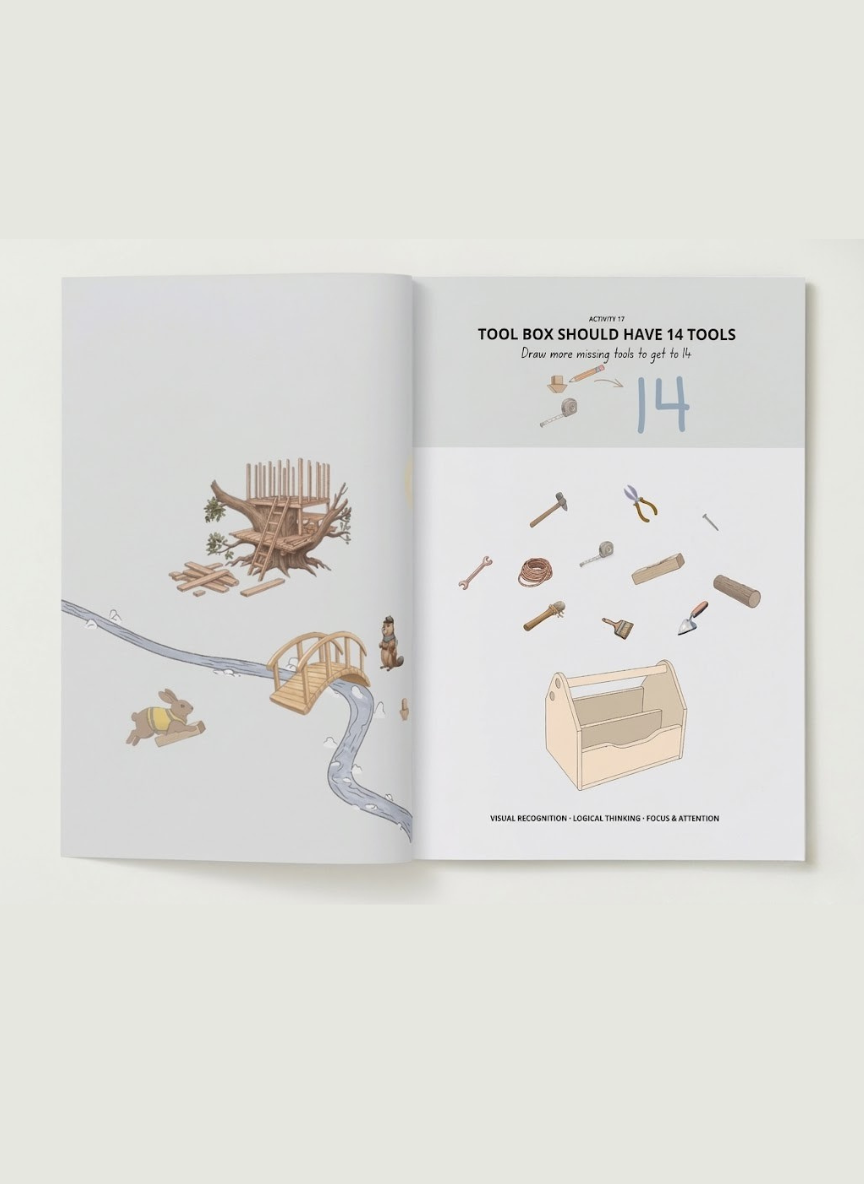
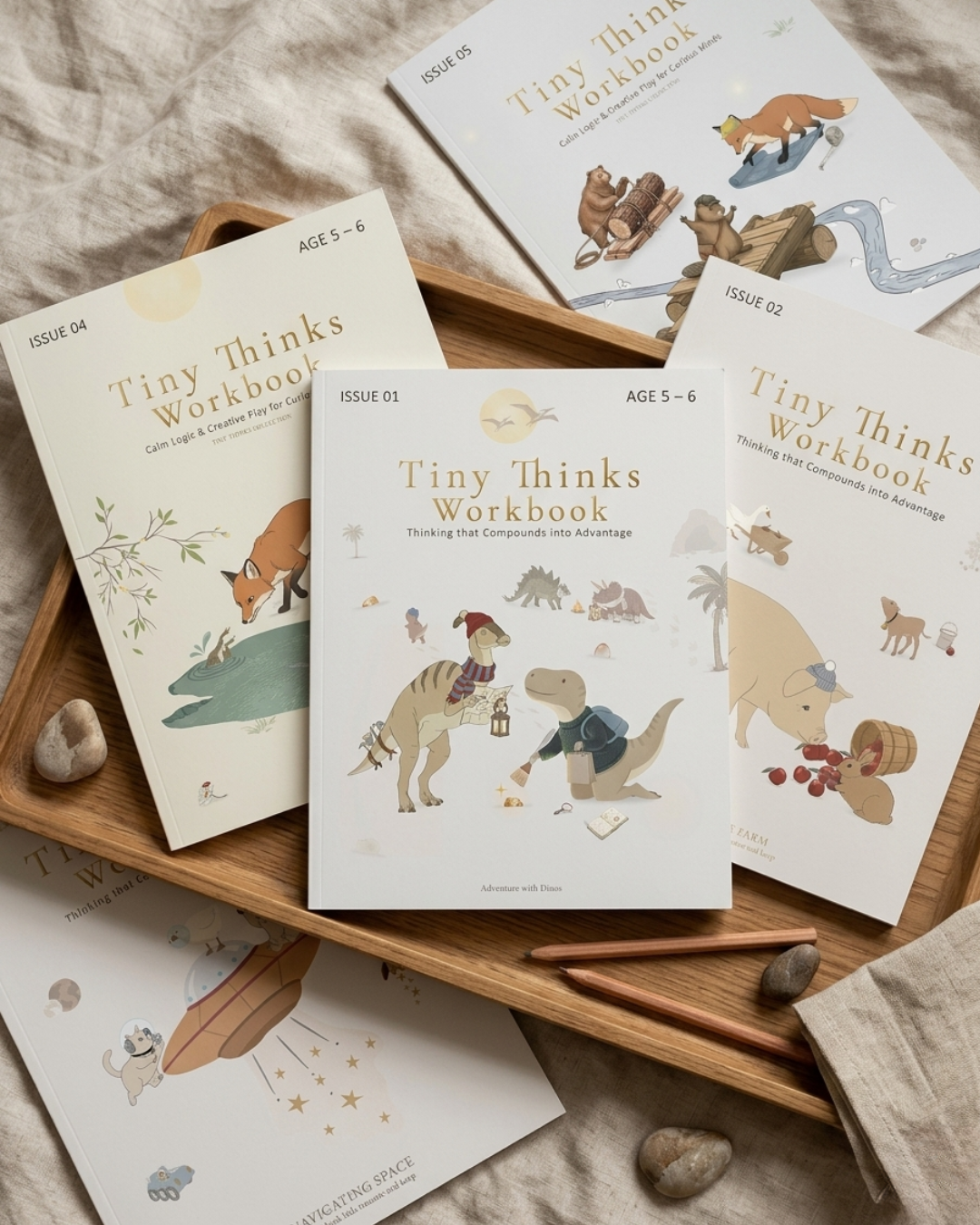
Our age-based Tiny Thinks™ Workbooks build on this foundation, bolstering attention, logic, and memory through your daily routines without the need for constant adult supervision or coercion. Tiny Thinks™ is not a prize, not a punishment for “excess screen.
It’s relief for those times when you need your child to transition from untethered to grounded, via hands-on, organized cognitive activity. They come back to these quiet rhythms on their own, bolstering concentration and self-directed activity over the weeks.
What Shapes Their Growth?
A child’s cognitive development between ages 3 and 7 is influenced by a combination of biology, environment, relationships, and daily rhythms. Brain growth in this stage is rapid, with approximately 80% of it occurring prior to age seven. What children see, hear, touch, and do each day lays down the wiring for attention, memory, language, and problem-solving.
The regularity of their daily schedules, the mood of their environment, and the cognitive habits demonstrated by grown-ups all construct the “framing” for learning. This phase isn’t about sprinting; it’s about growing strong muscles incrementally via repeated lived experiences. Tiny Thinks™ is based on this rule-first, screen-free philosophy, nurturing the organic stream of intellectual development without criticism or stress.
Your Connection
Daily connection is the lifeline. Kids learn best from the people they trust – mom, dad, grandma, grandpa, older siblings, favorite caregiver. Whether you’re reciting daily routines, telling a tale, or responding to a question, you’re not just wasting time. You’re wiring focus and recall.
A child’s security, their readiness to experiment, and their tolerance for frustration all blossom from those little, everyday moments of connection. Singing a song or reading the same book again and again might seem easy, but it’s these rituals that lend the predictability young brains desire.
Emotional support counts. When a child feels safe to inquire, investigate and even stumble, cognitive tools such as sequencing, reasoning and language flourish. In a relaxed, low-stress environment, children are more apt to persevere, problem solve and come back to a task after a blow.
The Power of Play
Play is the ‘work’ of young children. In both unstructured and organized activities, kids tinker, arrange and come to terms with the world. A matching game, a straightforward puzzle, or pretend play are not diversions. They are working memory, pattern recognition and flexible thinking playgrounds.
Playing with peers or caregivers fosters social cognition and cooperation. Games with easy rules demonstrate patience, sequencing and conflict resolution. These skills directly translate to the classroom and beyond.
The strongest play is quiet, tactile, and scheduled. It’s the silent building with blocks, the patient drawing of lines, and the constant re-reading of a beloved book. These experiences cultivate concentration and self-driven motivation much more than quick, novelty-based offers of input.
Digital Distractions
Screens are a life saver for numerous families. Tiny Thinks™ doesn’t judge their utilization. However, too much or too rapid screen time has the opposite effect; it scatters attention and can make it difficult for young children to calm down or concentrate.
By imposing mild but clear boundaries on screen time, you provide room for the mind to rest and true cognition to flourish. When screen transitions are rough, after school, before dinner, or at bedtime, a calm, tactile alternative is often the fastest way to reinstate regulation.
Tiny Thinks™ has a Free Calm Pack this moment. Easy, organized pages provide kids a means to clear their head on their own terms — without the assistance of a screen. Many families discover that kids come back to these resources of their own accord during high-friction periods — no coercion required.
Daily Nutrition
| Nutrient | Role in Brain Growth | Food Sources |
|---|---|---|
| Iron | Oxygen transport, cognition | Beans, spinach, meat |
| Omega-3 | Brain cell structure, focus | Fish, walnuts, flaxseed |
| Zinc | Memory, communication | Lentils, seeds, eggs |
| B Vitamins | Energy, nervous system support | Whole grains, dairy |
These nutrient-packed meals are a must for brain development and consistent attention. A child’s temperament, patience, and mental stamina all follow their diet closely. Well-timed, nutritious snacks such as fruit, nuts, and yogurt keep energy steadier, particularly during transitions.
Families who mind both what and when kids eat often witness jumps in focus, learning, and self-control.
Beyond Milestones: The Real Goal

Old-fashioned child development was all about checking off milestones — walking, talking, counting. More and more, what matters instead is the underlying cognitive architecture driving these accomplishments. It’s no longer about acing tests. Intelligence is a multi-layered, constantly developing system, founded on curiosity, resilience, and empathy, not memorized information or disconnected skills.
Between the ages of 3 and 7, children’s brains undergo a quick metamorphosis, establishing the foundation for learning and flexible thinking throughout their life. What we’re really after is not sprinting through milestones but cultivating the habits of mind that allow our kids to learn, adapt, and bond with others.
Fostering Curiosity
Curiosity is the driving force behind early cognitive development. Posing open-ended questions, “What do you observe about this bug?” or “How can we construct this tower higher?” encourages a child to think, notice, and tinker. It’s not about having the answer. It’s about being open to possible answers and learning to love the quest.
Varied experience counts. A walk in the park, washing kitchen utensils, or pairing socks introduces kids to rhythm and complexity in everyday life. It’s these kinds of moments that ignite inquiry and inspire kids to explore on their own terms, which is what keeps learning going long after any worksheet is put away.
Kids flourish when their breakthroughs are acknowledged. Not with big praise, but with genuine interest: “You figured out how to fit all the blocks!” This reaffirms the importance of persistence and exploration. As in all forms of exercise, curiosity-driven learning when repeated builds the mental flexibility that supports more advanced thinking later on.
Building Resilience
Resilience is not made in grand victories; it is humbly hammered out in the small defeats. When a puzzle piece won’t fit or a drawing doesn’t look like they imagined, children encounter frustration. Teaching coping strategies, such as taking a deep breath, asking for help, or trying again, provides them with tools to navigate these moments.
Praising effort, such as saying “You kept going, even when it was difficult,” instead of just focusing on outcomes moves the emphasis towards growth. Kids require opportunities to attempt, stumble, and bounce back. Allowing a toddler to wrestle a stubborn zipper or reconstruct a crashed block tower instructs that error is not a catastrophe.
Over time, this fosters confidence and a growth mindset, where challenges are viewed as opportunities, not threats. Supporting emotional regulation matters. Identifying emotions—“That was frustrating,” for example—and modeling composed reactions teach kids how to regulate themselves. That becomes the backbone of grit, allowing them to step into new challenges with greater autonomy.
Encouraging Empathy
Empathy is acquired through experience and mindful modeling. Kids see how you treat people and adapt their behavior to match. Easy habits, such as expressing gratitude and noticing if a friend is sulking, establish the atmosphere of authentic human connection.
Identify and discuss feelings. He looks somber. What can we do?” Practice turn-taking and sharing during play. Use soft prompts, such as “Let’s wait for our buddy to catch up.” Be generous in everyday things, such as aiding with clean-up and expressing gratitude. Teach kids to observe and act when someone is injured or excluded.
Cooperative play is an instinctive empathy workshop. Whether building, figuring out rules, or solving problems together, these experiences show kids how to think about others’ perspectives. Reinforcing generosity—“That was generous to share with your brother”—makes it clear that we matter.
Tiny Thinks™ was made for these instances — when your kid needs to chill, center, and tune in — screen-free! The Free Calm Pack provides deliberately low-stimulation activities that ignite curiosity and independent thought.
For parents tackling after-school decompression, travel, or bedtime wind down, Tiny Thinks™ Workbooks deliver a dependable, screen-free punch to build attention, sequencing, and resilience. No stress-inducing, morally infused structuring, just laid-back instruments for down-to-earth contexts.
Nurturing Your Little Thinker
Critical cognitive development between 3 and 7 lays the foundation for a lifetime of learning. This is when kids start to pretend, sort, and exhibit the earliest signs of independent thinking. Daily life is full of small moments that shape thinking: talking about the day, singing, or reading stories.
These moments, combined with directed learning and a secure setting, aid children in developing attention, memory, and reason. Tiny Thinks™ is a soothing framework for these instances. It is always a screen neither, never an alternative to screens, and simply a consistent, screen-less fallback if and when quiet concentration is required the most.
Ask Open Questions
Open questions transform everyday conversations into moments of actual thinking. Instead of asking “Did you like school?” ask “What was the most interesting thing you did today?” This prods kids to stop and remember, strengthening working memory.
When your child tells you why he constructed a block tower in a particular fashion, he is exercising sequencing and reasoning. It is not about the ‘correct’ answer; it is about demonstrating that their thinking counts. Talks like these affirm a child’s inherent inquisitiveness.
When a child asks “why,” answer by asking another question: “What do you think?” That promotes discovery and holds their attention longer. Over time, these habits cultivate an inquisitive mindset, teaching kids to view themselves as little philosophers, capable of cracking puzzles and posing deep questions.
Embrace Boredom
Boredom, we’re told, is to be corrected, yet it’s an incredibly potent stimulus for autonomous play. When kids have room to be bored, they learn to fill it with creativity—constructing, sketching, or game-making. It fortifies grit and independent thinking, crucial for future learning.
By giving boredom a chance, you teach your kids to tolerate discomfort and to look inward for inspiration. They could begin with absolutely nothing to play with, but before long they are pairing things, categorizing blocks, or inventing tales with whatever is nearby.
These moments can kindle serious focus, particularly when kids aren’t instinctively grabbing for a screen.
Create Thinking Spaces
A calm, routine nook with limited supplies—a drawing table, a chapter of puzzles, a library of books—tempts kids to pause and ponder. Reducing clutter and distractions in these areas helps kids concentrate for longer periods and develop the ability to reengage tasks on their own.
Materials should be open-ended: plain paper, basic blocks, matching cards, a few colored pencils. Thinking spaces can be communal as well. A puzzle on the table or group story time develops pattern recognition and social reasoning.
The setting matters less than the atmosphere, which should be calm, ordered, and always available for the child to use on their own terms. For the in-the-moment moments—after school, before dinner, on the road—Tiny Thinks™ provides tranquil screen-free solutions including the Free Calm Pack and age-specific workbooks.
They’re not rewards or upgrades, but real-world reprieve for parents eager to reclaim focus and autonomy. When your child needs to settle or unwind from screens, Tiny Thinks™ provides them a subtle yet structured means of re-engaging thinking, patterning and quiet play. No hype, no pressure, just what works.
When to Seek Guidance

Toddler cognitive development is generally a consistent, personal journey. There are some red flags that indicate when additional assistance might be required. Most children between ages three and seven follow a broad path: building language, making sense of patterns, remembering sequences, and starting tasks on their own.
If your kid isn’t hitting milestones like following basic directions, speaking in age-appropriate sentences, or recalling familiar routines, or if they regress, it’s a pragmatic indicator to get advice. Sometimes, the signs are subtle: a child who cannot stay on a simple task for a few minutes, one who gets stuck repeating the same mistake, or one who never settles into a rhythm of independent play. If doubts persist, trust yourself. Parents are usually the earliest observers of change, even if the pattern is difficult to articulate.
Tracking milestones is not about comparison, it’s about identifying trends. Every child is different and progresses in their own time. Some general indicators include identifying colors, naming common objects, putting two or three steps in order, or remembering recent events.
This is not to say that missing one or more of these consistently, or seeing them backslide, doesn’t require deeper attention. Supervision by itself, mere observation and delay, is insufficient. Passive screening won’t do. Instruments such as the Ages and Stages Questionnaire or the Survey of Well-being of Young Children are popular options for this. They provide a critical sense of a child’s relative standing and offer early detection of problems.
If there are concerns, collaboration is the next step. Reach out to your child’s educator, pediatrician, or a qualified healthcare professional. These professionals can evaluate using established screening tools and help decide if early intervention services are needed.
Children who face biological risks such as premature birth or environmental risks such as instability or limited stimulation may benefit from added support. Early identification makes the biggest difference. Early intervention is not just about correcting problems; it is about enhancing a child’s thinking, focus, and confidence before habits and frustrations set in.
Tiny Thinks is for you in those pressure moments when you see your kid get stuck in attention, focus or regulation. After school, during screen transitions, at the dinner table or in the waiting room, these are the moments when parents require a peaceful reset.
Tiny Thinks Free Calm Pack consists of adorable little sets of no-screen thinking pages that help kids settle and re-focus themselves. For families who want more routine, our age-based Workbooks offer gentle, predictable schedules that proactively develop working memory, sequencing, and independent initiation.
No pressure, no judgment—just a system that works when you want your kid to think cool and concentrate, with no additional noise.
Conclusion
Cognitive development in early childhood is incremental, pragmatic, and molded by everyday experiences. Ages 3–7 are full of big shifts, yet the majority of their advancement occurs almost imperceptibly within daily rituals, easy dialogue, and gentle, guided play. They flourish on familiar rhythms, on things they can initiate. Rapid, glitzy stimulation does not foster attention; slow, replicable experiences do. Parents don’t have to run after every milestone or crowd every moment. Building a calm thinking layer, one that helps kids settle, sequence, and work through small challenges, is usually sufficient. Have faith in routine and your child’s innate impulse to participate.
The most significant development occurs during ordinary minutes rather than on a timetable. Silent encouragement provides little minds their best beginning.
Frequently Asked Questions
What are the main cognitive milestones for children ages 3 to 7?
Ages 3 to 7, kids learn to think symbolically, solve simple problems, remember more, use language better, and understand basic logic. These skills are the bedrock of future learning.
How can I support cognitive development at home?
Provide secure play areas, shared book reading, questioning, and inquisitiveness. Even ‘basic’ things like puzzles and drawing contribute to your child’s brain development.
Why is play important for brain development in young children?
Play gives kids a chance to exercise their thinking, problem-solving, and social skills. It promotes imagination and shows them how to engage with others.
When should I be concerned about my child’s cognitive development?
Of course, if your child has difficulty speaking, following simple instructions, or learning things relative to other kids his age, it’s prudent to see a doctor.
What factors influence cognitive growth in ages 3 to 7?
Cognitive development includes genetics, nutrition, and environment, interactions with family, and the opportunity to play and learn.
How do language skills develop during ages 3 to 7?
Children increase their vocabulary, begin to form longer sentences, and develop an initial understanding of grammar rules. They begin to communicate feelings and ideas more clearly.
Can screen time affect cognitive development in young children?
Excessive screen time can restrict hands-on learning opportunities. Psychologists claim that interactive play and reading stimulate brain growth more at this age.