


Key Takeaways
- Emotional regulation skills for kids are early executive function skills, built through pause, name, choose, and repair, not just calming tricks used in the moment.
- Most children cannot learn a new coping skill while they are mid-meltdown because the reasoning part of the brain is offline during intense distress, according to Harvard’s Center on the Developing Child.
- Co-regulation, where an adult lends their calm to a child, comes before self-regulation, where a child manages big feelings independently.
- There is no fixed age when a child should regulate alone. Ages 3 to 4 are still learning to notice feelings, ages 5 to 7 are learning to plan and use calming steps with less help.
- Practising calming steps during ordinary, low-stakes moments builds the pattern children reach for later, more than any script used only during a meltdown.
- Emotional regulation draws on planning and self-control, one of the ten capabilities in the Pre-Seven Learning Method, alongside working memory and comfort with uncertainty.
The child who screams over a broken cracker. The child who hits when a game does not go their way. The child who seems fine at pickup and falls apart the second the car door shuts. If this is your house right now, you are not doing it wrong, and your child is not broken. Big reactions before age seven are common. What is less common is knowing what to actually teach, and when.
What emotional regulation really means for kids
Emotional regulation is the ability to notice a feeling, tolerate it, and choose a response instead of being run by it. It is not the same as being calm all the time, and it is not the same as suppressing feelings. A regulated child can still feel furious. The difference is what happens next.
Many parenting resources treat regulation as a set of calming tricks: breathe, count to ten, squeeze a ball. Those tools can help, but they sit on top of something deeper. Underneath regulation is executive function, the same mental machinery a child uses to follow multi-step directions or wait their turn. A child has to notice a body signal, hold a strategy in mind, stop an impulse, and pick from options. That is thinking work, done under emotional load, which is the hardest condition to think in.
This is why regulation is not a personality trait some kids have and others do not. It is a skill built the same way any skill is built: through repeated, low-pressure practice, mostly outside the moment when emotions are highest.
Why kids cannot learn regulation during a meltdown
Once a child is in full meltdown, they are not in a state to learn anything new. This is one of the most consistently misunderstood parts of teaching regulation. During intense distress, the brain’s stress response takes over and the parts responsible for reasoning, planning, and flexible thinking become much harder to access, a pattern described by Harvard’s Center on the Developing Child in its work on executive function and self-regulation (Harvard Center on the Developing Child).
This is why breathing exercises introduced for the first time mid-meltdown so often fail. The child is not refusing to cooperate. They genuinely cannot access a new tool while flooded. What they can access is you.
This is where co-regulation comes in. Co-regulation is when an adult’s steady presence, tone, and body help a child settle before the child can settle alone. A parent who lowers their voice, sits at the child’s level, and waits without demanding words is doing co-regulation. It is not a lesser strategy. It is the necessary stage before self-regulation, where a child eventually manages big feelings with less outside help. Most children move gradually from needing heavy co-regulation to needing a light reminder to needing almost nothing at all, and that shift happens over years, not weeks.
The four skills underneath emotional regulation
Regulation is not one skill. It is four smaller ones working together, and naming them helps you know what you are actually practising.
- Noticing: recognising a body signal (hot face, tight fists, fast breathing) before the feeling takes over.
- Naming: putting a word to the feeling, even a simple one like mad, scared, or too much.
- Choosing: picking a response from a small set of known options instead of reacting on impulse.
- Repairing: reconnecting after a hard moment, whether that is an apology, a hug, or simply returning to the activity.
Noticing and naming depend on working memory and early self-awareness. Choosing depends heavily on planning and self-control, deciding what to do before doing it. Repairing depends on comfort with uncertainty, since a child has to sit with the discomfort of having lost control and still find a way back. These are not soft skills. They are cognitive ones, and they are exactly why regulation belongs in the same conversation as attention, memory, and problem-solving.
Age-by-age emotional regulation expectations from 3 to 7
There is no fixed age when a child should be able to calm down alone, and any number claiming otherwise is not a research finding, it is a guess dressed up as a rule. What is well established is a general direction of travel.
- Ages 3 to 4: children are mostly learning to notice that a feeling is happening at all. Naming it accurately, in the moment, is still hard.
- Ages 4 to 5: children start to name feelings and recognise simple choices, like asking for space or taking a break, especially with adult prompting.
- Ages 5 to 7: children begin planning their own calming steps and attempting repair with less direct help, though they will still need support during genuinely hard moments.
A 6-year-old who cannot lose a board game without shouting is not behind. A 3-year-old who screams over a broken cracker is not a red flag. These are the expected texture of the years before seven, and they change slowly with practice, not overnight with a single conversation.
What to do before, during, and after big feelings
Regulation is easier to teach when you separate it into three moments, because each one calls for something different from you.
- Before: practise during calm moments. Play games that name feelings, rehearse choices with no pressure attached, so the pattern already exists before it is needed.
- During: co-regulate first. Lower your voice, get to their eye level, and resist the urge to teach or reason. Your calm is the tool right now, not your words.
- After: repair without shame. Once the child is calm, briefly revisit what happened. Not a lecture, a short, warm conversation: what happened, what we could try next time.
One thing that quietly derails this sequence: talking too much while a child is still overwhelmed. Long explanations mid-meltdown ask a flooded brain to do something it cannot do yet. Save the words for after.
In Tiny Thinks terms, this is the difference between asking for control in the hard moment and giving a child small chances to practise pause, choice, and repair before the hard moment arrives.
Best activities for building emotional regulation skills
The strongest regulation practice happens far from any actual meltdown, in ordinary, low-stakes moments where a child can rehearse without real stakes attached.
- Feelings check-ins: at dinner or bedtime, ask what colour or weather their day felt like. This builds the noticing and naming habit without pressure.
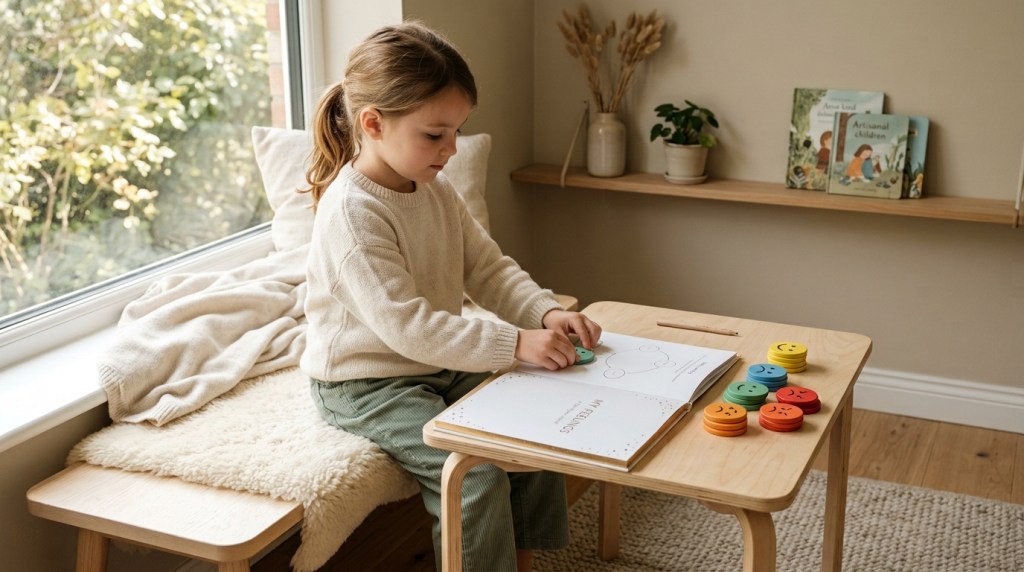
- Choice cards: a small set of physical cards showing calming options (squeeze hands, take three breaths, ask for a hug). Practising with the cards when calm makes them easier to reach for later.
- Pretend-play meltdowns: using a stuffed animal or puppet who gets upset, and walking through what it could try. Children often solve problems more easily for a puppet than for themselves.
- Losing games on purpose: playing simple games where you occasionally lose on purpose and narrate your own recovery out loud (that’s annoying, I wanted to win, I’ll try again) models regulation without a lecture.
- Slow-motion role-play: acting out a tricky moment, like a friend taking a toy, in a calm setting, so the response has already been rehearsed once before it is needed for real.
None of these require special materials or long blocks of time. Five calm minutes, repeated often, tends to matter more than one long session. For a wider set of related ideas, see Self-Regulation Activities for Preschoolers.
What not to do when teaching regulation
A few common approaches quietly work against regulation, even when they come from good instincts.
- Relying only on in-the-moment tools. If breathing or counting is only ever introduced during a meltdown, it will rarely land. Practise it first when calm.
- Using sticker charts or rewards for not melting down. This can shift a child’s focus to avoiding punishment rather than building the underlying skill, and can increase anxiety around big feelings.
- Switching strategies every few days. Children need repetition to build a reliable pattern. Give one approach a few weeks before deciding it is not working.
- Over-explaining during distress. A flooded child cannot absorb a long explanation. Say less, stay steady, save the conversation for later.
- Expecting self-control without ever teaching the steps. A child who has never practised naming feelings or choosing a coping tool will not suddenly produce one under pressure.
When big emotions may need extra support
Most explosive reactions before age seven are developmentally ordinary, especially during transitions, tiredness, or hunger. It is also completely normal for a child to hold it together at school and fall apart with a parent afterward. That is often a sign your child feels safe enough with you to release what they held in all day, not a sign you are doing something wrong.
If big reactions are frequent, intense, lasting well beyond what seems to fit the trigger, or interfering with friendships and daily routines over a period of months, it is reasonable to mention this to your pediatrician. They can help rule out or identify things like anxiety or a developmental difference that may need additional support. This is simply good practice, not a sign that something is broken in your parenting or your child.
What Is The Pre-Seven Learning Method?
The Pre-Seven Learning Method is a four-stage, screen-free approach for children ages 3 to 7 that builds ten cognitive capabilities underneath learning and academics through small, calibrated thinking missions during the formative years before age seven. Emotional regulation draws heavily on one of these ten: planning and self-control, the ability to pause and choose a response before acting. It also leans on working memory, holding a strategy in mind long enough to use it, and comfort with uncertainty, staying with a hard feeling long enough to find a way through it. A child who pauses before reacting, thinks through a choice, and then acts is practising the same underlying capability whether the task is a puzzle or a hard feeling.
You can see this capability outside emotional moments too. It is the child who looks at a puzzle, finds the corners first, and only then begins, rather than grabbing pieces at random. That same instinct, to pause and plan before acting, is what eventually lets a child pause before shouting, consider their options, and choose one.
For Tiny Thinks, emotional regulation is part of the thinking underneath learning: a child gets repeated, screen-free chances to pause, hold a step in mind, and try again when a feeling or task gets difficult.
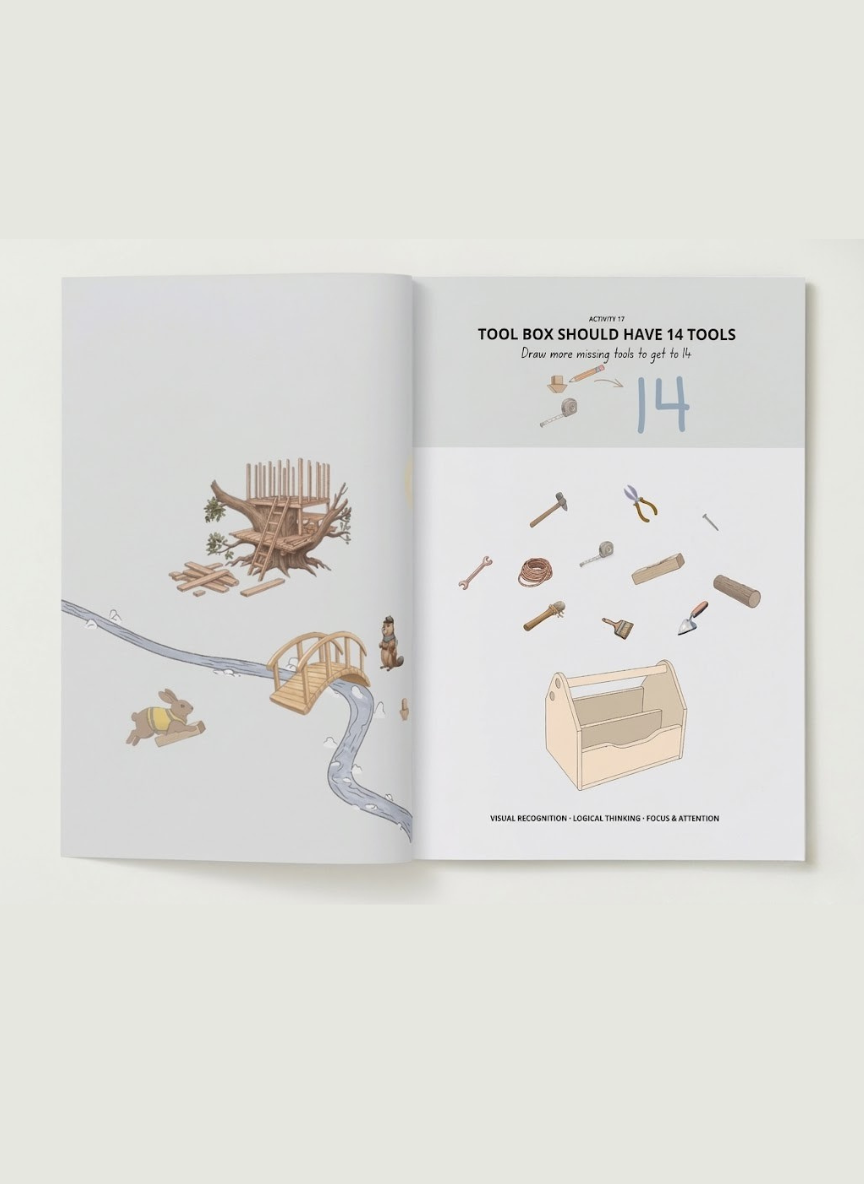
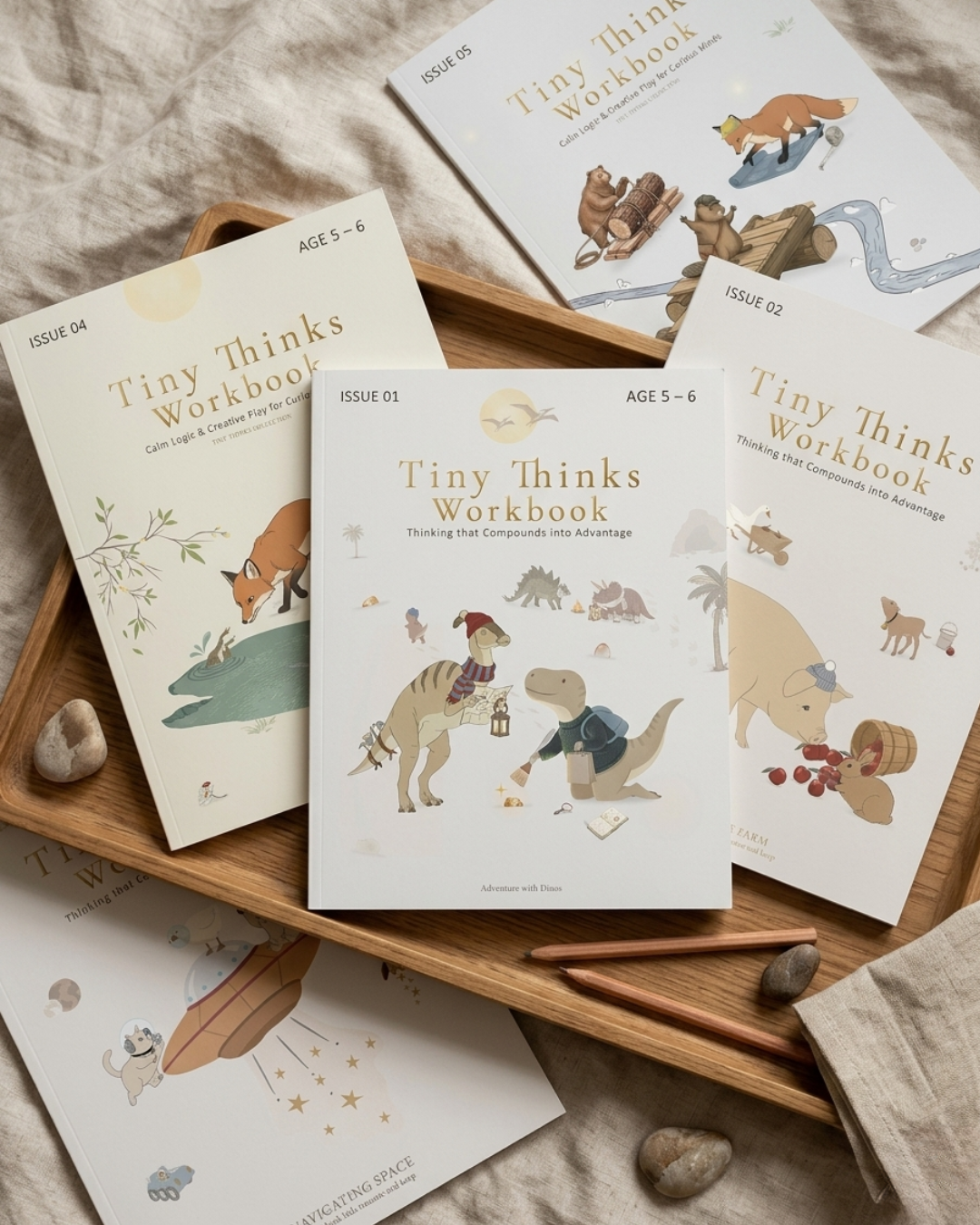
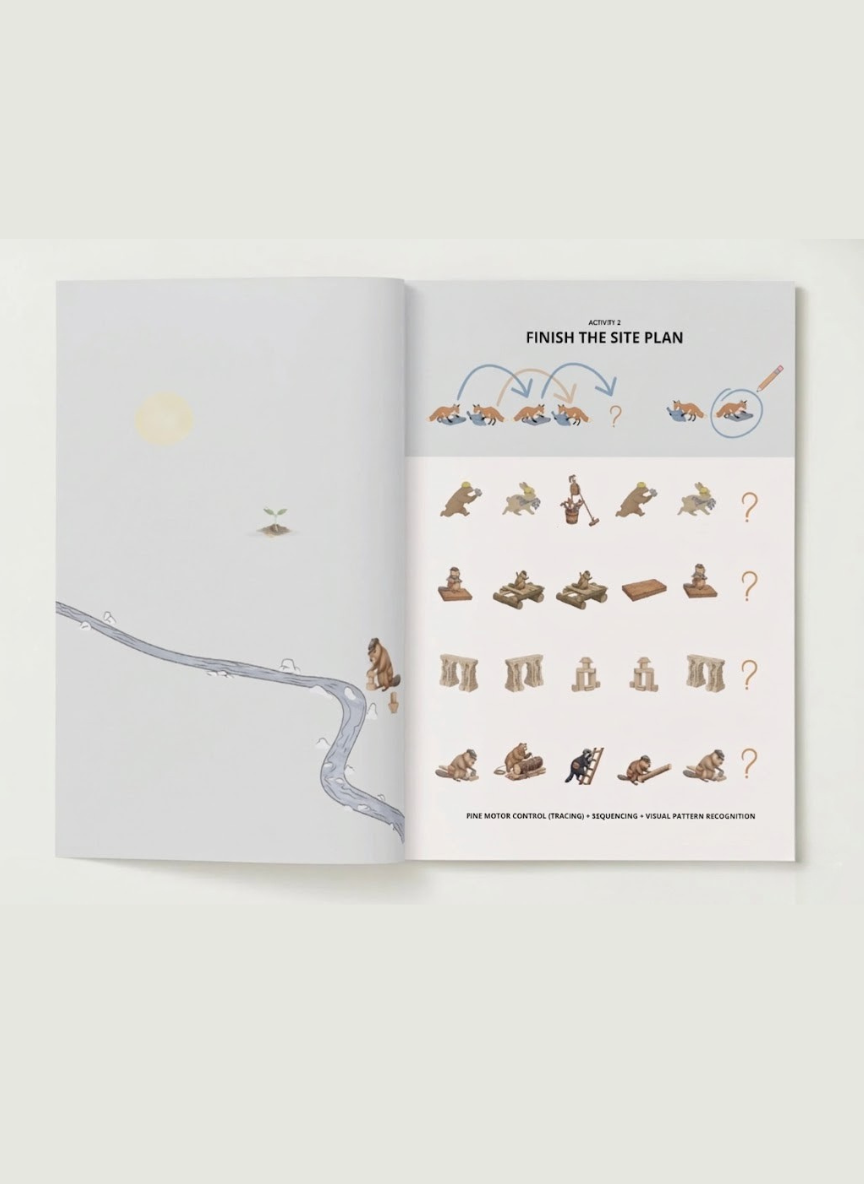
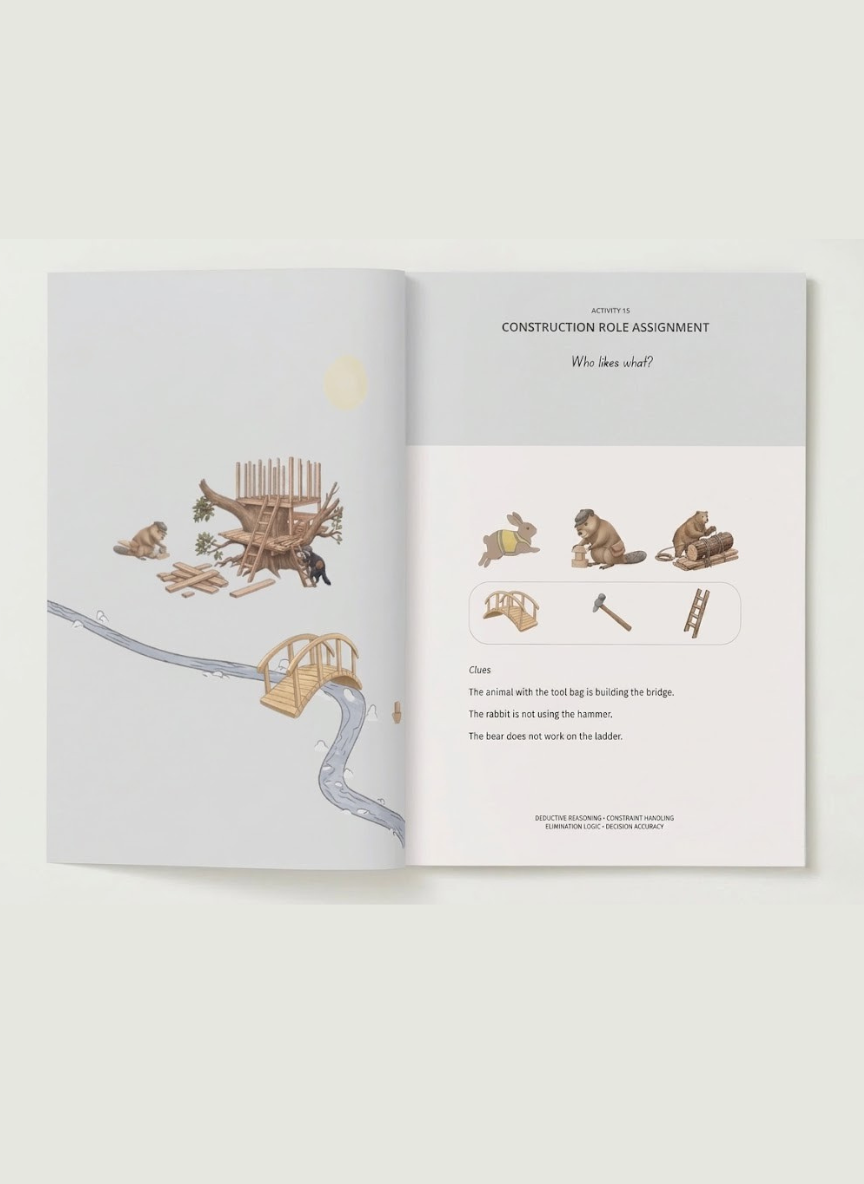
Tiny Thinks workbooks give children small, regular screen-free missions that practise planning, self-control, working memory, and comfort with uncertainty in calm moments, so the same thinking can be drawn on when feelings get bigger. Start with the Free Calm Pack, or explore the full range of Tiny Thinks workbooks for simple at-home practice built around The Pre-Seven Learning Method.
Frequently Asked Questions
How do I teach my child emotional regulation?
Teach it in calm moments through naming feelings, practising simple coping choices, and modelling your own recovery out loud, not only during meltdowns. Everyday practice like this is what the Pre-Seven Learning Method focuses on in the years before seven.
What are emotional regulation skills for children?
They are the ability to notice a feeling, name it, choose a response, and repair afterward, and they draw on planning, working memory, and self-control.
How do you calm a dysregulated child?
Use co-regulation: lower your voice, get to their eye level, and offer steady presence rather than new instructions or lengthy explanations.
At what age should children regulate emotions?
There is no fixed age. Children ages 3 to 4 are learning to notice feelings, while children ages 5 to 7 begin planning calming steps with less adult help.
What activities help kids self-regulate?
Feelings check-ins, choice cards, pretend-play meltdowns with puppets, and losing games on purpose all give children calm-state practice.
Why does nothing work once my child is upset?
Once a child is fully upset, the reasoning part of the brain is much harder to access, so new coping tools rarely work in that moment, only familiar, well-practised ones might.
Will my child grow out of huge reactions?
Most children show fewer and shorter big reactions as planning and self-control develop between ages 5 and 7, though the pace varies widely by child.
Is it normal for my child to melt down with me but not at school?
Yes, this is common and often means your child feels safe enough to release held-in feelings with you rather than a sign of a parenting problem.
Should I use sticker charts to stop meltdowns?
Reward charts aimed at stopping meltdowns can increase pressure and anxiety around big feelings rather than build the underlying coping skill.
- Emotional regulation skills for kids are early executive function skills, built through pause, name, choose, and repair, not just calming tricks used in the moment.
- Most children cannot learn a new coping skill while they are mid-meltdown because the reasoning part of the brain is offline during intense distress, according to Harvard’s Center on the Developing Child.
- Co-regulation, where an adult lends their calm to a child, comes before self-regulation, where a child manages big feelings independently.
- There is no fixed age when a child should regulate alone. Ages 3 to 4 are still learning to notice feelings, ages 5 to 7 are learning to plan and use calming steps with less help.
- Practising calming steps during ordinary, low-stakes moments builds the pattern children reach for later, more than any script used only during a meltdown.
- Emotional regulation draws on planning and self-control, one of the ten capabilities in the Pre-Seven Learning Method, alongside working memory and comfort with uncertainty.
The child who screams over a broken cracker. The child who hits when a game does not go their way. The child who seems fine at pickup and falls apart the second the car door shuts. If this is your house right now, you are not doing it wrong, and your child is not broken. Big reactions before age seven are common. What is less common is knowing what to actually teach, and when.
What emotional regulation really means for kids
Emotional regulation is the ability to notice a feeling, tolerate it, and choose a response instead of being run by it. It is not the same as being calm all the time, and it is not the same as suppressing feelings. A regulated child can still feel furious. The difference is what happens next.
Many parenting resources treat regulation as a set of calming tricks: breathe, count to ten, squeeze a ball. Those tools can help, but they sit on top of something deeper. Underneath regulation is executive function, the same mental machinery a child uses to follow multi-step directions or wait their turn. A child has to notice a body signal, hold a strategy in mind, stop an impulse, and pick from options. That is thinking work, done under emotional load, which is the hardest condition to think in.
This is why regulation is not a personality trait some kids have and others do not. It is a skill built the same way any skill is built: through repeated, low-pressure practice, mostly outside the moment when emotions are highest.
Why kids cannot learn regulation during a meltdown
Once a child is in full meltdown, they are not in a state to learn anything new. This is one of the most consistently misunderstood parts of teaching regulation. During intense distress, the brain’s stress response takes over and the parts responsible for reasoning, planning, and flexible thinking become much harder to access, a pattern described by Harvard’s Center on the Developing Child in its work on executive function and self-regulation (Harvard Center on the Developing Child).
This is why breathing exercises introduced for the first time mid-meltdown so often fail. The child is not refusing to cooperate. They genuinely cannot access a new tool while flooded. What they can access is you.
This is where co-regulation comes in. Co-regulation is when an adult’s steady presence, tone, and body help a child settle before the child can settle alone. A parent who lowers their voice, sits at the child’s level, and waits without demanding words is doing co-regulation. It is not a lesser strategy. It is the necessary stage before self-regulation, where a child eventually manages big feelings with less outside help. Most children move gradually from needing heavy co-regulation to needing a light reminder to needing almost nothing at all, and that shift happens over years, not weeks.
The four skills underneath emotional regulation
Regulation is not one skill. It is four smaller ones working together, and naming them helps you know what you are actually practising.
- Noticing: recognising a body signal (hot face, tight fists, fast breathing) before the feeling takes over.
- Naming: putting a word to the feeling, even a simple one like mad, scared, or too much.
- Choosing: picking a response from a small set of known options instead of reacting on impulse.
- Repairing: reconnecting after a hard moment, whether that is an apology, a hug, or simply returning to the activity.
Noticing and naming depend on working memory and early self-awareness. Choosing depends heavily on planning and self-control, deciding what to do before doing it. Repairing depends on comfort with uncertainty, since a child has to sit with the discomfort of having lost control and still find a way back. These are not soft skills. They are cognitive ones, and they are exactly why regulation belongs in the same conversation as attention, memory, and problem-solving.
Age-by-age emotional regulation expectations from 3 to 7
There is no fixed age when a child should be able to calm down alone, and any number claiming otherwise is not a research finding, it is a guess dressed up as a rule. What is well established is a general direction of travel.
- Ages 3 to 4: children are mostly learning to notice that a feeling is happening at all. Naming it accurately, in the moment, is still hard.
- Ages 4 to 5: children start to name feelings and recognise simple choices, like asking for space or taking a break, especially with adult prompting.
- Ages 5 to 7: children begin planning their own calming steps and attempting repair with less direct help, though they will still need support during genuinely hard moments.
A 6-year-old who cannot lose a board game without shouting is not behind. A 3-year-old who screams over a broken cracker is not a red flag. These are the expected texture of the years before seven, and they change slowly with practice, not overnight with a single conversation.
What to do before, during, and after big feelings
Regulation is easier to teach when you separate it into three moments, because each one calls for something different from you.
- Before: practise during calm moments. Play games that name feelings, rehearse choices with no pressure attached, so the pattern already exists before it is needed.
- During: co-regulate first. Lower your voice, get to their eye level, and resist the urge to teach or reason. Your calm is the tool right now, not your words.
- After: repair without shame. Once the child is calm, briefly revisit what happened. Not a lecture, a short, warm conversation: what happened, what we could try next time.
One thing that quietly derails this sequence: talking too much while a child is still overwhelmed. Long explanations mid-meltdown ask a flooded brain to do something it cannot do yet. Save the words for after.
In Tiny Thinks terms, this is the difference between asking for control in the hard moment and giving a child small chances to practise pause, choice, and repair before the hard moment arrives.
Best activities for building emotional regulation skills
The strongest regulation practice happens far from any actual meltdown, in ordinary, low-stakes moments where a child can rehearse without real stakes attached.
- Feelings check-ins: at dinner or bedtime, ask what colour or weather their day felt like. This builds the noticing and naming habit without pressure.
- Choice cards: a small set of physical cards showing calming options (squeeze hands, take three breaths, ask for a hug). Practising with the cards when calm makes them easier to reach for later.
- Pretend-play meltdowns: using a stuffed animal or puppet who gets upset, and walking through what it could try. Children often solve problems more easily for a puppet than for themselves.
- Losing games on purpose: playing simple games where you occasionally lose on purpose and narrate your own recovery out loud (that’s annoying, I wanted to win, I’ll try again) models regulation without a lecture.
- Slow-motion role-play: acting out a tricky moment, like a friend taking a toy, in a calm setting, so the response has already been rehearsed once before it is needed for real.
None of these require special materials or long blocks of time. Five calm minutes, repeated often, tends to matter more than one long session. For a wider set of related ideas, see Self-Regulation Activities for Preschoolers.
What not to do when teaching regulation
A few common approaches quietly work against regulation, even when they come from good instincts.
- Relying only on in-the-moment tools. If breathing or counting is only ever introduced during a meltdown, it will rarely land. Practise it first when calm.
- Using sticker charts or rewards for not melting down. This can shift a child’s focus to avoiding punishment rather than building the underlying skill, and can increase anxiety around big feelings.
- Switching strategies every few days. Children need repetition to build a reliable pattern. Give one approach a few weeks before deciding it is not working.
- Over-explaining during distress. A flooded child cannot absorb a long explanation. Say less, stay steady, save the conversation for later.
- Expecting self-control without ever teaching the steps. A child who has never practised naming feelings or choosing a coping tool will not suddenly produce one under pressure.
When big emotions may need extra support
Most explosive reactions before age seven are developmentally ordinary, especially during transitions, tiredness, or hunger. It is also completely normal for a child to hold it together at school and fall apart with a parent afterward. That is often a sign your child feels safe enough with you to release what they held in all day, not a sign you are doing something wrong.
If big reactions are frequent, intense, lasting well beyond what seems to fit the trigger, or interfering with friendships and daily routines over a period of months, it is reasonable to mention this to your pediatrician. They can help rule out or identify things like anxiety or a developmental difference that may need additional support. This is simply good practice, not a sign that something is broken in your parenting or your child.
What Is The Pre-Seven Learning Method?
The Pre-Seven Learning Method is a four-stage, screen-free approach for children ages 3 to 7 that builds ten cognitive capabilities underneath learning and academics through small, calibrated thinking missions during the formative years before age seven. Emotional regulation draws heavily on one of these ten: planning and self-control, the ability to pause and choose a response before acting. It also leans on working memory, holding a strategy in mind long enough to use it, and comfort with uncertainty, staying with a hard feeling long enough to find a way through it. A child who pauses before reacting, thinks through a choice, and then acts is practising the same underlying capability whether the task is a puzzle or a hard feeling.
You can see this capability outside emotional moments too. It is the child who looks at a puzzle, finds the corners first, and only then begins, rather than grabbing pieces at random. That same instinct, to pause and plan before acting, is what eventually lets a child pause before shouting, consider their options, and choose one.
For Tiny Thinks, emotional regulation is part of the thinking underneath learning: a child gets repeated, screen-free chances to pause, hold a step in mind, and try again when a feeling or task gets difficult.
Tiny Thinks workbooks give children small, regular screen-free missions that practise planning, self-control, working memory, and comfort with uncertainty in calm moments, so the same thinking can be drawn on when feelings get bigger. Start with the Free Calm Pack, or explore the full range of Tiny Thinks workbooks for simple at-home practice built around The Pre-Seven Learning Method.
Frequently Asked Questions
How do I teach my child emotional regulation?
Teach it in calm moments through naming feelings, practising simple coping choices, and modelling your own recovery out loud, not only during meltdowns. Everyday practice like this is what the Pre-Seven Learning Method focuses on in the years before seven.
What are emotional regulation skills for children?
They are the ability to notice a feeling, name it, choose a response, and repair afterward, and they draw on planning, working memory, and self-control.
How do you calm a dysregulated child?
Use co-regulation: lower your voice, get to their eye level, and offer steady presence rather than new instructions or lengthy explanations.
At what age should children regulate emotions?
There is no fixed age. Children ages 3 to 4 are learning to notice feelings, while children ages 5 to 7 begin planning calming steps with less adult help.
What activities help kids self-regulate?
Feelings check-ins, choice cards, pretend-play meltdowns with puppets, and losing games on purpose all give children calm-state practice.
Why does nothing work once my child is upset?
Once a child is fully upset, the reasoning part of the brain is much harder to access, so new coping tools rarely work in that moment, only familiar, well-practised ones might.
Will my child grow out of huge reactions?
Most children show fewer and shorter big reactions as planning and self-control develop between ages 5 and 7, though the pace varies widely by child.
Is it normal for my child to melt down with me but not at school?
Yes, this is common and often means your child feels safe enough to release held-in feelings with you rather than a sign of a parenting problem.
Should I use sticker charts to stop meltdowns?
Reward charts aimed at stopping meltdowns can increase pressure and anxiety around big feelings rather than build the underlying coping skill.